Latest News and Comment from Education

Monday, May 11, 2015

The Politics of Reform - The Crucial VoiceThe Crucial Voice

The Politics of Reform - The Crucial VoiceThe Crucial Voice:

The Politics of Reform


The politics of education reform has taken us on a roller-coaster ride for so long that it really behooves us to pause a moment and think about what all the political labels mean.
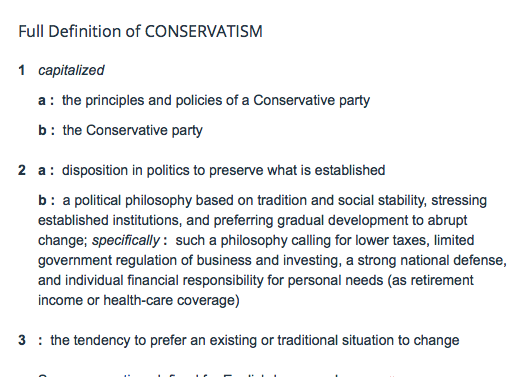
Look at what a purely conservative view would be.Screen Shot 2015-05-07 at 5.59.48 PMPeople sharing a true conservative political philosophy —to preserve what is established based on tradition and social stability— would not have wanted to do what we did with No Child Left Behind. We took a radical step, from a law meant to strengthen and improve an institution, to a law designed around the irresistibly appealing word “choice.”
So when we talk about a conservative point of view, it is with a small “c.” It is only when people with conservative views join a political party labeled Conservative —being the Republican Party in the U.S.—that governing philosophies get murky and guiding principles less clear.Mischiefs-of-Party
The same can be said about the Democratic Party —the designated U.S. political party of liberalism.
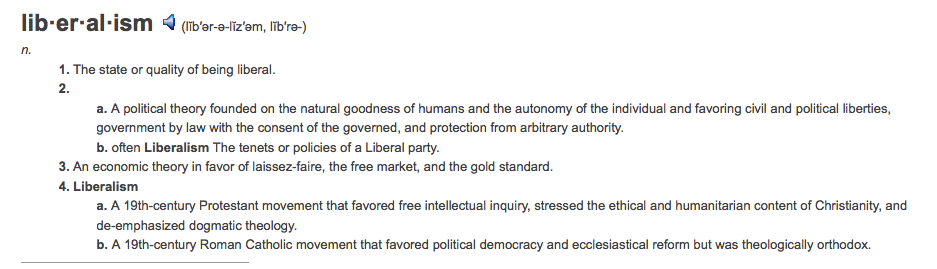
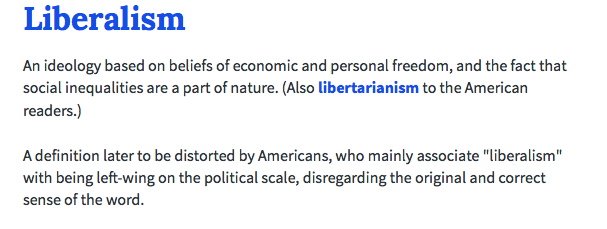
But, what is at the heart of liberalism?Screen Shot 2015-05-07 at 5.44.08 PMDoes the use of “free-market” in describing liberalism seem off?Screen Shot 2015-05-07 at 5.45.07 PMHum?
With American politics deeply embedded in education reform, it is no wonder we can’t figure out who the real enemies of public education are — “enemies” being defined here as any group or individuals wanting to dismantle the public system andThe Politics of Reform - The Crucial VoiceThe Crucial Voice:

Action Alert: @TeachForAmerica wants to Blow into Santa Ana Tomorrow | Cloaking Inequity

Action Alert: @TeachForAmerica wants to Blow into Santa Ana Tomorrow | Cloaking Inequity:


Action Alert: @TeachForAmerica wants to Blow into Santa Ana Tomorrow

Screen Shot 2015-05-11 at 5.07.32 PM
Are the Santa Ana winds going to blow in Teach For America tomorrow? Teach For America wants to gust into Santa Ana at a SAUSD Board meeting on 5.12.15. They want to teach special education, one of our most vulnerable exceptional populations. I received this letter from a concerned teacher and special education parent from Santa Ana.
Dear Parents, Educators and Employees of SAUSD,
I am writing to regarding a Board Agenda item up for approval tomorrow night in our district, Santa Ana Unified. A motion is being made to approve a contract with Teach For America for next school year. For numerous reason, this is a ill advised move for our district. I am told that the intention is to place these minimally trained college graduates (Recent research by Jameson Brewer has found that TFA teachers only spend 18 hours in classrooms during their five week summer training) in our Special Education classrooms. As a teacher for over 25 years working with many Special Education students, I know that what our Special Education population needs is highly qualified, well trained teachers and this is the opposite of what we will get if this contract is approved. As a parent of a Special Needs student in this same district where I work and teach, I would never allow my child to be taught by a temporary and untrained person, she needs a specialist, someone trained in meeting the needs of the most difficult to teach students.
I am shocked that I only found this information because a copy of the board minutes was forwarded to me by a concerned teacher. The failure to inform teachers and the community of this contract is inexcusable. For those that are unaware TFA is national non-traditional teacher training program that claims to support education equity. They offer college students with only a bachelor’s degree money to pay off loans, a five week training program and a full time teaching position for two years at a public school where they are given permission to teach have their own classroom and be fully in charge of a year of education for students, without attaining a credential or doing a student teaching internship. After two years the TFA teaching interns have the option to pursue a teaching credential or quit teaching and pursue a separate career. Many of them, in fact, do choose to move on and never teach in a classroom again. Many of these people have great intentions and it is not their intentions that I have a problem with. My problem is placing untrained people in the classrooms of our neediest and most difficult to teach and pretending like they are real teachers. TFA is funding by neoliberal foundations and has often scapegoats teachers by inaccurately saying their temporary teachers are preferable to veteran, certified teachers. TFA is funded by corporations like Walmart, who prefer to employ underpaid, often temporary labor with limited or no benefits. Consequently, TFA’s model is to staff and run schools in similar fashion. Our schools are not businesses, they must operate with only the best staff possible for our Special Education students.
Tina Andres
SAUSD Teacher and Parent of Special Education Student
california flagThe anonymous California TFA Special Education teacher (anonymous because she doesn’t want to be punished by Teach For America) from the post Teach for America alum letter to Board details threats, depression, and debt. Here are a few select quotes from her experience as a Teach For America Special Education teacher in California:
I was placed as a 2nd-5th grade Special Education Resource Specialist Teacher. As part of the TFA program, we were required to take classes through their partnered 
Action Alert: @TeachForAmerica wants to Blow into Santa Ana Tomorrow | Cloaking Inequity:

High number of expulsions at Western New York Maritime Charter School draw questions - City & Region - The Buffalo News

High number of expulsions at Western New York Maritime Charter School draw questions - City & Region - The Buffalo News:

High number of expulsions at Western New York Maritime Charter School draw questions

High attrition rate draws criticism in some quarters


The charter school located in a former warehouse on Genesee Street isn’t like other Buffalo charter schools.
That’s obvious from the uniform inspections students face as they walk through the door, and the framed photos that line the entryway, outlining the chain of command.
It’s obvious by the students who walk the halls, proudly wearing crisp, $500 uniforms with name tags, ribbons, bars and stars, courtesy of the U.S. Navy.
It’s also obvious by the students who aren’t there – the dozens every year who withdraw or get expelled at a rate two to five times higher than most other local charter schools.
“We don’t try to cover up anything,” said Lt. Col. Lawrence Astyk, the school’s commandant. “This is who we are.”
Western New York Maritime Charter School is either one of the most successful charters in Buffalo or one of the most controversial, depending on who you ask and how you view their data.
Many who attend the military-themed school clearly love it, having found a safe haven, clear expectations, academic support and a caring community of teachers and friends. The high school, founded in 2004, boasts a graduation rate of 85 percent – far above that of the Buffalo Public Schools and better than the state average.
But Maritime also has the highest attrition rate by far of any of Buffalo’s 15 charters. Roughly one out of every four students enrolled in Maritime last year were either expelled, suspended or withdrew, according to data tracked by the Buffalo district. Maritime administrators also acknowledge that the current senior class is only half the size of its freshman class.
That makes Maritime most susceptible to the criticism often lobbed by traditional public school advocates against charter schools: these independent schools excel because they have the freedom to throw out troublemakers and underachievers or persuade them to leave.
“Kids with discipline issues either are not accepted or are immediately told to leave,” said Larry Scott, a school psychologist in the Kenmore-Tonawanda school district and co-chairman of the Buffalo Parent-Teacher Organization. “Here you’re taking money from a traditional school district and sending those kids back to a traditional public school or not accepting them at all.”
Not all charter schools have high attrition rates. In fact, some of the highest performing Buffalo charters have attrition rates of 5 percent or less.
But Maritime is different; its leaders don’t pretend otherwise. Astyk said that if a charter school can’t have admissions criteria like City Honors School or Buffalo Academy of Visual and Performing Arts, then a military school like Maritime can at least have precise standards and consequences for students already enrolled.
That’s what makes it Maritime.
“They have to meet our standards of conduct,” Astyk said, referring to the school’s detailed rules that emphasize moral integrity and leadership, as well as academic effort and physical fitness. “You can be on the honor roll, but if you’re not meeting the other standards, you’re going to be out of here.”

It works for many

There’s no denying that for some students, Maritime is a blessing. Students who have struggled in other public and charter school settings have found a path to success within the walls of a school adorned with old flags, naval posters and other nautical displays.
Maritime was established 10 years ago for high school students who could benefit from the discipline, structure and support offered by a school affiliated with the Navy Junior ROTC program. Maritime’s student cadets are all JROTC participants; more than three-quarters come from the city.
In the early days, many kids were enrolled at Maritime against their will by fed-up parents who saw the school as a place where their kids would be forced to shape up. Astyk said that’s not the case any longer.
Senior Nadia Perri is a good example. The 18-year-old was flunking at Niagara Falls High High number of expulsions at Western New York Maritime Charter School draw questions - City & Region - The Buffalo News:

Public School Takeovers – When Local Control is Marked ‘White Only’ | gadflyonthewallblog

Public School Takeovers – When Local Control is Marked ‘White Only’ | gadflyonthewallblog:

Public School Takeovers – When Local Control is Marked ‘White Only’

segregated


Do you like Democracy?
Then you’d better not be poor or have brown skin.
Because in America today we only allow self-government to rich white folks.
Sad but true.
American public schools serving large populations of impoverished and minority children are increasingly being taken over by their respective states.
People of color and people living in poverty are losing their right to govern their own schools. They are losing a say in how their own children are educated. They are losing elective governance.
Why? No other reason than that they are poor and brown skinned.
The most recent example is Holyoke Public Schools in Massachusetts.

Just two weeks ago, the state education board moved to place Holyoke schools in receivership.
So later this spring out goes the elected school board and in comes either an individual or non-profit organization to take over running the district.
On what grounds?
Well, Holyoke is a city of about 40,000 residents in the western part of the state. According to the most recent U.S. Census Bureau figures, 31.5% of the city’s residents live below the poverty level – nearly three times the state average.
Nearly half of Holyoke students do not speak English as a first language and nearly 30 percent are English-language learners. Eighty-five percent of Holyoke students come from low-income households.
But those aren’t the reasons given for the state takeover. It’s poor test scores and high dropout rates.
The state board can’t just come out and admit it’s waging class and race warfare against its own citizens. Instead, out comes the racist dog whistle of test scores and accountability.
If those kids had just filled in the right bubbles on their standardized tests, freedom would continue to ring in Holyoke. If more kids didn’t become frustrated and drop out, the district would be a haven to rival ancient Athens.
Never mind that poor students almost always score lower on standardized tests than rich kids. Never mind that children trying to learn English don’t score as high as kids who have been speaking it since before preschool.
However, these “alarming trends” are actually improving – just not fast enough for the state.
The graduation rate climbed from 49.5 percent in 2011 to 60.2 percent in 2014. The dropout rate also has improved. However, when compared with richer, whiter Public School Takeovers – When Local Control is Marked ‘White Only’ | gadflyonthewallblog:


What's Up With That Big Grant to the Atlantic Monthly From the Walton Family Foundation?

What's Up With That Big Grant to the Atlantic Monthly From the Walton Family Foundation? - Inside Philanthropy: Fundraising Intelligence - Inside Philanthropy:

What's Up With That Big Grant to the Atlantic Monthly From the Walton Family Foundation?


We've been saying for a while that the tight new embrace between journalism and philanthropy is tricky, and for some obvious reasons. Foundations have agendas, and so when they give money to media outlets, you can't but wonder how that might influence coverage. 
Last year, we reported on the controversy around a big grant from the Arnold Foundation—which favors pension reform—to support a television series called Pension Peril at the PBS station in New York, WNET. The money was returned after public criticism.
We've also noted a double standard at work in scrutinizing this funding, and how some large foundation grants to media outfits attract very little scrutiny, even though they should—for example, the generous support to public radio by two foundations with a progressive agenda, Ford and Robert Wood Johnson, for coverage of specific issues, such as healthcare and inequality. If the Koch brothers made similar grants to media outlets, you can bet there'd be a firestorm. Ford has also given over $1.5 million to the Los Angeles Times in recent years. 
Still, it doesn't feel great to complain about philanthropic support of journalism at a time when serious media outlets are struggling to survive. What's more, evidence that funding has any impact on coverage is hard to come by and—anyway—the old model of relying on corporate advertising was filled with conflicts as well, and media created rules to mitigate those conflicts. 
All of which is important context for spotlighting a grant of $550,000made last year by the leading philanthropic proponent of charter schools, the Walton Family Foundation, to the Atlantic Monthly, a storied magazine that's been commanding attention from the nation's educated elite for a century and a half. The grant was made as part of Walton's effort's to shape public policy, with the foundation describing its goal in this area as catalyzing a "national movement demanding choice and accountability."
So how, exactly, does the Atlantic help the foundation advance it's game plan? 
That's a good question. The money funded two live events hosted in partnership with the Aspen Institute, a Washington D.C. based think tank. The first was the Washington Ideas Forum 2014 which featured participation by U.S. Senators John Barrasso (R-WY), Joe Manchin, III (D-WV) Delaware Governor Jack Markell (D) and U.S. Defense Secretary Chuck Hagel Chief along with ABC News’ White House Correspondent, Jonathan Allen and the Atlantic Monthly’s National Correspondent, James Fallows. The second event is the Aspen Ideas Festival 2015  scheduled for June 25 – July 4, 2015 in Aspen, Colorado. These gatherings are billed as forums where participants have the opportunity to hear from influential leaders who “discuss the ideas and issues that both shape our lives and challenge our times.” Past sponsors include the American Federation of Teachers, Mount Sinai, PBS, Toyota, and the Gates Foundation. The Aspen Institute and the Atlantic retain editorial control of the events including who speaks and what topics get covered. 
We should note that beyond big grants to pro-charter advocates, Walton gives money to a wide variety of institutions under its public policy What's Up With That Big Grant to the Atlantic Monthly From the Walton Family Foundation? - Inside Philanthropy: Fundraising Intelligence - Inside Philanthropy:

Thompson: Did Fordham Accidentally Offer Support for Socio-Economic Integration, Not School Closures?

This Week In Education: Thompson: Did Fordham Accidentally Offer Support for Socio-Economic Integration, Not School Closures?:

This Week In Education: Thompson: Did Fordham Accidentally Offer Support for Socio-Economic Integration, Not School Closures?


It would be easy to read the Forward to School Closures and Student Achievement, by Fordham’s Aaron Churchill and Mike Petrilli, and prejudge the paper as a similar piece of “astroturf” spin. But, the actual study of Ohio school closures, by Deven Carlson and Stéphane Lavertu, is solid. Their work will be a particularly valuable contribution to education research when it is not misused in support of scorched earth edu-politics where school closures are often used as an anti-union, anti-teacher battering ram.
It is possible to connect the evidentiary dots the way that Fordham does. A careful reading of the study gives as much evidence in opposition to closures as a school improvement strategy as it does in support of Churchill's and Petrilli's soundbites. 
Carlson and Lavertu note, "most of the few existing studies that rigorously examine the impact of school closure have found short-term negative effects (presumably from student mobility) and no discernable long-term effects on student achievement." So, if their study and future research does not conclude that closures produce more benefits than harm, it argues against the Fordham position.
Carlson's and Lavertu's findings "suggest that school-closure policies can yield academic benefits for displaced students so long as there are higher-quality schools nearby that students can attend." Of course, that is a huge "IF." The district schools that were closed were 92% low-income and 73% black. The non-closing schools in the districts studied were 85% low-income and 59% black. Even in this sample, 40% of students were placed in schools that were not higher-performing.
The study also analyzes the closing of charter schools. They were 74% low-income and 73% black.  Non-closing charters were 72% low-income and 54% black. That would be a topic for another post.
Moreover, those statistics are consistent with other research showing the benefits of socio-economic integration in schools and in housing. So, in light of the reappraisal of the Moving to Opportunity program and Robert Putnam's Our Kids, the increases in student performance might not be the result of competition that increases segregation. The gains may be due to a reduction of segregation.
Although you wouldn't know it by reading Churchill's and Petrilli's Forward, a strength of the study is that it gives two possible baselines to be used in calculating the effects of school closes. The Forward showcases the first, I'd say less meaningful baseline. The disruption and demoralization which accompanies the closing of a This Week In Education: Thompson: Did Fordham Accidentally Offer Support for Socio-Economic Integration, Not School Closures?:

Why kids who aren’t poor are now getting free and reduced-price school lunches - The Washington Post

Why kids who aren’t poor are now getting free and reduced-price school lunches - The Washington Post:

Why kids who aren’t poor are now getting free and reduced-price school lunches


 It used to be that students from families with low incomes qualified for lunches that were either free or available at a reduced price. That’s still true — but now, new federal rules allow kids who aren’t poor at many schools to get the same thing.

The change in the rules means not only that more kids will get to eat free- and reduced-price lunch but that what had been broadly used for years as a proxy for poverty rates among schoolchildren will no longer be useful for that purpose. Policymakers and researchers will have to find another measure of poverty. As the Hechinger Report notes in this story:
Education researchers often look at whether an instructional technique works as well with low-income students as it does high-income students, for example. Without reliable poverty figures for each school, that kind of analysis will be inaccurate. Many programs, including billions in federal Title I dollars for disadvantaged students, are tied to lunch statistics.  Philanthropic grants are given out this way, too. States and districts are scrambling to figure out how to allocate budget funds among schools without the precise school-lunch figures. New York City was so concerned about putting its federal dollars in jeopardy that it didn’t participate in free lunch for all this year. (Only children who are poor enough receive it). 
Under the federal Free and Reduced-Price Lunch Program, which was established in 1946 during the presidency of Harry Truman, students whose families earned no more than 85 percent above the federal poverty line and below that amount could qualify. The percentage of students who qualified has been going up over the years, with some 38 percent in 2001-02 to at least 50 percent by 2011-12.  That is different from the official poverty rate of children under 18, which rose to 23 percent in 2013.
New rules that went into effect this year allow for something called the “Community Eligiblity Provision,” which allows schools and districts to provide free breakfast and lunch to all students if at least 40 percent of them of them would have qualified by the old rules.  Updated guidance released in April from the U.S. Agriculture Department, which administers the nutrition program, said that participating schools no longer have to require families to complete individual applications. (It was these applications that researchers and policy-makers had used to get data they found useful.) The guidance says:
First rolled out in pilot states beginning in School Year (SY) 2011-2012, CEP became available for nationwide implementation this school year.  As a result, in SY 2014-2015, approximately 14,000 schools in more than 2,000 local educational agencies (LEAs) serving more than 6.4 million children elected to participate in CEP for its ability to both reduce administrative burden and increase access to school meals for children in low income communities. While Food and Nutrition Service (FNS) is encouraged by the significant response, we know more children can benefit from CEP.
Why is the federal government doing this? As noted above, it will reduce paperwork for families and schools, but it will also help reduce the stigma that some children feel about eating in a government-funded program at school. You can read more about the program here. The ultimate cost of the program is unclear because nobody yet knows how many students will participate.
States with the highest percentages of students who qualified for free- and reduced-price lunch in 2012 included Mississippi, at 71.5 percent; New Mexico, at 68.5 percent;  and Louisiana, at 67.1 percent.Why kids who aren’t poor are now getting free and reduced-price school lunches - The Washington Post:
Valerie Strauss covers education and runs The Answer Sheet blog.

Common Core critics allege conflicts, seek ethics changes

Common Core critics allege conflicts, seek ethics changes:

Common Core critics allege conflicts, seek ethics changes


BATON ROUGE, La. (AP) — The bitter feud over the Common Core education standards has grown increasingly personal, with critics of the standards raising conflict-of-interest allegations against state education leaders and seeking new ethics restrictions for them.
Unable so far to force an end to Louisiana's use of Common Core, opponents of the multistate standards are targeting Superintendent of Education John White directly, asking lawmakers to enact tougher ethics limits for White and members of the state education board.
The suggestion is that White has had improper influence from outside groups pushing Common Core and that's why he's such a staunch supporter of the English and math standards adopted by more than 40 states. He denies any improprieties — and the state ethics board cleared him after a complaint was filed.
The toughened ethics proposals, backed by Gov. Bobby Jindal, are scheduled for their first hearing Tuesday in the House and Governmental Affairs Committee.
They are the latest salvo in a fight that has grown increasingly nasty since Jindal — once an ardent supporter of Common Core — announced his opposition to the standards a year ago. By switching positions, Jindal broke with White, his hand-picked education superintendent, and education board members who had once been the governor's key allies.
Ethics complaints have been filed against White and members of his education department, and Common Core critics have repeatedly accused the superintendent and his supporters on the Board of Elementary and Secondary Education, known as BESE, of conflicts of interest and questionable behavior.
"This is a political assault is what this is, period," said BESE Chairman Chas Roemer, a Common Core supporter, blaming the Jindal administration for what he called an attack on White's integrity.
Jindal administration officials deny any orchestrated effort against the superintendent.
But, among other things, the bills pushed by Jindal — sponsored by Reps. Bob Hensgens, R-Abbeville, and Barry Ivey, R-Baton Rouge — seek to target affiliations White has with outside education organizations.
They would prohibit BESE members and the state superintendent from membership in nongovernment organizations that requires adoption of certain education standards or policies, unless lawmakers have approved those standards or policies.
And they would add new restrictions on BESE members, the superintendent and their family members having connections to entities that can get contracts or do work with the board or education department.
Jindal didn't name anyone when describing his support for the legislation, calling the bills "common sense." He said he and others have had concerns about "inappropriate influence" in states that have adopted Common Core, without mentioning that he signed onto the standards when White wasn't yet superintendent.
The Republican governor, a likely 2016 presidential candidate, said the bills would make sure Louisiana's education leaders don't have conflicting loyalties because of Common Core critics allege conflicts, seek ethics changes:

Review of Dramatic Action, Dramatic Improvement | National Education Policy Center

Review of Dramatic Action, Dramatic Improvement | National Education Policy Center:

Review of Dramatic Action, Dramatic Improvement


Tiffany D. Miller and Catherine Brown
Center for American Progress
March 31, 2015
May 11, 2015
Dramatic Action, Dramatic Improvement: The Research on School Turnaround advocates for implementing the most effective, research-based methods for turning around low-performing schools through the federal School Improvement Grant (SIG) program. It argues that the available body of research points to five dramatic actions that are necessary to bring about dramatic school improvement. Unfortunately, the rationale for its assertions is narrow, incoherent, and misleading. This limitation stems from the report’s unsystematic review of literature, resulting in its failure to incorporate lessons from large bodies of research on high-stakes accountability, school improvement, and the emerging evidence on school closures and federally funded turnarounds—all of which reveal that the federal SIG program’s turnaround policies are based on unwarranted claims and are contradicted by the empirical evidence. Consequently, the report’s recommendations are unsupported by rigorous research. Like the SIG program itself, the report promotes seemingly bold school changes that appear seductive on the surface. But when compared to the real evidence on school turnarounds, their evidence-based foundation vanishes. In the end, schools, districts, and states that follow the report’s advice stand to reproduce the unequal conditions that have led, in part, to their need for dramatic turnaround in the first place.
Think Tank ReviewDOWNLOAD/PRINT

“Freddie Gray was about education.” | educationalchemy

The Push to Close Langston Hughes Elementary School in Park Heights Baltimore Leaves Community Skeptical of the Motives | educationalchemy:

The Push to Close Langston Hughes Elementary School in Park Heights Baltimore Leaves Community Skeptical of the Motives


 “Freddie Gray was about education.”

“We teach our kids how to add, but they need to learn social skills…and life skills”
“They want to close our school down and send our kids into a drug infested neighorhood…why?”
“So here we go”
These statements were spoken at a school-closing meeting about Langston Hughes Elementary School. The school is slated for closure by 2015. The community is fighting back to keep their public school. Langston Hughes Action Committee, a neighborhood group, has appealed the school board’s decision.
So let’s back track to see how we got were.
The School:
Langston Hughes Elementary is the best performing school in Park Heights (a Baltimore City neighborhood). It has the highest academic achievement rating of all the neighboring schools. The community loves this school. They see it as a corner stone of their neighborhood. It has a sound and well maintained infrastructure including a full size cafeteria and a playground. Generations of community members have attended this school. For the last ten years Langston Hughes has been home to approximately 220 students grades k-5.
What Will Happen to the Children if They Close the School?
The school they want to send them to is a lower performing one in neighboring Pimlico Elementary Middle School which was built in 1910 and has problems with overcrowded classrooms, lead paint and asbestos. Pimlico is scheduled for the first round of renovations under the 21st Century Schools Plan. This move means that even more neighborhood students would endure several years of lead and asbestos abatement and renovations.
Children as young as six or seven would have to walk about one mile to Pimlico through a high crime, high drug, and high traffic area to get to school every day. Then once they’re at school, they’ll spend every day exposed to toxic chemicals that will create permanent developmental and health problems.
Pimlico has lost over 100 students in the last few years—Langston Hughes is in better condition than Pimlico and has a better reputation.
How is this Possible?
When the school commissioners accepted a challenge to visit the school, many didn’t even know where the school was. The school board members do not reflect the demographic of the community. They were surprised at how well kept it was. They declined to take the walk from Langston Hughes to Pimlico. Despite a positive impression, they voted for closure anyway. School system representatives have also stated they have no need to talk to parents. They have any right to close any school they want without talking to anyone.
There is a $1.1 billion school construction budget for Baltimore city schools. Part of this budget includes mandated closure of 26 schools. As a result, communities are pitted against each other to save their schools. The Langston Hughes building is the only school in the major redevelopment area. It’s pretty clear to members of the Park Heights neighborhood that the plan for this community is gentrification—it starts with school closings. The school is clearly on a list of schools that charters are allowed to move into, which seems to be contrary to what Dr. Thornton told Helen Atkinson of theTeachers Democracy Project at a board meeting. Leaders of the Park Heights community have been informed verbally and by email that a charter school would like to use the building.
There are 8 COMAR regulations regarding closing schools—they are using 1 to justify this closure—low school The Push to Close Langston Hughes Elementary School in Park Heights Baltimore Leaves Community Skeptical of the Motives | educationalchemy:

Louisiana RSD Charters Victim of a “Legislative Raid”? | deutsch29

Louisiana RSD Charters Victim of a “Legislative Raid”? | deutsch29:

Louisiana RSD Charters Victim of a “Legislative Raid”?


We have an interesting situation in Louisiana regarding the now-permanent Recovery School District (RSD):
On May 6, 2015, the Louisiana House education committee passed a bill requiring schools that are no longer “failing” to return to the local districts from whence they came, House Bill 166.
HB 166 also states, “all rights and responsibilities of ownership regarding all land, buildings, facilities, and other property that are part of the school being transferred shall also be returned to the local public school board.”
RSD was never meant to be permanent. Even pro-charter Cowen Institute declared as much in its 2003-2011 report:
Intended as a mechanism for restructuring and reform, the RSD was never meant to be a permanent part of the public school governance landscape in New Orleans. Instead, the RSD was meant to take control of and turn around chronically failing schools for an initial period of five years. After that time, and assuming adequate school improvement, schools would be released from the jurisdiction of the RSD and returned to their local school board.
In 2010, then-state superintendent Paul Pastorek came up with the idea to allow “high performing” schools to remain in RSD. The state board (BESE) passed this plan in December 2010. The plan also included the possibility of schools leaving RSD if they were still “failing” after five years. However, such transfer would require BESE approval.
In short, Pastorek’s proposal virtually guaranteed RSD stability and permanence in the Louisiana education landscape and provided the means for a charter-friendly BESE to create a 100-percent RSD New Orleans charter district, consisting of 73 schools in 2014-15.
HB 166 threatens to diminish the state’s power over schools that are determined as “no longer designated as a failing school”– though the language of HB 166 does not include the specifics on such designation.
The author of the bill, Representative Joseph Bouie, believes this number to be now at 46 schools, as noted in a May 6, 3015, nola.com article:
“We have 46 schools that should be back under the local board,” said HB 166’s sponsor, Rep. Joseph Bouie, D-New Orleans. The charter boards would continue to run the schools, but they would be overseen by the local authority, not the state.
Charter boards “being overseen by the local authority” could mean a greater possibility that these schools are thoroughly and regularly monitored and audited– something that has yet to happen in comprehensive, systemic fashion to those Louisiana RSD Charters Victim of a “Legislative Raid”? | deutsch29:


Local Accountability: Community Input in Education Funding | Cloaking Inequity

Local Accountability: Community Input in Education Funding | Cloaking Inequity:

Local Accountability: Community Input in Education Funding


giphy


Will a community-based approach to accountability and school funding work? This piece will contain a lot of acronyms and include some of my insights on the implementation of Local Accountability.
I’m a classroom teacher in Sacramento City Unified School District, and large urban local in California (43,000 students, 38% are English Learners, and over 60% are low-income). I am also active in my union local, Sacramento City Teachers Association, and I was elected as a representative to the State Council of the California Teachers Association (CTA). The opinions in this piece are only my own, and do not necessarily reflect those of either my school district, my local, CTA or NEA. I also blog at Reflections on Teaching.
This discussion centers around the new funding formula being used to allocate how California gives money to local school districts. For a host of reasons (lawsuits requiring funding-equity, Proposition 13 affecting local property taxes as a funding base for education, etc.) school monies in California for most districts come from the state. Traditionally, that has been in the form of base funding, and what are called categoricals, or specific funds for specific purposes, like English Language Acquisition funds, Foster Youth Programs, Migrant Programs, etc. Governor Brown has come up with a new formula that will allocate extra money, but allow local districts to come up with plans for how it will be spent. This is called Local Control Funding Formula or LCFF. The plans that districts have to write are called Local Control Accountability Plans (LCAPs).
The commentary from a previous guest blogger here on Cloaking Inequity and their discussion about Local Accountability pretty much agrees with what I’ve seen. Implementation of LCFF in the first year is all over the map throughout the state. Dictatorial and controlling districts are writing LCAPs that do not have any meaningful stakeholder input. Other districts are involving teachers representatives in a variety of areas of discussion like curriculum and instruction. Some districts have already had contract provisions for this, and for site-based decision making. Some districts have had well functioning school site councils (which included teacher, community and parent representatives) that are able to contribute to this process. Others sadly, still have SSCs that are a rubber-stamp for the site administrator or the district. Many districts are just confused.
Two things will likely need to be “tightened” in how LCAPs are created. First, the implementing language says districts must “consult” with stakeholders (teachers, parents, community). That word, consult, has lost any meaning at this point. For example, a district will hold a town hall on a issue, present their side, and take some questions. They will then proceed with their original proposal, without any changes or input from this meeting, and claim they “consulted” the public.
This happened in DC with Rhee, and in districts run by Broad Superintendent (it’s in their rule book) and gone on to be a widespread practice. Consult has come to mean, “We’ll tell you what we’re doing, listen to you whine about it, then do it anyway.” This was a concern that I heard more than once at CTA State Council in March of this year.
They will either need to define “consult” better, or add other language like “based on a consensus of opinion from stakeholders” (this  language suggested by one State Council member). The state and CTA are saying we need to give the process time and look at it after the first year and that’s fair enough. But, I don’t think these problems will resolve themselves without districts being forced to change how they do Local Accountability: Community Input in Education Funding | Cloaking Inequity:

L.A. Unified needs to do its homework on college-prep standards - LA Times

L.A. Unified needs to do its homework on college-prep standards - LA Times:

 L.A. Unified needs to do its homework on college-prep standards


It’s much easier for members of the L.A. Unified school board sitting on the dais to pass stringent and unrealistic new standards than it is for teachers on the ground to carry them out. Case in point: the district’s requirement that all students take the full schedule of college-prep courses — and earn a grade of C or better — if they want to graduate. It isn’t working.

Passed a decade ago but given 12 years to be fully implemented, the graduation requirement was big on good intentions but short on common sense. School activists were right to demand change in 2005; the situation was unacceptable. Too few students even tried to take the courses, known as the A-G series, required for admission to the University of California and California State University. In many high schools, especially those where disadvantaged students were enrolled, the courses weren’t even available. When they were, black and Latino students were commonly discouraged from taking them or were automatically signed up for an easier set of courses without being told what their options were.

Still, there’s a big difference between encouraging higher standards and setting students up for failure. The board based its policy on a similar effort in the San Jose schools without doing enough research to lean that the supposed success in that district was based on misreported data.

Now L.A. Unified faces its own embarrassing confrontation with reality: As many as three-fourths of its high school sophomores aren’t on track to meet the college-prep graduation standards that take effect in two years, according to district research. The results could be catastrophic. The requirement also has led to a narrowed curriculum and the dropping of elective classes.

The board obviously must heed Supt. Ramon C. Cortines and back away from the policy. In fact, it should drop the A-G requirement altogether and find more effective ways to prepare larger numbers of students for college.

All students must be guaranteed access to the full series of college-prep courses, and they should be encouraged to try taking them. Perhaps A-G should even be the default curriculum, unless students opt out. The board should require regular reports from schools on how many students are taking the courses and, of those, how many are maintaining grades of C or better. It should publish the data and intervene when numbers are disturbingly low.L.A. Unified needs to do its homework on college-prep standards - LA Times:

What Exactly Are Charter Schools Accomplishing for the Educational System? - NPQ - Nonprofit Quarterly

What Exactly Are Charter Schools Accomplishing for the Educational System? - NPQ - Nonprofit Quarterly:

What Exactly Are Charter Schools Accomplishing for the Educational System? 


 Last week was National Charter School Week, and endorsing this celebration of charter schools was President Barack Obama, who issued a presidential proclamation. The president was unabashed in his praise of high performing charter schools. (Of course, no one defends low-performing charter schools, or low-performing anything for that matter, but the descriptor is usually trotted out to make sure that charter school adherents aren’t simply saying that charters are good simply because they are charters and not traditional public schools.)

To understand where the leader of the nation sees charter schools, it is worth quoting from his proclamation at length:
“During National Charter Schools Week, we recognize the role public charter schools play in providing America's daughters and sons with a chance to reach their fullest potential, and we recommit to strengthening our nation’s classrooms for all…. As independent public schools, charter schools are able to try new models of learning and methods that encourage academic excellence and set students on a path to success. They are laboratories of learning and incubators for the ideas of tomorrow, but this flexibility comes with high standards and accountability. When a charter school does not measure up—when one is underperforming and not improving—we must make the tough decision to shut it down. But when charter schools are successful, they can help spur systemic reform, and their approaches can be replicated in classrooms across America. Today, especially in some of our nation’s most disadvantaged communities, successful charter schools are an important partner in increasing access to a high-quality education and closing the achievement gap…. Today, our nation’s very best charter schools are gateways to higher education and endless possibilities, lifting up students of all backgrounds and empowering them to achieve a brighter future. This week, we honor the parents, educators, and civic leaders who make the vision of charter schools a reality, and we continue our work to safeguard the promise that an education—one that expands horizons, challenges minds, and inspires a new generation of thinkers, doers, and dreamers—is within the reach of every girl and boy.”
In an interesting way, the president highlighted something about charter schools that has been increasingly lost in the debate. He noted, as many of the original promoters of charter schools did, that they were mean to “spur systemic reform, and…be replicated in classrooms across America.” In essence, they were yardstick competition for traditional public schools, meant to test different ideas, see whether they worked with curriculum and teaching methods, and then propagate those methods back into public schools. Increasingly, however, charter schools have become an institutional prerogative themselves, not to test things that aren’t being done in the best public schools around the country, but to demonstrate alternatives to the public school systems themselves. Yes, we know that charter schools are components of public school systems, but they are frequently articulated and promoted as alternatives to public schools despite being (partially) funded by and embedded within public school systems.
Paul Thomas, a professor at Furman University in South Carolina, took a critical eye to National Charter Schools Week, basically taking aim at the hype and overstatement behind the movement. Like the president’s widely circulated proclamation, Furman’s less-well-circulated essay on AlterNet also merits some extensive quotation:
“Political praise for charter schools emanates from both sides of the aisle; nearly every conservative call for education reform extols charter schools, with said accolades usually accompanying calls for the holy grail of free-market thinking in the educational realm: more parental ‘choice.’ But no amount of proclaiming and rallying can upend the evidence, which is not good for the charter school camp…Perhaps we should use this week less for celebration and more to seriously consider the evidence. What, exactly, are we meant to celebrate about charter schools? What have they achieved?
[…]
“In an analysis of charters conducted for the Shanker Institute, researcher Matthew Di Carlo has concluded that ‘there is nothing about ‘charterness’ that leads to strong results.’ In other words, there is nothing about a school being identified as a charter school that excludes other types of schools (regular public, private) from adopting the same policies or practices; there is also nothing about a school operating as a charter school that specifically leads to success…But if there’s nothing about the structure of charters that separates them from the pack, are we celebrating charter schools because of superior student achievement?
[…]
“Charter, public and private schools have about the same range of student outcomes. As Di Carlo stressed in his report, what we know to be true is that the type of school structure matters far less than what schools do and who the students are…. Are we celebrating charter schools for those ‘miracles’ that can serve as models for reforming all public schools? […] Miracle schools have overwhelmingly been discredited. They are not miracles at all, we discover, once the data are examined and the claims analyzed by researchers and scholars not associated with the schools…Strip away the unsubstantiated claims and you’ll see that the appeal of charters is mostly about ideology and emotion, amplified by stories of individual children who appear saved by charter schools.
[…]
“When the president asks us to celebrate and increase support for charter schools—which are essentially little different from the public schools they seek to reform—he has missed the larger point. We don’t need feckless celebration; what we need are the social reform policies and support of public schools that would render school choice entirely unnecessary.”
Both President Obama and Professor Thomas are struggling with a similar question: Exactly what are charter schools supposed to be demonstrating? Yardstick competition to improve public school systems is one thing, but it has become increasingly submerged in a wave of support for charter schools primarily because they aren’t traditional public schools. For those of us who actually had a hand in setting up (or, in this author’s professional experience, helping finance the real estate acquisition and development of) charter schools, sometimes the charter school celebration seems to be about something other than the educational experience of K-12 kids, either in charters or traditional schools.—Rick CohenWhat Exactly Are Charter Schools Accomplishing for the Educational System? - NPQ - Nonprofit Quarterly: