Wednesday, January 8, 2020

2020 Teachers’ New Year’s Resolutions: 2. Teach your students, not “the test” | Live Long and Prosper

2020 Teachers’ New Year’s Resolutions: 2. Teach your students, not “the test” | Live Long and Prosper

2020 Teachers’ New Year’s Resolutions: 2. Teach your students, not “the test”


2020 Teachers’ New Year’s Resolutions
2. Teach your students, not “the test”
It’s a new year and as is our custom here in the USA, we make resolutions which, while often broken, can be redefined as goals toward which we should strive.
NEW YEAR’S RESOLUTION #2
  • Teach your students, not “The Test.”
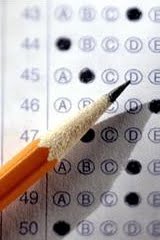
NO, DON’T TEACH TO THE TEST
I taught third grade in the mid-1970s. At that time the State of Indiana didn’t require standardized testing for evaluation of teachers or promotion of third graders. Nevertheless, my school system used standardized tests in grades three, six, eight, and ten. The purpose of the test was to see how our students were progressing and to diagnose any specific problems. We were specifically told by the administration not to “teach to the test.” It wasn’t professional!
When the results came back (always within a couple of weeks) we were able to see how each of our students was doing in particular areas, and plan our instruction accordingly.
10 years later, Indiana started the ISTEP. We were still told to remain professional and not to “teach to the test.”
NCLB — YES, TEACH TO THE TEST
In 2001 everything changed. No Child Left Behind shifted the attention from students to test scores. No longer were we told not to teach to the tests. Teaching to the tests was now encouraged because, we were told, the test covered CONTINUE READING: 2020 Teachers’ New Year’s Resolutions: 2. Teach your students, not “the test” | Live Long and Prosper
2020 Teachers’ New Year’s Resolutions: 1. Read aloud | Live Long and Prosper - https://wp.me/pUgLi-1rM

NYC Educator: On Teacher Morale

NYC Educator: On Teacher Morale

On Teacher Morale

Our school is generally a good place to work. Sure, there are things to complain about, and I spend a good portion of my time complaining about them and/ or trying to fix them. Nonetheless, I'm gonna go out on a limb here and say that, having gotten rid of two really insane supervisors recently, we haven't got any more of them. Of course, that could change at any moment, but for now I'd say we're beating the odds.

What are the odds? I'd say maybe one in three you get some lunatic telling you what to do. Of course it's not completely their fault. There's a whole lot of trickle-down crap from the geniuses in Albany, and it's all you can do these days to get in there and teach anything that students actually need to know. Making a jump from one school to another, though, is risky business.

I've long maintained that "getting out of the classroom" is just not a worthy goal. Anyone harboring such a goal doesn't love teaching and likely as not doesn't know how to do it well. The most efficacious way to get out of the classroom is to go into supervision. Sure, you have to go through the C30 process, but there's no guarantee the person the C30 board likes will get the gig. You know, if you happen to be spending Wednesday afternoons with the superintendent over at the Comfort Inn you might have the inside track. If your mommy works at Tweed that wouldn't hurt either.

Yesterday I was discussing so-called emergency sixth classes with a supervisor. The supervisor said, "I used to get a hundred applications for every opening, but now it's really tough to find people." That kind of amazed me. The supervisor theorized that perhaps people, comfortable with whoever is Danielsoning them, don't want to take a chance with CONTINUE READING: 
NYC Educator: On Teacher Morale


Slaying Goliath: Diane Ravitch’s New Book Traces a Quarter Century of Public Education Disruption | janresseger

Slaying Goliath: Diane Ravitch’s New Book Traces a Quarter Century of Public Education Disruption | janresseger

Slaying Goliath: Diane Ravitch’s New Book Traces a Quarter Century of Public Education Disruption


In her new book, Slaying Goliath: The Passionate Resistance to Privatization and the Fight to Save America’s Public Schools, Diane Ravitch summarizes, defines, and humanizes the widespread attack that has threatened public education across the United States in the past quarter century. And she tracks an encouraging backlash, a growing resistance led by dogged individuals, community organizations, and organized schoolteachers.
What’s been called corporate-accountability-based, test-and-punish school reform is something we’ve all watched over the years—nationally in No Child Left Behind and Race to the Top—statewide as school budgets have been stretched to pay for privatized charters or vouchers—and locally as our children began taking too many standardized tests, our local schools began receiving letter grades on state report cards, or students left the local public school for a nearby charter school.
With only scanty newspaper coverage to guide us, however, we may have struggled grasp the ideology behind this war on public education or see how all the lines of attack were converging to discredit public schools and the work of local teachers.  Diane Ravitch, the education historian, has done us all an enormous favor with this new book.
Ravitch defines the ideology of the war being waged on public education by a giant army. Ravitch names the so-called “school reform” movement a Goliath-sized experiment in disruption.  Goliath’s work can be seen in “the wreckage that the so-called ‘reform’ movement had created by demonizing teachers as if they were adversaries of their students and treating them as malingerers who required constant evaluation lest they fail to do their duty…. (in) the damage inflicted on public schools, their students and teachers, by heedless billionaires who had decided to disrupt, reinvent, and redesign the nation’s public schools…. (in) the work of  CONTINUE READING: Slaying Goliath: Diane Ravitch’s New Book Traces a Quarter Century of Public Education Disruption | janresseger

Jersey Jazzman: Hoboken, NJ Charter Schools: An Update for 2020

Jersey Jazzman: Hoboken, NJ Charter Schools: An Update for 2020

Hoboken, NJ Charter Schools: An Update for 2020


Long time readers know I have always thought one of the most interesting charter school sectors in New Jersey, if not the United States, is in Hoboken. A small city across the Hudson from Manhattan, Hoboken has undergone a period of extraordinary gentrification over the last several years. As detailed in a great book by Molly Vollman Makris --  Public Housing and School Choice in a Gentrified City; Youth Experiences of Uneven Opportunity -- Hoboken's charter schools have become an alternative system of schooling for affluent parents in a city that still has large numbers of children living in public housing and experiencing economic disadvantage.

I interviewed Molly back in 2015, and she made an important point: segregation is not an issue that can be laid entirely at the feet of Hoboken's charter schools. There are, in fact, many factors involved in why Hoboken's schools enroll the student populations they do. But the charters, as Molly put it, are part of the reason the city hasn't been able to adequately address the realities of segregation:"So I don’t think the charters and intra-district school choice are creating segregation so much as inhibiting desegregation. I think we all could do a better job."

Other than a few visits with family, I haven't been back to Hoboken much since I did that interview. But I've kept my eye on the city, if only because I think it's a unique case study in CONTINUE READING: 
Jersey Jazzman: Hoboken, NJ Charter Schools: An Update for 2020


Wash Met Closing on Jan 9 Education Town Hall – Education Town Hall Forum

Wash Met Closing on Jan 9 Education Town Hall – Education Town Hall Forum

WASH MET CLOSING ON JAN 9 EDUCATION TOWN HALL


On our January 9 show, the first of 2020, Education Town Hall will be talking with four current students at DCPS’s Washington Metropolitan high school about their journey, and that of their fellow Washington Met students, since learning right before Thanksgiving that DCPS proposed closing their school.
Listen at 11 a.m. EASTERN on Thursday, January 9, via TuneIn or by visiting We Act Radio and clicking on arrow at upper left (NOTE: Not all “listen” buttons are working at present).
Guests:
  • Lyric Johnson: 16 years old and on the DCPS chancellor’s cabinet; came to Wash Met in middle school
  • Na’Asia Hawkins, 18 years old, arrived at Wash Met after 2 years out of school; has 2-year-old son
  • Travius Butler, 17 years old, arrived at Wash Met after leaving Woodson HS; hopes to enter the military
  • Angel, 19 years old, has been at Wash Met for 3 years; has 5-month-old baby
Washington Met is one of four opportunity academies within DCPS, ensuring that students who have not found academic success at other schools will have a pathway to graduation. But citing poor attendance, low enrollment, and poor test scores, the DCPS chancellor has proposed closing Washington Met. effective next school year.
For these students, and a host before them, however, the school has provided a safe and welcoming haven away from difficulties of their lives, including serious trauma. For many, the school’s small classes and personal attention have been critical in their educations, something that other schools could not provide them.
Yet, years without a gym, library, day care for students’ children, and substantive career training, Washington Met. appears to have been poorly provisioned by the city—a reality not lost on its students.
As a result, these students have begun a difficult, but brave, journey in advocating for their school in the face of incredible odds against both them and their school.
The Education Town Hall with Thomas Byrd
broadcasts from Historic Anacostia
in Washington, DC, on We Act Radio,
Thursdays at 11:00 a.m. Eastern
New programming 2nd and 4th Thursdays, alternating with classic shows.
Listen live via TuneIn.
Shows are archived for convenient listening shortly after broadcast.
After years of weekly broadcasts, the program now focuses one show each month on local CONTINUE READING: Wash Met Closing on Jan 9 Education Town Hall – Education Town Hall Forum

Keeping Progressive Schools Alive | Deborah Meier on Education

Keeping Progressive Schools Alive | Deborah Meier on Education

Keeping Progressive Schools Alive


Dear Friends and Colleagues,
Happy New Year and a special thanks to those who respond to past blogs about choice, et al. I always mean to respond to each comment.
They helped my thinking a lot. And, I have decided to start a new political tendency: “The ‘It Depends’ Party.” I find it is my answer to so many of the issues facing us in life, and in schools.
For example, school choice can be very useful, or very dangerous, it depends. Ditto for small schools, although I worry less about its misuse.
But self-governance, my third principle, I think holds up best. (However, I can think of examples of where I would be against it and that is why in some cases we need a law against any “it”).
Watching helplessly as some of our wonderful New York City small, self-governing schools of choice have been destroyed, I have learned a lot. But not yet how we could have avoided it. Rereading Seymour Sarason’s last book, The Predictable Failure of Educational: can we change reform before it’s too late, I wish I could confer with him. At the time I just thought that if I understood him right I could avoid the mistakes. I didn’t. I thought, for example, that in the absence of a strong movement behind us I would have to rely on powerful allies. It worked for 30 years. But that was not enough.
Some of those schools we started in the 1970s and 80s have survived. So we need to explore how they did it. In some cases their original leaders are still there, hanging on tenaciously for fear that they to will fall prey.  Some have succeeded perhaps by being so invisibly unnoticeable that they made no enemies. In contrast, many of us were very noisy about our beliefs hoping to encourage a movement.
In Boston, the Pilots were protected for a while by the local union’s support and our existence in the labor-management contract. But Boston has gone through several leadership changes since the Boston Pilots began and each time we are nervous. And the original idea was that the autonomies offered the Pilots would expand over time to the whole system. We had modest success in a few areas.
At the heart of the failure is our weak belief in democracy, the absence of a larger CONTINUE READING: Keeping Progressive Schools Alive | Deborah Meier on Education

NANCY BAILEY: Students with Disabilities: Between a Rock and a Hard Place

Students with Disabilities: Between a Rock and a Hard Place

Students with Disabilities: Between a Rock and a Hard Place


Parents with students who have disabilities are troubled by the problems their children face in public schools. They may turn to charter schools believing they will finally get the services they find lacking in public school.
But charter schools are not an acceptable answer in most cases. We’ve known for years that students with disabilities are often excluded from charter schools where there’s inclusion. In schools where there’s segregation (only students with disabilities) children may not have qualified teachers. Nor do they get to socialize with their non-disabled peers.
This is especially disturbing since parents of students with disabilities are supposed to have a legal right to appropriate services. Their children should have access to the least restrictive environment with appropriate Individual Educational Plans in their public schools.
While charter schools are not viable, underfunded public schools are plagued with overcrowded inclusion classes, unsympathetic district and school administrators, CONTINUE READING: Students with Disabilities: Between a Rock and a Hard Place

Tuesday, January 7, 2020

More US schools teach in Spanish, but not enough to help Latinos

More US schools teach in Spanish, but not enough to help Latinos

HECHO EN USA: BILINGUAL EDUCATION

More US schools teach in English and Spanish, but not enough to help Latino kids
Classes taught in both languages help students from various backgrounds, but many districts have fought to keep Spanish out of schools.


The USA TODAY Network is launching a series on the Latino community in the USA called Hecho en USA, or made in America. Roughly 80% of all Latinos living in the USA are American citizens, but media coverage of Hispanics tends to focus on immigration and crime, instead of how Latino families live, work and learn in their hometowns. Hecho en USA tells the stories of the nation’s 59.9 million Latinos – a growing economic and cultural force, many of whom are born in the USA.
LOS ANGELES – Preschool teacher Rosa Ramirez has a special way of asking her students to line up for playtime outside. 
“Pueden pararse si llevan puesto algo de color amarillo, como una abeja,” she tells them. 
In English, Ramirez would say, “You can stand up if you are wearing yellow – like a bee.” But this is the half of the school day in which she teaches exclusively in Spanish. 
Her students are not confused by her language choice. Most of the 4-year-olds wearing even a smidgen of yellow stand up as instructed.
The preschool dual-language program at Gates Street Early Education Center in Lincoln Heights, one of Los Angeles’ oldest neighborhoods with dense populations of Latino and Asian residents, is part of a growing number of bilingual education models taking root in California and across the country. Many of them are designed to serve students from Spanish-speaking families, as well as students from other cultures, under mounting evidence that learning two languages can help people from all backgrounds become stronger students.  
Roughly 3.8 million students in U.S. schools are native Spanish-speakers who are not proficient in English. They make up the bulk of the approximately 5 million students nationwide identified as English language learners, the fastest-growing demographic in schools – and the lowest-performing, as judged by achievement tests and graduation rates. 
Sixty-seven percent of students with limited English skills graduated high school after four years in 2016, compared with 84% of all students, according to federal data. 
Language experts recommend how to improve those outcomes: More high-quality, long-term dual-language CONTINUE READING: More US schools teach in Spanish, but not enough to help Latinos

Shawgi Tell: Teachers Unions Not the Only Ones Opposing Charter Schools | Dissident Voice

Teachers Unions Not the Only Ones Opposing Charter Schools | Dissident Voice

Teachers Unions Not the Only Ones Opposing Charter Schools


Promoters of privately-operated non-profit and for-profit charter schools that seize billions of dollars a year from public schools have long promoted the illusion that it is mainly teachers unions that are opposed to charter schools.
Keeping in mind that 90% of charter schools have no teacher unions and that charter school owners-operators usually react bellicosely when teachers try to unionize to defend their rights and their students, it is not only teachers unions that oppose charter schools.
For years, many legislators, governors, school boards, superintendents, parents, students, teachers, community residents, education advocates, education associations, college professors, and others have also opposed non-profit and for-profit charter schools run by unelected individuals. These forces are being joined by new people from all walks of life every day.
People do not want segregated, deregulated, unstable, privatized, unaccountable, non-transparent, corrupt, and crisis-prone schools that enrich owners of capital while masquerading as “schools” that “benefit the kids.” People increasingly see through all the charter school hype and are not prepared to abandon America’s 170-year-old public school system that today educates 50 million youth in 100,000 schools.
Thousands of charter schools have closed over the years and thousands perform poorly every year. The performance of cyber charter schools is CONTINUE READING: Teachers Unions Not the Only Ones Opposing Charter Schools | Dissident Voice

The Decade in Education: What a Long, Strange Trip It’s Been | Teacher in a strange land

The Decade in Education: What a Long, Strange Trip It’s Been | Teacher in a strange land

The Decade in Education: What a Long, Strange Trip It’s Been


I’m sure you’re not geeked to read yet another combination critique/regret-fest/prognostication blog on the preceding Decade in Education. So I’m not going to write one. Besides, two extremely excellent ‘decade pieces’ were recently published, very different but both relevant and well worth your time.
The first is Audrey Watters’ The 100 Worst Ed-Tech Debacles of the Decade, a long and fascinating chronicle of ‘ed-tech failures and fuck-ups and flawed ideas’. Don’t be put off by the ‘ed-tech’ designation (or the naughty word).  The piece isn’t about computers or devices or digital programs, per se, but covers all technologies—so very many technologies—that were supposed to transform education in some way and ended up being so much splat on the classroom floor.
Go ahead. Skim through it. It starts with smaller, quicker-to-die, media-fueled sexy innovations, and works its way up through virtual charter schools, personalized learning, and venture philanthropy, disrupting all the way. The hits just keep on a-comin’ and just as rapidly disintegrating, disappointing and malfunctioning. I recognized about 90 out of the 100 Watters’ flops, and have been personally involved CONTINUE READING:  The Decade in Education: What a Long, Strange Trip It’s Been | Teacher in a strange land

It's Larry Ferlazzo's Websites of the Day... A VERY BUSY DAY | The latest news and resources in education since 2007

Larry Ferlazzo's Websites of the Day... | The latest news and resources in education since 2007

It's Larry Ferlazzo's Websites of the Day... A VERY BUSY DAY 
 The latest news and resources in education since 2007


Most Popular Posts Of The Week

I’m making a change in the content of the regular feature. In addition to sharing the top five posts that have received the most “hits” in the preceding seven days (though they may have originally been published on an earlier date), I will also include the top five posts that have actually appeared in the past week. Often, these are different posts. You might also be interested in IT’S THE TWELFT

YESTERDAY

“Author Interview: ‘Culturally Responsive Education in the Classroom'”

Author Interview: ‘Culturally Responsive Education in the Classroom’ is the headline of my latest Education Week Teacher column. In it, Adeyemi Stembridge talks about his new book, “Culturally Responsive Education In The Classroom: An Equity Framework for Pedagogy, including explaining the difference between “equity” and “equality.” Here are some excerpts:
A Look Back: “Shortcuts, School Reform and Private Foundations”

I thought that new – and veteran – readers might find it interesting if I began sharing my best posts from over the years. You can see the entire collection here . Today, I’m featuring a piece I wrote for The Huffington Post years years ago titled Shortcuts, School Reform and Private Foundations. Here’s an excerpt:
The Best Resources To Learn About The Importance Of Teacher Modeling

mohamed_hassan / Pixabay I’ve written a lot in posts and in my books about the importance of teacher modeling and how, usually, if one of my lessons goes south (which happens more frequently than I would like), I can usually find the reason in lack of teacher modeling. Literacy researcher Timothy Shanahan has just written the best piece I’ve seen on the importance of modeling – and how to do it.
My Latest BAM! Radio Show Is On Connecting Current Events To The Classroom

My latest ten-minute BAM! Radio Show is on connecting current events, including impeachment, to the classroom . I’m joined by Suzie Boss and Kristen Koppers, who have also contributed written commentaries to my Education Week Teacher column. I’m adding this show to All My BAM Radio Shows – Linked With Descriptions .
This Year’s “Doodle for Google” Student Contest Opens

Google’s annual contest for students to create “Doodles” opened up today . They will accept entries until March 13th. Even though there’s only “one” national winner, they seem to have enough finalists for it to be worthwhile for students to participate with a decent chance of gaining some recognition.


Chinese (Lunar) New Year Takes Place On January 25th – Here Are Teaching & Learning Resources

nguyentuanhung / Pixabay Chinese (Lunar) New Year takes place on January 25th this year. You might be interested in The Best Resources For Chinese (Lunar) New Year.
Larry Ferlazzo's Websites of the Day... | The latest news and resources in education since 2007