Latest News and Comment from Education

Thursday, October 10, 2019

Seattle Schools Community Forum: Seattle Time's Westneat Speaks Out on Advanced Learning/HCC

Seattle Schools Community Forum: Seattle Time's Westneat Speaks Out on Advanced Learning/HCC

Seattle Time's Westneat Speaks Out on Advanced Learning/HCC

From KNKX's Ashley Gross on yesterday's Curriculum&Instruction Board committee meeting discussion on Advanced Learning:

The Seattle school district’s proposal to change how it serves academically advanced students hit a roadblock Tuesday, after two school board directors voiced concerns in a committee meeting and chose not to advance a draft policy district leaders had put forward.

Board director Rick Burke said he was concerned that the district pushed ahead with the proposed change before an advanced learning task force of community members finished its work.
“We want our district to operate in a collaborative space. I’ve heard that from our superintendent. I’ve heard that from our board. I feel that myself,” Burke said. “And I do not believe that we’re in a collaborative space on this particular policy.”

Burke and Scott Pinkham, another board director, said they would not support moving the policy change out of the curriculum and instruction policy committee.

“Looking at what I’ve been hearing from the community, they feel that this still needs more work,” Pinkham said. “The people of color on the committee felt that their ideas weren’t included.
The mystery to me is why the district - of its own accord and direction - decided to take nearly two years for the Advanced Learning Taskforce to do its CONTINUE READING: Seattle Schools Community Forum: Seattle Time's Westneat Speaks Out on Advanced Learning/HCC

Is Inspire Charter Schools the Next A3 Education? | tultican

Is Inspire Charter Schools the Next A3 Education? | tultican

Is Inspire Charter Schools the Next A3 Education?

By Thomas Ultican 10/9/2019
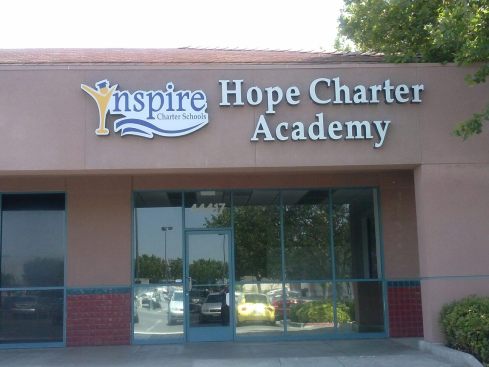
Inspire Charter School mirrors the methods of A3 Education. It employs practices strikingly similar to those that led to May’s 67-count indictment against A3’s leaders. Furthermore, the California Charter School Association (CCSA) took the same unusual step of sharing concerns about Inspire and A3 with California authorities. They are virtual schools that concentrate on obtaining authorization from small school districts. These systems have a similar structure in which a central organization controls the schools that are contracting with it and they transfer funds among multiple organizations making it difficult to monitor their activities. Students at both Inspire and A3 struggle academically.
Inspire picture 5
The First Inspire Charter School Opened in 2014
The Acton-Aqua Dulce Unified School District is infamous for authorizing suspect charter applications while not having the resources to adequately monitor those schools. It has 1085 public school students and 14,734 charter school students. Acton-Aqua Dulce authorized Inspire’s first charter school which was located in Los Angeles County. Strangely, Inspire Charter grew from 151 students in the 2014-15 school year to 4,321 students in the 2018-19 school year and then closed up shop this June 30th.
Founder Nick Nichols needed a program that would service his target audience of home school students.  The Inspire 2016 tax form shows that he purchased CONTINUE READING: Is Inspire Charter Schools the Next A3 Education? | tultican


Big Education Ape: #AnotherDayAnotherCharterScandal HOW BAD DO YOU HAVE TO BE: Calls mount for investigation of Inspire charter schools - The San Diego Union-Tribune - https://bigeducationape.blogspot.com/2019/10/anotherdayanothercharterscandal-how-bad.html

Wednesday, October 9, 2019

Short on teachers? Import them. | Live Long and Prosper

Short on teachers? Import them. | Live Long and Prosper

Short on teachers? Import them.

The war on America’s teachers has created an opportunity for teachers from other countries to come here on work visas to teach our children.
When Joevie Alvarado became a teacher, she never expected to teach American students 7,600 miles away.

But a dire shortage of US teachers means some schools are taking drastic measures — like hiring teachers from half a world away.
Alverado is from the Philippines…and is teaching in Arizona on a five-year J-1 visa. She makes more money here than back home…
The J-1 Teacher Program was meant to be a cultural exchange, but now it’s being used because there aren’t enough American teachers to fill all the spots available.
TEACHERS SALARIES: LOWER THAN OTHER COLLEGE GRADS, HIGHER THAN IN SOME OTHER COUNTRIES
The war on American teachers has made the job of teaching less desirable and a job that Americans are turning their backs on. Experienced teachers are leaving. Young people are choosing other careers.
So some states, like Arizona, are importing teachers from other countries.
In the U.S. teachers are paid less than other college graduates. They work long hours, at least as long as those other college graduates, often with little support. But the salaries of American teachers are higher than in other countries, so CONTINUE READING: Short on teachers? Import them. | Live Long and Prosper

Wendy Lecker: Why We Should Invest More In Neediest Children | Diane Ravitch's blog

Wendy Lecker: Why We Should Invest More In Neediest Children | Diane Ravitch's blog

Wendy Lecker: Why We Should Invest More In Neediest Children

Wendy Lecker is a civil rights lawyer who specializes in issues related to education and children.

A new Education Week national survey of school districts reveals disturbing gaps between state and federal policy and the reality in American public schools.

The vast majority of districts report major funding problems. Most list rising special education costs and rising levels of needy students as their top challenges. They also doubt they are financially prepared for the next recession.
The most serious funding problem districts report is convincing elected officials to sufficiently fund public schools. They give both state and federal officials poor marks for their ability to understand school spending, and cite state legislators as the biggest obstacle to making spending decisions that best address student needs. Rather than address need, state legislators perpetuate myths about school spending and quality.
Scholars Sally Nuamah, Jamila Michener, and Domingo Morel have found that poor communities, like school district leaders, lose faith in elected officials, and worse, in democratic institutions, when they experience policies that exacerbate rather than respond to their challenges.
Recent research highlights the failure of federal and state leaders to grasp the reality facing public schools. The CONTINUE READING: Wendy Lecker: Why We Should Invest More In Neediest Children | Diane Ravitch's blog

Shawgi Tell: The World Can End But Charter Schools Are Here To Stay Forever | Dissident Voice

The World Can End But Charter Schools Are Here To Stay Forever | Dissident Voice

The World Can End But Charter Schools Are Here To Stay Forever

This is another version of: it is easier for capitalists to imagine the end of the world than it is for them to imagine the end of capitalism.
Charter schools are pay-the-rich schemes that emerged in the midst of the neoliberal period that was launched at home and abroad in the late 1970s.
Charter schools are one of many mechanisms the rich have concocted since the 1980s and 1990s to counter the unavoidable law of the falling rate of profit under capitalism.
Mainstream economists often refer to this inescapable law as the law of diminishing returns. This is when the “return on investment” (ROI) is lower than the investment itself, especially over time. Diminishing returns are a built-in tendency of capitalism that affect the capitalist economy as a whole.
To avert the inevitable fall in the amount and rate of profit over time, capitalists necessarily concoct antisocial ways to increase their profits in the course of competing with other owners of capital. This can take the form of more aggressive advertising, changing expiration dates on products, charging people more fees and taxes for commodities and services, planned product CONTINUE READING: The World Can End But Charter Schools Are Here To Stay Forever | Dissident Voice

A Charter School Co-Location Debacle | Capital & Main

A Charter School Co-Location Debacle | Capital & Main

A Charter School Co-Location Debacle
Armed with a state override of its rejected application, Promise Academy filed a new request. Then came the lawsuits.

For months in San Jose, California, Promise Academy, a new charter school projected to enroll a couple hundred students, had been gearing up to launch for the 2019-2020 school year. But when the school should have been opening its doors, it still didn’t have a building. Promise Academy blamed the false start on the San Jose Unified School District, where it had planned to rent space. The district, which serves more than 30,000 in 41 schools, claimed that Promise Academy knew well in advance the steps needed to secure the space, and that it didn’t follow through. The resulting drawn-out dispute between Promise and SJUSD would come to illustrate the complex balance of power between charters and school districts, how even small charters can leverage outsized litigation power and why these conditions might be changing.
Under Proposition 39, which voters passed in 2000, public school districts are required to provide classrooms and facilities to charter schools operating within their boundaries. However, prospective charters must first prove that they have satisfactory educational platforms and sufficient interest from students and families by gathering signatures and submitting a petition to the district.

School District: “We work with a lot of charter schools and have never had this level of difficulty with an operator before.”


When Promise Academy first submitted a petition in 2017 to establish a K-12 charter school for the 2018-2019 school year, “It was San Jose Unified’s determination that [Promise Academy was] not offering a sound educational program and unlikely to implement it successfully, in large part–but not entirely–because the high school program that they were proposing was inconsistent with many aspects of the education code,” Ben Spielberg, a spokesperson for the district, told Capital & Main.
Instead of revising and resubmitting its petition, Promise appealed its original request’s CONTINUE READING: A Charter School Co-Location Debacle | Capital & Main

Rhode Island: Governor Gina Raimondo’s Plan to Demolish Public Education in Providence | Diane Ravitch's blog

Rhode Island: Governor Gina Raimondo’s Plan to Demolish Public Education in Providence | Diane Ravitch's blog

Rhode Island: Governor Gina Raimondo’s Plan to Demolish Public Education in Providence

Andrew Stewart recounts the alarming plans that Governor Gina Raimondo has in store for Providence public schools. She is a former venture capitalist who seems to have an instinctive suspicion of the public sector. What she has in mind, he says, is the planned demolition of the public schools.
He writes:
Someday, after the operatic cycle of Rhode Island Gov. Gina Raimondo’s political career has reached its concluding note, it will be a masterpiece of neoliberal assault upon the public sector, the commons, and the fabric of the welfare state in America to behold. It is absolutely essential, in order for the faculty and the students of Providence to fight back and win in this contest, to form a broad-based coalition that is centered on the success of students and dismantling the school-to-prison pipeline.
Right now, a multi-year media narrative, assembled by allegedly-liberal local news outlets, is being utilized in CONTINUE READING: Rhode Island: Governor Gina Raimondo’s Plan to Demolish Public Education in Providence | Diane Ravitch's blog

CURMUDGUCATION: AI Pokes Another Hole In Standardized Testing

CURMUDGUCATION: AI Pokes Another Hole In Standardized Testing

AI Pokes Another Hole In Standardized Testing

The stories were supposed to capture a new step forward in artificial intelligence. A “Breakthrough for A.I. Technology: Passing an 8th-Grade Science Test,” said the New York Times. “AI Aristo takes science test, emerges multiple-choice superstar,” said TechXPlore. Both stories were talking about Aristo (indicating a child version of Aristotle), a project of Paul Allen’s Allen Institute for Artificial Intelligence, where the headline read, “How to tutor AI from an ‘F’ to an ‘A.’
The occasion for all this excitement is Aristo’s conquest of a big standardized test, answering a convincing 80% of questions correctly on the 12th grade science test and 90% on the 8th grade test. Four years ago, none of the programs that attempted this feat were successful at all. 
We see these occasional steps forward greeted with a certain amount of hyperbole (last year the New York Post announced that computers were “beating humans” at reading comprehension), or the time the BBC announced that an AI “had the IQ of a four-year-old child,” but the field still has a very long way to go. And as it tries to get there, it tells us something about the education tasks set for humans.
Wired perhaps best captured the issue in a story headlined “AI Can Pass Standardized Tests—But It Would Fail Preschool.” AI’s still can’t answer open-ended questions, and Aristo was designed strictly to deal with multiple choice, and only within certain parameters. Aristo has problems with CONTINUE READING: CURMUDGUCATION: AI Pokes Another Hole In Standardized Testing

Why Democratic Candidates for President Need to Stop Waffling About Charter Schools | janresseger

Why Democratic Candidates for President Need to Stop Waffling About Charter Schools | janresseger

Why Democratic Candidates for President Need to Stop Waffling About Charter Schools

On Monday morning, Diane Ravitch sent around what I believe is an urgently important post from Michigan’s Nancy Flanagan.  Flanagan, a retired, National Board Certified Michigan public school teacher and 1993 Michigan Teacher of the Year, previously blogged regularly at Education Week.  She now blogs personally at Teacher in a Strange Land.
In the post Ravitch highlights this week, Flanagan regrets that Democrats running for President continue to waffle about charter schools and too few people are holding them to account on this issue.  At a recent gathering with women discussing politics in her community, Flanagan tried to protest when someone supported Cory Booker’s candidacy: “I interrupted the happy talk: ‘His record on education is terrible. He’s an avowed charter school supporter who nearly destroyed the Newark Public Schools.  He’s a big fan of school choice, even vouchers.’ I looked around the table at a lot of blank faces.  One voice spoke up: ‘So? Why is that so bad?'”
Flanagan explains her own strong opposition to charter schools: “I believe charter schools have done untold damage to public education, and I’ve had twenty years to observe the public money/private management ideology establish itself in Michigan. First, a scattering of alternative-idea boutique schools, another ‘choice’ for picky parents. Then go after the low-hanging fruit, the schools in deep poverty—and then the healthier districts. There is now agreement with an idea once unthinkable in America: corporations have a ‘right’ to advertise and sell education, using our tax dollars.” (emphasis in the original)
Why are so many people complacent when it comes to considering the complex issues around charter schools? Flanagan believes: “Our citizenry is trained in consumerism—promoting CONTINUE READING: Why Democratic Candidates for President Need to Stop Waffling About Charter Schools | janresseger

Louisiana Educator: Just 3 Days Left to Break the Grip of Out-of-State Reformers on Our Louisiana Schools

Louisiana Educator: Just 3 Days Left to Break the Grip of Out-of-State Reformers on Our Louisiana Schools

Just 3 Days Left to Break the Grip of Out-of-State Reformers on Our Louisiana Schools

The reformers and privatizers of public education are using hundreds of thousands of dollars of campaign contributions to get the voters in Louisiana to vote against their own interests in order to continue their control of our education system.
If you are reading this blog, I am asking you to help counteract the impact of big out-of-state money on the election of our Board of Elementary and Secondary Education (BESE). For the last 8 years the Louisiana Association of Business and Industry (LABI) and their out-of-state billionaire donors (The Waltons, the Gates, the Broads, and a bunch of Democratic hedge fund managers) have literally taken over and totally revamped our K-12 public education system. They have pushed school privatization and a system of constant testing and test prep for our students in the place of a real practical curriculum that would prepare our children for life. So now our students are performing in almost last place compared to other states in math and English and our ACT scores are dropping. It is time to break the grip of these education deformers on our public school tax dollars.
The only way we educators and citizens have of stopping the "deformers" of public education in Louisiana, is to spread the word about the good and independent BESE candidates to all our friends and relatives using social media and the good old fashioned telephone and face-to-face contact. A good strategy is to copy the link for this blog with your comments to Facebook and Twitter. We have approximately 3 days left to get the job done before election day October 12.

Please help elect the following independent voices for public education to BESE:
Dist. 1- Lee Barrios; Dist. 2- Ashonta Wyatt; Dist. 3- Janice Perea; Dist. 5- Dr. Stephen Chapman;  Dist. 6Gregory Spiers; Dist. 7- Timmie Melancon; Dist. 8- Vereta Lee.
To find out what BESE district you live in, just click on each Dist. # above to see the maps of BESE districts.


Louisiana Educator: Just 3 Days Left to Break the Grip of Out-of-State Reformers on Our Louisiana Schools


NYC Educator: The Terrible Teacher

NYC Educator: The Terrible Teacher
The Terrible Teacher

So this student doesn't show up to class for days. When he finally comes in, he's got these really prominent earphones. Who knows what kind they are, but they aren't airbuds. One of them is huge and made of something metallic. It really kind of stands out. The teacher has never seen anything like it before. He asks the kid to take it off, and he does. The teacher goes on.

The next day, the student comes in late again, and he's wearing the same earphones. Maybe they're a fashion statement. The teacher asks him to take them off again, and he does. The next day the same thing happens. The teacher, by now, is getting a little bit tired of him coming late to class and wearing these things. So he calls the dean, who comes in and takes them for the night. He's got to pick them up the next day. Undaunted, he pulls his phone out and starts doing whatever he does with that.

The next day, when he walks in late again, wearing the same earphones, The teacher starts to think he's not making an impression. This time he calls the dean and ask that they take his phone too. IThe teacher figures that's what powers the earbuds, so maybe this will discourage the repetitive behavior. The teacher tells the kid in the hall he's sorry, but it will be very hard for him to pass if he keeps walking in late and wasting time with the earphones.

The following week he comes in on time, and not wearing the earphones. The teacher hears his phone beep and asks him to turn the sound off. The kid does something or other, CONTINUE READING: 
NYC Educator: The Terrible Teacher


Mike Klonsky's Blog: There were three teacher strikes when Harold Washington was mayor

Mike Klonsky's Blog: There were three teacher strikes when Harold Washington was mayor

There were three teacher strikes when Harold Washington was mayor
The 19-day CTU strike in 1987 was longest in city history
In 1983, Harold Washington made history in two ways. He became Chicago's first African-American mayor and the first whose election grew directly from a high tide of black resistance to racist machine rule. That movement was joined by a grassroots coalition of progressive forces citywide. During his first term, a racist cabal of 29 white aldermen, led by the two Eddies, Vrdolyak and Burke, blocked his every move in the City Council. However, by 1987, when Washington won re-election, court-ordered reapportionment of wards led to the election of some allied Latino aldermen and the mayor gained some breathing room.

At that time, the public schools, the most racially segregated in the nation, were in a state of deep crisis. Badly underfunded by Republicans in Springfield, who referred to CPS as "a black hole," and ruled by a self-perpetuating top-heavy bureaucracy, Chicago's school system was the picture of abject failure. Chicago-hating Pres. Reagan went so far as to send his racist Sec. of Education William Bennett to the city to denounce CPS as the "nation's worst" school system.

In the wake of the record 19-day teachers' strike (Sept. 8 to Oct. 2), angry and frustrated parents raised their demand for sweeping change. While the mayor met separately with the two sides in the strike, urging reconciliation, he refused to get involved directly in the talks or to dictate terms of a settlement.

''Everyone says I was not involved, but you solve problems through discussions,'' he said. ''I had some of our best people working on the problem. There was a constant quest on my part to resolve the strike.'' -- NY Times
The five-week shutdown, which became the longest teacher strike in city history, and the third during Washington's tenure, concluded with a tentative agreement of a two-year contract that the CTU membership ratified the following day. The new contract CONTINUE READING: Mike Klonsky's Blog: There were three teacher strikes when Harold Washington was mayor


What is ‘design thinking’? And why does it belong in classrooms? - The Washington Post

What is ‘design thinking’? And why does it belong in classrooms? - The Washington Post

What is ‘design thinking’? And why does it belong in classrooms?
Actually, it’s already there — but teachers may not know it


What is “design thinking,” and why does it belong in America’s classrooms?
Actually, as cognitive scientist Lindsay Portnoy explains in this post, many teachers are already using design thinking but may not know it.
Design thinking is a process for solving problems creatively and infusing meaning into what students learn, regardless of the subject or grade. She writes:

Innovative methods of teaching and learning like design thinking are helping students and teachers reframe the way that school is done. What has become clear is that the success of each individual won’t come from besting a computer or working more quickly or efficiently than a robot, but rather by using our innately human capacities of talking with others to debate, discuss and develop dynamic solutions toward our shared goals.
Design thinking is a method of applying knowledge to practice. Isn’t this also the definition of teaching?
Portnoy, a researcher and professor at Northeastern University, is the author of the upcoming book “Designed to Learn: Using Design Thinking to Bring Purpose and Passion to the Classroom.” She is also a co-founder of the educational-game company Killer Snails, which develops learning card games, such as “Assassins of the Sea,” and has attracted funding from the National Science Foundation.
This post is a modified chapter of her book, which will be published in November 2019.

By Lindsay Portnoy

Fauquier High School is a large public school in Warrenton, Va. With its multiple buildings, it feels more like a college campus than a high school. The layout makes it difficult for the school community to connect. In 2017, school officials went in search of a solution that would help students and staff feel a greater sense of community.
One educator drew inspiration from an unusual place: the school’s front lobby and hallways.
George Murphy is a science educator at Fauquier and realized that while he couldn’t change the structure of the buildings, he could work with students to design a space that builds community. He noticed the bare walls along the main lobby where school faculty members and students gathered each CONTINUE READING: What is ‘design thinking’? And why does it belong in classrooms? - The Washington Post

Tuesday, October 8, 2019

CURMUDGUCATION: Why You Can Ignore That Hot New DFER Poll

CURMUDGUCATION: Why You Can Ignore That Hot New DFER Poll

Why You Can Ignore That Hot New DFER Poll

Yesterday the Democrats for Education Reform dropped a hot new pile of steaming poll results, and some media outlets, like US News, jumped right on it. The take was that Democrat voters are hollering for charters and choice, and the candidates are acting foolishly by running in the other direction.

Here's why you (and the candidates) don't need to be excitedly about any of this.


First, it's DFER. DFER was founded by some hedge funders who hoped to steer the Democratic party in a more free-marketty direction when it came to education. Their Democrat bona fides are suspect enough that some state Dems have actually demanded they un-D-ify themselves. DFER has had a bit of a tactical problem ever since Trump moved into the White House and brought Betsy DeVos along for the ride, namely that when DFER's favorite policies come out of DeVos's mouth, they're much harder to sell. Consequently, DFER has been trying hard to make the case that Good Democrats believe in charters and choice and Practical Democrats must at least act like they support these things if they want to get elected. So this is more of that.

Second, the polling company Benenson is not a polling company like Gallup is a polling company. Says their site, "We help leaders connect with, persuade and activate the audiences you need to win." They are a high-powered PR consulting firm, ready to help you anywhere "from the political war room to the corporate board room."

The poll questions are tilted (we'll get back to that), but the big clue to what's really going on here is in their own write-up of the results. Here's how one item is presented:

Message tested: “It’s time to not only start making real investments in our public schools, but fix CONTINUE READING: 
CURMUDGUCATION: Why You Can Ignore That Hot New DFER Poll


Michael Moore on Education in Finland | Diane Ravitch's blog

Michael Moore on Education in Finland | Diane Ravitch's blog

Michael Moore on Education in Finland


Michael Moore visited Finland with a camera crew to learn about its education system.
How could a nation post high test scores on international tests when its schools emphasize creativity, play, physical activity, and the arts and ignores standardized testing?
Watch his video and see what you think.
Michael Moore on Education in Finland | Diane Ravitch's blog

Sesame: How To Talk With Children About Race, Gender And Class : NPR

Sesame: How To Talk With Children About Race, Gender And Class : NPR

The Things Parents Don't Talk About With Their Kids ... But Should

A majority of parents rarely if ever discuss race/ethnicity, gender, class or other categories of social identity with their kids, according to a new, nationally representative survey of more than 6,000 parents conducted by Sesame Workshop and NORC at the University of Chicago. The researchers behind Sesame Street say the fact that so many families aren't talking about these issues is a problem because children are hardwired to notice differences at a young age — and they're asking questions.
" 'Why is this person darker than me?' 'Why is this person wearing that hat on their head?' " These are just some of the social identity questions parents might hear, says Tanya Haider, executive vice president for strategy, research and ventures at Sesame Workshop. "We sometimes are scared to talk about these things. If the adults stiffen up and say, 'Oh, you shouldn't say that loudly,' that's sending [children] a cue that there's something wrong."


And there's nothing wrong, Haider says, with a child's natural curiosity. What's risky is when kids are left alone to make sense of the differences they see, with little more than stereotypes, television and guesswork to guide them.
For the past year, NPR and Sesame Workshop have collaborated on a podcast for parents — part of NPR's Life Kit project. Together, they've covered all sorts of subjects, from how to raise kind kids and navigate divorce to how to talk with children about death. Earlier this year, NPR and Sesame Workshop devoted an entire episode to the CONTINUE READING: Sesame: How To Talk With Children About Race, Gender And Class : NPR