Latest News and Comment from Education

Monday, May 20, 2019

DeVos used personal emails for work in ‘limited’ cases, federal investigators say | PBS NewsHour

DeVos used personal emails for work in ‘limited’ cases, federal investigators say | PBS NewsHour

DeVos used personal emails for work in ‘limited’ cases, federal investigators say

An internal Education Department watchdog says Secretary Betsy DeVos has sometimes used personal email accounts for government business and did not always save the messages properly.
The agency’s Office of Inspector General released a report Monday finding “limited” instances in which DeVos sent work emails from four personal accounts.
Investigators say they found fewer than 100 emails to or from DeVos’ personal accounts on the department’s email system, and found no evidence of “active or extensive” use of her personal accounts.
But they found that the emails, which should have been forwarded to her government account, “were not always being properly preserved.”
The report says many of the emails were from people congratulating DeVos on her 2017 confirmation or offering staffing recommendations.
House Democrats requested the review in October 2017.
DeVos used personal emails for work in ‘limited’ cases, federal investigators say | PBS NewsHour

Scholarship Opportunity: Are you a Proud #PublicSchoolGrad? | Schott Foundation for Public Education

Scholarship Opportunity: Are you a Proud #PublicSchoolGrad? | Schott Foundation for Public Education

Scholarship Opportunity: Are you a Proud #PublicSchoolGrad?

Local public schools and their educators have produced America’s most brilliant artists, scientists, doctors, musicians, lawyers, presidents, and more — people from all walks of life, contributing to society in countless ways.
Are you or someone you know graduating in 2019 from a public high school? Help us lift up the importance of public education — with a chance to win a $1,000 college scholarship!


What you'll need to enter:
  • Information about you (name, birthday, name of the public school you're graduating from, etc.)
  • A photo of you holding this Proud #PublicSchoolGrad sign (or make your own with the same text!), in your cap and gown if possible
  • A few sentences describing a teacher you had who positively impacted or inspired you
  • If you're under 18, permission from your parents
A panel of judges will review all entries and pick a winner for the $1,000 scholarship. The contest is open now and runs until June 30, 2019.

Are you a Proud #PublicSchoolGrad? Enter today! >


Share on Facebook!Tweet this!

Scholarship Opportunity: Are you a Proud #PublicSchoolGrad? | Schott Foundation for Public Education

CURMUDGUCATION: 19 Rules For Life (2019 edition)

CURMUDGUCATION: 19 Rules For Life (2019 edition)

19 Rules For Life (2019 edition)


I first posted this list when I turned 60, and have revisited it many times. Now that my birthday has reappeared. I thought I'd start the practice of annually revisiting and revising it. I will keep my original observation-- that this list does not represent any particular signs of wisdom on my part, because I discovered these rules much in the same way that a dim cow discovers an electric fence.


1. Don't be a dick.


There is no excuse for being mean on purpose. Life will provide ample occasions on which you will hurt other people, either through ignorance or just because sometimes life puts us on collision courses with others and people get hurt. There is enough hurt and trouble and disappointment and rejection  naturally occurring in the world; there is no reason to deliberately go out of your way to add more.
There's a lesson here, somewhere.
2. Do better.

You are not necessarily going to be great. But you can always be better. You can always do a better job today than you did yesterday. Make better choices. Do better. You can always do better.

3. Tell the truth.

Words matter. Do not use them as tools with which to attack the world or attempt to pry prizes out of your fellow humans (see Rule #1). Say what you understand to be true. Life is too short to put your name to a lie. This does not mean that every word out of your mouth is some sort of Pronouncement from God. Nor does it mean you must be unkind. But you simply can't speak words that you know to be untrue.

4. Seek to understand.

Do not seek comfort or confirmation. Do not simply look for ways to prove what you already believe. Seek to understand, and always be open to the possibility that what you knew to be true yesterday must be rewritten today in the light of new, better understanding. Ignoring evidence you don't like because you want to protect your cherished beliefs is not good.

5. Listen and pay attention.

Shut up, listen, watch, and pay attention. How else will you seek understanding? Watch carefully. Really see. Really hear. People in particular, even the ones who lie, will tell you CONTINUE READING: CURMUDGUCATION: 19 Rules For Life (2019 edition)

Failing Charter Schools and a School Board’s Choice

Failing Charter Schools and a School Board’s Choice

Failing Charter Schools and a School Board’s Choice

“Data doesn’t close opportunity gaps. People have to do that, so we now need people to take action.”- Carrie Hahnel, EdTrust-West
 It is easy to blame a public school for failing to successfully educate a child. Teachers and schools make easy scapegoats in a society that consistently fails at addressing generational poverty, fails to support children with disabilities, and fails at balancing the need to nurture children with the necessity of putting food on the table. In California, we defunded our schools with Proposition 13 and are still wondering why these same schools are not educating children to our expectations.

Instead of addressing the root cause of failure, the education “reform” movement held up privatization as the solution. The charter school industry was created, resulting in even more money being diverted from public schools. Lacking proper oversight, these schools provided an environment where the health and safety of students could be endangered, funds could be diverted into the pockets of administrators and the parents of poor children could be taken advantage of. Education “reformers” treated these conditions as acceptable prices to pay for better educational opportunities for our children, or at least those without special education needs.
Predictably, it turns out that the charterization of the Los Angeles Unified School District (LAUSD) did not provide the miracle that was promised. The District has the highest number of charter schools in the country, with approximately 18% of its students in these publicly funded private schools. In the just-released list of 110 underperforming schools in the LAUSD, 20%were independent charter schools. Are we diverting $591.7 million from our public schools to get basically the same results?
In requesting that the state initiate a charter school moratorium, the LAUSD Board made a symbolic statement that it is time to review the 25-year-old law that created charter schools. Now it is time for them to take action. Every CONTINUE READING: Failing Charter Schools and a School Board’s Choice

The Resegregation of Baton Rouge Public Schools - The Atlantic

The Resegregation of Baton Rouge Public Schools - The Atlantic

The New Secession
Residents of the majority-white southeast corner of Baton Rouge want to make their own city, complete with its own schools, breaking away from the majority-black parts of town.


The fight began with little subtlety. White, wealthy parents in the southeastern corner of East Baton Rouge Parish, Louisiana, an area known as St. George, wanted their own school district. They argued that the schools in East Baton Rouge were routinely named as among the lowest performing in the state, and were unlikely to improve any time soon. So, in 2012, some of those parents went to the state legislature with a proposal: Create what would be called the Southeast Community School District.

The legislature shot it down. The parents needed a two-thirds majority for the creation of a school district, and they couldn’t martial the votes. A similar push in 2013 was rebuffed as well.
The organizers were discouraged, but undeterred. They needed a new strategy—and they didn’t have to look far. In 2005, a nearby community, Central, was unable to gather support for a school district from the legislature, so it incorporated as a new city. That helped it gain legislative approval to create its own school district, Central Community Schools, which opened its doors in 2007. The St. George supporters launched a petition drive and, in August 2013, registered a new website: StGeorgeLouisiana.com. They would try to create their own city.

A pattern has emerged over the past two decades: White, wealthy communities have been separating from their city’s school districts to form their own. According to a recent report from EdBuild, a nonprofit focused on public-school funding, 73 communities have split to form their own school districts since 2000, and the rate of places doing so has rapidly accelerated in the past two years. St. George, which activists seek to incorporate as a city, is a textbook example.
Oftentimes, in these instances, predominantly white parents are trying to break away from a majority-minority school district, which in turn isolates their property-tax dollars in a new district. (Many public schools rely heavily on property taxes.) The argument, then, is that the parents can better dictate how their money is being spent.
St. George is no different. The proposed area is more than 70 percent white and fewer than 15 percent black, while East Baton Rouge Parish is roughly 46.5 percent black. St. George supporters decry the violence and poor conditions of the public schools in Baton Rouge. Their tax dollars, they have argued, aren’t being put to good use. (Representatives for the St. George campaign’s CONTINUE READING: The Resegregation of Baton Rouge Public Schools - The Atlantic

Meet the 2019 “Black Education Matters Student Activist Award” winners: Youth leaders of an uprising for racial justice! – I AM AN EDUCATOR

Meet the 2019 “Black Education Matters Student Activist Award” winners: Youth leaders of an uprising for racial justice! – I AM AN EDUCATOR
Meet the 2019 “Black Education Matters Student Activist Award” winners: Youth leaders of an uprising for racial justice! 

At the first NAACP Youth Coalition Racial Justice Conference on Saturday, ethnic studies teacher Jesse Hagopian and Superbowl champion/bestselling author Michael Bennett presented the Black Education Matters Student Activist Award (BEMSAA) to three of the most dynamic and powerful changemaking youth in Seattle.
AwardPic.JPG
The 2019 BEMSAA award winners are:
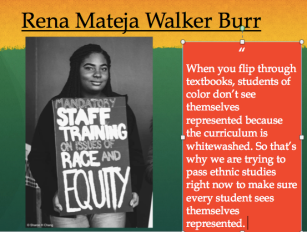
RenaMWB
Rena is an NAACP Youth Coalition leader  and one of the most outspoken leaders for ethnic studies and the Black Lives Matter at School movement.


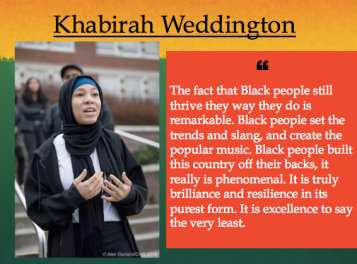
KWKhabirah founded the Black Student Union at Madrona Elementary School and has served as the Garfield High School BSU president for the past three years. She has been a relentless advocate for Black students and lead many struggles for racial justice and initiatives to promote Black excellence.

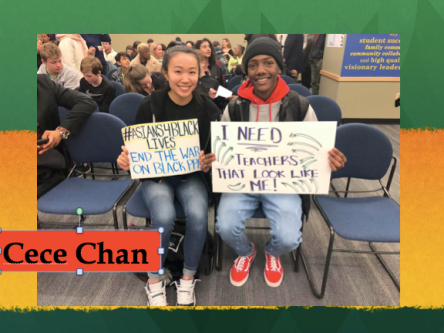
CC
Cece serves as the Nathan Hale’s representative on the NAACP-Youth Coalition and has been a leader in the struggle for ethnic studies and for the Black Lives Matter at School week of action. Cece has also recently finished a documentary about the struggle and promise of ethnic studies in the Seattle schools!


The Black Education Matters Student Activist Award (BEMSAA) offers a $1000 package to deserving Seattle public school students who demonstrates exceptional leadership in struggles for social justice, and against institutional racism.
Michael Bennett gave Rena the special Pennie Bennett award in the name of his mother saying,
My mom worked in the school district for the last 30 years…Me and Jesse have been friends for a while and I wanted to be able to create an lasting award for Black education and give out an award out every year to represent what my mom believes in…My mom was looking at all the things you were doing and she said, that girls is amazing! And I’m lucky to be able to give this award to Rena!
“I am so proud of this year’s winners of the Black Education Matters Student Activist Award,” said BEMSAA director Jesse Hagopian. “They have all contributed greatly to CONTINUE READING: Meet the 2019 “Black Education Matters Student Activist Award” winners: Youth leaders of an uprising for racial justice! – I AM AN EDUCATOR

Proposition 8 and Homophobic Bullying in California | Articles | Pediatrics

Proposition 8 and Homophobic Bullying in California | Articles | Pediatrics

Proposition 8 and Homophobic Bullying in California

Abstract

BACKGROUND: Bias-based bullying is associated with negative outcomes for youth, but its contextual predictors are largely unknown. Voter referenda that target lesbian, gay, bisexual, and transgender groups may be 1 contextual factor contributing to homophobic bullying.
METHODS: Data come from 14 consecutive waves (2001–2014) of cross-sectional surveys of students participating in the California Healthy Kids Survey (N = 4 977 557). Student responses were aggregated to the school level (n = 5121). Using a quasi-experimental design, we compared rates of homophobic bullying before and after Proposition 8, a voter referendum that restricted marriage to heterosexuals in November 2008.
RESULTS: Interrupted time series analyses confirmed that the academic year 2008–2009, during which Proposition 8 was passed, served as a turning point in homophobic bullying. The rate of homophobic bullying increased (blinear = 1.15; P < .001) and accelerated (bquadratic = 0.08; P < .001) in the period before Proposition 8. After Proposition 8, homophobic bullying gradually decreased (blinear = −0.28; P < .05). Specificity analyses showed that these trends were not observed among students who reported that they were bullied because of their race and/or ethnicity, religion, or gender but not because of their sexual orientation. Furthermore, the presence of a protective factor specific to school contexts among lesbian, gay, bisexual, and transgender youth (gay-straight alliances) was associated with a smaller increase in homophobic bullying pre–Proposition 8.
CONCLUSIONS: This research provides some of the first empirical evidence that public campaigns that promote stigma may confer risk for bias-based bullying among youth.
  • Accepted March 13, 2019.
View Full Text

Proposition 8 and Homophobic Bullying in California | Articles | Pediatrics

Epic Fail Of Charter Schools In Louisiana | OurFuture.org by People's Action

Epic Fail Of Charter Schools In Louisiana | OurFuture.org by People's Action

Epic Fail Of Charter Schools In Louisiana


When Arne Duncan, the U.S. Secretary of Education under President Barack Obama, said Hurricane Katrina was the “best thing that happened to the education system in New Orleans,” he was no doubt referring in part to how the storm and its aftermath led to the spread of charter schools across the city.
But if he had looked more closely before making his remark (he eventually apologized for his poor word choice), he would have noticed some of the new charter schools being created in New Orleans were already failing.
The very first charter school created in the post-Katrina era to close was Free Academy, which shuttered in early 2009—well before Duncan made his remarks—due to financial problems, lack of academic progress, and disputes with the school’s for-profit management company.
After Free Academy closed, many of the students scrambling to find new schools likely ended up in the Crocker Arts & Technology School, another charter school, which opened in the fall in the same building. But that school proved to be a false promise too when, on a Thursday evening in early December, parents learned Crocker had to close, literally overnight, due to its unsafe building.
The century-old structure was close to collapse, a condition that existed no doubt when the school was Free Academy and when Crocker decided to occupy the building. Officials at both schools either didn’t know or knew but didn’t bother to warn parents their children were in an unsafe building.
Duncan should have been concerned about these failed charters not only because of the potential harm the schools posed to students but also because the federal government helped to fund the schools.

Government Funds for Failed Schools

In 2006, barely a year after Katrina’s devastation, Duncan’s predecessor Margaret Spellings awarded $24 million to Louisiana to create charter schools, primarily in New Orleans.
The grant came from the Department of Education’s Charter Schools Program (CSP), which provides grants to individual CONTINUE READING: Epic Fail Of Charter Schools In Louisiana | OurFuture.org by People's Action

Teaching and Learning in the Age of the Technocrats

Teaching and Learning in the Age of the Technocrats

Teaching and Learning in the Age of the Technocrats


By Sheila Resseger, M.A.
I wrote the following words almost exactly four years ago. Since then, many parents did choose to inform themselves, and refused to allow their children to participate in the PARCC/SBAC assessments; the problem with the underlying standards, however, was not addressed. And the situation we have today is even more concerning. The Common Core standards are even more entrenched, and much of students’ learning has been shifted to depersonalized digital platforms.
Even if children are not taking the end of the year standardized test, they are still subjected to continual computerized testing, with content based on those flawed Common Core standards. I am not arguing against the use of technology in schools; nor am I arguing against assessment. Teachers are trained professionals who should be diagnostically assessing their students as they plan their lessons.
What I am arguing for is a realistic re-assessment by experienced classroom teachers, and experienced teacher educators, of the negative impact that these standards and accompanying tests have had on our students for the past decade, particularly on our most vulnerable students.
We need to do better, and in order to do better we need to address the full humanity of our students and provide them with engaging, culturally responsive, empowering curricula, not scripted/digital curricula that are designed to prepare them for invalid CONTINUE READING: Teaching and Learning in the Age of the Technocrats

A Note About the Fifth Year Anniversary of This Is Not A Test | The Jose Vilson

A Note About the Fifth Year Anniversary of This Is Not A Test | The Jose Vilson

A NOTE ABOUT THE FIFTH YEAR ANNIVERSARY OF THIS IS NOT A TEST


I wrote this book for you.
For some of you, it means I wrote this in love. There’s always that first visit to the local bookstore when we scan the education section and don’t see a book that tangentially relates to your qualms and visions. Most of the narrative-based books are written by professors, ex-educators, celebrities, and wunderkinds with a connection to a highly visible outlet for their story. The ones written by actual classroom teachers – the very few there are – are relegated to instructional books that publishers can sell en masse to districts flinging their arms for a life raft.
At the time, there were plenty of people implicitly competing for the “best” teacher blogger, teacher writer, or education writer. Some publishers forced teachers with narratives to follow the instructional template even when the educator had an actual set of stories to tell. Other publishers just threw as many books out as possible in hopes that perhaps one would stick. Some people write books in hopes of raising their platforms, knowing they’ll have plenty of opportunities (and connections) to write more. Some even wrote books as a “teacher” even when they left the classroom and schools a long while ago. I went into this process knowing that this one book would have to both convey the urgency of now and last forever because teachers like me rarely get opportunities for more than one.
Haymarket Books offered me the opportunity to be a legit author and not just because they’re a well-respected publishing house. Julie Fain and Anthony Arnove took a huge chance on me. Liliana Segura printed out my manuscript and marked more than half of it in red at our first meeting. That, too, CONTINUE READING: A Note About the Fifth Year Anniversary of This Is Not A Test | The Jose Vilson

K-12 Public Education: Front and Center in the 2020 Election | Real Learning CT

K-12 Public Education: Front and Center in the 2020 Election | Real Learning CT

K-12 Public Education: Front and Center in the 2020 Election

At last!  At last!  At last!  A candidate for President of the United States has recognized that the bedrock institution of our democracy is in peril, that the same forces of greed and racism that are working to destroy other elements of our society are also eating away at the very foundation of our society: K-12 public education.
That presidential candidate is Bernie Sanders.
Honoring the 65th anniversary of Brown vs. Board of Education, the Supreme Court case, which outlawed segregation in public schools, Senator Bernie Sanders unveiled his education plan, a comprehensive 10-point agenda, called The Thurgood Marshall Plan for A Quality Education for All.
The first principle of the plan is that every child has the right to a quality education. A simple statement to be sure but a principle that is far from being practiced in this country at this time.
In his plan, Senator Sanders wholeheartedly supports The NAACP Task Force Report entitled “Quality Education For All … One School At A Time”, which calls for a moratorium on the expansion of charter schools because:
  1. Charter schools have failed in fulfilling their original purpose, which was to innovate and infuse new ideas into the traditional public school system. There has been no carryover from the charter schools to traditional public schools. Charter schools have not, in any way, been learning labs, free from the restrictions imposed on public schools, which try out new ideas that benefit the larger population of students in public schools.
  2. The education that charter schools provide their students is questionable. The large scale study of student data from the Center for Research Outcomes (CREDO) at Stanford University’s Hoover Institute found that 17% of charter schools produced academic gains better than traditional public schools, 37% of charter schools performed worse than their traditional public schools counterparts serving similar students, 46% of the schools showed no difference.  Reducing class size, not charter CONTINUE READING: K-12 Public Education: Front and Center in the 2020 Election | Real Learning CT

The Letter from CORE activists. – Fred Klonsky

The Letter from CORE activists. – Fred Klonsky

THE LETTER FROM CORE ACTIVISTS.


We the undersigned are union members, members of CORE, and activists in our schools. Some of us are currently serving on leadership bodies of the CTU and are running for elected positions with the CORE slate. We have decades of combined experience fighting for better schools and a stronger union, and some of us are co-founders of CORE. We are endorsing the CORE slate in the 2019 leadership election and urge all members to vote for the slate in order to register their support for organizing a strike-ready union that’s fighting for a strong contract.We think a Members’ First victory would set the union back in negotiations and represent a move away from a fighting approach. While we respect many of the individuals in MF, and intend to continue working alongside all our union brothers and sisters, we do not believe they have the vision or the commitment to stand up to the bosses and win the schools our students deserve.
However, we recognize that many members are concerned about the direction of our union under the current CORE leadership team. We share many of those concerns. We are deeply sympathetic to members who feel that their working conditions, which are our students’ learning conditions, have been getting worse for years. As active rank-and-file teachers, clinicians, PSRPs, and school workers, we have experienced the bullying, the disrespect, the micromanaging, and the intense pressures and workloads personally.
We are not content with the state of our workplaces or the past contracts won. To be frank, our union has suffered a number of defeats in the past years. We know how damaging the REACH evaluation system is. We understand how Student-Based Budgeting and the School Rating System hurts members and students alike. We have labored under the longest school day and school year. We suffered through furloughs, skyrocketing healthcare costs, and the loss of raises.
We fully recognize that the author of our worsening conditions is the 1% and the political establishment of both major parties, who have rained down attack after attack on public education and unions everywhere. We are members of CORE precisely because of the major role CORE had pushing back against this neoliberal assault. We are proud of the organizing for the 2012 strike, for the resistance to testing, school closures, punitive evaluation systems, and the call to join our union fight with the broader needs of the communities where we live and work.
However, it’s our contention the current leadership has made a series of mistakes that have deepened the defeats and taken us off the road to fighting back. One of the most concerning was the top-down decision of this leadership to call off a strike in 2016 accepting what we consider a weak contract. We also believe our union has not done a sufficient job defending members and our contract in the buildings and that leadership has become too far removed from the everyday abuses we experience. In addition, we are in deep disagreement with our leadership’s turn towards funding Democratic establishment politicians, like our endorsement of Toni Preckwinkle, with the aim of buying influence and cutting deals. We believe that we CONTINUE READING: The Letter from CORE activists. – Fred Klonsky

enrique baloyra: Bernie calls for charter school moratorium - YouTube

Bernie calls for charter school moratorium - YouTube


enrique baloyra

Yesterday Vermont Senator Bernie Sanders came to with his 10-point education plan. Recalling the civil rights lawyer who successfully argued before the Supreme Court that racial segregation in public schools is unconstitutional under the XIV Amendment and later went on to become the first Black justice, the “Thurgood Marshall Plan for Public Education” aims to “combat racial discrimination and school segregation.”
Sixty-five years after the landmark Brown v. Board, our nation’s schools are more segregated than ever, and Black students are four times as likely to be suspended as whites, even for the same infraction.
Bernie’s plan calls for tripling the Title I budget, which our current education secretary wants to eliminate in favor of her school voucher scam, and funding teacher training programs at historically black colleges and universities. Studies show that students of color with at least one teacher of color are more likely to attend and graduate college. Currently seven percent of public school teachers are Black.
The plan also calls for a ban on corporate charter schools — echoing the NAACP’s three year-old moratorium — until a national audit can determine the extent of the well-documented waste, fraud, and abuse rampant in the industry.
“We do not need two school systems; we need to invest in our public schools system.”
“Thurgood Marshall said that all children have a right ‘to an equal opportunity to reach their full potential as citizens.’
“In my view, the only way to accomplish that goal is to guarantee every person in our country a quality education as a fundamental human right.”
https://twitter.com/BernieSanders/sta...
Unlike former Vice President Joe Biden, who as a young senator was opposed to busing and desegregation, Bernie would allow local school districts to use federal money for busing and increase funding for desegregation programs.
The charter school ban is expected to cause a rift in the Democratic party, as other presidential hopefuls Beto O’Rourke and Cory Booker both have extensive ties to charter school industry. Kamala Harris has also taken contributions from education profiteers.
Apparently some Democrats don’t mind corporations stealing assets from poor and minority communities, as long as there’s a buck in it for the donors.
Critics who say it’s too bold a plan should remember it’s the same thing they said about “Bernie’s Medicare for All” plan just a couple of years ago. Now six Democratic frontrunners are on board.

Bernie calls for charter school moratorium - YouTube