Latest News and Comment from Education

Friday, April 20, 2018

Robert DeNiro pens ‘excuse’ letter for students participating in #NationalSchoolWalkout #MarchForOurLives #NeverAgain - The Washington Post

Robert DeNiro pens ‘excuse’ letter for students participating in National School Walkout - The Washington Post:

Robert DeNiro pens ‘excuse’ letter for students participating in National School Walkout

Image result for Robert DeNiro


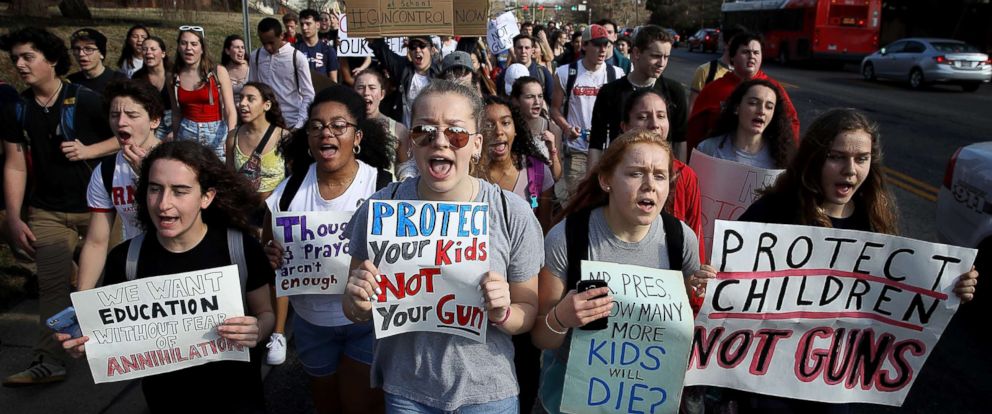
Friday, April 20, is National School Walkout day, when students in schools around the country are expected to walk out to protest what organizers say is inaction by local, state and federal officials to take action to prevent gun violence.
It is the 19th anniversary of the killings of 13 people by two students at Columbine High School in Colorado, and the latest of several massive student-led demonstrations against gun violence since the Feb. 14 killings of 17 people at Marjory Stoneman Douglas High School in Parkland, Fla.
As a gesture to help students who are planning to participate, actor Robert DeNiro has penned an “excuse letter” for anyone in need. CNN confirmed with DeNiro’s representatives that the letter did indeed come from him.


Students in every state are expected to walk out of school at 10 a.m. local time and will gather for 13 seconds of silence to honor the 13 victims at Columbine. After that, students are asked to have discussions about gun violence and solutions, and then participate in events that have been planned by local walkout leaders. Continue reading: Robert DeNiro pens ‘excuse’ letter for students participating in National School Walkout - The Washington Post:
Price Tags - March For Our Lives - https://wp.me/P9J85t-288 via @AMarch4OurLives

The NRA spends $1.05 per student in Florida. Politicians like Florida's Marco Rubio receive NRA blood money. Don't put a price on us.


Big Education Ape: #NeverAgain The Book by David Hogg, Lauren Hogg | #NationalSchoolWalkout #MarchForOurLives - http://bigeducationape.blogspot.com/2018/04/neveragain-by-david-hogg-lauren-hogg.html
#NeverAgain by David Hogg and Lauren Hogg

Thursday, April 19, 2018

Majority of teens worry about school shootings, and so do most parents | Pew Research Center

Majority of teens worry about school shootings, and so do most parents | Pew Research Center:
A majority of U.S. teens fear a shooting could happen at their school, and most parents share their concern


In the aftermath of the deadly shooting at a high school in Parkland, Florida, a majority of American teens say they are very or somewhat worried about the possibility of a shooting happening at their school – and most parents of teens share that concern, according to new Pew Research Center surveys of teens ages 13 to 17 and parents with children in the same age range.
Meanwhile, when it comes to what can be done to prevent this kind of violence, far more teens view proposals focused on mental illness, assault-style weapon bans and the use of metal detectors in schools as potentially effective than say the same about allowing teachers and school officials to carry guns in schools.
The surveys of teens and parents were conducted in March and April 2018, following the Feb. 14 shooting at Marjory Stoneman Douglas High School – one of the deadliest mass school shootings in U.S. history. Seventeen people were killed in the attack and more than a dozen others were injured. The surveys also come as the nation prepares to mark the 19th anniversary of the shooting at Columbine High School in Colorado.
Overall, 57% of teens say they are worried about the possibility of a shooting happening at their school, with one-in-four saying they are very worried. About three-in-ten (29%) say they are not too worried about this, and just 13% say they are not at all worried.
Nonwhite teens express a higher level of concern than their white peers. Roughly two-thirds (64%) of nonwhite teens, including 73% of Hispanics, say they are at least somewhat worried about this, compared with 51% of white teens.
School shooting fears differ by gender as well: 64% of girls say they are very or somewhat worried about a shooting happening at their school, compared with 51% of boys.
Parents of teenagers express similar levels of concern as teens themselves, with 63% saying they are at least somewhat worried about the possibility of a shooting happening at their child’s school. And there are similar patterns when it comes to race and gender, with nonwhite parents and mothers expressing more concern. Lower-income parents are particularly worried – in fact, 82% of parents with annual household incomes under $30,000 say they are at least somewhat worried that a shooting could happen at their teen’s school, compared with 64% of those with incomes between $30,000 and $74,999 and 53% of those with incomes of $75,000 or more.
Some policies seen as more effective than others
Against the backdrop of organized school walkoutsand marches calling for new legislation to address gun violence, teens see more value in some proposed measures than others. Asked to assess how effective various measures would be at preventing school shootings, 86% of teens say that preventing people with mental illnesses from purchasing guns and that improving mental health screening and treatment would be effective, including majorities who say each of these proposals would be very effective. Roughly eight-in-ten teens (79%) say that having  Continue reading: Majority of teens worry about school shootings, and so do most parents | Pew Research Center:

Price Tags - March For Our Lives - https://wp.me/P9J85t-288 via @AMarch4OurLives

The NRA spends $1.05 per student in Florida. Politicians like Florida's Marco Rubio receive NRA blood money. Don't put a price on us.

The World’s 50 Greatest Leaders of 2018 | Fortune #NeverAgain #NationalSchoolWalkout #MarchForOurLives

The World’s 50 Greatest Leaders of 2018 | Fortune:

The World’s 50 Greatest Leaders of 2018 
Our annual list of the thinkers, speakers, and doers who are stepping up to meet today’s challenges.


Though it seems unlikely, Tim Cook and Indira Jaising have something in common besides membership in Fortune’s 2018 ranking of the World’s Greatest Leaders. Cook (No. 14) is the wealthy CEO of Apple, the most valuable publicly traded company on earth; Jaising (No. 20) is an Indian lawyer who cofounded an NGO called Lawyers Collective, which promotes human rights issues. Yet they share this trait: Both have multiplied their organizations’ effectiveness by harnessing the power of unbundling. Following their example is a new imperative for the best leaders.
Unbundling means disaggregating enterprises of all kinds, from the smallest startups to entire nations. In business it can mean making a company more valuable by splitting it up, as Hewlett-Packard did and other companies (Honeywell, Pentair, DowDuPont) are doing. Or it can mean increasing value by delegating functions once regarded as necessary parts of the whole; Apple’s outsourcing of complex, high-tech manufacturing, and the staggering capital requirements that go with it, is a dramatic example.
Technology makes unbundling possible and often inevitable. For centuries, greater size made companies, nations, and other enterprises more efficient and effective. Increasingly, it doesn’t. Outsourcing and coordinating manufacturing, distribution, research, and nonemployee workers becomes easy and cheap in the digital era. The most extreme example is the Chinese appliance maker Haier, which is not so much a company as a platform that invites entrepreneurs to become one of thousands of microenterprises within its ecosystem. Crazy? Definitely not. Using this radically unbundled model, Haier has become the world’s largest appliance brand.
I asked the architect of Haier’s model, chairman Zhang Ruimin (on our WGL list in 2014 and 2017), why more business leaders don’t follow his example. “They’re afraid of giving up power,” he replied. Nearly all their incentives encourage empire building. “Bigger firms pay more, way more,” says Kevin Hallock, director of Cornell University’s Institute for Compensation Studies. The same is true among nonprofits and labor unions, he finds. Why would any leader want to unbundle?
This year’s list puts an emphasis on leaders who are navigating this challenge deftly. (That has meant sidelining some perennially worthy figures, from Pope Francis to Jeff Bezos; to see past years’ lists, visit Fortune.com.) At companies, one solution is to evaluate leaders on wealth creation rather than size as conventionally measured. Leaders of mission-driven nonprofits may face fewer disincentives. Indira Jaising’s little NGO punches far above its weight because it can outsource staff and infrastructure; the Internet lets it communicate widely at low cost and enables volunteers to pitch in from around the world.
Click on the names below to jump to their section of the list

THE TOP 10

1. The Students Marjory Stoneman Douglas and other schools
2. Bill and Melinda Gates Cofounders, Gates Foundation
3. The #MeToo Movement
4. Moon Jae-in President, South Korea
5. Kenneth Frazier CEO, Merck
6. Scott Gottlieb FDA commisioner
7. Margarethe Vestager Commissioner for Competition, European Union
8. Larry Fink CEO, BlackRock
9. General Joseph Dunford Chairman, Joint Chiefs of Staff
10. Liu He Vice Premier, China

11-20

11. Mary Barra CEO, General Motors
12. Nick Saban Football coach, University of Alabama
13. Emmanuel Macron President, France
14. Tim Cook CEO, Apple
15. Serena Williams Athlete
16. Isabelle Kocher CEO, Engie
17. Katie Bethell Executive director, PL+US
18. Ryan Coogler Film director
19. Huateng “Pony” Ma CEO, Tencent
20. Indira Jaising Founder, Lawyers Collective

21-30

21. Marc Benioff CEO, Salesforce
22. The Gymnasts and Their Allies
23. Kathleen McLaughlin Chief sustainability officer, Walmart
24. Mukesh Ambani Chairman and managing director, Reliance Industries
25. Mick Cornett Former mayor, Oklahoma City
26. Donald Hopkins Physician, the Carter Center
27. Oprah Winfrey CEO, OWN
28. Mitch Landrieu Mayor, New Orleans
29. Jacinda Ardern Prime Minister, New Zealand
30. Ma Jun Environmentalist, China

31-40

31. West Virginia Teachers
32. Leymah Gbowee President, Gbowee Peace Foundation
33. Jamie Dimon CEO, JPMorgan Chase
34. Michael Sorrell President, Paul Quinn College
35. Reese Witherspoon Actor/producer
36. Daniel Servitje Montull CEO, Grupo Bimbo
37. Izumi Nakamitsu Undersecretary general for disarmament, United Nations
38. Bashar Masri Founder, Rawabi
39. Leila de Lima Senator, Philippines
40. Angela Nyambura Gichaga CEO, Financing Alliance for Health

41-50

41. Timothy Keller Evangelical minister/author, Redeemer City to City
42. Gwynne Shotwell President and chief operating officer, SpaceX
43. Balkrishna Doshi Architect, India
44. Feike Sijbesma CEO, DSM
45. Kelly Chibale Scientist, South Africa
46. Ana Botín Group executive 
chairman, Banco Santander
47. Dina Meza Journalist, PEN Honduras
48. Ridwan Kamil Mayor, Bandung, Indonesia
49. Amy Gutmann President, University of Pennsylvania
50. Ed Bastian CEO, Delta Air Lines

The fiercest resisters of unbundling are national leaders. They have little to gain and much to lose by leading a smaller country. Yet they may have no choice, eventually. Many services that once were the province of governments—telecom, utilities, even Continue Reading: The World’s 50 Greatest Leaders of 2018 | Fortune:

Obama Profiles Parkland Survivors For TIME's '100 Most Influential' List | HuffPost - https://www.huffingtonpost.com/entry/obama-parkland-survivors_us_5ad8aed2e4b029ebe021cadd on @HuffPostPol

Cameron Kasky, Jaclyn Corin, David Hogg, Emma González and Alex Wind Is on the 2018 TIME 100 List |

Big Education Ape: #NeverAgain The Book by David Hogg, Lauren Hogg | #NationalSchoolWalkout #MarchForOurLives - http://bigeducationape.blogspot.com/2018/04/neveragain-by-david-hogg-lauren-hogg.html
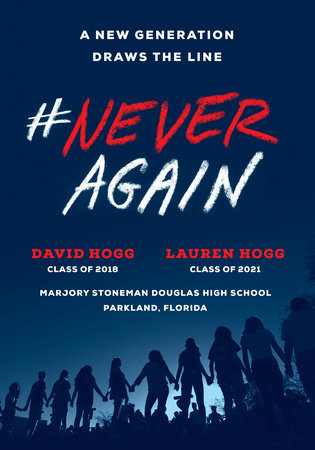
#NeverAgain by David Hogg and Lauren Hogg

Price Tags - March For Our Lives - https://wp.me/P9J85t-288 via @AMarch4OurLives


The NRA spends $1.05 per student in Florida. Politicians like Florida's Marco Rubio receive NRA blood money. Don't put a price on us.

The power Scam behind the search for a new L.A. schools leader

The power game behind the search for a new L.A. schools leader:

The power game behind the search for a new L.A. schools leader


The search for a new Los Angeles schools superintendent is proceeding behind closed doors, but the underlying power politics extend well beyond the room where seven elected Board of Education members are at work.

There now appear to be three finalists since Indianapolis Supt. Lewis Ferebee withdrew from consideration this week. They are, in alphabetical order: former Baltimore Supt. Andres Alonso, former investment banker Austin Beutner and Vivian Ekchian, who is L.A.'s interim superintendent.

Some of the city's power brokers seem to be invested in Beutner, 58, who is himself one of L.A.'s more influential leaders. But they are keeping a low profile, apparently working behind the scenes on his behalf.

The person who gets the job will have to confront the Los Angeles Unified School District's rising pension costs, vastly underfunded retiree health benefits and declining student enrollment, which could push the nation's second-largest school system toward financial crisis. Many schools also perform well below state averages academically.

What happened in closed session Tuesday, and who has the inside track?

The board met in private for about 10 hours. Much of that time was spent on second interviews with Alonso and Beutner. (Ekchian had hers last week.) Deliberation lasted until about 10 p.m. and often got heated, sources said. The meeting recessed with no announcement.

In any scenario, the majority would prefer to avoid a 4-3 vote if one of those four votes belongs to Ref Rodriguez, who faces criminal charges for alleged political money laundering. He has denied wrongdoing, but his reputation has suffered and he could be forced from office if convicted.

Informed speculation suggests that Beutner has the easiest path to a four-vote majority, and the core of that support would come from the four-member board majority elected with major financial backing from charter school advocates. Beutner has tried to avoid polarizing comments on charter-related issues, though he has served on the boards of charter school organizations and contributed to charter-backed candidates for public office.


But his lack of experience in managing schools or school districts could give some board members pause, including those in the charter-backed bloc.

If that bloc holds for Beutner, a fifth vote could come from Richard Vladovic, who has triangulated between opposing district factions without alienating them.

If Beutner cannot get past four votes, the board could turn to Alonso, especially if switching gears could bring him five or six votes.

From 2007 to 2013, Alonso, 60, managed to navigate opposing political forces in Baltimore, forging a respectful relationship with the teachers union while also winning praise from advocates, such as charter backers, who frequently do battle with unions.

In the current climate, the 57-year-old Ekchian, the insider, looks like a fallback choice. She would not be the first L.A. superintendent to ascend this way. Were she to be selected, a 7-0 vote is possible, as a gesture of goodwill.

What happens next?

The board meets Friday at noon. It's possible that the choice is already made and that the delay until Friday is simply to prepare for the announcement or to hash out contract details. Or maybe the debate continues.

How might the new board majority affect the superintendent selection process?

Supt. Michelle King was hired in 2016 by a board that wanted her to win back students who had left the school system for charter schools. These independently operated campuses Continue reading: The power game behind the search for a new L.A. schools leader:


Big Education Ape: Beutner emerges as a top pick for L.A. schools superintendent amid last-minute jockeying - http://bigeducationape.blogspot.com/2018/04/beutner-emerges-as-top-pick-for-la.html

Wednesday, April 18, 2018

#NeverAgain The Book by David Hogg, Lauren Hogg | #NationalSchoolWalkout #MarchForOurLives

#NeverAgain by David Hogg, Lauren Hogg | PenguinRandomHouse.com:


#NeverAgain
A NEW GENERATION DRAWS THE LINE
By DAVID HOGG and LAUREN HOGG
Foreword by Emma González
#NeverAgain by David Hogg and Lauren Hogg


ABOUT #NEVERAGAIN


From two students of Marjory Stoneman Douglas High School comes a declaration for our times, and an in-depth look at the making of the #NeverAgain movement that arose after the Parkland, Florida, shooting.


On February 14, 2018, seventeen-year-old David Hogg and his fourteen-year-old sister, Lauren, went to school at Marjory Stoneman Douglas High School, like any normal Wednesday. That day, of course, the world changed. By the next morning, with seventeen classmates and faculty dead, they had joined the leadership of a movement to save their own lives, and the lives of all other young people in America. It’s a leadership position they did not seek, and did not want–but events gave them no choice.


The morning after the massacre, David Hogg told CNN: “We’re children. You guys are the adults. You need to take some action and play a role. Work together. Get over your politics and get something done.”


This book is a manifesto for the movement begun that day, one that has already changed America–with voices of a new generation that are speaking truth to power, and are determined to succeed where their elders have failed. With moral force and clarity, a new generation has made it clear that problems previously deemed unsolvable due to powerful lobbies and political cowardice will be theirs to solve. Born just after Columbine and raised amid seemingly endless war and routine active shooter drills, this generation now says, Enough. This book is their statement of purpose, and the story of their lives. It is the essential guide to the #NeverAgain movement.


Big Education Ape: FIND A NATIONAL SCHOOL WALKOUT | Indivisible Guide #NationalSchoolWalkout #MarchForOurLives #NeverAgain - http://bigeducationape.blogspot.com/2018/04/find-national-school-walkout.html


Image result for national school walkout logo
 Image result for NATIONAL SCHOOL WALKOUT
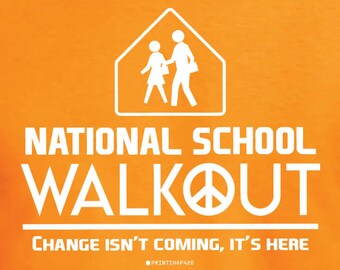
National School Walkout is a movement powered and led by students across the country. We’re protesting congressional, state, and local failures to take action to prevent gun violence. America is the only country in the world where so many people are killed by guns, and yet our leaders do nothing about it. In many states it’s more difficult to register to vote than it is to buy a rifle. Apparently to some politicians, a vote is scarier than a gun.
We’re changing that.


Price Tags - March For Our Lives - https://wp.me/P9J85t-288 via @AMarch4OurLives

The NRA spends $1.05 per student in Florida. Politicians like Florida's Marco Rubio receive NRA blood money. Don't put a price on us.

Betsy DeVos, Matt Bevin, and the Smarmy Attack on Teachers | GQ

Betsy DeVos, Matt Bevin, and the Smarmy Attack on Teachers | GQ:

Betsy DeVos, Matt Bevin, and the Smarmy Attack on Teachers

It’s easy to oppose education strikes if you don’t believe teaching is a job.
Image result for matt bevin teachers
In February, West Virginia teachers shut down every public school in the state. For nearly two weeks, the striking teachers stood their ground, disregarding the advice of union leaders and holding out for a 5 percent raise and a promise from the governor to address the sharply rising cost of health care. Following their success, teachers in Oklahoma organized their own state-wide strikes, while those in Arizona are also threatening strikes for the end of the month if the legislature doesn't finally come through on pay raises. And in Kentucky, educators across the state staged walkouts last Friday.
Kentucky governor Matt Bevin was particularly irked by the walkout in his state, and had a lot to say about it. "I guarantee you somewhere in Kentucky today, a child was sexually assaulted that was left at home because there was nobody there to watch them," he told reporters, adding, "I'm offended that people so cavalierly, and so flippantly, disregarded what's truly best for children."
To be 100 percent clear, Bevin had no information about any sexual assault that happened during the walkout. His "guarantee" was a total fabrication. He's since apologized in a four-minute video, but only after facing outrage from teacher organizations and Kentucky politicians alike—the state's Republican-dominated House of Representatives even passed resolutions condemning the remarks. But he isn't the only political leader trying to make the teachers into the villains of this story. Just days before Bevin basically blamed teachers for child abuse, Oklahoma governor Mary Fallin compared teachers striking in that state to a "teenage kid that wants a better car." In Fallin's metaphor, the perfectly good car the teachers already have includes broken desks, four-day weeks, stagnant wages since 2008, and tattered, decades-old textbooks.
Even education secretary Betsy DeVos weighed in, according to the Dallas Morning News:
"I think about the kids,” DeVos said. “I think we need to stay focused on what’s right for kids. And I hope that adults would keep adult disagreements and disputes in a separate place, and serve the students that are there to be served.”
Although DeVos uses the word "adults" here, and not specifically "teachers," she's making the same argument as Bevin in Kentucky: Teachers are doing a disservice to students by letting these "adult disagreements" get in the way of their teaching. We often talk about teaching as a "calling," something that people are innately drawn to out of some altruistic impulse. And there's nothing wrong with having a sense of duty for your job, that feeling that your work is tied to a broader social good. But this romanticized view of teaching actually lionizes and devalues it at the same time. If we don't think of teaching as a job—instead of a calling, a sacrifice, a duty—then we can't talk about job conditions, material things like class size, shortened school weeks, or teacher pay. And it's not just a problem from the right. Teach for America, well-intended as it may be, is founded on the bedrock principle that minimal training and boundless passion can prepare college grads to teach in under-served communities, essentially de-professionalizing education.
Opponents of well-funded public education, people like DeVos and Bevin who want to see schools as privatized as possible, are relying on this same mindset when they attack teachers pushing for better working conditions. Teachers are caretakers, the argument goes, and therefore if some teachers are willing to walk out of school,  Continue reading: Betsy DeVos, Matt Bevin, and the Smarmy Attack on Teachers | GQ:


Tuesday, April 17, 2018

FIND A NATIONAL SCHOOL WALKOUT | Indivisible Guide #NationalSchoolWalkout #MarchForOurLives #NeverAgain

FIND A NATIONAL SCHOOL WALKOUT | Indivisible Guide:

Image result for national school walkout logo

Image result for NATIONAL SCHOOL WALKOUT
National School Walkout is a movement powered and led by students across the country. We’re protesting congressional, state, and local failures to take action to prevent gun violence. America is the only country in the world where so many people are killed by guns, and yet our leaders do nothing about it. In many states it’s more difficult to register to vote than it is to buy a rifle. Apparently to some politicians, a vote is scarier than a gun.
We’re changing that.

FIND A NATIONAL SCHOOL WALKOUT

Related image
The National Student Walkout is a nationwide protest of our leaders’ failure to pass laws that protect us from gun violence. Mass shootings happen far too frequently in America, and we as a nation have become numb to seeing the news. After each one, the same cycle takes place: the media spend less than a week on the story, politicians offer their “thoughts and prayers,” and nothing ever changes. But after the horrific massacre at Marjory Stoneman Douglas High School in Parkland, Florida, young Americans are taking matters into their own hands.
On April 20th, the anniversary of the Columbine High School shooting, American students will walk out of class and protest.
Together, we will send a message that we won’t tolerate any more inaction on this issue. And if cowardly politicians fail to act, young people will show them the consequences of letting so many Americans die by voting them out in November.
Can't find a walkout near you? Create your own hereAnd get your #NationalSchoolWalkout merch here
There are 2362 events open for signup FIND A NATIONAL SCHOOL WALKOUT | Indivisible Guide:


Beutner emerges as a top pick for L.A. schools superintendent amid last-minute jockeying

Beutner emerges as a top pick for L.A. schools superintendent amid last-minute jockeying:

Beutner emerges as a top pick for L.A. schools superintendent amid last-minute jockeying


Austin Beutner has emerged as a leading contender to run the Los Angeles school district, with backers saying he is smart enough and tough enough to confront its financial and academic struggles.

Though he does not have a background in education, the former investment banker has in the last year examined some of the district's intractable problems, serving as co-chair of an outside task force with the support of then-Supt. Michelle King.

Sources inside and outside the school district said Beutner appears to have more support on the seven-member board than other finalists, and his name could come up for a vote as early as Tuesday.

But with the choice looming, board members last week received documents from the district's general counsel David Holmquist, notifying them that the charity Beutner founded, Vision to Learn, could lose its contract with the L.A. Unified School District. The nonprofit, according to the documents, has fallen far short in its commitment to provide vision screenings and glasses to thousands of low-income students this school year.

The Times was alerted to the Vision to Learn documents by sources who requested anonymity because they were not authorized to discuss the matter. The leaks appear to represent a last-gasp effort to thwart Beutner's appointment, reflecting some insiders' concerns about his qualifications and about the direction in which he might take L.A. Unified.

Reached Monday, Beutner declined to comment on the superintendent search and referred questions about the nonprofit to its administrative staff, which is in charge of day-to-day operations. Vision to Learn quickly challenged the accuracy of the district findings, saying it has served more students than recorded in district tallies and that the school system caused early delays.

The school board received documents about that contract as Beutner, a former Los Angeles Times publisher, appeared to emerge as one of four finalists for the job of superintendent. He is scheduled to be interviewed a second time on Tuesday, sources said.

Interim Supt. Vivian Ekchian, who has been managing the district since King left on medical leave last fall, also made it to the second round, according to insiders. The other two apparent finalists are more difficult to confirm, but several sources have named Indianapolis Supt. Lewis​ ​Ferebee and former Baltimore Supt. Andres Alonso, who teaches at the Harvard Graduate School of Education.

The nation's second-largest school district faces long-term budget problems because of rising pension costs, vastly underfunded retiree health benefits and declining enrollment. Despite incremental progress, most district students perform below the California average on state test scores, a challenge L.A. Unified has in common with other large urban school systems.

Politically, L.A. Unified is governed by an elected board split by ideological differences and sometimes pulled in conflicting directions by influential outside groups. The most prominent combatants are the teachers union and charter-school supporters, who typically back opposing slates for the school board. Charter schools, which are independently operated, are a major factor in the steep enrollment drop at many district-operated schools. Most charters are non-union.

In recent months, the task force Beutner has helped lead has delivered numerous proposals about how to improve the district. It has looked at student attendance, real estate holdings and oversight of district operations.

It's far from clear whether the information regarding Vision to Learn has eroded Beutner's support on the board.

A key document among those delivered to board members was a letter from the district to Vision to Learn dated April 11, stating that the nonprofit had provided exams and glasses for only about 5% of this school year's target of 30,000 students.

Unless a plan is put in place to correct the problem by early May, "LAUSD may terminate the agreement for default," wrote Bruce Trenbeth, contract administration manager for L.A. Unified.

Vision to Learn's executive director, Ann Hollister, said L.A. Unified's numbers are out of date. The district, she said, seems to be counting only the students for whom the nonprofit has so far been paid. The actual number of students screened, she said, is about 55% of the target, while about 18% received eye exams and 15% received glasses.

"We have an electronic medical record for every child we examined and screened," Hollister said.

But even the nonprofit's figures put Vision to Learn well behind its projected schedule, with less than two months left in the school year.

The district's letter to Vision to Learn said "numerous schools (with returned consent forms) dating as far back as Fall 2017 [requesting] services have not been contacted, had their calls continue reading: Beutner emerges as a top pick for L.A. schools superintendent amid last-minute jockeying


Who Is LA Times' Austin Beutner: Billionaire for Mayor? http://anewdomain.net/?p=82517