Latest News and Comment from Education

Friday, July 29, 2016

California’s new public school history curriculum reflects state’s diversity | The Sacramento Bee

California’s new public school history curriculum reflects state’s diversity | The Sacramento Bee:

California’s new public school history curriculum reflects state’s diversity

Dolores Huerta, vice president of the National Farm Workers Association, and Cesar Chavez, the association’s general director, are seen in November 1965.
Dolores Huerta, vice president of the National Farm Workers Association, and Cesar Chavez, the association’s general director, are seen in November 1965. Carl Crawford Sacramento Bee file

After 10 years, thousands of public comments and contentious debates, the California Department of Education has rewritten the history curriculum for California’s more than 6.2 million public school students.
The new History-Social Science Framework for grades K-12 was adopted by the state school board on July 14. It reflects the struggles and progress of LGBT Americans in the United States and California. It also contains more detail on Latino history, along with the role Filipinos played in both World War II and the United Farm Workers movement.
It includes sections on the impact of the missions on California Indians and the challenges faced by Chinese and Japanese immigrants, including the Asian Exclusion Act of 1882 and the forced incarceration of Japanese Americans in World War II.
California’s Hmong history isn’t included, but books by Hmong authors are recommended. The story of Americans with disabilities is also addressed. There’s a much deeper discussion of African American history, relying on slave narratives and firsthand accounts of rebellions and nonviolent protests during the Civil Rights movement.
Nearly every major ethnic group in California has been given a voice in the 900-page rewrite, which is expected to show up in textbooks by 2018.
“We want students to understand that California and this country developed in part because of people like them,” said Tom Adams, deputy superintendent for instruction and learning in the California Department of Education. “At the same time, it’s never been a smooth story of progress. It’s one in which people have had to struggle for equality.”
Once the new standards make their way into textbooks, their impact could be felt nationwide. California is the largest textbook market in the nation, Adams said.
The new curriculum aims to teach students to think critically about key historical events, said Adams, who has been working on the new framework since 2009, along with retired Berkeley professor Onkar Bindra, a Sacramento Sikh.
“We’re not going to tell them how to think on each issue,” Adams said. “Along with beingCalifornia’s new public school history curriculum reflects state’s diversity | The Sacramento Bee:

Renowned Scholars Examine Effective, Equitable School Reforms in New NEPC Book

Renowned Scholars Examine Effective, Equitable School Reforms in New NEPC Book:

Renowned Scholars Examine Effective, Equitable School Reforms in New NEPC Book

With chapters written by a who’s who of the educational research world—a collection of authors that Larry Cuban describes as “a cast of all-star scholars” and Gloria Ladson-Billings calls “some of the nation’s best minds”—the National Education Policy Center released its latest book: “Learning from the Federal Market-Based Reforms: Lessons for ESSA.” Editors William Mathis and Tina Trujillo brought these researchers together to create a critique of recent reforms followed by a series of proven, research-based reform strategies.
With states now finalizing their improvement plans for the new federal “Every Student Succeeds Act” (ESSA), the book provides a timely guide for policymakers and practitioners.
BookPointing to the need to move beyond the discredited test-based, discipline-and-punish mentality, David Kirp says the volume makes a clear and convincing case for a genuine reform agenda. “It’s a must-read for anyone concerned about the quality of American education.”
Pedro Noguera adds, “This book points to what we must do differently if we are to succeed in providing all children an education that will prepare them for life in the 21st Century.”
Throughout the book, scholars such as David Berliner, Gary Orfield, Mike Rose, Janelle Scott, Richard Rothstein, and Angela Valenzuela remind readers that reform requires society to address the root causes of inequities within schools and beyond the school walls, closing opportunity gaps wherever they arise. The community must address deprivation, poverty, racism and the inadequate and unequal distribution of resources.
Among the federally promoted reforms examined in the book are school choice, testing, teacher evaluation and school reconstitution. Other chapters look at the research around class size, early education, adequate and equitable funding, community involvement, and detracking.
In its foreword, Jeannie Oakes praises theBack cover book as a tool for closing the gap between research knowledge and education policy decisions: “We must marry the best empirical evidence with efforts to shift cultural norms and increase the political power of those who are seen as the beneficiaries of research-based reforms. We must convince our communities, large and small, of the relationship between having better facts and being better people. . . . [W]e have this book to help.”
The book is available from Information Age Publishing here and from major booksellers.
EARLY ORDER SAVINGS – Purchase the book on the IAP website at a substantially reduced price of $30 per paperback or $70 per hardcover plus s/h. The code to use at checkout is LFMBR30350.
The book will also be available as an eBook within the next 90 days from Google, Apple, and over 25 other online outlets.
The National Education Policy Center (NEPC), housed at the University of Colorado Boulder School of Education, produces and disseminates high-quality, peer-reviewed research to inform education policy discussions. Visit us at: http://nepc.colorado.edu
Find Documents: 
Press Release: http://nepc.info/node/8137

Clinton’s vice-presidential pick could raise profile of K-12 issues in presidential campaign | EdSource

Clinton’s vice-presidential pick could raise profile of K-12 issues in presidential campaign | EdSource:

Clinton's vice-presidential pick could raise profile of K-12 issues in presidential campaign

One issue that has strangely taken a back seat in the presidential campaign so far has been K-12 education.
That could change with the selection of Sen. Tim Kaine, D-Va., as Hillary Clinton’s running mate.
Because of Clinton’s lifelong interest in and attention to early childhood education, early learning and preschool have featured far more prominently than what happens to children in kindergarten through high school.
She has made lowering costs of going to college a central  part of her education platform, echoing proposals put forward by her major rival, Bernie Sanders.
In her acceptance speech Wednesday night she spoke at some length about her plans to make “college tuition free for the middle class and debt free for all,” and “liberating millions of people who already have student debt.”
“It’s just not right that Donald Trump can ignore his debate, but students and families can’t refinance theirs,” she said.
She also observed that “a four-year degree should not be the only path to a job,”  and pledged to “help more people learn a skill or practice a trade and make a good living doing it.”
In her speech she made passing references to “teachers who change lives” and the right of Americans to have access to a “good school,” but those were the only references to K-12 education.  She has previously expressed support for the Common Core standards in English and math in a pro forma way Clinton’s vice-presidential pick could raise profile of K-12 issues in presidential campaign | EdSource:
 
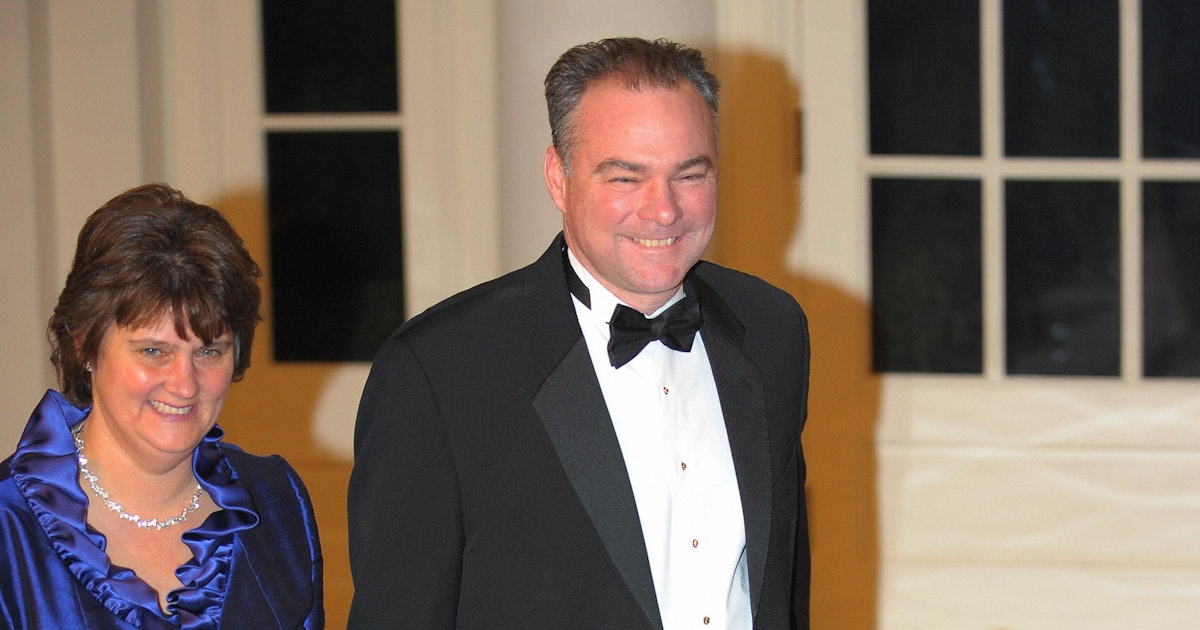
Big Education Ape: Tim Kaine Loves Public Schools. So Does His Wife Anne, Who is Virginia’s Secretary of Education http://bigeducationape.blogspot.com/2016/07/tim-kaine-loves-public-schools-so-does.html

The future of school accountability under ESSA | Brookings Institution

The future of school accountability under ESSA | Brookings Institution:

The future of school accountability under ESSA

Children, going to the first grade, gather in a classroom after an event marking the start of another school year

On July 27, the Brown Center on Education Policy hosted a discussion on the recently passed Every Student Succeeds Act. The panel was moderated by Arne Duncan, nonresident senior fellow with the Brown Center and former U.S. Secretary of Education for the Obama administration. The other two panelists were Hanseul King, State Superintendent of Education for the District of Columbia, and Chris Minnich, Executive Director of the Council of Chief State School Officers.

The No Child Left Behind Act: What Has Been Learned

Following a brief introduction from Brown Center Director Michael Hansen, the panel launched into a discussion of the predecessor to ESSA, the No Child Left Behind act. Mr. Minnich spoke highly of the continued testing mandate of NCLB under ESSA. He stated that NCLB was crucial in instigating state collection of student achievement data and disaggregation of data to identify achievement gaps, declaring that “we cannot go back to a time where we don’t have information on how schools are doing.” However, Mr. Minnich also urged states to learn from their struggles under NCLB, particularly state communication of information and expectations to schools and parents. He recalled that under NCLB several state agencies successfully began to track school performance and demanded that underperforming schools provide plans to raise student achievement, but failed to provide resource support or follow up on implementation. ESSA should give states an opportunity to provide more flexibility and support to fix those problems of the past.
The panelists additionally spoke to the power of higher, clearly defined, standards that were promoted during Race to the Top and the NCLB waiver period. Ms. Kang attributed rapid DC Public School achievement growth to teachers adapting to new standards by changing the types of teaching and learning taking place in classrooms. One example was a new writing assessment that asked students to analyze texts, rather than free-write an imaginative narrative. Ms. Kang described classroom practices focused on reading, discussing, and analytically writing about texts just a few years after adoption of the new assessment. Mr. Minnich concurred with the support for higher standards, remarking that the states that have established clear, higher, standards have seen students rise to the challenge and drive state-wide progress in student achievement.

The Ideal Accountability System

Under ESSA, states will be taking greater control of accountability systems. So what would an ideal accountability system look like? The panelists began by describing the dangers of having too many or too few metrics of student achievement. Under NCLB, a single proficiency standard was used to measure student progress. With so much weight on this one indicator, states were incentivized to push schools and districts to solely chase after higher proficiency rates in reading and math. Yet a system with fifteen to twenty metrics is easily just as ineffective, leading to confusion with unclear educational priorities. Thus, Mr. Minnich explains, an effective accountability system would be holistic while still focusing on clear priorities. Districts should first decide what they value and what improvements they want to see in their schools, and based on these established values, pick three or four clear metrics to focus on. These may include proficiency, growth, graduation rates, student engagement, and college or career-readiness. A limited number of such clear metrics would be easy to report and communicate clearly to schools, parents, and communities.
States will also have to decide on a balance between input-based metrics and output-based metrics. As Ms. Kang said, there is likely no magic proportion between the two, and indeed a large benefit of ESSA is in allowing states to design their accountability measures around their individual contexts. But to inform decisions, states will need a balance of both. Mr. Minnich explained “input metrics tell you how to improve; output metrics tell you where you are.” Both are clearly crucial to the task of identifying problems in school systems and solving them.

Addressing the Achievement Gap

Another important topic for states will be the achievement gap. The panelists agreed that states need to acknowledge historical underinvestment in education resources for certain minority racial groups and establish a dedicated commitment to now overinvesting in children from disadvantaged situations. Ms. Kang discussed the DC Publics Schools’ At-Risk Fund, a new category of spending dedicated to providing additional support for students considered at risk due to factors such as poverty, foster care, or homelessness. Mr. Duncan further discussed the challenge of local, property-tax-based school funding as a contribution to unequal resources and student achievement. He raised the idea of monetary incentives to attract the best faculty and staff to work in high-need schools, underscoring the need for states to overinvest in disadvantaged children and their schools to compensate for at-risk factors.

More Work to be Done

Even after states establish their educational priorities and accountability systems, more questions will have to be answered. How districts will work to raise student achievement matters. For example, focusing on underperforming schools is necessary, but using high-performing and high-growth schools as exemplary models can help districts define what they are aiming for. For effective implementation and a smooth transition from NCLB, states will need to communicate expectations and available support clearly with districts and schools. States will also need to decide what to do when new data, potential metrics, and methods of change are available. Teacher certification and renewal, for example, could prove a useful tool in impacting teaching processes for higher student achievement. It falls to states to determine how they will respond to their increasing quantities of information and new responsibilities.
With the end of NCLB and the beginning of ESSA, there is clearly much work to be done. As Ms. Kang put it, “the power is not just in having information, but how the system should be designed.” How states choose to design new accountability systems will clearly be a large development in years to come.
A full audio recording of the event can be found here.


Teachers' unions sense momentum at DNC

Teachers' unions sense momentum at DNC:

Teachers' unions sense momentum at DNC

The American Federation of teachers endorsed Clinton over Obama in 2008 and their support of her continues.

weingarten photo
President of the American Federation of Teachers Randi Weingarten.

Teachers' union leaders will admit it's been a tough 16 years for them--ever since George W. Bush swept into office with an aggressive reform agenda that Barack Obama has largely carried forward.
But labor leaders have held their heads noticeably higher at this week's Democratic National Convention thanks to recent changes in the education landscape and the party's nomination of Hillary Clinton, who is considered a more reliable ally than Obama.
"I think what we're seeing right now gives me hope," said Lily Eskelsen Garcia, head of the National Education Association (NEA), at a Wednesday forum hosted by The Atlantic.
Teachers' unions have historically been a pillar of support for Democratic politicians, both in terms of organizing and financial backing. During the Obama years, however, that patronage didn't buy much favor. The Obama administration pushed increased teacher accountability, school turnarounds, and other education reforms that have long irked unions. That tension manifested in 2014 when the NEA called on Obama's Secretary of Education, Arne Duncan, to resign. It was perhaps the most striking example of how far the Democratic party had drifted from union orbit.
Recent events, however, paint a far sunnier picture for the NEA and America's second-largest teacher's union, the American Federation of Teachers (AFT). Late last year, Congress passed a new education bill to replace No Child Left Behind, the Bush-era law that paved the way for many reform measures. In March, a Supreme Court deadlock thwarted--at least for now--a challenge to the union dues structure that could have greatly diminished union clout.
Now union leaders get to parade around Philadelphia in support of a new Democratic nominee, Hillary Clinton.

Read the rest of this story at NewsWorks Teachers' unions sense momentum at DNC:

More and more Minnesota students are opting out of standardized tests - StarTribune.com

More and more Minnesota students are opting out of standardized tests - StarTribune.com:

More and more Minnesota students are opting out of standardized tests

The trend is especially pronounced in Minneapolis high schools and raises questions about accuracy of test scores.


Leaders in the Minneapolis Public school district said this week that the accuracy of this year's standardized test scores for some of their schools was damaged because a significant number of students opted out of taking the tests.
This year's Minnesota Comprehensive Assessments data, released Thursday, shows that Minneapolis high schools in particular will have a hard time relying on the tests to assess the progress of their students in meeting achievement goals.
The data also show that opting out is a growing -- although still small -- trend elsewhere, as well.
In the 2015-16 school year, 94 out of every 10,000 students statewide refused to take the math tests, up from 3 per 10,000 just 4 years earlier. A lower rate of students refused to take the reading tests, but that has also risen sharply from four per 10,000 students to 74 per 10,000.
Breaking it down by grade level shows that 10th graders (reading test) and 11th graders (math test) have the highest opt-out rates.


In addition to opting out, other students don't take the tests because they are absent that day or have a medical exemption. Some students don't complete the exams and other exams are found to be invalid. But the number of students not taking the test for those reasons is far lower than those who simply choose not to take it. Opt-outs account for more than half of the cases for not taking the reading or math test.
State education commissioner Brenda Cassellius said the number of opt-outs might actually be higher because the data doesn’t account for students who refuse to take the test on the spot. The opt-out numbers only count those who alerted the school ahead of time. 
“I think our numbers are even larger,” Cassellius said.
Less than 2 percent of students statewide don’t take, or don’t complete, the tests, either because of opting out or these various other reasons.
State and federal law requires that schools see 95 percent participation on state accountability exams. The implications of not meeting that standard are still unknown as the state works to rewrite its laws to comply with the More and more Minnesota students are opting out of standardized tests - StarTribune.com:

Fethullah Gulen: Moderniser or Wolf in Sheep’s Clothing? « CSS Blog Network

Fethullah Gulen: Moderniser or Wolf in Sheep’s Clothing? « CSS Blog Network:

Fethullah Gulen: Moderniser or Wolf in Sheep’s Clothing?

Big Education Ape: KILLING ED: 120 American Charter Schools and One Secretive Turkish Cleric -http://bigeducationape.blogspot.com/2016/01/killing-ed-120-american-charter-schools.html


Synopsis
Fethullah Gulen, leader of one of the world’s largest Islamic movements, is accused of attempting to topple Turkish President Erdogan in a failed military coup. Is Gulen a modernist religious leader or a conspirator?
Commentary
BELIEVERS SAY he preaches a new, modernist form of Islam. Critics charge he is a wolf in sheep’s clothing preparing to convert secular Turkey into an Islamic republic. They accuse Fethullah Gulen of being a conspirator who has created a state within the state and attempted this weekend to topple the democratically elected Turkish President Recep Tayyip Erdogan in a failed military coup.
That was not how past Turkish governments or for that matter Erdogan in his eight years as prime minister saw Gulen, the leader of one of the world’s largest and wealthiest Islamic movements.
Cherished Ally and Weapon
Back in the 1990s, secular prime ministers Tansu Ciller and Mesut Yilmaz and other prominent political leaders viewed Gulen as their weapon against the pro-Islamic Refah (Welfare) Party, the predecessor of Erdogan’s Justice and Development Party (AKP), that advocated Turkey’s divorce from the West and a return to its Islamic and Ottoman roots.
Erdogan too initially saw. Gulen as a cherished ally. The two men worked together to force the staunchly secular military to accept civilian control in line with one of the European Union’s demands for future Turkish membership. It fitted both men’s goal of lifting French-style laicist restrictions on freedom of religious expression that had long been resisted by the military. Erdogan had at the time no problem with Gulen’s followers establishing a power base in the police force and the military.
This weekend’s failed coup suggests that elements of the military still believe in a non-constitutional role of the military. Yet, at the same time, it is to the credit of Erdogan and Gulen, that significant parts of the military, the opposition and the public backed Turkey’s democratically elected president and helped foil the coup irrespective of what they thought of his politics and leadership.
Gulen’s moves into branches of government, reflected his long-term strategy. Gulen preached obedience to the state and recognition of the rule of law while at the same time inserting his followers into key institutions of the state and educating a next generation in his ideological mould.
Indeed, more than half a century after he first became a government employed imam, Gulen adopted the role. He often dresses in a crumpled sports jacket and slacks, looking the part of a modern religious leader rather than a fervent Turkish nationalist or a militant Islamist. A doleful 75-year-old, he moreover talks the talk, avoiding language often employed by Turkey’s right-wing nationalists and Islamists.
Modernist approach
As a result, Gulen’s modernist approach appealed to urban conservatives and some more liberal segments of the middle class. His approach contrasted starkly with that of Mr. Erdogan, who targeted the more rural conservatives and the nationalists.
It was indeed Gulen’s advocacy of tolerance, dialogue and worldly education as well as his endorsement of Turkey’s close ties to Europe that endeared him to the country’s secular leaders of the 1990s and subsequently to Erdogan. “By emphasising our support for education and the media, we can prove that Islam is open to contemporary things,” he said in a rare interview with a foreign correspondent.
A diabetic with a heart ailment, Gulen has devoted himself since officially retiring in the early 1990s to writing tracts on Islam. Yet there is little in his writing or the administration of institutions linked to him that points in the direction of theological renewal.
Gulen among other things takes a conservative view of the role of women. Not surprisingly, Gulen’s movement operates separate schools for boys and girls. Yet, even Gulen has evolved.
When in the mid-1990s a woman visitor asked directions to a toilet at the Istanbul headquarters of his Zaman newspaper, officials said the multi-story building wasn’t equipped for women visitors. That has changed and women’s toilets were installed long before Erdogan’s police went in in March of this year to take over the paper.
Long term objective
Critics charge that Gulen’s professed moderation may not be what he really hopes to achieve. “Fethullah’s main project is the takeover of the state. That is why he was investing in education. They believe the state will just fall into their lap because they will be ready for it, they will have the people in place. That is their long-term plan,” said a prominent liberal Turkish intellectual.
Indeed, Gulen’s movement, despite the imam’s long-term vision, effectively sought to check Erdogan’s government in late 2013 with charges of corruption against ministers in the then prime minister’s cabinet and members of his family. The charges and alleged evidence to back them up were never tested in a court of law.
For Erdogan the charges were the straw that broke the camel’s back. What had been an increasingly public parting of ways that started with a soccer match fixing scandal in 2011 turned in late 2013 into open warfare with Erdogan firing or moving thousands of judiciary personnel and police officers to other jobs, shutting down the investigation, and seeking to destroy Gulen’s religious, educational and commercial empire.
The fact that the police played a key role in foiling this weekend’s coup attempt bears testimony to the degree to which Erdogan has succeeded in erasing Gulen’s influence in the police. This weekend’s dismissal of almost 3,000 judges and the issuance of arrest warrants for 140 of them on allegations of involvement with Gulen, suggests that Erdogan believes that his efforts to destroy the imam’s infrastructure were more successful in the police than they were in the judiciary.
None of this amounts to evidence of Erdogan’s assertion that Gulen engineered this weekend’s coup attempt. Like so much in recent years, Erdogan has used the alleged threat of a state within a state as well as increasingly authoritarian measures to remove his critics from the media and academia and to cow the parliamentary opposition to turn Turkey into an a more authoritarian state.
Erdogan’s illiberal version of Turkish democracy in which the public is invited to protest on his behalf but not against him makes uttering unsubstantiated allegations relatively easy. Erdogan will however have to produce hard evidence if he formally goes ahead with a request that the United States extradite Gulen, who is a green card holder resident in Pennsylvania.
Even if those that staged the failed coup turn out to be followers of Gulen, Erdogan would still have to prove that Gulen was aware and involved in their plans.
Back in 2011, during the soccer match fixing scandal, Gulen apologised to one of the involved club executives. The preacher said if his followers were involved in prosecuting soccer executives and players, he was not aware of that. It was a rare admission that Gulen, by now a frail old man, may no longer be in control of the empire he built.

About the Author
James M. Dorsey PhD is a Senior Fellow at the S. Rajaratnam School of International Studies (RSIS), Nanyang Technological University, Singapore, co-director of the University of Würzburg’s Institute for Fan Culture, and author of the just-published The Turbulent World of Middle East Soccer.
For more information on issues and events that shape our world, please visit our CSS Security Watch Series or browse our Publications.

Big Education Ape: The Gulen Movement’s Collision Course With The Turkish State -http://bigeducationape.blogspot.com/2016/07/the-gulen-movements-collision-course.html

Big Education Ape: US Commander Campbell: The man behind the failed coup in Turkey -http://bigeducationape.blogspot.com/2016/07/us-commander-campbell-man-behind-failed.html

Big Education Ape: Turkey’s Failed Coup Puts Spotlight on a Rural Pennsylvanian Town - WSJ - http://bigeducationape.blogspot.com/2016/07/turkeys-failed-coup-puts-spotlight-on.html

Big Education Ape: TBFURMAN: Who's Running These Schools? Part 3 -http://bigeducationape.blogspot.com/2016/07/tbfurman-whos-running-these-schools_24.html

Big Education Ape: Turkish rivalry comes to San Jose amid allegations about Magnolia charter schools - Mercury News - http://bigeducationape.blogspot.com/2016/07/turkish-rivalry-comes-to-san-jose-amid.html

Big Education Ape: Apple Education Services Posts Its Privacy Policy… in Latin | deutsch29 -http://bigeducationape.blogspot.com/2016/07/apple-education-services-posts-its.html

Big Education Ape: What Would it Take for US to Extradite Muslim Cleric to Turkey? -http://bigeducationape.blogspot.com/2016/07/what-would-it-take-for-us-to-extradite.html

Big Education Ape: Yo Campbell Brown Cat got your tongue? I Guess There is NO Talking Turkey w/ YOU! -http://bigeducationape.blogspot.com/2016/07/yo-campbell-brown-cat-got-your-tongue-i.html

Big Education Ape: TBFURMAN: Who's Running These Schools? -http://bigeducationape.blogspot.com/2016/07/tbfurman-whos-running-these-schools.html

Big Education Ape: Video shows Gülen urging followers to secretly infiltrate Turkish state institutions - Daily Sabah - http://bigeducationape.blogspot.com/2016/07/video-shows-gulen-urging-followers-to.html

Thursday, July 28, 2016

K.J.’s just-released emails show alternate city government reality - Sacramento News & Review -

Sacramento News & Review - K.J.’s just-released emails show alternate city government reality - News - Local Stories - July 28, 2016:

K.J.’s just-released emails show alternate city government reality
New documents reveal how the mayor used city staff for political maneuvering and attempted power plays


In July of 2013, Kevin Johnson had just prevented the Sacramento Kings from moving to Seattle. His days were busy shilling influential locals to buy season tickets, and maneuvering to prevent signature gatherers from putting an arena-subsidy referendum on the ballot. But, on July 26 of that year, the mayor—who often likens himself as Sacramento’s CEO—also found time to fly to Atlanta and play human-resources director and personally conduct an exit interview of a low-level worker with the National Conference of Black Mayors.
It’s true: New emails acquired by SN&R last week, as part of its recent legal victory against the mayor, reveal the lengths to which Johnson and his staff went to mop up blowback from his takeover at NCBM.
The more-than 70 emails and documents, which the mayor worked to keep secret for more than a year, don’t appear to contain any incriminating criminal evidence or “smoking guns” regarding Johnson or his ascension at the mayors group. But they do reaffirm a contentious, costly and time-consuming conquest of the Georgia-based nonprofit.
Perhaps more importantly, these Johnson communications also show how the mayor uses public city staff and his private employees to advance his political ambitions.
“Having a second, or alternate, bureaucracy that’s outside the government system … I think that’s unusual,” is how Peter Scheer, with the Northern California-based First Amendment Coalition, described Johnson’s administration at City Hall.
And they also function as a template for how a 21st century politician can use private email, such as Gmail, to skirt transparency, a case study that First Amendment and freedom-of-information experts refer to as a new frontier for elected leaders in California.
Scheer argued that Johnson’s use of private emails should be a concern.
“I think that’s inappropriate,” he said of his widespread use of Gmail accounts to avoid scrutiny from Sacramento News & Review - K.J.’s just-released emails show alternate city government reality - News - Local Stories - July 28, 2016:


I Will Vote for Hillary Clinton Because I Cannot Possibly Vote for Donald Trump. | deutsch29

I Will Vote for Hillary Clinton Because I Cannot Possibly Vote for Donald Trump. | deutsch29:

I Will Vote for Hillary Clinton Because I Cannot Possibly Vote for Donald Trump.


In Election 2016, I have a choice between Trump and Clinton, and Trump is too dangerous for me. I am no fan of Hillary Clinton; I am tired of political dynasties like the Bushes and Clintons. If I had had the opportunity, I would have voted for Bernie Sanders for president.
But that is not reality today. Clinton or Trump.
There is no way that I will miss casting my vote, and there is no way that I will vote for Donald J. Trump.
My chief research and writing focus is on K12 public education. Unfortunately, no candidate (Sanders included) realizes the damage that so-called “school choice” presents to America’s public school system. Maybe Clinton will come around; maybe not.
But my concerns about America’s relationship with the international community and. by extension, American national security, currently override all else as far as Election 2016 goes.
Yes, Hillary Clinton used an unsecured email server to transmit classified documents. This bothers me, indeed it does. But my concern with that issue is eclipsed by Donald Trump’s amazingly stupid verbalizing approval of a Russian hack of Clinton’s emails. As the July 27, 2016, New York Times reports:
Donald J. Trump said on Wednesday that he hoped Russian intelligence services had successfully hacked Hillary Clinton’s email, and encouraged them to publish whatever they may have stolen, essentially urging a foreign adversary to conduct cyberespionage against a former secretary of state.
 “Russia, if you’re listening, I hope you’re able to find the 30,000 emails that are missing,” Mr. Trump said during a news conference here in an apparent reference to Mrs. Clinton’s deleted emails. “I think you will probably be rewarded mightily by our press.” …
Mr. Trump later tried to modify his remarks about hacking Mrs. Clinton’s emails, contending they represented an effort to get the Russians to turn over their trove to the F.B.I.
“Asinine” does not capture the utter foolishness of Trump’s words– words that illustrate well the lack or forethought and restraint that Donald J. Trump would surely I Will Vote for Hillary Clinton Because I Cannot Possibly Vote for Donald Trump. | deutsch29:

“The 74’s” Fact-Checking of the Democratic Platform | VAMboozled! #DNC #DemsInPhilly

“The 74’s” Fact-Checking of the Democratic Platform | VAMboozled!:

“The 74’s” Fact-Checking of the Democratic Platform


As we all likely know well by now, speakers for both parties during last and this weeks’ Republican and Democratic Conventions, respectively, spoke and in many cases spewed a number of exaggerated, misleading, and outright false claims about multiple areas of American public policy…educational policy included. Hence, many fact-checking journalists, websites, social mediaists, and the like, have since been trying to hold both parties accountable for their facts and make “the actual facts” more evident. For a funny video about all of this, actually, see HBO’s John Oliver’s most recent bit on “last week’s unsurprisingly surprising Republican convention” here (11 minutes) and some of their expressions of “feelings” as “facts.”
Fittingly, The 74 — a non-profit, and (allegedly) non-partisan, honest, and fact-based news site (ironically) covering America’s education system “in crisis” that publishes articles “backed by investigation, expertise, and experience” — took on such a fact-checking challenge (however not void of feelings) in an article senior staff writer Matt Burnum wrote: “Researchers: No Consensus Against Using Test Scores in Teacher Evaluations, Contra Democratic Platform.”
Apparently, what author Barnum actually did to justify the title and contents of his article, however, was (1) take the claim written into the 55-page “2016 Democratic Party Platform” document that: “We [the Democratic Party] oppose…the use of student test scores in teacher and principal evaluations, a practice which has been repeatedly rejected by researchers” (p. 33); then (2) generalize what being “repeatedly rejected by researchers” means, to inferring that a “consensus,” “wholesale,” and “categorical rejection” among researchers “that such scores should not be used whatsoever in evaluation” exists; then “The 74’s” Fact-Checking of the Democratic Platform | VAMboozled!:


SOS Rally and March: Video and Transcript – Education Town Hall Forum

SOS Rally and March: Video and Transcript – Education Town Hall Forum:

SOS Rally and March: Video and Transcript

Denisha Jones, July 9 Rally, photo: BadAss Teachers

July 8-9 March and Rally for Public Education. Videos here
http://www.schoolhouselive.org/
“The Fight for Education is only Worth it When We also Fight for Social Justice”
By: Dr. Denisha Jones, BAT Board of Directors
This is the powerful and moving speech that Dr. Jones delivered at the People’s March for Education and Social Justice, copied from BadAss Teachers Association on Blogspot
Denisha Jones, July 9 Rally, photo: BadAss Teachers
Denisha Jones, July 8 Rally, photo: BadAss Teachers
As we have been preparing for this march and rally I have been asked countless times what the overall goal of this event is. Some have questioned the value of marching and rallying to achieve our goals. Personally I believe that there are many different reasons why we should march and rally. First we must come together and celebrate the progress we have made in the past five years. When hundreds of thousands of parents and students and teachers have opted out of high stakes testing across the country we need to celebrate. This does not mean we do not have much work to do but we should also take time to celebrate. Another reason we march and rally is to make our voices heard. We must remind society that education is not a privilege that only the rich can afford. We must demand that public education be preserved as a human right for all. When we march we elevate the voices of our students, their families and ourselves.
I have also been asked what makes this march/rally different than the one 5 years ago. And to that question I simply respond this time we have woken up to the reality that our fight to save public education is only worth it when we also fight for social justice. What good are high quality schools if black boys and girls are being herded into the prison industrial complex? What good are high test scores if our communities are ravaged by poverty and violence? What good is a child centered curriculum if families lack access to health care and jobs? We cannot fight for public education if we don’t fight for social justice.
Some of you might be wondering what it means to fight for social justice. Well it means acknowledging that this country has failed to serve all people well. We must acknowledge how institutional and structural racism, xenophobia, patriarchy, heterosexism, ableism, and classism have worked to oppress our non white non male brothers and sisters around the globe. We must acknowledge that we cannot have equitable public schools when we have income inequality.
We are the 99% and we must work together to not just restore the middle class but to eradicate poverty or at the very minimum to lessen the effects poverty has on the ability of our children to learn and grow. We must acknowledge that no human being is illegal and we must support the struggles of our undocumented brothers and sisters to live free of fear of deportation. We must acknowledge that mass incarceration has replaced slavery and Jim Crow and is wreaking havoc in our black and brown communities.
We cannot have equitable schools when our students’ parents are locked up for nonviolent crimes. We must acknowledge that climate change is a very real challenge to our future and we must prepare our children to be leaders in the green revolution.
We must acknowledge that Black Lives Matter. We must fight against police brutality and state sanctioned murder. We must put an end to private prisons fueling the school to prison pipeline. We must remember that any of our black and brown students can be the next Trayvon Martin, Tamir Rice, or Michael Brown. We must put an end to preschool discipline that unfairly targets black and brown boys and girls. We must protect our LGBT students and teachers who continue to be oppressed and lack real protection against discrimination. We must work to end SOS Rally and March: Video and Transcript – Education Town Hall Forum: