Latest News and Comment from Education

Friday, July 22, 2016

Marie Corfield: Dear @NJEA Members, This is Urgent!

Marie Corfield: Dear @NJEA Members, This is Urgent!:

Dear @NJEA Members, This is Urgent!

Hey you. Yea, you, NJEA member. The one working those part time jobs to make it through the summer. The one who is fortunate enough to not have to work in the summer to make ends meet. The one dipping into your retirement funds to make it through the summer. The one who has no time to advocate because you're just trying to keep your head above water. I'm talking to you

You need to stop what you're doing right now and read this.

See that counter on the right side of this screen? That's counting down to D-Day: the day the NJ pension system runs dry. That's right, I said, 'dry' as in running out of money. That's 10.45 years. For everyone. E-V-E-R-Y-O-N-E. Doesn't matter if you're a first year teacher or a 20 year retiree. There is no grandfather clause, no sliding scale. Nothing. Nada. Zippo. Say buh-bye to your future and hello to working til you drop.

If you don't know by now, the pension system has been grossly underfunded by the state for the past 20 years, even though we have been making our regularly scheduled payments (and then-some, thanks to Gov. Christie and Ch.78), and are now forced to work more years and get less in return. Our retired members are feeling the hit too because their cost of living adjustments have been frozen.

This situation is dire and it's not going to get any better if we sit back and do nothing.

It's that bad.

But that's not going to happen because we are a union, and unions work together. We stick together. We fight together. And we win together... and we are going to win this battle.

Right now approximately 300 specifically-designated NJEA Pension Fellows (myself included) are working hard to engage all 200,000 of us in the fight to save our pensions. 

Notice I didn't say, "engage the state legislature". I said, "engage all 200,000 of us". That's right, 300 of your fellow members cannot fix this problem alone, but 200,000 of us sure can.

We are working 5 days a week making member outreach phone calls and knocking on members' doors to inform and engage every single one of us to take action. In the first two days alone we made over 3800 phone calls and wrote countless postcards!

Right now the Assembly has approved the November ballot question to engrave funding the pension system into our state constitution. The Senate must also do so, but Senate President Steve Sweeney has yet to post the bill for a vote. If the vote doesn't happen by August 8, or if the vote fails in the Senate, there will be no ballot question, and we go back to square one... with that clock still ticking down to zero.

So, here are six easy things you can do right now:
  1. Go do VoteNJPension and sign up to become a Pension Activist. This is different from the Pension 'Fellows'. An activist is a voluntary position. You will receive text messages with updates and actions such as contacting legislators, and engaging friends and family to vote.
  2. Contact your State Senator—preferably today—and urge him or her to push Sen. Sweeney to post ACR-109 for a vote, and tell them you want them to vote Yes on it.
  3. Contact Sen. Sweeney directly and tell him to post ACR-109. His contact info: (856) 251-9801 or (856) 339-0808; SenSweeney@njleg.org. Don't worry, you won't get him on the phone. You will either get an answering machine or an aide who will take your information.
  4. Get informed. Read through What You Need To Know so that you can give factual information to those who may have questions or who think the pension system isn't worth saving.
  5. Contact one of the field offices we have set up for the summer and volunteer. Even if none of these are near you, there are many opportunities to volunteer your time in your community:

    NJEA Trenton Headquarters
    180 W. State St.
    Trenton
    609-599-4561

    NJEA Higher Education Office
    Golden Crest Corporate Center
    2279 State Highway 33, Suite 508
    Hamilton Square
    609-689-9580

    NJEA Region 11/12 Office
    Raritan Plaza II
    91 Fieldcrest Ave, Suite A3
    Edison
    732-287-4700

    Gloucester Co. Education Association
    190 N. Evergreen Ave, Suite 108
    Woodbury
    856-853-6673

    NJEA Stanhope Office
    23 Route 206
    Stanhope
    973-347-5717

    NJEA Region 3 Office
    1020 Laurel Oak Rd.
    Voorhees
    856-782-1225
  6. Make sure every member of your family who is able to do so is registered to vote.This website lets you do it online.
Friends, there really is no other way to say this. We can't sugar coat it or push it off on someone else. We need every single one of us taking action. Can you imagine Sen. Sweeney's office receiving 200,000 phone calls? He can't say No to that.

So please, make a commitment today to do your part. We all have worked too hard to simply let our pensions dissolve into thin air. And I think it's pretty safe to say that there aren't too many of us who can survive retirement without them. I know I can't.

Let's do this!

#TeamTrenton rocking the vote!
Marie Corfield: Dear @NJEA Members, This is Urgent!:

One Score and Seven Policy Iterations Ago… | VAMboozled!

One Score and Seven Policy Iterations Ago… | VAMboozled!:

One Score and Seven Policy Iterations Ago…

VAMboozled!
I just read what might be one of the best articles I’ve read in a long time on using test scores to measure teacher effectiveness, and why this is such a bad idea. Not surprisingly, unfortunately, this article was written 20 years ago (i.e., 1986) by – Edward Haertel, National Academy of Education member and recently retired Professor at Stanford University. If the name sounds familiar, it should as Professor Emeritus Haertel is one of the best on the topic of, and history behind VAMs (see prior posts about his related scholarship herehere, and here). To access the full article, please scroll to the reference at the bottom of this post.
Heartel wrote this article when at the time policymakers were, like they still are now, trying to hold teachers accountable for their students’ learning as measured on states’ standardized test scores. Although this article deals with minimum competency tests, which were in policy fashion at the time, about seven policy iterations ago, the contents of the article still have much relevance given where we are today — investing in “new and improved” Common Core tests and still riding on unsinkable beliefs that this is the way to reform the schools that have been in despair and (still) in need of major repair since 20+ years ago.
Here are some of the points I found of most “value:”
  • On isolating teacher effects: “Inferring teacher competence from test scores requires the isolation of teaching effects from other major influences on student test performance,” while “the task is to support an interpretation of student test performance as reflecting teacher competence by providing evidence against plausible rival hypotheses or interpretation.” While “student achievement depends on multiple factors, many of which are out of the teacher’s control,” and many of which cannot and likely never will be able to be “controlled.” In terms of home supports, “students enjoy varying levels of out-of-school support for learning. Not only may parental support and expectations influence student motivation and effort, but some parents may share directly in the task of instruction itself, reading with children, for example, or assisting them with homework.” In terms of school supports, “[s]choolwide learning climate refers to the host of factors that make a school more than a collection of self-contained classrooms. Where the principal is a strong instructional leader; where schoolwide policies on attendance, drug use, and discipline are consistently enforced; where the dominant peer culture is achievement-oriented; and where the school is actively supported by parents and the community.” This, all, makes isolating the teacher effect nearly if not wholly impossible.
  • On the difficulties with defining the teacher effect: “Does it include homework? Does it include self-directed study initiated by the student? How about tutoring by a parent One Score and Seven Policy Iterations Ago… | VAMboozled!:


‘All these teachers do is whine’ — and other myths - The Washington Post

‘All these teachers do is whine’ — and other myths - The Washington Post:

‘All these teachers do is whine’ — and other myths

You’ve heard many of them before, those statements about teachers and public schools that are said to be true but are just plain wrong.  In their book, “50 Myths and Lies That Threaten America’s Public Schools,” authors David C. Berliner and Gene V. Glass addressed many of them, including:
* Teachers are the most important influence in a child’s education.
* Merit pay is a good way to increase the performance of teachers.
* Subject matter knowledge is the most important asset a teacher can possess.
* Teachers are well paid.
* Subject matter is the most important asset a teacher can possess.
You have also no doubt heard that teachers have it easy because they have summers off, and can go home in mid-afternoon when their students leave, and that they can get tenure and therefore are protected from ever being fired.
Myths, all of them. And here’s some new ones, offered by Alice Trosclair, who has been teaching for nine years in south Louisiana. She currently teaches American literature, English Language and Composition (AP), and English Literature and Composition (AP). She lives with her husband and son, and has what she calls hundreds of “adopted” children — her students. A version of this was first published in The Educator’s Room, and I am republishing it with permission.

By Alice Trosclair
 “Stop being such a martyr.”
“All these teachers do is whine about how bad they have it.”
“It is your choice to put so many hours in. No one is forcing you to do all this.”
And my favorite, “You knew what you were getting into.”
Whether you want to admit it, society as we know it would fall apart without teachers. This a response to some of the comments that have been made on articles I have written or that I have heard over the past year.

*Stop being such a martyr.
I don’t consider myself a martyr, but I would die for my students, and I know any educator would. Some have. I would throw myself in front of my kids to protect them from a bullet or tornado. I think that entitles society to at least listen to what educators have to say. Someone who is willing to risk their lives for child deserves to be heard.
You may not agree with what we have to say, but you should at least listen with respect. We love education, and we love our students. And we are willing to put everything on the line for them, ‘All these teachers do is whine’ — and other myths - The Washington Post:

A Persistent Divide: New Federal Data Explore Education Disparities - Education Week

A Persistent Divide: New Federal Data Explore Education Disparities - Education Week:

A Persistent Divide: New Federal Data Explore Education Disparities


A deep gulf between the educational experiences of traditionally disadvantaged student groups and their peers on a broad range of indicators persists in U.S. public schools, according to new federal data. Here are some major highlights from the latest Civil Rights Data Collection—data on more than 50 million students collected from more than 99 percent of public schools and districts in the country during the 2013-14 school year.

School Discipline

The number of K-12 students who received at least one out-of-school suspension dropped by nearly 20 percent since the 2011-12 school year, but disparities persist.
  • 6 percent of all K-12 students were suspended in 2013-14. The suspension rate was 18 percent for black boys, 10 percent for black girls, 5 percent for white boys, and 2 percent for white girls.
  • American Indian or Alaska Native, Latino, Native Hawaiian or other Pacific Islander, and multiracial boys are also disproportionately suspended from school, representing 15% of K-12 students but 19% of K-12 students receiving one or more out-of-school suspensions.
  • Students with disabilities served by IDEA are more than twice as likely to receive one or more out-of-school suspensions as students without disabilities.
  • Black boys represent 8% of all students, but 19% of students expelled without educational services.
  • Black children made up 19 percent of preschool enrollment, but 47 percent of suspended preschool children. By comparison, white children made up 41 percent of enrollment but 28 percent of children suspended.

Access to Advanced Coursework

High-level math and science classes were not universally, or equally, offered in the nation’s high schools in 2013-14.
  • 33% of high schools with high black and Latino student enrollment* offer calculus, compared to 56% of high schools with low black and Latino student enrollment.
  • 48% of high schools with high black and Latino student enrollment* offer physics, compared to 67% of high schools with low black and Latino student enrollment.
  • 65% of high schools with high black and Latino student enrollment* offer chemistry, compared to 78% of high schools with low black and Latino student enrollment.
  • 71% of high schools with high black and Latino student enrollment* offer Algebra II, compared to 84% of high schools with low black and Latino student enrollment.
  • Black and Latino students represent 38% of students in schools that offer AP courses, but 29% of students enrolled in at least one Advance Placement course.
* “High/low black and Latino student enrollment” refers to schools with more than 75 percent and less than 25 percent black and Latino student enrollment, respectively.

Chronic Student Absenteeism

About 13 percent of all U.S. students—more than 6 million—missed at least 15 days of school in the 2013-14 school year.
  • 20% or more of American Indian or Alaska Native (26%), Native Hawaiian or other Pacific Islander (25%), black (22%), multiracial (21%), and Latino (20%) high school students are chronically absent.
  • High school students with disabilities served by IDEA are 1.3 times as likely to be chronically absent as high school students without disabilities.
  • 20% of all English-language-learner high school students are chronically absent.


Teacher Absenteeism

Nationally, 27 percent of pre-K-12 teachers were absent for more than 10 school days in the 2013-14 school year.

Sources: U.S. Department of Education and Education Week Research Center

Teacher/Staffing Equity

Black, Latino, and American Indian or Alaska Native students are more likely to attend schools with higher concentrations of inexperienced teachers.
  • 11% of black students, 9% of Latino students, and 7% of American Indian or Alaska Native students attend schools where more than 20% of teachers are in their first year of teaching, compared to 5% of white students and 4% of Asian students.
  • 10% of teachers in schools with high black and Latino student enrollment* are in their first year of teaching, compared to 5% of teachers in schools with low black and Latino student enrollment.

Sources: Civil Rights Data Collection and U.S. Department of Education
Vol. 35, Issue 36
Published in Print: July 20, 2016, as A Persistent Divide
 A Persistent Divide: New Federal Data Explore Education Disparities - Education Week:

Teach Like It’s 1895 – EduShyster

Teach Like It’s 1895 – EduShyster:

Teach Like It’s 1895


Teach Like a Champion’s pedagogical model is disturbingly similar to one that was established almost a century ago for the express purpose of maintaining racial hierarchy…
By Layla Treuhaft-Ali 
As an aspiring teacher and a history major, I’ve become fascinated by teacher education, past and present. Which is why I decided to embark on a close reading of Doug Lemov’s Teach Like A ChampionThe book, and its teaching techniques, looms large for any teacher who works in an urban school. Not only has the TLC model of teaching become a fixture of most *high-performing* charter school networks, but it is increasingly making its way into urban school districts as well. And that’s just the start. Teach Like a Champion’s approach also underlies broad efforts to transform the way teachers are educated, forming the *backbone of instruction* at an expanding number of charter-school-owned teacher education centers like Relay Graduate School of Education and Match’s Sposato School of Education.
As I was reading Teach Like A Champion, I observed something that shocked me. The pedagogical model espoused by Lemov is disturbingly similar to one that was established almost a century ago for the express purpose of maintaining racial hierarchy.
Teach Like A Champion advertises 49 discrete techniques that teachers can master to raise student achievement and help increase their students’ college readiness, with a strong emphasis on classroom culture and shaping student behavior, down to the most minute actions. As I was reading Teach Like A Champion, I observed something that shocked me. The pedagogical model espoused by Lemov is disturbingly similar to one that was established almost a century ago for the express purpose of maintaining racial hierarchy. Like Teach Like a Championthis initiative was implemented largely Teach Like It’s 1895 – EduShyster:

Donald Trump’s Love of School Choice

Donald Trump’s Love of School Choice:

Donald Trump’s Love of School Choice

focus on local phrase handwritten on chalkboard with heart symbol instead of O

It is no secret that when it comes to public schools and other facets of American life, many Republicans do not like the federal government. Donald Trump used to speak of local control of schools. This is very much the old Republican Party talking.
But last night, Donald Trump cheered school choice. He no longer mentions local control. I think he may now realize that school choice is the opposite of local control of schools. 
And the other night, Donald Trump, Jr. sniped at teachers and public schools and spouted the weary argument that America needs choice when it comes to public schools. Somewhere in that speech he praised vouchers in other countries. He failed to do his research. Here are the “disastrous” results in Sweden.
Local control is also an area that many value when it comes to the traditional idea of community schools. Many Democrats support community schools.
But local control and school choice don’t work together and you see this fight playing out in communities across the Donald Trump’s Love of School Choice:

School Closure: The Civil Rights Issue of Our Time | janresseger

School Closure: The Civil Rights Issue of Our Time | janresseger:

School Closure: The Civil Rights Issue of Our Time

This blog will take a week-long mid-summer break.  Look for a new post on Monday, August 1, 2016.
In an important piece published in The Hill, Judith Brown Dianis, Executive Director of Advancement Project, and Jitu Brown, National Director of the Journey for Justice Alliance, describe three complaints filed in 2014—on the 60th anniversary of Brown v. Board of Education—with the U.S. Department of Education’s Office for Civil Rights.  The complaints protest massive school closures in New Orleans, Newark, and Chicago, where 50 schools were shuttered at the end of the 2012-2013 school year.
One of the ways students in America’s cities are being deprived of basic opportunities is “through systematic and targeted school closures. We know this because we’ve been organizing against school closures, which are occurring in predominantly African American, Latino and low-income communities.  Across the country, these communities have watched as their schools, teachers, friendships and shared history are eliminated.  Many students are pushed out of one school only to be forced to attend another school that is further away, with less experienced teachers, similar resource inequities and instability.”
Here is the substance of the complaints: “The complaints challenged the disproportionate closures of traditional public schools in these cities. In New Orleans, the closures of the last five traditional public schools impacted over 1000 African-American students and only 5 White students. In Chicago, Black students were 26 times more likely to be impacted by school closures than White students.  In Newark, Black students were 51% of student enrollment, but 86% of students impacted by school closures.”
After a two year investigation, the Office of Civil Rights has reached an agreement with the Newark Public Schools that acknowledges the disproportionate impact of school closures on the city’s African American students and confirms that the school closures “did not appear to afford affected students any measurable, improved educational outcomes.” The agreement requires the Newark school district to investigate whether and how students from closed schools were affected academically and how their safe passage to school, and their access to special services (for disabled students) were impacted when schools were closed. Further, the district must evaluate and report on how the location of school facilities and the pupil School Closure: The Civil Rights Issue of Our Time | janresseger:

Russ on Reading: What Is the Best Way to Assess Early Literacy?

Russ on Reading: What Is the Best Way to Assess Early Literacy?:

What Is the Best Way to Assess Early Literacy?


Recently a teacher wrote to me about her school district's plans to scrap Running Records and use a combination of DIBELS and AIMSweb for assessing early literacy abilities. She asked for my help in fighting this ill-advised policy move and I provided some research based resources. I am pleased to say that this teacher, through her informed and impassioned action, was able to prevail and the elimination of Running Records was shelved.

This incident got me thinking and I decided to write this post to clarify some issues on early literacy assessment. As I travel to schools around the country, I have noted the proliferation of DIBELS and AIMSweb. Both DIBELS and AIMSweb are called "curriculum based measures" or CBMs. This term sounds good, of course, and may help administrators sell the product to school boards, but as literacy assessment expert, Peter Johnston points out, neither of these measures is curriculum based, unless we consider counting correctly pronounced words in a one-minute reading a part of the curriculum.

I would like to compare these assessments of early literacy to two assessments that I think are more enlightened and effective: Running Records and The Observational Survey, both devised by literacy researcher/educator Marie Clay.

Both DIBELS and AIMSweb take a "bits and pieces" approach to early literacy assessment. Children are asked to identify the letters of the alphabet, to read nonsense words, to segment the sounds in words, to perform a timed reading for fluency, and to use given vocabulary in a sentence all under 
Russ on Reading: What Is the Best Way to Assess Early Literacy?:

Apple Education Services Posts Its Privacy Policy… in Latin | deutsch29

Apple Education Services Posts Its Privacy Policy… in Latin | deutsch29:

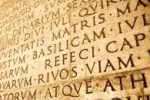
Apple Education Services Posts Its Privacy Policy… in Latin

latin

On its website, Apple Education Services offers the following information under the tag, “Who We Are”:
Apple Educational Services is a nonprofit organization focusing on improving the quality of education on in public and private schools. Apple Educational Services has been established in 2006 by a group of professional educators who have broad experience in charter school education. Apple Educational Services takes pride in a professional staff and a wide volunteer base to achieve its goals in helping the educators. Apple Educational Services works with schools and organizations every step of the way to make sure that they receive the needed support to meet their targets.
Though the above implies that Apple Education Services (AES) has been around as a nonprofit since 2006 (note: another link on the same website has AES as founded in 2005), the official ruling date for its nonprofit status was in September 2014. According to its 2014 990 tax form, AES is located in Moonachie, NJ; employs 12 people, and had end-of-year total assets of $36 million.
AES has four board members:
  • Mesut Sahin, President
  • Feruk Apaydin, Vice President
  • Alper Anil, Treasurer
  • Arthur Gallant, Director
AES is part of a greater Gulen network of school-related businesses/nonprofits.
On its 2014 tax form, the AES mission is as follows:
Apple Education Services (“Apple”) provides educational programs and technical support services consisting of student data base system, professional development for teachers and administrators, teacher evaluation, human resources, curriculum
Despite its listed mission, AES lists its three highest paid contractors as related toconstruction:
  • AARK Interstate Contractors (Ramsey, NJ), $10.7 million
  • Commerco Coppa Architects (Totowa, NJ), $120,520
  • United Construction and Managements (Lyndhurst, NJ), $239,408
And as for its revenue: Only $542,081 came from “software and edu consult,” with a Apple Education Services Posts Its Privacy Policy… in Latin | deutsch29:
 

Irony Alert: The Founder of Trump University Is Selling School Choice | gadflyonthewallblog

Irony Alert: The Founder of Trump University Is Selling School Choice | gadflyonthewallblog:

Irony Alert: The Founder of Trump University Is Selling School Choice

Donald-Trump-Donkey-Hotey
Donald Trump is in favor of school choice.
Well of course he is! After all, he made a lot of money scamming poor suckers out of their hard-earned cash with Trump University.
He knows how privatized education benefits the corporations who run the schooland not the poor schmucks who want to learn.
If he gets his way, our national education motto will be caveat emptor.
He is betting the American public is so stupid they’ll give a man caught in a scandalfor cheating people out of an education the power to set all education policy for our nation’s children.
And it’s all right there before the public.
In fact, the parallels between Trump University and school choice policies are apparent to anyone who looks. Here are just a few of the similarities:

1) False advertising
First of all, Trump University was never an actual university!
The New York State Education Department warned administrators when the institution was founded in 2005 that it was operating without a license. So what did the “school” do? It changed its legal name to The Trump Entrepreneur Initiative.
See? We’re not saying it’s a university anymore. I mean we still call it Trump Irony Alert: The Founder of Trump University Is Selling School Choice | gadflyonthewallblog:

Donald Trump Promotes School Choice, Bashes 'Bureaucrats' in Speech - Politics K-12 - Education Week

Donald Trump Promotes School Choice, Bashes 'Bureaucrats' in Speech - Politics K-12 - Education Week:

Donald Trump Promotes School Choice, Bashes 'Bureaucrats' in Speech

Cleveland
Republican Party presidential nominee Donald Trump gave a shout-out to a long-treasured GOP priority, school choice, in his nomination acceptance speech here Thursday, and in a section on education attacked a long-time party boogeyman, "bureaucrats."
"We will rescue kids from failing schools by helping their parents send them to a safe school of their choice," Trump told delegates on the final night of the Republican National Convention. "My opponent would rather protect bureaucrats than serve American children."
But anyone who wanted policy details about where Trump stood on education before the convention kicked off on Monday was just as in Donald Trump Promotes School Choice, Bashes 'Bureaucrats' in Speech - Politics K-12 - Education Week:

Top Donald Trump Quotes on K-12 Education Policy


By Andrew Ujifusa and Alyson Klein
Republican presidential nominee Donald Trump hasn't talked that much about K-12 education, but when he has it's been ... colorful. Take a look at our favorite Trump quotes on education policy.
On the federal role in K-12:
"Education through Washington, D.C., I don't want that. I want local education. I want the parents, and I want all of the teachers, and I want everybody to get together around a school and to make education great." - GOP debate in Miami, March 2015
On our international test scores and how much we pay for K-12:
"We're number one in terms of cost per pupil by a factor of, worldwide, by a factor of many. Number two is so far behind, forget it."
"So we're number one in the world in terms of spending. We're number 28 in the world in terms of, where do we stand? We have Third World countries that are ahead of us, countries that you wouldn't believe, some countries that you've hardly heard of." - Speech in Tulsa, Okla., January 2016 
On the Common Core State Standards:
"Common core is out! The Second Amendment is in!" Speech in Tulsa, Okla., January 2016                            
On who he listens to about education:
"I was with Dr. Ben Carson today [a one-time rival for the nomination] ... We spoke for over an hour on education. And he has such a great handle on it. He wants competitive schools. He wants a lot of different things that are terrific, including charter schools, by the way, that the unions are fighting like crazy. But charter schools work, and they work very well." - GOP debate in Miami, March 2016Thumbnail image for Thumbnail image for Thumbnail image for electionslug_2016_126x126.jpg
On school choice:
"Education reformers calls this school choice, charter schools, vouchers, even opportunity scholarships. I call it competition—the American Way." - The America We Deserve, by Donald Trump
On school facilities:
"We can't get an f--ing school built in Brooklyn." - April speech in Las Vegas 
On school safety:
"You know what a gun-free zone is for a sicko? That's bait" - January speech in Vermont 

Don't miss another Politics K-12 post. Sign up here to get news alerts in your email inbox.

California's baffling new approach to evaluating public schools - LA Times

California's baffling new approach to evaluating public schools - LA Times:

California's baffling new approach to evaluating public schools

Animo College Prep
A teacher compliments a student at Animo College Prep on the campus of Jordan High School in Watts in 2013. The students at the school achieved the highest gains in school performance in the state over the previous year's scores. (Los Angeles Times)


The Times Editorial Board


 I’s not easy to measure the performance of a school, because there are so many things that go into providing a good education. But neither should it be as hard as the State Board of Education is making it.

After three years of work, the board recently revealed a draft of its new annual accountability system for California schools. These are the report cards, in effect, that are to replace the old single-number Academic Performance Index by which schools have been judged for the last decade and a half. The API was based almost solely on the results of the annual standardized tests taken by students.
The board’s determination to measure schools by more than merely test scores is laudable and has led national thinking on the topic. But the new system is more than overly warm and fuzzy. Making sense of it is practically impossible.
There’s a series of colored boxes, with the colors designed to reflect both the school’s actual performance on a given measurement — such as how many students are suspended or what surveys say about the school’s atmosphere — and whether that performance is getting a little better or a lot better or … well, you get the picture.
Or more likely you don’t, because we’re sure having problems with it. There are nine different categories for measuring schools, with only one of those being how its students scored on the standards tests. Others include “basics” (such as having adequate textbooks and facilities) and “implementation of academic standards.” Each category is ranked by how high a priority it is for that particular school. And each category has two colored boxes. And there are six possible colors for each box. We’ve got this much: Green is good. Red is bad. Yellow is somewhere in between. Just like traffic lights. It’s hard to ascertain what the rest mean, but there’s a separate chart showing all the colors that is supposed to give you an idea of what they stand for. But it doesn’t, really.
Plus extra boxes for “equity reports,” which refer to how well subgroups such as Latino, black and low-income students are doing. But the numbers — also color-coded — confuse more than they inform.
If you’re a parent trying to figure out whether one school in your district is better than another, well, there’s no clear way to do it. If you’re a voter who wants to determine how much the local schools have improved over time, good luck.
The state board and its staff — educated and deeply immersed in the minutiae of school policy — have lost touch with those of us who aren’t experts in educational statistics. They would have seen the gap if they had taken these charts for a test drive, showing them to parents waiting outside schools to pick up their kids or to voters waiting in line at the supermarket. More than likely, these multicolored charts would have elicited a well-deserved “Huh?”
One reason the charts are so over-complicated is that they’re being larded with too many factors that don’t reveal how well students are learning. Among the elements being judged: parent involvement, suspension rates, graduation rates and the like. These may be important aspects of school life, but they are a means to an end — better-educated students. If a school doesn’t suspend any students, but also doesn’t improve academic outcomes, why should it get credit for hollow achievements?
Compare this with the API: one number, reflecting test performance, with a clear target number of 800 for academic proficiency. With a couple more numbers, parents could tell at a glance where that school stood in its efforts to improve.
The API was simplistic. It defined excellence too narrowly, which in turn led to “teaching to the test.” But this new method swings way too far in the opposite direction.
Meanwhile, the new federal Every Student Succeeds Act requires states to identify the lowest performing 5% of schools and intervene to improve achievement. How will California ever identify those schools? How will parents identify them?
The board is scheduled to adopt its final plan in September, just two months away. But these charts are unadoptable. The board must start over and create a simpler, clearer, more rigorous way to measure achievement.
Follow the Opinion section on Twitter @latimesopinion and Facebook