Latest News and Comment from Education

Friday, March 6, 2020

Best Teacher Activists Candidates For OEA Elections

Best Teacher Activists Candidates For OEA Elections

Best Teacher Activists Candidates For OEA Elections


There are many active teachers who work tremendously to improve the overall public education system across United States of America.
So, in this article, you will meet all the famous teacher activists candidates who we think are eligible for OEA elections:

Vote for Perry Bellow – Handleman for the OEA Secretary
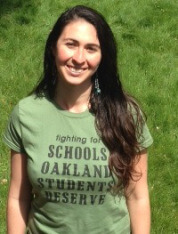
Perry Bellow
  • She is a teacher for the 5th year now.
  • Has been the Coliseum College Prep Academy Social Justice Pathway Director. Also an Ethnic Studies and Leadership teacher and had founded the CCPA internship.
  • Before she was a teacher she had worked as an immigrant right organizer and also the youth organizer.
  • Had worked as OEA Site representative, was active with the OEA crisis action team and had been the founding member of the Classroom struggle.
  • She loves google drive, chant sheets writing and is an expert at action alert email.

Vote for Deirdre Snyder for the post of  Seat 3 OEA Executive Board
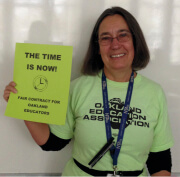
deirdre snyder
  • She has been the OEA site representative for more than ten years in Oakland.
  • Had initiated Green Academy situated in Oakland tech. Made the curriculum for the first year.
  • She was the Spanish teacher for more than 2 decades and had the main focus on learning that was project-based.
  • She Had been a member of the election committee for a long time.

Vote Michael Shane for the post of Seat 4 OEA Executive Board
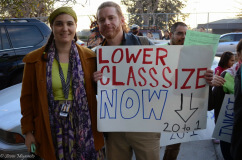
michael shane
  • For Rudsdale and Sojourner Truth had been the OEA site representative.
  • Has 15 years of experience as a teacher.
  • Then substitute the experience of 3 years in OUSD.
  • Is the founding member of Classroom Struggle.

Vote Ismael Armendariz for the post of Seat 5 OEA Executive Board
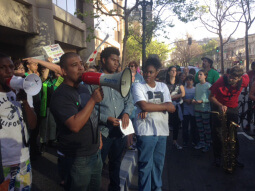
Ismael Armendariz
  • In Edna Brewer Middle School, Ismael was the OEA site representative.
  • An active member in SPED Hard Caps Campaign/ OEA Special Education caucus.
  • Over 5 years of experience in youth organizing and social justice.
  • At Brewer had founded Latino Male Empowerment After School Club.

Vote Natalia Cooper for the post of Seat 6 OEA Executive Board 

natalia cooper
  •  Experience of 5 years for teaching at Oakland Tech and McClymonds in OUSD.
  • Special Education case manager and Special Day Class Science teacher.
  • Had been OEA Site Rep for Oakland Tech, also OEA Special Education caucus and OEA Crisis Action Team.
  • A great Science Teacher at Exploratorium Teacher Institute in 2014. Was known for hatching trout eggs in the class.
Thanks for visiting @ClassroomStruggle.org
Hope you find helpful in understanding better idea on electing right candidate.

Final Office Hours* | Larry Cuban on School Reform and Classroom Practice

Final Office Hours* | Larry Cuban on School Reform and Classroom Practice

Final Office Hours*


By the end of June, I have to move out of my office in Cubberley.
I retired from the Graduate School of Education in 2001 and since then GSE has allotted offices in one of the two education buildings on campus to retired professors who, like myself, are located in Cubberley (named after a long-tenured dean and benefactor). I see occasional students, use the library located on the third floor, keep books and papers–yes in those metal-gray four-drawer file cases–and read.
The importance of office hours in my career as a professor
After a quarter-century of work in public schools as a teacher and administrator, I came to the GSE in 1981.
Being a tenured professor is a privileged position. Especially at an elite university at a time when recently-minted Ph.Ds getting tenure-line offers has shrunk dramatically and part-time instructors and adjunct posts have mushroomed across higher education.
Compared to being a high school teacher with five daily classes of 50-minutes each, the teaching load is light. I had to teach four courses a year. For each CONTINUE READING: Final Office Hours* | Larry Cuban on School Reform and Classroom Practice

Indiana Set to End Test Scores as a Mandatory Part of Teacher Evaluations | deutsch29

Indiana Set to End Test Scores as a Mandatory Part of Teacher Evaluations | deutsch29

Indiana Set to End Test Scores as a Mandatory Part of Teacher Evaluations


The idea of using student test scores to measure teachers is ridiculous. Testing companies know as much; that is why no testing company dares advertise its standardized tests as suitable for measuring anything other than the aptitude or achievement of the individual completing the test.
Even so, the life blood of so-called education reform is danmation by test score, be it damnation of teachers, or schools, or districts, or states, or even our nation as a whole.
After a while, though, the ed-reform, system-shake-up appeal of standardized testing loses its luster. Such has happened in Indiana as concerns the state-mandated use of student test scores as a component of teacher evaluations.
Indiana Representative Anthony Cook (R-Cicero) authored HB1002, “AN ACT to amend the Indiana Code concerning education,” a bill in which Cook simply removed the 2011 language requiring “school corporations” to include in teacher evaluations…
…objective measures of student achievement and growth to significantly inform the evaluations. The objective measures must include:
  • Student assessment results from statewide assessments for certificated employees whose responsibilities include instruction in subjects measured by statewide assessments
  • Methods for assessing student growth for certificated employees who do not teach in areas measured by statewide assessments, and
  • Student assessment results from locally developed assessments and other test masures for certificated employees whose responsibilities may or may not include instruction in subjects and areas measured by statewide assessments.
Consequently, the bill also relieves the state board of education of “Adopt[ing]… CONTINUE READING: Indiana Set to End Test Scores as a Mandatory Part of Teacher Evaluations | deutsch29

CURMUDGUCATION: Schneider's Indispensable Guide To Research

CURMUDGUCATION: Schneider's Indispensable Guide To Research

Schneider's Indispensable Guide To Research


I call her the indispensable Mercedes Schneider. When I entered the blogosphere, hers was one of the first names I learned, because I kept coming back to her blog to get the information that wasn't anywhere else. I have (I hear) a reputation for cranking out a lot of writing, but Schneider posts almost daily, writes books, and carries a full time teaching load. And her posts are usually the result of actual research (unlike some of us who just hop online and shoot off my mouth). Schneider is prolific, but she also brings hard facts and serious sourcing to her work. If you are not following her blog, you should be.

All of that is why I was excited to see that she has another book out. And while her other books have been detail-packed looks at what's going on with ed reform, this new book, A Practical Guide To Digital Research: Getting the Facts and Rejecting the Lies is a thorough look at how to go cyberdigging, looking at both the techniques and the tools that can be used to uncover whatever truth is lurking out there. Because she provides plenty of examples and demonstrations of how these tools and techniques have worked for her, Schneider also gives us a sort of greatest hits collection. Remember that time she figured out who the secret donor to Education Post was? Or just how much out-of-state money was sneaking into Massachusetts to support raising the charter cap? Or how the Louisiana ed chief was quietly married to the head of an organization that te ed department deals with?

There's an astonishing amount of information out there that is hidden--but not really hidden all that well. Schneider is an expert in uncovering those nuggets of information that some folks wish would stay hidden.

Schneider gives away her secrets here, and and does so in a clear, concise manner that can be CONTINUE READING: 
CURMUDGUCATION: Schneider's Indispensable Guide To Research

Amazing hearings on Friday & next steps to help us achieve smaller classes for NYC kids | Class Size Matters

Amazing hearings on Friday & next steps to help us achieve smaller classes for NYC kids | Class Size Matters 

Amazing hearings on Friday & next steps to help us achieve smaller classes for NYC kids


The class size hearings at City Hall on Friday were so overcrowded that it was standing room only. Sadly, many people weren’t allowed in the room, and many left before speaking.
Among those educators, parents, students and advocates who managed to speak, many gave tremendously stirring testimony about how much their opportunities had been unfairly restricted by the excessive class sizes in NYC public schools. They explained how much better our schools would be if the DOE prioritized class size reduction over the current emphasis on more testing and bureaucracy, and how smaller classes could also save millions in terms of special education costs as well as cut down on the school-to-prison pipeline.
I have started to post some of the testimony on my blog, along with a press release with some quotes. I will continue to add excerpts from the hearings over the next few days. Chalkbeat and NY1 also reported on the hearings and there is video of the entire six plus hours here.
Especially eloquent was Board of Regents member Kathleen Cashin, who spoke about when she was Superintendent of District 23 in Ocean Hill/Brownsville, she lowered class size in the elementary schools in 1999, and in her words, “the whole world changed.” Children were happy because they were able to form close bonds with their teachers, teachers gained a sense of fulfillment because they could reach all their students for the first time, and the district, one of the poorest in the nation, showed the greatest achievement growth of any in the city.
As Regent Cashin put it, “Poverty is a terrible teacher; and it drains anyone it comes in contact with. But CONTINUE READING: Amazing hearings on Friday & next steps to help us achieve smaller classes for NYC kids | Class Size Matters 

Thursday, March 5, 2020

CURMUDGUCATION: New Book Argues Christian Right Worships Power

CURMUDGUCATION: New Book Argues Christian Right Worships Power

New Book Argues Christian Right Worships Power


Katherine Stewart is an author and journalist who specializes in issues surrounding te separation of church and state. She has a new book coming out-- The Power Worshippers: Inside the Dangerous Rise of Religious Nationalismand a recent interview at Salon captures some of the highlights.

It's always interesting to see what happens when someone whose main beat is not education takes a look at education issues. Stewart has looked at educational issues in the past where they relate to church-state separation, and here she comes again with this statement from the interview:

We also have to recognize that the role of public money is absolutely huge. A lot of the calls for "religious freedom" that characterize much of the activism of the movement today are often seen, rightly so, as a demand that conservative Christians should be able to discriminate against LGBT Americans, nonreligious women and members of the religious minority groups. But even more than that, activists have their eye on a vast potential flow of public funds in the future. This is one of the reasons why the calls for religious freedom are just like this ever-louder drum beat that we're hearing in so many places.

This agenda has been made really explicit in the field of public education where activists are determined to expand access to public funds in the form of vouchers. They've actually placed a key CONTINUE READING: 
CURMUDGUCATION: New Book Argues Christian Right Worships Power

LA school board early results show win for union opposed to charters - The Washington Post

LA school board early results show win for union opposed to charters - The Washington Post

Good news likely for union opposing charters in L.A. school board vote


This is an update to a story I posted last weekend about crucial school board races in Los Angeles, the country’s second-largest school district.
Four of the seven seats on the Board of Education of the Los Angeles Unified School District were on Tuesday’s ballot. The key issue in the races: charter schools — and whether voters would elect a board that would expand these schools in the district or a board that wouldn’t. The shift of one seat would make all the difference in this regard.


More than $7 million was poured into the races, most of it going to three candidates who are pro-charter, and some of the races turned nasty, with charges of anti-Semitism in one and false charges of impropriety in another.

CLASS SIZE MATTERS THE TESTIMONY BINGE-WATCH - NYC Public School Parents

NYC Public School Parents


CLASS SIZE MATTERS 
THE TESTIMONY BINGE-WATCH


Curtis D. Young on how large classes contribute to the school-to-prison pipeline

Curtis D. Young, a member of CB12 Youth and Education Committee and the Executive Director of a juvenile justice nonprofit, testifies at the Class Size Hearings on Feb. 28 about how large classes in NYC schools contribute to high suspension rates and the school-to-prison pipeline. His written testimony is below the video. Testimony of Curtis Young at Class Size Hearings from Class Size Matters on
Shino Tanikawa on how Fair Student Funding system works against class size reduction and how small classes would facilitate integration

Testimony from Feb. 28 class size hearings at City Hall from Shino Tanikawa, a NYC public school parent leader. Shino is a member of the Fair Student Funding (FSF) taskforce, and discusses the difficult decisions principals must make regarding class size when the FSF system devised by DOE incentivizes them to overcrowd their schools and keep class sizes large. Also a member of the School Diversit
Karen Sprowal on how large classes caused her son to melt down

See the video of Karen Sprowal testifying at the City Council hearings on class size on Feb. 28. Karen described how large classes in her son's public school starting in the 4th grade caused him to melt down. Now he is doing well in a private school with small classes, with tuition paid for by the city at $93,000 per year. She explains how lowering class size would not just benefit so many NYC ch
Lorraie Forbes and Tiffani Torres speak out about how NYC students are being robbed because of excessive class sizes

High school students Lorraie Forbes and Tiffani Torres from Teens Take Charge testify about how important it is for NYC to lower class size to give students like them a real chance to succeed. As Lorraie put it, " I feel as if my fellow students and I are being robbed of the opportunity to be as big as we can be." When asked by Council Member Treyger how important class size is from one to ten, t

MAR 03

Must see video: Regent Kathy Cashin and City Council Education chair Mark Treyger on the importance of class size

See the video of Regent Kathleen Cashin's observations about class size which she made during the City Council hearings on Feb. 28 about what happened when she lowered class size in the District 23 schools when she was Superintendent. As she puts it, when you reduce class size, the "whole world changes." She explained how smaller classes are important both for students and their teachers, and lea

MAR 01

Testimonies of four mothers, speaking about how their children have been affected by the unacceptably large classes in city schools

The testimonies of parents, educators and advocates at the class size hearings at City Hall on Friday were so powerful that I am going to post many of them on this blog. Here is video of the proceedings -- nearly six hours. The hearings would have lasted even longer if many of the parents who wanted to testify hadn't been shut out because the room was too crowded. Here's an article about the hear

FEB 28


Council hearings on class size so overcrowded that scores of parents and advocates are turned away

credit @TeensTakeCharge For immediate release Friday, Feb. 28, 2020 Contact: Leonie Haimson; leoniehaimson@gmail.com ; 917-435-9329. Today, from 10 AM to 3:45 PM, the City Council Education Committee held hearings 
NYC Public School Parents


On Super Tuesday, the LA Teachers’ Strike Paid Off Again

On Super Tuesday, the LA Teachers’ Strike Paid Off Again

On Super Tuesday, the LA Teachers’ Strike Paid Off Again

Last January’s Los Angeles teachers’ strike saw some 30,000 educators walk out of the classroom in the nation’s second-largest school district and return six days later with a new contract. The teachers fought not only for wage increases but broadened their demands to include schooling conditions for the district’s more than 500,000 students. They called for caps on class sizes and extra support staff, including a full-time nurse in every school and a librarian for all middle and high schools. They pushed for greater oversight of charter schools and against their further expansion. The community overwhelmingly supported the teachers, and, by and large, the teachers won.
Now, the strike’s legacy is helping fuel electoral victories, which will determine school funding decisions and the district’s approach to charters. “One contract doesn’t solve all the decades of disinvestment in our schools,” says Cecily Myart-Cruz, president of the United Teachers Los Angeles (UTLA). “When you have privatizers knocking at the door—no, they ain’t knocking. They’re bulldozing our doors in.”
The issues at stake in the strike were on the ballot on Super Tuesday in Los Angeles. School board elections in the district typically pit the union against charter school advocates. The UTLA backed candidates in all four of the seats up for grabs. One, George McKenna, ran unopposed. Another, local progressive luminary Jackie Goldberg, won an outright majority of her district’s votes. Scott Schmerelson, an CONTINUE READING: On Super Tuesday, the LA Teachers’ Strike Paid Off Again

The National Reading Panel: Still Misrepresented After All These Years | Live Long and Prosper

The National Reading Panel: Still Misrepresented After All These Years | Live Long and Prosper

The National Reading Panel: Still Misrepresented After All These Years


THE “READING WARS” AND THE NATIONAL READING PANEL

Jay Matthews is a long-time education writer for the Washington Post. Matthews has written about education for years though he has no training or experience in education other than as a student (BA in government, Harvard University, MA in East Asian regional studies). To be sure, he has studied and written about education extensively as a journalist, but that isn’t enough to replace actual classroom experience.
In the following article, Matthews mentions the National Reading Panel report. He implies that the low test scores of poor children is because their schools and teachers ignore the “proven” science of systematic phonics, which we will see, is not proven science after all.
It is one more sign of rising concern over failure to give all children the intensive phonics lessons proven many years ago to be essential to mastering reading.

Reading is becoming a lively issue in many parts of the country. California recently agreed in a lawsuit settlement to spend $53 million over three years in 75 low-performing elementary schools to improve reading instruction. Only about half of third-graders have met that state’s reading standards, part of a national failure to teach the vital skill to impoverished children.
It has hit hard in Virginia. Walker and two other leaders of the Arlington CONTINUE READING: The National Reading Panel: Still Misrepresented After All These Years | Live Long and Prosper