Friday, November 8, 2019

CURMUDGUCATION: FL: Even The State Thinks Florida Virtual School Needs To Shape Up

CURMUDGUCATION: FL: Even The State Thinks Florida Virtual School Needs To Shape Up

FL: Even The State Thinks Florida Virtual School Needs To Shape Up


SERIOUSLY HOW BAD DO YOU HAVE TO BE TO HAVE THE FLORIDA EDUCATION DEPARTMENT (one of the worst in the country) SAY THAT A CHARTER SCHOOL OF ANY KIND IS FAILING???

Virtual charter schools have a lousy track record, so bad that even bricks-and-mortar charter advocates have called for them to shape the hell up. Meanwhile, Florida has implemented every reformy method of undercutting public schools that could be imagined. So it's entirely predictable that Florida would have its own cyberschool, and that it would be a mess. But a lucrative one, as under previous governor Rick Scott, the state added a graduation requirement that every student must take an online course.

The school itself? Well, a 2014 Harvard Kennedy School study found that FLVS was "not significantly worse" than public school. For some reason, FLVS did not include that in their marketing.

Florida Virtual School was launched in 1997 by the state, and has since spun off into a sort of private beast that offers franchises to school districts. Problems have ensued regularly since. For instance, in 2018 the on-line school suffered a massive data breach,  characterized by one expert as not so much a hack as the school "left the door open."

The most recent round involved the Orlando Sentinel trying to plumb the depths of the work of Frank Kruppenbacher, the once-attorney of FLVS. The Sentinel learned that the lawyer had been mixing his FLVS work with that of other clients, jobs, and his own family. He used school employees to do work elsewhere, hired family, and, additionally, was apparently a sexist jerk to staff. The school kept all of this under wraps, including a nasty court battle; FLVS not only refused to release documents, but filed a civil lawsuit against the Sentinel for asking.

How bad did it get? So bad that state edu-honcho and former actively anti-public ed legislator Richard Corcoran recommended a big-time audit of FLVS, and Governor Ron "Never Met A Privatizing Scheme He Didn't Like" DeSantis agreed. Previous Governor Rick Scott had loaded the FLVS board of trustees with folks who were cozy with Kruppenbacher, and DeSantis has made some noise about changing that, too.

This summer a new FLVS head was appointed, and some board was shuffled as the state took control CONTINUE READING: 
CURMUDGUCATION: FL: Even The State Thinks Florida Virtual School Needs To Shape Up


Education Research Report: U.S. Secret Service Analysis of Targeted School Violence

Education Research Report: U.S. Secret Service Analysis of Targeted School Violence

U.S. Secret Service Analysis of Targeted School Violence

The U.S. Secret Service today released a new report on targeted school violence in the United States. The study, Protecting America’s Schools: A U.S. SecretService Analysis of Targeted School Violence, identifies 41 incidents of attacks against K-12 schools in the United States from 2008 to 2017. Researchers with the Secret Service National Threat Assessment Center (NTAC) have examined the background and behaviors of the attackers and identified a series of key findings and significant commonalities.

The report identifies ten key findings among the 41 incidents:

 ·There is no profile of a student attacker, nor is there a profile for the type of school that has been targeted.
·Attackers usually had multiple motives, the most common involving a grievance with classmates.
·Most attackers used firearms, and firearms were most often acquired from the home.
·Most attackers had experienced psychological, behavioral, or developmental symptoms.
·Half of the attackers had interests in violent topics, like the Columbine shooting or Hitler.
·All attackers experienced social stressors involving their relationships with peers and/or romantic partners.
·Nearly every attacker experienced negative home life factors.
·Most attackers were victims of bullying, which was often observed by others.
·Most attackers had a history of school disciplinary actions, and many had prior contact with law enforcement.
·All attackers exhibited concerning behaviors. Most elicited concern from others,and most communicated their intent to attack.


Education Research Report: U.S. Secret Service Analysis of Targeted School Violence


Kentucky’s New Governor Andy Beshear Prioritizes Funding Public Schools, Strengthening State Pensions, and Protecting Medicaid Eligibility | janresseger

Kentucky’s New Governor Andy Beshear Prioritizes Funding Public Schools, Strengthening State Pensions, and Protecting Medicaid Eligibility | janresseger

Kentucky’s New Governor Andy Beshear Prioritizes Funding Public Schools, Strengthening State Pensions, and Protecting Medicaid Eligibility

On Tuesday night, Andy Beshear, a Democrat, was elected governor of Kentucky.  By a slim 5,100 vote margin, which may be challenged in Kentucky’s version of a recount, Beshear defeated the state’s current governor, Republican, Matt Bevin.
President Donald Trump and Vice President Mike Pence made this race a priority and spent considerable time in Kentucky rallying Bevin’s supporters in the final weeks of the campaign.  And Politico reports that the President’s 2020 campaign operation invested in an extensive get-out-the-vote effort across the state to ensure a Bevin victory. But it didn’t work.
Governor Elect Andy Beshear chose a public school principal, Jacqueline Coleman, as his running mate. He won on a platform for the common good, which features raising funding for public schools and school teachers, stabilizing the state pension fund, and eliminating restrictions on Medicaid eligibility.
Kentucky’s teachers marched on the state capitol in Frankfort in April 2018, as part of the beginning of the RedforEd wave, which has brought the nation’s attention to what have become outrageously large classes and shortages of counselors, school psychologists, social workers, nurses, and librarians as states failed to recover from the 2008 recession. The Center on Budget and Policy Priorities names Kentucky as one of a dozen states where, by 2019, state school formula funding remains 13 percent below where it was in 2008 when adjusted for inflation.
In early October, Andy Beshear released an education plan to increase the state’s funding for schools. The Louisville Courier Journal reported: “A main feature of the Democrats’ plan is supporting an ‘education first budget’ that increases the state’s portion of SEEK (Support Education Excellence in Kentucky) funding and increases overall per-pupil funding.  While per-pupil funding has increased under Bevin, Beshear said the total remains 13% lower than before the 2008 recession…. The Beshear campaign’s plan also calls for reducing class sizes, increasing the number of school nurses, adding mental health services, helping local CONTINUE READING: Kentucky’s New Governor Andy Beshear Prioritizes Funding Public Schools, Strengthening State Pensions, and Protecting Medicaid Eligibility | janresseger

Kamala Harris’ Extended-School-Day, Childcare Legislation | deutsch29

Kamala Harris’ Extended-School-Day, Childcare Legislation | deutsch29

Kamala Harris’ Extended-School-Day, Childcare Legislation

US senator and Democratic presidential hopeful Kamala Harris has introduced a bill to extend the elementary school day so that it better aligns with the traditonal, 9-to-5 workday in the name of helping low-income parents with child care.
The aim is to increase the length of the elementary school day “at least 8 am to 6 pm (or different hours if determined appropriate due to the needs of the community) Monday through Friday during the school year.” The bill would offer grants for up to $5M over five years to school districts to work the transformation. The bill also proposes support for summer programs (Harris proposes $1.3B annually for the summer programs.)
Harris’ bill does not require teachers to work longer school days. It does, however, presume that those elementary schools will be a stable, dependable, community presence. From the bill:
An elementary school at which Family Friendly School policies are established shall not close throughout the school year, except for on Federal holidays, weekends, and during weather emergencies and other emergencies that would make it a safety liability for children to be at school. Specifically, each elementary school at which Family Friendly School policies are established may not close for parent-teacher conferences, professional development, or for any other reason without offering full day enrichment activities free of charge for students.
And therein lies the disruptive-ed-reform rub.
Harris’ bill presumes that the associated elementary schools are a stable presence in low-income communities. Not so. America is well into the era of damning schools with low test grades to closure, and of turning commuity schools into “choice” schools (which means that the schools are not only less connected if not divorced from any community but also that they may well be operated by a remote, third-party entity from the community). So, to make low-income parents even more dependent upon elementary schools that could be CONTINUE READING: Kamala Harris’ Extended-School-Day, Childcare Legislation | deutsch29

Houston: The Double Standard That Favors Charters | Diane Ravitch's blog

Houston: The Double Standard That Favors Charters | Diane Ravitch's blog

Houston: The Double Standard That Favors Charters

W. J. Gumbert left the following comment about the state takeover of Houston, based on the low test scores of one high school. For the uninitiated, Governor Greg Abbott and Lt. Gov. Dan Patrick hate public schools. John Arnold is a billionaire who made his money as an energy trader at Enron and now campaigns against public sector pensions and in favor of charter schools.
Gumbert writes:
Let’s remember that charters close their low performing campuses enrolling economically disadvantaged students to circumvent accountability. Wheatley HS is 93.8% economically disadvantaged, 78.9% “at-risk”, 20.5% special education and student mobility is 28.5%. Wheatley would be evaluated under the “alternative academic accountability standards if it was operated by a charter. Regardless, TEA assigned HISD an academic accountability rating of 88.
At the same time as HISD’s takeover, TEA has approved the following charters, operated by appointed boards, to expand despite operating campuses with a lower rating than Wheatley HS:
KIPP Texas – 4 campuses rated 46-54
International Leadership of Texas – 3 campuses rated 45- CONTINUE READING: 
Houston: The Double Standard That Favors Charters | Diane Ravitch's blog

Seattle Schools Community Forum: On Washington Middle School; Why That School?

Seattle Schools Community Forum: On Washington Middle School; Why That School?

On Washington Middle School; Why That School?


I did not attend last night's Board meeting but it sounded lively.  (I had a ticket to hear Anita Hill speak and to the entire audience's great pleasure, Christine Blasey Ford introduced her. Powerful stuff to hear from both of them.)

I heard from tweets that the discussion around Washington Middle School, HCC and STEMbyTAF was over an hour long.  And Geary's amendment to somehow bypass the SAP to put in that program went down.

And it is very hard on TAF because they do have a good model and yet the district hasn't had a meeting for them with Gen Ed parents? What?

The question for me is, why Washington?  They had a terrible year last year - across the spectrum of students ending with the principal begin found to have verbally abused a black Sped student.  It seems a bit of piling on to then flip their school in a totally different direction.

There are other choices like:


1) Aki Kurose - TAF had their after-school program there years back and Aki has more minority students than WMS.


2) Rainier Beach High School - I think that RBHS is ready to embrace this program and the two could share a wonderful new building. And again, the minority students that TAF seeks to help.


3) Madrona -  That building WAS built for K-8 and it is woefully underenrolled as a K-5 at 251 students.  It's 39% African-American,  36% White, 16% biracial with 49% F/RL.

And do you know what all three have in common? No HCC program in their school.

Why continue on with WMS when there has been no/little outreach to Gen Ed CONTINUE READING: 
Seattle Schools Community Forum: On Washington Middle School; Why That School?


Thursday, November 7, 2019

Are Teachers Allowed to Think for Themselves? | gadflyonthewallblog

Are Teachers Allowed to Think for Themselves? | gadflyonthewallblog

Are Teachers Allowed to Think for Themselves? 

As a public school teacher, I am often told what to do and how to do it.
Go teach this class.
Report to lunch duty at this time.
Monitor this student’s progress in this way, that student’s progress in another way, differentiate the following, document this medical condition, write up this behavior, check for that kind of hall pass, post and teach these academic standards, etc., etc., etc.
Some of these directives I agree with and others I do not. But that is treated as an irrelevance because the one thing I’m never told to do is to think for myself.  The one thing that seems to be expressly forbidden – is that I think for myself.


Am I expected to think or just follow directions?

Does society want me to be a fully conscious co-conspirator of student curiosity or a mindless drone forcing kids to follow a predetermined path to work-a-day conformity?
Most days, it feels like the later.
Every last detail of my job is micromanaged and made “foolproof” to the degree that one wonders if the powers that be really consider teachers to be fools in need of proofing.
Teaching may be the only profession where you are required to get an advanced degree including a rigorous internship only to be treated like you have no idea what you’re doing.

TEA says it will replace Houston ISD’s elected school board - HoustonChronicle.com

TEA says it will replace Houston ISD’s elected school board - HoustonChronicle.com

TEA says it will replace Houston ISD’s elected school board

Texas Education Commissioner Mike Morath notified Houston ISD officials Wednesday that he plans to temporarily strip power from the district’s elected school board and appoint a replacement governance team, a long-anticipated decision resulting from a state investigation into allegations of trustee misconduct and chronically low academic performance at Wheatley High School.
Morath’s decision all-but-finalizes one of the most dramatic state interventions in an American school district to date, putting immense power over HISD in the hands of state-appointed officials. In addition to selecting a new board, Morath also must decide whether to keep HISD Interim Superintendent Grenita Lathan or install a new district leader, an authority granted under state law.
In a letter to HISD officials, Morath said he is compelled to act “given the inability of the board of trustees to govern the district" and its "inability to address the long-standing academic deficiencies” at Wheatley. State law mandates that Morath close historic Wheatley or replace the nine-member school board after the campus received its seventh consecutive failing grade in August. In addition, Texas Education Agency investigators last week recommended the installation of a new board after substantiating several allegations of misconduct by trustees.
The announcement comes one day after HISD voters ensured four new trustees would join the board in January 2020. Voters delivered stinging rebukes of two incumbent trustees trailed by allegations of unethical behavior, including violating the Texas Open Meetings Act and making false statements to state investigators. The new trustees, however, likely will have their voting authority removed in early 2020, following the appointment of the new board and superintendent selection. The replacement board members likely would serve for two to five years.
HISD’s current school board plans to continue fighting the state’s planned actions, though success is considered a long shot. Lawyers for the board are suing the TEA to stop Morath from installing a board of managers, arguing Wheatley has not triggered any sanctions and that state officials overstepped their authority during the misconduct investigation. Opponents of the intervention also note that HISD remains a B-rated district
under the state’s own accountability rules and is on solid financial footing.
Immediately following Morath’s announcement, HISD Board President Diana Dรกvila said elected officials should be allowed to remedy the CONTINUE READING:  TEA says it will replace Houston ISD’s elected school board - HoustonChronicle.com

Jim Hood: Don’t Give Up on Mississippi | Diane Ravitch's blog

Jim Hood: Don’t Give Up on Mississippi | Diane Ravitch's blog

Jim Hood: Don’t Give Up on Mississippi

Jim Hood lost the race for governor in Mississippi but he gave it all he has.
He gives hope that Mississippi might one day not be a taken-for-granted good-ole-white-boy state.
He gives hope that people will one day vote for their own best interest, for the common good, not just thoughtlessly vote for those who don’t care about them or anyone else.
This is the letter he sent to supporters (I made a small contribution):
Diane,
From the bottom of my heart, thank you. To the people of Mississippi who voted for me, the thousands of volunteers and contributors who supported and worked so hard for this campaign, my campaign staff, and most of all, my wife Debbie and our three children.
The last year on the campaign trail has meant the world to our family — traveling across Mississippi talking to working folks about the issues that matter most and building a campaign that reflects the rich diversity of our state. I am so grateful.
While last night’s outcome was not what we wanted, our effort to build a better Mississippi will continue. Together, we built a campaign to put the interests of Mississippi families first. The effort to expand pre-K, raise teacher pay, keep rural hospitals open, make healthcare more affordable, fix our roads and bridges, and provide tax relief to working families does not end with this campaign.
As your attorney general for 16 years, it has been my privilege and honor to serve the people of Mississippi. During my entire time as a public servant, I have been guided by the teachings of the Bible to help the least among us. I’m proud to have built a campaign for governor on those values, and I thank you for believing in our vision for Mississippi.
Sometimes progress does not happen as quickly as we like, but if history teaches us anything, change can happen if we keep at it and don’t give up. Please keep voting, keep caring, keep fighting for what you believe in, and keep fighting for a better Mississippi. I know I will.
Sincerely,
Jim

America's Education System: Teaching the Price of Everything and the Value of Nothing | Dissident Voice

America's Education System: Teaching the Price of Everything and the Value of Nothing | Dissident Voice

America’s Education System: Teaching the Price of Everything and the Value of Nothing

Ask students to read for more than a couple of sentences and many will protest that they can’t do it. The most frequent complaint that teachers hear that it’s boring. It is not so much the content of the written material that is at issues here; it is the act of reading itself that is deemed to be boring. What we are facing here is not just time-honored teenage torpor, but the mismatch between a post-literate New Flesh that is too wired to concentrate and the confining concentrational logics of decaying disciplinary systems. To be bored means simply to be removed from the communicative sensation-stimulus matrix of texting, You Tube and fast food; to be denied, for a moment, the constant flow of sugary gratification on demand. Some students want Nietzsche in the same way they want a hamburger; the fail to grasp—and the logic of the consumer system encourages this misapprehension—the indigestibility, the difficulty is Nietzsche.— Mark Fisher, Capitalist Realism: Is There No Alternative?, December 16, 2009
I am a substitute teacher (grades K-12) in a public school system located in Virginia, a state on the eastern seaboard of the United States. For many years prior to becoming a substitute teacher, I also taught at a private school in Virginia. Tuition and fees at the private school are approximately $42,000 (USD), the public schools are, of course, tuition free.
To be sure, there are highly motivated students in both educational settings that call into question Mark Fisher’s observation above. But in the main, both organizations struggle with figuring out if they are working with their subjects as students or as consumers of services provided by teachers and administrators.
From what I have observed in the tiny microcosm in which I’ve worked, adults have not figured out how to teach Generation Z. It is as if K-12 students are; well, lab rats, in a messy experiment that reflects adult confusion about how to facilitate learning in an era when all the “book learning” education seeks to impart is largely available on the World Wide Web (WWW). Reality hits video screens before adults can interpret it for their children; that is, assuming the CONTINUE READING: America's Education System: Teaching the Price of Everything and the Value of Nothing | Dissident Voice

What Is the Relationship among NAEP Scores, Educational Policy, and Classroom Practice? | radical eyes for equity

What Is the Relationship among NAEP Scores, Educational Policy, and Classroom Practice? | radical eyes for equity

What Is the Relationship among NAEP Scores, Educational Policy, and Classroom Practice?

Annually, the media, public, and political leaders over-react and misrepresent the release of SAT and ACT scores from across the US. Most notably, despite years of warnings from the College Board against the practice, many persist in ranking states by average state scores, ignoring that vastly different populations are being incorrectly compared.
These media, public, and political reactions to SAT and ACT scores are premature and superficial, but the one recurring conclusion that would be fair to emphasize is that, as with all standardized test data, the most persistent correlation to these scores includes the socio-economic status of the students’ families as well as the educational attainment of their parents.
Over many decades of test scores, in fact, educational policy and classroom practices have changed many times, and the consistency of those policies and practices have been significantly lacking and almost entirely unexamined.
For example, when test scores fell in California in the late 1980s and early 1990s, the media, public, and political leaders all blamed the state’s shift to whole language as the official reading policy.
This was a compelling narrative that, as I noted above, proved to be premature and superficial—relying on the most basic assumptions of correlation. A more careful analysis exposed two powerful facts: California test scores were far more likely to have dropped because of drastic cuts to educational funding and a significant influx of English language CONTINUE READING: What Is the Relationship among NAEP Scores, Educational Policy, and Classroom Practice? | radical eyes for equity

Trashing Teachers and Red-Baiting: How a Republican Governor Lost in Kentucky - In These Times

Trashing Teachers and Red-Baiting: How a Republican Governor Lost in Kentucky - In These Times

Trashing Teachers and Red-Baiting: How a Republican Governor Lost in Kentucky
Democrat Andy Beshear defeated Republican Gov. Matt Bevin in deep-red Kentucky. The lesson? Attacking teachers and socialism won’t protect the GOP.


When Kentucky teachers staged a series of walkouts in February and March, shutting down school districts across the state, their message was clear: Stop the attacks on workers and fund public education. It had become a common refrain as a series of teachers strikes swept the country, starting with the historic statewide walkout in West Virginia last February, which soon spread to Oklahoma, Arizona, California and other states.
But Kentucky educators were up against a singularly odious adversary: Republican Gov. Matt Bevin. The least popular governor in the country, Bevin made the incendiary accusation that teachers abetted sexual assault of children through their labor action, telling local station WDRB-TV: “I guarantee you somewhere in Kentucky today a child was sexually assaulted that was left at home because there was nobody there to watch them. I guarantee you somewhere today a child was physically harmed or ingested poison because they were home alone because a single parent didn't have any money to take care of them.”
The teachers, who were protesting cuts to their pensions as well as school privatization scams, were furious. J.P. LaVertu, a Shelby County teacher, called Bevin “a disgrace to our state.” Kentucky Education Association President Stephanie Winkler said she was “appalled” by his comments. Even Republican state Sen. Max Wise said Bevin’s accusations were “reprehensible.”
And on Tuesday night, Kentucky voters showed Gov. Bevin the door. Losing a widely watched race to his Democratic opponent, Andy Beshear, Bevin proved that viscously CONTINUE READING: Trashing Teachers and Red-Baiting: How a Republican Governor Lost in Kentucky - In These Times

Teaching at D.Tech High School: Government (Part 4) | Larry Cuban on School Reform and Classroom Practice

Teaching at D.Tech High School: Government (Part 4) | Larry Cuban on School Reform and Classroom Practice

Teaching at D.Tech High School: Government (Part 4)

Spencer is doing his three-minute talk. Since the semester began, every one of the 30-plus seniors in Government signs up for a day to talk about topics important to them. Topics range from singing, sharing art work, dancing, and similar interests.
Spencer chose to talk about himself. Eyes focus on Spencer as he tells about his family, life before and during d.tech high school, favorite foods and drinks (some of which he brought to share with class), and other topics. Then Spencer asks for questions. One student asks: “What is your ethnicity?” Spencer replies: “Three-quarters Chinese and one-quarter Korean.” Another student asks about the paper straw that he is using. “Do you want me to use a metal straw,” Spencer asks questioner. Laughter ripples across the room.
The three minutes are up. Spencer then asks the class for feedback on what he said and brought. A bunch of students compliment Spencer for his clarity, humor, and self-confidence in talking about himself. Spencer thanks the class and then asks for students to evaluate his introduction by raising their hands. Four is the top evaluation of performance and one is the poorest. Spencer calls out the each number and nearly all hands go up for a four. He returns to his seat and the teacher informs the next day’s student to be ready for tomorrow’s class.
Welcome to Ken Klieman’s Government class this late-September morning in 2019. The 32 seniors are sitting at tables facing the front of the room where the teacher’s table holding the LCD projector and white board are located.
Klieman, wearing a green polo shirt, grey chinos , tennis shoes, and what looks to CONTINUE READING: Teaching at D.Tech High School: Government (Part 4) | Larry Cuban on School Reform and Classroom Practice

Schools Matter: College Board Is Selling Student Data to Selective Colleges

Schools Matter: College Board Is Selling Student Data to Selective Colleges

College Board Is Selling Student Data to Selective Colleges

As a reward for his devotion to corporate power during the creation of Common Core, David Coleman was handed the plum job as CEO for the College Board, where his work to shape college applicants in the image desired by Bill Gates could continue, unimpeded.  

Now Coleman's greed has joined forces with the greed of America's richest universities and colleges to misuse student SAT data to enrich all participating parties. For just 47 cents each (payable to the College Board), colleges and universities can buy SAT records of Ivy League aspirants and invite them to apply, whether or not the students ever had a chance in hell to get in.

More applicants to say no to makes selective colleges look even more selective, thus raising the prominence of their brand, and it gives the College Board a half-buck per head, plus all the extra dough that rolls in from kids retaking the SAT when they find out that, oh, Columbia is interested in me??

Diabolical? You bet. The Wall Street Journal has the story:
Jori Johnson took the practice SAT test as a high-school student outside Chicago. Brochures later arrived from Vanderbilt, Stanford, Northwestern and the University of Chicago.
The universities’ solicitations piqued her interest, and she eventually applied. A few months later, she was rejected by CONTINUE READING: Schools Matter: College Board Is Selling Student Data to Selective Colleges

Bring Back Handwriting: It’s Good for Your Brain (But Not Mine!) | Diane Ravitch's blog

Bring Back Handwriting: It’s Good for Your Brain (But Not Mine!) | Diane Ravitch's blog

Bring Back Handwriting: It’s Good for Your Brain (But Not Mine!)

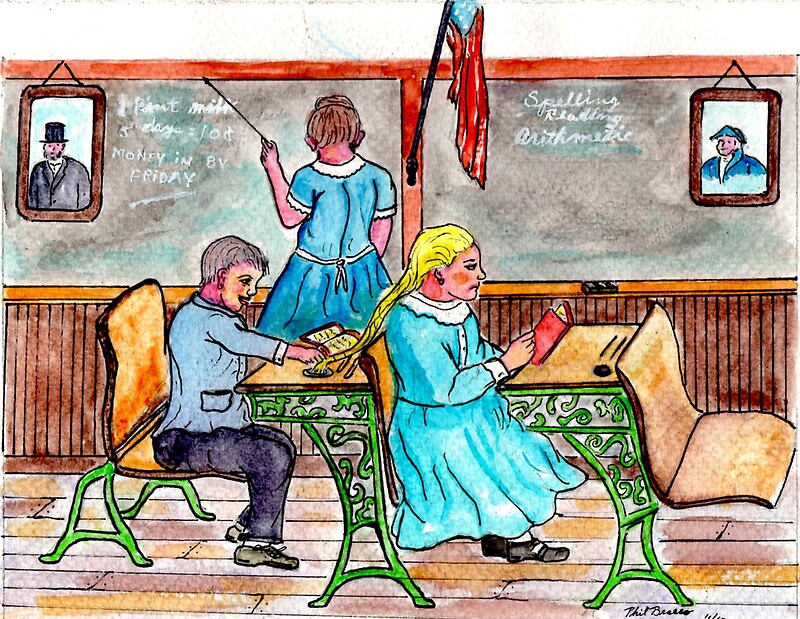
When I was in the early grades in the Houston public schools, we learned penmanship. At the time, we dipped our quill pens into an inkwell. It was messy, at least for me. At some point we switched to pens that had ink reserves, and you filled them up and wrote with ink. That was better than dipping the quill.
Then a new writing technology came along, called the “ballpoint pen.” No messy inkwells or ink bottles. You just wrote until they were dry, and then you threw them out. The ballpoint pen was a nightmare for me because I am left-handed and all the desks in my classrooms were meant for people who wrote with the their right hand. That meant that as I wrote, I smudged my hand across what I had just written. Not only was the writing smudged, but my the fingers on my left hand were always ink-stained.
We were taught the Palmer Method of writing. We made big circles, again and again. We were supposed to make round, beautiful letters.
That never worked for me. My handwriting was atrocious. As I have gotten older, it has gotten worse.
Be all that as it may, it turns out that writing by hand is good for you!
It is supposedly good for your brain and your emotions.
I suppose that may be true for many people but not for CONTINUE READING: Bring Back Handwriting: It’s Good for Your Brain (But Not Mine!) | Diane Ravitch's blog
Image result for PIGTAILS IN INKWELL

CURMUDGUCATION: Hanushek Offers Teachers A Grand Bargain

CURMUDGUCATION: Hanushek Offers Teachers A Grand Bargain

Hanushek Offers Teachers A Grand Bargain


If there is anything we don't lack in the education sphere, it's economists who know all about how to make education work real betterer. Two faves are Raj Chetty and Eric Hanushek, who have both pushed some super-great ideas. You probably remember the one about how the right first grade teacher can mean you'll make umpty-zillion more dollars in your lifetime, a piece of foolery that might be called speculative economics, a house of cards based on so many tissue-thin assumptions, guesses and Hail Marys that it's hard to believe-- well, it boils down to sexy, memorable headline, so that's why you've heard it.

Anyway. Hanushek is over at EdWeek this week with a proposition, a proposal, a Grand Bargain, if you will-- but you probably shouldn't.


This guy, still.
Much of this is vintage Hanushek, but he's hung it on the current vogue for noticing that teacher4 pay is lousy and teacher working conditions are failing to attract hordes of awesome meat widgets. Sadly, this is what some folks think would be a grand solution.

Hanushek opens with some concern trolling-- teacher pay etc really is bad, as witnessed by tough job actions across the country over the past years, but "sequential appeasement of these outbreaks of union combativeness and teacher frustration will almost certainly not help the students and will likely make teachers worse off in the long run."

Hanushek is clear on the pay thing; he's done some of the research on the teacher penalty, aka the money that people give up to join teaching rather than other similarly-trained professions. And he is trying to dance on a thin line. On the one hand, he CONTINUE READING: 
CURMUDGUCATION: Hanushek Offers Teachers A Grand Bargain


Big Win for Denver Public Schools | tultican

Big Win for Denver Public Schools | tultican

Big Win for Denver Public Schools

By Thomas Ultican 11/7/2019
Denver voters rejected the portfolio model of school management on Tuesday. Candidates endorsed by the teachers union were the victors and the “corporate school reform” candidates lost. Leading up to the election, the education focused publication Chalkbeat pointed out,
“If candidates backed by the Denver teachers union win at least two of the three seats, union-backed members will have a majority on the board for the first time in recent history. That could set the stage for a shift away from encouraging school choice and school autonomy to more heavily investing in traditional schools.”
The teachers union endorsed candidates won all three of the seats up for election.

Big Money No Longer Enough

The board of directors’ at-large seat is voted on by the entire city. There were three candidates vying for the at-large seat: Tay Anderson, Alexis Menocal Harrigan and Natela Alexandrovna Manuntseva. Anna DeWitt filed for the seat and raised some money but was not on the ballot. Manuntseva did not have enough resources or organizational support to compete. The race was essentially between Anderson and Harrigan.
Harrigan was the most politically connected of the nine school board candidates. A Denver Post biography noted,
“Menocal Harrigan currently works in advocacy for expanding computer science education. She previously was an education adviser to then-Gov. John Hickenlooper, a Denver City Council aide and a staff member for Sen. Michael Bennet, who helped launch DPS’s current reform agenda during his time as superintendent.”
Anderson’s biography on the other hand looks anything but formidable. The Denver Post reported,
“Anderson, a Manual High School graduate, ran unsuccessfully for the District 4 seat in 2017, when he was 18. He currently works as restorative practices coordinator at North High School.”
Tay is now 21-years-old.
Harrigan received large contributions from Colorado billionaire, Phillip CONTINUE READING: Big Win for Denver Public Schools | tultican