OH GOODIE!
Friday, August 2, 2019
Thursday, August 1, 2019
Jeff Bryant: A Movement Against Charter Schools Helped Oust Puerto Rico’s Governor
A Movement Against Charter Schools Helped Oust Puerto Rico’s Governor

A Movement Against Charter Schools Helped Oust Puerto Rico’s Governor

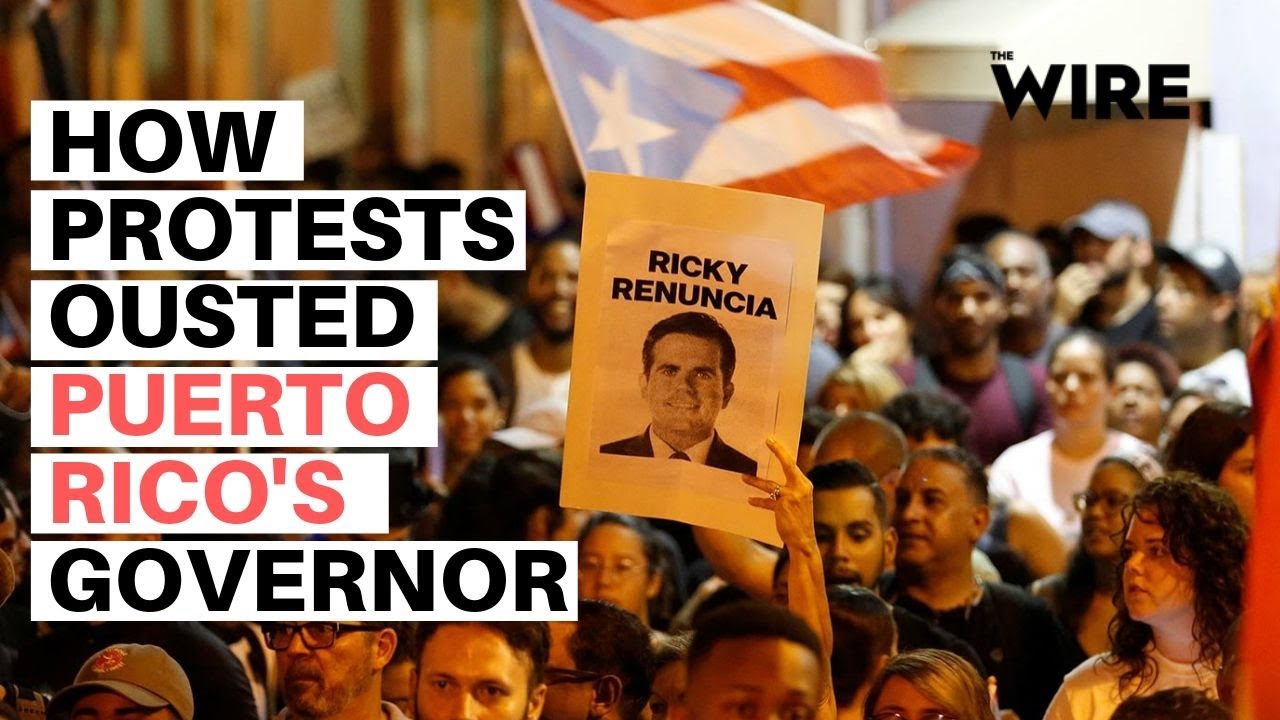
As Americans lament the current sorry state of democracy in Washington, D.C., government by the will of the people was very much alive recently in Puerto Rico, where a prolonged general strike that virtually shut down the island forced Governor Ricardo Rossellรณ to announce his resignation.
During the strike, huge crowds mobbed the governor’s mansion around the clock, closed highways in the capital of San Juan, and persuaded some presidential candidates in the Democratic Party to join in calling for the governor to resign.
Protesters had multiple grievances, but a “final straw” seems to have been a series of text messages leaked to an independent news organization in which the governor and his closest associates insulted political opponents and allies, members of the news media, and the LGBTQ community. Another notable target for insults in the text exchanges were the island’s public school teachers, whom the governor’s chief financial officer at the time, Christian Sobrino, called “terrorists.” (Sobrino and other top officials participating in the chats have resigned since the messages went public.)
Puerto Rico’s school teachers have been a constant nemesis to the Rossellรณ regime, and the island’s largest teachers’ union, the Asociaciรณn de Maestros de Puerto Rico (AMPR), united with other labor unions on the island to organize the general strike. Randi Weingarten, the leader of the American Federation of Teachers, which AMPR is an affiliate of, joined in the calls for Rossellรณ’s resignation.
The teachers’ disagreements with Governor Rossellรณ started long before the CONTINUE READING: A Movement Against Charter Schools Helped Oust Puerto Rico’s Governor
It Appears That Icky Sticky Nicky Melvoin Revealed Confidential Attorney Client Information
It Appears That Icky Sticky Nicky Melvoin Revealed Confidential Attorney Client Information From LAUSD’s Office Of The General Counsel | Michael Kohlhaas dot org
IT APPEARS THAT ICKY STICKY NICKY MELVOIN REVEALED CONFIDENTIAL ATTORNEY CLIENT INFORMATION FROM LAUSD’S OFFICE OF THE GENERAL COUNSEL TO THE CALIFORNIA CHARTER SCHOOL ASSOCIATION IN A SECRET MEETING IN FEBRUARY 2018 — HAVING TO DO WITH A JANUARY 2016 CCSA LAWSUIT AGAINST LAUSD OVER PROP 39 ACCESS TO FACILITIES — IN FEBRUARY 2018 CCSA MET WITH MELVOIN ABOUT LAUSD FACILITIES POLICY — AT THIS MEETING MELVOIN TOLD CCSA — THE ADVERSE PARTIES IN THE FREAKING LAWSUIT — THAT LAUSD’S GENERAL COUNSEL WAS “CONFIDENT IN LAWSUIT POSITION” — AND THEREFORE WAS DISINCLINED TO SETTLE — TWO MONTHS LATER CCSA CONCEDED AND DROPPED THE SUIT WITHOUT A SETTLEMENT — PERHAPS THEIR DECISION TO PURSUE THIS COURSE WAS INFORMED BY CONFIDENTIAL INFORMATION OBTAINED FROM MELVOIN — IT’S HARD TO IMAGINE IT COULD BE OTHERWISE CONTINUE READING: It Appears That Icky Sticky Nicky Melvoin Revealed Confidential Attorney Client Information From LAUSD’s Office Of The General Counsel | Michael Kohlhaas dot org
CURMUDGUCATION: Should A Teacher Be Secretary of Education
Should A Teacher Be Secretary of Education

This is part of the value of having a clown car full of candidates for a Presidential primary: the contest becomes a primary of ideas, and certain notions gain traction by spreading across the field of candidates. Not that gaining traction means those ideas will ultimately prevail (a widespread notion among the 2016 GOP field was that Donald Trump was unfit to be President), but it's still an intriguing process.
![]() |
| If I were Ed Secretary, I could stand up all day to talk to people |
One up-and-coming education policy idea that was first proposed by Elizabeth Warren, but has now garnered wider candidate support, is the notion that a teacher should be the next secretary of education. At last count, four major candidates were supporting some version of the idea. It's an arresting and appealing idea. Betsy DeVos is widely seen as a controversial opponent of public education, and in many education circles, predecessors like Arne Duncan were not much loved, either. Many teachers feel that the folks in D.C. just don't get it, so the idea of someone from the trenches who would, presumably, get it--well, it's an attractive idea. Now we have to ask--is it a good idea?
The devil, as always, is in the details. The idea has been expressed variously as appointing an educator, a public school teacher, or "someone who comes from public schools." That may seem pretty straightforward. It isn't. "Educator" is a loose umbrella term to cover anyone who has held an education-adjacent job: teacher, administrator, education advocacy group member, school bus CONTINUE READING: CURMUDGUCATION: Should A Teacher Be Secretary of Education
CURMUDGUCATION: Eight Weeks of Summer: Moving Forward
Eight Weeks of Summer: Moving Forward
This post is week 8 of 8 in the 8 Weeks of Summer Blog Challenge for educators.
I've been doing the eight week challenge because why not? This is the final prompt, and like any good exercise, it calls for some reflection. Here's prompt #8:
What will you keep from the #8WeekofSummer Blog Challenge moving forward?
I've been trying to answer these from the perspective of my previous non-retired teaching self, but this is a tough one to twist around that way. But let's give it a shot.
I always carried things forward from my summer growth projects, but never as much as I meant to.
One of the benefits of summer vacations for teachers is that it gives you the breathing space you need to reflect on practices. During the school year, virtually all time is caught up in the dailiness of it, and no matter how much you want to carry over your new deep philosophical insights, it only takes a week or two to go from "What's a good pedagogical approach to including more reflection on the idealism of Romantic authors" to "I think if I hurry, I can get my copying done in that five minute break before third period. Also, I think I've figured out where to move those three guys on the seventh period seating chart so that they'll stop having fart contests." Starting the year can move you quickly from envisioning a moving, breathing image of the cosmos to simply feeling like you're trapped in a game of Space Invaders.
The things that always ended up being useful were the things that I fully learned. Not ideas that I carried around separately, still shiny from just having the wrapper pulled off, but things that were fully integrated into the grubby scuffed cabinet of Things I Know.
My own big cabinet has been getting a steady reorganization, as I integrate everything I ever CONTINUE READING: CURMUDGUCATION: Eight Weeks of Summer: Moving Forward
Eight Weeks of Summer: Moving Forward
This post is week 8 of 8 in the 8 Weeks of Summer Blog Challenge for educators.
I've been doing the eight week challenge because why not? This is the final prompt, and like any good exercise, it calls for some reflection. Here's prompt #8:
What will you keep from the #8WeekofSummer Blog Challenge moving forward?
I've been trying to answer these from the perspective of my previous non-retired teaching self, but this is a tough one to twist around that way. But let's give it a shot.
I always carried things forward from my summer growth projects, but never as much as I meant to.
One of the benefits of summer vacations for teachers is that it gives you the breathing space you need to reflect on practices. During the school year, virtually all time is caught up in the dailiness of it, and no matter how much you want to carry over your new deep philosophical insights, it only takes a week or two to go from "What's a good pedagogical approach to including more reflection on the idealism of Romantic authors" to "I think if I hurry, I can get my copying done in that five minute break before third period. Also, I think I've figured out where to move those three guys on the seventh period seating chart so that they'll stop having fart contests." Starting the year can move you quickly from envisioning a moving, breathing image of the cosmos to simply feeling like you're trapped in a game of Space Invaders.
The things that always ended up being useful were the things that I fully learned. Not ideas that I carried around separately, still shiny from just having the wrapper pulled off, but things that were fully integrated into the grubby scuffed cabinet of Things I Know.
My own big cabinet has been getting a steady reorganization, as I integrate everything I ever CONTINUE READING: CURMUDGUCATION: Eight Weeks of Summer: Moving Forward
Now it’s getting ridiculous: Four Democratic debates, almost no discussion on K-12 education - The Washington Post
Now it’s getting ridiculous: Four debates, no questions about K-12 education
Now it’s getting ridiculous: Four debates among Democratic presidential candidates, and no questions — or serious discussion — about K-12 education.
A nod goes to Sen. Michael F. Bennet of Colorado, a former superintendent of the Denver school system, who answered a non-education question with a call to improve the public education system. His passionate plea to “fix our school system” and focus on segregated schools came in response to a question by CNN moderator Don Lemon about why he would be the best candidate to heal the racial divide in the United States.
Some candidates made passing references to universal preschool, and moderators did raise college affordability and student debt. But when it comes to K-12 public education, which many believe is the most important civic institution in the country, nada.
There have been four debates: two in June on NBC and MSNBC with 10 candidates each night; and two this week on CNN, also with 10 candidates on each night. So, what were the moderators thinking, exactly?
That education isn’t as important as health care and immigration and foreign affairs and how Democrats can win Michigan in 2020?
That prekindergarten and higher education is more important than the grades in between?
That Americans aren’t very interested in the present and future of public education and Education Secretary Betsy DeVos’s plans to change the way U.S. children attend school?
Do the moderators think the candidates all agree so they can’t spark a fight with the issue? (They don’t.)
Is it too difficult to compose questions that get at the heart of major matters confronting public schools?
How about: “America funds its public education system largely through property taxes, and federal efforts to close the gap between high-income and low-income neighborhoods have not bridged the gap. Should there be a fundamental change in the way public schools are funded?"
Or: “If the Supreme Court rules, as it may do, that it is constitutional for states to use public funds for CONTINUE READING: Now it’s getting ridiculous: Four Democratic debates, almost no discussion on K-12 education - The Washington Post
Understanding the work of Michael Deshotels – Educate Louisiana
Understanding The Work Of Michael Deshotels
Having followed the work of Michael Deshotels for almost seven years, I’ve come to understand his work, support his message, and count him as a trusted education advocate and personal friend. I also appreciate and support the work of other education advocates such as Lee Barrios and Dr. Mercedes Schneider. All of these folks have worked to bring to light what is wrong with what is happening in Louisiana’s education system just as I have. I have learned that sometimes no matter how hard you try, your message doesn’t get the traction it should because people don’t care, don’t understand, or interpreted the message, wrong.
When it comes to state assessments, student scores, and school performance schools, I believe that the four of us agree that the published results are meaningless based on the following reasons.
- The outcome is predetermined.
- The expected level of achievement is arbitrary.
- The cut scores used to determine the level of achievement are arbitrary.
- If you judge a fish by its ability to climb a tree, it will spend its life thinking it is a failure.
THE MESSAGE: Deshotels’ most recent publication, The LDOE claims steady growth in student LEAP scores, is a continuation of his effort to illustrate the invalidity of these scores. In his narrative, he points out that the average cut score for ELA and Math in grades 3-8 is 27%. The actual minimum number correct that a fourth grade student can get and receive a score of “Basic” is 21 of the 86 questions (24%). I note that the goal is “mastery;” however, “basic” is passing. CONTINUE READING: Understanding the work of Michael Deshotels – Educate Louisiana
Student Loan Forgiveness Programs for Teachers
With about 1% of applicants to the Public Service Loan Forgiveness program successfully receiving loan forgiveness, students who plan to rely on financial aid and hope to become teachers may have reason to think twice.
Nationwide, students are borrowing more student loans to pay for college than ever before. Among those who took out loans, the average student in the class of 2017 borrowed nearly $30,000, according to U.S. News data. But the median midcareer salary is $41,000 for students who majored in early childhood education and $43,000 for those who majored in elementary education, according to U.S. Census Bureau data from 2016-2017.
Rising college costs and low wages create the need for loan forgiveness for teachers, advocates say. But the Public Service Loan Forgiveness program has come under fire recently for failing to keep its promise. A recent lawsuit filed in federal court by the American Federation of Teachers alleges Education Secretary Betsy Devos unlawfully denied individuals debt forgiveness, according to a press release. While the lawsuit is currently pending further action in federal court, its outcome could impact the future of loan forgiveness for current and prospective students.
Students must also consider the possibility of the Public Service Loan Forgiveness program being eliminated, as was proposed by President Donald Trump in March.
Still, Randi Weingarten, president of the American Federation of Teachers, says students shouldn't allow themselves to be deterred by debt. "No one should forgo a career in public service because of concerns over student debt. Yet it's not a secret that the teaching profession is facing a crisis -- deep, systemic disinvestment in public education that has led to soaring college costs and shrinking teacher salaries, and a de-professionalization of the job that has led to a teacher shortage in all 50 states," Weingarten wrote in an email. "But teaching is a career built on hope, and a commitment to helping others and making our communities better. We must honor that commitment and protect the future teacher workforce."
Amid this uncertainty, Mark Kantrowitz, publisher and vice president of research for Savingforcollege.com, a website that CONTINUE READING: Student Loan Forgiveness Programs for Teachers
Subscribe to:
Posts (Atom)