Latest News and Comment from Education

Thursday, March 29, 2018

An open letter to Marjory Stoneman Douglas’ student journalists – The Miami Hurricane #NeverAgain #JournalismMatters #MarchForOurLives

An open letter to Marjory Stoneman Douglas’ student journalists – The Miami Hurricane:

An open letter to Marjory Stoneman Douglas’ student journalists 

Related image
The Eagle Eye – Marjory Stoneman Douglas High School, One Story at a Time
http://eagleeye.news/ on @EagleEyeMSD
Eagle Eye MSD
@EagleEyeMSD

This weekend was the start of your spring break – and you spent it marching.
Last month, when tragedy befell you, it might have forced you to change your plans. But it didn’t force you to lead the charge in such a loud, courageous, impossible-to-ignore way. That was all you.
But you didn’t need to be told that. We just wanted to say you’re making us proud – as journalists, as students, as people – and your commitment to telling your story has not gone unnoticed.
You student journalists – whether you’re on the staff of The Aerie or The Eagle Eye, or picked up the habit in the last month and a half – are in the difficult position of wearing two hats, those of subject and reporter. And you’re wearing them well, though we’re sure at times it is painful, infuriating and confusing.
The future of journalism doesn’t lie solely in a few famous papers, full-time newsrooms and big names telling people what they need to know. It’s a more immersive world of on-the-fly reporting and, often, telling your own stories as they happen – not waiting for a bigger outlet to catch wind and report. You’re embracing that future by getting information out via Twitter, Snapchat and long-form Facebook posts that tell us more about this tragedy than any evening broadcast ever could.
More than that, though, you’re teaching us how to do our job in the midst of tragedy. It’s a lot to ask of any journalist to remain composed when reporting on a story like this – much less a student who lived through it. But there you are, embodying the importance of journalism as you show your community ways it can help and tell the stories that matter.
This role of a journalist is especially important in dark times, when people are searching for answers, information – anything they can cling to and understand. Instead of adding to that darkness with the sort of voyeuristic, culprit-focused coverage so many news organizations are prone to do, you continue to uplift your community with stories of courage, healing and hope.
In the last six weeks, The Eagle Eye has written about means of remembrance, activism and selflessness – and you were living those ideals, too.
Your journalism embodies what we hope becomes common practice in the field: that of emphasizing the human side of your school, the names you remember and the people who won’t stop fighting for a better tomorrow.
We hope you don’t underestimate the impact of the work you’re doing, at every level of the storytelling process.
To trolls and haters, you’ve responded with a loud, resounding “no” – no to the gun lobby, to those who say you’re too young to get it, to the possibility of this ever happening again. From one team of journalists to another, we’re grateful to you for helming this revolution.
We sincerely welcome you into our newsroom, any day, and we are here to support you in whatever way you need most. You can find us @MiamiHurricane or at editor@themiamihurricane.com.
Editorials represent the majority view of The Miami Hurricane editorial board.An open letter to Marjory Stoneman Douglas’ student journalists – The Miami Hurricane:
Image result for the eagle eye msd


The Eagle Eye – Marjory Stoneman Douglas High School, One Story ...

eagleeye.news/

[Photo Galleries] The Eagle Eye documents the DC March For Our Lives through photos. Students get tattoos to honor the 17 victims. Memorial at Pine Trails Park is removed and preserved. [Multimedia] National school walkout marks the start of change. Georgia elementary schools donate pinwheels in support of MSD ...

Parkland


After the tragedy at Marjory Stoneman Douglas High School ...

SPORTS


As the Philadelphia Eagles hoisted their first Lombardi trophy in ...

HEALING


After the tragedy on Feb. 14, some Marjory Stoneman Douglas ...

OUR STORY


Category: OUR STORY. Junior Lorenzo Prado discusses his ...

EDITORIAL


Category: EDITORIAL. Immigration activists demonstrate outside ...

ARTS & LEISURE


March 21, 2018 by Ryan Lofurno in ARTS & LEISURE 0 ...

Tuesday, March 27, 2018

Linda Brown’s death is a reminder of how much segregation still exists in America’s schools - The Washington Post

Linda Brown’s death is a reminder of how much segregation still exists in America’s schools - The Washington Post:

Linda Brown’s death is a reminder of how much segregation still exists in America’s schools


The death of an icon in America's civil rights history is a reminder of how recently school segregation existed in the United States — and how little has changed since that time.
Linda Brown, who became the symbolic center of Brown v. Board of Education, the U.S. Supreme Court case that desegregated the nation's public schools, died on Sunday at 76. Her father, the Rev. Oliver L. Brown, was one of 13 plaintiffs who sought to ensure that Topeka, Kan., fully integrated its schools.
“I feel that after 30 years, looking back on Brown v. the Board of Education, it has made an impact in all facets of life for minorities throughout the land,” Brown said in a 1985 interview for “Eyes on the Prize,” a PBS documentary series on the civil rights movement. “I really think of it in terms of what it has done for our young people, in taking away that feeling of second-class citizenship.”
But while many black youths may no longer feel like second-class citizens, data suggests they may still be experiencing America in that way.

A recent report by the Economic Policy Institute says that 50 years after the Kerner Commission, a group that assessed poverty and racism in the United States, black youths have made significant gains in K-through-12 education, but challenges still exist.
“Over the last five decades, African Americans have seen substantial gains in high school completion rates. In 1968, just over half (54.4 percent) of 25- to 29-year-old African Americans had a high school diploma. Today, more than 9 out of 10 African Americans (92.3 percent) in the same age range had a high school diploma.
However, college completion expanded for whites at a similar pace, rising from 16.2 percent in 1968 to 42.1 percent today, leaving the relative situation of African Americans basically unchanged: In 1968 blacks were just over half (56.0 percent) as likely as whites to have a college degree, a situation that is essentially the same today (54.2 percent).”
These strides have often been made in schools that don't look much different from those in Kansas in the 1950s. In the last few decades, schools have been quietly resegregating. Federal data shows that the number of high-poverty schools serving primarily black and brown students has more than doubled between 2001 and 2014. Continue reading: https://www.washingtonpost.com/news/the-fix/wp/2018/03/27/linda-browns-death-is-a-reminder-of-how-much-segregation-still-exists-in-americas-schools/


Monday, March 26, 2018

March for Our Lives: Most Powerful Speeches - #MarchForOurLives #NeverAgain YouTube

March for Our Lives: five of the most powerful speeches - YouTube:

March for Our Lives:  Most Powerful Speeches 


March for Our Lives: five of the most powerful speeches


Emma Gonzalez gives speech at March for Our Lives rally


David Hogg's March For Our Lives Speech


Parkland survivor Sam Fuentes vomits during gun protest speech


Student from Parkland FL, Jaclyn Corin speaks at March For Our Lives Rally


11-year-old Naomi Wadler's March For Our Lives speech for black women gun violence victims


One Life Is Worth More Than All The Guns In America’: Sarah Chadwick At March


Student Activist Gets Personal At March For Our Lives Rally


Student organizer delivers spoken word speech at March for Our Lives


Edna ChƔvez at March For Our Lives


Parkland Student's Impassioned March For Our Lives Speech


Parkland HS student Cameron Kasky speaks at March for our lives Rally


How to File a Title IX Complaint in K-12 Schools | Stop Sexual Assault in Schools #MeTooK12

How to File a Title IX Complaint in K-12 Schools | Stop Sexual Assault in Schools:

How to File a Title IX Complaint in K-12 Schools

Stop Sexual Assault in Schools


Stop Sexual Assault in Schools

Educating students, families, and schools about the right to an equal education free from sexual harassment

A Guide for Parents and Guardians

By Dr. Bill Howe with Stop Sexual Assault in Schools (SSAIS.org)

Dr. Howe was the Connecticut State Title IX coordinator for 17 years. He maintains website on Title IX.

This simple guidance for parents and guardians explains how to file a complaint with your school district regarding sexual harassment, sexual violence, sex discrimination, and other violations of state and federal civil rights laws regarding gender discrimination. Some of this guidance also applies to educational programs (e.g. museum, science center) or private schools, if they receive federal funding from any source (e.g. Department of Education, Department of Agriculture, etc.).  All public and private schools that receive federal funding must follow the federal civil rights law Title IX, which protects students from the impact of sexual harassment and assault on their education.
The following information should not be construed as legal advice.
  1. Make sure that your school or educational program is required to follow state and federal civil rights laws. Under federal law, any educational entity that receives even one dollar of federal financial support must abide by Title IX and other federal civil rights laws. Do not let schools argue that since “they do not receive Title IX money” they do not have to obey the law. For example, schools (public or private) must follow Title IX under these circumstances:
— The school receives public school district funding. Public school funds, state funds, and federal funds are commingled. Therefore, acceptance of public school district funding or state funds is essentially the same as receiving federal funding.
— If any student in your school receives grants, scholarships, or loans through the school district or through the state, that is federal funding.
— If the school receives any state funds, then the school is bound by state civil rights laws, which most likely include anti-discrimination laws such as sex discrimination and sexual harassment.
— The private school receives federal funds, such as Title I, from any number of federal agencies, such as the National Science Foundation, Department of Education, Department of Agriculture, etc.
To find out if a private school receives federal funding or how to file a complaint if it does, see Title IX and Private Schools.  If your private school is one of several within an organization or diocese and even if only one school accepts federal money, Title IX applies to all schools in the organization or diocese. Learn more.
Students in parochial schools are generally not protected by state and federal civil rights laws if the continue reading:
How to File a Title IX Complaint in K-12 Schools | Stop Sexual Assault in Schools:

Sunday, March 25, 2018

Emma Gonzalez Speech Transcript - Read Full March for Our Lives Speech #MarchForOurLives #NeverAgain

Emma Gonzalez Speech Transcript - Read Full March for Our Lives Speech:

Here's Emma Gonzalez's Gut-Wrenching March for Our Lives Speech in Full
"Fight for your life before it’s somebody else’s job."


Parkland shooting survivor Emma Gonzalez has become a powerful activist, and when she took the stage to speak at today's March for Our Lives in D.C., the crowd was moved by her stunning speech, which lasted 6 minutes and 23 seconds, the length of the Parkland shooting.

"Six minutes and about twenty seconds. In a little over six minutes, 17 of our friends were taken from us, 15 were injured, and everyone, absolutely everyone, was forever altered," she began.

"Everyone who was there understands, everyone who has been touched by the cold grip of gun violence understands," she said.

She continued: "No one could comprehend the devastating aftermath or how far this reach or where this could go. For those who still can't comprehend because they refuse to, I'll tell you where it went. Right into the ground, six feet deep."

She went on to list the names of her classmates and teachers who died that day.

"Six minutes and twenty seconds with an AR-15 and my friend Carmen would never complain to me about piano practice. Aaron Feis would never call Kira, 'Miss Sunshine.' Alex Schachter would never walk into school with his brother Ryan. Scott Beigel would never joke around with Cameron at camp. Helena Ramsey would never hang out after school with Max. Gina Montalto would never wave to her friend Liam at lunch. Joaquin Oliver would never play basketball with Sam or Dylan. Alaina Petty would never. Cara Loughran would never. Chris Hixon would never. Luke Hoyer would never. Martin Duque Anguiano would never. Peter Wang would never. Alyssa Alhadeff would never. Jamie Guttenberg would never. Meadow Pollack would never."

She then stopped speaking and stared into the crowd, tears streaming down her face.

She ended the silence with, "Since the time that I came out here, it has been six minutes and twenty seconds. The shooter has ceased shooting and will soon abandon his rifle, blend in with the students as they escape and walk free for an hour before arrest. Fight for your life before it’s somebody else’s job."Emma Gonzalez Speech Transcript - Read Full March for Our Lives Speech:


To Strengthen Democracy, Invest in Our Public Schools | Deborah Meier on Education

To Strengthen Democracy, Invest in Our Public Schools | Deborah Meier on Education:

To Strengthen Democracy, Invest in Our Public Schools
By Emily Gasoi, Deborah Meier

American Educator Spring 2018
Who could have imagined that, more than 150 years into this bold project of preparing successive generations for informed citizenship, our system of universal education would be as imperiled as it is today? One of the original ideas behind establishing a system of “common schools”—as one of the early advocates for public education, Horace Mann, referred to them—was not that they would all be mediocre, but that children from different backgrounds, the children of workers and the children of factory owners, would be educated together. As Mann wrote in 1848, “Education … beyond all other devices of human origin, is the great equalizer of the conditions of men—the balance-wheel of the social machinery.”1

Of course, Mann’s own understanding of equality and citizenship was surely limited, as he wrote these words at a time when only white men had the vote, the Emancipation Proclamation was yet to be signed, and the children of workers were more likely to be working in factories themselves than they were to be attending school. And while schools have historically mirrored society’s inequities as much as they have inoculated against them, our public institutions nevertheless have at their foundation the ideals set forth in Mann’s quote and in our most soaring rhetoric about individual freedom and the common good.

And yet, in our current reform climate, our system of public education is often referred to as a “monopoly” rather than a public good. As such, in districts around the country, public schools are being shuttered at an alarming rate, with more than 1,700 schools closed nationwide in 2013 alone.2

Nowhere is this trend more dramatically played out than in Secretary of Education Betsy DeVos’s home state of Michigan, where entire school districts are losing the battle against unregulated privatization through for-profit charter management entities and voucher programs. And while there is no evidence that school choice alone helps to To Strengthen Democracy, Invest in Our Public Schools | Deborah Meier on Education:

American Educator Spring 2018

My latest books

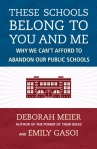
MEIER_GASOI_TheseSchools_FINALEmily Gasoi and I published last fall These Schools Belong to You and Me: Beacon Press, and so we have been busy promoting it around the country.


beyond_testing-332pxI will mention again that Matthew Knoester and I had a book published by TC Press last summer:  Beyond Testing: 7 Assessments of Students and Schools More Effective Than Standardized Tests.  And, by the way, more compatible with the purposes of schools.


A Merger for the Rabbi and the Labor Leader - The New York Times

A Merger for the Rabbi and the Labor Leader - The New York Times:

A Merger for the Rabbi and the Labor Leader


Randi Weingarten and Rabbi Sharon Anne Kleinbaum are to be married March 25 at La Marina, a restaurant in New York. Judge Michelle Schreiber of the New York City Housing Court, is to officiate, with Rabbi Sharon Cohen Anisfeld, the president of Hebrew College, leading the religious ceremony, which will include the signing of the ketubah.
Ms. Weingarten (left), 60, is the president of the American Federation of Teachers, which has headquarters in Washington. She graduated from Cornell and received a law degree from Cardozo School of Law, Yeshiva University.
She is the daughter of Gabriel Weingarten of Suffern, N.Y., and the late Edith Appelbaum Weingarten.
Rabbi Kleinbaum, 58, is the senior rabbi of Congregation Beth Simhat Torah in New York, a synagogue with a significant number of lesbian, gay, bisexual and transgender congregants. She graduated from Barnard College and from Reconstructionist Rabbinical College in Wyncott, Pa.
She is the daughter of Josephine Leve Kleinbaum of Teaneck, N.J., and the late Max M. Kleinbaum.
In the mid-1990s, Rabbi Kleinbaum and Ms. Weingarten knew each other peripherally.
“We were two lesbians in New York fighting for different things,” Ms. Weingarten said. “We liked each other. We had good banter. It wasn’t as if there were a lot of high-profile gay women who were active in leadership roles. I thought she was fun, witty and smart.”It continued that way until 2006. Both were at the Empire State Pride Agenda dinner, when Rabbi Kleinbaum asked Ms. Weingarten to speak at the Gay Pride Shabbat service.
“I’d just turned 50, I’d never publicly come out and said, ‘I’m a lesbian,’” Ms. Weingarten said. “Sharon allowed me to see myself as who I was. It shifted my thinking that it wasn’t simply about having a gay pride speaker. It was about shifting me. I was very moved by it.”
Rabbi Kleinbaum recalls the “ask” a little differently.
“She’s one of the most significant labor leaders in America,” Rabbi A Merger for the Rabbi and the Labor Leader - The New York Times:

Friday, March 23, 2018

Watch Live: March for Our Lives: A rally to end gun violence - #MarchForOurLives #NeverAgain @MomsDemand

 Watch Live: March for Our Lives: A rally to end gun violence - YouTube:

 Watch Live: March for Our Lives: A rally to end gun violence

March For Our Lives - March 24, 2018
https://wp.me/P9J85t-6 via @AMarch4OurLives
March For Our Lives - March 24, 2018
https://wp.me/P9J85t-6 via @AMarch4OurLives


 March For Our Lives - March 24, 2018
https://wp.me/P9J85t-6 via @AMarch4OurLives


March For Our Lives - March 24, 2018
https://wp.me/P9J85t-6 via @AMarch4OurLives

 March For Our Lives - March 24, 2018
https://wp.me/P9J85t-6 via @AMarch4OurLives

March For Our Lives - March 24, 2018
https://wp.me/P9J85t-6 via @AMarch4OurLives


March For Our Lives - March 24, 2018
https://wp.me/P9J85t-6 via @AMarch4OurLives

Parkland students: our manifesto to change America's gun laws | #MarchForOurLives The Guardian

Parkland students: our manifesto to change America's gun laws | Editorial staff of the Eagle Eye | US news | The Guardian:
Parkland students guest edit the Guardian US
Our manifesto to fix America's gun laws


After the massacre at our high school, our lives have changed forever – so we’re proposing these changes to halt mass shootings
by Editorial staff of the Eagle Eye
As a student publication, the Eagle Eye works to tell the stories of those who do not have a voice. Today, we are the ones who feel our voice must be elevated.
In the wake of the tragedy that occurred at our school on February 14 at Marjory Stoneman Douglas, our lives have changed beyond what we ever imagined. We, along with our publication, have been transformed. We will remain so for the rest of our lives.
We have a unique platform not only as student journalists, but also as survivors of a mass shooting. We are firsthand witnesses to the kind of devastation that gross incompetence and political inaction can produce. We cannot stand idly by as the country continues to be infected by a plague of gun violence that seeps into community after community, and does irreparable damage to the hearts and minds of the American people.
That’s why the Eagle Eye has come together and proposed these following changes to gun policy. We believe federal and state governments must put these in place to ensure that mass shootings and gun violence cease to be a staple of American culture.
We will be marching this Saturday, 24 March, for those that we loved and lost, and we write this in the hope that no other community or publication will ever have to do the same.
The changes we propose:

Ban semi-automatic weapons that fire high-velocity rounds

Civilians shouldn’t have access to the same weapons that soldiers do. That’s a gross misuse of the second amendment.
These weapons were designed for dealing death: not to animals or targets, but to other human beings. The fact that they can be bought by the public does not promote domestic tranquility. Rather, their availability puts us into the kind of danger faced by men and women trapped in war zones.
This situation reflects a failure of our government. It must be corrected to ensure the safety of those guaranteed the rights to life, liberty and the pursuit of happiness.  Continue reading:  Parkland students: our manifesto to change America's gun laws | Editorial staff of the Eagle Eye | US news | The Guardian:
Big Education Ape: Parkland students featured on cover of Time: 'Enough' | #MarchForOurLives TheHill - http://bigeducationape.blogspot.com/2018/03/parkland-students-featured-on-cover-of.html


Big Education Ape: School Shootings in America Since 2013 #MarchForOurLives -
http://bigeducationape.blogspot.com/2018/03/school-shootings-in-america-since-2013.html


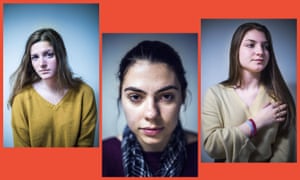
What students really think about school shootings