Latest News and Comment from Education

Wednesday, March 1, 2017

CURMUDGUCATION: NPR Explains Charter Schools

CURMUDGUCATION: NPR Explains Charter Schools:

NPR Explains Charter Schools


Claudio Sanchez at NPR decided to kick off March with a charter school explainer, and boy did March come in like a big, fuzzy, lamb. Sanchez decided that the best way to get a fully rounded explanation of charters was to talk to three charter advocates, a journalistic technique akin to interviewing the NRA about guns or the RJ Reynolds company about cigarettes. The resulting piece assures us all that charter schools are pretty awesome with no real down sides at all. Also, guns are basically freedom sticks and cigarettes can help you stay healthy.


Sanchez talked to Ted Kolderie (Education Evolving, and longtime charter law developer), Greg Richmond (National Association of Charter School Authorizers), and Nina Rees (National Alliance form Public [sic] Charter Schools). And together, they hit all the PR points one would expect in a charter puff piece.

Let's follow along with Sanchez'a Q&A format.

What is a charter school?

Kolderie notes that charters create a "two-sector system." One is a traditional centrally managed district, while the charters "are independent, not owned by a central school board." Which is to say, not owned by the taxpayers-- even though taxpayers foot the bill. Charter schools are, among other things, a system by which taxpayers buy a school system, but don't end up owning anything.

He also notes that charters are subject to performance, which is only kind of true in some states that have some accountability rules on paper. But some states have weak rules, and some states, 
CURMUDGUCATION: NPR Explains Charter Schools:

Image result for enron stock certificate
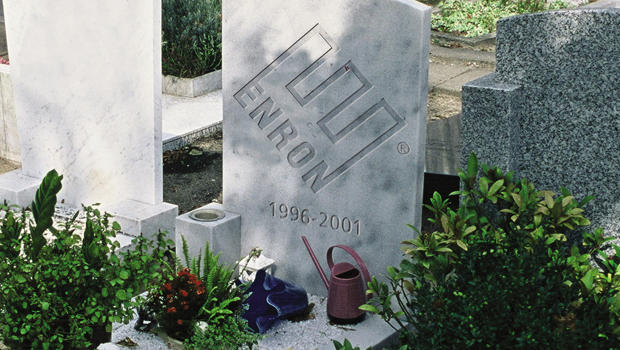
Image result for enron headstone

Silicon Valley teacher: Don’t confuse educational technology that helps kids learn — and doesn’t - The Washington Post

Silicon Valley teacher: Don’t confuse educational technology that helps kids learn — and doesn’t - The Washington Post:

Silicon Valley teacher: Don’t confuse educational technology that helps kids learn — and doesn’t

For years now school reformers have been touting the power of technology to transform education. Kids can learn better, faster and anywhere they want if only school districts would invest enough money in technology and allow teachers to learn how to integrate them into lessons.
But while educational technology has been extremely helpful for some populations of students, including some with disabilities, the overarching promise that enthusiasts predicted has not yet been borne out. There are a number of reasons for this, including poor training of teachers, poorly designed technology and technology that quickly becomes obsolete.
Here is a piece on this subject by Kathy Liu Sun, a former high school math teacher who is now an assistant professor of education at Santa Clara University in Silicon Valley, California.
By Kathy Liu Sun
I live and work in Silicon Valley, so it’s not surprising that technology has found its way into our math classrooms here.  But is technology really supporting our students to learn? Just because something is labeled as technology doesn’t mean it supports good learning.
In my recent work in local schools, I have observed that teachers are having their students work on computers for the entire math lesson. Proponents argue that computer-based lessons allow students to go at their own pace and expose students to content they might not otherwise have an opportunity to see. But these benefits come at a high cost.
One of the most pressing problems is the content and focus of these digital lessons, which are often simply digital replications of traditional lecture based math lessons. (You remember these: teacher at board showing you example after example, followed by practicing a similar problem with different numbers twenty times over.)
Whether delivered digitally or in person, this type of instruction sends the wrong message about mathematics. It teaches students that mathematics is about mastering a set of procedures, rather than viewing mathematics as a creative subject that is about problem-solving and sense-making.
Research has shown that such an emphasis on mathematical procedures is not supportive of student learning and fails to help students to draw connections between key mathematical ideas, think critically, and problem-solve. These skills are particularly important for 21stCentury citizenry and long-term achievement outcomes.
While your seventh grader engaging in digital math lessons might be learning pre-calculus procedures, she may not have any understanding of the underlying concepts that will be critical for future success.
Instead, let’s consider how technology might genuinely support mathematical sense-making and problem-solving. A recent study conducted at Stanford University found that students who Silicon Valley teacher: Don’t confuse educational technology that helps kids learn — and doesn’t - The Washington Post:


Digital Library Resource Collections - Smarter Balanced Assessment System (CA Dept of Education)

Digital Library Resource Collections - Smarter Balanced Assessment System (CA Dept of Education):

Digital Library Resource Collections

Image result for Digital Library Resource

Created by expert educators in collaboration with CDE and Smarter Balanced, the Digital Library resource collections bring together associated resources that pertain to specific topics in one location. Please note: A Digital Library account is required to access any Digital Library resource.

CDE—Professional Learning Series

The Professional Learning Series is designed to connect educators with resources in the Digital Library that directly relate to timely professional learning topics.
Formative Assessment Process
  • Formative Assessment Process – Foundational Series | PDF
    This foundational series is designed for use by educators with limited experience integrating the formative assessment process into instruction and/or limited understanding of the tools offered in the Digital Library.
  • Formative Assessment Process – Advanced Series | PDF
    This advanced series is designed for use by educators who can navigate the Digital Library and are ready to deepen their formative assessment practices and develop additional formative assessment skills.
Assessment Literacy
  • Assessment Literacy – Foundational Series | PDF
    This foundational series is designed for use by educators with limited understanding of the Smarter Balanced assessment system. This interactive series engages educators in the formative assessment process while learning about the components that make up the Smarter Balanced assessment system.
  • Assessment Literacy – Advanced Series | PDF
    This advanced series is available for use by educators who have used all components of the Smarter Balanced assessment system. This interactive series engages educators in the formative assessment process while learning how to evaluate and align classroom and district instruction and assessment tools with regard to Depth of Knowledge and accessibility for all students.
Supporting Student Accessibility Needs

CDE—Instructional Learning Series

The Instructional Learning Series is designed to connect educators with resources in the Digital Library that directly relate to specific Interim Assessment Blocks. For each resource on the lists below, a brief description is provided along with the Common Core State Standards (CCSS) of focus and estimated instructional time. Many of the formative assessment practices featured in these resources can be used across grades and content areas, so teachers are encouraged to explore all of the resource lists in this series.
English Language Arts/Literacy
Mathematics
More Instructional Learning Series resource lists coming soon!

Smarter Balanced—Digital Library Connections

Digital Library Connections link student performance on the Smarter Balanced Interim Assessment Blocks with resources in the Digital Library. Educators can use these connections to find relevant and useful instructional supports that are aligned with students' needs.
Overview
English Language Arts/Literacy
Mathematics
More Digital Library Connections coming soon!
Questions:   California Assessment of Student Performance and Progress Office | caaspp@cde.ca.gov | 916-445-8765
Last Reviewed: Wednesday, Mar
Digital Library Resource Collections - Smarter Balanced Assessment System (CA Dept of Education):


Education Secretary Betsy DeVos is getting some very bad news about her favorite thing, school vouchers - LA Times

Education Secretary Betsy DeVos is getting some very bad news about her favorite thing, school vouchers - LA Times:

Education Secretary Betsy DeVos is getting some very bad news about her favorite thing, school vouchers


A raft of recent studies about school vouchers couldn’t have come at a worse time for our new Secretary of Education Betsy DeVos.
That's because the studies report devastatingly bad results for students in those voucher programs. And they've been flowing into public forums just as DeVos, a leading advocate of school vouchers, takes charge of federal education policy. DeVos's patron, President Trump, proposed during his campaign to shovel $20 billion to the states to support magnet and charter schools in voucher programs.
Voucher programs give parents public funds to spend on approved private schools for their kids. The idea is to give children in underperforming schools an escape route to a better education, while providing competition that hopefully will goad those poorer schools into improving themselves.

Conservatives like the idea, which dates back to a 1955 essay by Milton Friedman, because it means reducing government's role in education and subjecting schools to market discipline. Give parents a set sum to spend on any school that meets minimum standards, Friedman wrote, and "a wide variety of schools will spring up to meet the demand."
But the economist's nirvana hasn't materialized as expected. Studies of a few early voucher experiments in Milwaukee, New York and Washington, D.C., were equivocal at best, showing some modest improvement in test scores for some students and none for others.  
That’s why the latest findings, which emerge from studies of statewide programs in Louisiana, Ohio and Indiana, have left education experts stunned. In a nutshell, they find huge declines of academic achievement among students in voucher programs in those three states.
“These results are without precedent in the educational literature,” says Kevin Carey, director of the education policy program at the think tank New America. “Among the past results, none were as positive as these are negative.”
study released last February by a team of researchers led by Jonathan Mills of Tulane University found that students in Louisiana’s expanded program lost ground in their first two years in the program. Those performing at average levels in math and reading — that is, at about the 50th percentile — fell 24 percentile points in math and eight points in reading after their first year in the program. In the second year, they improved slightly in math, though they still scored well below non-voucher students, and barely improved at all in reading.


Those results resembled December 2015 findings by Christopher Walters of UC Berkeley, Atila Abdulkadiroglu of Duke and Parag Pathak of MIT covering the Louisiana program’s first year, which found that participation in the program “substantially reduces academic achievement.” continue reading: Education Secretary Betsy DeVos is getting some very bad news about her favorite thing, school vouchers - LA Times:
Students in Louisiana's school voucher program fell sharply behind their peers in their first and second years in their new schools.


Mike Klonsky's SmallTalk Blog: Trump's empty statements on education

Mike Klonsky's SmallTalk Blog: Trump's empty statements on education:

Trump's empty statements on education


Trump's vapid speech to the Joint Session of Congress last night revealed, among other things, that he is an educational know-nothing. As you might expect, the speech was void of any real vision for the future of public education or school reform. It amounted to little more than a sound-bite ad for market-driven schooling.

But as he read from the teleprompter, a few lines caught my attention.

First, was the often repeated cliche used by former Sec. of Ed Arne Duncan, that education is "the civil rights issue of our time." It was hollow enough when Duncan first claimed it while often, in the same breath, stating his opposition to "forced integration".

But if Duncan's civil rights phrase mongering was tragedy, hearing it again from Trump, an open racist and rabid opponent of civil rights, was farce. Especially, coming as it did, a day after he and Ed Sec. Betsy DeVos held up Historic Black Colleges and Universities as their model of "choice" without once mentioning HBCUs' history as a response to Jim Crow and racial Mike Klonsky's SmallTalk Blog: Trump's empty statements on education:


Ms. DeVos’s Fake History About School Choice - The New York Times EDITORIAL BOARD

Ms. DeVos’s Fake History About School Choice - The New York Times:

Ms. DeVos’s Fake History About School Choice


Education Secretary Betsy DeVos offered a positively Orwellian explanation Monday of why historically black colleges and universities were created in the United States. Incredibly, she suggested that they were “real pioneers” in the school-choice movement and “started from the fact that there were too many students in America who did not have equal access to education.”
The Education Department’s own website — on a page titled “Historically Black Colleges and Universities and Higher Education Desegregation” — offers a more accurate history. These colleges, it shows, were created, beginning in the 19th century, as a direct response to rigid racial segregation when the doors of white colleges were typically closed to African-Americans.
Rather than integrate colleges, the Southern and border states established parallel, Jim Crow systems in which black college students were typically confined to segregated campuses handicapped by meager budgets and inferior libraries and facilities. Litigation over the funding equity issue continues to this day.
Ms. DeVos’s insulting distortion of history, which she tried to pull back after furious criticism, grows out of her obsession with market-driven school policies, including the idea of a publicly funded voucher program that public school students could use to pay for private education.
But as Kevin Carey reported in The Times just last week, new research shows that voucher programs may actually harm many students by shunting them into low-quality private schools. Taken together, three of the largest voucher programs in the country, enrolling nearly 180,000 children nationwide, showed negative results.
A 2015 study of an Indiana program that served tens of thousands of students found that voucher students who transferred to private schools did significantly worse in mathematics — and showed no improvement in reading.
study of a Louisiana voucher program last year serving predominantly black and low-income families found reading and math scores went down when children transferred to private schools. The performance decline was significant: Public elementary school children who started at the 50th percentile in math dropped to the 26th percentile within a year of transferring to a private school.
And a study of a large program in Ohio — conducted by the Thomas B. Fordham Institute — found that students who used vouchers to attend private schools fared worse academically compared with their peers attending public school.
At the very least, these studies show that the private schools cannot be presumed superior to public schools. These dismal results also make clear that free-market mechanisms that work well in business can be damaging when applied to the lives of schoolchildren.
Ms. DeVos’s strange interpretation of this country’s racist history was probably meant to pave the way for market-driven education policies. Ignorant statements notwithstanding, those policies have proved to be failures.Ms. DeVos’s Fake History About School Choice - The New York Times


Schools Matter: DeVos Takes Racist Stupidity to New Heights

Schools Matter: DeVos Takes Racist Stupidity to New Heights:

DeVos Takes Racist Stupidity to New Heights


White lady billionaire, Betsy DeVos, has moved beyond grizzly bears and guns to explore a whole new territory in the Trumpist landscape of racist delusion.  In describing the origins of historically black colleges and universities as an example of "school choice," DeVos shows that, 1) she is as ignorant as most people suspect, or 2) she is ideologically driven to turn a huge element of the historic black struggle for education into a minstrel sideshow to mis-educate an audience stupid enough to believe what she says.  This is from the Press Release yesterday:

. . . .A key priority for this administration is to help develop opportunities for communities that are often the most underserved. Rather than focus solely on funding, we must be willing to make the tangible, structural reforms that will allow students to reach their full potential.
Historically Black Colleges and Universities (HBCUs) have done this since their founding. They started from the fact that there were too many students in America who did not have equal access to education. They saw that the system wasn’t working, that there was an absence of opportunity, so they took it upon themselves to provide the solution.
HBCUs are real pioneers when it comes to school choice. They are living proof that when 
Schools Matter: DeVos Takes Racist Stupidity to New Heights:


More on the vital importance of doing a high-quality education adequacy cost study in Connecticut - Wait What?

More on the vital importance of doing a high-quality education adequacy cost study in Connecticut - Wait What?:

More on the vital importance of doing a high-quality education adequacy cost study in Connecticut


In testimony before the Connecticut Education Committee later today, students from the Education Adequacy Project Clinic at Yale Law School will provide legislators with the rationale behind the importance of conducting a comprehensive education adequacy cost study in order to determine the appropriate level of school funding in Connecticut.
The Yale law students will explain that,
An education adequacy cost study is the only truly systematic way to provide a comprehensive picture of the actual costs needed to ensure that every student in Connecticut receives an adequate education. Cost studies work by leveraging concrete data on student needs and the expertise of education experts to calibrate and allocate education funding. If we have one fundamental point to impress upon you, it is that when children’s futures are on the line, we cannot afford to resign ourselves to guesswork.  
Cost study experts begin by using standardized measures to identify the resources needed for all students to meet existing state standards. They then determine the costs of these resources for different types of districts, considering a range of factors that experience as well as research have shown are the most salient, including among others diverse student needs, poverty, geography, limited English proficiency, special education, and foster status. Finally, experts offer recommendations for how limited budgetary allocations can achieve the greatest impact.
In addition, the students have identified “Exemplary Cost Studies” that have been completed in other states.  The law students will testify that,
As of 2007, over 30 states had utilized cost studies. Some have been initiated by legislatures, and others undertaken pursuant to court order. We would like to illustrate the value of cost studies by pointing to two very different states, Massachusetts 
More on the vital importance of doing a high-quality education adequacy cost study in Connecticut - Wait What?:


Teaching the History of White Nationalism in the United States - Living in Dialogue

Teaching the History of White Nationalism in the United States - Living in Dialogue:

Teaching the History of White Nationalism in the United States

Image result for History of White Nationalism in the United States


By Paul Horton.
During the last year the Southern Poverty Law Center has reported an increase in hate crimes and hate groups. As political discourse in the United States in the late twentieth and early twenty-first centuries has become increasingly focused on identity politics, ethnic, cultural, and racial nationalisms have struggled to acquire opportunity and recognition within broader American publics. Reacting to this historical push from marginalized identity groups, an aggressive white nationalism has recently pushed back and reclaimed political power.
Although white nationalism has always been a dominant, if not the dominant ideology in American history, white nationalists in the twenty-first century often embrace policies of voter restrictions, immigration restriction, segregation, flight from public schools, and the defunding of any public programs at any level that are perceived to transfer public funds to minority groups.
Moreover, the current resurgence of white nationalism seems to be fueled by the prospect of a minority majority in the near future. Demographers have established that people of color will outnumber white Americans in about thirty years.
Another key element of the current white nationalism is a resurgence of the 1968 “Southern Strategy” of the “war on crime.” Minority and dissident behavior that actively and publically stand in opposition to white nationalism is increasingly viewed as criminal. More alarmingly, news reporting that directly challenges the hegemony of white nationalism is challenged as “fake news” and racism. Increasingly, attacks on vulnerable minority populations are not denounced, as a climate of fear and intimidation is encouraged by the inaction of many national leaders. The current chief political advisor to the President of the United States is strongly Teaching the History of White Nationalism in the United States - Living in Dialogue:

CURMUDGUCATION: DeVos, HBCU, and Justice

CURMUDGUCATION: DeVos, HBCU, and Justice:
DeVos, HBCU, and Justice


There is just so much to unpack about Betsy DeVos's bonkers attempt to rewrite the story of Historically Black Colleges and Universities into an advertisement for school choice.

They started from the fact that there were too many students in America who did not have equal access to education.

HBCUs are real pioneers when it comes to school choice. They are living proof that when more options are provided to students, they are afforded greater access and greater quality.
 

DeVos has been justly and repeatedly slammed for this. See also here. Or especially this Slate piece.

The statement is wrong on so many levels. She tried some damage control later, but that was not much of an improvement:

“Bucking that status quo, and providing an alternative option to students denied the right to attend a quality school is the legacy of HBCUs,” she said, according to prepared remarks released by her office. “But your history was born, not out of mere choice, but out of necessity, in the face of racism, and in the aftermath of the Civil War.”

She chalked the HBCU story up to structural changes, but since she is personally as rich as all HBCUs put together, that rings a little hollow. And there's a huge irony in that vouchers and charters became popular in the South as a means of escaping the collapse of Jim Crow laws.

But I want to focus on one other aspect of this revelatory mess-- what it says about DeVos's "solution" for a twisted system, a system that is formally and deliberately unjust.

What DeVos could have said was something along the lines of, "HBCUs never should have had to 
CURMUDGUCATION: DeVos, HBCU, and Justice:


A Look at Calvin College, Betsy DeVos's Alma Mater - The Atlantic

A Look at Calvin College, Betsy DeVos's Alma Mater - The Atlantic:
At Betsy DeVos's Alma Mater, a History of Fierce Debate
Calvin College is no fundamentalist Christian school.


GRAND RAPIDS, Mich.—It would be easy enough to drive past Calvin College without giving Betsy DeVos’s alma mater a second thought. Six miles southeast of downtown, the school is a sprawling cluster of nondescript buildings and winding pathways in a quiet suburb. But to bypass Calvin would be to ignore an institution whose approach to education offers clues about how the recently appointed U.S. education secretary might pursue her new job, and about the tug religious institutions feel between maintaining tradition and remaining relevant in a rapidly diversifying world.  
DeVos is now Calvin’s most famous alum, and in recent weeks, the school has been painted in some circles both online and in conversation as a conservative, insular institution that helped spawn a controversial presidential-cabinet member intent on using public dollars to further religious education. But that is a grossly simplified narrative, and one that obscures the nuances and very real tensions at the school.
In more than a dozen interviews, professors, students, and alumni of all political stripes painted a picture of a college where intellectual diversity and thought-provoking debate are the norm, and where the belief that followers of the Christian Reformed Church, with which the school is affiliated, have an obligation to engage with the world around them compels both instructors and students to question what they think they know.
“Our faith commits us to engaging the world all around us,” said Kevin den Dulk, a political-science professor who graduated from Calvin in the 1980s, during an interview in the DeVos Communication Center, which sits across from the Prince Conference Center bearing the secretary’s maiden name. (Her mother, Elsa, is also an alum.)
Den Dulk’s words aren’t just PR fluff; it’s a concept borne out by the school’s 141-year history and the Dutch-influenced part of western Michigan it calls home. The Christian Reformed Church is a Protestant tradition that has its roots in the Netherlands and has been deeply influenced by the theologian Abraham Kuyper, a A Look at Calvin College, Betsy DeVos's Alma Mater - The Atlantic:


RANDI WEINGARTEN: America is a country of immigrants | TheHill

America is a country of immigrants | TheHill:
America is a country of immigrants

President Trump ran on campaign promises that threatened immigrant communities and talked of deporting millions. Now the U.S. Department of Homeland Security’s recent memo makes clear that the administration is committed to keeping its promise of tearing families apart and making our country less safe.
In just the last two weeks, Daniel Ramirez-Medina, a 23-year-old recipient of Deferred Action for Childhood Arrivals (DACA) recipient with no prior criminal record, was taken from his Seattle home and remains detained. Lupita Garcia de Rayos, who has lived in Arizona for more than two decades and is the mother of two children who are U.S. citizens, was deported after checking in with U.S. Immigration and Customs Enforcement (ICE). Ervin Gonzalez, a transgender woman from El Paso, was apprehended in court by ICE while filing a domestic abuse claim, apparently tipped off by her abuser.
These actions are unacceptable and immoral.
According to Homeland Security, more than 700 immigrants were swept up in so-called targeted enforcement operations earlier this month by ICE. These policies are having a profound impact in our classrooms, workplaces and communities. The administration claims these are all hardened criminals, but it’s clear that they are targeting the most vulnerable — mothers, students and crime victims.


These families aspire to do exactly what our parents and grandparents did when they came to America, which is to help build this great country into a beacon of freedom, hope and opportunity in the world. They are hereAmerica is a country of immigrants | TheHill: