Tuesday, February 28, 2017

School Choice and the Inequitable Meat Grinder of Social Darwinism | radical eyes for equity

School Choice and the Inequitable Meat Grinder of Social Darwinism | radical eyes for equity:

School Choice and the Inequitable Meat Grinder of Social Darwinism

A close second to Trump himself as the poster child for the tragic consequences of being rich, white, and blindingly ignorant is Betsy DeVos, billionaire from a pyramid scheme and smiling shill for school choice.
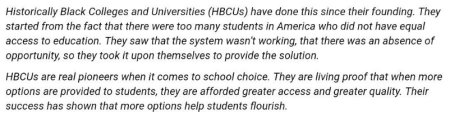
In the ugliest of ironies, DeVos has possibly achieved the single greatest moment of racial appropriation for political gain with her nonsensical twisting of HBCUs:
hbcu-devos
To understand the racism and privilege driving how and why the Right and Republicans chant “choice” and reach awkwardly out to blacks, consider Poet Claudia Rankine on studying whiteness, and the age of protest:
Why is it important to deconstruct whiteness? Rankine, whose most recent poetry is dominated by short paragraphs surrounded by expanses of white space, explains: “White people don’t see that their own positioning is a created position. They think it’s a meritocratic situation . . . rather than that the entire culture is set up to help them,” she says. “And so then they begin to believe that they are what is normal. That means everybody else is other to their position and, until you interrogate that, they will feel that individually they’re being attacked any time race comes up rather than understanding they are part of a community that includes all of us that put this hierarchical structure in place.”
DeVos, like Trump, believes she has earned her stature, believes she knows more than anyone else, and believes everyone else simply isn’t trying, isn’t deserving.
Blinded by her wealth and whiteness, she cannot see that choice is tossing School Choice and the Inequitable Meat Grinder of Social Darwinism | radical eyes for equity:
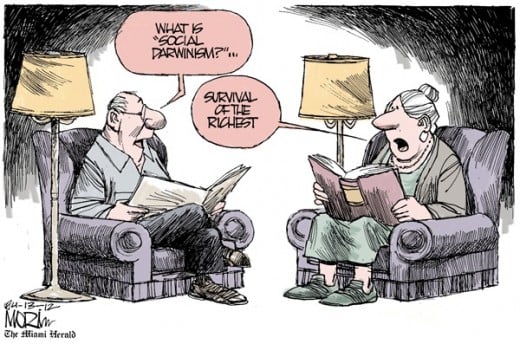
Image result for Inequitable Meat Grinder of Social Darwinism

Give Like A Billionaire – Protecting The Power Of Their Purse: How Billionaires Obscure Contributions And Command Influence – redqueeninla

Give Like A Billionaire – Protecting The Power Of Their Purse: How Billionaires Obscure Contributions And Command Influence – redqueeninla:

Give Like A Billionaire – Protecting The Power Of Their Purse: How Billionaires Obscure Contributions And Command Influence


Cute videos have peppered the website of Steve Zimmer’s opponents claiming to be shocked at the suggestion that big money is sloshing about the LAUSD4 school board race. ‘We’re just aw-shucks folks in the face of the Big Bad Union…’ goes that canard.
Well that’s basically shocked-shocked since it’s hardly news that Zimmer’s opponents are some of the richest people in America. Eli Broad, whom everyone’s familiar with as the architect of the “your-schools-suck-so-I-think-we-should-just-sell-half-of-them-down-the-river-to-my-pals-you-won’t-notice-much-plan”, is America’s 58th-richest bloke, but he’s not the only billionaire backer of the anti-Zimmer alliance.
Melvoin’s personal campaign donations pile has hidden among its heaps 6 such billionaires; Pohill’s a mere singular one {Arnold, Bloomberg, Broad, Karsh, Marks, Schusterman; Broad donated to Polhill as well}. Zimmer’s, well, ahem, not-so-much. He’s kinda left out in the cold by that big bad Union composed of … you and me.
As of last week Melvoin had 3x the maximum contributors as the others. He may have lots of littler contributions, but some of those are setup through handy-dandy monthly contributions just like your public radio station manages with its paid staff. This sort of snazzy, hyper-organized process for raking in the dough relatively painlessly is brought to you by some big-bucks, high-priced, professional campaign coordinators and PR consultancies. Their websites are a lot of fun to peruse and as a special bonus you’ll recognize a parade of “grassroots parent” organizations there too. Just like the one powering Zimmer’s opposition’s campaigns. It’s a little humbling to contemplate how much us just-parents need corralling by such slick, expensive, organization.
Which makes sense because when I try to arrange tshirts for my daughter’s extracurriculars (i) we can’t afford it and (ii) the effort just about kills everyone. Meanwhile every time you turn around Charter Schools are closing their doors so color-coordinated protestors can chant in coordinated union – professional organizers are so awesome to contemplate. That’s the kind of Union Charter-School-Corporates can really get behind: the sort that gins up GDP with tshirt purchases.
And so it’s empirically true that Zimmer’s campaign is being swamped out by billionaires’ money from beyond. Here’s how it’s done:Give Like A Billionaire – Protecting The Power Of Their Purse: How Billionaires Obscure Contributions And Command Influence – redqueeninla:


Trump invited a student to his joint address. Her story says a lot about his views on education reform. - The Washington Post

Trump invited a student to his joint address. Her story says a lot about his views on education reform. - The Washington Post:

Trump invited a student to his joint address. Her story says a lot about his views on education reform.


When President Trump delivers his first joint address to Congress Tuesday night, Denisha Merriweather will be there as his invited guest — and her attendance offers a clue about how Trump might fulfill his promise to spend $20 billion on expanding vouchers and other alternatives to traditional public schools.
Merriweather is a young woman who twice failed third grade at a Florida public school before her godmother placed her in a private school. She paid tuition with help from Florida’s tax-credit scholarship program, which gives corporations tax breaks when they donate to nonprofits that then distribute the money in the form of scholarships to private and religious schools.
Attending private school turned her life around, Merriweather says. She graduated from college and expects to receive a master’s degree this spring.
Trump and his education secretary, Betsy DeVos, have both said they believe public education is failing too many students and that the solution is to make sure students have more access to alternatives, including private schools.
One of the easiest ways Trump could make good on his promise to expand that access is to create a federal tax credit that incentivizes corporations to donate to state programs such as Florida’s. Such a credit could be embedded in a broader tax code overhaul that would need a simple majority in Congress to pass.
Florida’s program, established in 2001, provides is the largest of 17 state tax-credit scholarships in the nation. Such tax-credit programs effectively direct public funds to private-school tuition, just like traditional vouchers. But they don’t violate the separation of church and state, courts have found, because money going to religious schools isn’t coming directly from the government.
Also just like traditional vouchers, tax-credit scholarships have fierce critics.
They argue that the tax-credit programs draw needed funds out of the public school system, redirecting money to private schools that aren’t accountable for student performance. (Some Trump invited a student to his joint address. Her story says a lot about his views on education reform. - The Washington Post:

Common Core in California likely to continue despite Trump opposition | EdSource

Common Core in California likely to continue despite Trump opposition | EdSource:

Common Core in California likely to continue despite Trump opposition


Opposition by President Donald Trump and Secretary of Education Betsy DeVos to the Common Core is unlikely to slow implementation of the new standards in English language arts and math in states like California, where there has been little opposition to the standards.
That is the consensus of education leaders in California from diverse regions of the state, even those in areas of the state where the majority of voters cast their ballots for Trump. One reason is that implementation of the Common Core is well underway in most parts of the state, and reversing its momentum will be difficult, if not impossible, to do.
Voters backed Trump in 26 out of 58 California counties, including Kern County, where Trump received 53 percent of the vote. Kern County Superintendent of Schools Mary Barlow said implementation of the standards in her county is fully underway and “we are seeing a lot of progress.” She noted that despite the pro-Trump sentiment there, “we have had relatively little pushback on the California state standards.”
“Employers are begging for students that have critical thinking skills, can problemCommon Core in California likely to continue despite Trump opposition | EdSource: 
Image result for bill gates common core

How States Can Better Promote Fairness for Transgender Athletes by Jonathon Reynolds - Education Law Prof Blog

Education Law Prof Blog:

How States Can Better Promote Fairness for Transgender Athletes by Jonathon Reynolds

Image result for Mack Beggs

Mack Beggs, 17, won the Texas state girls’ wrestling title on Saturday culminating in an undefeated season for the young man. Unfortunately, this was not the division Beggs wanted to compete in – a sentiment shared by his competitors and other members of the community. Beggs was born female, but according to the Star-Telegram, his parents recall Beggs identifying as male as early as age 3. After a long wait, Beggs was finally able to begin transitioning a little more than a year ago with the use of testosterone therapy. Naturally, the treatment has promoted substantial growth in muscle mass and physical strength.
There was overwhelming community support behind Beggs’s desire to wrestle in the boys’ division, but the University Interscholastic League, the state’s governing body for public school athletics, prohibits gender integrated athletics. The Dallas Morning News reports that in 2016, 95% of Texas Superintendents voted in favor of amending the UIL’s constitution to require student athletes compete as the gender identified on their birth certificate.
The expansion of sex-separated teams in public school wrestling has been a recent development. I was on a wrestling team in Tennessee from 2005-2008, and I had the opportunity to wrestle several females over that course of time.  My female opponents were never conclusively less capable than the male opponents. Importantly, these opponents were females both on their birth certificate and in identity. Mack Beggs is not. Beggs testosterone therapy and male identity create actual differences between him and his female competitors. Since we have allowed female wrestlers to compete with males as a matter of practice before sex-separated teams, why not allow them to compete now? 
 It’s likely the UIL policy was promulgated to protect female competitors from competitors labeled male on their birth certificate, but incidentally the policy has created a situation where female competitors are forced to wrestle a male. Beggs may not be male according to his birth certificate, but according to his strength, muscle mass, and undefeated season – many would concede that Beggs is male, thus creating the problem the UIL wanted to avoid.
Under the Obama administration’s policy guidance, Beggs likely could have filed an administrative complaint with the Office for Civil Rights, alleging discrimination under Title IX.  The Trump administration, however, recently reversed that policy position.  The Supreme Court will presumably pick sides later this year in its pending case, Grimm v. Glouchester County, which addresses transgender students’ access to bathrooms consistent with their gender.
But even if the Court sides with the new administration and concludes that sex discrimination only means Education Law Prof Blog:


Chicago Public Schools Teeter on Fiscal Precipice | janresseger

Chicago Public Schools Teeter on Fiscal Precipice | janresseger:

Chicago Public Schools Teeter on Fiscal Precipice


 The Chicago Public Schools instituted a sudden, early February, unpaid four-day teacher furlough to save $35 million, along with a $46 million spending freeze on school discretionary funds that pay for textbook purchases, after-school programs, field trips, and hourly aides. But, at the end of last week after massive protests, the school district restored $15 million, when it became apparent that the city’s poorest schools had experienced the deepest cuts.

Lauren Fitzpatrick of the Sun-Times reports: “Money was given back to 434 schools that qualify for federal Title I money for low income children….”  “The Sun-Times found that schools where three of four children are low-income generally had their discretionary funds cut at twice the rate as schools where one in four children were low-income. The newspaper also found that majority Hispanic schools saw freezes that were twice as large as majority white schools.”
Juan Perez of the Chicago Tribune explains why schools serving the poorest Hispanic and African American students were unfairly penalized by the budget freeze: “CPS originally determined the amount of money schools had to cut in the spending freeze by looking at the money each building held in three accounts: funds received from the district on a per-pupil basis; supplemental state aid meant to help educate low-income students; and federal grant funds. These state and federal dollars aren’t meant to be used on general operating costs, but are intended to keep class sizes low and support learning programs in schools that have a higher number of low-income and minority students…  If poorer schools or buildings with large numbers of English-language learners had not yet spent their state and federal aid, those schools had more money to cut and were then in many cases hit hardest by the spending freeze.”
The problem is that nobody knows where the money to cover the restoration of the funds is going to come from. Restoring $15 million to the poorest schools will add to the district’s Chicago Public Schools Teeter on Fiscal Precipice | janresseger:

“Heroism of Incremental Change.” Part 1 | Larry Cuban on School Reform and Classroom Practice

“Heroism of Incremental Change.” Part 1 | Larry Cuban on School Reform and Classroom Practice:

“Heroism of Incremental Change.” Part 1


So much has been written about the importance of “transformational” change in health care, schools, and criminal justice.  Seeking fundamental changes quickly in how institutions operate is dramatic, visible, and garners media coverage. Too often, however, glowing rhetoric exceeds actions.
Making small changes, for example, in how health care for millions of previously uninsured Americans is delivered and paid for is undramatic and often goes unnoticed. The Affordable Care Act–Obamacare to many–is a prime example of an incremental change in health insurance for more Americans that is both important and substantial. The current “repeal and replace” political rhetoric promising dramatic changes in the Affordable Care Act that will “transform” health insurance remains, as I write, just words.
Similarly, claims for “transforming” changes in teaching and learning through “personalized learning,” robotics, and virtual reality are, well, still magical incantations that have yet to transpire in most U.S. schools.
But small changes in schooling can accumulate and help students learn. Teachers spending more time with individual students and increasing teacher collaboration are less visible, less media appealing changes. Setting aside time in daily schedules when children and youth can interact with teachers outside of lessons sounds so procedural, even trivial to starry-eyed reformers yet remains significant to individual teachers and students because those adult-student relationships are at the core of learning.
Or small changes in getting police officers in largely minority communities to treat individual citizens with respect, even at a time when social media saturates police-citizen interactions, reformers greet such changes with yawns and shrugs. The yearning for massive, swift, and head-turning change is strong among “Heroism of Incremental Change.” Part 1 | Larry Cuban on School Reform and Classroom Practice:


Chance the Rapper is meeting with Illinois’ governor about education funding. Really. - The Washington Post

Chance the Rapper is meeting with Illinois’ governor about education funding. Really. - The Washington Post:

Chance the Rapper is meeting with Illinois’ governor about education funding. Really.

Chance the Rapper, who hails from Chicago and who endorsed Hillary Clinton for president in 2016, is scheduled to meet this week with Republican Illinois Gov. Bruce Rauner to talk about Chicago Public Schools and the district’s extreme financial crisis. Really.
The meeting comes not long after Rauner was sued, along with the Illinois State Board of Education, by Chicago Public Schools over allegations of longtime inadequate and unequal funding. Rauner and Chicago Mayor Rahm Emanuel have clashed, each insulting the other in public over the district’s financial mess.
If it seems likes nothing more than a publicity stunt to you that Rauner would welcome talks with a rapper about funding (but not educators or city officials), this may make it even starker: Chance the Rapper’s father is Ken Williams-Bennett, deputy chief of staff to Emanuel. Williams-Bennett once worked for Barack Obama when he was a U.S. senator from Illinois. Chance’s birth name is Chancellor Johnathan Bennett.
The suit against state officials, filed earlier this month, says that they treat students in Chicago’s public schools, “who are predominantly African American and Hispanic, as second-class children, relegated to the back of the State’s education funding school bus.” A 2015 report by the nonprofit advocacy group the Education Trust found that Illinois’ funding gap between poor and wealthy districts “stands out for its unfairness,” with the highest-poverty districts receiving nearly 20 percent less in state funds than the lowest-poverty districts.
Chicago officials say that the city’s public school district — the third largest in the country — has 20 percent of the state’s students but only gets 15 percent of its funding. In 2015, the Chicago Tribune ran an editorial wondering whether the district would collapse as a result. It hasn’t, but money mismanagement, inadequate funding and failed education policy have created an existential crisis for the district.
The rapper-governor meeting evolved from Rauner’s tweet on Feb. 13 congratulating Chance on winning three Grammy Awards.
Congrats to @Chancetherapper for making history as an independent artist and taking home 3 Grammys. IL is proud that you're one of our own.
The Twitter conversation then went this way:


 Chance the Rapper is meeting with Illinois’ governor about education funding. Really. - The Washington Post:

Jersey Jazzman: Blaming Public Employees For NJ's Fiscal Mess: Today's Dopey Episode

Jersey Jazzman: Blaming Public Employees For NJ's Fiscal Mess: Today's Dopey Episode:

Blaming Public Employees For NJ's Fiscal Mess: Today's Dopey Episode

Whenever I want to read something really ill-informed and contemptuous of public employees, I turn to the always reliable Star-Ledger:

Property taxes in New Jersey are the highest in the nation. Since 2000, they have doubled and have risen at over twice the rate of inflation. No wonder people are forced to move; no wonder we have the highest foreclosure rate in the nation.
That's from guest columnist Tom Byrne, who apparently is so busy with his gig on the State Investment Council that he doesn't have the time to find out that out-migration due to taxes is a totally fabricated myth.

Or the time to read the Star-Ledger itself (the news part, which is still pretty good), which pointed out that New Jersey's high foreclosure rate is due, at least in part, to the state's relatively long foreclosure process.

By the way -- New Jersey is not some sort of wildly high-spending state:


OK, we're top ten (barely), but we're not some sort of outlier -- and that's without accounting for the fact that this is an expensive state in which to live. Funny how stuff like this never made it into Byrne's piece:

The obvious way to control property taxes is to hold the line on expenses, but this is fraught with political consequences, especially for Democrats. Public-sector unions like the NJEA and the two police unions, whose members' salaries and benefits are largely paid by property taxes, wield Jersey Jazzman: Blaming Public Employees For NJ's Fiscal Mess: Today's Dopey Episode:


Why I Will March (Stand For Something) | The Jose Vilson

Why I Will March (Stand For Something) | The Jose Vilson:

Why I Will March (Stand For Something)

Image result for Why I Will March (Stand For Something)

On March 4th, 2017 from 9:30 to 12:30, I’m marching with the Alliance for Quality Education and their broad coalition. There’s a billion reasons for me to march. Let me make a tiny list, though:
  • My son
  • My communities (Lower East Side / Harlem / Washington Heights / Inwood)
  • My students and their families
  • Because, for all the talk about Chicago, Detroit, LA, Philly, and other spaces where leaders are coming for public education, there’s little talk anymore about NYC
  • Because Governor Andrew Cuomo needs to know that he can no longer ignore the spaces where black and brown children
    • Also, because he can’t address it simply by telling Eva Moskowitz to take only the students she likes and discard the rest at the pleasure of hedge fund managers who want to see test scores
  • Because the rest of the country has to know that it’s not all good here
  • Because we shouldn’t negotiate our children’s futures from the point of compromise, but from the point of the ideal
  • Because there is such a thing as a “free” lunch for students, because we the people believe our kids should eat (DeVos sub 1)
  • Because this teacher isn’t in “receiver mode” and has never been (DeVos sub 2)
What’s more, I would love for you all to join the coalition in resisting the ways that education have cemented inequity in this country. To my knowledge, these education protests, like so many I’ve attended before, don’t have the largesse of other so-called grassroots undertakings. We can’t turn off our lights for day or two and rally in front of Albany on a weekday. We can’t bully parents into marching and threaten them with expulsion for not attending. We can’t tug at Cuomo’s pocket to attend the rallies and endorse our vision in commercials across the state. We won’t have Trump affiliates tour our halls without a reminder of how Trump sees public schooling as a monopoly worth breaking up.
We all we got.
To that end, we have to push back. Against Trump. Against DeVos. Against anyone who wishes to dismantle public education for our most vulnerable students. The argument about charters against public schools seems fraught with complications. The easy thing to say is that “not all charters.” The hard point to recognize is that public schools are a lifeline for what so many in America believe is democracy. If we aspire to the ideal of a democracy, then public education for all students matters. Akin to the arguments for universal health care, we must retain and bolster an education system that sits above the banter of the pseudo-free market.
We march with the hope that we’ll move forward from schools left behind by frigid policy and bolster these spaces with critically compassionate citizens. That’s why I’ll march. I hope to see you all there, too.
My shoes always welcome a good show of resistance. Plus, if you stand for nothing, then what will you fall for?Why I Will March (Stand For Something) | The Jose Vilson:


How Can We Look Our Kids In the Face? by Dr. Michael Flanagan Badass Teachers Association

Badass Teachers Association: How Can We Look Our Kids In the Face? by Dr. Michael Flanagan:

How Can We Look Our Kids In the Face? 


by Dr. Michael Flanagan

It was a nice summer night a couple of years ago, and my daughter was just learning to ride a bike. We were out in the parking lot of my building just as it was getting dark. I sat and watched her learn to steer and brake. A moment that is a touchstone in one’s life, that you hope your mind flashes back to when you leave this earth.


After a while she came and sat next to me and started talking about her life. “Where will I go to college?” “Where will I work?”


As I smiled, and said all the things a father is supposed to say like “Anywhere you want Honey. You can do whatever makes you happy”, my heart sank because I knew what I was telling her was a lie. I was looking at my daughter, at all the hope and potential that she had, juxtaposed with the terrible social, political and economic conditions of this planet and I feared for her future.


She was 10 years old.


I teach high school seniors who are four months away from graduation and I am sending them out into a country that is no longer even pretending to be a democracy. I write them recommendations, they receive their college acceptance letters, but I fear for their futures. In my government class I teach them from their textbooks about the magnificence of the Badass Teachers Association: How Can We Look Our Kids In the Face? by Dr. Michael Flanagan: