Latest News and Comment from Education

Sunday, August 28, 2016

FBI Raids Former SAT Exec Manual Alfaro’s Home; Alfaro Posts on LinkedIn Next Day | deutsch29

FBI Raids Former SAT Exec Manual Alfaro’s Home; Alfaro Posts on LinkedIn Next Day | deutsch29:

FBI Raids Former SAT Exec Manual Alfaro’s Home; Alfaro Posts on LinkedIn Next Day


On August 26, 2016, Reuters reported that the FBI raided the home of former College Board exec Manuel Alfaro, in connection with a leak of over 400 SAT test items to Reuters earlier the same month.
According to Reuters, the FBI “seized computers and other material” from Alfaro’s residence.
Alfaro has been publicly posting his concerns about the redesigned SAT in detail for months on LinkedIn, and he continues to post on LinkedIn the day following the raid, August 27, 2016.
Below is Alfaro’s August 27th post, in full, which he begins with a bold declaration:

Shining a Spotlight on the Dark Corners of the College Board: SAT has a Critical Technical Flaw

Manuel Alfaro

August 27, 2016

The FBI raided my home yesterday at the request of the College Board. It appears that Coleman wants to raise the stakes. Challenge accepted!
 Note: Whenever “SAT” is used below, it refers to the “redesigned SAT.”
The SAT test specifications require that, for items in context, 10% are Heavy (more than 60 words), 50% are Medium (40-60 words), and 40% are Light (less than 40 words). On its website, the College Board states that the SAT Practice forms were constructed using the same specifications as the SAT Operational forms. The College Board, however, did not use these specifications to build the SAT forms. And we found out about this after the SAT forms were built.
On January 2015, I received a high priority email from Sherri Miller requesting a report of the item distribution across the three categories (Heavy, Medium, Light)—she needed to provide confirmation, that night if possible, to Cyndie Schmeiser that the SAT forms were built to specifications. After analyzing the form metadata, I let her know that all the forms had about 45% Heavy items. “Wow,” she replied, “We had changed that to 10% heavy in the specs given the timing studies. How did we get to 45% of them being heavy?”
Months earlier, at a meeting with the SAT’s Technical Advisory Committee (TAC), the committee recommended that the SAT specifications be changed 
FBI Raids Former SAT Exec Manual Alfaro’s Home; Alfaro Posts on LinkedIn Next Day | deutsch29
 Image result for big education ape sat

Common Core’s New New Math has the Same Problem as the Old New Math | gadflyonthewallblog

Common Core’s New New Math has the Same Problem as the Old New Math | gadflyonthewallblog:

Common Core’s New New Math has the Same Problem as the Old New Math

little tired boy sitting at a desk and holding hands to head
Bad ideas are like unlucky pennies – they keep coming back again.
Take the New Math. Or maybe I should say the New New Math.
Common Core State Standards suggests we teach children a new way to do arithmetic. We should focus on multiple ways to reach an answer with an emphasis on understanding the concept behind the problem rather than just manipulating numbers.
It sounds fine in theory – until you think about it for five minutes.
When learning a new skill, it’s best to master a single, simple approach before being exposed to other more complex methods. Otherwise, you run the risk of confusion, frustration and ultimately not learning how to solve the problem.
Take directions.
If you’re lost and you ask for directions, you don’t want someone to tell you five ways to reach your destination. You want one, relatively simple way to get there – preferably with the least amount of turns and the highest number of landmarks.
Maybe later if you’re going to be traveling to this place frequently, you may want to learn alternate routes. But the first time, you’re more concerned about finding the destination (i.e. getting the answer) than understanding how the landscape would Common Core’s New New Math has the Same Problem as the Old New Math | gadflyonthewallblog:


Cartoons about Silicon Valley and Technology | Larry Cuban on School Reform and Classroom Practice

Cartoons about Silicon Valley and Technology | Larry Cuban on School Reform and Classroom Practice:

Cartoons about Silicon Valley and Technology


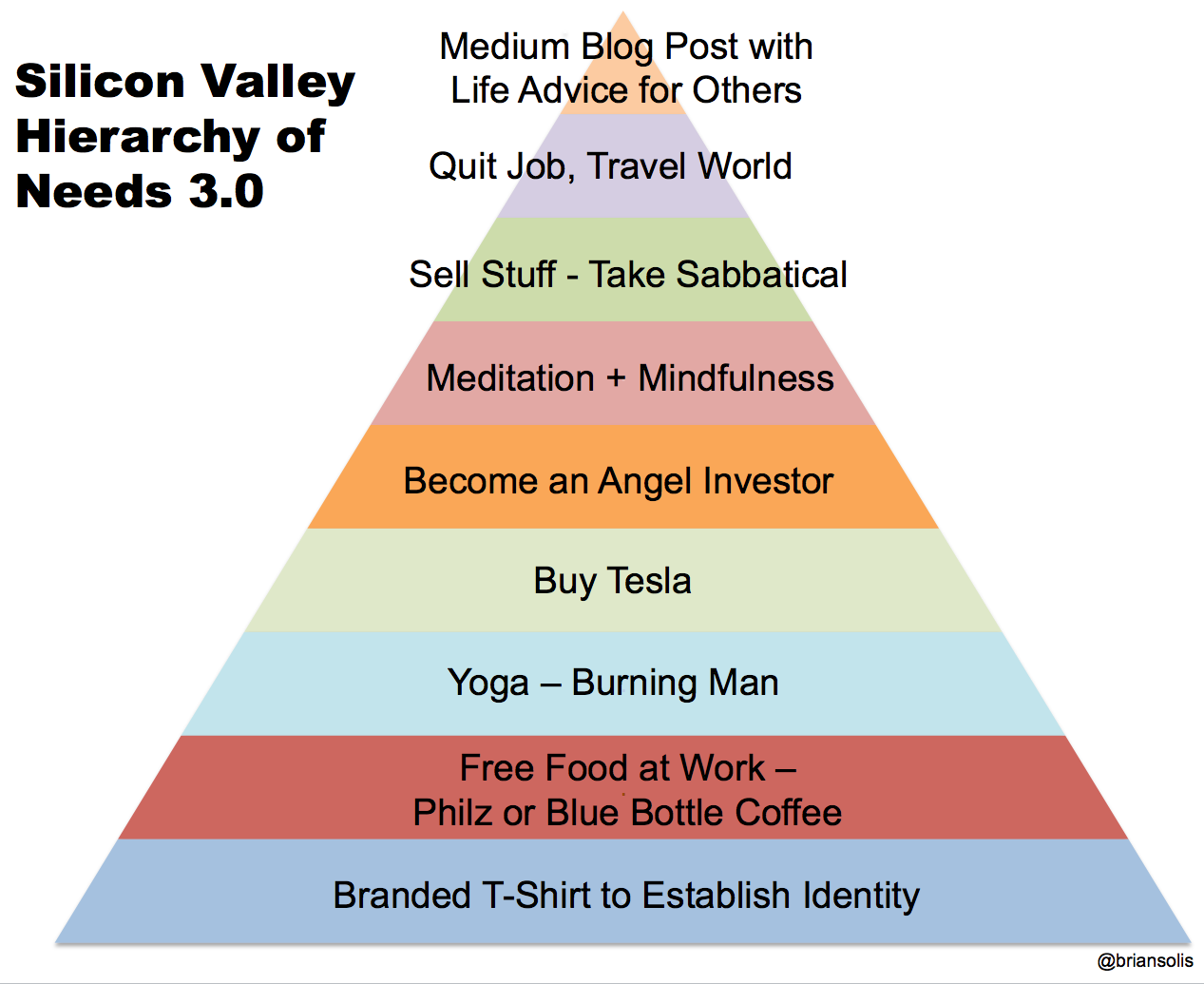
For this month, I have found a dozen or so cartoons that poke fun at the culture of Silicon Valley and life with technology. Enjoy !
SV_Hierarchy_pptx

drew-dernavich-i-ll-do-what-everybody-does-sell-this-startup-just-before-we-have-to-hir-new-yorker-cartoon

drew-dernavich-internet-epitaphs-digibuy-new-yorker-cartoon

cartoon

everyone-has-spent-a-day-doing-nothing-but-watching-netflix

LopezA20130626A_low

Children should not be a number.: Opt Out by Vacation #optout2017

Children should not be a number.: Opt Out by Vacation #optout2017:

Opt Out by Vacation #optout2017


Why Opt Out?
What Opt Out is NOT.
Opt Out Myths & Talking Points

New York State Parents,

If your family is fortunate enough to be able to take a vacation next year, consider the time-frame for the New York State Assessments in ELA and Math for grades 3-8.


If parents are looking for a good time to take a family trip, I recommend during the state testing period.  It is a win-win in many ways:

First of all, this is a stretch of time when the least amount of true learning is happening in classrooms across New York.  The inappropriate length of the exams, combined with the set up and collection times, basically ruins half of our children's school days for each of the exam dates.   Basically very little academic progress will be made over the state assessment time period.


The NYS Assessments are split this year with ELA in late March and math in early May. 

While the March testing period is during a popular spring break period for schools and Children should not be a number.: Opt Out by Vacation #optout2017:

ECOT Teacher Explains School’s Attendance Policy

ECOT Teacher Explains School’s Attendance Policy:

ECOT Teacher Explains School’s Attendance Policy

The central argument in the ECOT lawsuit attempting to block the Ohio Department of Education from auditing the charter school’s attendance is the claim that ECOT is not required to track login information for the students, but is simply required to “offer” students opportunities to log in and learn.
The school claims that an old contract with ODE stipulates this requirement for funding purposes.  The school’s contract with their sponsor, however, contains language that states that ECOT’s attendance policy is that students will be engaged in learning for five hours per day and five days per week, meaning that the school is accountable to its sponsor to follow these rules.
An ECOT teacher posted a video online welcoming her new students to the school that, among other things, explains ECOT’s attendance policy:
At 3:44 of the video, the teacher states:
ECOT policy is to work five hours a day, five days a week . . . you just need to remember that you need to work at least 25 hours a week.”
As ECOT’s stated attendance policy (since at least 1999 per the video), then this student engagement should be tracked by the school and used to justify their attendance for funding purposes.
Whether the student work is completed while logged in or tracked by a teacher in terms of duration, ECOT clearly should have such documentation available as evidence of student enrollment and attendance.ECOT Teacher Explains School’s Attendance Policy:

Related Stories

  1. ECOT Enrollment “Anomalies” Occur At All Grades, Not Just Grade 10
  2. ECOT Lies About Ohio Department Of Education In New Commercials
  3. House Speaker Rosenberger Headlines ECOT Graduation After Receiving $24K In Campaign Cash
  4. Ohio’s Largest Online Charter School, ECOT, Has Disturbingly Overstated Student Enrollment
  5. The Nepotism At ECOT Would Be Illegal In Public School Districts

California legal setback fails to discourage tenure opponents | Reuters

California legal setback fails to discourage tenure opponents | Reuters:

California legal setback fails to discourage tenure opponents


A nationwide drive to weaken job guarantees for U.S. public school teachers shows no sign of fading away even though an extended legal battle to stop the practice of granting tenure in California went down in defeat last week.

The California challenge, which would have made it easier for school districts to fire teachers deemed to be underachievers, reached the end of the line when the California Supreme Court declined to take up the case.

The decision was a setback for advocates of sweeping changes in education that unionized teachers generally oppose, including a repeal of tenure and more funding for charter schools.

Even so, advocates of change have wasted little time in regrouping. One group has introduced a federal lawsuit in Connecticut aiming to boost student access to charter schools, while a second group announced plans for a lawsuit challenging teacher job protections in a still-undetermined state.

"Moments like these, for people who understand the legal landscape, it motivates them even more to say 'OK, let's try it somewhere else,'" said Ralia Polechronis, executive director of the Partnership for Educational Justice.

Her group already is behind lawsuits aimed at ending teacher tenure in Minnesota and New York. It said last week it was planning to help bring a similar lawsuit as soon as this year in a state yet to be named.

In addition to opposition to tenure, other like-minded advocacy groups have embraced standardized testing for students, more funding for charter schools and linking teacher salaries to student performance.

In the last five years, North Carolina, Florida and Kansas, all with Republican-controlled legislatures, have passed laws to eliminate or phase out tenure for public school teachers. But most other U.S. states have some form of tenure.

The lawsuits are the latest salvo in a decades-old battle over job guarantees in U.S. public schools, which critics say have failed students despite public spending on education that exceeds that of many other developed countries.

Unions and their supporters say, however, that many schools suffer from inadequate funding and inept administration, not bad teachers. Tenure for experienced teachers guarantees them due process, not necessarily a job for life, they say. It enables instructors to teach controversial topics without fear of being dismissed or pressured politically.

Lawsuits that challenge tenure are imposing a significant litigation cost on states and unions that have to defend against them, said Randi Weingarten, president of the American Federation of Teachers.

"They are on an ideological path to undermine public schools," she said of union opponents.

CALIFORNIA BATTLE

California is among a number of states whose lawmakers tend to support teacher unions and have rejected proposals to weaken tenure laws.

That led a California group called Students Matter to a novel approach in 2012. In a case named after high school student Beatriz Vergara, Students Matter side-stepped the legislature and filed a lawsuit seeking to strike down tenure, arguing that job guarantees infringed the constitutionalCalifornia legal setback fails to discourage tenure opponents | Reuters:

Breaking up the summer break: Is year-round education good or bad?

Breaking up the summer break: Is year-round education good or bad?:

Breaking up the summer break: Is year-round education good or bad?


It's back-to-school season for much of the country, but for some students, school is never out.
For some, classes are in session all year long: About 3,700 K-12 public schools across the country operate on a year-round calendar — approximately 4 percent of all U.S. schools in 2011-12, according to the latest data available from the National Center for Education Statistics.
A year-round calendar, also referred to as a balanced calendar, reorganizes the 180 school days by shortening the traditional summer break, dispersing those days into several smaller breaks throughout the year. These breaks (usually two to three weeks long) are called intersessions, and schools can use that time for remediation and enrichment programs for students. The method is popular in other countries, but U.S. research has been deemed too inconclusive to draw any long-term conclusions.
David Hornak, executive director of the National Association for Year-Round Education, an organization that advocates for shorter summers to help improve student achievement, explained to CNBC's "On the Money" that a year-round calendar helps stem summer learning loss often seen in children when they break for the extended holiday.
"On average, a teacher on the traditional calendar is required to re-teach between four and eight weeks annually after the summer intermission," said Hornak, who's also the superintendent of Holt Public Schools in Holt, Michigan — where two schools in his district operate on a year-round calendar. He referred to the findings in the 2006 published Charles Ballinger and Carolyn Kneese book "School Calendar Reform."
When learning loss compounds year after year, Hornak argued Breaking up the summer break: Is year-round education good or bad?:

Surprise! Amid Rising Inequality, One School Gap Is Narrowing : NPR Ed : NPR

Surprise! Amid Rising Inequality, One School Gap Is Narrowing : NPR Ed : NPR:

Surprise! Amid Rising Inequality, One School Gap Is Narrowing

Illustration of the achievement gap shown through the analogy of growing gardens.


Recent studies and government reports continue to highlight what many American's know by their wallets: Rising income differences, debt and stagnant real wages are among the biggest problems besetting the nation.
That economic inequality is reflected in America's schools, right? Absolutely.
But a study just out shows that the gap in school readiness between rich and poor children entering kindergarten closed significantly — by 10 to 16 percent —from 1998 to 2010. Some ethnic/racial achievement gaps declined as well.
I spoke with the study's lead author, Sean Reardon, a professor of poverty and inequality in education at Stanford University.
Your study's results are kind of surprising given the widening income inequality over the same period, no?
Yeah, actually really quite surprising. Certainly it wasn't the finding we expected when we started the study. We thought because income and equality continued to grow and because achievement gaps had been growing for several decades, we thought we would just see that they had continued to grow but the data say otherwise.
Why do you think the gap has narrowed? More parents more engaged, doing more at the pre-K level across all incomes? Or are there other factors?
I think the two most likely explanations are improvements in the quality of preschool available to low-income families and more engagement of families across the income distribution, but particularly low-income families, in sort of cognitively enriching activities with their kids.
Give us some examples. Reading consistently to your child, taking them to museums, that kind of thing?
Yeah. We looked at the data to sort of see what parents say they have been doing with their kids over the last year. In the 2010 cohort, parents say they're doing more reading to their kids, they have more books at home. They're taking them to zoos, libraries, museums, places like that more. Their kids are doing more, playing more with computer games that are designed to teach them literacy and early numeracy skills, shapes, colors, sounds, letters, stuff like that. All of those things together we know are likely to help kids get ready for kindergarten.
What's interesting is the increase in those kinds of activities is more pronounced among low income families over this 12-year period than it is among high income families.
That is interesting. How was school readiness defined in the study?
These are studies where, in 1998 and 2010, the National Center for Education Statistics sent trained early childhood assessors out to 1,000 kindergartens around the country. In each kindergarten they sat down one-on-one with about 15 to 25 kindergarten students. And they asked them a structured set of questions to see if they could recognize letters, sound out words, count, recognize shapes, recognize colors and a variety of things like that. These were all sophisticated, kind of one-on-one Surprise! Amid Rising Inequality, One School Gap Is Narrowing : NPR Ed : NPR:

Why California is struggling to craft a fair, forward-looking way to assess public schools

Why California is struggling to craft a fair, forward-looking way to assess public schools:

Why California is struggling to craft a fair, forward-looking way to assess public schools

State Superintendent of Public Instruction Tom Torlakson, left, interacts with fourth grader Jaila Jones' project as she watches alongside San Bernardino City Unified Superintendent Dale Marsden, center, during a tour of Bing Wong Elementary School in San Bernardino, Calif. on Friday, Aug. 26, 2016. Torlakson toured to learn more about efforts to expose local students to potential careers starting as early as kindergarten. (Photos by Rachel Luna/The Sun, SCNG)
 (Photos by Rachel Luna/The Sun, SCNG) PHOTOS: State Superintendent Tom Torlakson tours San Bernardino school's linked learning program


Fifth grader Sandy Salgado, 10, shows State Superintendent of Public Instruction Tom Torlakson how she uses CoralDRAW program in her iSTEAM lab class during a tour of Bing Wong Elementary School in San Bernardino Friday.
Fifth grader Sandy Salgado, 10, shows State Superintendent of Public Instruction Tom Torlakson how she uses CoralDRAW program in her iSTEAM lab class during a tour of Bing Wong Elementary School in San Bernardino Friday.Rachel Luna/Staff Photographer
Between 1999 and 2013, California’s Academic Performance Index boiled everything about the state’s K-12 public schools down to a single number between 200 and 1000. That’s going away in a new, more nuanced system that’s now under construction.
In the old model, the desirability of neighborhoods or even whole communities in large part hinged on their API score. Careers were made or lost based on how far a school or district was from the magic 800 target number. And under the federal No Child Left Behind law, failure to steadily increase an API score — even an already high one — could mean dire trouble for a school or district.
But the API was only based on the results of standardized tests taken by the students. And those results, research has repeatedly shown, largely just measure the socio-economic environment the students come from and don’t paint much of a nuanced picture beyond that.
“That was essentially a measure of the average level of student achievement at the school. That’s not a very good measure of how good a school is, from the standpoint of how good a school is at making a kid smarter,” said Morgan Polikoff, a USC associate professor of education. “It’s a pretty good measure of the kind of kids who are enrolling in the school, like what the poverty level of the school is, but not how good the school is at teaching.”
In 2014, California’s State Board of Education pulled the brakes on calculating API while the state switched over to new standardized tests aligned with the Common Core State Standards. Those new Smarter Balanced tests, which students took for the second time this past spring, will be just one factor in a new accountability being created to replace the API score.
“I think they will go with a single number,” said Dale Marsden, superintendent of the 53,000-studentSan Bernardino City Unified School District, “but it won’t be based on a single factor.”
A draft version of a proposed color-coded reporting system for public schools was released in July. The proposed report card draws a lot from the NCLB-successor, Every Student Succeeds Act. It looks at how a school does in English Language Arts and math standardized tests but also looks at how well students learning English as a second language are doing, graduation rates, chronic absenteeism, suspension rates, college and career readiness and other factors.
“Schools do a lot more than just test scores,” Polikoff said. “By boiling everything down to just one test Why California is struggling to craft a fair, forward-looking way to assess public schools:


This week in the war on workers: Charter schools get the John Oliver treatment

This week in the war on workers: Charter schools get the John Oliver treatment:

This week in the war on workers: Charter schools get the John Oliver treatment


Charter schools got the John Oliver treatment, and it's brutal. Oliver opened by saying “we’re going to set aside whether or not charter schools are a good idea in principle,” because there are already a lot of them, “So instead we’re going to look at how they operate in practice.” And, as regular readers here know, how they operate in practice is often shady AF. Here’s just one example from an 18-minute segment filled with examples:
Voiceover from Frontline: By law charter schools must be nonprofit. But the schools can hire an educational management company or EMO to run the school and the EMO can try to make a profit. [David] Brennan calls his EMO White Hat Management.
Brennan: Education is first, last and always a business. If it’s run like a business it can be done profitably.
Oliver: Yes, education is first last and always a business. Take the ‘l’ off the word ‘learning’ and what do you got? ‘Earning.’ Take the ‘e’ off and what do you got? ‘Arning.’ Yeah, sure, that’s not a word, but it could be in one of our English classes. Now that man’s company, White Hat Management, worked on the contracts where each charter would pay 95 percent or more of its government funding to White Hat, which as a private company, isn’t obligated to provide the same level of transparency as, say, a school district. So taxpayers could have little idea how that money was being spent. And who can say if that’s a good system or not? All I know is, White Hat ran 32 of the lowest-performing schools in the state. And if you do essentially the same terrible thing more than 30 times in a row, you’re not a management company. You’re basically Billy Joel’s Greatest Hits Volumes 2 and 3.
Watch the whole video below.
I’m entirely unsurprised that Columbia’s response to [the NLRB ruling allowing graduate students to unionize] is to threaten an appeal and put up a union-busting website. Thanks to the training that I acquired at Columbia, I can tell you that Columbia is a historically union-busting institution: President Seth Low personally approved the use of Columbia students to help bust a national machinist worker’s strike in 1901, and the tradition continued with Columbia students acting as strike-breakers in a 1905 transit strike, a 1920 railroad strike, and a building trades strike in 1936, until the rise of student leftism finally made collegiate scabbing uncouth.
And again, I was there when the GSEU held a “Free the Ballot Box” protest on the steps of Low Library to protest management having locked up the ballot boxes in the NLRB election that had been held shortly before the Brown decision, which election had come only after four years of management stalling and failed appeals that dragged on for years after the NLRB had made its ruling in 2000 granting the right to organize.
● Remember how 401(k) retirement plans were supposed to bring more people into This week in the war on workers: Charter schools get the John Oliver treatment:

Dirty smear tactics of charter schools | Editorial | lehighvalleylive.com

Dirty tactics smear efforts of charter schools | Editorial | lehighvalleylive.com:

Dirty smear  tactics of charter schools


Is this any way to promote a charter school?
The pending debut of the Innovative Arts Academy Charter School in Catasauqua in September might have been uneventful, considering school officials said they had met their goal of enrolling 300 students for the sixth-to-12th-grade school.
Innovative Arts Academy Charter SchoolThis fledgling Catasauqua charter school denies authorizing, paying for or sending out this mailer. 
Then a newspaper ad in the Morning Call and an anonymous mailer raised the school's profile dramatically. They touted the drug bust of a Liberty High School student last year, asking parents" "Why worry about this type of student at school?" and advising them to "Come visit Arts Academy Charter School."
Reaction to the unsigned mailer, which listed the school's address, was immediate. Bethlehem Area School District Superintendent Joseph Roy called it a low blow and an impetus for the Legislature to reform the state's charter school act.
Pennsylvania Auditor General Eugene DePasquale, a critic of the state's approach to charter schools, said he wants to know who drew up and authorized the promotions. He asked the U.S. Department of Education Office of Inspector General to look into it.
"Unfortunately we have become accustomed to dirtball mailers and tactics like this in political campaigns," DePasquale said. "But when it spills over into our education system and one public school appears to have attacked another it becomes downright deplorable."
While there's nothing unfactual about the student drug bust in the ad and mailer — and we support anyone's right to speak out about education funding and choice — we agree with DePasquale's concern about the tactics used in an anonymous mailer. The broadside is felt deeply by public school officials and supporters, considering Pennsylvania's charter schools are funded by taxpayer money funneled through district budgets. Public school boards have a say in approving charters within their boundaries, but the state's enabling law has generated a flurry of charters, which compete with public districts for students.
So who's behind the ad and mailer? Charter school officials say it's not them. School attorney  Daniel Fennick said the school is trying to divorce itself legally from the mailers and stop any unauthorized advertising. School CEO Loraine Petrillo resigned over the flap and other issues.
With no one stepping up, we're left to consider the underlying details: Developer Abe Atiyeh, who has leased other buildings for charter schools in the Lehigh Valley, is the owner of the building housing the new school in Catasauqua. Previously he paid a consultant a per capita fee to sign up enrollees at another charter school. Last week an Atiyeh employee made a public records request of the Bethlehem Area School District, seeking 10 years of arrest records on Liberty High School students.
When asked about the mailers and ads, Atiyeh refused to comment and hung up on an Express-Times reporter.
Time and a thorough investigation should reveal the source of the solicitations, which, even if they are legal, dip into a simplistic, fear-mongering approach to draw students from public schools to charter schools.
We hope DePasquale and others get to the bottom of this and answer the legal questions involved. Lawmakers who have been hearing pleas to correct the flaws in the state's charter school law should consider this another reason to get moving.Dirty tactics smear efforts of charter schools | Editorial | lehighvalleylive.com:


White students disproportionately use Ohio school voucher program | The Columbus Dispatch

White students disproportionately use Ohio school voucher program | The Columbus Dispatch:

White students disproportionately use Ohio school voucher program


White students appear to get into private schools using taxpayer-funded vouchers at a higher rate than black students, raising questions about why that’s happening.
Ohio’s original voucher program, called EdChoice, allows students assigned to low-performing public schools to seek acceptance to a private school that accepts vouchers. A Dispatch analysis of 2014-15 data shows that the schools eligible because of their failing test scores were 61.3 percent black, but black students represented 48.5 percent of the students who were attending a private school on a voucher that year.
Whites made up 21.4 percent of the students attending qualifying low-performing schools, but 33.4 percent of those who applied and were accepted to a private school under the voucher program, state records show.
Add in a second, fast-growing Ohio voucher program, known as the EdChoice expansion program, which provides low-income students with vouchers even if they aren’t assigned to a low-performing public school, and the enrollment grows even more disproportionately white.
While census data show that about 29 percent of school-age children (ages 5-17) who live in poverty in Ohio are black, black students make up only 18.4 percent of expansion vouchers granted in 2014-15. Whites made up 64.3 percent of the expansion program, but only about 56 percent of the Ohio kids in poverty. The expansion program paid for more than 3,600 vouchers in 2014-15, triple the amount awarded the previous year.
“It is concerning,” said Nana Watson, president of the Columbus branch of the NAACP. “It’s concerning that it doesn’t seem to be balanced. We have more white children in the expansion program. And why is that?”
Asian, Latino and multiracial students appear to get vouchers at rates close to — within 1 or 2 percentage points — the proportional size of potential applicants, data show.
“It is illegal for any school to discriminate on the basis of race,” said Brittany Halpin, spokeswoman for the state Department of White students disproportionately use Ohio school voucher program | The Columbus Dispatch:

Movement to Opt-Out of Standardized Testing Bolstered By Judge's Ruling | FlaglerLive

Movement to Opt-Out of Standardized Testing Bolstered By Judge's Ruling | FlaglerLive:

Movement to Opt-Out of Standardized Testing Bolstered By Judge’s Ruling


A Leon County judge Friday declined to immediately order that students in a potentially precedent-setting lawsuit be promoted from third to fourth grade, but her rejection of several state arguments could fuel a movement that seeks to allow children to “opt out” of a standardized test.
In a 50-page ruling, Circuit Judge Karen Gievers turned down a request from parents for an injunction against five districts that held students back in the third grade after they refused to answer questions on the Florida Standards Assessment. She ordered a sixth district, Hernando County, to offer an alternative route for students to qualify for the fourth grade, but the ruling doesn’t explicitly say students in the lawsuit must be promoted.
In many ways, though, elements of Gievers’ ruling could be seen as a clear-cut defeat for the Florida Department of Education and at least some of the school districts. In addition to Hernando County, the judge was particularly scalding toward the state education agency and Orange County.
Also, Gievers found that students who fill out their names on the Florida Standards Assessment, break the seal on the test and then refuse to answer questions have “minimally participated” — as parents contend. The state rejected that interpretation, saying that students have to at least answer one question to be considered to have participated.
“Whether the statewide defendants decide that at least one question must have been answered for the defendants to score the test … is irrelevant. By being present, by breaking the seal and putting their names on the test packet, the students did participate in the test,” Gievers wrote.
A spokeswoman for the Florida Department of Education said the agency is reviewing the ruling.
The ruling could provide new oxygen to the “opt-out” movement, which has argued that under state law, parents have the right to tell their children to minimally participate in the test and then ask for the students to be promoted to fourth grade based on a “portfolio.”
The Florida Department of Education and the school districts say that while the law spells out ways to advance that don’t require passing the assessment, it doesn’t give students the opportunity to completely refuse to take the test.
Gievers also wrote that Orange County’s treatment of parent Michelle Rhea and her daughter was “particularly blatant, arbitrary and capricious,” because some students were allowed to move on after completing a portfolio, while Rhea’s daughter was denied a portfolio. But Gievers said she couldn’t issue an injunction about the girl because Rhea has moved her to a private school pending the outcome of the case.
And Gievers rejected arguments by the districts that the case should be broken up, with the Florida Department of Education fighting a lawsuit in Tallahassee while the districts face courts in their home counties.
Procedurally, the case is complicated because several parents have held their children out of school, enrolled them in private schools or begun home schooling them in response to the students being retained in third grade. In those cases, Gievers ruled, she couldn’t order the districts to do anything immediately because the students are not in public schools.
However, parts of at least some of those claims can still be heard at a later phase in the lawsuit.
Gievers brushed aside arguments from parents who clash with what some districts will accept as “portfolios,” an alternative to receiving the required grade on the Florida Standards Assessment. She said those claims would have to be heard by an administrative law judge first, because they concern a state rule.
A hearing concerning the Hernando County students, if the parents and the districts can’t agree on a resolution, is set for Monday afternoon.