Monday, August 1, 2016

Report charges many charter schools exclude children in violation of the law | EdSource

Report charges many charter schools exclude children in violation of the law | EdSource:

Report charges many charter schools exclude children in violation of the law


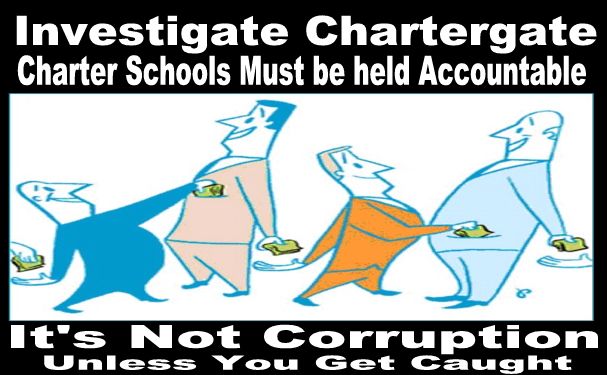
Over 1 in 5 of California’s charter schools have restrictive admissions requirements or other exclusionary practices that keep out many students with the greatest academic needs, a report released today by the ACLU Foundation of Southern California and the public interest law firm Public Advocates alleges.
These practices, the report alleges, “violate the California Education Code, the California and U.S. Constitution, and state and federal civil rights laws.”
The report, titled, “Unequal Access: How Some California Charter Schools Illegally Restrict Enrollment,” says that according to the California Charter Schools Act of 1992, charter schools are required to “admit all pupils who wish to attend,” except for space limitations.
“Charter schools may not enact admissions requirements or other barriers to enrollment and must admit all students who apply, just as traditional schools cannot turn away students,” the 28-page report charges.
Of the  1,228 charter schools in California, the report said that it has identified 253 that have practices that are “plainly exclusionary,” based on information posted on the schools’ websites.


These practices include:
  • Denying enrollment to students who have weak grades or test scores;
  • Expelling students who do not have strong grades or test scores;
  • Denying enrollment to students who do not “meet a minimum level of English proficiency;”
  • Requiring students to meet “onerous” requirements for admission, including students or parent having to write essays or be interviewed;
  • Discouraging students from immigrant background from applying by requiring parents or students to provide social security numbers or other citizenship information;
  • Make enrollment conditional on parents volunteering or donating funds to the school.
In a lengthy statement, Jed Wallace, president and CEO of the California Charter Schools Association, said, “We agree with Report charges many charter schools exclude children in violation of the law | EdSource:
 save image

Sunday, July 31, 2016

The Mouth of Donald Trump | deutsch29

The Mouth of Donald Trump | deutsch29:
The Mouth of Donald Trump


Perhaps the best Republican promoter of another Clinton presidency is the mouth of Donald Trump.
He simply cannot control himself. He apparently tried, sort of, following the Democratic National Convention, when he told CNN that he wanted to “hit” some of the speakers so that “they’d never recover.” CNN’s Ashley Killough was quick to translate for Trump: “Trump often uses the term ‘hit’ to mean verbally attack, rather than physical contact.”
Trump even seemed to try to abide by the advice to refrain from attacking DNC speakers and instead focus on Clinton:
Trump said his friend, who he labeled a “very great governor,” urged him to stay focused on attacking Clinton, not other Democrats.
“He said, ‘Don’t hit there. Don’t hit down. You have one person to beat. It’s Hillary Rodham Clinton,'” Trump recalled, adding that he initially objected to the advice. “I said, ‘But I really want to. I don’t like what they’re saying because a lot of it is lies. Not all of it but a lot of it is.’ I said, ‘I just really … it makes me feel good.’ “
Ultimately, he said, he conceded and decided not to launch into verbal assaults against the Democrats.
But like a kid who cannot master his own verbiage, Trump botched an interview with George Stephanopolos in which he was asked questions about the speech given by Khizr and Ghazala Khan, the parents of an American Muslim soldier, Humayun Khan, who died while serving America in Iraq.
In a particular blunder, Trump focused The Mouth of Donald Trump | deutsch29:

CURMUDGUCATION: Common Core Defenders Still Flailing Away

CURMUDGUCATION: Common Core Defenders Still Flailing Away:

Common Core Defenders Still Flailing Away


I think of Common Core defenders as a little like Bigfoot or the Loch Ness monster-- folks kind of believe they're out there, but only a handful of folks will admit to having seen them.

After all, neither major party will admit to loving the Core any more, and lots of policy folks have adopted the more generic and less civilian-alarming "college and career ready" for describing any kind of standardy stuff we're trying to push. Charter purveyors have learned they don't have to back the Core to succeed, and most everyone else has determined that the mere use of the term raises so much squawking that it's just better to keep quiet. The Gates Foundation slowed spending on the Core way down, with just one grant awarded in 2016.

And yet, every once in a while, like dust bunnies before a vacuum cleaner on a hardwood floor, the CC supporters come running out.


This time, the vacuum cleaner was a New York Times op-ed by Diane Ravitch. The piece really had nothing all that new or novel to say-- the Common Core cost taxpayers a buttload of money, and it hasn't helped students a bit. But, perhaps predictably, some folks popped right up to defend the still-useless set of standards.

The Collaborative for Student Success went with alistsicle of nine times they thought Ravitch was wrongin the NYT piece.

These included old standards like "they aren't really national" and "they aren't really curriculum," not acknowledging that both of those ideas are out in the world because back in the day, Core supporters put them there. It is true that, as of today, the Core are not quite national standards-- but they were always supposed to be. The whole notion was that CCSS would "fix" education by ensuring that students in Iowa and Alabama would be on the same page when it came to math and 
CURMUDGUCATION: Common Core Defenders Still Flailing Away:

Seattle Schools Community Forum: National PTA Survey

Seattle Schools Community Forum: National PTA Survey:

National PTA Survey


The National PTA is currently conducting a survey of members.  It asks a few early questions about how members use PTA and then asks about what members know about "advocacy" work.

They then ask about interest in webinars on


  • Every Student Succeeds Act (ESSA)
  • National PTA's Advocacy Toolkit
  • Common Core standards
  • Special Education Toolkit
They aren't asking members for their input on these issues but rather, do members want to hear what PTA thinks.

Then they ask about the "2016 Election" and various activities. 

It's curious because they ask if members are interested in hosting a voter registration event "if your PTA was provided a guide/planning tool on how to do it."  I find that interesting because I honestly have not heard of many/any Seattle PTAs doing this.

Then they get to "National PTA Legislation Committee Focus."  They list:


  • mental health care access and early intervention 
  • lead in school water systems/playgrounds
  • climate change
  • pre-K teacher credentials
  • pre-K teacher pay scale
  • pre-K funding
  • kindergarten funding
  • recess
  • virtual charter schools
  • gun safety and violence prevention
Why so many pre-K issues?  I'm baffled on that one.  And virtual charter Seattle Schools Community Forum: National PTA Survey:

A Follow-up about My Position on Presidential Election 2016 | deutsch29

A Follow-up about My Position on Presidential Election 2016 | deutsch29:

A Follow-up about My Position on Presidential Election 2016


I received an entire spectrum of reactions to that post.
Some readers jeered and called me names (not many).
A number expressed their disappointment and even stopped following my blog. (Some added that they could not trust me anymore and included statements like “thanks for nothing” and that my work was “all for nothing.”) But the disappointment was not unified. Some were disappointed because
  • I publicly expressed an opinion about whom I would support.
  • I would not be voting for Trump.
  • I would not be boycotting the election.
  • I did not write an enthusiastic endorsement of Clinton.
  • I would not be voting for Johnson or Stein.
Others did not express their disappointment with my position but did let me know of their concern; still others openly yet respectfully disagreed and said that they were taking a strong stand opposite mine (i.e., voting for Trump because they could not possibly vote for Clinton).
Some expressed that they knew early on I would endorse Clinton; others went further and added that I was only looking for some excuse to do so.
And there are those who wrote that they understood my dilemma because it was their dilemma, as well.
Among my friends, a number will vote for Trump. They have told me so. And a number will vote for Clinton. They have told me so. This election is a tough one, and I have been surprised more than once about which candidate a friend supports. But I have told none that I am disappointed; I have tried to argue none into my own position, and I have ended no relationships over a friend’s choice of Clinton or Trump (or neither).
I have had some readers ask if I have seen the movie, Hillary’s America. I have not. And a number asked if I had seen Clinton Cash.
I watched about half of Clinton Cash before writing this post. And I read from a few articles related to the Clintons’ involvement in other countries and related to their A Follow-up about My Position on Presidential Election 2016 | deutsch29:

Anonymity and Professionalism: Teacher Voice in a Time of High Anxiety | the becoming radical

Anonymity and Professionalism: Teacher Voice in a Time of High Anxiety | the becoming radical:

Anonymity and Professionalism: Teacher Voice in a Time of High Anxiety


Briefly on the National Council of Teachers of English‘s Connected Community, members could post on forums anonymously, spurring a few discussions and debates about anonymity and professionalism (as well as attribution of ideas and accountability during a thread about plagiarism).
When I first moved to higher education, my current university had an online platform that included a discussion feature, one that also allowed students (or anyone in the university community) to post anonymously with screen names.
One particular group of students connected with a powerful and controversial (also highly politicized and well funded from outside sources) student organization often posted anonymously and tended toward personal attacks of university professors—xenophobic and homophobic slurs included.
Several professors also participated in these online debates, but with their names openly displayed.
This situation was a subset of a larger campus tension between very conservative students and a much more moderate faculty. Ultimately, that forum was closed and never resurrected; however, a key element of the situation was the debate over whether or not anonymous posting was appropriate—notably in the context of an institution of higher learning.
Then and during the recent NCTE Connected Community discussion, I have always maintained that a key element of professionalism is the relationship between a professional’s name and her/his stances, claims.
In my professional scholarship and my public work, my name and even access to my email are prominent always.
As a writer and career educator, I see my scholarship and public work as extensions of teaching—and believe all teachers must be authoritative, earning the trust of those they serve as teachers. The who and whatof teaching and making claims, for me, is inextricable.
However, there is a long and powerful history of pen names/pseudonyms in traditional writing as well as the more recent world of blogging.
Anonymous voices have risen out of oppression in the name of overcoming that oppression—racism, sexism, homophobia, classism, etc.
So if we return to the anonymous posting on NCTE’s Connected Community and place that in the context Anonymity and Professionalism: Teacher Voice in a Time of High Anxiety | the becoming radical:

Seattle Schools Community Forum: Personalized Learning; Part Two

Seattle Schools Community Forum: Personalized Learning; Part Two:
Personalized Learning; Part Two


To start, I'm not against using computers to aid in teaching and learning.  But there are huge costs and unknowns and because of the investment of time and finances for this endeavor, parents need to ask hard, hard questions about what this will look like for their child.

I'm almost glad it took this long to get to Part Two because Data & Society put out a very good working paper about the topic: Personalized Learning: The Conversations We’re Not Having.  They start with this quote:
The Promise of Personalized Learning

“...if instead of having mass education as we now have, must have, with a curriculum, once we have outlets, computer outlets in every home, each of them hooked up to enormous libraries where anyone can ask any question and be given answers...then you ask, and you can find out, and you can follow it up, and you can do it in your own home, at your own speed, in your own direction, in your own time, then everyone will enjoy learning.

Nowadays, what people call learning is forced on you and everyone is forced to learn the same thing on the same day at the same speed in class. And everyone is different. For some it goes too fast, for some too slow, for some in the wrong direction. But give them a chance in addition to school — I don’t say we abolish school, but in addition to school — to follow up their own bent from the start...”

—Isaac Asimov, Interview with Bill Moyers, PBS, 1988
Is personalized learning really "new?"

Even without the use of new data-driven learning technologies, it 
Seattle Schools Community Forum: Personalized Learning; Part Two:


CURMUDGUCATION: ICYMI: All of July Edition

CURMUDGUCATION: ICYMI: All of July Edition:

ICYMI: All of July Edition


Big Education Ape: CURMUDGUCATION: $tand For Children: The Astroturfing of Advocacy - http://bigeducationape.blogspot.com/2016/07/curmudgucation-tand-for-children.html


It's been a few weeks since I had a reading list for you, and this is certainly not the complete list of what I could recommend, but there are still only so many hours in a Sunday. 

Tea Party Charter Leader Admits Becoming a Cyber School Was Simply a Way To Get a Charter

From Eclectablog, which should be on your must-read list, one more example of how the charter sector (particularly in Ohio) is a playground for charlatans and bunko artists. This at least qualifies as a slightly new manner of fraud... 

Read Like Detective

Another excellent article from the "Why Common Core Sucks" genre. You know most of these pieces, but Johnathan Chase finds a good way to put them together and connect the dots.

Trump: Tribune of Poor White People

This interview with J.D.Vance, author of Hillbilly Elegy, is not just an excellent explanation of why Trump keeps winning, but is also a sharp look at the culture of poor, white poverty in this country.

Inequality Is for Winners

Jennifer Berkshire's interview with Tom Frank, author of Listen, Liberal, is a good companion piece to the previous article on the list.


Is Plagiarism Really a Big Deal?

This is a double-win, because it's Nancy Flanagan, and she references a piece by Paul Thomas. While the hook is recent issues with the P word, she connects this to the kind of ethical issues we deal with in any classroom where students can steal ideas or writing (aka "most of them")

Understanding KIPP Model Charter

Jim Horn here shares the entire second chapter from his book Work Hard, Be Hard, a look at the world of No Excuses teaching. It's sobering and scary and helps answer the question, "How bad can it be, really?"

Students Broken Moral Compasses

Teacher Paul Barnwell looks at what the test-driven education revolution has cost us in student moral education.

School Funding and Presidential Hypocrisy

So once again, politicians and their children are saying, "Poor kids should have the same choices rich kids do," which sounds pretty, but as Jersey Jazzman shows, it's empty noise unless we talk about what that would actually cost. Over at EdWeek, Andrew Ujifusa takes a look at the same issue-- so you can get a good hard, two-headed look at what it would really cost to actually do this. 

Have Obama's Education Policies Weakened the Democratic Party


A pretty blunt look at Obama ed policies and how they damaged the traditional Democratic Party relationship with education. 

The More Things Change, the More They Stay the Same

Bianca Tanis gives the most complete look at the new NY test result numbers-- and how big a mess the whole thing is.

Pence and ALEC 

Yes, if you read here, you undoubtedly read Diane Ravitch. But don't let this quick piece get lost in the shuffle, reminding us that ALEC has some big dogs in play in this election.

Love Letter to My Dead Student

A guest writer at Edushyster delivers this heart-thumping piece.   


 CURMUDGUCATION: ICYMI: All of July Edition:

The Smear Campaign At The Delaware Auditor’s Office & What The News Journal Didn’t Tell You – Exceptional Delaware

The Smear Campaign At The Delaware Auditor’s Office & What The News Journal Didn’t Tell You – Exceptional Delaware:

The Smear Campaign At The Delaware Auditor’s Office & What The News Journal Didn’t Tell You


Revenge is ugly business.  When it takes place at a very high state level and the object of that revenge gets a whole article about it in the state’s biggest newspaper, it is really ugly.
Today, James Fisher and Matthew Albright published an article about the Auditor of Accounts, Kathleen Davies.  The article claims Davies was put on leave over two months ago due to not using the state procurement card for travel expenses.  According to the story, sources who would only be named as “state employees” contacted the Office of Management and Budget, then run by Ann Visalli, in November of 2015.  They alleged Davies spent over $7700 in travel expenses (over four years) and received personal reimbursements instead of using the state p-card.  She did do this.  But was it wrong?  Absolutely not.  I’m not buying any of this.  Let’s take a close look at what else was going on at the time these “sources” (as the News Journal calls them) filed this complaint.
Davies had just come out with a report on many charter schools, not just Delaware College Prep (the only school mentioned in the article).  Kuumba Academy was also named in the report on personal reimbursements as using funds against the accounting policies of the state.  Two other charters did not have any inappropriate use of state funds: Odyssey Charter School and Thomas Edison Charter School.
But there was more going on at that time.  The reports on Family Foundations Academy and Providence Creek Academy had not come out yet.  The September 30th enrollment inspection was just beginning (which was published earlier this Spring and pulled from State Auditor Tom Wagner’s website after Davies was put on leave).  Another Delaware charter school, The Delaware Met, was under formal review.  Hearings and meetings with the Charter School Accountability Committee took place in November and December of 2015.  One of the big questions surrounding Delaware Met was how they were spending their money.  And by default, their operation management company, Innovative Schools, would also be looked at.
There was also an inspection released by Davies on December 7th.  This surrounded an anonymous tip about Delaware Department of Education employees abusing travel expenses.  No wrongdoing was found in the inspection report.  But why would the News Journal not mention such an important part of this timeline in their article as well as the actual inspection?  If this accusation by sources who have now become “whistleblowers” was made to the OMB in November of 2015, this would have been the same time when Davies would have been working on the DOE travel expense report which came out on December 7th.  The timing on this is uncanny!
If it took six months for Davies to be put on leave, what was the OMB doing for six months?  Why did Davies just happen to be put on leave at the same time the DOE was pitching a conniption fit about the September 30th Inspection Report written by Davies?  The report, published by Wagner’s office on May 5th,can be found here.  Why did Wagner pull the report which had absolutely nothing to do with her supposed reasons for being put on leave?  Which other The Smear Campaign At The Delaware Auditor’s Office & What The News Journal Didn’t Tell You – Exceptional Delaware: