Latest News and Comment from Education

Saturday, July 2, 2016

NEA Delegates Arrive in Washington, DC, for 154th Annual Meeting - 2016 NEA Annual Meeting

NEA Delegates Arrive in Washington, DC, for 154th Annual Meeting - 2016 NEA Annual Meeting:

NEA Delegates Arrive in Washington, DC, for 154th Annual Meeting

140704-RR-RA-01
It’s about that time again, when thousands of delegates will arrive in our nation’s capital for the 154th NEA Annual Meeting and 95th Representative Assembly. Embracing this year’s theme of “Unite. Inspire. Lead!: Harnessing the Power of Our Diversity,” more than 7,500 delegates will gather to vote on major issues surrounding public schools, students and teachers and to create an enhanced learning environment nationwide. The decisions made will impact the entire NEA body of nearly 3 million members.
2016 National Teacher of the Year Jahana Hayes will address delegates to the Representative Assembly.
The NEA Annual Meeting and Representative Assembly (RA), also known as the world’s largest democratic deliberative body, takes place this year June 27 – July 4  at the Walter E. Washington Convention Center. Delegates will collectively vote on a strategic plan and budget, resolutions and ways to advance NEA’s legislative program, as well as NEA’s organizational policies. Sessions and workshops will also be available to educators for tackling issues that will help them provide a better learning experience for their students regardless of race, gender, class, immigration status, disability and sexuality.
The NEA  2016 Joint Conference on Concerns of Minorities and Womenbegins June 30, surrounding what is likely the most provocative presidential election in United State’s history from a political standpoint. There, prominent social justice activists Maria Elena Durazo (widely considered one of the nation’s most powerful and savvy organizers) and Dahkota Kicking Bear Brown (the youngest person to serve as the White House’s Indian Education advisor) will speak. Following the speeches, NEA will present the award for Social Justice Activist of the Year. The awardee will be an exceptional NEA member, who possesses the qualities of leadership and organization, as well as the ability to engage parents, educators and their community in advocating for social justice issues that impact students, fellow teachers and those who dwell in their surroundings.
NEA Student Program Chair Chelsey Jo Herrig at the 2015 Legacy Project.
The NEA Student Program will present its second annual LEGACY Project on Friday, July 1, when student member volunteers take part in a series of service projects, including the filling of backpacks with school supplies and encouraging notes, and assist in building 25 “Little Free Libraries” that will be donated to under-served communities.
On Saturday, July 2, and Sunday, July 3, NEA will host aRead Across America “Reading Lounge” at the ballpark during Nationals games. Young Nats fans will have the opportunity to take a selfie with The Cat in the Hat in the photo booth. NEA President Lily Eskelsen García will deliver the national anthem on July 3, before the Nationals take on the Cincinnati Reds. NEA members have the opportunity to purchase discounted ticketsto Nationals games from now until July 6.
Educators raise their hands at the 2015 Empowered Educators Day event.
Sunday, July 3, is Empowered Educators Day, where attendees will engage in breakout sessions focused on family-community engagement and policy leadership in regards to the Every Student Succeeds Act. Later that evening, 13 human and civil rights leaders within the organization will shine a light on their current activism at the Human and Civil Rights Awards Dinner. The 50th anniversary of NEA’s merger with the American Teachers Association, which represented Black teachers in segregated schools, will also be celebrated. ATA originally created the Human and Civil Rights Awards Dinner that has honored many civil rights leaders, including Martin Luther King, Jr., Rosa Parks, and César Chavez. When NEA and ATA merged in 1966, NEA chose to carry on this important tradition.
NEA President Lily Eskelsen García will open the RA with the keynote address on July 4, beginning four days of democratic debate and policy-setting for the Association.
It’s an election year in the nation’s capital, and Secretary Hillary Clinton, presumptive Democratic Presidential Nominee, will address delegates on Tuesday, July 5. In October, NEA educators recommended Secretary Clinton in the Democratic Primary.
RA delegates will also be addressed by NEA Executive Director John Stocks, who will speak on the need to give educators an elevated voice in issues affecting teaching and learning; NEA’s Education Support Professional of the Year paraeducator Doreen McGuire-Grigg and the National Teacher of the Year Jahana Hayes.
NEA will also present its highest honor the Friend of Education Award to U.S. Senators Lamar Alexander (R-Tenn.) and Patty Murray (D-Wash.) for their work to pass the Every Student Succeeds Act.
Visit http://ra.nea.org/ra-media/ for regular updates from the meeting. For a full agenda go tohttp://ra.nea.org/agenda/.
NEA Delegates Arrive in Washington, DC, for 154th Annual Meeting - 2016 NEA Annual Meeting:

Schools Are Finally Applying Lessons From the Coleman Report and Integrating Based on Class - The Atlantic

Schools Are Finally Applying Lessons From the Coleman Report and Integrating Based on Class - The Atlantic:

Why Did It Take So Long for Class-Based School Integration to Take Hold?

Half a century ago, the Coleman Report revealed that socioeconomic diversity is key to removing racial inequalities in education.

Fifty years ago—on July 2, 1966—the federal government published “Equality of Educational Opportunity,”a landmark study by the Johns Hopkins University sociologist James Coleman that gave support for a novel idea about education: that schools should integrate based on the socioeconomic status of students.

A dozen years earlier, the U.S. Supreme Court’s decision in Brown v. Board of Education had famously declared that schools segregated by race were inherently unequal and ushered in decades of efforts to desegregate schools by race. But the Coleman Report, which Education Week said is “widely regarded as the most important education study of the 20th century,” put a twist on Brown. It found that if one’s goal were to raise the academic achievement of pupils, then promoting a socioeconomic mix of students was even more important than changing the racial composition of the school.

The impetus for the study was to get at the root of educational inequality by race. Authorized by Congress as part of the 1964 Civil Rights Act, the study was designed to examine inequality of opportunity in education “by reasons of race, color, religion or national origin.” Many expected the report to find the source of inequality in achievement between racial groups to be unequal spending between black and white schools, or racial school segregation itself.
Instead, the report, which The New Yorker’s Nicholas Lemann called “probably the single best-known piece of quantitative social science in American history,” found that the biggest predictors of academic achievement were the socioeconomic status of the family a child comes from and the socioeconomic status of the classmates in the school she attends. Coleman wrote, “The educational resources provided by a child’s fellow students are more important for his achievement than are the resources provided by the school board.”

A report conceived of as part of an effort to address racial inequality found that class inequality—and class segregation—mattered most. Racial school integration did generally benefit black students, the report found, but the “beneficial effect of a student body with a high proportion of white students comes not from racial composition per se but from the better educational background and higher educational aspirations that are, on average, found among whites.” Daniel Patrick Moynihan, the U.S. Senator who assembled a Harvard University study group to examine the Coleman Report’s findings, suggested, “we should begin to see that the underlying reality is not race but social class.” Dozens of subsequent studies, using more sophisticated techniques than those available to Coleman, have affirmed his results.

For years after its publication, the Coleman Report’s key finding about socioeconomic integration was largely ignored by shapers of public policy, in part because it was seen as politically volatile. Liberals focused on equalizing school spending and racially desegregating schools, while conservatives advocated teacher accountability measures and private school vouchers. Once exception was Duluth, Minnesota, where, in 1972, policymakers floated the idea of integrating schools by socioeconomic status. In an interview, Coleman endorsed the proposal, saying “a child’s performance, especially a working-class child’s performance, is greatly benefited by going to a school with children who come from educationally stronger backgrounds.” But the Duluth plan met political resistance and never got off the ground.
Advocates of racial desegregation noted that while the Constitution requires the desegregation of schools that were once officially segregated by race, the Fourteenth Amendment doesn’t say anything about desegregation by economic status. This was unfortunate from an educational standpoint, Coleman noted, because racial desegregation did not always result in economic desegregation. For example, in Boston, Coleman noted, the racial-desegregation plan “involved primarily lower-class communities,” exempting “most of the higher-achieving middle-class schools in the suburbs” and was therefore unlikely to yield “beneficial effects on achievement.” By contrast, in places like Charlotte, North Carolina, racial school integration involved both working-class black students Schools Are Finally Applying Lessons From the Coleman Report and Integrating Based on Class - The Atlantic:

Big Education Ape: Education Secretary John King Will Call for More Diverse Schools in Orlando Speech - The Atlantic - http://bigeducationape.blogspot.com/2016/07/education-secretary-john-king-will-call.html
 

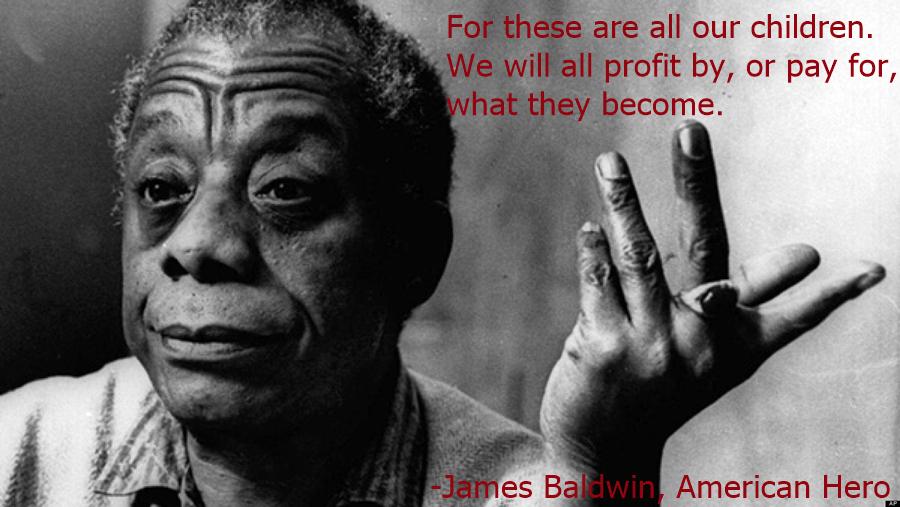
These Children Are Our Children! - LA Progressive

These Children Are Our Children! - LA Progressive:

These Children Are Our Children!


Remember all too recently when thousands of unaccompanied children crossed the border into our country as they fled from torture and certain death in their homelands, particularly in Central America? Yet, instead of greeting these innocent children with open arms, we treated them like criminals, turning them away—caring nothing about what would await them if they were forced to return to their countries of birth.
Amazingly, those protesters (in places like Murrieta, California, and Oracle, Arizona) held sway, the FBI gave in, and, carrying those frightened, apprehensive, and panic-stricken children, the buses took away the real victims of this controversy. That whole scene reminded me of how the U. S. government turned the Jews away who had crossed the ocean to escape the Nazi terror, only to be returned to European concentration camps, torture, starvation, “scientific” experiments, and death. Aren’t we admonished to Never Forget?!
Have you thought (since then) what has come of them? I have continued to worry about them (the pictures are burned into my memory) and, thus, have gotten involved in programs whose aims are to do what our government at many levels has generally not done. One such advocacy group is CLUE—Clergy and Laity United for Economic Justice. It is through its staffers that I was introduced to people from the Center for Human Rights and Constitutional Law, the secular CARECEN (Central American Resource Center), the Catholic Esperanza (hope/promise) Immigrant Rights Project, and the North Hills United Methodist Church (with a congregation of about 65-70% Central Americans) and its Welcome Center for Unaccompanied Minors (whose leader is Pastor Fred Morris who has spent many years in Nicaragua and Brazil, the latter of which is where he, many years ago, was tortured for his championing of human rights).
I must add, before I continue, how proud I am of Congressmember Tony Cárdenas who has taken an active role in advocating for the rights of these and all undocumented people—those who deserve a right to come out of the shadows and be allowed to become or continue to be contributors to their communities without fear of penalties and punishments, let alone deportation and separation from family.
I am so grateful for all the time Pastor Morris granted me as he enlightened me about many of the situations of which I would not ordinarily have been aware. What follows reflects much of the information he so generously shared during our conversation.
You probably have heard stories of the thousands of young people who have left their families, friends, and homelands with the hope they will arrive in America where they can survive in peace. Yet, we have heard of the risky trips, escaping from those at home who would enlist them in gang patrols or kill them, the rugged terrain they must traverse if they manage to get away, the trains on which they grittily hold for dear life, the hunger and dehydration, the assault and rape that must be endured.
And if they manage to overcome all those obstacles, there are still the gangs in Mexico which might kidnap them when those innocents make it that far and hold them for ransom to be paid by These Children Are Our Children! - LA Progressive:


NEA Convention 2016: What to Expect - Teacher Beat - Education Week

NEA Convention 2016: What to Expect - Teacher Beat - Education Week:

NEA Convention 2016: What to Expect

Teacher Beat
Beginning July 3, we will be bringing you our annual coverage from the National Education Association's annual convention. What's on the table this year? Read on.

A Clinton speech. The apparent Democratic nominee for president, Hillary Clinton, is expected to address the NEA at some point. This could be a strictly by-the-numbers speech to a generally supportive audience that she will need to rely on as canvassers during the general election, or it could be the place where she decides to lay out more specifically her plans for K-12 education, which have been in short supply to date.
This doesn't mean that Clinton is going to be well received by all. The union's PAC Committee and board of directors' votes on Clinton were far from unanimous, and there were murmurs of disapproval from Sanders supporters that both the NEA and the AFT endorsed Clinton so early. I wouldn't necessarily expect any open protests, but it is possible we could see a New Business Item seeking to change the endorsement process.

A Push on LGBT issues. The union's major policy statements are expected to include items on supporting LGBT students in the wake of the attack in Orlando, and one from the union's board of directors on the "school to prison pipeline." As with last year's debate on structural racism, it remains unclear what resources the union will put forward to bring these statement out of the clouds and into reality.  
The Friend of Education award. This year, the NEA's Friend of Education Award will go to Sens. Patty Murray (D-Wash.) and Lamar Alexander (R-Tenn.), presumably for their roles in getting the Every Student Succeeds Act to the finish line. Murray is a past recipient of the award from just a few years ago (2013), and she has long enjoyed a close relationship with the union.
But Alexander is a different story. In the 1980s, he waged a long battle with the union's Tennessee affiliate over a career-ladder system he wanted to implement. It left such a sore spot that Alexanderbrought up the disagreement in the mid-2000s, when the Teacher Incentive Fund, a federal performance pay program, was getting underway. It will be interesting to see if he shows up to collect this thing in person.
(Fun fact: Hillary Clinton won the Friend of Education award in 1999.) NEA Convention 2016: What to Expect - Teacher Beat - Education Week:
Make sure to follow along on Twitter, too, at the addresses below.
  for the latest news on teacher policy and politics.

CURMUDGUCATION: Writing Junk + Discovering Gloria Jean Merriex

CURMUDGUCATION: Writing Junk:

Writing Junk


First, we need to understand that the state of writing instruction has never been great.

If you are of a Certain Age (say, mine) you may recall a type of writing instruction that we could call the Lego Building Approach. In this method, students are first taught to construct sentences. Then they are taught how to arrange a certain number of sentences into a paragraph. Finally, they are taught to assemble those paragraphs into full essays.

This is junk. It assumes that the basic building block of a piece of writing is a sentence. No-- the basic building block of a piece of writing is an idea. To try to say something without having any idea what you want to say is a fool's errand.

Not that the Lego Building Approach should feel bad for being junk. The instructional writing landscape is littered with junk, clogged with junk, sometimes obscured by the broad shadow of towering junk. And on almost-weekly basis, folks try to sort out what the junk is and how best to clear it away.

Here's John Warner at Inside Higher Ed trying to answer the question, "Why can't my new employees write?" Warner reports that he hears that question often from employers. With a little probing he determines that what they mean by "can't write," is "They primarily observe a fundamental lack of clarity and perceive a gap between the purpose of the writing and the result of what’s been written, a lack of awareness of audience and occasion."

In other words, they don't seem to get the idea that they are supposed to be communicating real ideas and information in a real way to real people. It's not a question of rigor or expectations, Warner notes. It's that they were trained to do something else entirely.

I believe that in many cases, these young professionals have never encountered a genuine and meaningful rhetorical situation in an academic or professional context. They are highly skilled at a 
CURMUDGUCATION: Writing Junk:


 Discovering Gloria Jean Merriex


Gloria Jean Merriex grew up in Gainesville, Florida. Gainesville is a city of extremes; on the one hand, it's the home of the University of Florida and has many of the features of a big college town; on the other hand, the southern and eastern neighborhoods of Gainesboro are home to crushing poverty. Charles Duval Elementary School is located in the center of an eastern neighborhood filled with crime and poverty.

Merriex saw teaching as a path out of the poverty of her neighborhood, but she did not choose to leave the neighborhood itself. Once she had her degree, she chose to teach at Duval Elementary, where for about twenty-five years she was a middle-of-the-road, competent-but-not-exceptional teacher.

I became acquainted with Merriex through the work of filmmaker Boaz Dvir; my nephew, who studied film at Penn State, had Dvir as a teacher and thought we might have a few things to say to each other. But years ago, Dvir was a professor in Florida who heard about Merriex and decided to tell her story. The result is a documentary in progress entitled "Discovering Gloria." I've watched a rough cut of the film, and it is a challenging and moving story.
 Discovering Gloria Jean Merriex

Russ on Reading: Grammar as Meaningful Work

Russ on Reading: Grammar as Meaningful Work:

Grammar as Meaningful Work


Probably no issue in the teaching of English can fire more debate than grammar instruction. Google, "Should grammar be taught?" and you can find literally thousands of arguments on either side. By the way, notice that I just used "Google" as a verb, which would drive my 7th grade English teacher, Mrs. McGarry, up a wall; but I digress. The issue, of course, is not whether grammar should be taught, but how. On this issue the answer is clear: one-hundred years of research has consistently demonstrated that skill and drill, learn the rules, underline the subject and predicate, diagram the sentence, do practice lesson 12 in your Warriner's, type instruction does not improve writing.

Grammar instruction must begin with what students already know about grammar (quite a lot it turns out) and build from there based on the student's own writing. Like most learning, context is everything, and the best context for learning grammar is the student's own writing. Instead of thinking of grammar as a set of rules to be followed, we need to think of grammar as a set of tools to be used by the writer in the process of meaning making.

One of the great things about teaching writing is that evidence of what students know and don't know is constantly available on the page right in front of us. When we see second grade students beginning every sentence with "and", we know we can teach a lesson on sentence variety and have students practice in their own writing. This is so much more effective than decontextualized lessons about the "rule" of not starting a sentence with a conjunction, which by the way is not a rule. There is no rule in English that says we should not start a sentence with a conjunction. It is just that stylistically it is not a good idea to over use that structure.

If our third grade students are using a lot of short choppy sentences in their writing, we know to teach a lesson on sentence combining and coordination. If students are using dialogue in their writing, it is a good idea to teach 
Russ on Reading: Grammar as Meaningful Work:

Seattle Schools Community Forum: Seattle School Board's Lollapalooza of a Meeting Yesterday

Seattle Schools Community Forum: Seattle School Board's Lollapalooza of a Meeting Yesterday:

Seattle School Board's Lollapalooza of a Meeting Yesterday


As I previously reported, the Board was having an Audit&Finance Committee Meeting of the Whole and then had an Executive Committee Meeting of the Whole and then a Work Session on the 2016-2017 Budget to figure out to do with this $11M underspend that was found. 

All the Board members were present except for Sue Peters (on the phone the entire meeting) and Stephan Blanford whose absence was not explained.  Also to note, during committee meetings of the whole (COW - how's that for an acronym?), only members of the committee vote on items but all Board members can partake in the discussion.

The meeting also was a first look at the new CFO, JoLynn Berge.  The rest of the room was filled out by staff.  I was the only member of the public present. 

While the meeting was marked at times with laughter and the tone was respectful, it was also a sober meeting.

 Audit&Finance
There were only two items to discuss, both of them Technology items.  Representing DOTS (Department of Technology Services) was Nancy Petersen and David Oestreicher, Director of Technology Infrastructure.  Former head Carmen Rahm left the district in early June.  Like many senior staff before him, he left some real problems.  The two items on the agenda were notable for that reason.

One was a BAR for the next Board meeting on July 6th for purchase of technology for BEX IV schools, capacity classrooms, K-3 class size reductions and  Special Education classrooms.  (This includes 85 capacity classrooms that have been created out of other spaces.) 

It didn't start well as Deputy Superintendent Steve Nielsen had to confess that the BAR had left out an Apple contract that would move the cost on the BAR from $1.5M to $2M. 

That's a pretty big issue right that there anyone could read a BAR on a contract 
Seattle Schools Community Forum: Seattle School Board's Lollapalooza of a Meeting Yesterday:

Michigan's shortchanging its kids. Why?

Michigan's shortchanging its kids. Why?:

Michigan's shortchanging its kids. Why?


Eight months ago, the State of Michigan set out to learn what it would cost per year to provide each school-age child in this state an adequate education.
Now we know the answer: $8,667. At minimum.
In the next school year, Michigan's per-pupil allowance will range from $7,511 to $8,229 — although some districts will spend significantly more — numbers that fall short of the study's findings. That's troubling enough.
But the implications of this state-commissioned report provide the answer to another question, one its researchers weren't charged with answering: This state is in serious, serious trouble.
In commissioning the report, the state asked consulting firm Augenblick, Palaich and Associates to determine how much districts in which students scored above state averages for proficiency in tested subjects spend per pupil.
But here’s the thing — Michigan student performance, across the board, is not good. In just one subject tested are more than 50% of students, on average, ranked proficient.
That's what the state paid a consulting firm $399,000 to find out: How much it would cost to ensure that Michigan kids do better than current state averages, even when those state averages are dismal. The report's authors answered that question, but also developed a different methodology, looking at districts that perform significantly better than state averages. There are only 58.
spokesman for Gov. Rick Snyder told Free Press reporter Lori Higgins that this report is important, and that a commission Snyder recently created to improve Michigan education would review the report.
This is the equivalent of ringing a small hand bell to alert an apartment block that there is a raging fire in progress.
The adequate education study is the third report in the last two months that should have Michigan lawmakers panicking — both Education Trust Midwest, an education policy advocacy group, and the annual Annie E. Casey KidsCount report found that Michigan ranks in the bottom third for education in this country; EdTrust's results indicate that Michigan will rank 48th in the country by 2030 unless we make drastic changes.
Education in Michigan is not working. This is indisputably clear.
Districts with fewer at-risk or non-English-speaking students had better outcomes than districts with high poverty rates and kids who can't speak the language in which much instruction is given. This news should shock no one. Nor should the report's finding that the state should spend up to 40% more to provide adequate education for at-risk or non-English-speaking students than the report's recommended baseline.
Further, the state's school funding system, modified in 1994 to provide equitable funding across districts, isn't cutting it: Some districts spend nearly $10,000 more per student, often with demonstrably better outcomes. While the report's authors found that a few districts spent less money to achieve better results, the research also showed that state school funding is becoming less equitable — districts with higher taxable property value tend to spend more on education, for example, a gulf that has the potential to widen. The taxable value of property in Michigan school districts ranges from $2.5 million to roughly $35,000 per student. It's a huge disparity.
Nor does the state's funding system account for varying student needs. Districts with high populations of students who are at-risk or who speak little to no English often have fewer dollars available to provide services that should be more comprehensive, if improved performance is the desired outcome.
This report isn't an outlier — a 2014 analysis found that nationally, 38 out of 39 studies recommended more dollars for public education, Higgins reported.
These findings should surprise no one, despite the dogged right-wing insistence that spending isn't linked to better educational outcomes. It's a convenient excuse that allows legislators who don't really care that much about kids who don't live in their districts, who perhaps don't look like them, to throw up their hands, insisting that spending more won't help, so why bother?
It's a wearying cynicism that exists solely to excuse inaction. And It's a dim-sighted view of success: The idea that Michigan can thrive, if only some of our children are offered opportunity.


Involving parents in schools needs more realistic — and practical — outreach efforts. - StarTribune.com

Involving parents in schools needs more realistic — and practical — outreach efforts. - StarTribune.com:
Involving parents in schools needs more realistic — and practical — outreach efforts.
The state needs to reach out in more realistic and practical ways. It's really not that hard. 


As an immigrant to the United States, I had no clue how school systems operated. When I noticed a problem in my son’s district, I wrote to the City Council and state legislators. I didn’t realize that a separate governing body existed — a school board — and that I should turn to it for help.
This is one reason now, as a teacher in Minneapolis and a school board member in Richfield, I have a commitment to engaging parents on a practical level. This spring, I established a parent academy at my elementary school that offered dinner, child care and bilingual training sessions on how to advocate for schoolchildren.
In my role as an elected official, I ask my district to use low-tech communication techniques such as bulletin boards, take-home packets and personal outreach to supplement Web pages and social media sites. Many parents and guardians are new to the U.S., or living paycheck to paycheck, which means internet access and computer literacy may be barriers to involvement.
In the coming months, the Minnesota Department of Education has the opportunity to take parental engagement to a larger and more influential scale. Like all states, Minnesota must redesign the accountability system for publicly funded schools under the federal Every Student Succeeds Act (ESSA). The feds rightly directed states to convene local stakeholders for input on how to gauge school performance and what to do when schools miss the mark.
Under ESSA, states are required to weigh how many students are achieving at grade level; the academic growth (or an equivalent measure) that elementary and middle schoolers make each year; whether enough high schoolers are graduating on time; and the progress made by English-language learners. And for the first time, each state must add at least one nonacademic component to create a fuller picture of a school’s quality.
Many states already have other quality measures in their accountability systems — ranging from student absentee rates to accessibility of advanced placement, arts or physical education courses. Minnesota’s accountability system, however, fails to include any additional factors. Right now the feds have provided an opportunity for us to move beyond test scores, but too few people know their opinions can influence what should count.
If you are like me, you were unaware that the state education department held hearings on ESSA at its headquarters in Roseville this spring. While I appreciate that the meetings were open to the public, thousands of parents, students and educators who have a vested interest in school accountability were not even aware that the meetings were taking place.
This lack of authentic engagement is especially troubling at schools such as those I represent in Richfield — where five in 10 students speak a language other than English at home — and where I teach in Minneapolis — where nearly all my students qualify for free or reduced-price lunch. We serve the historically underserved students the law is designed to protect. These communities deserve real opportunities to engage with policymakers, ask questions, receive answers and give feedback on how their schools are doing and what would make them better.
As the state moves ahead, it should hold discussions in the neighborhoods that are most affected, and genuinely involve those who have the most to lose or to gain. In fact, parent engagement could be among the factors by which schools are judged going forward. The state could model engagement by conducting authentic outreach and tabulating parents’ comments; simply sending an e-mail to the regular roster of school advocates about a meeting in the suburbs just doesn’t cut it.
Not long ago, Tim Pollis, Richfield baseball coach and a fellow board member, made that kind of extra effort to reach parents. He visited the Latino Parent Association to inquire why so few Latino students were trying out for baseball or taking advantage of its scholarships. The parents — who were otherwise involved in their children’s education — said that they had not heard about the opportunities. As it turned out, the information had only been available on the internet.
If a coach can find the time to make personal contact with the parents of prospective baseball players, then the state can find a way to engage parents on the law that will dictate school accountability for the next generation of kids.

Paula Cole is a Spanish immersion teacher in Minneapolis and a member of the Richfield school board.Involving parents in schools needs more realistic — and practical — outreach efforts. - StarTribune.com:

And the Rockets' Red Glare. Splodey Heads Keep ‘Splodin’!

And the Rockets' Red Glare. Splodey Heads Keep ‘Splodin’!:

And the Rockets' Red Glare. Splodey Heads Keep 'Splodin'!

Out on the weekend.


(Permanent Musical Accompaniment To The Last Post Of The Week From The Blog's Favourite Living Canadian)
"My judgment approves this measure and my whole heart is in it. All that I have, and all that I am, and all that I hope in this life I am willing to stake on it. And I leave off as I began, that live or die, survive or perish, I am for the Declaration."
—John Adams, future vice-president of the United States, to the Second Continental Congress, July 1, 1776.
"Splodey heads keep 'splodin'!"
—Sarah Palin, once-possible vice-president of the United States,to the Western Conservative Summit, July 1, 2016.


Friday was the 78th birthday of the indefatigable Diane Ravitch, stalwart crusader for the survival of public education in the United States. She sent out a birthday message to her fans and, as the son of a man who spent 35 years in public secondary education, I think you should consider taking her up on what she suggests that you do.
If you want to do something for me other than say "happy birthday" (which is also nice), please join and/or make a gift of any size to theNetwork for Public Education or the NPE Action Fund, which engages in political action. I co-founded these groups with Anthony Cody, and we hope NPE will be the meeting plac e for all those who are sick of attacks on public schools and teachers, for all those who want to sing the praises of a great democratic public education system that is required by law to provide equal opportunity for all students. We want a transformation, not the status quo. We want great schools for every child, not just for the few. And we won't tolerate the naysayers who pick on the people, institutions, and values we hold dear.
And the Rockets' Red Glare. Splodey Heads Keep ‘Splodin’!:


Friday, July 1, 2016

LMAO – Charter school front group hires “Tactics Manager” - Wait What?

LMAO – Charter school front group hires “Tactics Manager” - Wait What?:

LMAO – Charter school front group hires “Tactics Manager”


Families for Excellent Schools, the corporate funded, New York based charter school lobby group, with chapters in Connecticut and Massachusetts, is looking for a manager of tactics.
A Manager of Tactics?
Not just any Manager of Tactics.  They are hiring a National Director of Tactics…
Perhaps they find their calling in the words of Sun Tzu, who wrote about tactics in his epic entitled, The Art of War;
All warfare is based on deception. Hence, when we are able to attack, we must seem unable; when using our forces, we must appear inactive; when we are near, we must make the enemy believe we are far away; when far away, we must make him believe we are near.” –  Sun TzuThe Art of War
So it is that the billionaire funded Families for Excellent Schools has posted a job listing searching for a National Manager of Tactics.
What an incredible and disturbing commentary about the charter school industry and its corporate education reform allies.
According to the FES job posting, the pro-charter schools, anti-public education, anti-LMAO – Charter school front group hires “Tactics Manager” - Wait What?:


Save Our Schools: See You in DC July 8-9! - Living in Dialogue

Save Our Schools: See You in DC July 8-9! - Living in Dialogue:

Save Our Schools: See You in DC July 8-9!


One week from today, on Friday, July 8, I will join thousands of activists from around the nation at the Lincoln Memorial in Washington, DC, to once again raise our voices for meaningful changes in our schools at a protest organized by the Save Our Schools Coalition. We will hear from Reverend Barber, from Diane Ravitch, Jonathan Kozol, Tanaisa Brown, Barbara Madeloni, Jtiu Brown and many more. We will march in the streets with these demands:
  • Full, equitable funding for all public schools
  • Safe, racially just schools and communities
  • Community leadership in public school policies
  • Professional, diverse educators for all students
  • Child-centered, culturally appropriate curriculum for all
  • No high-stakes standardized testing
I was one of those who helped organize the 2011 Save Our Schools march in DC, which raised similar issues in the first national protest against phony education reforms. These events are built by creating a broad coalition that include activist groups and teacher unions. Right now, thousands of teachers are headed to DC to take part in the NEA’s rep assembly, which will wrap up next Thursday. Many will stay an extra day to join in the SOS Coalition event.
For some reason, a couple of bloggers have decided to attack this event and its organizer, on very flimsy grounds. The thrust of the attack is that since the SOS Coalition is providing funding to pay for buses to bring parents, students and community activists to DC who could not otherwise afford to make the trip, and this costs money, that the project must be getting some heavy subsidy from nefarious teacher unions – and thus the protest will be some sort of pep rally for Hillary Clinton.
For the record, the buses are being provided at the direct request of organizers with the Journey for Justice, which organizes communities of color to support democratic control of public schools.  The funds raised for these scholarships have come from individuals, locals and state teacher organizations and the coalition partners like NPE, BATS, SOS  as well as fundraising webinars with Jonathan Kozol and Diane Ravitch. I have donated several times myself, because I strongly believe that we need to build solidarity with the people most affected by corporate reform, and one concrete way to do this is to support their active participation in protests and conferences such as this. Funds are still being raised to pay for these buses. If you would like tojoin me in donating, please go here. These travel funds have not come from the teacher unions.
In 2011, the SOS March was primarily supported by grassroots donations, but did receive some financial support from the AFT and NEA. This support did not prevent us from being able to deliver a strong message of protest against Obama administration policies. This year, the amount of financial support provided by teacher unions has been significantly less, although both the NEA and AFT have helped publicize the events and encouraged members to attend. These are coalition events that require everyone to come together around a shared vision. That is how we brought people together in 2011, and it is how we did it this year as well.
Creating events like this requires us to build alliances and cooperate. I do not agree with everything that NEA or AFT leaders do, and have certainly made that clear over the past few years. But I value the capacity of these organizations to bring together educators, and appreciate the chance to work with them whenever possible.
Criticisms were also leveled at Bob George, as they were a few years ago. I have worked closely with Bob over the past six years, and if he is in pursuit of wealth, he has chosen a very strange path. Bob works hard, and brings people together without making a big deal out of himself. He is the real deal. He cares very deeply about social justice and has worked to make this year’s event much more diverse and representative of those most affected by corporate reform than the one five years ago.
One of the things I appreciate about being in a broad movement is the chance to hear perspectives from diverse points of view. In some gatherings I am among the more radical people in the room. In others, I am more in the center, politically speaking. If we constantly focus on our differences, then we can do very little beyond pontificate from our separate soapboxes about what is wrong about those we differ with. This gets us nowhere. How much more lively and rich it is when we bring together people from different walks of life, with different viewpoints from our own! In this case, the SOS Coalition is bringing together a range of activists and organizations, to rally around a strong stand for public schools. I look forward to seeing lots of friends, and making some new ones as well. I hope you can join us – and if you can’t, pitch in a few bucks so someone else can make the journey.
Save Our Schools: See You in DC July 8-9! - Living in Dialogue: