Tuesday, June 7, 2016

Why Doesn't Society Care About the Education of Incarcerated Youth - The Atlantic

Why Doesn't Society Care About the Education of Incarcerated Youth - The Atlantic:

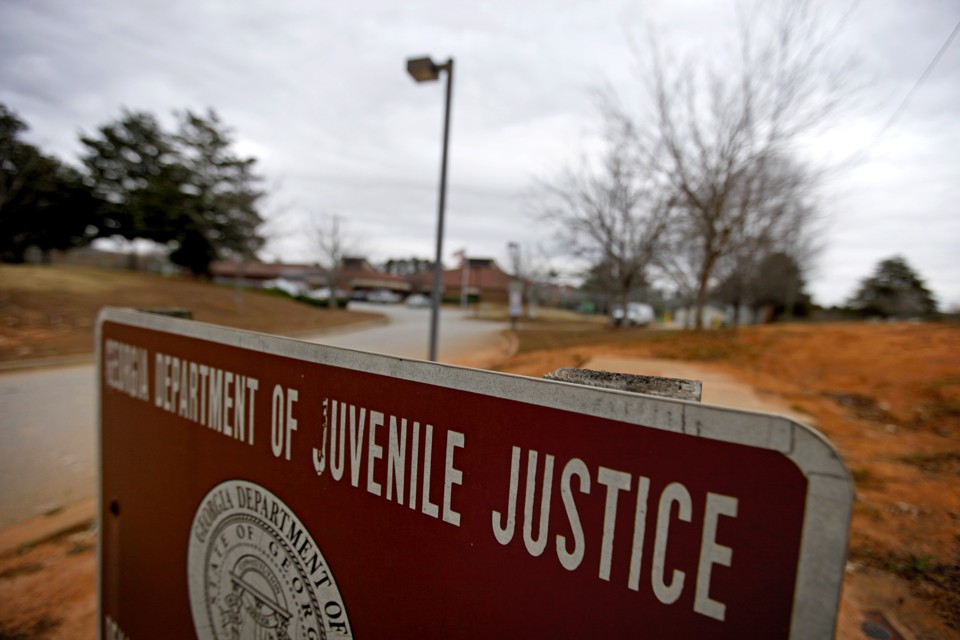
Learning Behind Bars

Why doesn’t education in juvenile detention facilities get any attention or support?


In spite of some signs of improvement, fundamental disparities persist in youth incarceration. The number of youngsters in U.S. correctional facilities has been cut in half—a dramatic drop of 53 percent from 2001 to 2013—according to a Pew analysis of federal data. Still, the Annie E. Casey Foundation, a child-advocacy group, found “in every year for which data are available, the overwhelming majority of confined youth are held for nonviolent offenses.” And children of color bear the brunt of juvenile-justice policies: Black children are nearly five times as likely, and Latino and Native American youngsters are two to three times as likely, to be incarcerated as are their white peers.

Similar inequities carry over to the learning that happens behind bars. Though confined young people are entitled to an education by law, the quality of the education they receive can vary greatly. The U.S. Departments of Education and Justice issued guidance to states in December 2014 to improve school programs in youth detention. But overall, the education of incarcerated youth is mostly ignored and poorly understood.
Among those working to bring greater visibility to the issue of schooling in juvenile-detention facilities is David Domenici, the director of the Center for Educational Excellence in Alternative Settings (CEEAS), a nonprofit devoted to improving teaching and learning at juvenile-justice schools. In 2013 CEEAS developed “Words Unlocked,” a nationwide poetry contest to amplify the voices and creative talents of incarcerated youngsters. After speaking recently at an education summit hosted by The Atlantic, Domenici offered additional thoughts on why educating students in juvenile facilities deserves more attention and support. The interview that follows has been edited for length and clarity.


Melinda D. Anderson: “Education is the civil-rights issue of our time” is a recurring catchphrase in education policy, until the topic turns to the civil rights of incarcerated youth. The notion that youth in juvenile detention are “bad kids” who deserve their fate—and thus that educating them is immaterial—is a philosophical hurdle that activists and others engaged in this work must constantly strive to overcome. How do we begin to combat the belief that these children are expendable?

David Domenici (CEEAS)
David Domenici: These are not bad kids—they are poor, they have failed at and been failed by our school systems, they are disproportionately kids of color, many are victims of violence and abuse, and they mostly live in under-resourced neighborhoods, wracked by violence and high unemployment. And yes, many are hard to work with, and some have done some bad stuff. [Yet] I was the principal at what’s now known as New Beginnings Youth Development Center (D.C.’s secure facility for adjudicated youth formerly known as Oak Hill Detention Center) for four years. Hundreds of kids passed through Oak Hill during my time there. Not one was white.

I don’t want white kids locked up either—but we have to be honest about this. About 98 percent were black, the rest Hispanic. Almost all of the kids came from a handful of poor, segregated neighborhoods. None attended the city’s magnet schools, or the one integrated, high-performing high school. How is this not a Why Doesn't Society Care About the Education of Incarcerated Youth - The Atlantic:

The 7 steps to making a standardized test - The Boston Globe

The 7 steps to making a standardized test - The Boston Globe:

The 7 steps to making a standardized test

Inside the New Hampshire not-for-profit where assessments like the MCAS are born.

Who designs the standardized tests that spread a blanket of silence and stress across schools in Massachusetts and other states each spring?
A) A phalanx of drill sergeants who would ban recess if they could
B) A coven of witches who feed on the sweat and tears of small children
C) Dozens of PhDs and former teachers who spend their days in cubicles in Dover, New Hampshire.
The answer is C. The Massachusetts tests for grades 3 through 8 — used to rate schools, partially evaluate teachers, and help decide if students move to the next grade — are created by the employees of the not-for-profit Measured Progress, an enthusiastic bunch who care deeply about improving education through testing. Measured Progress has worked with the Massachusetts Department of Elementary and Secondary Education to make and score the MCAS for all but four of the 19 times it has been given. The company also works on large-scale assessments for 16 other states and is one of two companies in the running to design the MCAS 2.0.
Here’s how they do their work:
1. The state decides what the test should look like
The list of standards — the skills and knowledge states decide their students should have at each grade level — is the test maker’s bible. Examples from the Massachusetts standards, which incorporate the Common Core, include: “Determine a theme of a story, drama, or poem from details in the text; summarize the text” or “Use the four operations with whole numbers to solve problems.” The state and Measured Progress agree on how many questions to devote to each standard and the ratio of multiple-choice questions to open-ended ones.
2. Measured Progress begins writing questions
 Next, it’s time to start writing “items,” as they’re called in the industry. Each year, MCAS tests included some recycled items, but a large number will have been field-tested in previous years and used for scoring for the first time. A good item is clear and concise and will address the standard it’s supposed to be assessing. Multiple-choice questions can have only one right answer. Reading passages need to be drawn from actual fiction or nonfiction. In math, word problems need to be realistic. “You can’t have someone going on a hike where he’s hiking 20 miles per hour,” says Raymond Reese, a math content development specialist.
3. Educators weigh in
After an internal review, the state assembles six to 12 educators from across Massachusetts for each grade (and sometimes subject area) that’s being tested to go through items with them, one by one. If teachers don’t like an item, they can either suggest revisions or vote to reject it (fewer than 10 percent are discarded at this stage). Meanwhile, separate committees of state educators vet the items for bias. “They’re really looking for things that might affect performance on items other than the student’s ability,” says Stuart Kahl, Measured Progress’s founding principal. A writing prompt to The 7 steps to making a standardized test - The Boston Globe:


Your Cheat Sheet for the Proposed ESSA Accountability Rules - Politics K-12 - Education Week

Your Cheat Sheet for the Proposed ESSA Accountability Rules - Politics K-12 - Education Week:

Your Cheat Sheet for the Proposed ESSA Accountability Rules


By Andrew Ujifusa and Alyson Klein
It's been close to two weeks since the U.S. Department of Education released proposed regulations for the Every Student Succeeds Act that would govern school accountability. We've touched onseveral high-profile issues in the draft rules since they were made public, including their requirement for a single overall rating for schools and the tricky shift to ESSA that some schools might face in 2016-17. 
But below, you can find several of the most important issues in a straightforward, "cheat sheet" format. We've organized the material into three categories:
• What ESSA says about the issue in statutory language; 
• How the proposed ESSA regulations would handle the issue, and;
• Some of the reaction to the proposed regulations. (We included this where it was relevant—not every area has gotten serious pushback or praise at this early stage.) 
Let us know if you think we've missed any major issues in the comments section, or email us ataujifusa@epe.org, or aklein@epe.org. You have until Aug. 1 to submit your comments to the department about these proposed rules. They're expected to be finalized at some point after that later this year.

Overall School Rating

• What ESSA Says: ESSA does not explicitly require states to apply an overall rating to each school in their accountability plans.
• What the Draft Rules Say: The regulations require a "summative" rating for each school. States have to have at least three categories of summative ratings. The rating can take the form of a number (say on a scale of 1 to 100), an A through F grade, or it could just be a category (say, "needs improvement", "satisfactory", or "excellent.") Plus, states need to make publicly available any data that informs the overall summative rating. If schools are calculating the rating based on growth, achievement, and school climate, for example, they need to publish that data for parents, alongside the overall score. 
• The Reaction: Supporters of such a comprehensive rating for schools say the proposal is consistent with the intent of ESSA to provide clear information to educators, parents, and others. Some, however, are concerned that it could undermine alternative methods of school accountability, such as "dashboards" that provide information about various indicators, but don't place a single rating on schools. 

Test Participation

• What ESSA Says: States are still required to test all students annually in English/language arts and math in grades 3-8 and once in high school. But states are allowed to set consequences for schools that don't meet the 95 percent participation threshold. States could also have laws explicitly allowing parents to opt their children out of tests.
• What the Draft Rules Say: States must choose one of three sanctions for schools that miss the threshold, such as giving schools the lowest rating on their academic achievement indicators or knocking down their overall ratings. Or else states can submit their own plans for dealing with test-participation problems. 
• The Reaction: Fans of annual standardized tests say the proposal is appropriate and highlights how important these tests are. However, those friendly to the testing opt-out movement argue the plan is too prescriptive and that states would not get the flexibility they think the law contains when it comes to dealing with high opt-out rates. (If you're thinking the legal environment for opt-out seems complicated or unclear right now, you're not alone.) AFT President Randi Weingarten is among those critical of the proposed rules here, saying they're too punitive.

Accountability Indicators

• What ESSA Says: States must create an accountability system that relies on both academic indicators like test scores, graduation rates, and English-language proficiency, plus at least one indicator of school quality, which could be teacher engagement, student engagmement, school climate, or anything else the state cooks up that's subject to federal approval of their accountability plans. Each of these indicators must carry "substantial" weight. And the academic indicators, as a group, must be given a weight "much greater" than the school-quality indicator. 
• What the Draft Rules Say: The proposed regulations don't define what "much greater" means or give any sense of what would be an appropriate weight for each indicator. They do say, however, that the academic indicators need to give equal weight to math and reading. And they say that the school-quality indicator should be something that research shows will contribute to student achievement or boost graduation rates. (There's research to back up indicators like access to the arts, or science and social studies classes, U.S. Secretary of Education John B. King, Jr. said in a recent interview with Education Week.)
Also, the school-quality indicator should be something that shows real differentiation from one school to another. For example, the department is discouraging states from using average daily attendance; it says there's simply not enough variation from school to school, which means it's harder to tell which schools need closer attention and support. Also, importantly, just as with the summative rating, states need to come up with at least three performance levels for each indicator. That means if a state picks, say, teacher engagement, it needs to figure out what it means for a school to have at least high, low, and medium teacher engagement. (States could come up with more than three levels, if they want.) 
•The Reaction: Mike Petrilli, of the Thomas B. Fordham Institute, thinks the department is attaching too many strings to the school quality indicator. Check out his post here

Subgroups of Students and 'N' Sizes

• What ESSA Says: States need to consider the performance of each subgroup of students (that's English-language learners, racial minorities, students in special education, and disadvantaged kids) seperately, no combining of subgroups into "super subgroups." Also, states need to set an "n" size, meaning the minimum number of students in a particular group that a school must have in order for that group to count for accountability purposes. The state gets to pick the "n" size it wants—the department doesn't get to require any particular number. (The thinking behind an "n" size: If a Your Cheat Sheet for the Proposed ESSA Accountability Rules - Politics K-12 - Education Week:

Monday, June 6, 2016

The Waiting Game Sacramento City Unified’s central kitchen slow to progress | Comstock's magazine

The Waiting Game | Comstock's magazine:

The Waiting Game

Sacramento City Unified’s central kitchen slow to progress

Image of The Waiting Game
I’m a locavore — an advocate for eating local food. Local food tastes better. Sadly, kids eating school lunches rarely know the joys of a blueberry or tomato grown in their own communities. In Sacramento, school cafeterias don’t have the equipment or capacity to store and prepare fresh, local food. They’re designed mainly to warm frozen, processed food.
In 2012, taxpayers approved Measure R to fund a solution to this problem: build a “central kitchen,” a large kitchen that serves as a hub for the whole district, where meals are prepared from scratch daily and distributed same-day to all schools. Yet, four years later, kids are still waiting for a better school lunch.
On May 5, the Sacramento City Unified School District school board received an assessment from the Central Kitchen Task Force about the viability of local properties for a central kitchen site. I’m on the task force, and I joined a group of food activists at the meeting to speak in favor of building the central kitchen and to inspire a sense of urgency to keep the project on track. Two feasible sites have been identified. One is owned by the district, but not centrally located to school sites. The other is favorably located next to the SCUSD’s existing food warehouse, but isn’t owned by the district. No action has been taken yet to select a site — the first barrier standing between Sacramento students and their local watermelon. Board Member Jay Hansen, who appointed the task force, says he anticipates an action on property by August.
Let me provide context for the problems that lead to the need for a central kitchen. It’s not the fault of “lunch ladies” that our kids aren’t eating fresh school meals; it’s a systems-level problem that runs much deeper. Through my job as executive director of the Food Literacy Center and as a volunteer appointee of the SCUSD’s task force, I work closely with district staff from the Nutrition Services Department. They’re the ones banging their pots and pans the loudest to resolve the fresh food issue, working to fill school lunches with local fruits and veggies (defined by the district as grown within 250 miles). But making these dreams come true takes a lot of work.
“If Sacramento is to deliver on its promise as the Farm-to-Fork Capital, we need to start with what we feed students in our schools,” says Nutrition Services Director Brenda Padilla. With a master’s degree in human nutrition, she’s the one in charge of the meals our kids eat. And she’s eager to improve the choices offered to them.
Campuses Not Equipped
When it comes to serving local food, the story is like an orange with a very stubborn peel: It’s hard to get to the good stuff. In this case, federal school lunch regulations don’t stand in the way  — it’s a problem of equipment and infrastructure.
Many SCUSD campuses were built during an era when processed foods reigned supreme, with small kitchens designed to serve one goal: heat and serve. They are tiny spaces without much prep or The Waiting Game | Comstock's magazine:

Charter schools’ dire lesson: Deregulation invariably leads to disaster - Salon.com

Charter schools’ dire lesson: Deregulation invariably leads to disaster - Salon.com:

Charter schools’ dire lesson: Deregulation invariably leads to disaster
Moneyed interests have turned learning laboratories into just another racket, plagued by questions of transparency


 The original concept of charter schools emerged nationally more than two decades ago and was intended to support community efforts to open up education. Albert Shanker, then president of the American Federation of Teachers union, lauded the charter idea in 1988 as way to propel social mobility for working class kids and to give teachers more decision-making power.

“There was a sense from the start that they would develop models for the broader system,” John Rogers tells Capital & Main. Rogers, a professor at the University of California, Los Angeles’ Graduate School of Education and Information Studies, is director of UCLA’s Institute for Democracy, Education, and Access. He adds that charter schools were to be laboratories where parents and educators would work together to craft the best possible learning environment and to serve as engines of innovation and social equity.
But critics of today’s market-based charter movement say monied interests have turned those learning labs into models for capital capture in the Golden State and beyond–“the charter school gravy train,” as Forbes describes it. Charters are publicly funded but privately managed and, like most privately run businesses, the schools prefer to avoid transparency in their operations. This often has brought negative publicity to the schools – last month the Los Angeles Daily News reported that the principal of El Camino Real Charter High School charged more than $100,000 in expenses to his school-issued credit card, many of them for personal use.
“Information belongs to the public,” says Daniel Losen, who conducts law and policy research on education equality issues. “To the extent that you think choice should benefit parents—good choices are made with good information.” Losen co-authored a March, 2016 report about charter schools’ disciplinary policies, produced by theCenter for Civil Rights Remedies at the Civil Rights Project at UCLA.
Billions of taxpayer dollars have flowed into expanding America’s privately-run charter school system over the past two decades, including $3.3 billion in federal funds alone, reports an analysis by the Center for Media and Democracy. California has the nation’s largest number of charter schools, with most of them located in Los Angeles County. But in an age when words like “accountability” and “transparency” dominate political discourse, the financial mechanics of charters receive less oversight and scrutiny than the average public school bake sale.
The National Alliance for Public Charter Schools candidly spells out the Golden State’slaissez fairerules of the game on its website: “California law provides that charter schools are automatically exempt from most laws governing school districts.”
The California Charter Schools Association (CCSA) has explicitly opposed state legislation that would clearly define the existing transparency laws and codes for charter schools — standards charters can now avoid despite their use of public funds.
“Charters don’t have to disclose budgets,” says Jackie Goldberg, a long-time Los Angeles school teacher and former Los Angeles Unified School District (LAUSD) board president, who also served in the California State Assembly. “Once a charter is written, it’s not subject to the Brown or the Public Records acts.”
The CCSA opposes several bills currently progressing through the state legislature that would bring charter school transparency requirements into line with those expected of public schools. One measure spells out the expectation that charters would follow the same standards as public schools when it comes to the Public Records Act that guarantees access to public records; CCSA argues that most charter schools already voluntarily comply—so the law is Charter schools’ dire lesson: Deregulation invariably leads to disaster - Salon.com:


Debate over transgender use of bathrooms & locker rooms | WBFO

Debate over transgender use of bathrooms & locker rooms | WBFO:

Debate over transgender use of bathrooms & locker rooms

Randi Weingarten, President of the American Federation of Teachers.
CREDIT WBFO NEWS PHOTO BY EILEEN BUCKLEY

Many school districts are working to draft a transgender policy to protect a student’s rights.  The transgender issue effects not only students in K through 12, but at colleges and universities. WBFO's Senior Reporter Eileen Buckley says there is no one set policy in place for schools to follow.
Inside a school bathroom.
CREDIT WBFO NEWS PHOTO BY EILEEN BUCKLEY
A few weeks ago President Obama issued a directive to public schools across the U.S. stating transgender students should use a bathroom or locker room in which they 'identify with'.
"I think some districts are absolutely struggling with this situations. They want to make sure individuals, students are 100-percent protected from any discrimination,” said Traci Lopardi, Attorney, Harris Beach in Buffalo.
Traci Lopardi, Attorney, Harris Beach in Buffalo, specializes in education law.
CREDIT WBFO NEWS PHOTO BY EILEEN BUCKLEY
The law firm represents more than 150-school districts across the state and more than 50-school districts in western New York. Lopardi specializes in education law. As the debate continues over a transgender student's rights in a school, Lopardi said the Obama directive was issued in a joint letter from the Department of Justice and Department of Education.
“And that guidance, while it doesn’t have the same force of law, that’s certainly that is something that various educational institutions need to consider, because otherwise they could potentially lose federal funding. We’ve seen some lawsuits around the country, but certainly the Department of Justice becoming involved with some various schools and telling them that they must provide appropriate facilities to transgender individuals, otherwise they will lose federal funds,” Lopardi explained.
Almost a year ago here in New York the State Education Department issued a Debate over transgender use of bathrooms & locker rooms | WBFO:


The Media Still Doesn't Grasp Problems with Bill Gates Control of Ed Policy | Truth in American Education

The Media Still Doesn't Grasp Problems with Bill Gates Control of Ed Policy | Truth in American Education:

The Media Still Doesn't Grasp Problems with Bill Gates Control of Ed Policy 

Photo credit: World Economic Forum (CC-By-SA 2.0)

We’ve written about the Gates Foundation’s admission that its efforts to impose Common Core nationwide were misguided and ineffective. Remarkably, the mainstream media have begun to analyze the relatively unexamined problems with allowing one unelected man – even one who is very very very rich – to control public-education policy. But although they’ve taken a small step in the right direction, they still miss some essential conclusions.
Case in point: a recent column in the Los Angeles Times, promisingly entitled “Gates Foundation Failures Show Philanthropists Shouldn’t Be Setting America’s Public School Agenda.” The Timescorrectly observed that “the Gates Foundation strongly supported the proposed Common Core curriculum standards, helping to bankroll not just their development, but the political effort to have them quickly adopted and implemented by states.” Agreeing with and elaborating on the foundation’s admission of “stumbling,” the Times concluded that Gates accumulated “an unhealthy amount of power” and was given “too much sway in recent years over how schools are run.”
Too bad no one ever saw this problem before. Oh wait – thousands of parents and other concerned observers have been protesting for years now Gates’s assault on local control over education, and his blunderbuss attempts to remake schools in his own image. But not until his foundation itself admits what has been glaringly obvious for some time does the Times notice the situation.
Perhaps we shouldn’t criticize the Johnny-come-latelies in the press but rather welcome them to the train wreck. But they richly deserve criticism for still clinging to the shreds of Common Core propaganda that Gates and other proponents continue to recycle. From the same Times piece: “Financial support for Common Core isn’t a bad thing. When the standards are implemented well, The Media Still Doesn't Grasp Problems with Bill Gates Control of Ed Policy | Truth in American Education:

Does Teaching Experience Matter? Let's Count the Ways

Does Teaching Experience Matter? Let's Count the Ways:

Does Teaching Experience Matter? Let’s Count the Ways

does teaching experience matter?
One of the most popular pieces of conventional wisdom in the national debate over education is that teachers lose the capacity to further improve student achievement after only a few years in the classroom – their effectiveness plateaus early in their careers. This perception has framed debates on everything from teacher quality, professional pay, due process, and teacher retention and recruitment.
But is it supported by research? The Learning Policy Institute recently dove into existing data, surveys and reports to shed some light on the relationship between teaching experience and student outcomes.
The verdict: experience matters – even in the second decade of teaching and beyond.
“The common refrain that teaching experience does not matter after the first few years in the classroom is no longer supported by the preponderance of the research,” Tara Kini and Anne Podolsky write in Does Teaching Experience Increase Teacher Effectiveness? “We find that teaching experience is, on average, positively associated with student achievement gains throughout a teacher’s career.”
Based on their analysis of 30 studies published over the past 15 years, Kini and Podolsky find that:
  • Gains in teacher effectiveness are most striking during the first five years in the classroom, but continue to increase – albeit at a slower pace – during the second, and often third, decade of a career.
  • As teachers gain experience, students’ academic gains are not the only benefit. School attendance also improves.
  • For teachers to be effective at any point in their career, they must be a part of a supportive and collegial school environment. Stability in teaching assignments is also key. Teachers are most effective in the same grade level, subject, or district.
  • More experienced teachers support greater student learning for their colleagues and the school as a whole, as well as for their own students. Novice teachers, in particular, benefit most from having more experienced colleagues.
Why take this issue on now? Aside from the fact that recent research uses more precise and accurate methods (see figure below), Kini and Podolsky say that the Does Teaching Experience Matter? Let's Count the Ways:


SHOCKER: Walton Funds Illinois State Charter Commission, Which Blocks Closure of Failing Charter Schools Funded by Walton | Diane Ravitch's blog

SHOCKER: Walton Funds Illinois State Charter Commission, Which Blocks Closure of Failing Charter Schools Funded by Walton | Diane Ravitch's blog:

SHOCKER: Walton Funds Illinois State Charter Commission, Which Blocks Closure of Failing Charter Schools Funded by Walton


 The Chicago Sun-Times reported on a startling conflict of interest.

The rightwing, anti-union Walton Family Foundation has been funding the Illinois State Charter School Commission, a state agency, as well as many charter schools in Illinois. When the Chicago Public Schools recommended closing two charter schools because of their poor performance, the Commission blocked the closing. The two failing charters were also funded by the Walton Family Foundation.
Have you ever heard of a public agency that relied for funding on a private foundation with a political agenda of privatization?
Reporters Dan Mihalopoulos and Lauren FitzPatrick write:
A private foundation started by the late Walmart mogul Sam Walton and his wife has contributed heavily to the Illinois State Charter School Commission and to two charter operators whose schools the state agency has blocked the Chicago Board of Education from closing over poor student performance, records obtained by the Chicago Sun-Times show.

Even in the complex history of public education in Chicago, the situation involving the two charters, the Chicago Public Schools, the charter commission and the Arkansas-based Walton Family Foundation is unusual.
Unusual is an understatement.
For years, CPS has faced criticism for allowing the expansion and taxpayer-financed funding of privately run charters even as it shut down traditional public schools over low enrollment and bad test scores.

Aiming to show it expects charters to meet the same standards as CPS schools, the Board of Ed moved last November to cut off funding for three schools — including the Amandla Charter School in Englewood and Lighthouse Academies’ school in Bronzeville — over poor student performance. The charter commission overruled the Board of Ed and, in March, blocked CPS from closing the schools.
Beside Amandla and the Bronzeville Lighthouse Charter School, the commission also saved the Betty Shabazz International Charter School’s Barbara A. Sizemore Campus in Englewood from being closed. The Walton foundation hasn’t donated to Shabazz.
CPS responded later in March by suing the state agency over its ruling, which Mayor Rahm Emanuel’s schools chief, Forrest Claypool, called “ill-advised and destructive.”
Over the past 20 years, the Walton foundation has given more than $45 million to educational groups in Illinois, including charter schools and the SHOCKER: Walton Funds Illinois State Charter Commission, Which Blocks Closure of Failing Charter Schools Funded by Walton | Diane Ravitch's blog:

Just Published! A Revised Edition of “The Death and Life of the Great American School System: How Testing and Choice Are Undermining Education” | Diane Ravitch's blog

Just Published! A Revised Edition of “The Death and Life of the Great American School System: How Testing and Choice Are Undermining Education” | Diane Ravitch's blog:

Just Published! A Revised Edition of “The Death and Life of the Great American School System: How Testing and Choice Are Undermining Education”

The Death and Life of the Great American School System: How Testing and Choice Are Undermining Education: Diane Ravitch: 9780465025572: Amazon.com: Books - http://www.amazon.com/Death-Great-American-School-System/dp/0465025579


 I am very pleased to let you know about the publication of a newly revised edition of The Death and Life of the Great American School System: How Testing and Choice Are Undermining Education.

Perhaps you read it when it was first released in 2010. It was big news at the time, because I broke ranks with the conservative think tanks and policymakers who had once been my allies. I spoke out against the misuse of testing and the dangers of privatization. This was unexpected from someone who had been an Assistant Secretary of Education in the administration of President George H. W. Bush, who served as part of three conservative think tanks, and who had written many articles about the “crisis” in American education.
I thought I had made a clean break with the Bush-Obama agenda. But in time I realized that I had not completely escaped the old, failed way of thinking (like a state, tinkering with people’s lives from afar). The book continued my longstanding support for a national curriculum and predicted that it would be smooth sailing now that the culture wars were over. I was wrong again!
In this new revision of the book, I have removed any endorsement for a national curriculum or national standards or national tests, and I explain why. The controversy over the Common Core standards taught me that the U.S. will never have a national curriculum, and furthermore, should never have one.
I also explain why a national curriculum and national examinations will not reduce the achievement gap among different racial and ethnic groups and will not reduce poverty. The advocacy for them–from the same people who support privatization–continues to be an excuse for avoiding the issue of poverty. And I rewrote the chapter on “A Nation at Risk,” showing how it dodged the most important issues in our society, which were economic and social, not educational.
Yes, there is a “crisis” in education, but it is not a crisis of test scores or failing schools. The crisis is caused by policymakers, federal officials, foundations, and business leaders who are imposing failed ideas on the schools. These impositions are hurting students, teachers, principals, communities, and public education itself. They have failed and failed, again and again, but those who support the Bush-Obama agenda of competition, choice, testing, and accountability refuse to re-examine their assumptions. Their inability to recognize their own failure has created disruption (which they admire), turmoil, and massive demoralization among educators.
I hope you will consider reading the book. I think that D&L continues to speak with passion to the terrible and real crisis in American education, a crisis caused by non-educators who want to turn our schools into job-training units, who want to emphasize standardized testing to the detriment of students, educators, and public schools, and who foolishly think that privatization will improve education.Just Published! A Revised Edition of “The Death and Life of the Great American School System: How Testing and Choice Are Undermining Education” | Diane Ravitch's blog: