Latest News and Comment from Education

Saturday, May 23, 2015

Special Nite Cap: Catch Up on Today's Post 5/23/15


Special Nite Cap 


CORPORATE ED REFORM


CURMUDGUCATION: Newark: The Civil Rights Lie
CURMUDGUCATION: Newark: The Civil Rights Lie: Newark: The Civil Rights LieFriday, the students of Newark took to the streets. Thousands of students. Students from many different schools within the city. They took to the steps of City Hall, and then they moved to shut down the main drag. And unlike a previous protest in Newark, this one resulted in actual press coverage. In addition to coverage fro
A Costly Tax Break for Nonpublic Schools - NYTimes.com
A Costly Tax Break for Nonpublic Schools - NYTimes.com: A Costly Tax Break for Nonpublic SchoolsGov. Andrew Cuomo can talk passionately about improving New York’s “failing public schools,” but when he made that point at churches and a yeshiva last Sunday it was, at best, disingenuous. He was there to sell his bill that would help private and parochial schools, by offering big tax credits to their
With A Brooklyn Accent: Should Business Leaders Be Put in Charge of Education?
With A Brooklyn Accent: Should Business Leaders Be Put in Charge of Education?: Should Business Leaders Be Put in Charge of Education?During the last 15 years, elected officials of both parties decided that business leaders would be better equipped to transform our public education system and make it "globally competitive" than teachers and school administrators. Their reasoning: why not
Flip The Louisiana Board Of Elementary And Secondary Education ( Bese)
Flip BESE: FLIP THE LOUISIANA BOARD OF ELEMENTARY AND SECONDARY EDUCATION ( BESE)Click Here to Follow Flip BESE on Facebook Click Here to Follow Flip BESE on Facebook Click Here to Follow Flip BESE on Facebook LEE P.BARRIOS FOR BESE 1 Web SiteClick Here to Follow Flip BESE on Facebook MIKE KREAMER FOR BESE 7 Web SiteClick Here to Follow Flip BESE on Facebook JASON FRANCE FOR BESE 6 Web SiteClick H
Mike Klonsky's SmallTalk Blog: An entire Chicago community resists charter expansion
Mike Klonsky's SmallTalk Blog: An entire Chicago community resists charter expansion: An entire Chicago community resists charter expansion“Because CPS funds on a per pupil basis, every kids who’s not sitting at Lakeview or Senn or Amundsen is $5,200 that school doesn’t get.” --Northside parent, Wendy Vasquez  "As governor, I'm all in for you. I want to expand your charter network and get hig
Eloquent testimony from Karen Zaccor on Noble Street. | Fred Klonsky
Eloquent testimony from Karen Zaccor on Noble Street. | Fred Klonsky: Eloquent testimony from Karen Zaccor on Noble Street.– From Tim Furman’s blog.This is Karen Zaccor’s testimony at the recent almost-under-the-radar hearing for the Noble Street insertion into Buena Park.Testimony in opposition to the relocation of a Noble St. high school to the 46th WardChildren learn what they live. At my schoo
*If Any Charter School Needs a Union, It’s Urban Prep* | EduShyster
*If Any Charter School Needs a Union, It’s Urban Prep* | EduShyster: *If Any Charter School Needs a Union, It’s Urban Prep*A former teacher weighs in on teaching and learning conditions at a Chicago charter school…Editor’s note: A few weeks ago, I ran a post by Urban Prep teacher Dave Woo about why he and his colleagues at a Chicago charter school are organizing a union. Teachers at the school wil
New Mexico Teachers Burn Their State-Based Teacher Evaluations |
New Mexico Teachers Burn Their State-Based Teacher Evaluations |: New Mexico Teachers Burn Their State-Based Teacher EvaluationsMore than three dozen teachers,”including many who [had] just been rated “highly effective” by the New Mexico Public Education Department, working in the Albuquerque Public School District – the largest public school district in the state of New Mexico – turned to a burni
How Grades 6-12 get robbed in federal education funding - The Washington Post
How Grades 6-12 get robbed in federal education funding - The Washington Post: How Grades 6-12 get robbed in federal education fundingThis graphic comes from a new report by the Alliance for Excellent Education called “Why ESEA Must Fill the Missing Middle,” a reference to the Elementary and Secondary Education Act, which, in its current version is known as No Child Left Behind, and is now being r
Alberta Darling’s False Claims About New Orleans Exposed , But Truth Does Not Matter
Alberta Darling’s False Claims About New Orleans Exposed Once Again, But Truth Does Not Matter To Those Intent On Destroying The Public Good | Educate All Students: Larry Miller's Blog: Alberta Darling’s False Claims About New Orleans Exposed Once Again, But Truth Does Not Matter To Those Intent On Destroying The Public GoodLouisianna Educator Blog: by Michael Deshotels May 21, 2015http://louisian
Top Educators Say Teacher Quality Isn’t the Key to Student Achievement - Yahoo News
Top Educators Say Teacher Quality Isn’t the Key to Student Achievement - Yahoo News: Top Educators Say Teacher Quality Isn’t the Key to Student Achievement Ask 1,000 education policy analysts why American students lag behind their global peers, and you’ll get at least 500 different answers—too much testing or not enough. Out-of-control homework levels or too little time hitting the books. Teachers
Poor Children Are Just Nails to Pound | Steve Nelson
Poor Children Are Just Nails to Pound | Steve Nelson: Poor Children Are Just Nails to PoundI spend at least several hours every week reading about conflict over education reform. It is as fascinating as it is important. The forces amassed on each side are growing in size and ferocity, and much of the rhetoric is heated. I admit that my own rhetoric is pretty warm.Despite my and others' criticism,
Elon Musk didn't like his kids' school, so he made his own small, secretive school without grade levels - Yahoo Finance
Elon Musk didn't like his kids' school, so he made his own small, secretive school without grade levels - Yahoo Finance: Elon Musk didn't like his kids' school, so he made his own small, secretive school without grade levelsElon Musk didn't like his kids' school, so he started his own, the inventor and entrepreneur said in an interview on Beijing Television.The school is called Ad Astra — which me

YESTERDAY

Who Will Be the Next Secretary of Education in 2016? - Badass Teachers Association
Badass Teachers Association: Who Will Be the Next Secretary of Education in 2016?As we approach the beginning stages of the 2016 presidential elections, the stakes for the future of public education in this country could not be higher. Moreover, it is time for teachers, administrators and parents to consider whether the next president of the United States will be a true education president. Needle
Special Nite Cap: Catch Up on Today's Post 5/22/15
Special Nite Cap CORPORATE ED REFORMUSDOE Advertises Charter School “Competition” Reviewer Positions for Only One Day | deutsch29USDOE Advertises Charter School “Competition” Reviewer Positions for Only One Day | deutsch29: USDOE Advertises Charter School “Competition” Reviewer Positions for Only One DayThe US Department of Education Office of Innovation and Improvement (OII), an office that Fordh


CURMUDGUCATION: Newark: The Civil Rights Lie

CURMUDGUCATION: Newark: The Civil Rights Lie:

Newark: The Civil Rights Lie


Friday, the students of Newark took to the streets. Thousands of students. Students from many different schools within the city. They took to the steps of City Hall, and then they moved to shut down the main drag. And unlike a previous protest in Newark, this one resulted in actual press coverage. In addition to coverage from Bob Braun, who has covered the story in Newark faithfully, the walkout was also covered in the "regular" media here and here.

As always, the students' actions were thoughtful, measured and positive. Their message was vocal and clear. Accountability for superintendent Cami Anderson (skewered in one sign as "$cami"). A return to local control. And end to charter takeover of schools that have no need of takeover.

Imagine you are someone thinking, "I believe that equitable education is the civil rights issue of our era. I believe that students who are not wealthy and not white are not represented and their needs are not respected. I am concerned that without test results, these students will become invisible."

Could you possibly have stood in Newark and said, "Boy, I just wish there were some way to find out what black families and students want, or what they think about the direction of education in Newark."

And yet, per nj.com, the district had this to say:

"While the District supports our students' right to express their opinions and concerns, we cannot support these actions when they disrupt the regular instructional day," Parmley said in the statement. "The District remains committed to broadening opportunities for Newark's students through expanded learning time and through creating additional professional development opportunities for teachers." 

Right. The district remains committed to doing everything except actually listening to their students. They will tell students what they need. They will tell students what they want.

Reports indicate that throughout the district, principals followed a directive to shut the student voices down by any means necessary. Hold lockdowns in the schools. Run long assemblies. Make phonecalls to threaten families with consequences (no prom, no graduation) should a student walk 
CURMUDGUCATION: Newark: The Civil Rights Lie:

A Costly Tax Break for Nonpublic Schools - NYTimes.com

A Costly Tax Break for Nonpublic Schools - NYTimes.com:
A Costly Tax Break for Nonpublic Schools


Gov. Andrew Cuomo can talk passionately about improving New York’s “failing public schools,” but when he made that point at churches and a yeshiva last Sunday it was, at best, disingenuous. He was there to sell his bill that would help private and parochial schools, by offering big tax credits to their donors. This energetic effort for an expensive and possibly unconstitutional bill that Mr. Cuomo has named the Parental Choice in Education Act could cost the state more than $150 million a year. That money should be used to help almost 2.7 million public school students in the state, not given to wealthy donors subsidizing mainly private or religious schools.

Elizabeth Lynam, a budget expert for New York’s Citizens Budget Commission, called the bill “an extremely lucrative benefit likely to serve the state’s wealthiest taxpayers.” Many of the people who would get the credit already support their favorite private or parochial schools, she said. A tax credit to encourage them isn’t needed.

The bill would allow a 75 percent credit on donations of up to $1 million for each individual or corporation contributing to funds for students in private or parochial schools. That is a huge change from existing law, which offers far less lucrative tax deductions. Typically, for the wealthiest taxpayers, the maximum state tax deduction on $1 million is about $22,000. The Cuomo plan would cap the number of tax credits it gives out and create a complicated system of deadlines and requirements before donors could get the full benefits. Those difficulties add to the suspicion that only someone with a fancy accountant could easily take advantage of this tax bonus.

The $150 million pool includes millions of dollars in tax credits for donations that could provide scholarships to private or parochial students from families with incomes of up to $300,000 a year, which hardly targets the neediest students. And, in an attempt to attract support from the Assembly speaker ,Carl Heastie, and his Democratic majority, Mr. Cuomo has proposed $70 million for a tuition credit of $500 per child sent to nonpublic schools for families with incomes of up to $60,000. There would also be $10 million a year for public-school teachers, including those in charter schools, who could get up to $200 each in tax relief when they buy classroom supplies.

With this misguided bill, Mr. Cuomo may have found plenty of support from religious leaders and private school donors. But his efforts seems jarring, given his record of seeking more accountability in schools. The state has little say in private and parochial schools over testing, the teaching of basic subjects or other data collection required for assessing a good education.

Moreover, taxpayer support for religious education has been banned by the state Constitution for over a century. Exceptions were made long ago for universal needs like transportation and special education, but there are questions as to whether the kind of public support for religious schools the bill proposes would be prohibited.

Republicans in the majority in the State Senate are all for the governor’s bill. It will be up to Mr. Heastie and the Assembly to make sure it doesn’t pass. A Costly Tax Break for Nonpublic Schools - NYTimes.com:

By 

Follow The New York Times Opinion section on Facebook and Twitter, and sign up for the Opinion Today newsletter.

With A Brooklyn Accent: Should Business Leaders Be Put in Charge of Education?

With A Brooklyn Accent: Should Business Leaders Be Put in Charge of Education?:

Should Business Leaders Be Put in Charge of Education?


During the last 15 years, elected officials of both parties decided that business leaders would be better equipped to transform our public education system and make it "globally competitive" than teachers and school administrators. Their reasoning: why not put education policy in the hands of the most successful people in the country- people like Bill Gates, the Waltons, Eli Broad, and Michael Bloomberg.

Not only did this policy show a profound misunderstanding of and lack of respect for what educators do, it gave our "business leaders" far too much credit. During the last 30 years, when these business leaders have been given free reign to reshape the American economy, we have seen:

Millions of jobs exported or outsourced.
CEO's enrich themselves to an unprecedented degree
Whole sectors of the economy- e.g. Hedge Funds- emerge which produce nothing and accumulate an unconscionable proportion of national wealth
Wages and incomes remain stagnant for the majority of With A Brooklyn Accent: Should Business Leaders Be Put in Charge of Education?:

FLIP THE LOUISIANA BOARD OF ELEMENTARY AND SECONDARY EDUCATION ( BESE) #flipbese

Flip BESE:

 FLIP THE 
LOUISIANA BOARD OF ELEMENTARY AND SECONDARY EDUCATION 
( BESE)


New Orleans’ Recovery School District: The Lie Unveiled | deutsch29 http://bit.ly/1JKAOFl

Now-closed Lagniappe Academy: A Case Study in Louisiana Charter “Oversight Underinvestment” | deutsch29 http://bit.ly/1JKAQwF

No return for Recovery School District charters: Bill fails in House | NOLA.com http://bit.ly/1JKAXbI

Louisiana RSD Charters Victim of a “Legislative Raid”? | deutsch29 http://bit.ly/1JKAZAp

Jefferson charter school budget has $87,500 per student | NOLA.com http://bit.ly/1JKB0UQ

Mike Klonsky's SmallTalk Blog: An entire Chicago community resists charter expansion

Mike Klonsky's SmallTalk Blog: An entire Chicago community resists charter expansion:


An entire Chicago community resists charter expansion

“Because CPS funds on a per pupil basis, every kids who’s not sitting at Lakeview or Senn or Amundsen is $5,200 that school doesn’t get.” --Northside parent, Wendy Vasquez
  "As governor, I'm all in for you. I want to expand your charter network and get high-quality charters in every community throughout the state of Illinois." -- Bruce Rauner
Okay, it should be pretty clear by now that parents and educators don't want Noble Charters invading their North Side neighborhoods of Rogers Park and Lake View. Amundsen is one of two area high schools backed by growing, community support. Lakeview is the other. And when north-side parents, principals and community activists speak out, local pols listen. That's how the north side ducked Rahm's mass school closings.


Karen Zaccor, a teacher at Uplift Community High School and a resident of the Uptown Community, offers some strong testimony on Tim Furman's blog, about Noble's so-called "no excuses" approach to school discipline.

CPS, you need to use our public tax dollars to support our neighborhood schools, who educate every child, not just the best and the brightest. You need to invest your limited resources in full Mike Klonsky's SmallTalk Blog: An entire Chicago community resists charter expansion:

Eloquent testimony from Karen Zaccor on Noble Street. | Fred Klonsky

Eloquent testimony from Karen Zaccor on Noble Street. | Fred Klonsky:

Eloquent testimony from Karen Zaccor on Noble Street.

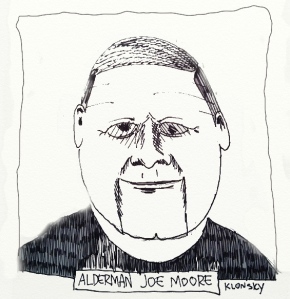
moore
– From Tim Furman’s blog.
This is Karen Zaccor’s testimony at the recent almost-under-the-radar hearing for the Noble Street insertion into Buena Park.
Testimony in opposition to the relocation of a Noble St. high school to the 46th Ward
Children learn what they live. At my school, Uplift, like many neighborhood high school, our children learn that they are important whether they are the most successful student or the least, whether they are the best behaved student or the worst. In our schools we strive to educate every single child to the best of our ability. In our schools, we understand that too many students are struggling with devastating life challenges and act out at times when they are overwhelmed by events like a sibling being shot or the toll of being homeless, and we look for ways to support those students despite the loss of resources that could help with that.
In our schools, we strive to give our students a voice in what happens in school. We want them to be active participants in our democratic society so we want them to practice what that means in school. We want them to learn that they should always stand up against oppression wherever they see it. We teach them not to just accept what they are told, but to investigate and demand evidence, knowing that the path of unquestioning obedience to authority has led to all manner of evils throughout history in our country and elsewhere.
Children learn what they live. At Noble Street charter schools, children learn that they are not all important, that they only matter if they are going to contribute to better statistics for the school, that if they are not successful or not well behaved, they should find another school. They learn that it does not matter if they are dealing with traumas so extreme they would weigh adults down—that will not be accepted as an excuse for a less than perfect performance. A full one-third of its students leave Eloquent testimony from Karen Zaccor on Noble Street. | Fred Klonsky:

*If Any Charter School Needs a Union, It’s Urban Prep* | EduShyster

*If Any Charter School Needs a Union, It’s Urban Prep* | EduShyster:

*If Any Charter School Needs a Union, It’s Urban Prep*


A former teacher weighs in on teaching and learning conditions at a Chicago charter school…
Urban_Prep_EnglewoodEditor’s note: A few weeks ago, I ran a post by Urban Prep teacher Dave Woo about why he and his colleagues at a Chicago charter school are organizing a union. Teachers at the school will vote on June 3rd on whether they want to be part of the Chicago Alliance of Charter Teachers and Staff. In the meantime, Urban Prep administrators are making the case that having a union is antithetical to the charter’s mission—which, according to one former teacher, appears to be *promoting the Urban Prep brand with an eye towards national expansion.* The teacher, whose testimony I’m sharing here, urges all of us to stand with his former Urban Prep colleagues. 
trump towerI am a former Urban Prep teacher and colleague of Dave Woo’s. Every word he says is true. Urban Prep’s slogan is *we believe.* I know for a fact that the teachers I worked with believe in their students and dedicate long, hard hours to providing them with the best possible educational experience, the administrators who operate Urban Prep seem to believe in promoting their brand with an eye toward national expansion; providing themselves with palatial offices across the street from the Trump Tower; maintaining a posse of lobbyists and consultants; and paying themselves six figure salaries.
Meanwhile, primarily young and inexperienced teachers struggle to deliver a rigorous college preparatory curriculum without computers, without projectors, without textbooks and frequently, without the paper required to make copies. Teachers are *If Any Charter School Needs a Union, It’s Urban Prep* | EduShyster:

New Mexico Teachers Burn Their State-Based Teacher Evaluations |

New Mexico Teachers Burn Their State-Based Teacher Evaluations |:

New Mexico Teachers Burn Their State-Based Teacher Evaluations


More than three dozen teachers,”including many who [had] just been rated “highly effective” by the New Mexico Public Education Department, working in the Albuquerque Public School District – the largest public school district in the state of New Mexico – turned to a burning bin this week, tossing their state-developed teacher evaluations into the fire in protest in front of district headquarters.
See the full article (with picture below) in The Albuquerque Journal here.
mkb050815h/metro/Marla Brose/050815 Linnea Montoya, a kindergarten teacher at Montezuma Elementary, drops her teacher evaluation into a waste basket with other burning evaluations in front of Albuquerque Public Schools headquarters, Wednesday, May 20, 2015, in Albuquerque, N.M. A group of teachers filled the entrance to APS to participate in the teacher evaluation protest. "It insulted my fellow teachers who mentored me and scored lower," Montoya said. (Marla Brose/Albuquerque Journal)
“Courtney Hinman ignited the blaze by taking a lighter to his “effective” evaluation. He was quickly followed by a “minimally effective” special education teacher from Albuquerque High School, then by a “highly effective” teacher from Monte Vista Elementary School. Wally Walstrom, also of Monte Vista Elementary, told the crowd of 60 or 70 people that his “highly effective” rating was “meaningless,” before tossing it into the fire. One after another, teachers used the words “meaningless” and “unfair” to describe the evaluations and the process used to arrive at those judgments…Another teacher said the majority of his autistic, special-needs students failed the SBA – a mandatory assessment test – yet he was judged “highly effective. ‘How can that be?’ he asked as he dropped his evaluation New Mexico Teachers Burn Their State-Based Teacher Evaluations |:

How Grades 6-12 get robbed in federal education funding - The Washington Post

How Grades 6-12 get robbed in federal education funding - The Washington Post:

How Grades 6-12 get robbed in federal education funding


This graphic comes from a new report by the Alliance for Excellent Education called “Why ESEA Must Fill the Missing Middle,” a reference to the Elementary and Secondary Education Act, which, in its current version is known as No Child Left Behind, and is now being rewritten by Congress. The report shows how federal funding is concentrated in the early years and in college — and gives “paltry” sums to middle and high school in comparison to early childhood, elementary schools and post-secondary education.
The report notes that several programs designed to boost student achievement in high school have been cut in recent years, and it says:
Moreover, the High School Graduation Initiative (HSGI), the only federal program dedicated exclusively to high school improvement by supporting dropout prevention and reentry programs, was eliminated in FY 2015.
This decline in funding exacerbates the problem of the “missing middle.” The term “missing middle” refers to the inequitable distribution of federal funds between grade spans, so named
How Grades 6-12 get robbed in federal education funding - The Washington Post:

Alberta Darling’s False Claims About New Orleans Exposed , But Truth Does Not Matter

Alberta Darling’s False Claims About New Orleans Exposed Once Again, But Truth Does Not Matter To Those Intent On Destroying The Public Good | Educate All Students: Larry Miller's Blog:

Alberta Darling’s False Claims About New Orleans Exposed Once Again, But Truth Does Not Matter To Those Intent On Destroying The Public Good


Louisianna Educator Blog: by Michael Deshotels May 21, 2015

New Orleans RSD Compared to Traditional Schools
The national news media has been reporting for several years now that the “portfolio” of charter schools created to run the state takeover schools in New Orleans have produced an amazing turnaround of those schools in the ten years since hurricane Katrina demolished the public schools in New Orleans. We see claims that most of the takeover schools are no longer failing and that the graduation rate has improved dramatically, and that the improved performance of the RSD students has greatly exceeded that of more traditional schools across Louisiana and across the nation. The charter school proponents seem to be claiming that poverty can no longer be used as an excuse for poor academic performance. They believe, or would have us believe, that the New Orleans RSD has found the secret to closing the achievement gap between impoverished, at-risk minority students and more advantaged middle class students.
This report is an attempt to simply examine the relevant data that can be used to measure academic success of the New Orleans Recovery District. It will attempt to measure how the RSD compares to traditional public schools. What does the data tell us? Is it Reform Success or Reform Hype?
Is the Comparison Really Complicated?
Some education researchers on this topic have agonized over the fact that the Louisiana school rating system has changed so much in recent years that it is difficult to compare apples to apples. Also, the RSD has closed and renamed so many schools in New Orleans that it is almost impossible to trace the progress of any particular school. The test scores of RSD students on the Louisiana LEAP and iLEAP tests seem to have significantly improved, but so have the scores for the students in traditional schools throughout Louisiana. So, is there a still a method that will really compare the RSD schools to the traditional schools in Louisiana and possibly to other schools across the nation?
Unfortunately for comparison of student performance, the state test results in Louisiana have been manipulated so that they no longer measure the same level of proficiency as they did ten years ago. There appears to have been significant grade inflation of test results over the past ten years that have nothing to do with improvement in student achievement. Some of the grade inflation has come from familiarity of educators and students with the state test, so that students can score higher without significantly improving their math and reading skills. The rest of the grade inflation comes from a general lowering of the raw cut scores documented in this blog for the rating of “Basic” which in Louisiana is considered to be grade level performance. Not only have the state test results been manipulated by lowering many of the raw cut scores, the ratio of difficult to easy questions on the test can be changed from year to year also changing apparent performance.
So how much inflation has occurred in the state testing? The testing inflation can be estimated by comparing the average test results of Louisiana students as measured by the National Assessment of Education Progress (NAEP) with the results of the state designed LEAP and iLEAP tests. In the last ten years, analysis shows that according to state tests, approximately 11 percent more students statewide were deemed to be on grade level (scored basic or above) than ten years ago. But at the same time, the NAEP test shows that only 3 percent more students advanced to basic. That difference and the simultaneous softening in the Louisiana formula for assigning grades to schools (bonus points for subgroups) have resulted in more and more schools appearing to have made dramatic progress in the last ten years. That dramatic “faux progress” includes the New Orleans RSD charter schools.
Graduation rates have improved statewide, and ACT scores are up slightly across the state. So how can we use these statistics to compare the RSD to the rest of the state and to schools nationwide?
There are three simple criteria that may be used to compare student performance between the RSD, state traditional schools, and schools in other states.
The answer to comparison of student performance in Louisiana is really quite simple and does not require complex calculations. First a little history:
The narrative by the charter school proponents is that prior to Hurricane Katrina, the school system in New Orleans was failing miserably. There was graft and corruption by school managers, and most students were getting such a substandard education that the schools deserved to be taken over and drastically overhauled. Some of that narrative is correct, but in the few years leading up to Katrina, the school system in New Orleans, just like all other systems in the state, was in the process of improving its student test scores. Even so, the destruction of Katrina was used as an opportunity for the State to take over schools and put them under new management. Independent charter management organizations were invited to come in and set up new schools chartered by the RSD and operated independently of the Orleans Parish School Board.
As some schools were taken over and some were closed, it became more difficult to trace the progress of individual schools. There is however, one very important statistic on student Alberta Darling’s False Claims About New Orleans Exposed Once Again, But Truth Does Not Matter To Those Intent On Destroying The Public Good | Educate All Students: Larry Miller's Blog:

Top Educators Say Teacher Quality Isn’t the Key to Student Achievement - Yahoo News

Top Educators Say Teacher Quality Isn’t the Key to Student Achievement - Yahoo News:

Top Educators Say Teacher Quality Isn’t the Key to Student Achievement


 Ask 1,000 education policy analysts why American students lag behind their global peers, and you’ll get at least 500 different answers—too much testing or not enough. Out-of-control homework levels or too little time hitting the books. Teachers who are either under constant administrative pressure or who have too much freedom at the chalkboard. 

Ask 56 of the nation’s best classroom educators, however, and they’re pretty consistent: poverty, family stress, learning disabilities, and psychological problems students face outside the schoolhouse are keeping them from achievement inside it. 
That’s the takeaway from a survey of the 2015 state Teachers of the Year winners, a collection of the top educators selected each year in every U.S. state, as well as territories and jurisdictions such as Washington, D.C., and Guam.
The survey, by the Council of Chief State School Officers and Scholastic Inc., polled the 56 educators, who represent the best the profession has to offer. All but 10 of the winners responded to the poll. 
Asked about a range of educational issues, the teachers identified, by clear margins, family stress—single, divorced, or estranged parents; financial instability; domestic abuse; or homelessness—and poverty as the two biggest hurdles on students’ road to success. 
Seventy-six percent of the teachers said students’ home lives kept them from doing their best in the classroom, while 63 percent identified poverty as the biggest factor. Learning and emotional difficulties came in as the third-highest impediment to student success at 52 percent.  
“As teachers, we know those factors present huge barriers to our students’ success,” Jennifer Dorman, Maine’s winner, told The Washington Post. “Helping students cope with those three factors is probably the most important part of my job. But on a national level, those problems are not being recognized as the primary obstacles.”
Poverty, domestic stress, and learning and emotional problems far outpaced the other factors identified in the survey, including students’ language difficulties (24 percent), substance abuse (11 percent), and bullying (9 percent), as barriers to learning. The top three, however, aren’t likely to go away soon. 
The U.S. Department of Education reported that for the first time in national history, a majority of public school students qualify for free or subsidized meals at school, considered a statistical marker of poverty. 
Heather Sandstrom, a senior research associate at the Urban Institute, a nonpartisan think tank, agrees that problems in students’ living rooms can have an impact on how well they do in their Top Educators Say Teacher Quality Isn’t the Key to Student Achievement - Yahoo News:

Poor Children Are Just Nails to Pound | Steve Nelson

Poor Children Are Just Nails to Pound | Steve Nelson:

Poor Children Are Just Nails to Pound


I spend at least several hours every week reading about conflict over education reform. It is as fascinating as it is important. The forces amassed on each side are growing in size and ferocity, and much of the rhetoric is heated. I admit that my own rhetoric is pretty warm.
Despite my and others' criticism, I suppose many reformers are doing what they think is right or, sadly, what they think is necessary. Many critics accuse reformers of being in it for the money. There is surely plenty of collateral profit to be made. Hundreds of tech entrepreneurs are capitalizing on reform; creating Common Core apps, test prep materials, Common Core curriculum, tutoring services or other programs designed to capture a share of the $700 billion market. Large charter management organizations are not doing the work for the betterment of humankind. A lot of money is being spent on education reform and it is enriching some folks, to be sure.
But what about Bill and Melinda Gates, Eli Broad, the Walton family members or other extremely wealthy folks who are the real forces behind educational reform? When assessing the interlocking pieces of the funding puzzle, as Mercedes Schneider has done so well in her book, Chronicle of Echoes: Who's Who in the Implosion of American Public Education, it is clear that the reform movement would be relatively toothless without their support. But there is no reasonable evidence to support the idea that these and other wealthy folks engage in this work to profit.
So what moves them? They claim to do the work because they want to help lift poor children out of poverty and give them an escape route from failing schools. I have no right to doubt the sincerity of that motive. (Unfortunately, that sentiment hasn't been returned in kind. Education reform folks have gotten very angry with me, characterizing me -- accurately -- as the head of an expensive private school, thereby implying that I am disqualified from the debate. I might argue that my position as the head of a private school provides some immunity against accusations of self-interest. Goodness knows I have nothing to gain. I also have nothing to lose.)
My sense, particularly when reading the sharp, frustrated tone of reformers' responses to criticism, is that they honestly believe they know what is best. Beginning in the '50s and '60s, America steadily moved away from intellectualism and toward business-focused pragmatism. Along with the rejection of idealism and intellectualism came a constant imperative to "run things like a business" and "focus on the bottom line." The Reagan-era emphasis on free markets produced an increased adulation of wealth. While it is not entirely a phenomenon of the 20th and 21st century, the nearly automatic pairing of money and wisdom is built into our culture.
In the late 1980s when I was the president of a performing arts school in Detroit, I experienced this first hand. I suspect most non-profit leaders could tell a similar story.
Members of the Ford family dominated the board of the organization. Some Detroit residents might know that there are "automobile Fords" and "chemical Fords." Separate families -- and we had both on the board, some of them products of Ford-Ford marriages. Most of these folks were kind and generous. Their support helped provide wonderful music and dance programs to thousands of kids, many quite poor. I remain grateful, all these years later. But the unconscious assumed relationship between wealth and wisdom was revealed in the meetings of the board. The wealthier "auto Fords" were invariably deferred to by the less affluent "chemical Fords." If that dynamic was amusing -- and it was -- then the relationship between "auto Fords" and "developer Taubman" was hilarious.
A. Alfred Taubman (who passed away recently) made a fortune, mostly developing upscale shopping malls. He subsequently bought Sotheby's and was briefly incarcerated for a price-fixing scandal. Forbes estimated his net worth before he died at $3.3 billion. He gave hundreds of millions to many organizations, including an estimated $141 million to the University of Michigan. When Taubman entered the boardroom, the level of deference shown by Fords, "auto" and "chemical" alike, Poor Children Are Just Nails to Pound | Steve Nelson:

Elon Musk didn't like his kids' school, so he made his own small, secretive school without grade levels - Yahoo Finance

Elon Musk didn't like his kids' school, so he made his own small, secretive school without grade levels - Yahoo Finance:

Elon Musk didn't like his kids' school, so he made his own small, secretive school without grade levels


Elon Musk didn't like his kids' school, so he made his own small, secretive school without grade levels


Elon Musk didn't like his kids' school, so he started his own, the inventor and entrepreneur said in an interview on Beijing Television.

The school is called Ad Astra — which means "To the stars" — and is small and relatively secretive. It doesn't have its own website or a social media presence.
Christina Simon, who writes about private elementary schools in Los Angeles, has done some digging around Ad Astra.
She says she's been in contact with a mother whose child attends Musk's school. The mother told Simon that the relatively new Ad Astra School is "very small and experimental," and caters to a small group of children whose parents are primarily SpaceX employees.
Musk says in the interview that Ad Astra, which is a year old, currently has 14 kids and will increase to 20 in September. His grand vision for the school involves removing grade levels, so there's no distinction between students in 1st grade and 3rd. Musk is "making all the children go through the same grade at the same time, like an assembly line," he says in the interview.
"Some people love English or languages. Some people love math. Some people love music. Different abilities, different times," he says. "It makes more sense to cater the education to match their aptitudes and abilities."
Musk pulled his kids out of their school and even hired one of their teachers away to start Ad Astra. "I didn't see the regular schools doing the things I thought should be done," he says.
View gallery
.
Elon Musk
(jdlasica / flickr) Musk sees a fundamental flaw in how schools teach problem solving. 

"It's important to teach problem solving, or teach to the problem and not the tools," Musk says. "Let's say you're trying to teach people about how engines work. A more traditional approach would be saying, 'we're going to teach all about screwdrivers and wrenches.' This is a very difficult way to do it."
Instead, Musk says it makes more sense to give students an engine and then work to disassemble it. 
"How are we going to take it apart? You need a screwdriver. That's what the screwdriver is for," Musk explains. "And then a very important thing happens: The relevance of the tools becomes apparent."
So far, Ad Astra "seems to be going pretty well," according to Musk. "The kids really love going to school."
"I hated going to school when I was a kid," Musk told his interviewer. "It was torture."
When Musk was a child living in Pretoria, South Africa, he was viciously bullied as a student. His classmates pushed him down a concrete stairwell. In one instance, he was beaten so badly that he needed to go to the hospital.
“They got my best [expletive] friend to lure me out of hiding so they could beat me up. And that [expletive] hurt. For some reason they decided that I was it, and they were going to go after me nonstop. That’s what made growing up difficult. For a number of years there was no respite. You get chased around by gangs at school who tried to beat the [expletive] out of me, and then I’d come home, and it would just be awful there as well.” 
His difficult experiences both at home — where he had a strained relationship with his father — and at school would eventually lead Musk to leave South Africa for the United States. 
You can watch Musk's full video interview below.