Sunday, March 29, 2015

The Growing Progressive Movement to Save Public Education | The Progressive

The Growing Progressive Movement to Save Public Education | The Progressive:

The Growing Progressive Movement to Save Public Education 


 All over the country, a growing movement of parents, teachers, and students is rising up against over-testing, school closings, and shady schemes that channel public funds into private schools.

Saving public education is shaping up to be a key issue in the 2016 Presidential campaign.
In a front-page article this week, The New York Times described Hillary Clinton’s dilemma on so-called education reform.
On one side, charter school operators and hedge fund managers are urging Hillary to adopt their teachers-union-bashing, pro-privatization agenda.
On the other side, communities all over the country are experiencing education “reform” as a major threat to their local public schools.
 “Mrs. Clinton is re-entering the fray like a Rip Van Winkle for whom the terrain on education standards has shifted markedly, with deep new fissures in the Democratic Party,” Times reporter Maggie Haberman writes.
The pressure Haberman notes, however, is mostly coming from one side—Wall Street hedge fund managers and “wealthy Democrats who favor sweeping changes to education—including a more business-like approach, and tying teacher tenure to performance as measured by student test scores.”
But there is more to the story than what Wall Street wants.
I attended a local forum in tiny Reedsburg, Wisconsin, recently, where community members packed an elementary school gym to talk about school budget cuts and the expansion of voucher and charter school programs that will drain even more money away from their local public schools.
As state officials hold budget hearings around Wisconsin, they are hearing over and over from citizens who are alarmed about the dismantling of the local public schools.
It’s an issue that puts Republicans as well as Democrats in a difficult position.
School choice lobbyists have spent enormous sums of money—as much as the lobby group for all other business interests combined—to promote the idea that public schools have “failed” and to support Republicans who want to privatize public schools.
But small-town constituents like those who gathered the other night in Reedsburg do not want to see their local public schools destroyed, nor do they want to see their tax dollars go to pay private-school tuition for families who have never even sent their kids to the local public school, which has happened under Scott Walker’s school-voucher expansion in Wisconsin.
Parents in Altoona  and Eau Claire were so outraged by the school funding cuts related to a puny $13 savings in their property taxes, they started a campaign called Project 13 and collected checks for $13 and dumped them on the desks of their local school boards, demanding that the school board use the money to fund their schools.
In Illinois, outrage about school closures has fueled the insurgent campaign of Chuey Garcia against “Mayor 1 percent” Rahm Emanuel.
Hillary should take a close look at what has happened to Rahm, a chief proponent of the corporate school reform agenda supported by those hedge fund managers mentioned in The New York Times.
As Anthony Cody wrote in an open letter to the Progressive Change Campaign Committee that attracted a lot of attention this week on our website, saving public schools is a key issue for progressives, and should be on the “Bold Progressives” list of issues on which Hillary Clinton needs to respond to the base.
The PCCC responded promptly, Cody reports, saying it will look into sending a representative to a major conference in April, organized by Cody and Diane Ravich.
Appropriately, that Network for Public Education conference will be held in Chicago, where the battle between local progressive activists and Mayor 1 percent shows just how much progressives care about saving our schools.
Ruth Conniff is editor of  The Progressive.
- See more at: http://www.progressive.org/news/2015/03/188068/growing-progressive-movement-save-public-education#sthash.MuXrCZdS.dpuf

What I’m really thinking: the GCSE student | Life and style | The Guardian

What I’m really thinking: the GCSE student | Life and style | The Guardian:

What I’m really thinking: the GCSE student

‘A regimented curriculum geared towards preparing students for impersonal, memory-based exams is as depressing as it is uninteresting’


What I'm really thinking: GCSE student.


 I press my Oyster card against the machine, and the kindly bus driver asks how my day was. I mumble something about it being fine. It’s not an unfair description of another mind-numbing day, filled with my teachers giving lessons they didn’t want to teach to students who didn’t want to learn.

I’m at a London comprehensive, and it’s filled with good people in a bad system. Students want to learn and teachers want to teach. But a regimented curriculum geared towards preparing students for impersonal, memory-based exams is as depressing as it is uninteresting.
When I was 10, in year five, my teacher was eccentric and inspirational. He showed complete disregard for what he was meant to teach and how he was meant to teach it – he was the best teacher I’ve had. Year five wasn’t just the year I enjoyed the most, but also the year I learned the most (according to standardised tests). His students thought he was fantastic – the school had him sacked.
I get home and slump on the nearest sofa. The effort required to make it through a school day and to complete my homework and revision is immense. Combine it with trying to lead something vaguely resembling a social life while making it through puberty, and you rapidly become exhausted. There are only two kinds of GCSE students: tired ones and liars.
I read education-related news articles. They often seem to be about exam reform. Conspicuously absent are the opinions of actual students. I’m not saying I have all the answers, just that occasionally it could help to listen to a teenager.What I’m really thinking: the GCSE student | Life and style | The Guardian:

When will teacher evaluations make the grade? - Newsday

When will teacher evaluations make the grade? - Newsday:


When will teacher evaluations make the grade?


A new plan for teacher evaluations that was furiously negotiated this weekend in Albany may offer a real chance at progress. It's hard to say without knowing the full details. In truth, it will be hard to say even after we know the full details.

Gov. Andrew M. Cuomo has been demanding evaluations that culminate in some meaningful percentage of New York's public school teachers being identified as ineffective. Teachers unions and the state legislators they support have been fighting him. Meanwhile, districts and parents are being misled into battling Common Core curricula and the standardized tests on behalf of teachers, who often don't oppose the tests or the lesson plans. The teachers simply resist being evaluated on student mastery of those tests.

But whether this iteration does the trick won't alter the long-term reality: New York will eventually get an evaluation system that identifies and rewards the best teachers, provides training for those who need it and flushes out the worst. It's not going to happen because Albany deems it so, but because the courts, parents and stark facts of student failure demand it.

The state budget is due Wednesday, and Cuomo has made this issue central to this year's negotiations. Evaluations of educators in New York's schools for the past two years found very few teachers ineffective or developing. On Long Island, 104 of the 124 districts didn't find a single teacher or principal ineffective, and 54 districts evaluated every educator as "highly effective" or "effective."

The system has been gamed. The 80 percent of each evaluation not based strictly on student test results is slanted to favor educators, with even some teachers classed as "developing" getting as many as 76 of those 80 available points.

The unions have proved they knew a lot more about how to finesse an evaluation system than the reformers. The unions may, with this new plan, do so again. It's difficult to believe they and their political supporters will accept a system that is, in fact, acceptable.

And it's important to remember that the current, skewed evaluation results aren't the fundamental reasons the system must change. It's the number of students getting to Long Island's community colleges in need of remedial help, 60 percent to 70 percent. It's the mere 38 percent of the state's high school graduates who are ready for college or careers.

This isn't just about poor kids or minorities. The Board of Regents says that even in districts with good graduation rates, graduates are often unprepared for the next level.

This year's standardized testing for Long Island students in grades 3 through 8 begins on April 14. Calls to opt children out of the tests are again mounting. But parents will eventually realize that their kids aren't getting the education they need, or that we're paying for.

The courts are figuring that out. In California and Pennsylvania, judges recently came down against both teacher tenure and layoffs by seniority. In New York, a lawsuit has been filed in pursuit of similar goals. Teacher tenure and difficult firing mechanisms are an equity issue: Underprivileged students suffer the most when bad teachers are retained. But affluent children are not well-served by such a system either.

Teachers absolutely can be evaluated in a meaningful way, with student achievement as part of the equation. Washington, D.C.; New Haven, Connecticut; Massachusetts and other places offer vaunted models of teacher evaluation to look at. We know it would help to add components of parent and student evaluations and classroom observers who aren't employed by the same school. Better standardized tests that tell us more about each student's needs and triumphs would be When will teacher evaluations make the grade? - Newsday:

Finland and the Common Core | John M. Eger

Finland and the Common Core | John M. Eger:


Finland and the Common Core

Source: iStock


 All right, it's not the Common Core per se, but it sure looks like it. And it helps confirm what most people in the U.S. are saying about the Common Core: "This could be the holy grail of education reform."

Finland changes its National Core Curriculum (NCC) every few years. While teachers and even students and their parents may want to see other changes made, the process is coming to a close.
For a nation that ranks at the top of the so-called PISA tests (for Program for International Student Assessment) administered by the Organization for Economic and Cooperative Development (OECD) to 15-year-olds every three years, the changes Finland proposes are confusing to many but seen as absolutely necessary by administrators and government executives in the education ministry.
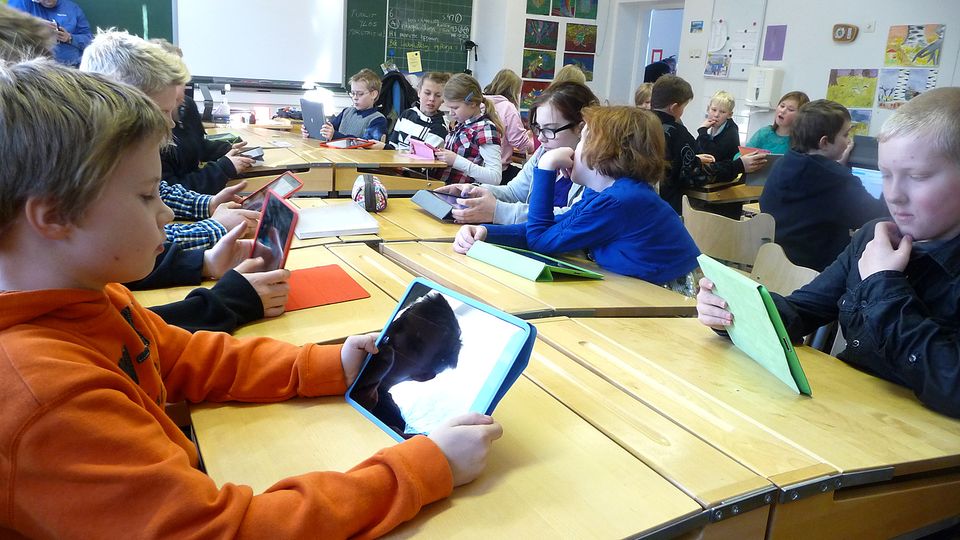
2015-03-22-1427064540-5515540-TottijrvenkouluNokiaiPadhanke091112.jpg
According to Liisa Pohjolainen, who is in charge of youth and adult education in Helsinki, the capital city at the forefront of the reform program, "This is going to be a big change in education in Finland that we're just beginning."
What they propose is scrapping traditional "teaching by subject" in favor of "teaching by topic." There is no math, history or biology per se. Instead of teaching specific disciplines, teaching will be interdisciplinary and real-world. Richard Garner, the education editor of the Independent in England, put it this way:
Pupils would be taught cross-subject topics such as the European Union -- which would merge elements of economics, history (of the countries involved), languages and geography... [Or using] a map of continental Europe on the whiteboard ... the children must combine weather conditions with the different countries displayed on the board. For instance, today it is sunny in Finland and foggy in Denmark. This means the pupils combine the learning of English with geography.
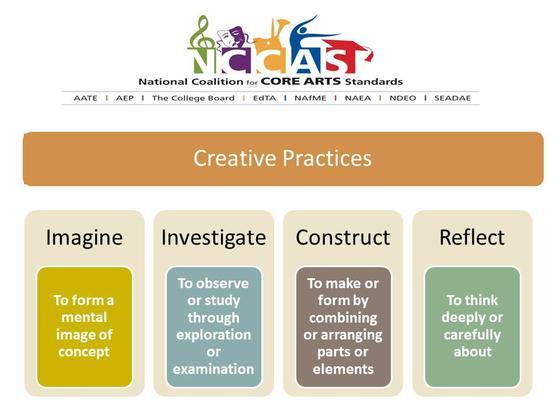
The reason that Finland is moving in this radical direction is why so many states have adopted the Common Core, also known as the "state standards initiative." While we have been watching Finland, which produces what author Amanda Ripley calls "The Smartest Kids in the World," maybe the Finns have been watching us. The Common Core, for example, "proposes that educators engage students in inquiry and exploration of real world problems and interdisciplinary performance tasks." That's exactly what Finland wants too.
2015-03-22-1427064621-8817380-20140725creativepracticesthumb.jpg
The Common Core is like Finland's National Curriculum Core (NCC) plan. It opens the door to integrating all the disciplines, merging art and science, and fashioning an interdisciplinary curriculum that enhances the thinking skills young people most need.
Clearly, this effort here and there is not going to be easy. Most teachers have been teaching single subjects for many years. This new methodology requires collaboration in course planning, team teaching and individual assessment of student outcomes.
The students will need to work in groups, participate in the problem solving, and be ready and accountable for what they contribute to their learning. They will be assessed individually too.
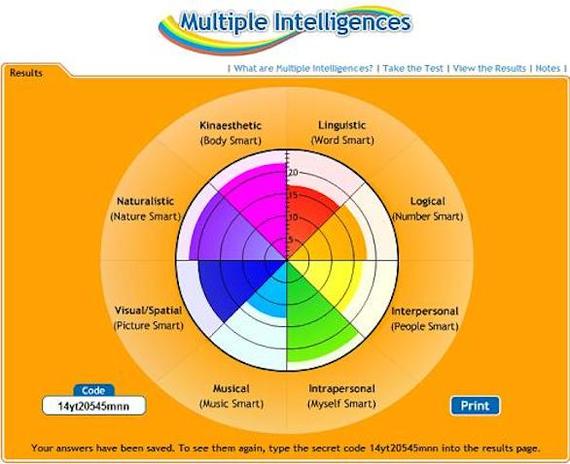
It is critical that we look at "how students learn." As Howard Gardner has written, some people are more verbal-linguistic, some more spatial, and some more logical, and the list continues. And now, after 30 or so years, this is more widely accepted. Under the Common Core approach to teaching and learning, it will be commonplace.
2015-03-22-1427064753-1532358-20140725multipleintelligencethumb.jpg
To date this has not yet been widely applied in the schools. There is simply no longer any reason to deny Gardiner's assertion that we all have "multiple intelligences" and, for our students, begin to craft learning methods that recognize the different learning styles and the need for more tailored individual learning methods.
The Common Core also eliminates the silos in education by requiring interdisciplinary, real-word problems to solve.
The new global, knowledge economy is calling for radical change in education. This is radical indeed. But as the National Governors Association (NGA) Center and the Council of Chief State School Officers (CCSSO) have pointed out, "Today's students are preparing to enter a world in which colleges and businesses are demanding more than ever before."

How a Finnish Experiment Could Mean Better Education in America

The U.S. education system is fast beginning to resemble a decrepit (and worthless) financial derivative.
Noted venture capitalist Peter Thiel referred to the higher education system as the next bubble. And student loans are expected to be the next big default in the financial markets.
Part of the problem with the system’s returns is its emphasis on academic rigor at the expense of practical training. This approach does not necessarily translate into financial or career success later in life.
The American education industry could learn a few things from its Finnish counterpart. The Nordic state, which is regularly among the top scorers in student assessment indexes, is transforming its educational pedagogy from a subject-based curriculum to a topic-based one.
The new system, which is currently being tested, combines vocational training with humanities to ready children for the job market. According to capital city Helsinki’s development manager, the changes are “necessary for industry and modern society.”
The new Finnish education system emphasizes an interdisciplinary approach to education. For example, students in the catering service industry are taught a mix of subjects such as English and math along with vocational skills related to catering. Similarly, English and geography are combined into a single subject.
Thus, it combines the practicality of a vocational approach with cross-functional expertise. According to Finnish authorities, outcomes for students in the new system have improved.
It is not hard to see why.
The system has multiple benefits. For starters, student grades will be a true reflection of their soft skills and hard skills. As an example, students who graduate from the catering service course will have a mix of communication and vocational skills (such as culinary expertise) necessary for their job.
Source: Thinkstock
 Your Reaction?
Source: Thinkstock
This is unlike a subject-based approach, which emphasizes academic rigor over practical experience. In this case, academic grades determine the all-too-important internships, which are seen as gateways to the good jobs. This adds to the time and resources spent by a society to hone productive citizens. The new system enables graduates of the new system to become productive immediately after joining the workforce.
This will have a positive impact on the nation’s economy, because a country’s economy is only as good as its citizen’s productivity and skill sets. For example, a focus on humanities-centered education in American academia has reduced the value of a humanities degree. At the other end of spectrum, it has created a mismatch in the supply and demand for technology workers.
More conclusive proof about the effect of worker skill sets can be found in a European Union study, which evaluated the effect of vocational skill sets on an economy. According to the study, better-skilled employees at intermediate and lower levels of organization allow senior managers and professional staff to think strategically and do their own jobs well rather than engage in “fire-fighting.”
In simple words, a good employee is a productive employee. The study further states that the context in which skills are developed is important in determining the ultimate effect of skills on productivity. Thus, academic study of a subject — such as catering services — is useless without practical experience in a workplace setting. With their emphasis on academic rigor, current education systems are not suited for a productive economy.

Philosophy and practice

Indeed, the case for a good education system is as much a philosophical one as a business one. An educated workforce is important for scientific progress and is important to construct a tolerant, civilized, and humane society.
Estimated to be worth approximately $1.3 trillion, the American education industry is a complex network of personal tutoring agencies, public institutions, and a thriving textbook market. The entire juggernaut is founded on preparing youngsters for viable jobs in a nation’s economy.
But there has been a disconnect between its promised and actual returns in recent times. Education is an investment made by individuals. A good degree gets you a good job and, consequently, a good income. Similarly, graduation from a top-tier university multiplies networking opportunities.
spiral of high fees coupled with rising unemployment among millennials and structural changes in the economy have made that investment unsustainable, however.
That is only part of the problem.
Other problems, such as individual statewide initiatives and standards to measure academic performance, further complicate matters. While the common core standards unify individual frameworks under a single umbrella, they are still focused on piecemeal subject-based academic rigor.
As societies become a complex mesh of economic and global factors, a subject-specific approach is not well-suited to preparing students for a labor market that is increasingly international and interdisciplinary rather than local or limited to a single field.
For example, the career prospects for technology workers are already bright. But an increasingly technology-obsessed society makes context necessary for development of products and services using technology.
If successful, the Finnish education reform might provide pointers to America’s education czars on how to make the financial investment worth it.http://www.cheatsheet.com/business/how-a-finnish-experiment-could-mean-better-education-in-america.html/?a=viewall

Vouchers still vouchers by any other name - San Antonio Express-News

Vouchers still vouchers by any other name - San Antonio Express-News:


Vouchers still vouchers by any other name


 Do we want a system of education that is good for all our children or one that is good for a only a few?

Several school voucher bills have been filed in the current legislative session. This is not the first session where we have seen vouchers proposed, and it likely won’t be the last.
The so-called “Taxpayer Savings Grant” concept in one of the bills is to take public funds and allow parents to use them where they choose. The bill could give roughly 60 percent of the cost of educating a student directly to the parent, and the other 40 percent is counted as “savings” to the state, which would supposedly generate a windfall of $1.7 billion over five years. Not surprisingly, the bills are supported by some groups who are regular critics of traditional public schools.
There are significant problems with legislators’ calculations.
First, the cost of running a school does not decline in a linear fashion if small numbers of students choose to leave. In other words, a class with 24 students costs essentially the same as a class with 25 students. These “savings” also ignore the negative impact to the students who remain in the public school.
Second, for most Texas districts, a loss of enrollment increases the district’s wealth per student, which translates to a decline in state per-pupil funding. The “Taxpayer Savings Grant” bill specifically excludes the institutions where this “grant” money would go from the financial or student performance accountability that traditional public schools operate under. This would be a startling example of a fiscally conservative state giving away public funds without any oversight.
We also see school choice advocates, especially those who would promote vouchers, speaking of the issue in terms that invoke the civil rights movement in our country. It is ironic that some of the earliest school voucher programs were created in the Southern states in the 1960s for the express purpose of perpetuating segregation.
A recent article in the Huffington Post speaks to the notion of school choice when it is used to encourage an exodus from public schools. The author makes the point that school choice actually disenfranchises the public. He states, “School choice treats parents as if they are the only stakeholders in education. They are not. We all depend on a society in which people are reasonably well-educated. This is why everybody votes for school board members — not just the people who have kids in school.”
Traditional public schools exist to serve the entire public. A system heavily influenced by choice indicates that only parents have a voice as they are the only people who control student enrollment or, perhaps better stated, market share. This message that the general public should have no interest or say in the schools is a dangerous one and seems to support a notion that Vouchers still vouchers by any other name - San Antonio Express-News:

Charter schools not performing as planned in Pennsylvania; should we scrap them? - Times Leader - timesleader.com

Joseph Rogan: Charter schools not performing as planned in Pennsylvania; should we scrap them? - Times Leader - timesleader.com:

Joseph Rogan: Charter schools not performing as planned in Pennsylvania; should we scrap them?


 The Pennsylvania House of Representatives recently voted to “improve” charter schools. House Bill 530 requires academic performance measures and expects charter schools to implement truancy regulations. It also reduces lunch money payments by $27 million since cyber charter schools do not provide lunches.


Gov. Tom Wolf moved in a different direction. He axed the Philadelphia School Reform Commission chairman who approved new charters and installed a commissioner who opposed them. He proposed changes that would save districts $162 million, primarily by establishing a $5,950 base tuition rate, eliminating double-dipping that allowed charter schools to receive reimbursements for pension costs already funded by districts, partially resuming the state’s tuition reimbursements to districts, requiring annual audits and requiring charter schools to return money they do not spend on students.

Taken together, the Keystone Alliance for Public Charter Schools says the governor’s budget would “shut down charter schools across Pennsylvania.”

Since the House and the governor seem to be heading in opposite directions, maybe this is a good time to wonder whether and why we need charter schools at all.

In 1988, the American Federation of Teachers proposed charter schools to serve as “educational laboratories” to discover better teaching methods. Charter schools have had plenty of time, but have not developed new approaches to improve education. The National Alliance for Public Charter Schools only lists methods commonly used in Traditional Public Schools (TPSs).

Innovation in teaching has been replaced by top-heavy management and anti-union sentiments that result in fewer job protections which silence teachers’ voices and cause high staff turnover. Instead of fostering collaboration, they have aggravated the antipathy toward TPSs.

In part, America’s greatness is due to our system of universal public education that is under attack today. The goal of the Independence Hall Tea Party Association, for example, is to “shut down public schools.” Instead of accepting responsibility to educate all children, it wants to educate only some.

School choice was based on the assumption that competitive market forces – including allowing parents to make decisions – will solve problems. Real choice has been reduced as private schools have closed or became too expensive. For anti-government types, charter schools are the next best thing. Privately operated, they are free from most of the rules and regulations that control TPSs, but are fully funded by their students’ districts. In Pennsylvania, 119,465 students attend charter schools: 84,373 in traditional schoolhouses and 35,092 in cyber schools. In 2012-13, they cost districts about $1.3 billion, according to the Pennsylvania School Boards Association.

Many districts are tasked with educating economically disadvantaged students, which creates serious challenges to understaffed and underfunded schools. For example, 80 percent of the students in our state’s largest district come from poverty – twice the state’s average. In 2012-13, Philadelphia spent $14,361 per pupil – a lot of money – but still $256 below the state’s average. Instead of helping Philadelphia, our previous governor cut more than $1,300 per student. Starving Philadelphia created deficits that necessitated program cuts, layoffs and increased class sizes. Not surprisingly, families moved their children. Now, more than 30 percent of the district’s budget – $750 million – is earmarked annually for charter schools.

Paying for charter schools requires that we take money from underfinanced districts, like Philadelphia. Moody’s Investors Service noted that charter schools even negatively affect districts’ credit ratings. Such financial problems put the ability of districts to provide quality universal public education in peril. This outcome begs the question: If we are having problems funding one system of public education, why do we think we can fund two?

Public schools accept all students, while many charter schools do not. The Washington Post reported that some use admission barriers, and therefore serve far fewer students with disabilities. In the 2013 national charter school study, the Center for Research on Education Outcomes (CREDO) at Stanford University found that 13 percent of TPS students in the nation are special education students, but charters only served 8 percent.

Furthermore, a 2014 analysis by The Notebook, a media outlet that covers education, found that Pennsylvania charter schools received $350 million for special education students, but spent only $156 million – a fact underscored by the U.S. Government Accounting Office. The National Center for Special Education in Charter Schools suggests the discrepancy undermines the sector’s overall credibility. Additionally, Public Citizens for Children and Youth reported that across the nation charter schools have fewer minority, low-income and English-as-a-second-language learners on their rosters.

Charter schools also expel students at a far higher rate. In the nation’s capital, for example, charter schools expelled 30 times more students than TPS schools over a three-year period. Furthermore, when a TPS school expels a student, it must still provide that student with an education – often at a higher cost. Charters can just move on.

Just as there are good TPSs, there are also good charter schools. On average, though, are charter schools better than traditional public schools? Since the 2009 CREDO report, charters have improved mainly because low-scoring schools closed and were removed from calibrations. If they were still operating, there would have been no gains. Joseph Rogan: Charter schools not performing as planned in Pennsylvania; should we scrap them? - Times Leader - timesleader.com:

Why my children opt out of standardized testing—and yours should too - Quartz

Why my children opt out of standardized testing—and yours should too - Quartz:

Why my children opt out of standardized testing—and yours should too

Parents Can Opt Out - United Opt Out National

Click Here to go to United Opt Out National: 


Click Here to go to the WebsiteUnited Opt Out Team
Home
Click Here to go to the Website FairTest

 As children around the US embark on spring break, they do so knowing they will soon be required to gear up once more for standardized-testing season. Or rather, I should say most of our nation’s children will be gearing up. This year, like the year before it, my three children will not be among this cohort of national test takers, nor will the growing thousands of other children from families who have chosen to opt out of standardized tests.

Why opt out?


I admit that my main reason for opting out of standardized testing is not data-driven, but instead based on emotional and philosophical beliefs. I am not opting out because I think tests unfairly force children to sit for long periods, nor because they might cause stress, are cruel to special-needs children, punish teachers for students’ low scores, steal valuable instructional time, divert loads of money to businesses that create the tests, or include poorly worded questions. No, while all those reasons hold merit for other like-minded parents, my main reasons can be traced all the way back to The Star-Spangled Banner.

The story of how Francis Scott Key penned the lyrics to the US national anthem in 1814 while watching the bombardment of Baltimore is riveting. When Key, a prisoner on board a British ship of war, saw that first hint of unfurled color waving in the early morning light, a thrill went through him. When I consider his lyrics, trying to imagine what Key was thinking in the midst of that battle, three words come to mind: independence, community, and—bear with me—booyah! Together, these words represent what is missing in our schools today.

Our students’ independence is slowly but surely being crushed by an endless scholastic bombardment of carrots and sticks, reminders to stay on the state-mandated track and learn the state-mandated information. No zig, no zag, no time to stop and enjoy the view. Students are to be compliant and obedient. They are not to question the authority of leaders in the system. Students are inculcated, from a very early age, with the sense that they do not own their education.
At the same time, their sense of community is being damaged by the very system designed to educate them. Grouped according to age, students are relentlessly rewarded (with treats, good grades, smiley faces, extra recess minutes) or punished (with bad grades, class rankings, less recess) based on slight differences in development and abilities. Everything possible is given a score. Those who score well learn a sense of superiority and condescension, while those who score poorly learn self-hatred. At the same time, this ranking system makes it very clear that one student’s climbing rank is tied to another’s falling one.


Together, these strategies and others are silencing the exhilarated yawps and hoorahs, woohoos and booyahs of our nation’s students. Meek and fearful, they have forgotten how to seek out challenging and exciting tasks. A generation of children are growing up with an “Is it going to be on the test?” mentality. All that is left is to try to make education palatable by adding silly rewards, candy, pep rallies, and in-classroom movies.

I’m opting my children out of standardized testing because sometimes when you’re a prisoner on a ship, you need to glimpse a flag on a hill—to see someone, somewhere, reaffirming your almost forgotten sense of independence and community.

I want my children to value independence. I want them to look at systems of state control with a wary eye, to demand and revere control over their own lives as their birthright. The joy and mystery of living, learning, growing, and loving isWhy my children opt out of standardized testing—and yours should too - Quartz: