Latest News and Comment from Education

Tuesday, March 24, 2015

Dr. Gary Thompson’s $100,000 Reward For SAGE Common Core Test Validity Reports | COMMON CORE

Dr. Gary Thompson’s $100,000 Reward For SAGE Common Core Test Validity Reports | COMMON CORE:


Dr. Gary Thompson’s $100,000 Reward For SAGE Common Core Test Validity Reports


100k2


 Last year, on Behalf of Early Life Child Psychology and Education Center, Dr. Gary Thompson offered $100,000.00 to the Utah State Office of Education (USOE) for validity reports for Utah’s SAGE Common Core test.

He made the offer after Associate Superintendent Judy Park made a public statement regarding the validity of SAGE which Dr. Thompson knew to be false.  He knew that test makers such as American Institutes for Research (AIR)  or Pearson routinely provide validity reports to psychologists in the private sector, because by law and ethics, they know the tests can’t be used otherwise.
Dr. Thompson gave the USOE a 24-hour deadline to forward to his clinic some certified copies of industry-standard validity reports prepared by AIR.  Such reports would show the test’s construct validity, criterion validity, content validity, concurrent validity, and predictive validity.
In exchange for copies of the reports, Early Life Corp would donate $50,000.00 to a public school of USOE’s choice, plus an additional $50,000.00 to the 2014-15 Utah Public School Teacher of the Year.  He sent the offer directly to Dr. Judy Park and to some of the Utah State School Board members; he also posted the offer on his personal Facebook page, the clinic’s Facebook page, and on the Utahns Against Common Core Facebook page.
The offer was quickly big news among those who follow the Common Core Initiative’s unfolding saga nationwide.  Six clinicians and partners of Early Life, including the CEO who happens to be Dr. Thompson’s wife, were not happy about the offer.  That night was a sleepless one for them and Dr. Thompson was consigned to the couch for the night by the CEO.  Still, Dr. Thompson slept like a baby.  Why?
Here’s a little bit of history:
Right after his appearance on the Glenn Beck TV show, where Dr. Thompson had exposed the Common Core/SAGE test’s assault on student privacy and its unanswered validity questions, Dr. Thompson had been summoned to the offices of then-Superintendent Dr. Martell Menlove and Associate Superintendent Brenda Hales.  He accepted the invitation, bringing along his clinic’s lawyer and his best friend, Edward D. Flint.
During the two and a half hour meeting, Dr. Thompson and Ed Flint first sat and listened to “Brenda Hales’ hour-long lecture about ‘the Standards'”.  Dr. Thompson finally explained, when she was finished speaking, that academic standards were not Thompson/Flint’s area of expertise and that the subject was of no interest to them on any level.
Next, Menlove/Hales listened to Thompson/Flint.  The doctor and the lawyer explained the fundamentals of test validity issues and data gathering, and expressed their concerns about privacy and testing issues, laying out a careful analysis of how easily potential violations could occur under Common Core’s tests.
Menlove/Hales dismissed their concerns as “conspiracy theories” and requested that Thompson/Flint “stop bringing fear into our community via social media”.  Thompson and Flint promised to cease speaking of their concerns if Menlove and Hales would agree to contact AIR to provide documentation that the concerns were unwarranted.
Dr. Menlove agreed.
Weeks later, still having seen no validity reports, Dr. Thompson finally received a phone call –from a parent, who had noticed an AIR letter posted  on the USOE webpage.  The letter was directed to Dr. Menlove from AIR Vice President Jon Cohen; it purported to address the concerns of Mr. Flint and Dr. Thompson, using their names.
AIR Vice President Jon Cohen failed to actually respond to the pointed, specific concerns that had been submitted in writing to Dr. Menlove.  (Read those here.)
What he did do is attempt to give AIR a pat on the back by sharing a link to what was meant to go to a national nonprofit disabilities organization, one that would Dr. Gary Thompson’s $100,000 Reward For SAGE Common Core Test Validity Reports | COMMON CORE:

Why the left hates this man: Rahm Emanuel’s sins against the progressive movement ‪#‎Chuy2015

Why the left hates this man: Rahm Emanuel’s sins against the progressive movement - Salon.com:

Why the left hates this man: Rahm Emanuel’s sins against the progressive movement

With big election coming up, liberal groups have declared public enemy #1 -- but it's not a Republican. Here's why

HEATHER DIGBY PARTON


Despite the beltway’s belief in the Tea Party as fearsome giant slayers who terrify the otherwise sensible Republican grown-ups to such an extent they dare not defy them, the truth isn’t quite as dramatic as all that. The Tea Party did manage to unseat some incumbents in primaries, even one as powerful as former House majority leader Eric Cantor, which hit GOP insiders like a category 5 hurricane. But the fact is that the grassroots activists in both parties have been working to make their respective caucuses reflect the wishes of their constituents and both parties have had some success.
Way back in the day (a decade ago) when the Progressive Netroots were just starting to organize, the first “scalp” any of the left leaning movement activists took was that of a Democratic hack from Maryland named Al Wynn when they backed a progressive challenger by  the name of Donna Edwards. Edwards defeated Wynn in 2008 and is now running to replace Senator Barbara Mikulski who recently announced her retirement. In each congressional cycle Netroots progressives have fought a number of hard-fought primaries, losing more often than they won (just like the Tea Party) but slowly managing to make the House of Representatives a bit more progressive than it was before. Congressional representatives like Matt Cartwright, Beto O’Rourke and Senators like Jon Tester were backed strongly by the grassroots of the party and managed to unseat incumbents. Nobody in the beltway noticed or cared, of course. (Progressives always forget to order their tri-corner hats and Betsy Ross wigs…)
But over time, it’s had an effect and not just because of the “scalps” they took, but because all of those hard fought races, whether won or lost, showed the incumbents that there was a restive group of activists out there who could challenge the status quo.  And aside from primary challenges, progressives in congress from Keith Ellison and Alan Grayson in the House to Elizabeth Warren and Tammy Baldwin in the Senate were enthusiastically supported by Netroots groups like, Move On, DFA, PCCC and Blue America (disclosure: I am a principal in that group) among a number of others, a support which translates into small donor involvement, campaign volunteering and strategic advice as well as engaged in grassroots activism for progressive congressional initiatives.  It’s made a difference.  The House and Senate today have progressive wings that are active and vocal in a way they did not a decade ago.


Back in 2006 when all this really started to come together there was one Democrat who quickly determined that this nascent progressive movement was a major threat to the status quo. His name was Rahm Emanuel who was, at the time, an Illinois congressman in charge of candidate recruitment for the congressional Democrats. If there’s anyone who can take credit for being the catalyst for this long term Netroots commitment to elect progressives to congress it is him. His crude dismissal of grassroots concerns was blatant. His contempt for anyone who disagreed with his centrist Blue Dog/New Democrat philosophy was palpable.  While his wholehearted support for big money interests was seen as the ultimate in strategic brilliance by the beltway elites, it repelled Democratic activists everywhere.
Despite the fact that lame-duck George W. Bush and the war in Iraq were so unpopular that virtually anyone who could draw a breath who had a D after his or her name could have won, the conventional wisdom said that Emanuel’s DCCC win in the off year election of 2006 was a validation of his political savvy. (In case you were wondering, Emanuel wasn’t elected to congress until after the Iraq war resolution but was on record supporting it, saying that the U.S. needed a “muscular projection of force” there. You can let the shrinks sort out just what that language says about him …)
When the newly elected President Obama tapped him as chief-of-staff, you could hear progressives screaming “nooooooo” across the land. And when he departed to run for Why the left hates this man: Rahm Emanuel’s sins against the progressive movement - Salon.com:

501 (c) 4 Social Welfare Organization or Social Disease

Private foundations vs public charities | Foundations | Funding Resources | Knowledge Base | Tools | GrantSpace:


Q:
What is the difference between a private foundation and a public charity?
A:

Private foundations

Foundation Center defines a private foundation as a nongovernmental, nonprofit organization having a principal fund managed by its own trustees or directors. Private foundations maintain or aid charitable, educational, religious, or other activities serving the public good, primarily through the making of grants to other nonprofit organizations.
Every U.S. and foreign charity that qualifies under Section 501(c)(3) of the Internal Revenue Service Code as tax-exempt is a "private foundation" unless it demonstrates to the IRS that it has met the public support test. Broadly speaking, organizations that are not private foundations are public charities as described in the Internal Revenue Service Code.

Public charities

Public charities generally derive their funding or support primarily from the general public, receiving grants from individuals, government, and private foundations. Although some public charities engage in grantmaking activities, most conduct direct service or other tax-exempt activities. A private foundation, on the other hand, usually derives its principal fund from a single source, such as an individual, family, or corporation, and more often than not is a grantmaker. A private foundation does not solicit funds from the public.

Why should grantseekers know the difference?

Examining a funder's giving history is an important part of researching foundation prospects. Past grants can reveal the funder's preferred subjects, organization types, and ranges of grant amounts.
This data is easier to get from a private foundation, which must disclose all grantees and grant amounts in its IRS Form 990-PF. However, a grantmaking public charity isn't subject to this disclosure requirement, so access to its grants data will depend on how much the funder is willing to share with the public, via its Form 990, website, or other communication channels.
If a grantmaking public charity doesn't provide a grants list in its Form 990, explore its website or search the Internet for the funder's name to find any related news or press releases, some of which may be about grants that it made.

A word about "foundation"

Don't assume that an organization with "foundation" in its name is a grantmaker. (Example: Foundation Center.) The word "foundation" has no legal definition. 
Selected resources below might also be helpful.

Web Sites

* indicates staff pick
IRS Logo


Types of Organizations Exempt under Section 501(c)(4)

Internal Revenue Code section 501(c)(4) provides for the exemption of two very different types of organizations with their own distinct qualification requirements. They are:
  • Social welfare organizations: Civic leagues or organizations not organized for profit but operated exclusively for the promotion of social welfare, and
  • Local associations of employees, the membership of which is limited to the employees of designated person(s) in a particular municipality, and the net earnings of which are devoted exclusively for the promotion of social welfare.
Homeowners associations and volunteer fire companies may be recognized as exempt as social welfare organizations if they meet the requirements for exemption. Organizations that engage in substantial lobbying activities sometimes also are classified as social welfare organizations. 
Additional information


Social Welfare Organizations - Examples

Some nonprofit organi­zations that qualify as social welfare organiza­tions include:
  • An organization operating an airport that serves the general public in an area with no other airport and that is on land owned by a local government, which supervises the airport’s operation,
  • A community association that works to improve public services, housing and resi­dential parking; publishes a free commu­nity newspaper; sponsors a community sports league, holiday programs and meetings; and contracts with a private se­curity service to patrol the community,
  • A community association devoted to preserving the community’s traditions, ar­chitecture and appearance by represent­ing it before the local legislature and administrative agencies in zoning, traffic and parking matters,
  • An organization that tries to encourage in­dustrial development and relieve unem­ployment in an area by making loans to businesses so they will relocate to the area and
  • An organization that holds an annual festi­val of regional customs and traditions.


Action Organizations

Seeking legislation germane to the organization's programs is a permissible means of attaining social welfare purposes.  Thus, a section 501(c)(4) social welfare organization may further its exempt purposes through lobbying as its sole or primary activity without jeopardizing its exempt status. An organization that has lost its section 501(c)(3) status due to substantial attempts to influence legislation may not thereafter qualify as a section 501(c)(4) organization.  In addition, a section 501(c)(4) organization that engages in lobbying may be required to either provide notice to its members regarding the percentage of dues paid that are applicable to lobbying activities or pay aproxy tax .  For more information, see Lobbying Issues .
Additional information


http://www.irs.gov/Charities-&-Non-Profits/Other-Non-Profits/Types-of-Organizations-Exempt-under-Section-501(c)(4)

Some Michigan parents saying no to state testing

Some Michigan parents saying no to state testing:

Too much pressure on kids? Parents reject state tests


When sixth-grader Elliot Corbin talks about taking the state's standardized exams, words like "stress" and "afraid" and "nervous" flow freely from her lips.
"My stomach would hurt and I would have headaches, and I would be worried about the test days before it actually happened," said Elliot, 12, recalling the times she'd taken the now-retired MEAP exam.
These days, though, Elliot is only excited. When the state debuts a new exam for elementary and middle school students this spring, Elliot and sister Quinn, 10, a fourth-grader, will stay home with their mom, Deborah Corbin of Mt. Clemens, who for the first time is opting her kids out of the exams.
They're part of a movement gaining traction nationwide as parents unhappy with the pressure and anxiety that comes with high-stakes exams — particularly the exams based on the rigorous Common Core State Standards — are rising up to say "enough."
In Michigan, elementary and middle school students are tested every year in grades 3-8 in math and language arts, and in additional subjects at other grade levels. High school students are tested in the 11th grade. But that's on top of tests required by local school districts.
The opt-out movement is fueling a debate in Michigan and beyond. Critics worry kids are being over-tested and say schools have been overtaken by testing. Testing advocates, meanwhile, say it's crucial to holding schools accountable and for gauging how well students are learning. The debate has heated up this year as Congress works to reauthorize No Child Left Behind, the federal law that has been blamed for the increased focus on testing.
The movement's impact could be significant. Federal rules require 95% of students in a school to be tested. If too many opt out, a school could be identified for improvement — and face sanctions — a point officials at the Michigan Department of Education Some Michigan parents saying no to state testing:

Parents Can Opt Out - United Opt Out National

Click Here to go to United Opt Out National: 


Click Here to go to the WebsiteUnited Opt Out Team
Home
Click Here to go to the Website FairTest


Ok It's a Conspiracy: Move Over, Koch Brothers: A Bigger, Darker Rightwing Funder Is Out to Destroy Public Education | Common Dreams

Move Over, Koch Brothers: A Bigger, Darker Rightwing Funder Is Out to Destroy Public Education | Common Dreams | Breaking News & Views for the Progressive Community:

Move Over, Koch Brothers: A Bigger, Darker Rightwing Funder Is Out to Destroy Public Education


It's "the most powerful organization in America that no one seems to know about."
That's how Scot Ross, executive director of the progressive think tank One Wisconsin Institute, describes the Bradley Foundation.
The Bradley Foundation, headed by Governor Scott Walker's campaign co-chair Michael Grebe, has underwritten a massive, pro-privatization propaganda campaign, including "a systematic and relentless campaign to turn public opinion against the public school system."
Unlike David Koch of the Koch Brothers, whose cover was blown when a gonzo blogger named Ian Murphy(editor of the Buffalo Beast and a frequent contributor to The Progressive), impersonated him in a prank call to Wisconsin Governor Scott Walker.
The Milwaukee based Bradley Foundation operates off the mainstream media radar. Yet the group has made more than $530 million in grants and awards since 1985, making it a much, much bigger giver to rightwing causes than the Koch brothers. With more than $290 million in assets, Bradley is one of the biggest foundations in the United States.
A new report by Ross's group One Wisconsin Now reveals the Bradley Foundation's particular focus on privatizing the public schools.
Among the report's findings:
--The Bradley Foundation, headed by Governor Scott Walker's campaign co-chair Michael Grebe, has underwritten a massive, pro-privatization propaganda campaign, including "a systematic and relentless campaign to turn public opinion against the public school system."
--Bradley has spent more than $31 million since 2001 supporting organizations promoting education privatization, academics providing favorable pro-privatization pseudo-science, media personalities promoting the privatization agenda, and lobbying organizations advocating for privatization legislation.
--The Bradley-financed campaign has manufactured an education "crisis," proposed a "solution," attacked and undermined the ability of potential opponents to block their agenda, and funded aggressive pro-privatization media and lobbying efforts.
--The Bradley-financed Wisconsin Policy Research Institute has manipulated research and pressured a University of Wisconsin professor to downplay results that show school vouchers in a negative light, while highlighting scientifically dubious favorable results.
Way back in 1990, Bradley backed the first private-school voucher program in the nation, right in Milwaukee.
This year, Wisconsin Governor Scott Walker plans to expand the voucher program to nine new counties, despite test results that show voucher students underperform compared with their public school peers.
The free-market mission of the Bradley Foundation fits in nicely with a national rightwing pro-privatization agenda.
Across the country, Bradley has given money to groups like Americans for Prosperity to tout school vouchers and other privatization efforts as an answer to "failing" public schools.
"Their financing is the cornerstone for the privatization of public schools not just in Wisconsin, but across America," Ross explains.
Ross calls the interlocking efforts of Bradley and other groups "a tax-deductible SuperPAC." The groups that have received funds from Bradley include the MacIver Institute, the Koch brothers' Americans for Prosperity, the Manhattan Institute, and rightwing pundits including George Will, a member of the Bradley Foundation board of directors and recipient of a $250,000 Bradley "outstanding achievement" cash prize.
The free-market mission of the Bradley Foundation fits in nicely with a national rightwing pro-privatization agenda.
"We've seen this influx of out-of-state corporate money into Wisconsin," says Ross, who was active in the effort to recall Wisconsin Governor Scott Walker. "Here we have this homegrown foundation pouring more money into the rightwing foundation network than Move Over, Koch Brothers: A Bigger, Darker Rightwing Funder Is Out to Destroy Public Education | Common Dreams | Breaking News & Views for the Progressive Community:


Bradley Foundation. $3,000,000.00 to Charter School Growth Fund 2013

Common Core stands despite vote - News - seacoastonline.com - Portsmouth, NH

Common Core stands despite vote - News - seacoastonline.com - Portsmouth, NH:


Common Core stands despite vote

SAU 21 officials call article 'non-binding,' says parents need more education


"Common will take local power away from educators, teachers and parents, and it will turn it over to federal government" said Heather Day, right, as she told voters to vote yes on the Winnacunnet Cooperative District's Article 6 with daughter Veda Cropper.


 By Max Sullivan

msullivan@seacoastonline.com

Posted Mar. 23, 2015 at 5:30 PM 

HAMPTON - SAU 21 officials said last week they plan to move forward with the Common Core State Standards at Winnacunnet High School despite voters passing a citizen's petition by 60 percent at the March 10 election to reject Common Core.
School District officials and School Board members called the petition on the Winnacunnet High School Cooperative District ballot "non-binding" last week, as the language in the article did not require any action to be enforced if passed.
"There's nothing binding to it," SAU 21 Superintendent Bob Sullivan said. "It was just a statement."
But the fact that 2955 of 4909 voters marked "yes" on Article 6 put forth by State Rep. Max Abramson (R-Seabrook) did send a message to SAU 21, Assistant Superintendent Barbara Hopkins said.
"I think it means we need to help educate our communities and our parents better," Hopkins said. "We try. We've had a number of forums about it... all the different schools have done outreach in regards to these standards."
Common Core is "a set of high-quality academic standards in mathematics and English language arts/literacy (ELA)," according to its website, outlining "what a student should know and be able to do at the end of each grade." New Hampshire is one of 43 states that have implemented the standards into their school districts, according to the website.
WHS is moving forward with Smarter Balanced testing in April, which will provide data to show the district how its classes are keeping up with the standards, WHS Principal Bill McGowan said. He said the standards are designed to make the students "college-ready."
But the standards have faced criticism, including from parents across the country.
Heather Day, whose daughter is in fourth grade at Marston School, said that she's concerned the standards are an overreach by the federal government, taking away local control of education and thus stifling creativity in teachers and students. She stood outside with her daughter holding a sign in opposition of Common Core on voting day.
"Common Core will take local power away from educators, teacher and parents," Day said.
Article 6 stated that a yes vote would "reject Common Core."
The article stated Common Core "is not research based" and was created without "input taken from the teachers when developing these standards behind closed doors."
But Hopkins said there are misunderstandings about Common Core, the biggest being that it changes the curriculum. That's not true, she said. Curriculum is still up to the individual schools, Common Core stands despite vote - News - seacoastonline.com - Portsmouth, NH:


Six-weeks of training at the Broad Academy, no significant experience in education, Tata was hired as superintendent of Wake County schools

Tata’s politics may cost NC transportation dollars | News and Observer News and Observer:


Tata’s politics may cost NC transportation dollars


N.C. Department of Transportation Secretary Tony Tata has made a nice living trading on his status as a retired brigadier general.
When he retired after 28 years in the U.S. Army, his former rank and six-weeks of training at the Broad Academy gave him entry into the Washington, D.C. school district. There he would use his military acumen to improve the schools logistics as chief of operations under then-schools chancellor Michelle Rhee. That lasted 19 months.
Then, despite no significant experience in education, Tata was hired as superintendent of Wake County schools, North Carolina’s largest school district, because a conservative-led school board liked his potential for gung-ho, nontraditional leadership. That didn’t end well. Tata gained a reputation for bullying staff and couldn’t get the buses to run on time. He was dismissed by a new, progressive board after a year and half and left with approximately $250,000 in severance pay.
Soon after he landed his current post. Upon announcing Tata’s appointment, Gov. Pat McCrory said that despite Tata’s lack of experience with state transportation issues, he had run complex operations as a general. “If he can do it in Afghanistan under fire, surely he can do it in North Carolina,” McCrory said.
Now Tata is working his one-star again. In addition to running a major state department with a $4 billion budget and some 12,000 employees, he’s found time to be a regular commentator on Sean Hannity’s Fox News show and write military thrillers on the side. On Fox, Tata regularly criticizes the Obama administration’s policies regarding the Middle East. Last Friday, he noted that Iran and Hezbollah have been taken off the list of terror threats in the national security report. The move is part of the administration’s effort to encourage Iran’s help in fighting the Islamic State, but Tata declared it foolish and dangerous.
“I don’t know what pie-in-the-sky world we’re living in right now, but this is ridiculous,” he told Hannity. “This is an oppressive regime that wants to destroy Israel and the United States.”
Why Hannity is turning to Tata for wisdom on the Middle East is baffling. Tata has no special insight into the region. Beyond that, the public learnedTata’s politics may cost NC transportation dollars | News and Observer News and Observer:


Read more here: http://www.newsobserver.com/opinion/editorials/article16130225.html#storylink=cpy

Has Jeb Bush Used Money From His Education Foundation to Pay for His Presidential Bid? | Scathing Purple Musings

Has Jeb Bush Used Money From His Education Foundation to Pay for His Presidential Bid? | Scathing Purple Musings:

Has Jeb Bush Used Money From His Education Foundation to Pay for His Presidential Bid?


Writes Beth Reinhard for the Wall Street Journal:
The educational foundation founded by former Florida Gov. Jeb Bushpaid about $3 million in 2013 and 2014 to a public affairs firm headed by a top political adviser, Mike Murphy.
Mr. Murphy is a partner at Revolution Agency in Alexandria, Va., which ran the Foundation for Excellence in Education’s Learn More, Go Further campaign marking the 15th anniversary of the former governor’s education overhaul. Mr. Murphy is also a top adviser to Right to Rise, the political committee that has been collecting millions of dollars since January as Mr. Bush explores a potential bid for the Republican presidential nomination.
The foundation’s Learn More, Go Further campaign in 2013 and 2014 included a website and other online media, television and radio ads, and live events in Florida to promote the state’s educational system.
An $841,652 payment to Revolution Agency from the Foundation for Excellence in Education was listed in its 2013 report to the Internal Revenue Service detailing revenues and expenses. The 2014 report is expected to show another $2.2 million payment to Revolution Agency, 
Has Jeb Bush Used Money From His Education Foundation to Pay for His Presidential Bid? | Scathing Purple Musings:

Film Review: Defies Measurement weaves together problematic purposes of ed reform | Cloaking Inequity

Film Review: Defies Measurement weaves together problematic purposes of ed reform | Cloaking Inequity:

Film Review: Defies Measurement weaves together problematic purposes of ed reform

Screen Shot 2015-03-23 at 11.16.40 PM
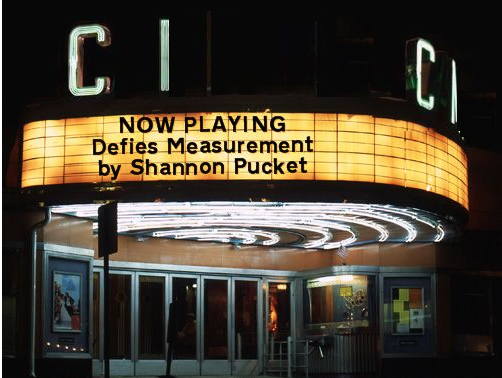
In Defies Measurement, Shannon Puckett expertly weaves together the problematic purposes of testing, Common Core, corporate reform, No Child Left Behind, Teach For America, The Gates Foundation, The Broad Foundation, charter schools, and privatization. The film begins with Chipman middle school and traces the inspiration and impact that the school had on a diverse groups of students over the long term beyond their experience at the Bay Area middle school. The core of the film traces the testing and accountability reform context from their birth in eugenics to their invasion of public schools in the 2000s. At each step, the movie has an acute sense of counter narrative to the common discourse and argument in favor of school reform.
DEFIES MEASUREMENT strengthens the discussion about public education by exploring why it is so important to address the social and emotional needs of every student, and what happens when the wrong people make decisions for schools.
Shannon Puckett ratchets up the tension and knowledge methodically by gathering an all-star cast of education policy experts, parents and others— Diane Ravitch, David Berliner, Linda Darling-Hammond, David Kirp, Karran Harper Royal, Mercedes Schneider, Jason France, Howard Gardener and many many many others (y yo)… These are the critical voices and expertise noticeably absent in Davis Guggenheim’s Waiting for Superman. Puckett’s filmmaking is markedly more imaginative and accurate than Waiting for Superman. She clearly improves upon that effort. It could be said that Defies Measurement is kryptonite for Superman’s attempt to discuss what is ailing our nation’s schools. The movie has an acute sense of the unnerving aspects of education reform agenda, the film Defies Measurement made me simultaneously disappointed, angry— and yet with the Chipman backdrop— hopeful for an alternative student and community centered era in public education.
Please click the link below to go directly to the film. For information on how to screen this film for others and for resources to learn more and take action, visit DefiesMeasurement.com


Screen Shot 2015-03-23 at 11.49.01 PM


Film Review: Defies Measurement weaves together problematic purposes of ed reform | Cloaking Inequity: