Latest News and Comment from Education

Wednesday, January 21, 2015

How the Top-Down Imposition of Unproven Charter Schools Is Roiling Parents and Communities | Alternet

How the Top-Down Imposition of Unproven Charter Schools Is Roiling Parents and Communities | Alternet:


How the Top-Down Imposition of Unproven Charter Schools Is Roiling Parents and Communities

A fight over education in Nashville might come your way next: It's a proxy for dangerous right-wing education ideas.


“We know we need to do something about students who are not achieving in our schools.”
That anxious appeal – along with its many variations – has become the refrain now firmly embedded in speeches and opinion columns about American public education.
Yes! Do something. About those kids.
Only this time, the anxious appeal is coming from Jai Sanders, an African-American parent in Nashville, Tennessee, who has a stake in the matter: The something about to be done is aimed squarely at him and his children.
Sanders, pausing briefly before assembling a bagel with lox and cream cheese, explains, “But what we’re currently doing is throwing solutions at the wall to see what sticks, without any research or any consultation with the people who are affected the most.”
His tone of voice doesn’t carry a trace of the anger or resentment that could be inferred from what he just said. Actually, Sanders exudes affability. With a green ball cap tipped slightly back from his cherubic face, he gestures broadly and smiles incessantly. His impossibly well-behaved 3-year-old daughter seated beside him only occasionally diverts him as she carefully navigates her bagel.
They live with mom and the rest of the family in the same house where Jai grew up – the third generation of Sanders to live in their home in East Nashville.
Sanders, who attended both public and private schools while growing up in East Nashville, has chosen, along with his wife, to send their children to their neighborhood public school, Inglewood Elementary. Inglewood was “the default for us,” he says.
An older daughter who attends the school has been identified gifted and talented which has enabled her to be included in a program where she is provided with an Individual Education Plan so she receives specific attention to her abilities.
Yet now Sanders finds himself and his family swept into a raging Music City controversy. Conversations about public education – where you send your kid to school, where other parents send their kids, and who gets to decide – have exploded into acrimonious bickering, full of charges and counter-charges.
The debate pits parents against parents, schools against schools, and communities against communities. School board meetings have turned How the Top-Down Imposition of Unproven Charter Schools Is Roiling Parents and Communities | Alternet:

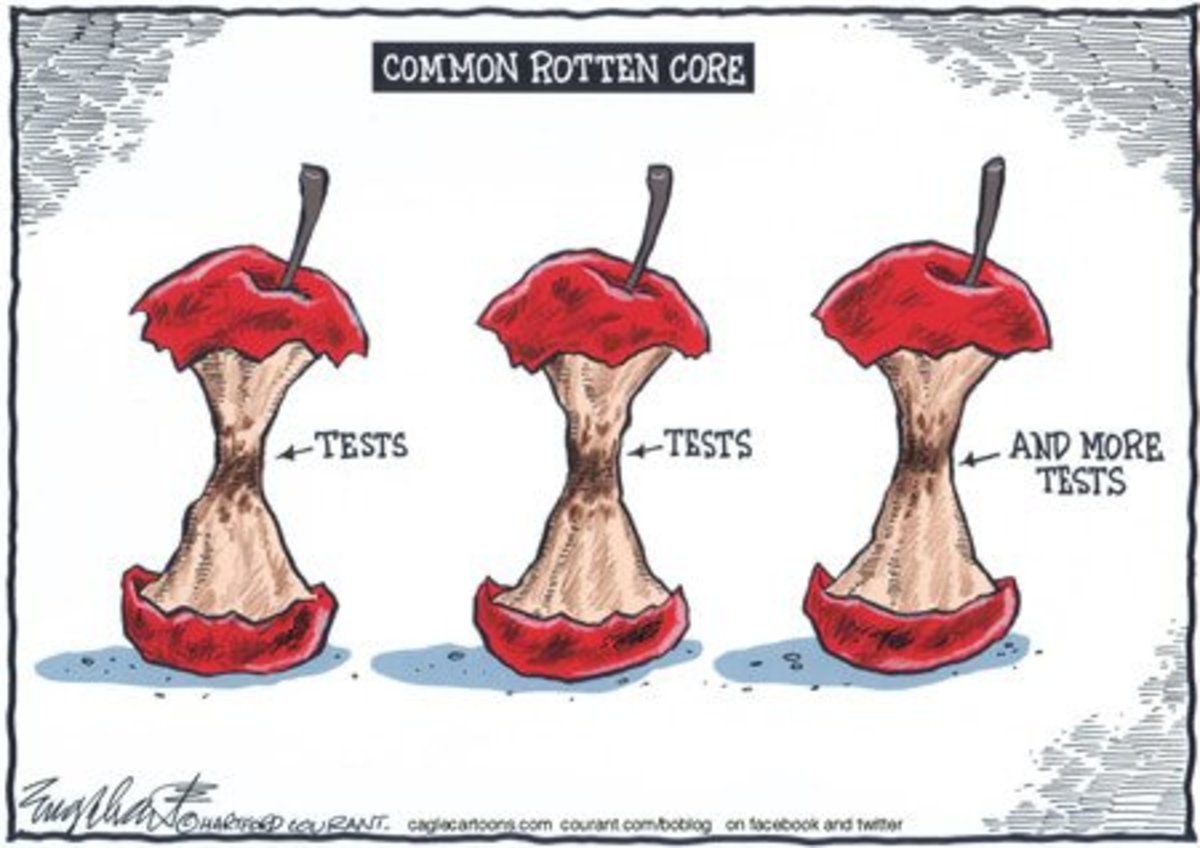
Teachers Need Tests — Just Not Common Core!

Teachers Need Tests:


Teachers Need Tests — Just Not Common Core!

Teachers Need TestsCombined, we have over 41 years of experience teaching. Marla is a National Board Certified Teacher with 29 years of teaching in middle and high school. Melissa has been in education for 12 years, mostly in special education classrooms. We have used testing “data” for a variety of things throughout the years. In the good old days, teachers used testing outcomes to help kids, in fact, many still do.
Let’s take a simple spelling test that a teacher may give. The teacher gives the words out for a child to study that may have a certain trend. For example, kids may need to study words that have the “ph” (phone) sound. The teacher would give the kids a list of words to study that contain that sound. When the child takes the spelling test and does well, this outcome tells the teacher that the child will be proficient when it comes to spelling words with the”ph” sound. If a child does not do well on the test, the teacher will design some intervention strategy to help the child master that set of words.
The intervention strategy could be to have the child restudy just the words they missed and retake the test. The teacher could have the child use the words in a writing piece or sit with the teacher in an extra help session to go over the words. The great thing about the “good old days” is that the teacher got to decide the type of intervention strategy and tailor it to the child. Those days are long gone!
Let’s now examine how high stakes state tests are used by teachers. In the state of New York, currently, students are required to take and pass two history Regents exams to graduate. The two exams they must pass are the U.S. History Regents (Grade 11) and the Global History Regents (Grade 10). Both of these tests are 50 multiple choice questions, a thematic essay, and a Document Based Essay. The students have 3 hours to take the test. In the good old days, before “accountability” in New York State, teachers scored all parts of the test, and the data from those tests was kept available, in the school, for teachers to use to help children. By keeping the exams in school, teachers had access to them and could use them for remediation.
One New York teacher shared, “I had a young man about five years ago who had failed the Global History Regents, and he was due to take it again in June. He needed to pass it to graduate from high school. I was able to access his old Regents exam that he failed because we could keep the exams in the school to access. I was able to analyze his weaknesses, and work on that with him Teachers Need Tests:

Teachers and Company: Map Comparison: Level of Poverty to Level of Performance

Teachers and Company: Map Comparison: Level of Poverty to Level of Performance:


Map Comparison: Level of Poverty to Level of Performance

          Today we are going to consider two very similar maps.  The map at the top is a map of public school ratings based solely on the students test scores.  The map underneath is a map showing the percentage of poverty.  The similarities are striking.  You can almost overlay one on top of the other. These images give additional weight to the plethora of evidence found on studies of test scores and poverty. Childhood poverty is the highest its been in 20 years.  The United States has a child hood poverty rate of 21% overall but it is not evenly distributed.   Poverty is a significant factor in school performance.  The stress of living with want makes learning difficult as I discussed a few weeks back in the post calledStress, Poverty and Learning.  If we are serious about improving our performance we must address the handicapping conditions of poverty.  We need to abandon programs which are not working at least as well as the public schools had prior to their inception such as ASD and CC/PARCC and instead try something new.
          Take the lowest performing school in your state and update it.  Bring in wrap around services and teachers with masters degrees.  Pay the teachers handsomely and trust them.  Set up the school so the teachers will not be punished for the poverty of the students.  Create wrap around services with small class size and family interventions/assistance.  Test in three years.  Skip the wasted time and money for the annual test.  It's a reasonable hypothesis that you will have academic growth, happier kids, happier families, and happy teachers.  With the funds saved on testing the state can afford to pilot a true reform which is child centered.

           I would like to point out one surprising and, for me, thrilling exception on the map,  the state of Tennessee.  Our state has some of the lowest funded, highest poverty schools in the nation. Our teachers and students have performed above what anyone would expect. Tennessee has out performed all of the other high poverty states and we should be celebrating. Instead, we have succumbed to the Global Education Reform Movement.  There is little tenure protection in our 'right to work state'. GERM has caused teachers to be capriciously fired or subjected to constructed dismissal because the principal just Teachers and Company: Map Comparison: Level of Poverty to Level of Performance:

Seattle Police Assault Outspoken Teacher. Get Away With It. As Usual. | HorsesAss.Org

Seattle Police Assault Outspoken Teacher. Get Away With It. As Usual. | HorsesAss.Org:


Seattle Police Assault Outspoken Teacher. Get Away With It. As Usual.

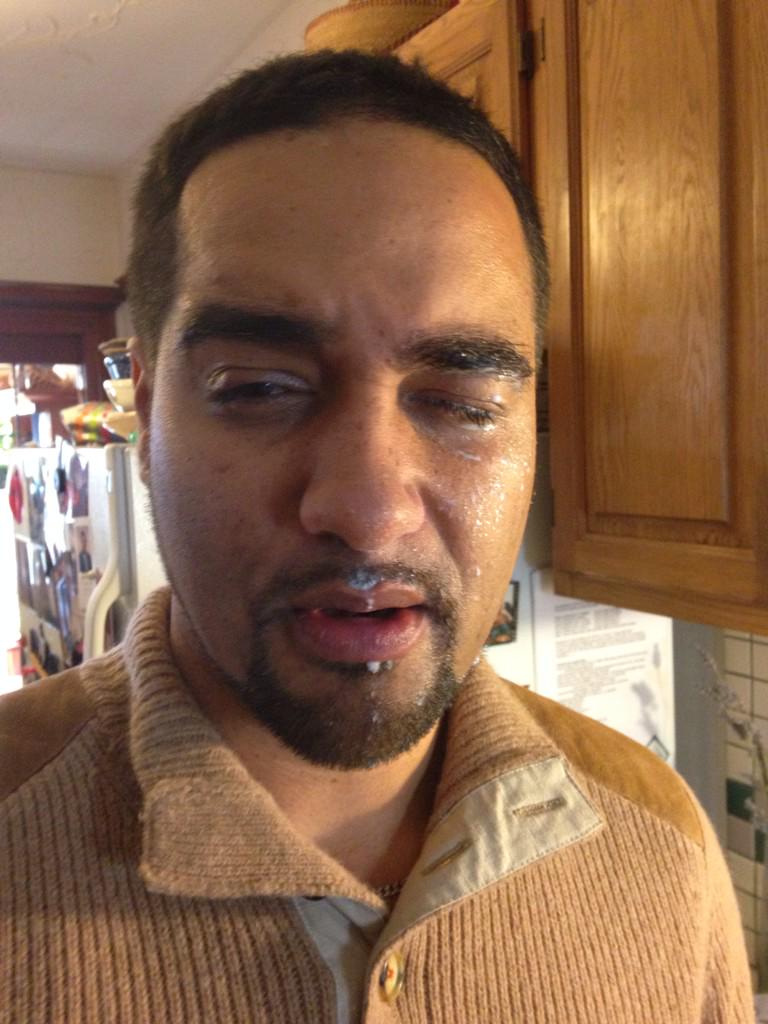
Jesse Hagopian is an award-winning history teacher at Garfield High School, an author, an outspoken activist, and a leader of the fight against excessive school testing. And yesterday, near the end of the MLK Day march, he was assaulted by Seattle Police without provocation.
View image on Twitter

As Hagopian explains in further detail on his Facebook page:
I was marching for Martin Luther King day today–amazing march! At one point after the big main march, group of bike cops set up a line to keep us from marching. Some people walked through the line, but I didn’t. When my phone rang, I turned away from the cops and began walking away to answer the phone. A cop then ran up in my face and pepper sprayed me right in the face. The milk has helped a lot and I’m beginning to feel better. Wish we had a better world.
Hagopian is a public figure of sorts, a fixture at social justice rallies and protests, and a relatively frequent subject of media coverage. He’s not known to be violent in any way, but he is known to be a leader. So not having seen the incident, here’s my bit of informed conjecture as to what might have happened: The police recognized him, saw him reach for his phone, and suspected he might be organizing activities on the ground. So they disabled him.
That’s right. My guess is that the police pepper sprayed Hagopian in order to prevent him from using his phone.
I suppose it’s possible the officer in question is just an asshole who indiscriminately assaulted Hagopian for no apparent reason (or an asshole who recognized Hagopian and saw an opportunity to assault him just because), but in any case, the point is that once again an officer assaulted aninnocent person and got away with it.
And yes, pepper spraying somebody in the face is assault. If I were to walk up to you and pepper spray you in the face, I would be charged with assault. And if I were to walk up to a Seattle police officer and pepper spray him in the face I would certainly be charged with assaulting a police officer (assuming I survived the encounter). But police have learned from experience that they have near absolute impunity to pepper spray anybody, with no legal consequences whatsoever. It’s gotten to the point where they even laugh about it. Pepper Seattle Police Assault Outspoken Teacher. Get Away With It. As Usual. | HorsesAss.Org:

The Trojan Horse of "Free" Community College

The Trojan Horse of "Free" Community College:


The Trojan Horse of "Free" Community College

Wednesday, 21 January 2015 11:04By Adam Bessie, Truthout | Op-Ed


Supporters react as President Barack Obama greets them after delivering remarks on new initiatives to help Americans go to college and get the skills they need to succeed, at Pellissippi State Community College in Knoxville, Tenn., Jan. 9, 2015. Obama proposed making community college tuition-free for millions of students. (Jabin Botsford/The New York Times)

President Obama's proposal for "free" community college should excite me, as a community college professor who works daily with those students perched precariously on the outermost edge of higher education - undocumented immigrants, high school drop-outs, homeless teens, former prisoners - all arriving to campus striving for the safety, security and affluence of middle-class American life. And while students hold on tight to the edge of the ivory tower, I've seen many fall off despite their best efforts, passion and potential, dragged down and out of the classroom by the gravity of this poverty. And these are just the students that show up to class - all too many can't even get a fingerhold, as they are so bogged down by just trying to make ends meet that coming to an "open-access" community college isn't a plausible option.
It wasn't always this way. In 1960, California's master plan for higher education - which soon became the model for the country - sought to provide a world-class education for all California students, not just those who could afford it. There were no fees, and all were accepted at some point in the system. For many, community college was the first stop on a journey that would take them to prosperity - financial, intellectual and democratic. And while community college is still accessible for many, the ideal of "open access" has been increasingly blocked: It's not just the rising fees for students, but cuts that restrict access in invisible ways - fewer course offerings, fewer support services and fewer full-time instructors to help students find their way, and not fall away.

So doesn't Obama's proposal harken a return to the golden age of the California master plan?

Rather than usher in a golden age, I worry it will signal the end of an era - the end of community college. While I welcome a return to the open-access model, in which high-quality higher education is free to the student, the cost of Obama's proposal may be too high - and I don't mean in taxpayer dollars.

I worry that "free" college may be a Trojan horse for implementing a Race to the Top (RTTT) for higher education, which has been a disastrous policy for K-12 education. RTTT, which is essentially No Child Left Behind rebranded, uses the force of the federal government to institute a regime of standardized testing and so-called "competition," which has narrowed the curriculum (especially in poor schools, which many of my students come from), emphasizing only reading and math, and tossing aside the arts, sciences and other areas which can't be tested. Beyond this, RTTT has wrested control of classrooms out of the hands of educators and communities, and The Trojan Horse of "Free" Community College:

The Contenders to Watch in the Fight for the California Democratic Party's Soul

The Contenders to Watch in the Fight for the California Democratic Party's Soul:

The Contenders to Watch in the Fight for the California Democratic Party’s Soul

The Conservatives and Neoliberals Democrats (aka Rockefeller Republicans) are NOT real Democrats


The retirement of California Sen.Barbara Boxer, while not unexpected, heralds the first of several big changes the state is likely to see in the next few years. Many people also think Sen. Dianne Feinstein, who was elected along with Boxer in 1992, will retire in 2018, the same year Gov. Jerry Brown will be termed out. The ensuing scramble for California’s top three seats could determine whether the state’s dominant Democratic Party—which controls every statewide office and has a large majority in both chambers of the legislature and in 39 of the 53 congressional districts—swings in a conservative or progressive direction.
California may be a deep blue state, but it is by no means a unilaterally left-leaning one. Fortunately, legislators do have fairly settled, progressive stances on certain key topics—namely LGBT and reproductive rights. However, other issues, such as as economic justice, support for public education, or environmental advocacy, will be sure to separate the state’s politicians along an ideological spectrum in the coming years.
As discussion ramps up about Boxer’s replacement, it’s vital to keep an eye on possible contenders for the seat, as well as those who could run for Senate or governor in 2018. Here’s a list of potential candidates in California we should be keeping an eye on in the next few election cycles:
The Progressives (Real Democrats)
California Attorney General Kamala Harris: Pundits and commentators widely see Harris as the top prospect for Boxer’s seat in the state, so her announcement to run was no surprise. As a prosecutor, Harris has charted a progressive path. She tends to look at society as an ecosystem, making the case for a holistic approach to issues of social justice and policy. She has said, for example, that in order to reduce crime and have safe neighborhoods, civic official must invest in public schools. In her first race for attorney general, her opponent promised to defend Prop 8 to the Supreme Court, while Harris refused to do so; after the Ninth Circuit overturned the law, Harris moved swiftly to usher in marriage equality throughout the state. One of Harris’ most impressive accomplishments, though, has been her response to the mortgage crisis. She secured more than $18 billion from big banks to help California homeowners with underwater mortgages and introduced the California Homeowner Bill of Rights to prevent unfair practices from banks and lenders in the future.
Harris’ legacy is not without controversy, however; advocates for abolishing the death penalty have been disappointed in her office’s support for the law, though Harris says she is personally opposed to it. Thus far, activists have drawn particular attention to Harris’ office’s actions surrounding the Daniel Larsen case: When a federal judge declared Larsen, who had been convicted and sentenced under California’s draconian three-strikes law, to be innocent, Harris’ office held him for an extra four years based on the technicality that he missed a filing deadline. She may also have to clarify her statement to BuzzFeed that “in general” the police have not become too militarized.
Harris should address those very serious issues; without dismissing those, though, she is also one of the leading progressive figures in the state. Furthermore, the importance of having another woman of color in the Senate cannot be understated.
Rep. Jackie SpeierSan Francisco Bay Area Rep. Jackie Speier is a dream figure for progressives. After decades in county office and the state legislature, Speier was elected to Congress in 2008. Speier is one of the strongest advocates for reproductive freedom in the House, and her voice could certainly be used in the Senate. NARAL Pro-Choice America and Planned Parenthood have given her 100 percent approval ratings; she has also discussed her own experience with having an abortion on the floor of the House. In addition, Speier has been an advocate for gun safety, including background checks and safety locks. She is a member of the LGBT Equality Caucus and has stood up for marriage equality. And she has fought for strong environmental regulations and an energy plan that focuses on creating green jobs, addressing climate change, and regulating polluters.
Tom Steyer: It’s unusual to put a white male hedge fund manager in a list of progressives. Still, Steyer is a big environmentalist; he’s pumped millions of dollars into campaigns in California and around the country for pro-environmental candidates and ballot measures. He put $2.5 million into the campaign against Prop 23, helping defeat the Dirty Energy Prop, which would have rolled back clean energy standards in California. Through his NextGen Climate PAC, he’s supported candidates across the country with mixed success. That said, he has yet to take sides publicly about other issues, such as corporate education reform—a hot-button topic that other hedge fund managers tend to approve of. And will he favor economic and labor regulations for companies, the way he favors environmental regulation? Plus, some activists worry that spending big on his own underdog campaign could be a waste of money that he could put toward competitive races around the country.
John Chiang: Chiang was elected state treasurer in 2014, having previously served two terms as state controller. He has a good record as an economic progressive, including a pivotal moment in 2008, when he refused to allow then-Gov. Schwarzenegger to use state employees’ pay as a bargaining chip during a budgetary battle. He could be a strong alternative if a conservative or neoliberal Democrat makes a push for one of the seats.
The Conservatives and NeoliberalsThe Republicans of Democrats for Education Reform http://bit.ly/1msd8vW }
Antonio Villaraigosa: As he publicly considers running for Boxer’s seat, the former Los Angeles mayor has been more frequently referring to himself as a progressive. Villaraigosa’s record, however, suggests otherwise. He has embraced corporate education reform, even holding an event with corporate education lobbyist Michelle Rhee during the 2012 Democratic National Convention. He’s also joined the board of Campaign to Fix the Debt, a corporate group dedicated to cutting Social Security and Medicare, which prompted progressive organizations such as Courage Campaign to call on him to resign from it. He did not do so; he has, to date, refused to meet with the tens of thousands of constituents who started and signed a petition about their concerns about his involvement.
Lieutenant Governor Gavin Newsom: Lt. Gov. Newsom has already bowed out of the race for Boxer’s seat, leading some people to believe that he’ll either running for governor or Senate in 2018. Newsom is known to both state and national audiences for his bold stance in favor of marriage equality while he was mayor of San Francisco. But while he has a generally liberal track record on social issues like those, as well as environmental ones, he has a history of being not-so-great on economics. Alarmingly, Newsom has embraced a Silicon Valley “tech-bro” mindset on regulations—in his book Citizenville, he made the argument that government should get out of the way of corporate innovation. He also sent an email during his re-election campaign claiming regulations hurt tech businesses. When Democrats want to loosen regulations—which, in turn, widens the inequality gap throughout California and puts workers at risk of exploitation—then you have to ask what Democrats actually stand for.
Mayor Kevin Johnson: Sacramento Mayor Kevin Johnson has signaled that he may seek higher office in the next few years. When his wife, Michelle Rhee, stepped down from her position at StudentsFirst, she said it was to support her husband’s future plans. There are many reasons progressives shouldn’t support Johnson. He’s embraced corporate-styleeducation reform and billsLocal news outlets have reported his improprieties with fundraising, noting that he was using his office for his own pet projects: In 2012, the state’s Fair Political Practices Commission fined him more than $37,000 for failing to report contributions to these nonprofits from Wal-Mart’s foundation and other groups. While progressives in California were fighting against Prop 8 in 2008, Johnson opposed marriage equality, stating that he believes marriage is between a man and a woman. He eventually switched to opposing Prop 8, but the statement was worrying nonetheless. In addition, he has a shady history involving allegations of sexual misconduct, which came to light during a federal investigation.
Rep. Raul Ruiz: Rep. Ruiz is a second-term member of Congress from the Palm Springs area, holding a decidedly moderate swing district. He’s broken with the Democratic Party on some key decisions, including recently voting with Republicans to condemn Barack Obamafor a prisoner exchange that freed a U.S. soldier who had been held captive for nearly five years. In fact, CQ Weekly found that he was one of the most likely House Democrats to vote against the Democratic leadership.  He either believes in his conservative voting record or he does it because he thinks it makes good politics. Either way, he’s not the candidate progressives will want.
The People No One Is Talking About—But Should Be
Rep. Mark TakanoRep. Takano is serving his second term for a moderately Democratic district based in Riverside, Calif. Takano is one of those true gems: a genuine progressive who works hard and is committed to maintaining his values. He’s gained headlines for his clever use of social media, including highlighting his past as a teacher by taking a red pen to Republican letters. Takano is the only openly gay minority The Contenders to Watch in the Fight for the California Democratic Party's Soul:


Hill fight on No Child Left Behind looms - Maggie Severns - POLITICO

Hill fight on No Child Left Behind looms - Maggie Severns - POLITICO:


Hill fight on No Child Left Behind looms


 Senate education committee leader Sen. Lamar Alexander says he wants to work out a bipartisan deal this spring to rewrite the landmark education law No Child Left Behind.

But last week, he released a discussion draft of the bill that was anything but.
Story Continued Below
He and other congressional Republicans are angling to revamp rules about how often students are tested, how much power the education secretary should have, the amount of control states have over education policy as they collect billions in federal dollars, when to intervene in schools deemed failing and more. The debate kicks off at a hearing Wednesday on testing.
The coming debate may be the most dramatic congressional fight over education in more than a decade.
Alexander and his Democratic counterpart on the committee, Sen. Patty Murray, have said repeatedly they want to work in a bipartisan fashion but have yet to begin working together. Alexander has said that his discussion draft is just the start of a long process on No Child Left Behind that will include taking the bill through committee and amending it, and he has had discussions about rewriting NCLB with almost every member of the committee, including multiple conversations with Murray.


But the vision Alexander has sketched out so far didn’t take Murray’s priorities into account and Democratic aides saw it only hours before it was released to the public. The move has left many in the education world speculating — and some convinced — that working across the aisle going forward will be onerous.
“It’s totally clear this is entirely partisan,” one lobbyist said. “It’s crazy.”
Alexander doesn’t think so. “Of course it’s a bipartisan process — there’s no other way to pass a law in a Congress that requires 60 votes in the Senate and a presidential signature,” Alexander said. “It’s the job of the majority to offer a suggestion, which is the chairman’s discussion draft, and then we’ll do our best to work in the committee to get a bipartisan bill.”
Already, priorities and position papers are flying. The White House has been meeting with education groups to build support that could stand up to the Republican Congress on accountability and equity issues, several education advocates said. Education Secretary Arne Duncan outlined his priorities in a speech, saying he wants to keep many of NCLB’s testing requirements, as well as the requirement that the government intervene in low-performing schools. But the White House hasn’t dived into reauthorization. And comments on NCLB – and K-12 education in general – were absent from last night’s State of the Union address.
Should schools have to test students every year?
Alexander raised eyebrows last fall when he indicated he might be willing to get rid of the law’s annual testing mandate. No Child Left Behind requires schools to test students in reading and math each year from third through eighth grades and once in high school. And students must be tested in science once each in elementary, middle and high school. The tests results are used to track student progress, school performance and though not required by NCLB, in some places


Read more: http://www.politico.com/story/2015/01/no-child-left-behind-congress-114416.html#ixzz3PTQgulR7

An Open Letter to Lamar Alexander: Don't Forget Rule #84 in 'The Little Plaid Book' | Diane Ravitch

An Open Letter to Lamar Alexander: Don't Forget Rule #84 in 'The Little Plaid Book' | Diane Ravitch:


An Open Letter to Lamar Alexander: Don't Forget Rule #84 in 'The Little Plaid Book'


 Senator Lamar Alexander

U.S. Senate
Washington, D.C.
Dear Lamar,
I wish I could be in Washington for the hearings about the reauthorization of NCLB. I can't make it for two reasons: I wasn't invited, and I have a date to speak to parents at P.S. 3 in Manhattan who are outraged about all the testing imposed on their children.
I learned a lot about education policy and federalism after you chose me to serve as your Assistant Secretary of Education in charge of research and improvement and as counsel to the Secretary of Education (you). I am imagining that I am still advising you, as I did from 1991 to 1993 (remember that you and every other top administrator in the Department left a day before the inauguration of Bill Clinton, and you told me I was Acting Secretary for the day?). What I always admired about you was your deliberateness, your thoughtfulness, your ability to listen to discordant voices, and your respect for federalism. You didn't think you were smarter than everyone else in the country just because you were a member of the President's Cabinet. You understood federalism. You didn't think it was your job to impose what you wanted on every school in America. You respected the ability of local communities to govern their schools without your supervision or dictation.
NCLB was not informed by your wisdom. It set impossible goals, then established punishments for schools that could not do the impossible. I remember a panel discussion in early 2002 at the Willard Hotel soon after NCLB was signed. You were on the panel. I was in the audience, and I stood up and asked you whether you truly believed that 100% of all children in grades 3-8 would be "proficient" by 2014. You answered, "No, Diane, but we think it is good to have goals." Well, based on goals that you knew were out of reach, teachers and principals have been fired, and many schools -- beloved in their communities -- have been closed.
NCLB has introduced an unprecedented level of turmoil into the nation's public education system. Wearing my conservative hat, I have to say that it's wrong to disrupt the lives of communities, schools, families, and children to satisfy an absurd federal mandate, based on a false premise and based too on the non-existent "Texas miracle." Conservatives are not fire-breathing radicals who seek to destroy community and tradition. Conservatives conserve, conservatives believe in incremental change, not in upheaval and disruption.
I urge you to abandon the annual mandated federal testing in grades 3-8. Little children are sitting for 8-10 hours to take the annual tests in math and reading. As a parent, you surely understand that this is madness. This is why the Opt Out movement is growing across the nation, as parents protest what feels like federally-mandated child abuse.
Do we need to compare the performance of states? NAEP does that already. Anyone who wants to know how Mississippi compares to Massachusetts can look at the NAEP results, which are released every two years. Do we want disaggregated data? NAEP reports scores by race, gender, English language proficiency, and disability status. How will we learn about achievement gaps if we don't test every child annually? NAEP reports that too. In short, we already have the information that everyone says they want and need.
NCLB has forced teachers to teach to the test; that once was considered unethical and unprofessional, but now it is an accepted practice in schools across the country. NCLB has caused many schools to spend more time and resources on test prep, interim assessments, and testing. That means narrowing the curriculum: when testing matters so much, there is less time for the arts, physical education, foreign languages, civics, and other valuable studies and activities. Over this past dozen years, there have been numerous examples of states gaming the system and educators cheating because the tests determine whether schools will live or die, and whether educators will get a bonus or be fired.
I urge you to enact what you call "option one," grade span testing, and to abandon annual testing. If you keep annual testing in the law, states and districts will continue to engage in the mis-education that NCLB incentivized. Bad habits die hard, if at all.
Just say no to annual testing. No high-performing nation does it, and neither should we. We are the most over-tested nation in the world, and it's time to encourage children to sing, dance, play instruments, write poetry, imagine stories, create videos, make science projects, write history papers, and discover the joy of learning.
As I learned from you, the U.S. Department of Education should not act as a National School Board. The Secretary of Education is not the National Superintendent of Schools. The past dozen years of centralizing control of education in Washington, D.C., has not been good for education or for democracy.
The law governing the activities of the U.S. Department of Education states clearly that no federal official should attempt to "exercise any direction, supervision, or control over the curriculum, program of instruction, [or] administration....of any educational institution." When I was your Assistant Secretary and Counselor, I was very much aware of that prohibition. For the past dozen years, it seems to have been forgotten. Just a few years ago, the current administration funded tests for the Common Core standards, which will most assuredly exert control over the curriculum and program of instruction. The federal tests will determine what is taught.
The nation has seen a startling expansion of federal power over local community public schools since the passage of NCLB. There is certainly an important role for the federal government in assuring equality of educational opportunity and informing the American people about the progress of education. But the federal role today is taking on responsibilities that belong to states and local districts. The key mechanism for that takeover is annual testing, the results of which are used to dictate other policies of dubious legality and validity, like evaluating teachers and even colleges of education by student test scores.
Sir, please revise the federal law so that it authorizes the federal government to do what it does best: protecting the rights of children, gathering data, sponsoring research, encouraging the improvement of teaching, funding special education, and distributing resources to the neediest districts to help the neediest students (which was the original purpose of the Elementary and Secondary Education Act of 1965).
In closing, may I remind you of something you wrote in your book of advice:
No. 84: Read anything Diane Ravitch writes about education.
Lamar Alexander, Little Plaid Book, page 44
I agree with you.
Yours truly,
Diane Ravitch