Latest News and Comment from Education

Saturday, May 14, 2011

United Way report aimed at education action - SignOnSanDiego.com

United Way report aimed at education action - SignOnSanDiego.com

United Way report aimed at education action

SATURDAY, MAY 14, 2011 AT 4 A.M.

On display

The “Voices for the Common Good” report at a reception at 3 p.m. Saturday at the Westfield Mission Valley shopping mall. An outdoor photo installation featuring larger-than-life images of San Diego kids with a call to action for adults will be on display outside Nordstrom Rack and Michaels.

Saying the nation has reached a turning point in education, United Way of San Diego County is releasing a report Saturday it hopes will galvanize individuals and businesses to take steps to get involved and improve schools in the region.

The report, a mix of national and local voices developed after parents, students, business leaders and educators were interviewed in nearly 40 communities around the country, finds that people overwhelmingly believe the country is failing its schoolchildren, that education is a key to success and that communities need to focus more on the needs of children.

As part of the project, the local United Way took a close look at data about San Diego County’s public schools. Among the troubling results they highlight: about a third of the fourth graders in

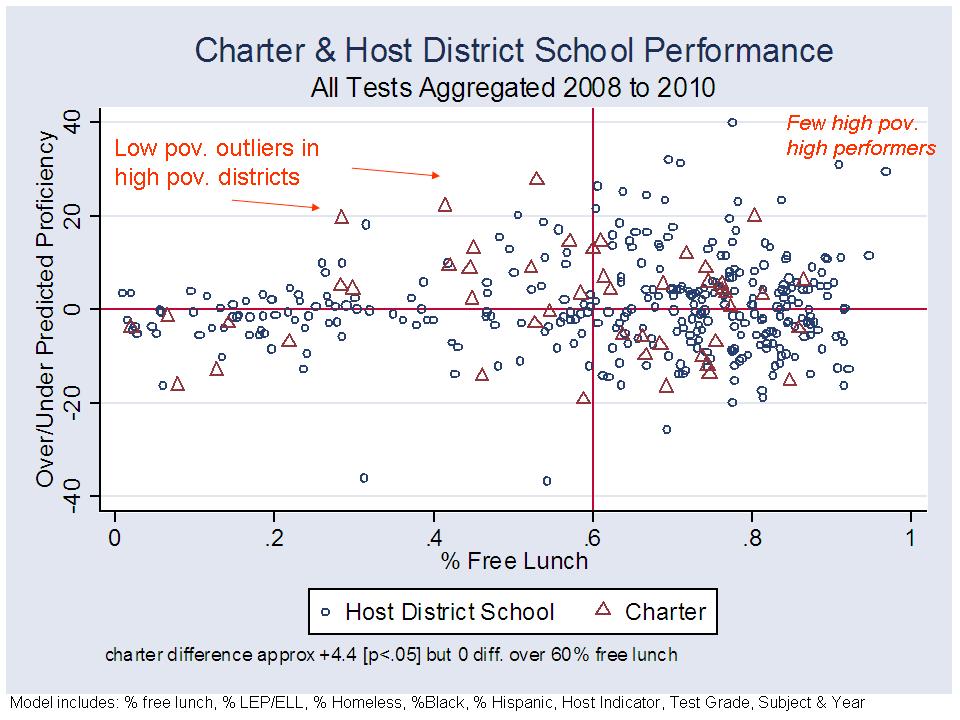
A few updated NJ charter figures: Write your own story… « School Finance 101

A few updated NJ charter figures: Write your own story… « School Finance 101

Daily Kos: The data speaks - poverty and American education

Daily Kos: The data speaks - poverty and American education

The data speaks - poverty and American education

Please watch the following video from the Texas Tribune. In its brief four minutes Michael Marder explains how readily available data on Texas schools makes clear the real issue on college readiness is the connection with poverty.

Popout

There is more video below the fold, as well as some comments from yours truly

Weblogg-ed » “There are Some People Who Don’t Wait”

Weblogg-ed » “There are Some People Who Don’t Wait”

“There are Some People Who Don’t Wait”

This quote from Robert Krulwich of NPR caught my eye yesterday:

But there are some people, who don’t wait.

I don’t know exactly what going on inside them; but they have this… hunger. It’s almost like an ache.

Something inside you says I can’t wait to be asked I just have to jump in and do it.

He was talking about beginning journalists, but I couldn’t help thinking about the many teachers who I have met over the years who haven’t waited. People like Shelley Blake-Plock and Dolores Gende and Anne Smith andKathy Cassidy and Brian Crosby and Shannon Miller and Shelley Wright and Jabiz Raisdana and a whole slew of others who had some type of hunger overcome them, something that made them jump right in and really change the way the thought about teaching and learning and classrooms. For some, I know, what’s happened over the past decade or so has simply afforded a way for them to do more of what they always believed, to give kids the reins and let them learn about learning. But for others, and I would count myself in this second category, the last 10 years have brought to life a way of thinking about education that is decidedly different from

Saturday coffee + Old school. « Fred Klonsky's blog

Saturday coffee. « Fred Klonsky's blog

Saturday coffee.

Hey, Chicago. How did you enjoy your summer?

It was 90 degrees on Tuesday. We had the AC on Thursday night. Now we have the heat back on and it’s 44 degrees.

In the mean while, a happy birthday wish to my son-in-law in Brooklyn. And we celebrated my brother and sister-in-law’s 43 years of marriage at Irwin’s last night.

I had the soft shell crab. Chef Irwin served me three of them with fresh asparagus and purple potatoes. I started the meal with fried green tomatoes and applewood bacon. Yes.

And let’s not even speak of the desserts we shared. Okay. I will speak of them. Sour cherry pie with home-made ice cream and peanut butter something or other with whipped cream and chocolate sauce.

My brother, who is definitely a chocoholic, actually passed on the dessert with four “chocolates” in the title. But

Old school.

The Kinks.

Popout

Mathematical Intimidation: Driven by the Data by John Ewing | Seattle Education

Mathematical Intimidation: Driven by the Data by John Ewing | Seattle Education

Mathematical Intimidation: Driven by the Data by John Ewing

Of course we should hold teachers accountable,
but this does not mean we have to pretend
that mathematical models can do something they
cannot. Of course we should rid our schools of
incompetent teachers, but value-added models are
an exceedingly blunt tool for this purpose. In any
case, we ought to expect more from our teachers
than what value-added attempts to measure.

John Ewing, PhD, Mathematician and President of Math for America

I came across this article by Mathematician John Ewing and wanted to share it with you.

Dora

Mathematical Intimidation: Driven by Data

by John Ewing

Mathematicians occasionally worry

Big role of test scores in New York teacher evaluations — Joanne Jacobs

Big role of test scores in New York teacher evaluations — Joanne Jacobs

Big role of test scores in New York teacher evaluations

Last year, the New York State Legislature passed a measure that allowed 20 percent of a teacher’s evaluation to be based on students’ scores on standardized state tests.

Now it has gone up to 40 percent. This means they will count more than any other single measure. The new regulations are expected to be enacted on Monday by the state’s Board of Regents.

This change may be largely due to pressure from Governor Andrew M. Cuomo, who, according to the New York Times, said that a high-quality evaluation system had to be in place before he could support Mayor Bloomberg’s push to end seniority protection in layoffs.

But is this a high-quality evaluation system? It gives a great deal of power to tests that we don’t even have yet (as they are being revised) and to a value-added formula that has turned up many eccentricities, to put it mildly.

Maher’s “Real Time” Education Debate Failure Redux: Legend of the Fall, pt. VII | Dailycensored.com

Maher’s “Real Time” Education Debate Failure Redux: Legend of the Fall, pt. VII | Dailycensored.com

Maher’s “Real Time” Education Debate Failure Redux: Legend of the Fall, pt. VII

A new slogan has appeared from the ranks of educators who know the new education reform movement to be misguided, uninformed, and powerful: “Those who can, teach. Those who cannot pass laws about teaching.”

This is a parody of the demeaning, “Those who can, do. Those who cannot, teach.” It is this saying that is at the heart of the cultural disrespect that much of the U.S. holds and voices about educators, but the newer slogan, in the second part, hits the key problem with how our schools are run and who takes the blame: The reality is that teachers in K-12 U.S. public education have little autonomy and professional power–and that is even more pronounced today than 40 years ago–but the architects of how schools are run, politicians and self-appointed education experts, have somehow shifted all the blame and accountability onto those teachers who are mandated to implement the misguided policies dictated by elected officials, who are overwhelmingly

Interesting “Take” On Why We Need Immigrants | Larry Ferlazzo's Websites of the Day...

Interesting “Take” On Why We Need Immigrants | Larry Ferlazzo's Websites of the Day...

Interesting “Take” On Why We Need Immigrants

“Why America Needs Immigrants” is an article by Jonah Lehrer in The Wall Street Journal.

He discusses the usual stuff you’d expect about the need for highly skilled entrepreneurs, but also adds an interesting perspective:

But the advantages of immigration aren’t limited to those with particular academic backgrounds. In recent years, psychologists have discovered that exposing people to different cultures, either through travel abroad or diversity in their hometown, can also make them more creative. When we encounter other cultures we become more willing to consider multiple interpretations of the same thing. Take leaving food on one’s plate: In China, it’s often a compliment, signaling that the host has provided enough to eat. But in America it can suggest that the food wasn’t good.

People familiar with such cultural contrasts are more likely to consider alternate possibilities when problem-

Daily Kos: Maher's "Real Time" Education Debate Failure Redux

Daily Kos: Maher's "Real Time" Education Debate Failure Redux

A new slogan has appeared from the ranks of educators who know the new education reform movement to be misguided, uninformed, and powerful: "Those who can, teach. Those who cannot pass laws about teaching."

This is a parody of the demeaning, "Those who can, do. Those who cannot, teach." It is this saying that is at the heart of the cultural disrespect that much of the U.S. holds and voices about educators, but the newer slogan, in the second part, hits the key problem with how our schools are run and who takes the blame: The reality is that teachers in K-12 U.S. public education have little autonomy and professional power--and that is even more pronounced today than 40 years ago--but the architects of how schools are run, politicians and self-appointed education experts, have somehow shifted all the blame and accountability onto those teachers who are mandated to implement the misguided policies dictated by elected officials, who are overwhelmingly without experience or expertise in education.

But the problem with education policy and reform debate is much deeper than that.

As I have been documenting in a series labeled "Legends of the Fall," public discourse

How White People Became White | Dissident Voice

How White People Became White | Dissident Voice

How White People Became White

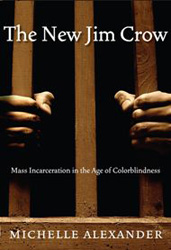
I am here to do some truth telling!” So declared Michelle Alexander in Chicago on March 17, 2011, at a Roosevelt University-sponsored event featuring her book The New Jim Crow: Mass Incarceration in the Age of Colorblindness. Since its publication in 2010, Ms. Alexander has made the rounds of television, radio and web appearances. But neither her book nor her media blitz adequately convey the intensity and passion that this young legal scholar and self-described “racial justice advocate” brings to her subject in person. Her focus is on a centuries-old wrong perpetrated against all peoples of color, but particularly against Black men – their mass roundup, imprisonment, and lifetime relegation to second class citizenship status thereafter.

Of course, Alexander is far from first to chronicle the American penal system’s attempts to neutralize, if not destroy, the Black community. She writes in the wake of not a few stalwarts – from the incisive pen of James Baldwin and Malcolm X’s fire-breathing oratory, to the persistent, clarion call for justice by and on behalf of Mumia Abu-Jamal; and from the public intellectualism of Cornell West and the late Manning Marable, to the tireless educative and organizational work of long time Black Power and anti-war and feminist Angela Davis, among many others. Alexander’s contribution to this body of protest literature and tradition is important not because she presents any novel ideas. Rather, for the first time, she meticulously lays bare the

Teachers end week of protests

Teachers end week of protests

Teachers end week of protests

Linda Seeman, who teaches at Hayward's Cherryland Elementary School, joins other teachers at Civic Center Plaza protesting statewide cuts to education.

(05-13) 21:13 PDT SAN FRANCISCO -- Teachers who rallied Friday to protest looming state budget cuts had a message that was sometimes plaintive, like a San Bruno third-grade instructor's sign that declared, "I will work for pencils."

"Teachers are paying for basic supplies. ...They're taking away money every year," said Lisa Gemma, who teaches 27 multilingual students at Belle Air School in San Bruno - where, she added, "we're out of pencils and eraser tops."

"They cut the school year five days. They laid off the librarian. We're fighting for our lives," said Deborah Waggoner, a third-grade teacher at Cinnabar School in Petaluma. At 51, she said she had never before attended a political rally, but decided it was "time to


Read more: http://www.sfgate.com/cgi-bin/article.cgi?f=/c/a/2011/05/13/MNSN1JG6F4.DTL#ixzz1ML6biblN