Latest News and Comment from Education

Saturday, June 8, 2019

With A Brooklyn Accent: The Warren/Charter School Flap: Perspectives of a Bay Area Educator

With A Brooklyn Accent: The Warren/Charter School Flap: Perspectives of a Bay Area Educator

The Warren/Charter School Flap: Perspectives of a Bay Area Educator


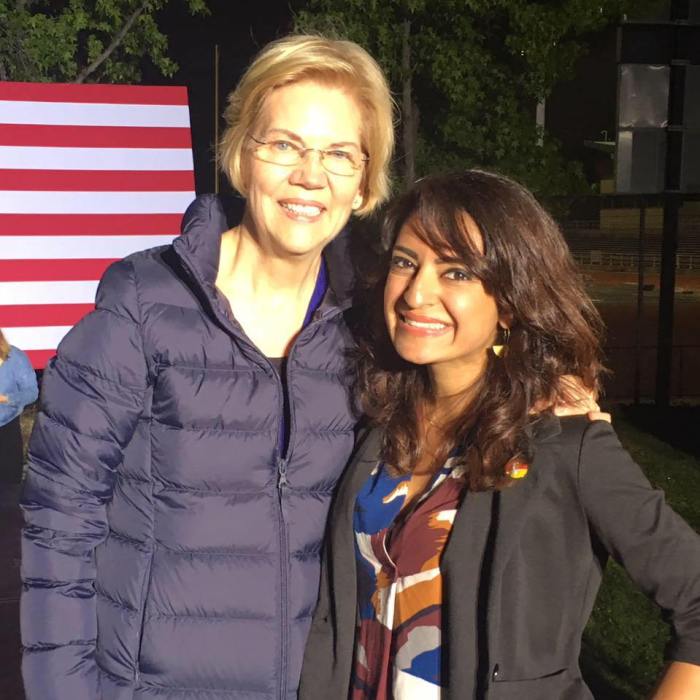
The following was just sent to me by a Bay Area Educator to provide some context as to why Elizabeth Warren's choice of a charter school teacher to honor at her rally was so controversial
It focuses less on Warren and the young teacher she introduced than the unhappy history of
Charter Schools in the Oakland Unified School District

Oakland Unified has been warmly welcoming to charter schools and “reformers” from the beginning, and the organization Great Oakland Public Schools (GO Public Schools), funded by the Waltons and other billionaires, has been the orchestrator of much of that, pushing the usual “reform” policies into the district. OUSD has been increasingly troubled and gone through waves of financial crisis. A recent “reform” superintendent* left the district in even more dire financial chaos than ever.*

in the last few years OUSD has begun assessing the toll charters have taken, and recently released a report detailing the financial devastation they've wrought on the district. And the district was just racked by a teacher strike in which charters were a huge issue. Basically, charters have become radioactive in Oakland.

Then, las weekend Elizabeth Warren made a successful appearance at a huge Oakland rally, introduced by a former teacher who mentioned her five years teaching in a high-poverty part of the district. An Oakland teacher who was at the rally thought it was strange that that the CONTINUE READING:
With A Brooklyn Accent: The Warren/Charter School Flap: Perspectives of a Bay Area Educator


Big Education Ape: Steven Singer Issues a Correction | Diane Ravitch's blog - http://bigeducationape.blogspot.com/2019/06/steven-singer-issues-correction-diane.html
Big Education Ape: Badass Teachers Association Blog: Charter School Teacher Introduces Elizabeth Warren at Rally by Steven Singer - http://bigeducationape.blogspot.com/2019/06/badass-teachers-association-blog.html
61665090_10109374029691176_8067465538567143424_n


Big Education Ape: Elizabeth Warren Has a Former TFAer Advising Her on Education | deutsch29 - http://bigeducationape.blogspot.com/2019/06/elizabeth-warren-has-former-tfaer.html


Dear Teachers: Please Don't Make Your Lessons Relevant

Dear Teachers: Please Don't Make Your Lessons Relevant

Dear Teachers: Please Don't Make Your Lessons Relevant
When I was getting my teacher training way back in the 1970s, we used to hear a great deal about making our teaching relevant. It took me several years of teaching to figure out why that was terrible advice. And it hasn't ever gone away.
It seems to make sense. Connect your lesson on parts of speech to a current popular song. Assign persuasive essays about something the kids are into today. Could we do an essay about the rap? I hear that teens very much like the rap these days.
But the problem is not teachers who are clueless about what a relevant connection might be. That's correctable (I still want back the hours of my life I spent watching The Hills so that I could follow student discussions). The problem is less obvious than the natural consequences of living on the other side of the generational divide.
Nobody says, "Let's think of a way to make mountains tall." And if your spouse says, "I'm looking for ways to make you interesting and appealing," that is not a good sign.
Once you look at a lesson and ask, "How am I going to make this material relevant," you have admitted that the material is not actually relevant. If that's true--if the lesson is inherently irrelevant--then you need to ask a bigger question. Why are you teaching it at all? Because it's on the test? Because your boss said you have to? These are lousy CONTINUE READING: Dear Teachers: Please Don't Make Your Lessons Relevant

CURMUDGUCATION: The Twins Are Two

CURMUDGUCATION: The Twins Are Two

The Twins Are Two

The Board of Directors celebrated its birthday this week. Okay, they're two, so "celebrate" might be a bit of a stretch, because they didn't really know what exactly was happening other than it involved cake and ice cream and some new toys. 

This is not my first parenting rodeo; I have two older children and a trio of grandchildren who are, in my completely unbiased opinion, geniuses. But this is my first go-round with twins. The boys are identical twins, carrying exactly the same genetic code in every cell. The boys have come as close to identical life experience as anyone could. It is absolutely fascinating to me to see what variation is possible within that genetic and experience framework.

Resting up in preparation for birthday shenanigans
They are physically distinct; Baby A is a little leaner, and you can definitely tell the difference when you heft them. It's not super-hard to tell them apart, especially if you can see both of them. Baby B is more tender-hearted; when he cries big and ugly, it's about disappointment and sadness. Baby A is more prone to an ugly cry out of ragey frustration. Baby A is more likely to fling himself off a cliff or up a wall; Baby B is more likely to want to stop and think about whether or not to go down the slide. 

In other words, despite everything being stacked in favor of these two children being two versions of the same person, they are two distinct and separate individuals. To motivate them, to soothe them, to encourage them, to clothe them, to guide them past a physical obstruction-- all these activities require two distinct approaches, two different sorts of sensitivities. 

I think of this every time I see someone touting a teaching approach that supposedly works every time for every child. "This is evidence-based science," they declare. "Therefor you just use this CONTINUE READING: CURMUDGUCATION: The Twins Are Two

Seattle Schools Community Forum: Two More WA State Charter Schools to Close

Seattle Schools Community Forum: Two More WA State Charter Schools to Close

Two More WA State Charter Schools to Close

I knew this was likely coming. How? Because of the low number of applications to the Washington Charter Commission.  Because of the low number of applications approved.  And that one other charter school also closed this year closed this year.

That line from the Washington Policy Center and others that  "all the charters have a waiting list" was just bullshit.

From the Times:


Two charter schools — one in Kent and another in Tacoma — will shut down at the end of this academic year, bringing the total number of closures to four since the publicly funded but privately run schools first opened in Washington state five years ago.
Two of those are Green Dot's, one of the big chain players in charter schools in Washington State.  

But in his statement, Hailey in part blamed a last-minute decisionduring this year’s legislative session to block charter schools from accessing state funds that boost the local tax collections of traditional school districts. 
The freedom to run your school as you please means oversight and that costs money on the part of the state.  Sorry, charters that's how it is.

I will be glad when I have the time to write about charters, locally and nationally.  The tide is away from charters and with California leading the way, I think it's a fad that will fade.  I think charters may always be around but in far CONTINUE READING: 
Seattle Schools Community Forum: Two More WA State Charter Schools to Close


School vouchers expand despite evidence of negative effects

School vouchers expand despite evidence of negative effects

School vouchers expand despite evidence of negative effects

For the past couple of decades, proponents of vouchers for private schools have been pushing the idea that vouchers work.
They assert there is a consensus among researchers that voucher programs lead to learning gains for students – in some cases bigger gains than with other reforms and approaches, such as class-size reduction.
They have highlighted studies that show the positive impact of vouchers on various populations. At the very least, they argue, vouchers do no harm.
As researchers who study school choice and education policy, we see a new consensus emerging — including in pro-voucher advocates’ own studies — that vouchers are having mostly no effects or negative effects on student learning. As a result, we see a shift in how voucher proponents are redefining what voucher success represents. They are using a new set of non-academic gains that were not the primary argument to promote vouchers.
How success is defined is particularly important now in light of the fact that Florida and Tennessee – which are both controlled by Republicans – have created new publicly funded voucher programs in May 2019.
In April, a large-scale study — conducted by voucher advocates — found substantial negative impacts for students using vouchers to attend private schools.
Certainly, other studies show a different kind of positive effect on the likelihood of a student enrolling and persisting in college. Other studies also show that vouchers have positive effects on perceptions of school safety, and on avoidance of crime and out-of-wedlock births. But these goals were not what was used to advance vouchers.

Vouchers being pursued politically

In addition to states, Republicans are pursuing vouchers at the federal level as well. For instance, U.S. Secretary of Education Betsy DeVos – along with Republican Sen. Ted Cruz of CONTINUE READING: School vouchers expand despite evidence of negative effects

New Haven parents initiate recall action against three school board members over teachers strike – The Mercury News

New Haven parents initiate recall action against three school board members over teachers strike – The Mercury News

New Haven parents initiate recall action against three school board members over teachers strike
'This is not a playground for disagreements'

Fed up with a teachers strike that’s almost three weeks old, a group of parents have launched a move to recall three New Haven school board members, saying their lack of leadership has prolonged a nightmare that has kept droves of students away from classrooms and jeopardized their grades.
“We have witnessed a total and complete lack of willingness and ability of this board to lead us through these difficult times,” Colleen Weaver, one of the parents leading the effort, told board members at Tuesday’s meeting.
“Teachers in this school district deserve more from this board of education and administration. The students deserve more from all of us,” said Weaver, who along with other parents notified New Haven Unified School District board members Jeff Wang and Lance Nishihira of their intent to recall them. Board President Sharan Kaur was served notice at another location where she had teleconferenced into the meeting, the parents said.
Weaver and another parent, Erika Viray Santos, filed paperwork initiating the recall effort Wednesday with the Alameda County Registrar of Voters.
“The board of education has successfully driven a wedge between the district and the teachers and parents and students of this community. This is not a playground for disagreements. The choices they have made are affecting the lives of our children,” Weaver told the board.
She and other parents who spoke about the recall were backed by many people in an overflowing meeting room who cheered and yelled in support.
In a Thursday afternoon interview, Weaver said a move to recall all five members likely would fizzle, so the group focused on the three up for re-election in 2020.
She hopes the other two members, Sarabjit Kaur Cheema and Linda Canlas, will take advantage of “a second chance at doing what they said they were going to do, which is work CONTINUE READING: New Haven parents initiate recall action against three school board members over teachers strike – The Mercury News

With A Brooklyn Accent: Will The Next Democratic President Appoint Another Charter School Missionary as Secretary of Education?

With A Brooklyn Accent: Will The Next Democratic President Appoint Another Charter School Missionary as Secretary of Education?

Will The Next Democratic President Appoint Another Charter School Missionary as Secretary of Education?

Just to clear the record: I am not in favor of closing charter schools or demonizing those who work in or attend them. Some of my best students have gone to charter schools, worked in charter schools, and sent their children to charter schools. I can live with that. In a society filled with hardship and inequality, it is not my place to challenge where people work, where they live and where they send their children to school.

However, to the best of my knowledge, none of my students and former students are CHARTER SCHOOL MISSIONARIES, people who think that charter schools are the solution to economic and educational inequality and think public schools, in their entirety, should be shut down in favor of charters as they were in New Orleans.
Our last three Secretaries of Education, Arne Duncan, John King and Betsy Devos have been Charter School Missionaries. I just want to make sure that the next Democratic President, whether elected in 2020 or 2024, will not appoint a Charter School Missionary to that position
Right now, few, if any of the Democratic candidates for President have earned my confidence that they would make a clean break with the Obama and Trump Administration on Education Issues.
With A Brooklyn Accent: Will The Next Democratic President Appoint Another Charter School Missionary as Secretary of Education?

Respect for Teaching: One Teacher’s Story | Larry Cuban on School Reform and Classroom Practice

Respect for Teaching: One Teacher’s Story | Larry Cuban on School Reform and Classroom Practice

Respect for Teaching: One Teacher’s Story


To be a teacher is honored in name, with awards, and fond memories of former students. Sometimes, however, those honors and memories are betrayed, albeit inadvertently, by bureaucratic rules that reveal disrespect for teaching. 
I describe here an incident that occurred to me nearly 50 years ago when I worked in the Washington, D.C. schools. I was a teacher who became an administrator and then chose to return to the classroom, Sure, five decades ago is ancient history so readers will have to judge whether the attitudes embedded in organizational procedures that I experienced are contemporary or merely a historical curiosity.
I wrote the following piece for a Washington, D.C. alternative newspaper in 1971.

I have taught off and on for nearly fifteen years. When not teaching, I have been an administrator…. I directed an experimental teaching project called the Cardozo Project in Urban Teaching 1963-1967. [Afterwards] I taught half-time while writing a book. The following year, in the hope of working with others who shared my interest in [reform], I returned to administration as the Director of Staff Development in the Washington,  D.C. schools. That lasted two years since the budget and program [were] gutted … by the D.C. Council….  At that point [1970] I decided to return to the classroom rather than occupy a desk [downtown].
It was an uncommon decision I discovered. To understand why, you have to appreciate the nagging guilt that haunts administrators about leaving the classroom. Talk to most central office administrators … and you will inevitably hear how important it is ‘to stay in touch with kids. That’s where the action is. How I miss it.’  When I would ask why not return to the classroom, I would hear:  CONTINUE READING: Respect for Teaching: One Teacher’s Story | Larry Cuban on School Reform and Classroom Practice


June 13: Advocacy and DC Education – Education Town Hall Forum

June 13: Advocacy and DC Education – Education Town Hall Forum
JUNE 13: ADVOCACY AND DC EDUCATION

Education Town Hall on Thursday June 13 will feature a discussion about advocacy and DC education: specifically, what education advocacy in DC looks like, what it can (and cannot) do, and how parents, teachers, students, and community members can effectively mobilize and advocate for their public schools.
Listen at 11 a.m. EASTERN on Thursday, June 13, via TuneIn or by visiting We Act Radio and clicking on arrow at upper left (NOTE: Not all “listen” buttons are working at present).
For our show, we have a deep well spring of experienced local education advocates to hear from:
Daniel del Pielago is organizing director of Empower DC, a local grass roots advocacy agency. Mr. del Pielago has spent the last 15 years in DC organizing around gentrification issues as well as strengthening housing and education in DC. He also helped with the 2013 lawsuit that Empower brought against DCPS closures that year.
Eboni-Rose Thompson is the chair of the Ward 7 Education Council and director of strategic initiatives and partnerships at America’s Promise, a national organization that brings together communities and groups to help the lives of children and young adults. A native Washingtonian and a graduate of SEED public charter school and the University of Pennsylvania, Ms. Thompson has worked for DCPS to strengthen parent, family, and community engagement and has served as an ANC commissioner.
Third-generation Ward 8 resident and native Washingtonian, Ronald Thompson Jr. is a Ward 8 activist, focusing on public education and issues of equity. A 2016 graduate of Dunbar high school, Mr. Thompson will be continuing his college studies in political science this fall.
Mysiki Valentine is an advocate with DC’s Fair Budget Coalition, which brings together local organizations to fight poverty through budget advocacy. A native Washingtonian, Mr. Valentine has worked with local communities to advocate for education, transit, economic, and racial equity and has helped to create inclusive spaces for black LGTBQA+ communities.
–Valerie Jablow
The Education Town Hall with Thomas Byrd
broadcasts from Historic Anacostia
in Washington, DC, on We Act Radio,
Thursdays at 11:00 a.m. Eastern
New programming 2nd and 4th Thursdays, alternating with classic shows.
Listen live via TuneIn.
Shows are archived for convenient listening shortly after broadcast.
After years of weekly broadcasts, the program now focuses one show each month on local issues and one on “the BUS,” organized by BadAss TeachersUnited Opt Out, and SOS March.
June 13: Advocacy and DC Education – Education Town Hall Forum

THIS WEEK Education Research Report

Education Research Report


THIS WEEK 
Education Research Report


Teens sleep longer, are more alert for homework when school starts later
Preliminary findings from a new study of middle school and high school students suggest that they got more sleep and were less likely to feel too sleepy to do homework after their district changed to later school start times. In fall 2017, the Cherry Creek School District in Greenwood Village, Colorado, delayed school start times for middle school by 50 minutes (changing from 8 a.m. to 8:50 a.m.)
The online student population is rapidly growing in size and complexity. While a growing number of prospective students...
The online student population is rapidly growing in size and complexity. While a growing number of prospective students creates enrollment opportunities, a school’s success can also depend on tailoring their programs and services to the motivations and needs of today’s online learners. To access insights that illuminate how to engage this unique population, register for the eighth-annual Online C

JUN 06

Science faculty with education specialties (SFES) help their colleagues and K-12 teachers improve science education
There is so much emphasis placed on STEM skills and boosting students' understanding and interest in these fields. But are school teachers and college faculty able to engage their students and deliver teaching in a way that makes it hands-on and gives them the ability to tackle and solve real-life problems? This is where science faculty with education specialties (SFES) come in, with the unique a
Algebra I Coursetaking and Postsecondary Enrollment
The High School Longitudinal Study of 2009 (HSLS:09) is a nationally representative, longitudinal study of over 23,000 9 th -graders in 2009. This study follows students throughout their secondary and postsecondary years assessing student trajectories, major fields of study, and career paths. The Base Year collection occurred in 2009, with a First Follow-up in 2012 and a Second Follow-up in 2016.
Unlocking the Power of Students Who Learn Differently
Complete report In the United States, 1 in 5 students have learning and attention issues. This includes those with identified specific learning disabilities, diagnosed ADHD, or related disorders that impact learning. Despite often having above average or average intelligence, the majority of these students are achieving below grade level. This equates to millions of students across the nation who
Bias at the intersection of race and gender: Evidence from preschool‐aged children
There is ample evidence of racial and gender bias in young children, but thus far this evidence comes almost exclusively from children's responses to a single social category (either race or gender). Yet we are each simultaneously members of many social categories (including our race and gender). Among adults, racial and gender biases intersect: negative racial biases are expressed more strongly
Measuring School Contributions to Growth in Social-Emotional Learning
School value-added models are increasingly used to measure schools’ contributions to student success. At the same time, policymakers and researchers agree that schools should support students’ social-emotional learning (SEL) as well as academic development. Yet, the evidence regarding whether schools can influence SEL and whether statistical growth models can appropriately measure this influence
6 State support per pupil was lower in a majority of states—29—in academic year 2016 compared with 2008,
Complete report Nearly 10 years after the end of the Great Recession, state governments have put the worst behind them. But the deepest downturn since World War II also has lived up to early predictions that states would face a “Lost Decade” because of missed economic and revenue growth. 1 The legacy of the lost decade is easily overlooked given the second-longest U.S. economic expansion on recor

JUN 04

Almost 60 percent of parents with children aged 14 to 18 reported them being bullied
Complete report Bullying used to be depicted as kids being shoved into lockers and coerced out of their lunch money by the older, more popular rulers of the school. Nowadays, the focus on bullying has shifted to those hiding behind computer screens and taunting others in the virtual world. While in-school bullying is on the rise , technology and social media have created alternate avenues for bul
School children who nap are happier, excel academically, and have fewer behavioral problems
Ask just about any parent whether napping has benefits and you'll likely hear a resounding "yes," particularly for the child's mood, energy levels, and school performance. New research from the University of Pennsylvania and the University of California, Irvine, published in the journal SLEEP backs up that parental insight. A study of nearly 3,000 fourth, fifth, and sixth graders ages 10-12 revea
K-12 Funding Still Lagging in Many States M
Some states still provide much less K-12 funding per student than in the 2008 school year, when the Great Recession hit, according to new Census Bureau data and state budget documents. In seven states, combined state and local school funding in the 2017 school year was at least 10 percent below pre-recession levels in inflation-adjusted terms, Census data show. Florida, the deepest-cutting state,
Teachers Spend Less Time Teaching in Classrooms With Students With Special Needs
Debates about the inclusion of students with disabilities in general education classrooms often overlook its impact on teachers. This study analyzes the concern that teachers may spend less time teaching in classrooms with children with special needs using survey data on 121,173 teachers from 38 participating countries and partners of the Teaching and Learning International Survey (TALIS) 2013. T

JUN 03

Postsecondary attainment by tracking the fall 2012 entering cohort
This snapshot goes beyond traditional measures of postsecondary attainment by tracking the fall 2012 entering cohort over time, and showing persistence, stop-out, and completion rates at the end of each subsequent academic year. The model tracks outcomes for both full-time and part-time starters, and takes spring and summer terms into account. By the end of year four, 43.7 percent had completed a
In spring 2019, overall postsecondary enrollments decreased 1.7 percent from the previous spring.
Enrollments increased 3.2 percent at four-year private nonprofit institutions, but this increase was largely due to the recent conversion of a large for-profit institution to nonprofit status. Enrollments decreased among four-year for-profit institutions (-19.7 percent), two-year public institutions (-3.4 percent), and four-year public institutions (-0.9 percent). Taken as a whole, public sector
College Board 's Realize Your College Potential Campaign: No Impact
The College Board sought to reduce barriers in the college application process by minimizing information aggregation costs, encouraging a broad application portfolio, and providing an impetus to start the search process. Some students were offered additional encouragements, such as text message reminders or college application fee waivers. In a randomized control trial with 785,000 low- and middl
Student Loan Choice Overload
What influences college student borrowing? In a field experiment with a large community college, the authors of this study sent emails about federal student loans to students who have received information about financial aid but have not made a borrowing decision. A treatment reminding students that they need not borrow the maximum amount of available loan aid does not affect borrowing. Treatment
Perry Preschool Project benefited students' children and siblings
This paper examines the impact of the iconic Perry Preschool Project on the children and siblings of the original participants. The children of treated participants have fewer school suspensions, higher levels of education and employment, and lower levels of participation in crime, compared with the children of untreated participants. Impacts are especially pronounced for the children of male par
The Perry Preschoolers at Late Midlife
This paper presents the first analysis of the life course outcomes through late midlife (around age 55) for the participants of the iconic Perry Preschool Project, an experimental high-quality preschool program for disadvantaged 


Education Research Report