Monday, September 12, 2016

Seattle Schools Community Forum: Chris Reykdal for State Superintendent of Public Instruction

Seattle Schools Community Forum: Chris Reykdal for State Superintendent of Public Instruction:

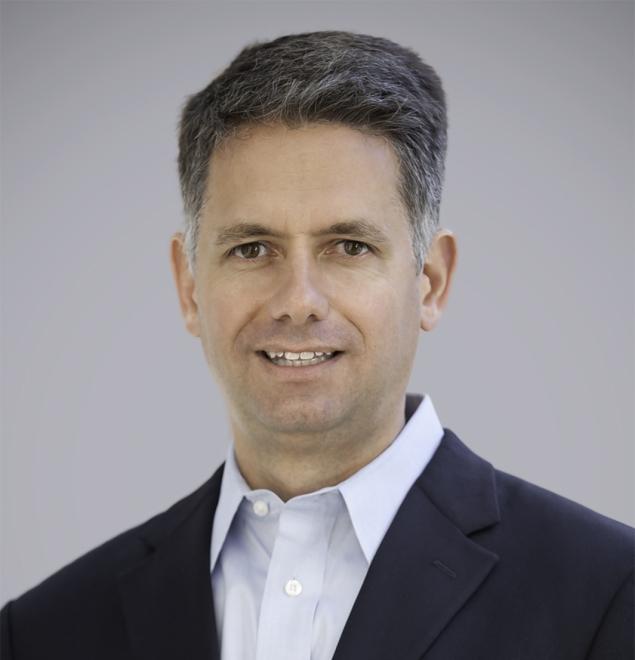
Chris Reykdal for State Superintendent of Public Instruction

Image result for Chris Reykdal for state superintendent

I'm endorsing Chris Reykdal for state superintendent.  Before I get to why, I want to lay out what the role of the state superintendent is.  Reydal's website. 

KUOW had this piece about the job recently and called it "ceremonial."  I think that might be more the Lt. Governor role but certainly not the state superintendent.  Many people think it is to support teachers but the role is an executive/administrative role that supports teaching and learning (which would include teachers but that is not the main focus.)

Here's what former state rep Marcie Maxwell had to say by way of explanation:


In my years as a School Board Director, Legislator and Governor’s Education Policy Advisor, I’ve worked closely with OSPI Superintendents, and understand the roles and responsibilities of this statewide official. The role of OSPI Superintendent is deep in politics, policies and budgets. OSPI is a statewide agency of 400+ employees with program oversight and reporting for billions in state and federal education funds.
It is important to have someone who cares about schools and students but it's more important to consider that the state superintendent sits on several key committees including the timber committee (because some school funding comes from timber sales.)  You need someone who knows this landscape and Reykdal does. 

Maxwell goes on to state that Reykdal has been a teacher (three years early in his professional career), a fiscal director for higher ed systems but has also been an elected official - both a school board director and a state representative.  That on-the-ground knowledge of both how schools work and the people who do the funding is a significant item in the list of what Reykdal would bring to the office.

Besides his teaching certificate, he also has a Master's degree in Public Administration (government finance, budgeting and performance management.) 

In the Legislature, he has served as the vice-chair of the House Education Committee.  He's worked in the Washington Senate before being elected, as a fiscal analyst for transportation. 

In short, he knows his stuff and is ready to step into the executive role of state superintendent. 

But I believe the state superintendent should also be able to talk to teachers and kids because the role also has some cheerleading to it; mainly, promoting belief in our public schools. 

Reykdal grew up the youngest of eight kids in a poor family.   As he puts it:
Seattle Schools Community Forum: Chris Reykdal for State Superintendent of Public Instruction:


Love and Hate, Sorta (It's Only Been Two Days) | The Jose Vilson

Love and Hate, Sorta (It's Only Been Two Days) | The Jose Vilson:

Love and Hate, Sorta (It's Only Been Two Days)

Image result for Love and Hate

“Vilson, tu si ere malo!”
It was the most random comment. For whatever reason, middle school students crack me up. Perhaps a large part of their being necessitates testing limits within the first few days of getting to know a teacher. Perhaps they insist that the first two days don’t mean much, so giving anything more than the usual rules speech or index card distribution is doing too much. Perhaps my easier demeanor relative to prior years opened up my students up to get a different vibe from me than prior students.
But I’ve never heard more students make a love / hate determination on the first two days of school than with this year.
I have three seventh grade classes, two eighth grade classes, all with different personalities individually and collectively. The students are still adjusting to the adults, and I’m throwing them off-balance with my self-effacing comments and high expectations (“not just eighth grade, but the first year of high school”).
Summer learning loss might be real, but my teacher look is still on point. I employed over the course of the first and second day with speed. I let out a smile every so often, but my eyes were just sharp enough to keep the classes moving. Amazing.
My students have all these awesome names. There’s one in particular that I had to learn from the student 15 times. I’ve been practicing it all weekend and I’m hoping it’s sharp by tomorrow. Sidenote: I probably shook a few when I rolled the r’s in some of their names, too. They’ll be even more surprised when I call their parents.
The talent teacher stopped me in the hallway and said, “Vilson, this seventh grade class is really excited about you!” Why? “Because they’re all saying that they’re going to pass.” Why? What did I Love and Hate, Sorta (It's Only Been Two Days) | The Jose Vilson:


The Fight to Bring Transparency to California's Charter Schools - LA Progressive

The Fight to Bring Transparency to California's Charter Schools - LA Progressive:

The Fight to Bring Transparency to California’s Charter Schools

Image result for big education ape California’s Charter Schools


imee Roylance was thrilled when her son was accepted into Livermore Valley Charter School in 2010. The traditional public schools in their part of the Bay Area were cash-strapped and struggling, and the K-8 charter school, with a waiting list 300 kids long, was known to be an excellent alternative. Sure enough, her son thrived at Livermore Valley, thanks to its diverse programming and strong leadership of its well-liked principal. Eventually, Roylance enrolled her younger two children at Livermore Valley, too.
“The experience overall was very positive,” she says. But she didn’t know what was going on behind the scenes.
She first heard inklings of financial and management troubles at the school early this year. Curious, she used her real estate background to look up the tax status of the land parcels on which the school sat – and found the charter was months behind in payments. Soon, Roylance and other parents were packing board meetings of the Tri-Valley Learning Corporation, the nonprofit that operates the school, demanding answers that didn’t come. Board members, Roylance claims, refused to address their tax troubles, release budget information or explain how they were using public funds. The board limited public comment at its hearings, changed meeting locations and released only snippets of pertinent financial documents, says Roylance. Livermore Valley didn’t return a request for comment by press time, but the charter school’s troubles have continued to mount: Tri-Valley is now under investigation by the Alameda County District Attorney for fraud,mismanagement of its foreign exchange program andchild endangerment.
Roylance believes many of these problems could have been avoided if Livermore Valley and its operator were required to be more transparent. “I don’t think [management] would have been able to take advantage of the system,” she says. “If there was more transparency, the public would have known what was going on. We could have avoided a lot of the trauma we went through.”
Roylance isn’t alone in such beliefs. An alliance of teachers, community activists and state officials is advocating that California’s charter school industry – the largest in the country, with more than 1,200 charter schools statewide – be held to the same accountability standards as traditional public schools. It’s calling for the passage of Assembly Bill 709, which would require charter schools to follow open-records and open-meeting laws, and disclose how they use taxpayer funds, as well as to prohibit charter board members from profiting from their schools. Currently, that bill sits on the desk of Governor Jerry Brown, who launched two charter schools while mayor of Oakland and has a history of opposing new charter regulations. But maybe, hope activists, with scandals and public outcry mounting, California’s charter schools are ready to be held accountable.

As the charter movement spread across the country, for-profit enterprises saw the potential for tapping into the $620 billion the United States spends on elementary and secondary schools without the regulatory restrictions placed on traditional public schools.

When the first charter school law passed in Minnesota in 1991, the idea was that these independently run schools would boast increased inventiveness and accountability, since they’d be run by parents, teachers and community members who’d have the students’ best interests at heart. But as the charter movement spread across the country, for-profit enterprises saw the potential for tapping into the $620 billion the United States spends on elementary and secondary schools without the regulatory restrictions placed on traditional public schools.
“Charter schools were originally a union concept,” says Eric Heins, president of the California Teachers Association. “We’d create these laboratory schools, exempt from the usual restrictions — then if we see things work, we’d scale them up to the traditional system. But they have become co-opted by a for-profit industry and backed by this small cabal of billionaires.” (Disclosure: CTA is a financial supporter of this website.)
Since these charters are exempt from most school district laws, there’s nothing on the books compelling them to abide by California’s open-meeting and open-records rules. And these days, California is being singled out for lax oversight of its booming The Fight to Bring Transparency to California's Charter Schools - LA Progressive:
Image result for big education ape California’s Charter Schools

SACRAMENTO PROGRESSIVE ALLIANCE: CTA Public Education Forum - Sacramento

SACRAMENTO PROGRESSIVE ALLIANCE: CTA Public Education Forum - Sacramento:

CTA Public Education Forum - Sacramento


The Sacramento City Unified School District has a once in a lifetime opportunity to create the public education system our students deserve. Because it is in the best financial position in its history, with the right vision Sac City can become THE Destination District in California. 

We can take one huge step forward to creating that vision in our upcoming contract negotiations with the District which will begin next month. To help us inform our proposals and to provide a voice for educators, parents, students and the broader community, we are holding a public education forum. A flyer for the event can be found by clicking here. 

Join Mayor-Elect Darrell Steinberg, Educators, Parents and Community Leaders! Tuesday, September 20th
Fruitridge Elementary
4625 44th Street
Sacramento 95820
6:30 to 8 p.m. 

And the District's ability to continue to make progress relies on adequate funding. That's why we support: 
Yes on Prop 55 

Proposition 55 is on the November ballot. This statewide ballot initiative extends the tax on millionaires that was part of 2012's Proposition 30 that helped to restore funding to schools. This increased revenue is a major reason why Sac City is in the best financial position it has been in its history. A fact sheet on Prop 55 can be found here. 

We look forward to seeing you on September 20th. In the meantime, you can stay informed by visiting our website at www.sacteachers.org.

Nikki Milevsky David Fisher
President, SCTA First Vice-President, SCTA
Tell your friends. 


 SACRAMENTO PROGRESSIVE ALLIANCE: CTA Public Education Forum - Sacramento:

“Union Shill”: I am more than a label, I am me – Cloaking Inequity

“Union Shill”: I am more than a label, I am me – Cloaking Inequity:

“Union Shill”: I am more than a label, I am me


Drop Labels is a upcoming social media campaign using videos to share personal stories of individuals discussing a particular label that has impacted their life. At the end of every video, the filmed individual asks for their friends to upload their personal videos on DropLabels.Org to start a viral movement. They are also working with nonprofits to share stories of those that receive service, and in return, they share information about the nonprofits that participate – such as sharing links for donations, information, and or resources. Their end goal, is to bring awareness to labels and reduce prejudice and stigmas. Furthermore, to also share information about nonprofits that work to bring communities together and assist with reducing discrimination, along with increasing their donations and support.
My short clip deals with my perspective on the label “union shill” I discuss my beliefs about labor and my family history in the labor movement.
I am more than a label, I am me
How can you make a Drop Labels video right now?:
  1. Use your personal camera, phone, tablet, or computer to record a 2-8 minute long video
  2. In the video, describe a label that has impacted your life. Labels can be words or certain categories such as ethnicity, gender, sexual orientation, and etc.
  3. At the end of the video state “Join me and others in this movement by uploading your personal video on DropLabels.Org”
  4. Send video to Chloe Messdaghi at messdaghi@gmail.com as soon as possible.
They are launching the campaign at some point in September. On the day of the launch, they will send you a link of your personal video on our site to be shared within your social media network, as well as asking for your friends and family to make videos as well.๐Ÿ™‚
Check out and follow my YouTube channel here.
Please Facebook Like, Tweet, etc below and/or reblog to share this discussion with others.
Want to know about Cloaking Inequity’s freshly pressed conversations about educational policy? Click the “Follow blog by email” button on the home page.
Twitter: @ProfessorJVH
Click here for Vitae.
 “Union Shill”: I am more than a label, I am me – Cloaking Inequity:

Education Lessons From A Sparkly District: What A Difference A Year Makes

Education Lessons From A Sparkly District: What A Difference A Year Makes:

What A Difference A Year Makes


A year ago, I wrote about a student's 8th grade class schedule in a Newark middle school. You can read that post here. It was also later picked up by Valerie Strauss at the Washington Post. The Newark schedule was in stark contrast to what schedules look like in suburban and wealthier districts throughout the state.

This was his 8th grade schedule:


The parents, both from multi-generational Newark families, and their son, struggled with the lack of variety within the school day. I would characterize that schedule as oppressive. How can children thrive on a day that looks like that? I know lots of people will think (and feel free to rail against me for suggesting otherwise) there's nothing wrong with a monotonous day filled with English language arts and math. That art, gym, chorus, music, languages, etc. are for those who "deserve" it and not for students who live in a place where high test scores are the only thing keeping their local schools open. 

At the end of last school year, the parents made the very tough decision to leave their city, their home, behind and head for the Jersey shore. Yes, they were fortunate to be able to afford to do so. Not everyone is in that position.

What their son experienced in 8th grade was enough for them to say no more. They wanted 
Education Lessons From A Sparkly District: What A Difference A Year Makes:


DON'T WANT STATE AUDIT OF "TEACHER JAIL PRACTICE" AT LAUSD TO BE A WHITEWASH? LET THEM HEAR FROM YOU - Perdaily.com

DON'T WANT STATE AUDIT OF "TEACHER JAIL PRACTICE" AT LAUSD TO BE A 


DON'T WANT STATE AUDIT OF "TEACHER JAIL PRACTICE" AT LAUSD TO BE A WHITEWASH? LET THEM HEAR FROM YOU


Joint Legislative Audit Committee.jpg

On January 13th, 2016, the Joint Legislative Audit Committee (JLAC) approved an audit requested by State Senator Tony Mendoza (D-Artesia) regarding the use of "Teacher Jail" by the Los Angeles Unified School District (LAUSD). Although the audit report is scheduled to be finished at the beginning of October, one can justifiably wonder how this audit process can possibly come up with an impartial broad spectrum of testimony and evidence on the "teacher jail" used at LAUSD and elsewhere, when up until now nothing has been done to reach out to teachers and others in the general public who might offer a different and possibly more enlightening alternative take on why the isolation and long term incarceration of legally presumed innocent teachers was necessary in the first place. Simply stated: Is teach jail about bad teachers or just about saving LAUSD money by getting rid of those at the top of the salary scale as I suggested in my January 15, 2016 article at www.perdaily.com? Up until now has the JLAC looked at LAUSD's financial motive for teacher jail?

While it is understandable that the JLAC would want to be secretive in protecting the integrity of their investigation and what they were looking into and what they had already found out, one must wonder why it took me weeks of reaching out to them before they finally were willing to spend an hour with me on the phone on 8/24/16 listening to my take as to what teacher jail might just be all about, if one was willing to look at all the evidence.

What follows is the JLAC's ten point audit mandate. After going through it yourself, you might consider getting directly in touch with those doing the audit at the JLAC listed below to tell them your experience. One would hope that the more testimony supported with evidence you give, the better chance the JLAC will have in coming up with the real truth about teacher jail. Who knows, maybe if enough of you contact the JLAC, they just might ask for an extension of time to continue looking into the practice of teacher jail at LAUSD and elsewhere.

Contact:

California State Audit

Elaine Howle, State Auditor

621 Capitol Mall, Suite #120

Sacramento, CA 95814

(916) 445.0255

Mark Reinardy ext. 295

Tammy Lozano ext. 346

2016-103 AUDIT SCOPE AND OBJECTIVES School District Employee Discipline Process

The audit by the California State Auditor will provide independently developed and verified information related to the Los Angeles Unified School District's (LAUSD) credentialed employee discipline processes, as well as those of select other school districts, and will include, but not be limited to, the following:

1. Review and evaluate the laws, rules, and regulations significant to the audit objectives.

2. Determine the circumstances under which LAUSD houses teachers who are the subject of a misconduct investigation, and determine the cost of housing teachers, based on the per-teacher cost and overall cost, for the past five years. In determining these costs, include the cost of compensating the housed employee and the cost of a substitute teacher, when applicable.

3. Survey a selection of school districts regarding their policies and practices used when a teacher is the subject of an investigation for misconduct requiring his or her removal from the classroom.

4. Determine the reasons LAUSD houses teachers who are the subject of a misconduct investigation, evaluate the appropriateness of those reasons, and determine whether other, less costly alternatives exist.

5. For a selection of teachers, assesses the manner in which their cases were evaluated, investigated, and resolved. For a selection of teachers who have been housed for a significant amount of time, determine whether the investigations related to those teachers were conducted timely. Also, to the extent possible, for those cases that are still unresolved or were not resolved timely, determine whether the process LAUSD uses to investigate teacher misconduct and to house teachers who are the subject of such an investigation is sufficient to protect the procedural due process rights of the teachers involved.

6. Evaluate whether housing teachers who are on paid leave pending the outcome of a misconduct investigation is a reasonable practice, and determine whether LAUSD follows appropriate policies and practices in making the decision to house such employees.

7. Determine, to the extent possible, whether employees, including those employees who had been housed for a significant period of time during the last five years, ultimately have disciplinary action taken against them by LAUSD or by the Commission on Teacher Credentialing with respect to their teaching credential.

8. Review data from the last five years concerning the number of credentialed school employees at LAUSD who have been housed and the length of time they have been housed. To the extent possible, categorize and present the data grouped by the type of misconduct alleged.

9. To the extent possible, review the impact on students whose teachers have been housed.

10. Review and assess any other issues that are significant to the audit.

This document is #2016-103. Estimated release date of final audit is October 2016.

http://voiceofoc.org/2016/01/senator-mendoza-lausd-teacher-jail-audit-request-approved-by-jlac/

https://www.auditor.ca.gov/pdfs/analyses/2016-103.pdf

https://www.auditor.ca.gov/bsa/aip

https://www.auditor.ca.gov/contactus


DON'T WANT STATE AUDIT OF "TEACHER JAIL PRACTICE" AT LAUSD TO BE A WHITEWASH? LET THEM HEAR FROM YOU - Perdaily.com:

Tom Torlakson Announces Nutrition Grant Winners - Year 2016 (CA Dept of Education)

Tom Torlakson Announces Nutrition Grant Winners - Year 2016 (CA Dept of Education):

Tom Torlakson Announces Nutrition Grant Winners - Year 2016

Image result for big education ape Tom Torlakson kiss the cook


SACRAMENTO—State Superintendent of Public Instruction Tom Torlakson announced today that 50 schools received grants for the 2016–17 school year to make changes in their cafeterias to encourage students to select and enjoy nutritious foods. The grants come from the Team Nutrition Smarter Lunchrooms Movement of California Program.
The program is designed to help schools makeover their lunchrooms and food menus by providing funds for a variety of strategic changes, including creating visually interesting signs, adding innovative descriptions of menu items, and placing fruit at the checkout register. Under the grant program, districts receive nearly $14,000 to distribute to two schools.
In addition to the grant money, district winners will receive additional support from the Smarter Lunchroom Movement of California Collaborative led by the California Department of Education (CDE), the Dairy Council, and the University of California Fresh Nutrition Education Program. Students will also receive nutrition education to reinforce the lunchroom makeover messaging.
“It’s never too early or too late to introduce our students to the benefits of eating healthy foods,” Torlakson said. “This grant money enables school districts to apply extra resources toward a nutrition program that is creative, visual, and will resonate with students in a way that encourages them to make healthy and nutritious choices during lunch period and even after the school bell rings.”
Superintendent Torlakson has placed a top priority on keeping students healthy by making sure they have access to nutritious foods and engage in regular physical activity. Studies have attributed academic success and positive student performance to healthy eating habits. Well-nourished children are able to focus in class and are ready to learn.
The CDE Nutrition Services Division created this grant program from funds it received from the U.S. Department of Agriculture through its Team Nutrition Training Grant.
For a complete list of 2016–17 grantees, visit the CDE Team Nutrition Smarter Lunchroom Makeover Funding Results web page.
# # # #
Tom Torlakson — State Superintendent of Public Instruction
Communications Division, Room 5206, 916-319-0818, Fax 916-319-0100
Tom Torlakson Announces Nutrition Grant Winners - Year 2016 (CA Dept of Education):

Assume You Can Do What You Like Under ESSA, Sen. Alexander Tells Ky. Lawmakers - Politics K-12 - Education Week

Assume You Can Do What You Like Under ESSA, Sen. Alexander Tells Ky. Lawmakers - Politics K-12 - Education Week:

Assume You Can Do What You Like Under ESSA, Sen. Alexander Tells Ky. Lawmakers

AlexanderSnipKentucky.PNG

How should states approach the Every Student Succeeds Act? U.S. Sen. Lamar Alexander, R-Tenn., had clear advice for state lawmakers on Monday: Assume you can do as you please, and if the U.S. Department of Education shoots down your ideas without a clear rationale, don't take it lying down.
Alexander, the chairman of the Senate education committee, emphasized that message during a public hearing held by the Kentucky legislature's Interim Joint Committee on Education. The senator, one of the architects of the law, also said that when states put together their ESSA plans and tackle thorny questions, they should consult the "new coalition" of groups that backed ESSA and helped get it passed, from state leaders and local school boards to the national teachers' unions. 
But Alexander devoted many of his remarks to playing up states' authority under the law and downplaying the Education Department's overall role.
"Don't assume you can't do anything," Alexander told the lawmakers.
And in a similar vein, he said that if the Education Department rejects Kentucky's state ESSA plan without a clear rationale, "You can take the department to court, and I hope that you do. I hope that you don't have to. We'll have a new administration [in 2017]."
Here's how the senator dealt with a few other topics:
• As he has before, Alexander said the department's official draft supplemental money rule, which requires federal money to be used in addition to and not in place of state and local dollars, is a bad idea.
"I'm going to do all I can to oppose it. I hope you will too," he said.
Essentially, Alexander believes the department doesn't have the legal authority to do what it wants to do here.
Remember that Secretary of Education John B. King Jr. has said his department's proposed supplemental-money plan, while not a cure-all for resource inequity in schools, is a big step forward in trying to ensure that poor students receive a greater share of state and local resources. In fact, the department said the proposal would shift up to $2 billion in new state and local money for disadvantaged students. 
• While he mostly criticized the role of Washington in education, in response to a question about the proper federal role in K-12, Alexander did highlight the importance of ensuring that certain tests are administered, and that the results are published and broken down by various subgroups. But when it comes to developing and implementing strategies to help low-performing schools, Alexander emphasized where the Education Department's role ends: "While you're required to identify the schools [in need of improvement] in order to get the federal money, what you do with the schools is up to you."
Alexander talked with Kentucky lawmakers at about the same time that King departed from Washington on a weeklong bus tour of American schools  on Monday. 
Image capture of Sen. Lamar Alexander, R-Tenn., from the Sept. 12, 2016 Kentucky Joint Education Committee hearing. 

Don't miss another Politics K-12 post. Sign up here to get news alerts in your email inbox.
Follow us on Twitter at @PoliticsK12.
Assume You Can Do What You Like Under ESSA, Sen. Alexander Tells Ky. Lawmakers - Politics K-12 - Education Week:

Mike Klonsky's SmallTalk Blog: Here's just 5 day's worth of Chicago Trib's CPD headlines

Mike Klonsky's SmallTalk Blog: Here's just 5 day's worth of Chicago Trib's CPD headlines:

Here's just 5 day's worth of Chicago Trib's CPD headlines


Grand jury to look into possible cover-up by Chicago police in Laquan McDonald shooting
(9/12) A grand jury will be impaneled to investigate a possible cover-up by Chicago police in the fatal shooting of Laquan McDonald at the request of a special prosecutor appointed in July to investigate the matter. Patricia Brown Holmes, the special prosecutor, said Monday she has enough evidence to...
 Lawsuit accuses Chicago cop of beating mentally disabled teen

(9/12) A veteran Chicago police officer has been accused in a federal lawsuit of beating a mentally disabled teen while off duty last year, sticking his gun in the young man's mouth and filing a false police report to cover it up. Both the Independent Police Review Authority, which investigates police...


4 officers hospitalized after Englewood crash

(9/11)Four Chicago police officers were hospitalized after a crash late Saturday in Englewood, police said. Just after 11:35 p.m., two squad cars crashed while attempting to curb a vehicle in the 5800 block of South Ashland Avenue. The officers were taken to area hospitals with injuries that police described...
Police open fire after witnessing fatal Humboldt Park shooting; 1 wounded

(9/10) It's uncommon for police officers to witness a killing, but Friday night, Chicago police say, gang unit officers watched a fatal shooting unfold on the streets of Humboldt Park. Before it was over, officers intervened and fired shots. A second person was injured by gunfire, possibly from police,...
Police chase death, wrongful conviction, cop overtime suits may cost city $2.7M

(9/9) Chicago taxpayers likely are on the hook for another $2.7 million in lawsuit costs after the City Council Finance Committee on Friday recommended paying out Mike Klonsky's SmallTalk Blog: Here's just 5 day's worth of Chicago Trib's CPD headlines:

In Chicago, DFER has been run out of town. | Fred Klonsky

In Chicago, DFER has been run out of town. | Fred Klonsky:

In Chicago, DFER has been run out of town.


prekoped4-3-web.jpg


Former DFER boss, Joe Williams, quit to get a job at Walmart. The rest of DFER left town.
Back in 2014, Illinois Democratic Party political consultant David Ormsby predicted, “Democrats for Education Reform will face a formidable challenge outmaneuvering the CTU.”
Ormsby and I have had differences over the years, but he was right as rain about that.
Comparing DFER’s role in the current teacher negotiations to 2012, the Sun-Times Lauren FitzPatrick yesterday wrote, “DFER no longer has a chapter in Illinois. Its national press shop did not respond to messages seeking comment, nor did its former local head.”
The guy who once ran DFER, Joe Williams, jumped ship a while ago and took a job at Walmart. Not as a store greeter. With their foundation.
Joe once threatened to kick my ass and said I was dumbest person in the world.
In the world! A low bar, if you ask me.
DFER, who claim to be Democrats but are definitely not in the progressive Sanders wing, got their heads handed to them at the DNC. The platform debate on education rejected their views as well as the policies that In Chicago, DFER has been run out of town. | Fred Klonsky: