Latest News and Comment from Education

Sunday, September 11, 2016

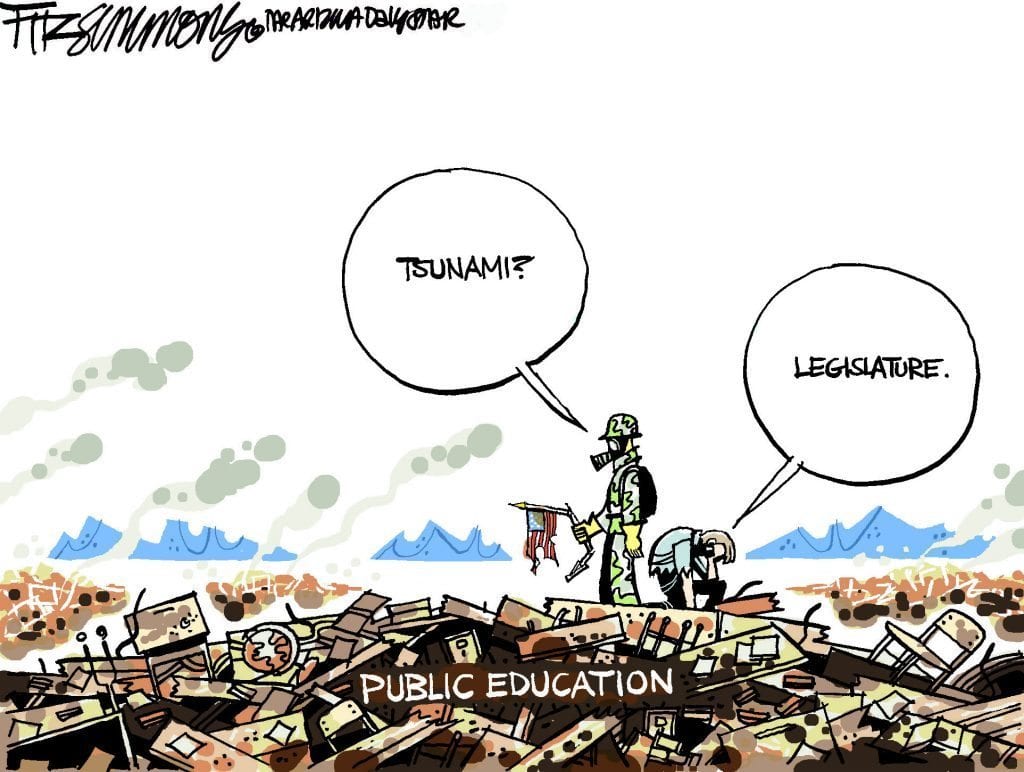
The Upcoming, Troubling, PBS “School of the Future”

The Upcoming, Troubling, PBS “School of the Future”:

The Upcoming, Troubling, PBS “School of the Future”

The colorful words "SCHOOL" made with wooden letters next to a pile of other letters over old wooden board.

On Wednesday, Sept. 14, 9 pm ET, PBS and NOVA will air a two hour special called “School of the Future.” The advertisement tells us much. They are warning that the future for children demands that students need better preparation to succeed due to globalization. What they probably won’t tell us is that this future will likely continue to be manipulated by corporations.
Technology
This abstract, strange future they speak about (possibly puzzling to the smartest among us), will be about technology, of course.
Their message appears to be that we better address technology that can be used with students, even to study their brains to see if they can learn faster and better. The goal is to close the achievement gap.
The ad has that hint of emergency for which school reformers are known.
Sal Kahn of Kahn Academy fame will be on the program. I don’t mind Kahn’s online instruction, but it is naïve to believe that such a program will replace public schools and real teachers.
And that’s what today’s technology is about. Don’t be deceived by the few teachers that The Upcoming, Troubling, PBS “School of the Future”:

CURMUDGUCATION: OR: Oh Noooos!! SBA Results Are In!

CURMUDGUCATION: OR: Oh Noooos!! SBA Results Are In!:

OR: Oh Noooos!! SBA Results Are In!

Out in Oregon, the Smarter Balanced Assessment results were in this week, and various outlets raised the cry of dismay over the results. But Betsy Hammond at the Oregonian did an outstanding job of capturing everything wrong with SBA fever in her "8 Sobering Takeaways..." piece.


First, she reminds us that "the tests are designed to measure whether students are on track to be ready for college, starting in third grade." I'll remind us that while that may have been the intent, since A) we have no idea how to measure whether or not a nine-year-old is "in track" for college consequently, B) we have no idea whether or not SBA is doing so. It's a patently ridiculous idea-- can a standardized math and science test tell us if that nine-year-old is on track to earn any college degree?

But let's look at those eight sobering takeaways (and may I just add that I wonder, as I always wonder when someone tosses "sobering" into a conversation, what exactly Hammond thinks got us all drunk in the first place?)

1) 53% of Oregonian nine-year-olds aren't "on track" in reading and math. This could prevent them from graduating, because nothing that could possibly happen in the next nine years of their education could alter their destiny. It is set in stone, chiseled there by this single standardized test. One has to wonder if this fits with other statistics in Oregon-- has Oregon routinely been experiencing a mere 50% graduation rate, or does this pack of children represent a particularly low ebb in academic achievement. Id so, what could account for that?

2) The test result gap between students who are wealthy and/or white and students who are not-- well, that just hasn't been fixed yet. It's almost as if all the great reform ideas that have been 
CURMUDGUCATION: OR: Oh Noooos!! SBA Results Are In!:


This District May Close All Of Its High Schools, But It's About Much More Than Money : NPR Ed : NPR

This District May Close All Of Its High Schools, But It's About Much More Than Money : NPR Ed : NPR:

This District May Close All Of Its High Schools, But It's About Much More Than Money

Superintendent Jay Badams leads a coalition of students, parents, educators, and community members at the state capitol in Harrisburg, Pa., urging state lawmakers to alter policies that have left Erie's public schools on the brink of insolvency. Kevin McCorry/WHYY

In northwest Pennsylvania, along the edge of Lake Erie, you'll find the city of Erie.
There, the superintendent of the more than 12,000 student district has forwarded a plan that's causing a stir — calling for leaders to consider shutting down all of the district's high schools and sending students to the wealthier, whiter, suburban districts.
Why?
Superintendent Jay Badams says it's a "matter of fairness."
Erie's schools have been pushed to the brink after six years of deep budget cuts, and he believes the children in the city's district — which predominantly serves students of color — are being systematically shortchanged.
That's in part because urban school districts in Pennsylvania face a particularly brutal logic.
They serve the poorest, most needy students. Yet, when it comes to state funding per pupil, most of them don't make the top of the list.
Even though Erie is one of the most impoverished districts in the state, and has one of the highest percentages of English language learners, the district currently receives less per-pupil funding from the state than hundreds of other districts.
Excluding pension costs, per-pupil spending in Erie is less than it was in 2008-09.
"If our students would need to attend schools in other districts in order to have some sort of equity, then that may end up being the most ethical and moral decision," Badams says.
What about the students?
The signs of Erie's fiscal distress would be hard for students to overlook.
"There's a perception out there that kids living in poverty, kids living in the inner-city, don't know what they're missing," Badams says. "Well, they do know what they're missing."
Many of the aging school buildings have crumbling infrastructure. Books and This District May Close All Of Its High Schools, But It's About Much More Than Money : NPR Ed : NPR:

Community Schools: Why Do We Need Them? - LA Progressive

Community Schools: Why Do We Need Them? - LA Progressive:

Community Schools: Why Do We Need Them?

community schools

With A Brooklyn Accent: September 11 Memories: Thoughts on a Day of Mourning, And Unity

With A Brooklyn Accent: September 11 Memories: Thoughts on a Day of Mourning, And Unity:

September 11 Memories: Thoughts on a Day of Mourning, And Unity

Image result for September 11 Memories: Thoughts on a Day of Mourning, And Unity
September 11 is etched in my mind as a time of horror, fear and mourning, but also a time when New Yorkers came together in a way I rarely have seen before or since.
I was in my office that day when one of my favorite students walked in, telling me, with a shaking voice, that she and her roommates had heard that a plane had stuck the World Trade Center. I didn't know what to think, but I knew we could see the Twin Towers from the windows of my sixth floor seminar room on Fordham's Bronx campus, so I opened the door and looked out . From there, as other faculty and students joined us, we saw the first tower collapse, then the second, terrified not only at the deaths of thousands, if not tens of thousands that would ensue, but at the inevitably consequences of an attack that involved such damage.
In the hours that followed, I like many others, tried to find out what happened to loved ones who worked in Lower Manhattan, especially my daughter and son in law. Both thank God, were alive. I also called Liz, who was heroically trying to hold things together in PS 321 where she was the principal, especially when she found out that some of the teachers had spouses who worked in the Twin Towers. This was going to be a tragedy that left almost no one unaffected. And I looked inside myself and prayed that I would have the courage to deal with the pain, and the fear, and panic, not only inside me, but in so many others.
In the days that followed, the pain got personal. Three coaches I worked with in Brooklyn CYO, one of them the father of one of my son's best friends, had died trying to save people in the Twin Towers. They had run up the stairs as others ran down. As had 11 firefighters in our local firehouse in Park Slope. And I knew there were neighborhoods I took teams I coached to, Rockaway, Bay Ridge, Marine Park, that were filled with police officers and firefighters. And the death toll there was going to be terrible.
And this made me feel enraged at the attack. Whatever protest against US foreign policy those who flew into the buildings had intended, the primary blow they had struck was at working class New York- killing secretaries, building maintenance workers, those who worked in cafeterias and restaurants, along with the brokers and government workers and the police, firefighters, EMS workers and other first responders. I was enraged at those who had done this to my city and to people I had known and With A Brooklyn Accent: September 11 Memories: Thoughts on a Day of Mourning, And Unity:


JOHN THOMPSON: ‘It Is About Our Kids’ | The Oklahoma Observer

‘It Is About Our Kids’ | The Oklahoma Observer:

‘It Is About Our Kids’ 

‘It Is About Our Kids’


Editor’s Note: This is the first of two essays by veteran Oklahoma educators analyzing State Question 779, the proposed one percent sales tax increase for public education that will appear on the Nov. 8 statewide ballot. The second essay will be posted tomorrow. Both first appeared in the September edition of The Oklahoma Observer.
BY JOHN THOMPSON
Thompson,JohnWe definitely must vote Yes! on SQ 779. I wish we could cast our ballots with the certainty that we are making the right choice for the right reason. Voters must not be ambivalent, however. A No vote would be catastrophic. Oklahoma needs a huge turnout to vote for school funding, and get on track towards providing an educational and economic future for all of our kids.
Rarely do I comment on school finances. I focus on education policy, especially in regard to high-poverty Oklahoma City schools. Neither do I like to think of education funding in isolation. To build a just and promising future, teachers and school systems must join as team players with state and local social service providers and nonprofits in order to tackle complex and interconnected challenges. If this were merely a question of how to fund an increase in teacher salaries, I don’t know where I would come down in terms of the arguments by good Democrats and policy experts who question whether the sales tax is the proper tool.
Our teachers need a raise. They’ve gone a decade without one. Oklahoma invests 22% less than the rest of the region in per student funding, and we continue to cut education spending by as much or more as any state in the country. We face an exodus of teaching talent to neighboring states where teachers might be paid $10,000 more while living just a few miles across the border. Teachers need the $5,000 a year raise that SQ 779 would fund. But that is not the reason for taking the unusual step of raising sales taxes.
SQ 779 is not about teachers or other adults. It is about our kids. SQ 779 is a belated effort to rescue our poorest children’s educations. In some of Oklahoma’s most challenged districts, our schools could literally collapse. Rather than question the harm that a penny tax increase could inflict on cities and our poorest voters, we should ask about the price tag for rebuilding our most challenged schools in those cities. In fact, the defeat of SQ 779 could be a No vote on whether we care enough to salvage our most disadvantaged schools.
I know this will sound like hyperbole to some. Seventeen years ago, I wondered if business leaders were exaggerating when they briefed members of the MAPS for Kids bipartisan coalition. I was discreetly told that the MAPS effort to raise a temporary sales tax and property taxes was likely the last chance for the Oklahoma City Public School System. The OKCPS had suffered through too many years without passing bond issues and the bill for the chronic underfunding of schools was about to come due. If the voters did not support the tax increase, the next step would be to try to manage an orderly breakup of the district. Under such a situation, it would be unlikely that anything resembling adequate education options would be provided for our poorest children.
I saw real progress at John Marshall and in other OKCPS schools after the MAPS tax was passed, but then came No Child Left Behind. Teachers and ‘It Is About Our Kids’ | The Oklahoma Observer:

Randi Weingarten: “The Teacher Held My Hand” – Medium

“The Teacher Held My Hand” – Medium:

Randi Weingarten: “The Teacher Held My Hand”

My letter to members of the United Federation of Teachers in September of 2001, reposted today in memory of their heroism, and the of those we lost.
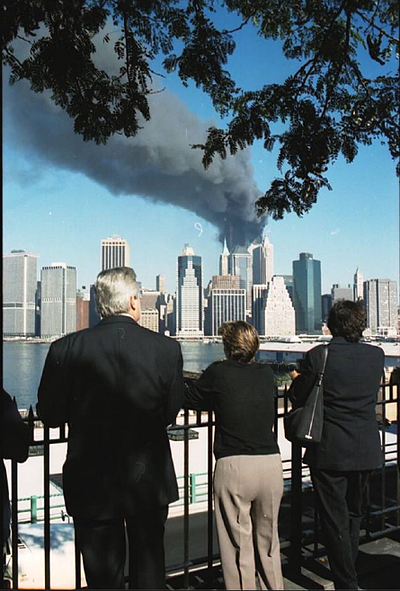
It was Primary Day. I was leafleting near Brooklyn Borough Hall with Alan Hevesi. Rush hour was nearly over. Suddenly, we heard an explosion. Smoke rose on the eastern horizon. We stopped campaigning and headed for the promenade. There the sight of one of the towers burning stopped us cold. Transfixed with disbelief, we watched a plane approach and then penetrate the second tower. A communal gasp, some screams, then silent horror swept through the growing crowd.
The rest of the day — I’ve never spent so much time at 110 Livingston — was spent in a blur of meetings, phone calls and huddles, gathering information on the state of the schools, making tough decisions on how to proceed, anxiously locating family and friends, sighing each time someone was safe, and crying each time someone was not.
As the towers collapsed, the mayor understandably wanted to evacuate all the schools, send every child home immediately. Chancellor Levy was ready to go along, but I strongly urged them to reconsider.
How could we send the children into the streets, into the unknown? What if they couldn’t get home? What if no one was home? What if there were more attacks? There were all kinds of ‘what ifs,’ some too terrible to think about.
Wouldn’t they be safer in the schools?
Convinced, the chancellor ordered the schools locked down. Together we developed a dismissal plan.
As evening approached, we needed to make a decision about the next day. Again understandably, the mayor’s office pressed for a return to normalcy as soon as possible. The schools should open, they argued. But again I differed. And again the mayor listened. Families would be able to spend Wednesday together, absorbing what had happened, explaining it to the children, helping them feel safe in this new, scary world.
Tuesday night, walking in my Brooklyn neighborhood, hearing the sirens and smelling the smoke, I gave thanks that there had been not a single report of a child hurt or missing in the day’s chaos. I knew our members were also safe, though three supervisors of school safety were injured. But I worried about you, especially about those of you in lower Manhattan and those whose loved ones were there.
I could only imagine what you had gone through. It was not until later that I “The Teacher Held My Hand” – Medium:


Justice for opt-out movement | Bradenton Herald

Courts sides with opt-out parents, ruling third graders who refuse to take the reading test can still advance by proving their reading skills. | Bradenton Herald:
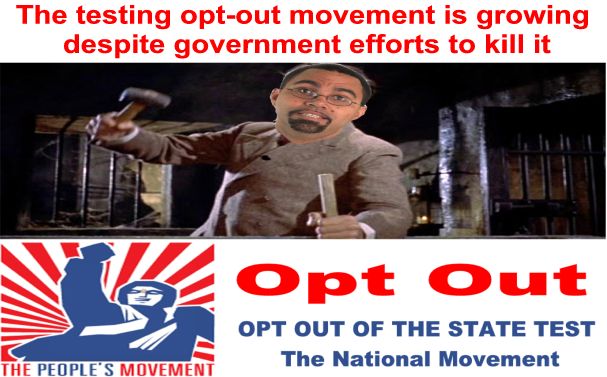
Justice for opt-out movement


Image result for big education ape opt out


Image result for big education ape opt out

Fifteen Years Later: Have We Learned Anything about Unity and Community? - Teacher in a Strange Land - Education Week Teacher

Fifteen Years Later: Have We Learned Anything about Unity and Community? - Teacher in a Strange Land - Education Week Teacher:

Fifteen Years Later: Have We Learned Anything about Unity and Community?

Image result for Unity and Community


I'm avoiding the fifteen-year remembrance pieces on television this morning.
There was a time--a relatively long period of time--when I believed that our national response to overwhelming tragedy might include an incentive to do more than fight back (erroneously, as it turned out) against The Forces Opposed to Democracy.
I actually thought that absorbing the lessons of 9/11 might refocus my particular bailiwick, education, on the necessity of future-thinking, diplomacy, and the mutual needs of our global community.
But not so much.
Instead, we are concentrating, like lasers, on "efficient" school governance models, higher profit margins for common educational services, and better data outcomes for kids in poverty despite the fact that those data outcomes don't really lead to more opportunity.
So much for community. So much for peace and justice and aiming for equal opportunity.
This morning, I picked up my digital newspaper and discovered that privileged white kids in one of the most highly regarded public school systems in my state (based on those data outcomes) spent Friday night waving TRUMP signs and a so-called Betsy Ross flag (which may or may not have racist origins) across a football field at the urban school students and parents on the other side. A father from the Grand Rapids Public School district, attending the game to support the football team and the marching band, penned a powerful letter to the Forest Hills school community:

Your team, your coaches, your families were our guests, yet it seems many of your students are unaware of the negative impact these actions would have on members of our community in our home field. One could argue these boys are ignorant of the symbols they embrace and display--so they are just kids. That only goes so far.
Is it not the role of their parents, you, and your district staff to make sure they aware that their actions in this context could have negative consequences? Certainly they have the right of free speech, but is sharing such politically charged symbols actions and words at high school football game the right set of actions for this context?
Spot on.
I'm sure the administrative team at Forest Hills is in full damage control mode. I actually know folks who are teachers and school leaders at Forest Hills and respect their work and beliefs. My own school district survived appalling student behavior on more than one occasion. This will, eventually, go away--but it represents something much larger and more sinister, something that impacts all of us here in the home of the brave. I hope the teachers in both schools are ready (and allowed) to discuss these events with their students in age-appropriate ways. I hope that civil discourse is still possible.
This seems to be the long-term outcome, then, of being attacked on our own soil: more division, self-indulgence, and deepening racial fault lines. Winners and losers. To hell with unity or even civil behavior--dominance has become our national goal, our trickle-down response to all conflict.
If 9/11--arguably the most shocking thing that's happened in a generation--was not a catalyst for positive social change, what hope do we have for preserving and enhancing our (once globally admired, and still considerable) public resources? If a friendly competition between two public Fifteen Years Later: Have We Learned Anything about Unity and Community? - Teacher in a Strange Land - Education Week Teacher:


Stages of Technology Integration in Classrooms (Part 3) | Larry Cuban on School Reform and Classroom Practice

Stages of Technology Integration in Classrooms (Part 3) | Larry Cuban on School Reform and Classroom Practice:

Stages of Technology Integration in Classrooms (Part 3)

chapter-10-new-40-638

Technology integration is not a binary choice: you either do it or you don’t. Anyone who has taught, observed classrooms and thought about what it means to include electronic devices and software into daily lessons knows that technology integration, like raising a child, learning to drive or cultivating a garden, is a process–not an either/or outcome. One goes through various stages in learning how to raise a child, drive a car, grow a garden. In each instance, a “good” child, driving well, a fruitful garden is the desired but not predictable outcome.
A host of researchers and enthusiasts have written extensively about the different phases a teacher, school, and district goes through in integrating technology into their daily operations. Most of the literature seldom mentions that such movement through increasingly complicated stages is really phases of putting a new idea or practice into action. The labels for the levels of classroom practice vary–novice to expert, traditional to innovative, entry-level to transformational.
Writers and professional associations have described how individuals and organization stumble or glide from one phase to another before smoothly using electronic devices to reach larger ends. And it is the ends (e.g., content, skills, attitudes) that have to be kept in sight for those who want teachers to arrive at the top (or last) stage. Buried in that final implementation stage is a view of “good” technology integration and, implicitly, “good” teaching. Often obscured but still there, these notions of what are “good” teaching and learning are embedded in that last stage. Figuring out those ends and what values are concealed within them is difficult but revealing in the biases that model-builders and users have.
As with arriving at a definition (see last post), I have examined many such conceptual frameworks that lay out a series of steps going from a beginner to an expert (across frameworks the names for each step vary). Most often mentioned are the Apple Classroom of Tomorrow (ACOT) and the SAMR models. Many implementation frameworks in use are variations of these two.
The ACOT model.
The earliest stage model came from the demonstration project Apple launched in the mid-1980s when the company placed in five elementary and secondary Stages of Technology Integration in Classrooms (Part 3) | Larry Cuban on School Reform and Classroom Practice:


Arkansas Residents Jim and Alice Walton Pony Up $1,835,000 to Raise Charter Cap in Massachusetts | deutsch29

Arkansas Residents Jim and Alice Walton Pony Up $1,835,000 to Raise Charter Cap in Massachusetts | deutsch29:

Arkansas Residents Jim and Alice Walton Pony Up $1,835,000 to Raise Charter Cap in Massachusetts


According to the September 09, 2016, filing of the Massachusetts ballot committee,Yes on 2, billionaire Arkansas resident Alice Walton is one of two individualsproviding the $710,100 in funding to promote MA Question 2, raising the charter school cap.
Alice Walton provided $710,000.
A second contributor, Massachusetts resident Frank Perullo provided $100 in order to establish the committee.
And then, the Alice Walton cash was moved to another Question 2 ballot committee: $703,770.29 of Alice Walton’s Yes on 2 committee money was expended to fundQuestion 2 ballot committee, Campaign for Fair Access to Quality Public Schools, where it was combined with billionaire Arkansas resident Jim Walton’s contribution of $1,125,000, thus making the total Walton contribution to the two committees $1,835,000 (and total Walton contribution to the latter committee, $1,828,770.29).
The Campaign for Fair Access total on its Sept 09, 2016, filing was $2,292,183 for 46 contributors– with 79 percent of that money ($1,828,770 / $2,292183) arriving from two out-of-state billionaires.
In other words, 96 percent of contributors (44 out of 46) provided only 21 percent of the total funding on the Campaign for Fair Access Sept 2016 report.
I can almost hear the conversation between Alice and Jim:
“You buy this Massachusetts ballot committee, and I’ll buy that one.”
“Done.”
The Waltons are not the only out-of-state billionaires using their wealth to influence the charter cap in a state in which they do not reside. According to the September 09, 2016, filing of the Question 2 ballot committee, Great Schools Massachusetts, other out-of-state billionaire/lobbying nonprofit contributors include the following:
  • John Arnold (Texas), $250,000
  • Michael Bloomberg (New York), $240,000
  • Education Reform Now (ERN) Advocacy (New York), $250,000
  • Families for Excellent Schools (FES) Advocacy (New York), $5,750,000
Note that the lobbying nonprofits, ERN Advocacy and FES Advocacy, are not Arkansas Residents Jim and Alice Walton Pony Up $1,835,000 to Raise Charter Cap in Massachusetts | deutsch29:

CURMUDGUCATION: ICYMI: Catch up on your reading (9/11)

CURMUDGUCATION: ICYMI: Catch up on your reading (9/11):

ICYMI: Catch up on your reading (9/11)


Here's some education reading for a quiet week in September. As always, please share and pass on the pieces you like. 

To the Gentlemen Talking about Lazy Teachers

This blog is operated by two former teachers, but clearly the woman still remembers how the gig works.

I Don't Want My Son To Read in Kindergarten

One more great argument in favor of letting small children be small children.

Black Teachers Matter

Yes, I already aimed readers at this piece from Mother Jones earlier in the week, but if it was still parked on your "I've got to get around to reading that" list, here's your encouragement to do that today. It's an important piece.

Devos Family Showers GOP with Money

The Detroit Press lays out the discouraging picture of how one family bought itself a state legislature

Gutting the Powers of American Cities

From Slate, a detailed picture of how pre-emption is the new technique for conservatives to take control of cities (because local control is only cool when it does what you want it to). And-- surprise-- ALEC is all over this.

A Parent's Reflections on School Letter Grades

Bill Ferriter blogs a lot about technology and technique in the classroom, but he's also a father, and he takes the occasion to reflect on his concerns about his child's very wonderful school being branded with a C.

Understanding Teach Like a Champion

This is actually an old post from Peg with Pen, but Doug Lemov's little slice of teacher baloney has come up a few times this week, and this is a pretty good look at just why I would rather teach like a human teacher.

College and Career Ready: The Manufacture of Hollow People

I'm a sucker for anyone who thinks we're teaching live human beings and not manufacturing widgets for companies to consume.

The Anti-Five Paragraph Essay Five Paragraph Essay

Well done. 


Election Education Update
After the two conventions, it began to look like public education would not have any champion in this Presidential cycle. So maybe now that the candidates have had a chance to put together clearer statements and assemble some advisors, has the picture changed? Are things looking up for fans of public education? Well, in a word, no. And in more than a single word...? Trump Flaps His Gums This was t
(Some of) What Technocrats Get Wrong
Slate ran an article this week about the newsy side of Facebook , and it's a reminder of so many reasons that technocrats are not to be trusted around education. Facebook has been having trouble handling the news. Well, and 
 Catch up with CURMUDGUCATION


 Big Education Ape: Catch up with CURMUDGUCATION: PA: Judge Cuts School Funding + Testing Still Incentivizing Cheating - http://bigeducationape.blogspot.com/2016/09/catch-up-with-curmudgucation-pa-judge.html


Problems with the CCJEF Decision - Will equity without adequacy be enough to help Connecticut’s neediest children? (By Wendy Lecker) - Wait What?

Problems with the CCJEF Decision - Will equity without adequacy be enough to help Connecticut’s neediest children? (By Wendy Lecker) - Wait What?:

Problems with the CCJEF Decision – Will equity without adequacy be enough to help Connecticut’s neediest children? (By Wendy Lecker)


Wendy Lecker, an education advocate, legal expert and Stamford Advocate columnist produces a MUST READ analysis about some of the extremely serious problems associated with the Judge’s recent ruling in the CCJEF v. Rell school funding case.  The article first appeared in the Stamford Advocate and other Hearst newspapers.  You can read and comment on this critically important piece at:http://www.stamfordadvocate.com/news/article/Wendy-Lecker-Ruling-raises-hope-for-poorest-9212622.php
Wendy Lecker writes;
On Sept. 7, Judge Thomas Moukawsher issued his post-trial decision in Connecticut’s school funding case, CCJEF v. Rell. His sweeping decision covered funding, which I will address here, and education policy, which I will address in my next column.
On the funding front, the outcome was mixed. While the judge did declare Connecticut’s system of distributing school aid unconstitutional, he found that the state was providing adequate funding. In doing so, he redefined constitutional adequacy and ignored the plaintiffs’ overwhelming evidence of resource deficiencies in the CCJEF districts.
At trial, the CCJEF plaintiffs put forth overwhelming evidence of severe resource deficiencies of inputs such as: academic and social intervention for at-risk students and students with special needs; guidance counselors, social workers, nurses, services for English Language Learners, music art and other subjects; and reasonable class size.
Judge Moukawsher’s charge was to examine the resources in the districts at issue in the case and determine whether those resources were so inadequate as to violate Connecticut’s constitution.
However, nowhere in the opinion does the judge systematically look the actual resources present or absent in each district.
Rather, the judge focused only on three types of resources: facilities, instrumentalities of learning, and teachers. He declared that since, in his 
Problems with the CCJEF Decision - Will equity without adequacy be enough to help Connecticut’s neediest children? (By Wendy Lecker) - Wait What?: