Latest News and Comment from Education

Tuesday, January 28, 2020

BHM #16: John Muir Shares its Black History Pride! - SF PUBLIC SCHOOL MOM

BHM #16: John Muir Shares its Black History Pride! - SF PUBLIC SCHOOL MOM

BHM #16: John Muir Shares its Black History Pride!


In honor of Black History Month, I’m reposting a previous series. Several years ago, (2015 to be exact!) I challenged myself to write 28 posts highlighting African-American History. In 2016, I finally reached my goal!
While I have been so excited that Muir and other schools have a long tradition of celebrating Black history during Black History Month and throughout the year, there are still many schools in SF that haven’t celebrated this holiday (!) I am excited to announce that this year, in 2020, after five years of advocacy by me and other African American Parent Advisory Council leaders, SFUSD will finally celebrate Black History Month at every school in the district!
Check out my original post below which appeared on February 21, 2016. To see more posts in this series, click here.

Ihave been shocked to learn through my participation in the African American Parent Advisory Council (AAPAC) that NOT ALL SFUSD SCHOOLS are holding celebration activities (!?!) The SFUSD AAPAC is sending out a survey to principals to see which schools have activities planned. You can support their efforts by asking your child what activities are going on at your school. Remember, Black History is American History, and all our kids lose out when we don’t learn about the contributions and perspectives of Black Americans.
If your school doesn’t have multiple activities planned (and it’s a whole MONTH for Pete’s sake… so there should be multiple activities planned!) John Muir’s event is one great example.
On Thursday, February 11, 2016, I had the HONOR of participating in the National African American Read-In at John Muir Elementary. I know I brag a lot CONTINUE READING: BHM #16: John Muir Shares its Black History Pride! - SF PUBLIC SCHOOL MOM

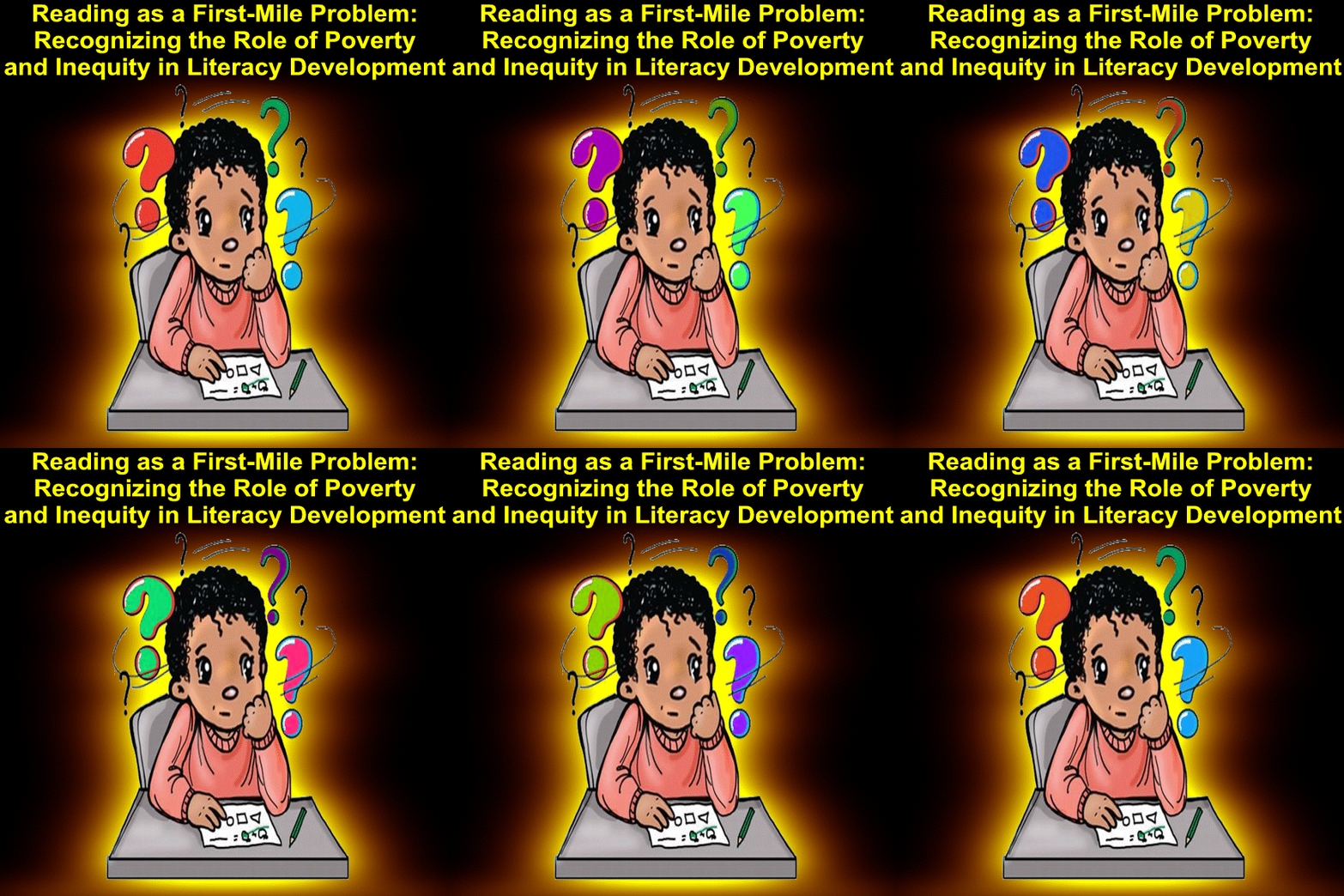
Reading as a First-Mile Problem: Recognizing the Role of Poverty and Inequity in Literacy Development – radical eyes for equity

Reading as a First-Mile Problem: Recognizing the Role of Poverty and Inequity in Literacy Development – radical eyes for equity

Reading as a First-Mile Problem: Recognizing the Role of Poverty and Inequity in Literacy Development


Literacy scholar Tim Shanahan answers the question Why Is It So Hard to Improve Reading Achievement? with the following: “Classroom implementation is the last mile in reading reform.” He eventually adds, “The last mile rhetoric shouldn’t be a hair-on-fire message, but one that acknowledges both the current successes and the need to do better.”
Shanahan’s consideration of the persistent public and political concern over low reading achievement appears to offer a balanced admission that many approaches to reading instruction can be successful, but framing reading as a last-mile problem is finding yourself in a hole and deciding you just need to dig a little deeper.
Shanahan seems to accept a number of different “levers” as valid approaches to improving student reading, including a somewhat veiled endorsement of Common Core standards; in fact, he concedes: “Let’s face it. Our problem in reading isn’t that nothing works. It’s that everything does.”
In 2020, what Shanahan’s last-mile argument reveals, however, is that there is a mistake in teaching reading that can be addressed, but as a society, we refuse to acknowledge that reading is a first-mile problem.
That first mile is much larger than formal schooling, and what we refuse to CONTINUE READING: Reading as a First-Mile Problem: Recognizing the Role of Poverty and Inequity in Literacy Development – radical eyes for equity

Join us for a National Twitter Chat Wednesday 1/29 – Black Lives Matter At School #BlackLivesMatterAtSchool #weekofaction #studentactivism

Join us for a National Twitter Chat Wednesday 1/29 – Black Lives Matter At School

Join us for a National Twitter Chat Wednesday 1/29


To kick off the 2020 Black Lives Matter at School Week of Action we are hosting a twitter chat all day on Wednesday, January 29th. Beginning at 9 am/EST we will post questions related to the Week of Action. We hope to hear how you are participating this year including lesson ideas, events, challenges, and successes!


Join us for a National Twitter Chat Wednesday 1/29 – Black Lives Matter At School

@BLMAtSchool

Mitchell Robinson: Donald Trump's Impeachment Book Club! | Eclectablog

Donald Trump's Impeachment Book Club! | Eclectablog

Donald Trump’s Impeachment Book Club!


Amidst the overnight announcement of John Bolton’s upcoming tell-all memoir, based on his front-row seat for this administration’s extortion of Ukraine in order to cheat in the 2020 elections, other members of Trump’s inner circle are now drooling over the prospects of 7-figure book deals of their own.
Although none of these books have been announced as of this date, we have obtained a sneak peak at a few of the titles now currently being furiously typed out by Trump’s closest advisers, and thought our loyal readers might be interested in what these insiders have to say…

Betsy DeVos

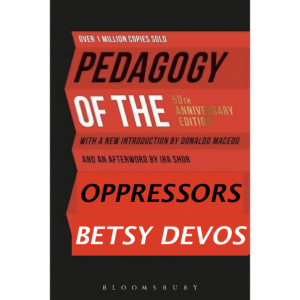
First, from the Secretary of Education who never attended a public school…never sent her own children to a public school…and has studiously avoided setting foot in a public school since assuming her current office, comes the blockbuster epic on how to destroy a nation’s public school system from the inside: Betsy DeVos’ “Pedagogy of the Oppressors”.
Come along with Sec. DeVos as she explains how her state’s largest school district, which she has devoted the last several decades of her personal energies and political clout to dismantling, should be put down like a rabid dog, throwing thousands of Michigan’s most vulnerable children into the claws of a predatory charter school system that closes schools like bad dry cleaners, and drained the state’s tax coffers of millions of dollars for charter schools that never opened.
Join Betsy as her friends and business partners rake in millions on bogus charter school real estate investments, and as she prevents students from recouping their defaulted student loan payments from for-profit colleges that have gone out of business. Watch in horror as Betsy CONTINUE READING: Donald Trump's Impeachment Book Club! | Eclectablog

Carol Burris: The Five Biggest Charter Scandals of 2019 | Diane Ravitch's blog

Carol Burris: The Five Biggest Charter Scandals of 2019 | Diane Ravitch's blog

Carol Burris: The Five Biggest Charter Scandals of 2019


There were many to choose from.
Numero uno, of course, was the giant charter scam in California:
1. A3 Education: Eleven are indicted over their involvement in a charter scheme that defrauded California taxpayers of more than $50 million.
In May, the California Superior Court for the County of San Diego indicted 11 people on charges that they helped defraud California taxpayers out of $50 million via an elaborate scheme to create phony attendance records to increase revenue to an online charter chain known as A3. You can find a summary of the story with its elaborate kickbacks and fraud schemes here.
The alleged theft took place over the course of several years. In 2016, Jason Schrock and Sean McManus reportedly purchased Mosaica Online learning, which got its start with a $100,000 grant from the federal Charter Schools Program (CSP). They eventually renamed the online schools Valiant. Schrock and McManus managed the schools through the nonprofit Academic, Arts and Action (A3) Charter Academy. Eli Johnson would reportedly approach small, cash-strapped school districts to enlist them as authorizers, for which they would receive an authorizer fee.
In addition to Valiant Academy charter schools, A3 CONTINUE READING: Carol Burris: The Five Biggest Charter Scandals of 2019 | Diane Ravitch's blog

Shawgi Tell: Charter Schools Have No Valid Claim to Public Property | Diane Ravitch's blog

Shawgi Tell: Charter Schools Have No Valid Claim to Public Property | Diane Ravitch's blog

Shawgi Tell: Charter Schools Have No Valid Claim to Public Property

Shawgi Tell is a professor of education at Nazareth University in New York. He has taken note of states where charter schools are given ownership of public property, where they buy property and supplies with public money but keep title to their purchases if their charter should close. He has seen states that require districts to hand over empty buildings to charter owners for $1, which then becomes their private property. He thinks these transfers of public assets to private ownership are wrong.
He bases his argument on the belief that public property belongs to taxpayers, but charter schools are privately owned.
He writes:
Public facilities and infrastructure are produced by the working class and people and belong to the public. They exist in order to serve the common good and to contribute to the extended reproduction of society.
This collectively-produced wealth must not be handed over to competing owners of capital who are only concerned with maximizing profit as fast as possible, regardless of the damage caused to society and the environment. Socially-produced wealth must be off limits to narrow private interests. The aims and purposes of the CONTINUE READING: Shawgi Tell: Charter Schools Have No Valid Claim to Public Property | Diane Ravitch's blog

January 2020 Newsletter - Network For Public Education

January 2020 Newsletter - Network For Public Education

January 2020 Newsletter


2019 saw a marked increase in the number of reports involving scandalous behavior on the part of charter schools.
Here is an important Answer Sheet blog I wrote that highlights the top 5 charter scandals of 2019.
As awareness of outrageous behavior increases, so do calls for charter law reform. Do your part by sharing the facts.
*******
Diane’s latest book Slaying Goliath was officially released last week. Read this terrific Q and A with Diane that appeared in the Washington Post here.
And be on the lookout to see if Diane is coming to a city near you. Go here to find her book talk schedule for this month and next.
The Network for Public Education’s Position Statement Regarding Espinoza v. Montana Department of Revenue
Last week the U.S. Supreme Court heard arguments on the case of Espinoza v. Montana Department of Revenue. The litigants seek to force the state of Montana to allow taxpayer dollars to go to private religious schools. Betsy DeVos has indicated her support for “faith-based education,” but this diversion of public funds goes against the long-standing separation of church and state, and threatens to further weaken public schools. 
The Network for Public Education categorically opposes the use of tax dollars for private and parochial schools. If parents wish to educate children in such schools, they should do so with private funds. Public funds should be spent for the common good. 
We encourage you to read about this important study that shows how Indiana’s voucher program has led to a new generation of segregation academies.
Only Six More Weeks Until Our National Conference
January 2020 Newsletter - Network For Public Education

The Responsibilty of Teaching Students to Become “Engaged Capable Voters”and the Slippery Slope | Ed In The Apple

The Responsibilty of Teaching Students to Become “Engaged Capable Voters”and the Slippery Slope | Ed In The Apple

The Responsibilty of Teaching Students to Become “Engaged Capable Voters”and the Slippery Slope

The Campaign for Fiscal Equity (CFE) decision requires New York State to provide a “sound basic education,” and, goes on to define the term;
… sound basic education should consist of skills necessary to enable children to eventually function productively as civic participants capable of voting and serving on a jury. Productive citizenship means more than just being qualified to vote or serve as a juror, but to do so capably and knowledgeably. It connotes civic engagement. An engaged, capable voter needs the intellectual tools to evaluate complex issues, such as campaign finance reform, tax policy, and global warming, to name only a few. Ballot propositions in New York City, … can require a close reading and a familiarity with the structure of local government
Are we working towards enabling our students to become “engaged, capable voters” and provide them with the “intellectual tools to evaluate complex issues?”
If we stay within the confines of required courses and examination preparation, the answer isprobably not. We should set aside time  to use the presidential election process as a teaching tool.
The nation is currently engaged in the candidate selection process, a primary CONTINUE READING: The Responsibilty of Teaching Students to Become “Engaged Capable Voters”and the Slippery Slope | Ed In The Apple

CURMUDGUCATION: McKinsey's New Baloney Sales Pitch For Computerized Classroom


CURMUDGUCATION: McKinsey's New Baloney Sales Pitch For Computerized Classroom

McKinsey's New Baloney Sales Pitch For Computerized Classroom

McKinsey is the 800 pound gorilla of consulting, a behemoth with their own set of values about how to drag everything into MarketWorld (I recommend Anand Giridharadas's Winners Take All for a closer look at how that world looks). They have occasionally dipped their toes into the world of education because, hey, there's a lot of money in that pool. One notable adventure was their plan for re-structuring the Boston school system, which was mostly about cutting all manner of expenses, like, you know, food for the students. They also like to make the occasional bad argument for heavy duty data analytics.

Of course, the Hot New market in education is computerizing the classroom. It's got everything-- more opportunities to sell both hardware and software as well as cutting back the money spent on those classroom meat widgets with their expensive teaching degrees. The main thrust of the computerized classroom has been Personalized [sic] Learning (powered by super-duper AI), but Jill Barshay at Hechinger Report captures in one neat, understated paragraph why that is not living up to entrepreneurial expectations:


For much of the previous decade, advocates of education technology imagined a classroom where computer algorithms would differentiate instruction for each student, delivering just the right lessons at the right time, like a personal tutor. The evidence that students learn better this way has not been strong and, instead, we’re reading reports that technology use at school sometimes hurts student achievement.

God bless Barshay for writing "computer algorithm" instead of Artificial Intelligence.

But you see the problem-- it's going to be hard to market this stuff if it doesn't really work. What's a CONTINUE READING: 
CURMUDGUCATION: McKinsey's New Baloney Sales Pitch For Computerized Classroom


LAUSD District 3 Election: The Hunter Becomes the Hunted

LAUSD District 3 Election: The Hunter Becomes the Hunted

LAUSD District 3 Election: The Hunter Becomes the Hunted

What we accept as normal today with regard to education, I want your grandchildren to tell you that you were crazy to accept.– Bernie Sanders
It has been over five years since my wife, Nicole, and I sat in a conference room in Eli Broad’s LAUSD headquarters and decided to take on the district’s bureaucracy. To be honest, I did not even know who my school board member was at the time. We just knew that fighting the district to make sure that my two daughters received services that their teachers agreed that they needed was an untenable situation and we wanted to do our part to Change the LAUSD. My first campaign for the LAUSD School Board was born.

Former LAUSD Board Member Tamar Galatzan (from LAUSD archives)
It did not take long to realize how deeply entrenched the problems were at the district or that my representative on the school board was part of the reason the LAUSD was headed straight towards catastrophe. Tamar Galatzan was a Los Angeles Deputy City Attorney moonlighting as a school board member. She was a strong supporter of the then-superintendent John Deasy and his $1.3 billion iPad debacle. Too busy with her day job, she was missing in action as Deasy flubbed the implementation of MiSiS and had to spend over $133.6-million in an attempt to fix the resulting problems. She promised a school additional funding if it converted to a pilot school even as the source of those funds dried up.

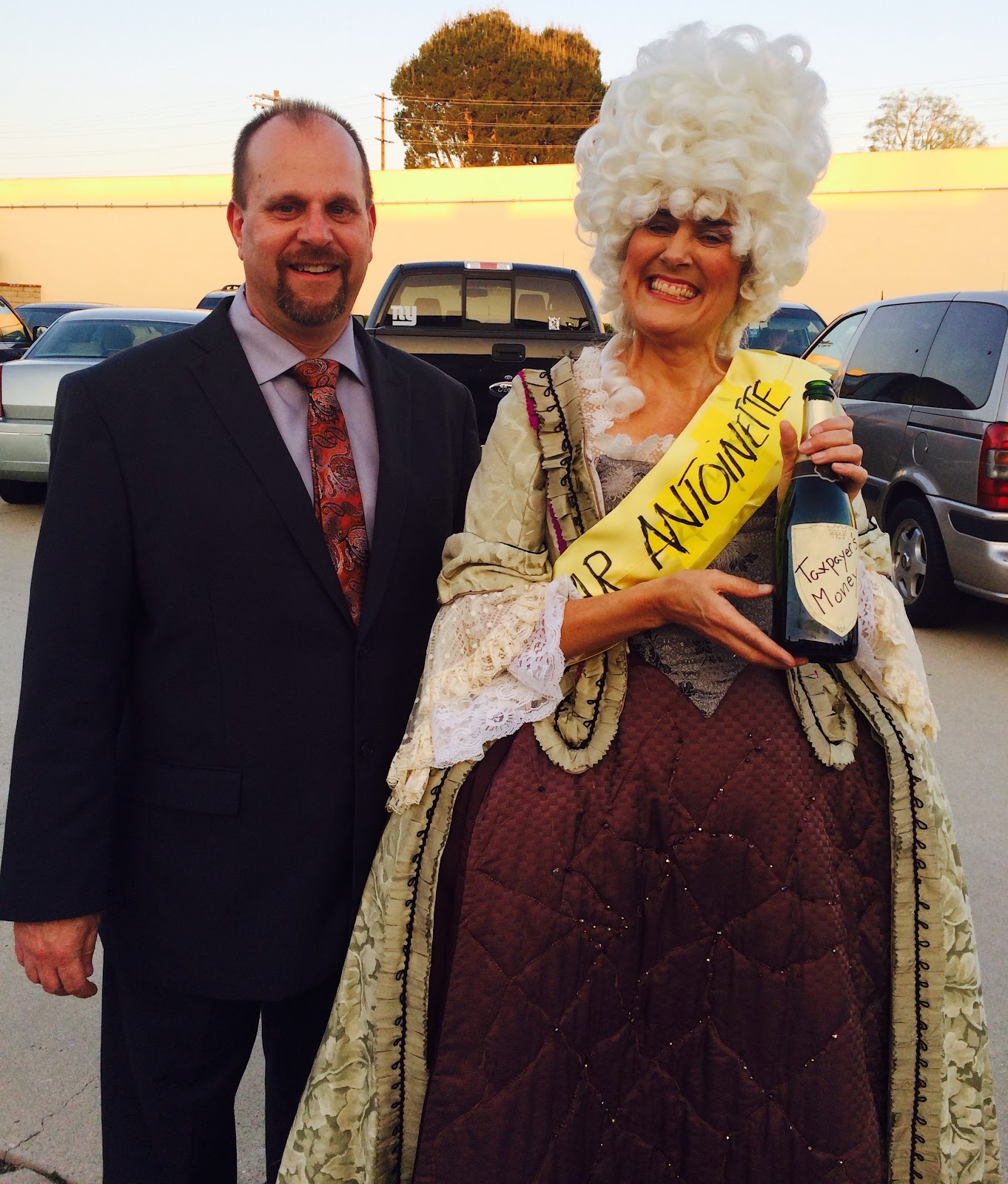
The Author and “Tamar Antoinette” during the 2015 campaign (Nicole Petersen)
Even with all of these problems, Galatzan was considered invincible. Her campaign’s bank account was heavily padded by those promoting charter schools and she enjoyed the support of Los Angeles’ privatizer in chief, former mayor Antonio Villaraigosa. Even so, five candidates lined up to challenge her in the March 2015 primary election.
Elizabeth Badger and I were the first competitors to declare and met soon afterward at a town hall hosted by the incumbent. We exchanged contact information after a debate during George McKenna’s special CONTINUE READING: LAUSD District 3 Election: The Hunter Becomes the Hunted

Monday, January 27, 2020

enrique baloyra: Should taxpayers have to fund private schools? - YouTube

Should taxpayers have to fund private schools? - YouTube
Should taxpayers have to fund private schools?


enrique baloyra

This week the Supreme Court heard a case over whether states must fund religious schools. In Espinoza v. Montana Department of Revenue, the plaintiffs argue that their religious liberty is being violated after the Montana Supreme Court struck down a program that provides tax credits for donations to private school vouchers.
In their ruling, the state court cited a clause in the Montana constitution prohibiting “any direct or indirect appropriation or payment from any public fund or monies […] to aid any church” or religious school.

Justice Kavanaugh argued this provision advances “grotesque anti-Catholic bigotry,” citing 19th century Blaine amendments.

But Montana’s constitution was rewritten in 1972.
It’s worth noting here that Stillwater Christian School, where the plaintiffs send their children, advances anti-LGBTQ ideology. Another school that participates in the program expels students for “lesbian, gay, bisexual, and/or transgender conduct” and forces employees to sign an agreement that they “will not engage in such behaviors.”
Now, nobody is denying these private entities the right to teach whatever hate and bigotry they choose . And that dinosaurs and humans lived together.
And it’s perfectly within a parent’s right to protect their children from learning “Arabic numerals,”commonly referred to as “numbers.”
“But shouldn’t […] taxpayers also have a right not to subsidize these teachings, which may violate their own religious beliefs or freedom of conscience?”
https://slate.com/news-and-politics/2...
What’s missing from the argument is the underlying reason why parents send their children to private school. It’s called Polite White Supremacy.
That’s why some parents choose to take their kids out of their neighborhood public school, even when they learn it outperforms their “school of choice.”
And it’s why school segregation is worse today than it was before Brown v. Board.
Also missing from the discussion is how fourteen states — including Utah, North Carolina, Arizona, Indiana, and Florida — have provisions in their constitutions requiring a uniform system of schools.
https://www.ecs.org/wp-content/upload...
But a separate and unequal system of unaccountable private schools is the antithetical to a uniform system.
Legal scholars say the ruling — expected in June — could fundamentally undermine the way the Founding Fathers established the separation between church and state.


Should taxpayers have to fund private schools? - YouTube

Fact-checking Phonics, NRP, and NCTQ – radical eyes for equity

Fact-checking Phonics, NRP, and NCTQ – radical eyes for equity

Fact-checking Phonics, NRP, and NCTQ


The “science of reading” movement often claims that a systematic intensive phonics-first approach to teaching reading is endorsed by science that is settled, that the National Reading Panel (NRP) is a key element of that settled science, and that teacher education is mostly absent of that “science of reading” (a message that has been central to NCTQ for many years).
These claims, however, misrepresent what evidence actually shows. Here, then, are some evidence-based fact-checks of phonics, NRP, and NCTQ.
Phonics
Abstract
There is a widespread consensus in the research community that reading instruction in English should first focus on teaching letter (grapheme) to sound (phoneme) correspondences rather than adopt meaning-based reading approaches such as whole language instruction. That is, initial reading instruction should emphasize systematic phonics. In this systematic review, I show that this CONTINUE READING: Fact-checking Phonics, NRP, and NCTQ – radical eyes for equity

Blue Cereal "Share The Love!" Month! | Blue Cereal Education

Blue Cereal "Share The Love!" Month! | Blue Cereal Education

Blue Cereal "Share The Love!" Month!


Candy Hearts & Saccharine Souls

Oh The People Cover

As you know from the rapid replacement of holiday displays which began at midnight on December 26th, Valentine’s Day is coming. February, it turns out, is the month of love.
Well, not REAL love... but exploitative, crass, commercialized love, packed with artificial ingredients – cultural pressure to overspend, unnecessary emotional theatrics, and the obligatory scarlet flora whose lifespan will fall WELL short of the concomitant credit card payments.
In other words, it’s the most American holiday this side of the 4th of July!
ClaudiaSLunchBoxBlue Cereal would like to SHARE the love this year throughout the month of February. Initially I thought I might stick with the tried-and-true...  Daily lingerie pics of myself in lacy garments of the sort which inevitably SCREAM, “I’m trying WAY too hard.” Whitney Houston (or whoever the kids are listening to these days) belting out that “Eye...hee-eye... will always love youuuuu...hee-oooouuuu!” Maybe even some of those little candy hearts with wacky messages like “Diabetes turns me on!” or “It's OK – I'm #11FF!”
But it all seemed too obvious. Too crass. Too commercial and not at all useful. (Well, except for the lingerie shots. I may still do those. Viewership has been down and I could use the clicks.)
Instead, February will see the return of a few things I’ve enjoyed doing in the past.

Killer Blue Serials

BrettHLunchBoxOur first “Share The Love” feature will be a weekly installment of “Blue Serials” – summaries and commentary on the best CONTINUE READING: Blue Cereal "Share The Love!" Month! | Blue Cereal Education

Mitchell Robinson: Thought Adam Schiff's impeachment presentation was good? Public school teachers do that every day | Eclectablog

Thought Adam Schiff's impeachment presentation was good? Public school teachers do that every day | Eclectablog

Thought Adam Schiff’s impeachment presentation was good? Public school teachers do that every day


While I absolutely agree that Adam Schiff did a wonderful job presenting the impeachment case against the president, I must confess that I’m a little surprised at how amazed so many seem to be at how smoothly he delivered his information, the quality of his argument, and his use of audio/visual materials.
Because if you were impressed with Mr. Schiff’s performance, then I encourage you to consider the fact that thousands of public school teachers and college instructors are doing what Rep. Schiff did every, single day in their classrooms across the country. In elementary schools, middle schools, high schools, and college classrooms, the nation’s teachers are researching, organizing, audio-visualizing, and testifying their tails off on a daily basis to the 90+% of the school-aged children in our country.
They are speaking extemporaneously, without written notes, using thoughtfully designed slide decks and visual materials, and weaving together research, evidence, anecdotes, and personal experiences to craft compelling lessons about their course material and the topics of the day.
Just imagine how much more those teachers could do if they, like Mr. Schiff, had dozens of highly- CONTINUE READING: Thought Adam Schiff's impeachment presentation was good? Public school teachers do that every day | Eclectablog