Latest News and Comment from Education

Saturday, November 10, 2018

Week in Review: Troubled school faces closure, possible criminal investigation over board mismanagement | The Lens

Week in Review: Troubled school faces closure, possible criminal investigation over board mismanagement | The Lens

Week in Review: Troubled school faces closure, possible criminal investigation over board mismanagement


Orleans Parish school district Superintendent Henderson Lewis Jr. told Edgar P. Harney Spirit of Excellence Academy parents and staff crammed into the Central City charter school Monday night that it will close at the end of school year.
He also called for all members of the embattled charter school board to step down. Lewis said the district discovered matters it has referred to the Orleans Parish District Attorney’s Office, which handles criminal investigations. Lewis said the school district has also alerted the Louisiana Legislative Auditor about the school.
“We didn’t just get here last week or this month,” district administrator Amanda Aiken said. “There have been ongoing compliance issues with Harney.”
Later in the week, the school moved to expand its legal team.

Big Education Ape: What Should We Really Learn From New Orleans After the Storm? A Q&A With NEPC Fellow Bruce Baker | National Education Policy Center - https://bigeducationape.blogspot.com/2018/11/what-should-we-really-learn-from-new.html

THE LENS ELECTION MAP: SEE HOW LOUISIANA VOTED
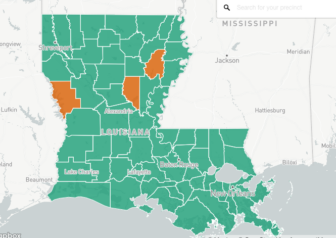
Amendment 2, which will repeal the state’s non-unanimous jury law, passed with overwhelming support: 64% for to 36% against. Gaining even greater support, though, was Amendment 1, which will prohibit people from running for public office for five years after completing a felony sentence. Amendment 6, the property tax increase “phase in,” passed as well.
Interim Secretary of State Kyle Ardoin, who took over the office after former SOS Tom Schedler resigned following a sexual harassment allegation, will get a chance at winning the office in his own right in December, when he’ll face Democrat Gwen Collins in the runoff.
In Orleans Parish, Omar Mason and Marie Williams are also going to a runoff in the race for Civil District Court, Div. E, judge.

SUPPORT THE LENS

We prioritize transparency and accountability in our reporting. It’s what you expect from us.
Today, especially in this era of misinformation and attacks on press freedoms, we’re asking you to stand up for truth. Between now and Dec. 31 we’re eligible for a matching gift opportunity from NewsMatch, a national call-to-action that support nonprofits like us. We can earn up to $25,000 in matching dollars, which means The Lens can raise $50,000 in total. Give today.

COMPARE 2018 NEW ORLEANS SCHOOL RATINGS

The Louisiana Department of Education released school ratings Thursday. The A-F letter grades help parents gauge school performance, and the nearly all-charter Orleans Parish school district uses the ratings to decide which charter schools will remain open.
The Orleans Parish school district received a C letter grade for the third year in a row.
Only seven city schools earned A letter grades. They are Benjamin Franklin High School, Edna Karr High School, Edward Hynes Charter School, Lake Forest Elementary Charter School, Lusher Charter School, New Orleans Center for Creative Arts and Warren Easton Senior High School.
Fifteen schools were rated F, and 18 were rated D.
The state has curved letter grades for the last four school years as harder standardized tests were introduced, in effect freezing the number of schools that received A’s and F’s.
But this year, the state is using a new calculation. It’s uncurved, but it takes year to year progress into account, which will likely benefit schools with low-achieving students who show growth.

CANTRELL ADMINISTRATION ADMITS TO INACCURACIES IN 2019 BUDGET PROPOSAL

Longtime city Budget Director Cary Grant admitted on Friday that Mayor LaToya Cantrell’s first budget proposal, sent to the City Council on Nov. 1, contained glaring inaccuracies in the listed revenues from prior years. These numbers are necessary for the council to see whether various city revenue sources are rising or falling.
Grant apologized to the council on Friday — during the first hearing for the 2019 city budget — and adding that he had “never seen this happen before.”
While the inaccuracies caused confusion among the council, Councilman Jared Brossett said that it didn’t significantly impede the process.
“We caught it in time,” he said.

ORLEANS PARISH WILL OUTSOURCE LAST DIRECT-RUN ELEMENTARY SCHOOL

Taking another step toward becoming an all-charter district, the Orleans Parish school district informed Cypress Academy parents it will hand the school over to an outside operator next year, in spite of the district’s promises to run the school directly through the 2019-2020 school year.
On Monday, Cypress parents will learn who the small school’s new charter operator will be, according to a letter district Chief of Schools Rene’ Lewis-Carter sent them this week. On Thursday, some Cypress parents attended a district public hearing to express their frustration.
“You may be asking, ‘Why now?’ And, ‘Why have we decided not to run the school for the 2019-20 school year as we initially committed?’” Lewis-Carter wrote in the letter.

BEHIND THE LENS EPISODE 6: ‘WHY AM I LOSING MY NEIGHBORHOOD SCHOOL?’
This week on the podcast, host and producer Tom Wright talks to education reporter Marta Jewson about the impending closure of Harney charter school.
Marta also discusses this year’s state ratings for Orleans Parish public schools.
Tom also interviews state Sen. J.P. Morrell about state Constitutional Amendment 2, which repeals Louisiana’s non-unanimous jury law, and Amendment 6, which will allow large property tax increases to be phased in over several years. Louisiana voters passed both measures this week.
And reporter Michael Isaac Stein talks about the New Orleans city budget process, which got off to a late start this year.

OPINION: WE’VE NORMALIZED TRUMP, BUT TUESDAY NIGHT’S ‘VICTORY’ MAY BE HIS UNDOING

Opinion editor Jed Horne wraps up the 2018 midterms:
“Blue wave? Let’s get real. It didn’t happen, except in the Northeast where voters turned away from Trump in a wave of revulsion.
“But neither was it quite the stirring victory that Trump declared on Wednesday as — with his trademark mix of self-delusion and outright lying — he tried to paper over a major, potentially fatal, setback: losing control of the House of Representatives.”

OPINION: JUSTICE REFORM HOBBLED BY UNHEALTHY DEPENDENCE ON BAIL, FINES AND COURT FEES

“It’s time for the City of New Orleans to step up the pace of criminal justice reform. Too many citizens are still incarcerated for too long under harsh conditions, often for non-violent offenses.
“But there’s a much more shocking violation of the U.S. Constitution at play in the Orleans Justice Center (OJC): over half of all detainees are stuck in jail for months on end—sometimes years—before they have even been tried. And many of these citizens are held simply because they are too poor to pay bail, fines, and fees.”
Week in Review: Troubled school faces closure, possible criminal investigation over board mismanagement | The Lens

More Than 1,000 Educators Won Elections On Tuesday, Teachers Union Says | HuffPost

More Than 1,000 Educators Won Elections On Tuesday, Teachers Union Says | HuffPost

More Than 1,000 Educators Won Elections On Tuesday, Teachers Union Says
“We saw wins up and down the ballot, and we are on fire,” the head of the National Education Association said of the midterms.


More than 1,000 teachers and other education professionals won state legislative seats across the country in Tuesday’s elections, the nation’s largest teachers union said Friday.
More than 1,500 current and former teachers and education professionals sought office in the 2018 elections, the National Education Association announced in October. Teacher-led protests swept states from West Virginia to Arizona last winter and spring, leading to an exceptional influx of candidates.
The group said the final tally before Election Day numbered more than 1,800 such candidates. Of those, the union said, 1,081 won their races for state legislative seats on Tuesday.


That success means teachers and educators will hold roughly 15 percent of all state legislative positions nationwide next year, based on the number of such positions counted by the National State Legislative Council. An additional 42 races have yet to be called, the NEA said.
A lack of historical data makes it hard to compare this year’s numbers or success rates to previous elections, or to draw a direct connection between those victories and the earlier protest movements.
But the NEA and the Democratic Legislative Campaign Committee, the Democratic Party’s state legislative campaign arm, said before Tuesday’s vote that the number of teachers pursuing office had increased from previous electoral cycles. A DLCC spokesperson said before the election that it had counted more than 1,200 educators running for office as Democrats in 2018, an increase of roughly 200 from two years ago. 
Not all of those included in the NEA or DLCC counts are teachers. The union used a broad definition to compile the numbers, counting current and former classroom teachers and professors at the K-12 and postsecondary levels, as well as candidates who had worked as administrative or support staff in schools, districts and universities. Many of Continue reaiding: More Than 1,000 Educators Won Elections On Tuesday, Teachers Union Says | HuffPost

'We're Bringing Education Back': Takeaways From The Election : NPR

'We're Bringing Education Back': Takeaways From The Election : NPR

'We're Bringing Education Back': Takeaways From The Election


Hello! We know there's a lot of news out there, but we're bringing you an education-centric take on the midterms, with big results in some key states.
Arizona
Arizona is one of five states that saw teacher walkouts this past spring. After a grassroots group of public school supporters put it on the ballot, what would have been the nation's broadest school voucher expansion was overturned Tuesday 2-to-1 by popular referendum.

Arizona has been considered a model state by school choice advocates, so the rebuke is a notable shift.
Republican Doug Ducey, a school choice advocate, retained the governorship. He helped end the walkout with a pledge to boost educators' salaries by 20 percent by 2020. But Ducey has also promised a tax cut, so it's unclear where the money will come from.
Colorado
Another teacher walkout state; still, voters nixed a $1.6 billion tax hike for public education.
Jared Polis, the new Democratic governor, founded two charter schools. He's proposed the that Colorado needs to "end decades of shameful underinvestment in our public schools" and wants to stabilize and equalize school funding in the state.
Polis, who has two children with his partner, is also the country's first openly gay governor.
Connecticut
Jahana Hayes, the 2016 National Teacher of the Year, became the first black woman to represent the Nutmeg State in Congress. "This history teacher is making history," she told reporters on Tuesday.
Illinois
Democrat J.B. Pritzker, a wealthy venture capitalist, won a resounding 15-point victory over incumbent Republican Bruce Rauner. Pritzker's resume includes philanthropic support of early education, like the First Five Years Fund.


Rauner was an original plaintiff in the Supreme Court case Janus v. AFSCME, which dealt a heavy blow to public employee unions.
He also took heat from teacher unions for his support of school choice and for relaxing teacher certification rules to address a teacher shortage.
Education is a big ongoing political issue here; a new school funding formula is intended to direct more money to poor districts.
Kansas
The State Supreme Court says school funding in Kansas is unconstitutionally "inadequate." A school shut down is possible if the legislature can't agree on a fix.
During the campaign, Democrat Laura Kelly dubbed herself the "education governor." Gov. Kelly now says she will work to ensure that schools are fully funded.


Maryland
Half a billion dollars' worth of gambling money is headed for Maryland public schools. The ballot measure passed by almost 90 percent.
Michigan
Democrat Gretchen Whitmer, a teacher union member with children in public schools, is moving to the governor's residence here.
American Federation of Teachers President Randi Weingarten said in a a statement: "Gretchen Whitmer walks the walk for kids, for teachers and for working families because she's one of us." All of this in Education Secretary Betsy DeVos's home state, where the Republican DeVos family has spent millions of dollars in support of school choice.
On Whitmer's docket is expanding access to pre-K and rebuilding Detroit's public schools.

New Jersey
half-billion chunk of change via bonds will go toward vocational, career and technical education, as well as school water infrastructure and school security.
New Mexico
Democratic Governor-elect Michelle Lujan Grisham campaigned on remaking the school accountability system and ditching the state PARCC test in favor of less testing time.
She backed more money for teachers, more preK and career education, more attention to Native education, and promised to improve the state's high school graduation rate, currently in 49th place. School funding bond issues passed here Tuesday as well.
Oklahoma
In another walkout state, Republican Kevin Stitt, who painted himself as a friend to schools and promised a bump in teacher pay in the next year's budget, won the governorship.
Wisconsin
The state's Superintendent of Public Instruction, Democrat Tony Evers, beat incumbent Scott Walker, attacking him for weakening public sector unions and cutting K12 and higher ed budgets. Evers' schools agenda is to restore investment across the board.
His running mate, former state Rep. Mandela Barnes, told the crowd on election night: "We are bringing education back to the state of Wisconsin."

'We're Bringing Education Back': Takeaways From The Election : NPR

Friday, November 9, 2018

With Democratic Wins, Charter Schools Face a Backlash in N.Y. and Other States - The New York Times

With Democratic Wins, Charter Schools Face a Backlash in N.Y. and Other States - The New York Times

With Democratic Wins, Charter Schools Face a Backlash in N.Y. and Other States


Over the last decade, the charter school movement gained a significant foothold in New York, demonstrating along the way that it could build fruitful alliances with Gov. Andrew M. Cuomo and other prominent Democrats. The movement hoped to set a national example — if charter schools could make it in a deep blue state like New York, they could make it anywhere.

But the election on Tuesday strongly suggested that the golden era of charter schools is over in New York. The insurgent Democrats who were at the forefront of the party’s successful effort to take over the State Senate have repeatedly expressed hostility to the movement.

John Liu, a newly elected Democratic state senator from Queens, has said New York City should “get rid of” large charter school networks. Robert Jackson, a Democrat who will represent a Manhattan district in the State Senate, promised during his campaign to support charter schools only if they have unionized teachers.

And another incoming Democratic state senator, Julia Salazar of Brooklyn, recently broadcast a simple message about charter schools: “I’m not interested in privatizing our public schools.”

No one is saying that existing charter schools will have to close. And in fact, New York City, which is the nation’s largest school system and home to the vast majority of the state’s charter schools, has many that are excelling.

Over 100,000 students in hundreds of the city’s charter schools are doing well on state tests, and tens of thousands of children are on waiting lists for spots. New York State has been mostly spared the scandals that have plagued states with weaker regulations.


But it seems highly likely that a New York Legislature entirely under Democratic control will restrict the number of new charter schools that can open, and tighten regulations on existing ones.
The defeat is magnified because Mr. Cuomo, a shrewd observer of national political trends with an eye toward a potential White House bid, recently softened his support for charter schools. Mayor Bill de Blasio is a longtime charter opponent with his own national aspirations.
And New York is not the only state where the charter school movement is facing fierce headwinds because of the election.
Gov. Scott Walker of Wisconsin, an enemy of public sector unions, was unseated by a Democrat, Tony Evers, a former teacher who ran on a promise to boost funding to traditional public schools.
In neighboring Illinois, J.B. Pritzker, a Democrat who promised to curb charter school growth, beat the incumbent Republican, Gov. Bruce Rauner, a supporter of charter schools. And in Michigan, a Democrat, Gretchen Whitmer, promised to “put an end to the DeVos agenda.”
Ms. Whitmer won her race for governor decisively against the state’s Republican attorney general, Bill Schuette, who is an ally of Betsy DeVos, Continue reading: With Democratic Wins, Charter Schools Face a Backlash in N.Y. and Other States - The New York Times


Is Screen Time at School Bad for Kids? - The Atlantic

Is Screen Time at School Bad for Kids? - The Atlantic
The Backlash Against Screen Time at School
Combining education and technology is great—until it's not.


Four years ago, Paul France left a teaching job in the Chicago suburbs to move to San Francisco and be part of the so-called personalized-learning revolution in education. He joined a high-profile start-up called AltSchool whose investors include Mark Zuckerberg and the venture-capital firm Andreessen Horowitz. France was passionate about both education and technology and welcomed the opportunity to combine the two. But they would not prove to be as complementary as he thought.
AltSchool’s founder, a former Google executive named Max Ventilla, envisioned it as a place where students, aided by technology and tech-savvy teachers, would learn at their own pace, based on their interests and aptitudes. Teachers, using proprietary software to track student performance and help guide their learning, would be freed from time-consuming tasks like scoring exams and could devote more attention to students. The company’s mission was to help move the American education system from an industrial age model “where schools were set up to resemble factories and students had a conveyor belt-like experience” to a more “learner-centric” approach that gives students a sense of agency and 21st-century problem-solving skills, Devin Vodicka, who is responsible for guiding the company’s personalized learning platform as it expands to more schools, told me.

The company opened small lab schools in San Francisco, Palo Alto, and New York. Students were provided with their own iPads or Chromebooks along with individualized “playlists” of learning activities to choose from. Cameras in classrooms videotaped students’ and teachers’ interactions, enabling teachers and engineers to analyze the footage and review what worked, a process AltSchool technologists hoped would eventually be aided by computers using machine-learning algorithms.
AltSchool was flooded with applicants willing and able to pay tuition of $30,000 or more for their children to attend, and became one of the hottest start-ups in educational technology; to date, it has raised more than $170 million in investment. It was part of a broad investor rush to ed tech. Last year, Continue reading: Is Screen Time at School Bad for Kids? - The Atlantic


School Choice Fails to Create Equity and Justice for Our Society’s Poorest Children | janresseger

School Choice Fails to Create Equity and Justice for Our Society’s Poorest Children | janresseger

School Choice Fails to Create Equity and Justice for Our Society’s Poorest Children


Early this week, in her Washington Post column, Valerie Strauss published an important reflection on Why It Matters Who Governs America’s Public Schools by Diane Ravitch and Carol Burris of the Network for Public Education. Burris and Ravitch are responding to a major report from the Learning Policy Institute’s Peter Cookson, Linda Darling-Hammond, Robert Rothman, and Patrick Shields, a report which endorses the idea of “portfolio school reform.”
The Learning Policy Institute’s report, The Tapestry of American Public Education, promotes a lovely metaphor, a tapestry of school options woven together—open enrollment, magnet schools, charter schools, and specialty schools based on distinct educational models. The Learning Policy Institute declares: “The goal and challenge of school choice is to create a system in which all children choose and are chosen by a good school that serves them well and is easily accessible. The central lesson from decades of experience and research is that choice alone does not accomplish this goal.  Simply creating new options does not lead automatically to greater access, quality or equity.”  Here is how the Learning Policy Institute proposes that such fair and equal choice might be accomplished: “Focus on educational opportunities for children, not governance structures. Too often, questions related to the number of charters a district should have address school governance preferences, rather than the needs of children… Work to ensure equity and access for all. Expanding choice can increase opportunities, or it can complicate or restrict access to convenient and appropriate opportunities, most often for the neediest students… Create transparency at every stage about outcomes, opportunities, and resources to inform decision making for families, communities, and policymakers… Build a system of schools that meets all students’ needs.”
The Learning Policy Institute’s recommendations sound familiar. They are the same arguments made by the Center on Reinventing Public Education as it describes its theory of “portfolio school reform.” Portfolio school reform imagines an amicable, collaborative mix of many different schools: “A great school for every child in every neighborhood. The portfolio Continue reading:School Choice Fails to Create Equity and Justice for Our Society’s Poorest Children | janresseger

Linda Darling-Hammond vs. Diane Ravitch and Carol Burris - The Washington Post

Linda Darling-Hammond vs. Diane Ravitch and Carol Burris - The Washington Post
Linda Darling-Hammond vs. Diane Ravitch and Carol Burris


I recently published a post by Diane Ravitch and Carol Burris titled “Why It Matters Who Governs America’s Public Schools,” which took issue with some parts of a new report — “The Tapestry of American Public Education: How Can We Create a System of Schools Worth Choosing for All?” — released by a California think tank founded by education expert Linda Darling-Hammond. This post is a response from Darling-Hammond and colleagues to that piece.
Ravitch, Darling-Hammond and Burris are three of the most prominent voices in the national education debate about how to create equitable schools in this country and more often than not agree with one another. This piece and the earlier one reveal a split in the way they view school choice.
Ravitch, a former U.S. assistant secretary of education, is an education historian and advocate who for years was seen as the titular leader of the grass-roots movement against corporate school reform. Burris is a former award-winning high school principal in New York. Both women are leaders of the nonprofit advocacy group the Network for Public Education.
Ravitch and Burris oppose the expansion of alternatives to publicly funded and publicly operated schools and districts, including charter schools, which are privately operated but funded with taxpayer dollars. Their piece criticized the new report for, among other things, failing to take a strong stand on the expansion of charter schools.
Darling-Hammond, an expert on teacher preparation and equity, founded the Center for Opportunity Policy in Education at Stanford University, where she is professor emeritus, and is founder and president of the California-based Learning Policy Institute. The nonprofit think tank was created to conduct independent, high-quality research to improve education policy and practice, and it was the institute that released the report.
As the post below explains, the report looks at the issue of school choice in a different way than many of the debates on the subject, and in contrast to Ravitch and Burris. You can read their piece here.
School choice is a means, not an end — and a useful one only if it results in greater quality and access for all students
By Linda Darling-Hammond, Peter Cookson, Bob Rothman and Patrick Shields
Last week, the Learning Policy Institute (LPI) released a report, “The Tapestry of American Public Education: How Can We Create a System of Schools Worth Choosing for All?” that takes up the issues of choice in public education from a different perspective from the one that has been driving debates since the election of President Trump.
Trump and Secretary of Education Betsy DeVos have made “choice” their central education policy — defining it primarily as vouchers and tax credits for private schools and funding for charter schools, which include for-profit as well as nonprofit entities. DeVos has actually been a shareholder in K12 Inc., one of the largest for- Continue reading: Linda Darling-Hammond vs. Diane Ravitch and Carol Burris - The Washington Post