Latest News and Comment from Education

Friday, April 6, 2018

New Rule: Pencils Down | Real Time with Bill Maher (HBO) - YouTube

New Rule: Pencils Down | Real Time with Bill Maher (HBO) - YouTube:

New Rule: Pencils Down 

In a surprising move, Bill sticks up for children in his editorial New Rule.


‘Real Time': Bill Maher Defies Himself to Come Out Swinging for Kids (and Striking Teachers)


Bill Maher used the “New Rules” segment of Friday night’s episode of “Real Time” to do something even he couldn’t believe he was doing: advocating for kids.
Specifically, Maher weighed in on the ongoing wave of teachers strikes in states like Kentucky and Oklahoma, likening underfunded schools and underpaid children to neglectful parenting. “There is a revolt brewing in the teacher’s lounge these days, and it’s long overdue. #TimesUp, meet pencils down,” he said.
But of course, Maher also noted how weird this topic is for him, as he famously can’t stand kids.
“I know, me sticking up for kids? It’s like Mike Pence fighting for gay adoption,” Maher joked.
But, Maher said, he was recently struck by a social media post from a teacher in Arizona, who shared her pay stub, that went viral. “Probably because she’s one of the people we entrust with our children. And she makes $320 bucks a week.”
“How do people, even the burdened taxpayer, justify this? We were all kids, we remember early learning,” he continued. “You have those moments imprinted on your brain. A teacher was your first mentor, your first role model.”
Or, said, “if you grew up in Florida, your first lay.”
Maher noted teachers in West Virginia went on strike for a 5 percent pay raise. That’s “not a lot, but it helps when you have to pay for your own paper, your own pencils, and now, your own bullets.”
“Here’s an idea, don’t give the teachers guns, give them a living wage. They’re not asking for the world, just enough of a raise so they don’t have to drive an Uber three nights a week,” Maher said. “It isn’t  Continue reading: ‘Real Time': Bill Maher Defies Himself to Come Out Swinging for Kids (and Striking Teachers)

Meet the Activist at the Heart of the U.S. Teacher Protests | Need to Know | OZY

Meet the Activist at the Heart of the U.S. Teacher Protests | Need to Know | OZY:

MEET THE ACTIVIST AT THE HEART OF THE U.S. TEACHER PROTESTS


WHY YOU SHOULD CARE

Because the teachers’ movement is on the rise.
This week, thousands of people descended on the Oklahoma state Capitol, holding signs that declared, “If you think education is expensive, try ignorance!” and “Give us the tools we need so we can succeed!” It was the latest in a string of teacher walkouts in favor of increased education funding. And if you squinted hard enough at the picket lines in Oklahoma, West Virginia, Illinois and Puerto Rico in recent weeks, you’d have seen the same diminutive 60-year-old New Yorker: Randi Weingarten, president of the American Federation of Teachers.
Image result for MEET THE ACTIVIST AT THE HEART OF THE U.S. TEACHER PROTESTS
Long one of the most powerful — and controversial — figures in the labor movement, Weingarten has emerged as a face of a nationwide battle for more resources for public education that has taken a bold, even desperate, turn after years of budget cuts by states and school districts. West Virginia teachers won a 5 percent pay raise after shutting down the state’s schools for nearly two weeks. Oklahoma saw its third day of walkouts Wednesday, with educators demanding more classroom funding — even after the legislature tried to avert the walkout with a $6,100 teacher pay raise. Kentucky teachers are storming their Capitol this week to protest budget cuts and pension changes. More states are likely to join in. When asked why teachers are striking now, Weingarten says, “Because the time for passive resignation is over.”

OUR WEAPON IS OUR VOTE, AND OUR MISSION IS THE 2018 ELECTIONS.

RANDI WEINGARTEN
The situation has become so dire in Oklahoma that many public schools have been forced to operate on a four-day week. Textbooks are severely outdated and falling apart, and buildings are in disrepair, including defective heating systems that force kids to bundle up head to toe in the winter. Weingarten says she spoke to an Oklahoma social studies teacher who has kids that are forced to sit on the floor because there aren’t enough desks. “The inequity for kids in this country is real,” she says.
The daughter of a schoolteacher who went on an illegal strike when Weingarten was in high school, the labor leader is rooted in education and activism. Her suburban high school outside New York didn’t want for much — from rigorous coursework to ample extracurriculars — but when she later taught history at Clara Barton High School in Crown Heights, Brooklyn, she was Continue Reading: Meet the Activist at the Heart of the U.S. Teacher Protests | Need to Know | OZY:

Teaching beyond the test: Diane Ravitch, Jesse Hagopian | Books | santafenewmexican.com

Teaching beyond the test: Diane Ravitch, Jesse Hagopian | Books | santafenewmexican.com:

Teaching beyond the test: Diane Ravitch, Jesse Hagopian

About a quarter of a century ago, the federal government started requiring states to test student proficiency in basic subjects in order to receive certain kinds of federal funding. Up until then, standardized testing was a ritual performed for just a few grade levels, but it soon became an annual rite of passage. Critics of frequent testing maintain that classroom time is now occupied with test prep instead of the kinds of creative learning that make kids excited about knowledge, while supporters of these methods insist that teachers and schools be held financially and professionally accountable for the results of their efforts.
Diane Ravitch, an educational policy analyst and professor at New York University, used to be an enthusiastic supporter of standardized testing, but changed her tune in her 2010 book The Death and Life of the Great American School System: How Testing and Choice Are Undermining Education. In Reign of Error: The Hoax of the Privatization Movement and the Danger to America’s Public Schools (2013), she takes a strong stand against profit-driven charter schools. According to Ravitch, this is not a partisan issue, because both Democrat and Republican presidential administrations have emphasized testing — to the benefit of private enterprises and at the expense of subjects that are not really testable, such as the arts. Ravitch talks with Jesse Hagopian, a public-school teacher and editor of More Than a Score: The New Uprising Against High-Stakes Testing (2014), as part of the Lannan Foundation’s In Pursuit of Cultural Freedom series on Wednesday, April 11. 
Ravitch and Hagopian are in conversation at the Lensic Performing Arts Center (211 W. San Francisco St.), at 7 p.m. on April 11. Tickets are $8 ($5 students and seniors), tickets santafe.orgTeaching beyond the test: Diane Ravitch, Jesse Hagopian | Books | santafenewmexican.com:

Thursday, April 5, 2018

Implicit racial bias causes black boys to be disciplined at school more than whites, federal report finds - The Washington Post

Implicit racial bias causes black boys to be disciplined at school more than whites, federal report finds - The Washington Post:

Implicit racial bias causes black boys to be disciplined at school more than whites, federal report finds


Starting in prekindergarten, black boys and girls were disciplined at school far more than their white peers in 2013-2014, according to a government analysis of data that said implicit racial bias was the likely cause of these continuing disparities.
The analysis, issued Wednesday by the U.S. Government Accountability Office, said students with disabilities and all boys also experienced disproportionate levels of discipline. But black students were particularly overrepresented: While they constituted 15.5 percent of public school students, they accounted for 39 percent of students suspended from school.
The disparity was worse for children of color in prekindergarten: Black students accounted for 19 percent of preschool students in public schools, but represented 47  percent of students suspended from preschool. Boys of all groups accounted for 54 percent of the public school pre-K population, but 78 percent of those suspended.
Addressing why disparities in discipline exist, the GAO said research points to bias:  “Implicit bias — stereotypes or unconscious association about people — on the part of teachers and staff may cause them to judge students’ behaviors differently based on the students’ race and sex.”
The report was issued on the same day that Education Secretary Betsy DeVos held two forums to hear from people on both sides of the discipline issue, which has been controversial for years. The forums were closed to the press.
It has long been agreed that discipline disparities exist based on race and disability, but there is no consensus on what to do about it. The GAO report noted that research has shown that children suspended from school lose important instructional time, are less likely to graduate on time, and are more likely to repeat a grade, drop out of school and become involved in the juvenile justice system.
A study of California youth estimated that students who dropped out of high school because of suspensions would result in about $2.7 billion in costs for the state, stemming from lost wages and tax revenue, increased crime, and higher welfare and health costs.
In 2014, President Barack Obama issued guidance to schools in an attempt to end the  Continue reading: Implicit racial bias causes black boys to be disciplined at school more than whites, federal report finds - The Washington Post:

Tuesday, April 3, 2018

How the #NeverAgain Movement Is Disrupting Gun Politics | The Nation #MarchForOurLives

How the #NeverAgain Movement Is Disrupting Gun Politics | The Nation:

How the #NeverAgain Movement Is Disrupting Gun Politics
The gun-control movement has never been able to talk about race—until now.


Two days before the March for Our Lives drew as many as 800,000 demonstrators to Pennsylvania Avenue, students at Thurgood Marshall Academy in southeast Washington held their own rally in the school gymnasium. “Living in DC, it’s easy to be in a bubble. We live in the nation’s capital. There’s the monuments, the statues, the memorials, and all of that,” Jayla Holdip told her classmates. “But we need our stories to be heard. It should not be normal for everybody in this room to be affected by gun violence.”

In 2016, 77 percent of all homicides in Washington, DC, were committedwith a gun, and Thurgood Marshall is located in one of the most dangerous zip codes in the city. In the past two years, the Sixth and Seventh Police Districts, which cover the neighborhoods east of the Anacostia River, recorded 154 homicides and 829 assaults with a deadly weapon in which a gun was used. By comparison, the Second Police District, which encompasses a geographical area about as large as the Sixth and Seventh combined but also has a richer and whiter population, saw just five homicides and 37 gun assaults over the same period.
“Gun violence is an issue that our DC community and other cities have experienced for generations. Although we personally have not experienced a school shooting, we know the destruction of guns all so well,” said Zion Kelly when it was his turn to speak. At the beginning of the school year, Kelly’s twin brother Zaire, also a Thurgood Marshall student, had been shot and killed on the way home from a college-prep class. He was 16. In January, Paris Brown, a junior, was shot to death less than two miles away—the second person in a school of fewer than 400 students to be killed with a gun since the school year began.
Murders in this part of the city, much less meetings of student activists, aren’t normally headline news. But that day, two risers full of news cameras were on hand to record the rally. “To these cameras,” said one of the students, Aaron Woods, staring directly at the camera to the laughter of his classmates, “and these government officials who we’re trying to reach—yeah, we’re looking for y’all.”


The cameras were there because some of the now-famous students from CONTINUE READING;  How the #NeverAgain Movement Is Disrupting Gun Politics | The Nation:

Monday, April 2, 2018

The Senate's Quietest Dealmaker Is Ready to Be a Little Louder

The Senate's Quietest Dealmaker Is Ready to Be a Little Louder:

THE SENATE'S QUIETEST DEALMAKER IS READY TO BE A LITTLE LOUDER


Something’s snapped. After the 2016 presidential election, women nationwide wanted to make a scene. We flooded streets in protest. We filled out ballots. Whispers gave way to battle cries. We didn’t do it for “attention.” We did it for progress. In “Fired Up,” ELLE.com explores women’s rage—and what comes next.

With a few months until the midterm elections, the New York Times published a piece on a relative political newbie. The upstart candidate was just the latest evidence that some convention had been upended, that all across America new opportunities had opened up for people who wanted to seize them. The nation was in the midst of a fundamental redistribution of power, the profile concluded; because “[o]utsiders, many of them women, have leaped to the forefront...in American politics.”
It’s the kind of statement that those of us who’ve watched the events of the past 14 months have come to expect—to revel in, even. Except reporter Timothy Egan didn’t write it in 2018. He didn’t write it in 2017 or 2016, either.
It was 1992, and he wrote it to introduce people to one woman who would soon rise to national prominence.
Patty Murray (D-WA), an activist, school teacher, and Washington State Senator, had just beaten out her "better known" and male opponents to become the top Democratic candidate for an open Senate seat. Within 12 weeks, she would compete in the general election and win. Murray was "perhaps the most powerful variation yet in sexual politics," Egan wrote, a candidate for the United States Senate who intended to run as no more or less than what she was: "a mom in tennis shoes." The epithet was Murray’s de facto motto, but it had been meant as an insult. Earlier in her career, she’d traveled to the state capital to protest budget cuts in education when a male lawmaker snarked, "You can't do anything; you're just a mom in tennis shoes."
It turned out "just a mom in tennis shoes" was exactly the kind of person to whom constituents could relate. She cared about the issues that mattered to them—family leave, education, better pay. Voters in Washington elected Murray that November and CONTINUE READING: The Senate's Quietest Dealmaker Is Ready to Be a Little Louder:


Saturday, March 31, 2018

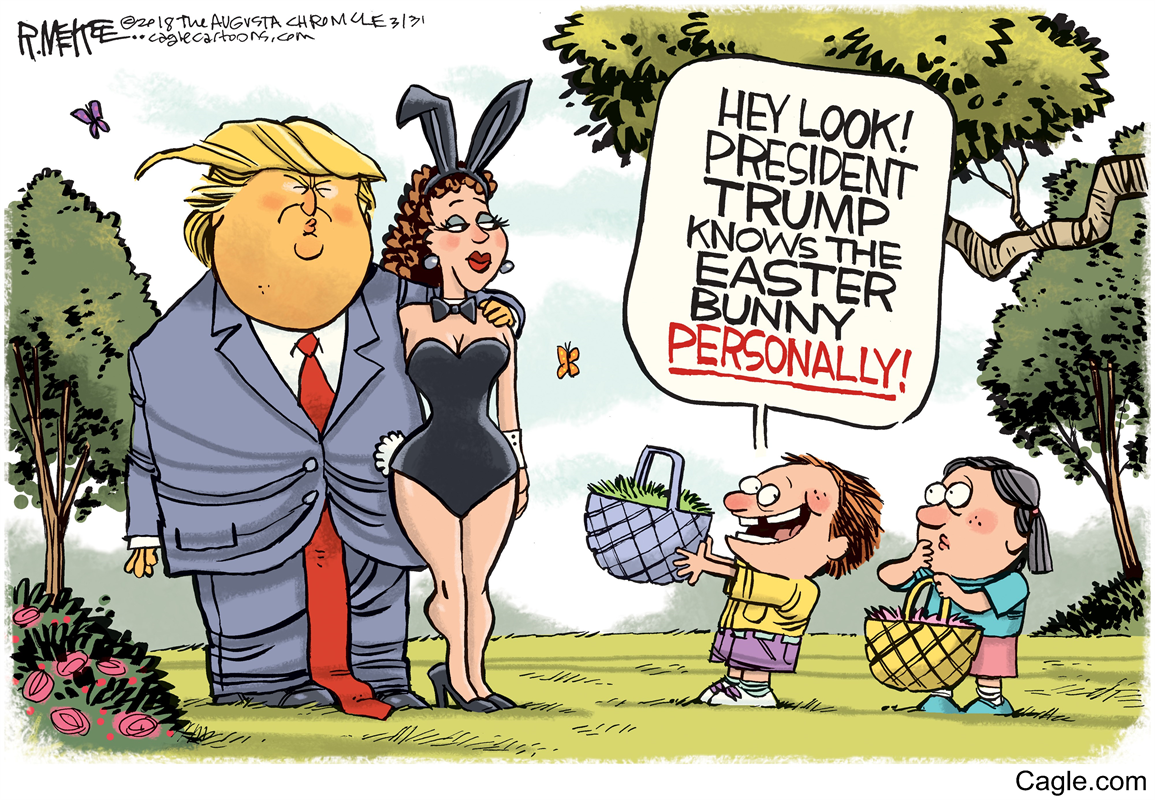
HAPPY EASTER APRIL FOOLS


HAPPY EASTER APRIL FOOLS 


Father, Forgive Them For They Do Not Know What They Are Doing Luke 23:34


Seizing Upon Post-Hurricane Damage, Puerto Rico's New "Education Reform" Law Paves Way for Charters, Vouchers

Seizing Upon Post-Hurricane Damage, Puerto Rico's New "Education Reform" Law Paves Way for Charters, Vouchers:

Seizing Upon Post-Hurricane Damage, Puerto Rico's New "Education Reform" Law Paves Way for Charters, Vouchers
"Puerto Rico is now open to edupreneurs, no-excuses charters, and corporate exploitation of its children."


Roughly six months after Hurricane Maria slammed into Puerto Rico, the island's governor signed into law "education reform" legislation that he says "puts our students first" but that critics say stinks of a privatization plan that will do nothing to help students.
The plan will consolidate schools and allow for charter schools and vouchers—ideas that are not endorsed by the Puerto Rico Teachers Association (Asociación de Maestros de Puerto Rico).
Another teacher's union, the Federación de Maestros de Puerto Rico, vowed that it, alongside teachers, parents, and students, would "defeat the false reform with the struggle on the street and in schools."
Offering background, education historian Lauren Lefty wrote at Jacobin:
In the wake of twin disasters—one man-made in the form of a vulture fund-fueled debt crisis, and one natural in the form of last September's Hurricane MarĆ­a — Puerto Rican leaders are attempting to implement a vast austerity program, claiming it will solve the island's economic woes. In the eyes of many Puerto Ricans, however, this is textbook "disaster capitalism": capitalizing on a moment of crisis, when the population is weak and unable to mobilize, to ram through pro-market austerity measures.
Although the government has slowly been rolling out austerity measures since the debt crisis began, post-hurricane, it's doubled down. And the island's public school system is one of the leading targets.
Among critics' targets is Julia Keleher, Puerto Rico's non-Puerto Rican Education Secretary, who, in the wake of the hurricane said the storm was a "real opportunity to press the reset button." Her role, Lefty argued, "highlights the island's precarious colonial status and harkens to even less sovereign days."
As NPR reported earlier this month,
teachers' unions in Puerto Rico have responded to the government's proposed overhaul with protest, anger, and derision. Since Gov. Ricardo Rossello presented it to the legislature last month, critics have said he and Keleher are using the damage that Hurricane Maria inflicted on the island and its schools as justification to push privatization, much like the governor recently announced his intention to sell off Puerto Rico's publicly owned electric grid.
"We are disappointed the powers that be in Puerto Rico have bought the wrongheaded DeVos and Trump spin that charters and vouchers are a panacea," American Federation of Teachers president Randi Weingarten said recently.
Responding to the new law, education historian Diane Ravitch writes that it marks "a sad day for Puerto Rico." She continues:
Does he know that charters demand equal funding and choose the students they want?
Does he know that voucher students get worse results than their peers in public schools?
Probably the hedge funds that own the Commonwealth’s debt didn’t tell him.
Puerto Rico is now open to edupreneurs, no-excuses charters, and corporate exploitation of its children.Seizing Upon Post-Hurricane Damage, Puerto Rico's New "Education Reform" Law Paves Way for Charters, Vouchers:

FRIENDS: Now More Than Ever

Independent journalism has become the last firewall against government and corporate lies. Yet, with frightening regularity, independent media sources are losing funding, closing down or being blacked out by Google and Facebook. Never before has independent media been more endangered. If you believe in Common Dreams, if you believe in people-powered independent media,please support us now and help us fight—with truths—against the lies that would smother our democracy. Please help keep Common Dreams alive and growing. Thank you. -- Craig Brown, Co-founder
Support Common DreamsSupport Common Dreams
 Seizing Upon Post-Hurricane Damage, Puerto Rico's New "Education Reform" Law Paves Way for Charters, Vouchers:


Thursday, March 29, 2018

An open letter to Marjory Stoneman Douglas’ student journalists – The Miami Hurricane #NeverAgain #JournalismMatters #MarchForOurLives

An open letter to Marjory Stoneman Douglas’ student journalists – The Miami Hurricane:

An open letter to Marjory Stoneman Douglas’ student journalists 

Related image
The Eagle Eye – Marjory Stoneman Douglas High School, One Story at a Time
http://eagleeye.news/ on @EagleEyeMSD
Eagle Eye MSD
@EagleEyeMSD

This weekend was the start of your spring break – and you spent it marching.
Last month, when tragedy befell you, it might have forced you to change your plans. But it didn’t force you to lead the charge in such a loud, courageous, impossible-to-ignore way. That was all you.
But you didn’t need to be told that. We just wanted to say you’re making us proud – as journalists, as students, as people – and your commitment to telling your story has not gone unnoticed.
You student journalists – whether you’re on the staff of The Aerie or The Eagle Eye, or picked up the habit in the last month and a half – are in the difficult position of wearing two hats, those of subject and reporter. And you’re wearing them well, though we’re sure at times it is painful, infuriating and confusing.
The future of journalism doesn’t lie solely in a few famous papers, full-time newsrooms and big names telling people what they need to know. It’s a more immersive world of on-the-fly reporting and, often, telling your own stories as they happen – not waiting for a bigger outlet to catch wind and report. You’re embracing that future by getting information out via Twitter, Snapchat and long-form Facebook posts that tell us more about this tragedy than any evening broadcast ever could.
More than that, though, you’re teaching us how to do our job in the midst of tragedy. It’s a lot to ask of any journalist to remain composed when reporting on a story like this – much less a student who lived through it. But there you are, embodying the importance of journalism as you show your community ways it can help and tell the stories that matter.
This role of a journalist is especially important in dark times, when people are searching for answers, information – anything they can cling to and understand. Instead of adding to that darkness with the sort of voyeuristic, culprit-focused coverage so many news organizations are prone to do, you continue to uplift your community with stories of courage, healing and hope.
In the last six weeks, The Eagle Eye has written about means of remembrance, activism and selflessness – and you were living those ideals, too.
Your journalism embodies what we hope becomes common practice in the field: that of emphasizing the human side of your school, the names you remember and the people who won’t stop fighting for a better tomorrow.
We hope you don’t underestimate the impact of the work you’re doing, at every level of the storytelling process.
To trolls and haters, you’ve responded with a loud, resounding “no” – no to the gun lobby, to those who say you’re too young to get it, to the possibility of this ever happening again. From one team of journalists to another, we’re grateful to you for helming this revolution.
We sincerely welcome you into our newsroom, any day, and we are here to support you in whatever way you need most. You can find us @MiamiHurricane or at editor@themiamihurricane.com.
Editorials represent the majority view of The Miami Hurricane editorial board.An open letter to Marjory Stoneman Douglas’ student journalists – The Miami Hurricane:
Image result for the eagle eye msd


The Eagle Eye – Marjory Stoneman Douglas High School, One Story ...

eagleeye.news/

[Photo Galleries] The Eagle Eye documents the DC March For Our Lives through photos. Students get tattoos to honor the 17 victims. Memorial at Pine Trails Park is removed and preserved. [Multimedia] National school walkout marks the start of change. Georgia elementary schools donate pinwheels in support of MSD ...

Parkland


After the tragedy at Marjory Stoneman Douglas High School ...

SPORTS


As the Philadelphia Eagles hoisted their first Lombardi trophy in ...

HEALING


After the tragedy on Feb. 14, some Marjory Stoneman Douglas ...

OUR STORY


Category: OUR STORY. Junior Lorenzo Prado discusses his ...

EDITORIAL


Category: EDITORIAL. Immigration activists demonstrate outside ...

ARTS & LEISURE


March 21, 2018 by Ryan Lofurno in ARTS & LEISURE 0 ...