Latest News and Comment from Education

Friday, March 10, 2017

GREATER SACRAMENTO PROGRESSIVE ALLIANCE: The High Cost of Defunding State Universities

GREATER SACRAMENTO PROGRESSIVE ALLIANCE: The High Cost of Defunding State Universities:

The High Cost of Defunding State Universities

Image result for big education ape starving schools to death

Seth Sandronsky,
Last month a seven-member panel met in the state Capitol to discuss the calamitous funding situation of the California State University system, as well as the prospects for creating free public higher education in the state. The latter idea of nationally establishing cost- and debt-free learning at the college and university levels had been popularized by Bernie Sanders during his presidential campaign last year. Yet in California, the legacy of the revenue-slashing Proposition 13, which California voters approved in 1978 to cut property taxes, remains a formidable stumbling block.
At the heart of the February colloquium in Sacramento was a new report released by the California Faculty Association called Equity, Interrupted: How California is Cheating Its Future. (Disclosure: CFA is a financial supporter of this website.) Among the report’s findings is that the CSU student body rose 64 percent from 1985 to 2015, yet state funding for the system as a percent of the total general fund fell from 4.4 percent to 2.4 percent. 
Panelist and Assemblymember Phil Ting (D-San Francisco) stressed the practical politics of raising taxes and spending them on public higher education. Ting, who chairs the Assembly Budget Committee, pointed to November’s approval by San Francisco voters of Proposition W, which will establish free City College of San Francisco tuition for students who are city residents. It will be funded by a real estate tax on properties that sell for over $5 million.
A similar proposal is on the radar in New York state, where Democratic Governor Andrew Cuomo proposed in January that residents with annual household incomes of $125,000 or less attend state colleges without paying tuition. New York’s 2011-2015 median household income—the point at which one-half is below and the other half is above— was $59,269, according to the U.S. Census Bureau.
Such large-scale public investment in free education is not new. In 1944 President Franklin D. Roosevelt signed the Servicemen’s Readjustment Act, better known as the GI Bill of Rights. That federal policy allowed mainly white ex-soldiers to attend colleges and universities, free of fees and tuition. (Jim Crow segregation kept nonwhite veterans from attending many public higher education institutions.) 
The economic impact of the GI Bill investment, which also GREATER SACRAMENTO PROGRESSIVE ALLIANCE: The High Cost of Defunding State Universities:


Peg with Pen: Retweet to @aurorak12 please re: PARCC incentives at Jewell Elementary

Peg with Pen: Retweet to @aurorak12 please re: PARCC incentives at Jewell Elementary:

Retweet to @aurorak12 please re: PARCC incentives at Jewell Elementary


If you read my post from last Sunday you will know that there is currently a PARCC incentive plan afoot in my former school, Jewell Elementary in the Aurora Public School District. The plan will reward students who show great effort on PARCC and who attend on all testing days. It will punish children who do not show great effort. It will punish students whose parents have opted them out.

As you can imagine, the children who don't show great effort will be the children who are struggling in some shape or form, whether it be due to problems at home, stresses at school, lack of food, fatigue, emotional and behavioral needs that are not addressed, the list goes on. So, our neediest children who test will be punished for lack of effort. The opt out students will be punished because their parents are refusing to allow their children to participate.

This week has been a week of attempting to shut this PARCC incentive plan down. You can read more about it in these links:

http://www.pegwithpen.com/2017/03/jewell-elementary-offers-parcc-cmas.html

Washington Post (Answer Sheet w/Valerie Strauss)

And Peter Greene did a nice piece about testing bribes here.

Currently there are lots of rumors running around so it's hard to know how this will be resolved. These PARCC incentives are not in compliance with the House Bill 15-1323 which was passed in 2015. There is some indication that Aurora believes they have skirted the law 
Peg with Pen: Retweet to @aurorak12 please re: PARCC incentives at Jewell Elementary:


Is Betsy DeVos Getting Rid of Special Education and Rehabilitative Services?

Is Betsy DeVos Getting Rid of Special Education and Rehabilitative Services?:

Is Betsy DeVos Getting Rid of Special Education and Rehabilitative Services?

Who will Betsy DeVos choose to run the Office of Special Education and Rehabilitative Services (OSERS)? Anyone? Will she leave the position vacant? Will the U.S. Office of Special Education and Rehabilitative Services be dismantled?
Education Week is reporting she hasn’t chosen anyone yet. One would think, since she didn’t understand the meaning of the Individuals with Disabilities Education Act (IDEA), she would have wanted someone in this job immediately. But there the position sits, with someone temporarily sitting in.
Is Betsy DeVos disorganized? Or, is something sinister going on?
Not placing anyone at the helm of OSERS to advocate for students with special needs could be one way to hit the program hard in such a way it may not recover. With no one advocating for the children, the federal government would be able to make budget cuts to special education and use the money for other projects.
Many Republicans advocate for the end of the U.S. Department of Education. Sometimes it is not clear to them exactly what the federal government does for public schools. But there are many programs that depend on the department. IDEA is one of those programs. It is a federal mandate.
A while back the Center for American Progress outlined how eliminating this department would affect education in general and more specifically special education. Five million children and students with disabilities would lose $12.7 billion used every Is Betsy DeVos Getting Rid of Special Education and Rehabilitative Services?:

Jeff Bryant: Yes, Schools Can Improve; Here’s How

3/10/2017 – Yes, Schools Can Improve; Here’s How:

Jeff Bryant: Yes, Schools Can Improve; Here’s How


THIS WEEK: Slashing School Spending … Governors Prioritize Funding … Suspensions Cost Billions … Labeling Students Failures … Beating DeVos

TOP STORY

Yes, Schools Can Improve; Here’s How

By Jeff Bryant

“The policy agenda Obama set for the nation’s schools was never going to work … Similarly, voucher-funded, unbridled ‘school choice’ DeVos and Trump want is a false road too … Where both sides in the policy debate start is with the assumption that real progress can’t come from schools themselves but must be imposed from outside by folks who aren’t professional educators … What if that assumption is wrong? … Recently, I traveled to a school district to search for answers to that question.”
Read more …

NEWS AND VIEWS

Federal Budget Knife Could Slash Into K-12 Programs

Education Week

“President Donald Trump’s push to drastically reduce domestic spending as a way to boost defense spending could have a significant impact on programs at the U.S. Department of Education, where the biggest streams of funding go toward low-income students and those with special needs … The single biggest budget item included in that amount are Pell Grants for low-income students attending college … The biggest program by dollar amount at the department related to K-12 public schools is Title I, designated for disadvantaged students … It’s also unclear to what extent the Trump administration’s budget would push cuts to programs like Head Start, Preschool Development Grants, and the National School Lunch Program.”
Read more …

State Of The State Education Priorities

MDR

“The Education Commission of the States (ECS) released its annual summary of the top education priorities identified by 42 governors … The top priority for governors is school finance … Priorities included increasing overall funding, updating funding formulas, and improving infrastructure. Some governors focused on equity by proposing changes to the dispersal and utilization of state education dollars to improve opportunities for at-risk populations … Other top K-12 priorities included teacher issues such as recruiting, retaining, and better compensating teachers.’”
Read more …

Suspending Students Costs Billions in Economic Losses, New Study Finds

Education Week

“Researchers followed a single cohort of California 10th grade students through high school for three years and found that those who were suspended had only a 60 percent graduation rate … The result: An economic loss of $2.7 billion over the lifetime of that single cohort of dropouts who left school because they were suspended … Researchers said suspensions are still overused in California and that district leaders and educators must do more to further reduce them, especially for special education students, blacks, and Hispanics.”
Read more …

Students’ Worry: Education Technology Might Predict Failure Before They Have A Chance To Succeed

The Hechinger Report

“A high-tech program designed to predict which students are at risk of failure … will be used to label them before they have a chance to make their own impression on a teacher … They want their teachers to get to know them personally, not blindly usher them down a path set into motion by an algorithm … Students … worry that they often don’t get to see the data that is being kept on them, and that computers lack the ability to form human relationships needed to gather contextual information about their lives.”
Read more …

Betsy DeVos’s Education Agenda Can Be Overturned. This City Shows How.

The Nation

Philadelphia City Councilwoman Helen Gym writes, “In Philadelphia, we have learned a thing or two about beating back a top-down, anti-public school agenda. From our experiences, we’ve learned how to build a movement that will not only hold accountable people like Betsy DeVos but will also lift up a vision of vibrant public schools and restore them to the center of our civic life … While the challenges remain large, we’ve shown that the march of privatization and vouchers is far from inevitable.”
Read more …

 3/10/2017 – Yes, Schools Can Improve; Here’s How:

Bill to fight cyberbullying would strip students, teachers of privacy protections

Bill to fight cyberbullying would strip students, teachers of privacy protections:

Bill would strip privacy protections from California students and teachers

Image result for privacy protections California students and teachers


In  2015  Gov. Jerry Brown signed a bill that prohibited California police and other state agencies from searching our phones and online accounts without our consent, a court order, or showing it is an emergency.
That measure, the California Electronic Communications Privacy Act, affords Californians basic Fourth Amendment protections when it comes to digital data.
But a bill now before the state legislature would take away those rights from students and staff at California’s public schools.
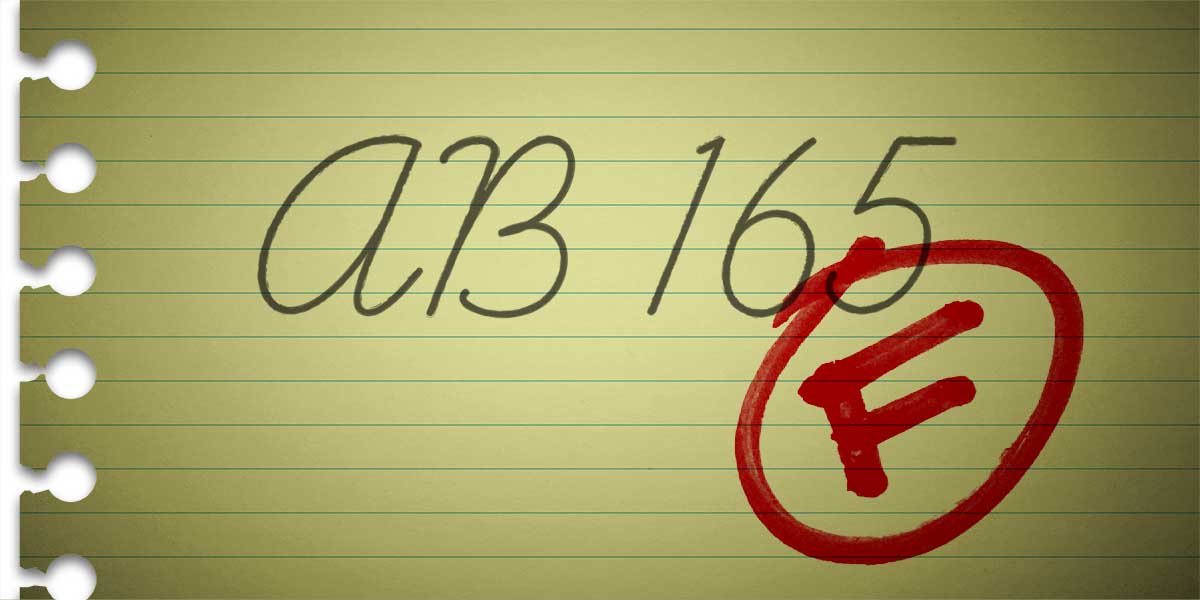
The legislation, Assembly Bill 165, would “end the application of the Electronic Communications Privacy Act to a local educational agency, as defined, or an individual acting for or on behalf of a local educational agency.” The bill defines educational agencies as county offices of education, school districts and charter schools.
It has long been illegal to search through someone’s personal filing cabinet or the hard drives of their home or office PC without a valid court order, but until the electronic privacy act was passed, law enforcement could obtain access to someone’s web-based email account or cloud storage service on the theory that any data left on a server is “abandoned.”
That theory dates back to the time when off-premise servers were used simply to transmit data from one machine to another but, today, many of us store our most intimate personal data on services like Dropbox, Google Drive and Microsoft OneDrive and most people now rely on cloud-based servers to store and access their email and even their diaries and personal photographs. For most people, almost everything stored on cell phones is also backed up to cloud servers.
An article by student journalists Evalyn Li and Andrew Zhao in Gunn High School’s student newspaper, The Oracle, explained the pros and cons of AB 165. It quoted a Palo Alto school official that “the school district would exercise the power under this law for the safety of its students,” and another saying that he “believes that this legislation is meant to protect students from threats such as cyberbullying.” The same article also quoted a student leader who argued that if a school wants to search a student’s phone “there should be a warrant only because staff shouldn’t just get into other people’s personal property.”
In a blog post, the Student Press Law Center raised the issue of the bill’s potential impact on student journalists. The organization worries that, despite federal law protecting against “most newsroom searches and seizures,” this bill could “cause school or campus police to believe that there is no longer such protection, since there has never been an explicit ruling about how this applies to student journalists.”
The Electronic Frontier Foundation (EFF) argues that “AB 165 would destroy the privacy and free speech protections for Californians who attend or work in the public schools,” saying that it provides for “no outside oversight for searches of electronic devices or online accounts; no notice to individuals or parents and guardians; and no safeguards for what information is searched and how it may be used or shared, including with federal agencies.”
As The Oracle pointed out, one justification for AB 165 is to enable school officials to protect student victims of cyberbullying. As CEO of ConnectSafely.org and co-author of A Parents’ Guide to Cyberbullying, I support reasonable efforts to protect children from Bill to fight cyberbullying would strip students, teachers of privacy protections:


Peter Schrag: The yawning education gap | EdSource

The yawning education gap | EdSource:

The yawning education gap

Image result for The yawning education gap
Oakland Unified history teacher Jennifer Brouhard asks 5th grader Sequori Cross about her perceptions of women at work in the Richmond shipyards during World War II.CREDIT: JOHN FENSTERWALD/EDSOURCE TODAY

Among the major divisions in the electorate last year (by gender, ethnicity and geography) was the gap between those who were college educated and those who were not. That was widely interpreted as an indicator of a broader socioeconomic split, as it surely was.
Peter Schrag
CREDIT: PATRICIA TERNAHAN
Peter Schrag
But given widespread acceptance by a large part of the electorate of Trumpian Newspeak, “alternative facts” and gargantuan falsehoods about urban crime, immigration, the economy, climate change, the Russian connection and a long list of other matters, both during the campaign and since, was it also a measure of educational failure, plain and simple, and particularly of education in history, government and economics?
Nate Silver in his widely respected FiveThirtyEight blog, among others, leaves no doubt that it was far more a measure of education than of income.
Hillary Clinton, he showed in a post-election analysis, did better in the nation’s 50 “most educated counties,” those with the highest percentage of college graduates, than Barack Obama had done in 2012, and worse in the 50 “least educated counties.” Conversely, Donald Trump “improved on (Mitt) Romney’s performance in 23 of 30 counties where median incomes are $70,000 or higher but less than 35 percent of the population have college degrees and the majority of the population is white.”
While Silver acknowledges that there could have been other factors at play, heThe yawning education gap | EdSource: 


Public Schools: Who Is Failing Whom?  A MUST READ by Ann P Cronin - Wait What?

Public Schools: Who Is Failing Whom?  A MUST READ by Ann P Cronin - Wait What?:

Public Schools: Who Is Failing Whom?  A MUST READ 
by Ann P Cronin

Image result for Failing politicians failing schools


Education advocate and fellow education blogger, Ann Cronin, has written another powerful piece, this time asking who is failing whom when it comes to the nation’s public schools.
Ann Cronin writes;
If the same words are repeated over and over again, they begin to begin to be taken as true. “Failing public schools” are such words. I see them written and hear them spoken by legislators, journalists, and commentators who probably have not been in a public school in decades since they attended one or never because they were educated in private schools.
Looking at who is taking Advanced Placement courses and how those students are faring is one of many ways to bring the term “failing public schools” into question. The number of high school students taking Advanced Placement exams increased in 2016, and more of the test takers were from low-income families, according to the College Board’s annual report on the Advanced Placement program. More than 1.1 million high school students took at least one Advanced Placement course during high school, 25,000 more than in 2015. That means that of the 3.1 million students who graduated from high school in 2016, more than 20% of them earned a score of 3 or better on an AP exam. Scoring a 3 allowed them to gain college credit at most colleges and universities.
The increase in the number of test-takers from low-income families continues a trend. In 2003, just over 94,000 students from low-income families took an AP exam; whereas, in 2016, 554,500 students from low-income families took at least one AP exam. Those who believe public schools are failing probably think that increasing the number of test-takers, especially low-income students from urban schools, would lower the overall performance on the AP tests. Not so. The average scores on all AP exams have held steady. In fact, the average score was actually higher in 2016 than in 2003 when far fewer students took AP exams. As Nat Malkus of the American Enterprise Institute said recently, “The fact that 1 in 5 public school graduates passed an AP exam in 2016 pushes back against the ‘public schools are failing’ narrative.”
So, the public schools in urban areas, where the increased 
Public Schools: Who Is Failing Whom?  A MUST READ by Ann P Cronin - Wait What?:


Oregon Save Our Schools: Attend State BOE Meetings and Help Save Our Schools!

Oregon Save Our Schools: Attend State BOE Meetings and Help Save Our Schools!:

Attend State BOE Meetings and Help Save Our Schools!

Image result for angry mob animated gif

One of the most important bodies in education in Oregon is the State Board of Education. Its job is to take education bills that pass the legislature and implement them. It is also responsible for overseeing the State Department of Education.

The Board meets once a month, generally, but not always, in Salem. The public can testify at the beginning of each session which often lasts all day. The public testimony is at the beginning of the meeting which starts about 9:45, but it is a good idea to get their slightly earlier to speak.

Often there are very few people in attendance so testimony can really stand out. Are you irritated about testing, about the longitudinal data base, about the overall approach to education in Oregon, or any other topic – let the people running much of the education in the state know.

P.S. If you are a member of OEA they will cover the substitute cost for up to four members who want to take the day and testify at the State Board.

Our children need you! Have fun!

Here is the link to the Oregon State Board of Education website where you can easily find schedules and locations of meetings, the agendas for the meetings and who is on the state board. Just click on "About Us" and then "State Board of Education"
.

If you want to go directly to the State Board page then you can just click on this link.


 Oregon Save Our Schools: Attend State BOE Meetings and Help Save Our Schools!:

CURMUDGUCATION: ESSA Big Mess

CURMUDGUCATION: ESSA Big Mess:

ESSA Big Mess

Image result for Big Mess

ESSA is caught in the middle of a very bad movie right now. It's the sequel to "How A Bill Becomes A Law," and it has no heroes.

After the bill becomes a law, the work still isn't done. Because to build a bi-partisan agreement, you write the law with statements like "Treatment of mugwumps will be fair." (Perhaps not that vague, but as always, allow me to exaggerate to make a point). So Republicans and Democrats sign the bill, each satisfied that "fair" means what they want it to mean.


"ESSA big mess. Weesa in trouble," says new USED undersecretary.

So now it's a law, but nobody knows what it means exactly. Here on the local level, outside of DC, where live human beings go on about their lives, what does it mean that mugwumps will be treated fairly? When they come to eat at the mugwump diner, should local officials be providing them with a bowl of tomato soup or a cheese sandwich?

In order to actually implement the law, we need some rules. And to get those, we turn to the United States Department of Mugwumpery, USDM develops the actual rules that states have to follow, which adds another layer of shenanigans because as a limb on the executive branch, the USDM has its own ideas about "fair" that it would like to implement.

That, in fact, is the story so far with the Every Student Succeeds Act. In an unprecedented show of bipartisanship, the Senate Education Committee managed to leave out everything there was hard 
CURMUDGUCATION: ESSA Big Mess:

What Is an "Appropriate" Education for Students with Disabilities?; The Court Will Tell Us Soon - Education Law Prof Blog

Education Law Prof Blog:

What Is an "Appropriate" Education for Students with Disabilities?; The Court Will Tell Us Soon 

by Jonathan D. Glater


Just how much must a school district do to support the educational opportunity of a disabled student?  Just enough to enable that student to get something, anything, out of the education provided?  Or enough to enable that student to thrive, to excel?
The question has confronted courts for years, as parents of disabled children have demanded that school districts do more to provide their children a “free appropriate public education.”  But the meaning of this phrase, typically abbreviated as “FAPE,” has eluded precise definition.  When the Supreme Court addressed the question, in Board of Education of Hendrick Hudson Central School District v. Rowley, 458 U.S. 176 (1982), a majority concluded that
[A] “free appropriate public education” consists of educational instruction specially designed to meet the unique needs of the handicapped child, supported by such services as are necessary to permit the child "to benefit" from the instruction. Almost as a checklist for adequacy under the Act, the definition also requires that such instruction and services be provided at public expense and under public supervision, meet the State's educational standards, approximate the grade levels used in the State's regular education, and comport with the child's [individualized education program – more on that below]. Thus, if personalized instruction is being provided with sufficient supportive services to permit the child to benefit from the instruction, and the other items on the definitional checklist are satisfied, the child is receiving a "free appropriate public education" as defined by the Act.
The Court’s language suggests that any benefit is sufficient to satisfy the requirement that schools provide FAPE; Justice Rehnquist, who wrote the majority opinion, took a very literal and formal approach to the language of the law to reach this Court’s conclusion.
Congress imposed the FAPE mandate in the Education for all Handicapped Children Act of 1975, Public Law 94-142, subsequently re-enacted as the Individuals with Disabilities Education Act (“IDEA”).  The meaning of FAPE is before Education Law Prof Blog:


Oliver Wendell Holmes: “Taxes Are What We Pay for Civilized Society.” | janresseger

Oliver Wendell Holmes: “Taxes Are What We Pay for Civilized Society.” | janresseger:

Oliver Wendell Holmes: “Taxes Are What We Pay for Civilized Society.”


You will notice that I did not mention the issue of school funding in the title of this post. Neither did I mention the name of the state that is the subject of the post. While I cannot tell exactly who is reading this blog, WordPress statistics tell me which posts are viewed, and I know that school funding is a topic people don’t like to read about—especially if it is in somebody else’s state.
School funding is not a taboo subject, however, if the fight is happening in your state. If we are parents, we know that what’s at stake is a class size of 32 children for third grade, or the presence of a school nurse, or an elementary school library that is staffed and unlocked. We know that the number of college counselors at the high school and the presence of the marching band or the orchestra might be at stake. We also know what pay-to-play means in a school-specific context where fees to play football or run track are threatened if the school funding is reduced. This is all pretty much invisible to other people, however. Because schools are buildings most of us rarely enter, we cannot see how money translates directly into services for children.
I hope that introduction is enough to make you feel obligated to finish reading this post, because I believe it is about some of the most important concerns for our society.  Do we feel an obligation to help the children in our nuclear family succeed or do we have an obligation to all children and the role of their education for our broader society? Do we somehow really believe that education is a competitive, zero sum game and that if other children win, our own children will lose? Are we willing to spend some of what we have earned to support the institutions of our community and our state?  Is cutting taxes more important than anything Oliver Wendell Holmes: “Taxes Are What We Pay for Civilized Society.” | janresseger:
 Image result for big education ape starving schools to death

FYI, Alabama’s constitution still calls for ‘separate schools for white and colored children’ - The Washington Post

FYI, Alabama’s constitution still calls for ‘separate schools for white and colored children’ - The Washington Post:

FYI, Alabama’s constitution still calls for ‘separate schools for white and colored children’


Alabama has been in the news of late, what with Jeff Sessions, President Trump’s controversial attorney general, hailing from there, and the state’s Republican governor, Robert Bentley, in possible danger of impeachment after he was found to have had a sexually explicit conversation in 2016 with his then-chief adviser.
But there is something else to consider about Alabama that reflects on its history and the country’s current racial divide.  It’s about the state constitution, which was written in 1901 and designed to limit local government and disenfranchise blacks. It has been amended more than 800 times since then and is the longest constitution in the country and possibly the world, at what the Council of State Governments says is 388,882 words.
Yet in the 116 years since it was written, and after all of the efforts to modernize the document — many of those efforts aimed at revising or eliminating racist language — these racist words still reside in the document:
SECTION 256
Duty of legislature to establish and maintain public school system; apportionment of public school fund; separate schools for white and colored children.
The legislature shall establish, organize, and maintain a liberal system of public schools throughout the state for the benefit of the children thereof between the ages of seven and twenty-one years. The public school fund shall be apportioned to the several counties in proportion to the number of school children of school age therein, and shall be so apportioned to the schools in the districts or townships in the counties as to provide, as nearly as practicable, school terms of equal duration in such school districts or townships. Separate schools shall be provided for white and colored children, and no child of either race shall be permitted to attend a school of the other race.
Of course, legal racial school segregation was banned throughout the United States by the Supreme Court in the 1954 Brown v. Board of Education decision, and federal law trumps state law.
But the language is still there, and a ballot initiative in 2012 to eliminate it, called the Alabama FYI, Alabama’s constitution still calls for ‘separate schools for white and colored children’ - The Washington Post:

With A Brooklyn Accent: Without Immigrants, NYC's Economy Would Grind to a Halt

With A Brooklyn Accent: Without Immigrants, NYC's Economy Would Grind to a Halt:

Without Immigrants, NYC's Economy Would Grind to a Halt

Image result for Without Immigrants, NYC

You cannot launch a program of mass deportations without totally destabilizing the New York economy. First of all, the business districts of many outer borough working class communities almost totally dependent on immigrant run enterprises In New York, there are at least ten times as many bodegas, pizza parlors and Chinese take out spots- almost all immigrant owned and operated- as there are fast food restaurants. They supply the food for the workers of "the city that never sleeps" not McDonalds and Burger King.


Secondly, the taxi and car services that EVERYONE in NY, especially its wealthier residents depend on to take them to and from airports, the theater and restaurants, and in many cases work, all are driven or operated by immigrants. This is true of Uber, Lyft and neighborhood car services as well as of yellow and green cabs. If you ever REALLY had a "day without immigrants" in NYC, the city would grind to a halt, literally.
And finally, we have child care
. The vast majority of child care workers and nannies hired by middle class and wealthy New Yorkers are immigrants. Should THEY stay home, their would be collective hysteria in a significant portion of the city's two income, high end families

In all of the areas I indicated, the immigration status of those working varies markedly, and includes significant portions of undocumented people . If you terrorize them, and create panic in their ranks, the entire city will pay the price of such a misguided and inhumane policyWith A Brooklyn Accent: Without Immigrants, NYC's Economy Would Grind to a Halt:


NYC Educator: Happy Students Learn More and Happy Teachers Teach Better

NYC Educator: Happy Students Learn More and Happy Teachers Teach Better:

Happy Students Learn More and Happy Teachers Teach Better

Image result for Happy school

I wish I could tell you I thought of that title, but it's a direct quote from Texas superintendent John Kuhn. Don't you wish all superintendents thought that way? Imagine looking toward being productive and helpful rather than vindictive and petty. I know, it's asking a lot, but it's kind of common sense. Of course, there's a Spanish saying that common sense is the least common of all the senses, and I must say I'm a subscriber to that train of thought.

Every day I read articles everywhere on the perfidy of teachers. We don't want to work. We get health benefits and we don't deserve them. Our jobs are easy. We should get rid of all those messy certification requirements and let just anyone do it. Let's judge teachers by test scores. Let's ignore the fact that this is utter nonsense and never, ever question whether the tests are even valid. Let's assume that Moses carried the tests from Mt. Sinai alongside the Ten Commandments. Let's open charter schools because they're all about saving the children. Public schools are dropout factories. 

It's tough for us because if you just read these pieces and take them at face value, the arguments appear to not be insane. But when you're in the classroom each and every day, you see things the bureaucrats don't. You see things the papers don't. When some genius in Albany decides that teachers shouldn't grade the tests of their own students it might make sense. After all, if teachers are rated by the tests, they have an incentive to juke the stats.

Now that's true. But why are we being rated by tests when the American Statistical Association says teachers change test scores by a factor of 1-14%? Of course there's that assumption that we're crooks. Now I will freely admit that I want my kids to do well in my classes and on tests. But that only means I'll help. It doesn't mean I'll cheat. Of course, if I were in Albany, where they lower the bar when they want to make NYC Educator: Happy Students Learn More and Happy Teachers Teach Better:


The School District and Technology Integration: The Path of the Butterfly or Bullet? | Larry Cuban on School Reform and Classroom Practice

The School District and Technology Integration: The Path of the Butterfly or Bullet? | Larry Cuban on School Reform and Classroom Practice:

The School District and Technology Integration: The Path of the Butterfly or Bullet?

Image result for Butterfly or Bullet


For the past year I have observed the integration of new technologies in classroom lessons, school programs, and districts. I have begun writing chapters for a book that will appear in 2018. From time to time I will publish posts here taken from the manuscript that I am writing. 
In Silicon Valley there are 77 school districts arrayed across five counties in the San Francisco Bay area. All have technology plans for their schools. These districts buy lots of hard- and software, wire schools with WiFi, provide classroom carts of laptops and tablets, offer teacher workshops on technology integration and then cross their fingers that teachers will use what the district has provided for daily lessons. Voluntary participation is the rule. Teacher choice of using devices and software means that great variation exists not only in every single school within a district but across each district heralded as embracing high-tech.[i]
Only two districts, however, have gone beyond having a plan, buying devices, building infrastructures and then crossing their fingers that teachers will use all of the available hardware and software in daily lessons. Only two districts have adopted policies that nudged all teachers in every school to use new technologies, blend learning, and create personalized lessons.  Only two districts have built a systematic infrastructure of broadband and WiFi, incorporated newly developed software, sponsored professional development, and provided technical assistance with the explicit expectation that all district teachers would go beyond considering use the new technologies in their daily lessons and actually incorporate the hardware and software into their 45 to 90-minute customary sequence of activities.
These two districts are Mountain View-Los Altos Union High School District and Milpitas Unified District.


Schooling in the Ownership Society: Rahm's Infrastructure Trust, a failed privatization scam.

Schooling in the Ownership Society: Rahm's Infrastructure Trust, a failed privatization scam.:

Rahm's Infrastructure Trust, a failed privatization scam.

Rahm Emanuel flew in Randi Weingarten  to support the Infrastructure Trust.

The BGA's Alejandra Cancino writes in Crain's, that Rahm Emanuel's grand PR stunt, known as the Infrastructure Trust, has done nothing to rebuild Chicago's infrastructure nor to build any trust. In short, it was a sham and a humbug, a facade under which to carry out even more failed privatization deals.

Writes Cancino:


...the infrastructure trust that Mayor Rahm Emanuel once hailed as a model of out-of-the-box thinking to jumpstart public works has proved anything but.
 Launched five years ago this month, the Chicago Infrastructure Trust has accomplished little and done so at a snail's pace. None of the $800 million in financing that Emanuel claimed he had lined up from institutional investors to bankroll city projects ever materialized, with resources so tight that the trust on several occasions has been late by more than a month in paying staff and once by several months.
What's more, city records reviewed by the Better Government Association show trust operations and projects have been largely dependent on public financing even though Emanuel sold the idea as an innovative financing scheme to free taxpayers from cost and risk.
As of October, the trust still owed money to some former employees, consultants and contractors, according to its most recent audit report.
Sounds like one of Trump's deals. Doesn't it? And there were more. Like the the failed privatization of Midway Airport.

warned about the Trust back in 2012 when Rahm first touted it as a model for other cities to follow and claimed that it would bring thousands of jobs to Chicago. And I wasn't alone.

Ald. Scott Waguespack, 32nd, (yes, there are a few honest ones on the council) opposed the trust's creation pushed for more transparency and City Council oversight.

Ben Joravsky, writing in the Reader, called Rahm the "trust fund mayor" and warned of the lack of transparency around IT.

But warnings fell on deaf ears. Why? Because there were the big banks, like Citibank 
Schooling in the Ownership Society: Rahm's Infrastructure Trust, a failed privatization scam.: