Latest News and Comment from Education

Monday, August 8, 2016

Failing Still to Address Poverty Directly: Growth Mindset as Deficit Ideology | the becoming radical

Failing Still to Address Poverty Directly: Growth Mindset as Deficit Ideology | the becoming radical:

Failing Still to Address Poverty Directly: Growth Mindset as Deficit Ideology


Reporting in Education WeekEvie Blad explains:
Having a growth mindset may help buffer students from low-income families from the effects of poverty on academic achievement, researchers found in a first-of-its kind, large-scale study of 168,000 10th grade students in Chile.
But poor students in the study were also less likely to have a growth mindset than their higher-income peers, researchers found.
Similar to the popularity of “grit” and “no excuses” policies, growth mindset has gained a great deal of momentum as a school-based inoculation for the negative impact of poverty on children.
The binaries of growth and fixed mindsets are often grounded in the work of Carol Dwek, and others, who defines each as follows:
According to Dweck, “In a fixed mindset, people believe their basic qualities, like their intelligence or talent, are simply fixed traits. They spend their time documenting their intelligence or talent instead of developing them. They also believe that talent alone creates success—without effort.”…
Alternatively, “In a growth mindset, people believe that their most basic abilities can be developed through dedication and hard work—brains and talent are just the starting point. This view creates a love of learning and a resilience that is essential for great accomplishment,” writes Dweck.
However, the media, the public, and educators often fail to acknowledge two significant flaws with growth mindset: (1) the essential deficit ideology that focuses all of the blame (and thus the need for a cure) in the individual child, and (2) the larger failure to see the need to address poverty directly instead of indirectlythrough formal education.
First, then, let’s consider deficit ideology [1], as examined by Paul Gorksi:
Briefly, deficit ideology is a worldview that explains and justifies outcome inequalities— standardized test scores or levels of educational attainment, for example—by pointing to supposed deficiencies within disenfranchised individuals and communities (Brandon, 2003; Valencia, 1997a; Weiner, 2003; Yosso, 2005). Simultaneously, and of equal importance, deficit ideology discounts sociopolitical context, such as the systemic conditions (racism, economic injustice, and so on) that grant some people greater social, political, and economic access, such as that to high-quality schooling, than others (Brandon, 2003; Dudley-Marling, 2007; Gorski, 2008a; Hamovitch, 1996). The function of deficit ideology, as I will describe in greater detail later, is to justify existing social conditions by identifying the problem of inequality as located within, rather than as pressing upon, disenfranchised communities so that efforts to redress inequalities focus on “fixing” disenfranchised people rather than the conditions which disenfranchise them (Weiner, 2003; Yosso, 2005).
Any person’s success or failure can be traced to a number of factors, but in the U.S., our blind faith in the Failing Still to Address Poverty Directly: Growth Mindset as Deficit Ideology | the becoming radical:

Say "thank you" to the NAACP (and more) - Network For Public Education

Say "thank you" to the NAACP (and more) - Network For Public Education:

Say “thank you” to the NAACP (and more)

The delegates to the NAACP take strong a stand to protect communities from charter abuses and to put a moratorium on charter growth.

Screen Shot 2016-08-07 at 2.00.55 PM

 During the annual NAACP convention in Cincinnati, the delegates stood up to the charter school lobby and the billionaires that support it. Delegates passed a resolution to put a moratorium on the expansion of privately managed charter schools.  They also passed resolutions against the excessive disciplinary practices, waste, fraud, and sorting and selecting of students in admissions associated with charters.

Read why it occurred, and why it is important here.
As expected, corporate reformers were outraged, with some individuals attacking the organization ‘as out of touch’ and worse. No doubt the leadership will be under enormous pressure to undo the resolutions in the fall.
Show your support for the NAACP!
Call (410) 580-5777 and say “thank you” for the moratorium.
Send a “thank you” email. We make it easy. Just click here.
Post the link below to the “thank you” letter on social media.
You can become a member of the NAACP and/or sign up for the NAACP newsletters here.
Text me…. maybe?
During our recent survey, over one third of respondents said that they would like to receive text alerts from NPE. Texts would be sent to alert members of actions, events and important information, only.  We will not share your cell phone number with anyone, nor will we call you.
Sign up here. Be sure to enter your name and cell phone number.
AARP turns away from ALEC
The AARP cut off its ties with ALEC due to protests and calls from advocates like you. NPE supporters were a part of that effort. You can read that story here. When you take the few moments to participate in an action alert, you can make a difference.

The High-Stakes Testing Scam Revealed At Last – Exceptional Delaware

The High-Stakes Testing Scam Revealed At Last – Exceptional Delaware:

The High-Stakes Testing Scam Revealed At Last

What if I told you the high-stakes testing American children have been going through is a complete and utter scam? Many would say they already knew that, but would they be able to tell you how they knew this? Probably not. At least not at the levels our state Department of Educations developed with the many testing companies such as American Institutes for Research, Pearson, and the Smarter Balanced Assessment Consortium.
The Delaware Department of Education put out a Request for Proposal for our new Social Studies State Assessment. The actual RFP is a treasure trove of testing information. For starters, the Delaware Department of Education is flat-out lying in their RFP. Last year, the Delaware DOE put out their “Delaware School Success Framework”. This is essentially Delaware’s report card for schools. Included in this horrible accountability testing machine are participation rate penalties for schools that go under 95% participation rate on the state assessments. The Delaware DOE and State Board of Education tried passing an updated version of Delaware’s regulation regarding school accountability, but many parents and education organizations balked and successfully blocked the State Board of Education from passing it. As a result, even though the Delaware State Board of Education eventually passed the Delaware School Success Framework, there is no regulatory power behind it. But that didn’t stop the Delaware DOE from making it look like it is perfectly legal in their RFP for the new Social Studies state assessment.
One of the first things the DOE calls for from a potential vendor for this test is understanding of and the ability to put the Rasch Scoring Methodology into the test. What is this Rasch the Delaware DOE has? It is an all-consuming itch to trip up kids and schools and parents. This is part of the underbelly of state testing that no one talks about. The website appropriately titled Rasch-Analysis.com explains the Rasch Scoring Methodology as this:
What is a Rasch Analysis? The Rasch model, where the total score summarizes completely a person’s standing on a variable, arises from a more fundamental requirement: that the comparison of two people is independent of which items may be used within the set of items assessing the same variable. Thus the Rasch model is taken as a criterion for the structure of the responses, rather than a mere statistical description of the responses. For example, the comparison of the performance of two students’ work marked by different graders should be independent of the graders.
In this case it is considered that the researcher is deliberately developing items The High-Stakes Testing Scam Revealed At Last – Exceptional Delaware:

We Are All Chicago Schools – More Layoffs, Less Help for Other People’s Kids | gadflyonthewallblog

We Are All Chicago Schools – More Layoffs, Less Help for Other People’s Kids | gadflyonthewallblog:

We Are All Chicago Schools – More Layoffs, Less Help for Other People’s Kids

“Fuck those kids.”
Mayor Rahm Emanuel couldn’t have been clearer if he’d said the above.
Chicago Schools Chief Executive Forrest Claypool couldn’t have made his priorities clearer if he’d given Chicago’s parents the bird and told them to “Kiss my ass.”
The Chicago Board of Education – made up of members all of whom are appointed by the mayor – decided to layoff 1,000 teachers and staff at the city’s public schools just a month before opening day. Sure, some may keep their jobs through reassignment, but hundreds will be unemployed.
This after a recent history of closing more than 80 schools and slashing thousands of jobs. Just last February, the district laid off 62 employees, including 17 teachers. In January, it laid off 227 staff members.
This begs several questions: How many teachers and support staff can Chicago Public Schools afford to lose? What exactly is this doing to its students? How is it affecting 
 

A Tale Of Two (Or Three) Davids:  The ECOT Goliath And Ohio’s Charter School Debacle

A Tale Of Two (Or Three) Davids:  The ECOT Goliath And Ohio’s Charter School Debacle:

A Tale Of Two (Or Three) Davids:  The ECOT Goliath And Ohio’s Charter School Debacle


Drip, drip, drip.
The steady stream of critical stories about the charter school Goliath named ECOT now is approaching a critical level, ready to create a flood in the GOP Statehouse and in the offices of the mega-giant’s lobbyists well before this year’s elections. If a Richard Nixon-type was somehow in command at this stage of the game and dealing with the proliferating ECOT mess, he would have called in the Plumbers and the renowned Haldeman and Erlichman firm to deal with the debacle.
No, the ECOT flood is not attributable to global warming, which Republicans don’t believe in, but nevertheless the water level around the Goliath is rising. Rapidly.
But wait. If there is a Goliath-type creature on the loose, doesn’t John Q. Public need a David to slay this foraging creature that feasts on more than $100 million from the state treasury, in addition to the other low-performing, politically connected charters that siphon off additional hundreds of millions annually in scarce public funds?
Interestingly enough, Ohio has not one but two public servants named David who could have made a difference in wounding the menacing ECOT, exposing other low-performing charters and their sponsors (or is the better word choice enablers) and otherwise protecting citizens from further harm.
It’s been a year since we saw the first David, Hansen by surname, who directed the Ohio Department of Education’s charter school office, leave under fire for data rigging. In administering his department, Hansen was responsible for generating the legally required sponsor evaluation system, but neglected to include all of the performance data of certain failing charter schools.
Even the right-wing Breitbart blog had some stinging observations about Hansen and his conflicted background as the head of the Office of Quality School Choice:
“Hansen, whose position was created in 2013 by (Gov. John) Kasich to oversee the expansion of charter schools in the state, told the Associated Press that the state law pertaining to the evaluation of Ohio’s charter schools was “not a model of clarity.”
 The controversy came at a time when Ohio’s charter schools were under significant scrutiny, with problems of attendance and accountability surrounding the schools that were billed as an alternative to public schools.
 And Hansen himself was not new to data rigging.
As Ohio Political blog Plunderbund reported, in 2009 — while Hansen was president of the Buckeye Institute — he was also caught manipulating data regarding Ohio’s charter schools, yet was still chosen to be school choice director in 2013. Many of the schools involved were owned and operated by for-profit company White Hat Management, which itself is owned by David Brennan, a big donor — through his family’s foundation — to the Buckeye Institute, to the Republican Party, and to Kasich’s campaign in Ohio.”
So the first David failed to protect the public from charter Goliaths and was apparently conflicted by his relationship to long-time benefactors in the charter industry. In addition, there is the matter of his wife, Beth Hansen, who served as Kasich’s chief-of-staff and campaign manager when the governor thought he could be a viable candidate for president. Could David Hansen’s problems be A Tale Of Two (Or Three) Davids:  The ECOT Goliath And Ohio’s Charter School Debacle:
 

It’s back to court for charter schools in Washington State | Seattle Education

It’s back to court for charter schools in Washington State | Seattle Education:

It’s back to court for charter schools in Washington State

lawsuit-
The Washington State Supreme Court deemed charter schools unconstitutional in 2015 and yet the charter schools remained open on the promise of private money supporting them. The $14M never materialized and instead the State Superintendent funneled money surreptitiously into charter schools by way of a small school district in a corner of the state, the Mary Walker School District.
In the meantime, legislators who ignored the consequence of not adequately funding public schools forged ahead with great hubris in what they thought would be a way around using public funds to keep the charter schools open by using state lottery money. This was called the Charter School Act.
There are many holes in the new law and recent developments are pertinent to the new lawsuit.
The plaintiffs are:
League of Women Voters, Washington State
El Centro de la Raza
Washington Education Association
Washington Association of School Administrators
International Union of Operating Engineers 609
Aerospace Machinists Union DL 751
Washington State Labor Council, AFL-CIO
United Food and Commercial Workers Union
Washington Federation of State Employees
American Federation of Teachers, Washington
Teamsters Joint Council No. 28
Pat Braman, on her own behalf
Donna Boyer, on her own behalf and on behalf of her minor children
Sarah Lucas, on her own behalf and on behalf of her minor children
The defendant is:
State of Washington

These are the basics:
After the Charter School Act was approved by the state legislators, it went to Governor Inslee’s desk to be signed. The Governor did not sign the bill but allowed it to pass into law. This is rare and the last time it happened was in 1981.
The Charter School Act went into effect on April 3, 2016.
On May 27, 2016, the Plaintiff’s made a demand that the State Attorney General Bob Ferguson, who is considering a run for Governor, investigate the constitutionality of the It’s back to court for charter schools in Washington State | Seattle Education:

CURMUDGUCATION: Reuters: SAT, ACT, and Test Insecurity

CURMUDGUCATION: Reuters: SAT, ACT, and Test Insecurity:

Reuters: SAT, ACT, and Test Insecurity


A Reuters investigative team has been taking a look at the ACT and SAT testing industry, and finding a huge mess. We had already seen hints of the problems with, among other things, whistleblowing posts from SAT insider Manuel Alfaro. But this Reuters series, now at five articles plus sidebars, is sort of jawdropping.

The articles have maintained a remarkably low profile, so I'm going to give you links to all five with a short peek at each so you can pick and choose your faves. Bookmark this-- it may take you a while to work through all of these, but it's worth it.


Part One: Multiple Choices

Turns out the SAT has been breached, big-time and many times, overseas. And the College Board knew it. And they went ahead and used the compromised tests anyway. These "content thefts" is eastern Asia are a huge part of that regions test prep industry. Further, the investigation shows that the College Board knew that a Chinese website was the source of much leakage, but they still failed to limit seatings at Chinese administrations of the test (it would have cost them over a million dollars in revenue). Most interesting takeaway here-- the highly compromised nature of the SAT in Asia suggests that US students might be losing out on college spots to Asian students who have cheated for high SAT scores. And you know it's bad when the ever-hubristic David Coleman chooses not to comment.

Part Two: Cheat Sheet

Security for the new SATs released in March lasted roughly five minutes. The traditional low-tech solutions were used, of course-- test prep companies waiting outside test sites to ask students what was one the test. The internet was also not kind to SAT security. But the College Board's antiquated and long-porous security measures also buckled immediately. Chinese tipsters showed Reuters whole chunks of the test that had been hacked from College Board's computers. This is particularly 
CURMUDGUCATION: Reuters: SAT, ACT, and Test Insecurity:

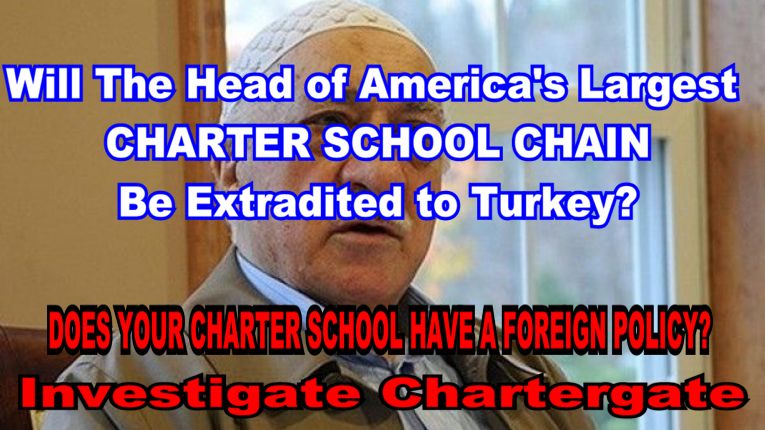
US to discuss Gulen extradition in Turkey next week | TRT World

US to discuss Gulen extradition in Turkey next week | TRT World:

US to discuss Gulen extradition in Turkey next week
Both sides have exchanged letters to find way forward on the extradition of Fethullah Gulen, blamed by Turkey for orchestrating the July 15 putsch.


The US Justice Department will send a delegation to Turkey next week to discuss extradition of US-based preacher and the leader of Fethullah Terror Organisation (FETO) Fethullah Gulen, state media Anadolu Agency said quoting a source in Turkey’s Justice Ministry.
Both sides have exchanged letters to discuss a way forward on the issue of Gulen's extradition.
Turkish government has blamed Gulen for the July 15 failed coup attempt which left 239 people dead and nearly 2,200 injured.
The source further said the US Justice Department had first written to Turkey’s Justice Ministry, suggesting that both sides should exchange delegations to discuss the extradition issue.
Turkey replied positively to the letter, suggesting the US side should first send its delegation to Turkey.
The US Justice Department agreed to the proposal and will be sending a delegation to Turkey next week.
Following the defeated coup which aimed to overthrow Turkey's democratically-elected government, Turkey sent two official requests to the US to extradite Gulen so that he can be put on trial.
Turkey’s Justice Minister Bekir Bozdag last week said a second request to arrest Gulen had been sent to the United States.
He told reporters that Turkey had made the first demand for Gulen’s extradition on July 19.


Justice Minister Bekir Bozdag. Image: Anadolu Agency

He said the second request stated, “There are serious claims and expressions that Gulen has a hand in the coup attempt. That is why he needs to be immediately arrested. We have intelligence that he could flee to a third country.”
The US was still reviewing the documents request.
The US State Department, without going into the details of the process, said it was still evaluating the evidence presented by Turkey.
“It is not an overnight process”, the State Department spokesman said despite the fact that the US had received the first documents from Turkey more than 20 days ago.
Ankara has accused Gulen for leading the putsch through his followers within the Turkish military who are also members of the FETO.
Gulen is also accused of a long-running campaign to overthrow the state through infiltrations into Turkish institutions, particularly the military, police, and judiciary, forming what is commonly known as the parallel state.US to discuss Gulen extradition in Turkey next week | TRT World:

Big Education Ape: Fethullah Gulen’s Race to the Top Is Over | Foreign Policy - http://bigeducationape.blogspot.com/2016/08/fethullah-gulens-race-to-top-is-over.html

NAACP members call for ban on privately managed charter schools - The Washington Post

NAACP members call for ban on privately managed charter schools - The Washington Post:

NAACP members call for ban on privately managed charter schools

Rep. Al Green (D-Tex.) listens to Hillary Clinton at the NAACP annual convention in Cincinnati on July 18. (Melina Mara/The Washington Post)

The NAACP has long expressed concern about charter schools, but now its members are taking a tougher stance. At their recent annual national convention late last month, members of the National Association for the Advancement of Colored People approved a resolution that included language calling for a moratorium on the expansion of privately managed charters.
For years, resolutions at annual national conventions of the historic organization have raised issues about charters, but the 2016 resolution uses stark language. The new resolution (see text below) notes that “charter schools with privately appointed boards do not represent the public but make decisions about how public funds are spent,” and it cites a number of problems with some charters, including punitive disciplinary policies, fiscal mismanagement and conflicts of interest.
The resolution won’t be official NAACP policy until the organization’s national board meets soon and decides whether to approve it — but the message from the majority of its members are clear. It says in part:
* “Charter schools have contributed to the increased segregation rather than diverse integration of our public school system.”
* “Weak oversight of charter schools puts students and communities at risk of harm, public funds at risk of being wasted, and further erodes local control of public education.”
* ” [R]esearchers have warned that charter school expansions in low-income communities mirror predatory lending practices that led to the sub-prime mortgage disaster, putting schools and communities impacted by these practices at great risk of loss and harm…”
Charter advocates criticized the NAACP vote, with charter school founder and operator Steve Perry telling NewsOne Now that the NAACP convention is out of touch with its members in the states. Education Secretary John King told participants at the annual National Association of Black Journalists–National Association of Hispanic Journalists convention in Washington that there shouldn’t be “artificial barriers” to the growth of quality charters, which he called “drivers of opportunity for kids,” according to TakePart.com.
Here’s a post about the resolution and why it matters in the school reform debate. It was written by Carol Burris, a former New York high school principal who is now executive director of the nonprofit Network for Public Education, explains why putting the word “public” in front NAACP members call for ban on privately managed charter schools - The Washington Post:

Black Organizations Say No -- or at Least, Slow Down -- to Charter Schools

Black Organizations Say No -- or at Least, Slow Down -- to Charter Schools:

Black Organizations Say No -- or at Least, Slow Down -- to Charter Schools

The NAACP and the Movement for Black Lives cast a cold eye on education reform.

(Photo: AP/The Flint Journal-MLive.com/Jake May)
Students learn and practice yoga on International Yoga Day on June 21, 2016, at The New Standard charter school in Flint, Michigan.

 t its national convention in July, the National Association for the Advancement of Colored People, one of the nation’s premier civil-rights organizations, passed a resolution calling for a moratorium on charter schools. The resolution said, among other things, that charters have contributed to segregation, have used disproportionately high levels of punitive and exclusionary discipline, and pledged that the NAACP will seek to promote stronger investigative bodies to oversee charter school fraud, corruption, and waste. The resolution will not become official policy until the NAACP’s national board convenes later this fall, but it builds on previous resolutions passed in 2010 and 2014 that were also critical of charter schools.

A coalition of more than 50 black-led organizations known as the Movement for Black Lives—aligned with the Black Lives Matter movement—also released a wide-ranging policy platform last week outlining a collective political agenda that the groups had been hammering out since more than 1,000 activists and organizersgathered in Cleveland last summer.
Though their platform focuses on issues ranging from prisons and police to economic justice, a considerable portion is focused on education. In addition to calls for a constitutional amendment guaranteeing a fully-funded education, the Movement for Black Lives demands a moratorium on charter schools, an end toschool closures, and an end to “market reformer” programs like Teach for America.
The new calls for national charter moratoriums from both the NAACP and the Movement for Black Lives highlights the growing divides among civil-rights organizations and people of color over support for the so-called education reform agenda.
Jonathan Stith, the national coordinator for the Alliance for Educational Justice, a network of 30 youth-led groups across the country, co-authored the Movement for Black Lives’ education proposals. I asked him how their coalition arrived at their position on education reform as they were crafting their policy language, given that many black families support school choice.
“We definitely hear that, and that’s part of the reason why our platform calls for community control,” he says. “I think what you hear from those groups [that support charters] is that they feel that they want some level of control and influence over public education, and we by no means seek to deny that.” Specifically, the platform calls for things like democratically elected school boards and ending state takeovers.
“We recognize that for families, the first priority is to find the best educational opportunity for their children, and some families feel that charter schools provide that,” Stith says. “But we feel that is a false choice; charter schools are used to pull funding from other schools, they destabilize traditional public schools, and ultimately lead to their closures.” He adds that there is a growing number of black families in charter schools who have had bad experiences, and have been pushed Black Organizations Say No -- or at Least, Slow Down -- to Charter Schools: