Latest News and Comment from Education

Monday, July 25, 2016

Five Facts About School Meal Programs - The Pew Charitable Trusts

Five Facts About School Meal Programs:

Five Facts About School Meal Programs

School meal programs
Today’s school lunches, such as this one served in Menomonie, Wisconsin, are rich in fruits, vegetables, and whole grains and low in saturated fat and sodium.

More than 30 million students—about 3 in 5 schoolkids—participate daily in the National School Lunch Program (NSLP), even though many of them and their families may not realize it. Created by Congress in 1946, the NSLP helps pay for 5 billion healthy lunches served each year in 95 percent of public schools and thousands of private ones too. The School Breakfast Program (SBP), established 20 years later, provides morning meals to about 14 million children, a number that’s been rising steadily.
Here are five facts about these far-reaching and sometimes misunderstood programs.
1. All students in participating schools have healthier food and drink choices because of these programs. That’s because breakfasts and lunches, a la carte menus, and snacks sold in school vending machines and stores must meet a consistent set of science-based nutrition standards set by the U.S. Department of Agriculture. In 2012, USDA began strengthening these guidelines, some of which had not been updated in 30 years. The revised standards ensure that all students are offered more fruits, vegetables, lean proteins, and whole grain-rich items, and that foods and drinks on campus do not have excess saturated fat, sugar, and sodium.
2. These programs support affordable food for all students. Schools’ routine encouragement that families apply for free or reduced-price meals can give the impression that national meal programs benefit only lower-income students. The truth is, kids who pay full price represent 27 percent of the daily participants in the NSLP and 15 percent in the SBP. Schools receive a federal reimbursement for each meal children buy, regardless of household income, and for those provided free of charge, which helps districts offer nutritious, quality meals to all kids. Students receive an entree, three healthy sides, and a carton of milk for less than what many people spend on their daily coffee.  
3. Healthy school meals improve kids’ eating habits. Major studies have shown that children are eating more of their nutritious school lunches and wasting less food since districts implemented USDA’s updated nutrition standards. For example, middle school students consumed larger shares of their entrees and vegetables in 2014 compared with the year before the stronger standards took effect.
4. Today’s school meals offer healthier—not fewer—calories. Under current guidelines, meals can provide students essentially the same total calories that were typical prior to USDA’s revisions. Lunches offered in high schools, for instance, have to average no more than 850 calories over the week—seven calories less than the average offered before updated standards. Children are able to get the energy they need to learn and grow, but with the healthier standards, it’s just coming from more nutritious foods.
5. Students’ cafeteria choices are increasing. USDA’s updated standards require schools to serve fruits and vegetables with every meal and to offer a variety throughout the week to give children access to all the nutrients important for their health. Menu options are expanding in other ways too. In just the first year under higher nutrition standards, a third of elementary schools expanded the selection of entrees on their menus.
Check out the resources below to learn more, and plan a school lunch date to see firsthand what’s working in the school cafeteria. Five Facts About School Meal Programs:


Additional Resources


When Play Is Criminalized: Racial Disparities in Childhood

When Play Is Criminalized: Racial Disparities in Childhood:

When Play Is Criminalized: Racial Disparities in Childhood

2016.7.25.Playground.main
Racial disparities in the way children are allowed to play denies many Black kids an important childhood right. (Photo: Stefano Brivio / Flickr)

A significant segment of the child-age population in the United States is effectively denied one of the most important rights of childhood: free play. The trend away from unstructured play can have deleterious effects on the cognitive, social and emotional development of affected children. Because of disparities in opportunities for physical activity at school, the semi-privatization of public space, and the criminalization of Black and Brown bodies in motion, children of color, especially those of low socio-economic status, too often miss this essential requirement for healthy childhood development.
According to Diane Barnes, a Licensed Clinical Social Worker (LCSW) in private practice in New York City, "both children and adolescents require at least 60 minutes or more per day" of physical activity. "Their activities," Barnes says, "are obviously different. While young children are running around the playground, older kids are more likely to be engaged in exercise that is related to a sport such as football or soccer."
It is the "running around" -- the uninhibited activity -- that is so crucial to cognitive, social and emotional childhood development. "Free play should be imaginative and self-directed," says Barnes. "The ideas should come from within. Dance classes and soccer classes do not count as free play." Indeed, even school physical education classes, while important to overall wellness and an essential component of a balanced, healthy education, don't count as free play. "While it would be wonderful to increase PE," Barnes says, "PE should not be mistaken as free play because it is not. It is not only necessary for children to have the room to play, but this play needs to be free play and not under the microscope of teachers or other professionals."
The Importance of Free Play
Indeed, a growing body of research proves the influence of play on children is overwhelmingly positive, as it leads to greater academic achievement and better executive function . Free play looks less like PE and more like recess -- or at least like recess time as memorialized in the well of the American imagination. Images of children goofing off, climbing, leaping, falling and even bruising with wild abandon populate the collective consciousness of our past.
However, despite the efforts of movements like Free-Range Kids , American children rarely move independently, without the watchful gaze of adults who monitor their every movement. This hypervigilant eye is watchful even when older school-aged children play in their own neighborhoods. For children who are Black and Brown, this adult gaze -- in the form of surveillance by both police and school authorities -- often criminalizes their young bodies. Sufficient research reveals the tremendous racial disparities in disciplinary responses to children's behavior in schools and in communities.
An issue brief published by the Kirwan Institute for the Study of Race and Ethnicity found that,
African American students, and especially African American boys, are disciplined more often and receive more out-of-school suspensions and expulsions than White students. Perhaps more alarming is the 2010 finding that over 70% of the When Play Is Criminalized: Racial Disparities in Childhood:


Tax Spending Without Representation - Change The LAUSD

Tax Spending Without Representation - Change The LAUSD:

Tax Spending Without Representation


GHCHS.jpg

-California Charter School Association
As Eli Broad prepares to implement his plan “to reach 50 percent charter market share” within the LAUSD, now is the time for Angelenos to begin asking what this privately controlled system would look like. While Broad claims that his takeover of public education will bring an “expansion of high-quality charter schools in Los Angeles,” is there any proof that existing charter schools have reached this standard of excellence? Do charter schools help to “ensure that no Los Angeles student remains trapped in a low-performing school,” or would this expanded network of publicly funded private schools continue to cherry-pick the easiest to teach students who are more likely to increase their school’s reported test scores. Most importantly, do these schools actually want “parents [who] are effectively engaged” or will their right to elect representatives to the governing boards be revoked once these schools are established?
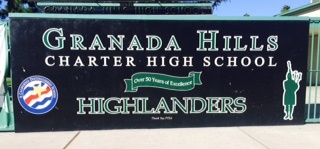
The LAUSD “already has more than 200 charters, the most of any school system in the country,” which provides plenty of examples of how these types of schools are operated and what should be expected from Broad’s private school district. One example is Granada Hills Charter High School (GHCHS), which bills itself as “the largest single education reform effort in the country.” The school shows its willingness to play loose with statistics when it says that it “serves nearly 4,500 families.” The official school profile states that it only has 4,300 students, so unless it bans siblings from attending the school together, the claim of 4,500 families seems to be exaggerated.
While the California Department of Education reports that the LAUSD has164,349 English Learners or 25.4% of its total enrollment of 646,683 students, GHCHS has 146 or 3.4% of its population. This is down from the  291 English learners it served when it converted to a charter in 2003. The California Charter School Association says that “charter schools understand their responsibility to serve all students and are committed to serving students with exceptional needs.” GHCHS serves 301 of these students, or 7% of its population, including those with 504 plans, who usually “spend the entire day in a general education classroom,” but require an accommodation to deal with a disability. By comparison, the LAUSD serves 82,759 special education students or 12.7% of its total population. GHCHS is also run by a governing board that is no longer democratically elected and, therefore, does not give parents, teachers or community members a formal say in how the school operates.
When GHCHS was first converted from a LAUSD run school to a charter it was done so with the promise of allowing the “community to be more actively involved.” In its first charter renewal application, it was able to legitimately state that its “governing structure is designed to foster participation by all stakeholders,” as these stakeholders were represented on a democratically elected governing board. As described in their charter, this board consisted ofTax Spending Without Representation - Change The LAUSD: 

In School Choice Fight, a Fresh Force Emerges | The Texas Tribune

In School Choice Fight, a Fresh Force Emerges | The Texas Tribune:

In School Choice Fight, a Fresh Force Emerges


Astroturf lobbying refers to political organizations or campaigns that appear to be made up of grassroots activists but are actually organized and run by corporate interests seeking to privatize and destroy Public Education. Such groups are often typified by innocent-sounding names that have been chosen specifically to disguise the group's true backers

*Editor's note: This story has been updated to note that Texans for Education Opportunity co-founder Stacy Hock was appointed by Gov. Greg Abbott to the Commission on Next Generation Assessments and Accountability.
An ambitious new player has emerged in the controversial effort to use taxpayer dollars to help Texas parents send their kids to private or religious schools.
Texans for Education Opportunity, whichlaunched in May, supports all forms of “school choice,” including charters and traditional public schools, said Executive Director Randan Steinhauser, an Austin-based school choice activist and public relations consultant who co-founded the nonprofit advocacy organization.
But she said the group’s main goal is to get Texas lawmakers to create “education savings accounts” — a program under which the state would dole out taxpayer money directly to parents via debit card to cover approved education-related expenses, like private school tuition, tutors or homeschooling materials. About a half-dozen other Republican-dominated states, including Florida and Arizona, have already created such programs, although most of them target specific student populations, including disabled and low-income students. (Nevada is an exception, offering assistance to all students.) 
Literature provided by Texans for Education Opportunity, which appears to be the first statewide organization focused solely on school choice, suggests the state offer up to $7,800 for any student pursuing an alternative schooling route. That is about 90 percent of what the state provides on average to traditional school districts per student for annual maintenance and operations, the pamphlet says.
The concept is similar to private school vouchers, in which taxpayer funds are awarded directly to schools, but it is larger in scope.
Monty Exter, a lobbyist for the Association of Texas Professional Educators, said education savings accounts are worse than vouchers because there is no good way to control how parents spend the money. The states that have implemented such programs have included no provisions that allow them to reclaim money if parents spend it on "a flatscreen TV or a bag of crack," he said.
"Who's to say that a laptop isn't an educational expenditure, but who's to say that it is? Who is going to police that?" he said. "Are we going to pay someone at the state level to monitor this program, and how much is that going to cost?"
Exter said that concern is separate from the larger one school and teacher groups have long expressed in opposing such programs — that they divert much-needed dollars away from struggling public schools.
But Steinhauser said such a program would have “the biggest benefit to families” because — unlike private school vouchers — it would empower parents to choose the option that works best for their child.
“We’re working to educate legislators on the specifics,” she said, arguing that there is rampant misinformation about how such a program would function. “We’re making sure they understand the positive impact it could have on the state of Texas and on students in their district and families in the state who are desperate for another option.”
Literature provided by Texans for Education Opportunity, which appears to be the first statewide organization focused solely on school choice, suggests the state offer up to $7,800 for any student pursuing an alternative schooling route.
The group, whose board of directors includes former U.S. Sen. Phil Gramm of Texas, has so far raised more than $100,000 from a variety of local and national organizations to fund its work, Steinhauser said. And it expects to raise hundreds of thousands more dollars through the political action committee it will form this fall to dole out campaign contributions to the state lawmakers who assist with its mission. 
Businesswoman and philanthropist Stacy Hock, who co-founded the group, has spearheaded fundraising. (She serves on the board of the Texas Public Policy Foundation, a conservative think tank. Earlier this year, Gov. Greg Abbott also appointed her to serve on the Commission on Next Generation Assessments and Accountability, where she serves as vice-chair.)
“We’ll be supporting legislators who stand up and fight for an education savings account during the session” next year, Steinhauser said.
Creating such a program is a top priority for Lt. Gov. Dan Patrick, who has tried unsuccessfully to do so since he was a state senator. Last year, under his leadership, the Senate passed a bill that would’ve provided up to $100 million in tax credits to businesses that donated money for scholarships for school choice families. But it died in the House, where a bipartisan coalition of lawmakers has long blocked such proposals. 
Steinhauser said she has worked closely with Patrick since her 2013 move to Texas, where she was surprised to find that school choice initiatives weren’t further along. She had previously traveled the country lobbying for school choice legislation as national director of external affairs for the American Federation of Children, the nation’s largest school choice organization.
In addition to her new role heading Texans for Education Opportunity, Steinhauser also is an adviser for both National School Choice Week and the Friedman Foundation for Educational Choice. And she is a partner at the political and public relations consulting firm she co-founded with her husband, Brendan Steinhauser, a Texas native whose clients include U.S. Rep. Michael McCaul, R-Austin.
Disclosure: The Association of Texas Professional Educators and the Texas Public Policy Foundation have been financial supporters of The Texas Tribune. A complete list of Tribune donors and sponsors can be viewed hereIn School Choice Fight, a Fresh Force Emerges | The Texas Tribune:

Beyond ‘Mad Men’: More Public Schools Advertise To Survive | StateImpact Indiana

Beyond ‘Mad Men’: More Public Schools Advertise To Survive | StateImpact Indiana:

Beyond ‘Mad Men’: More Public Schools Advertise To Survive

Fort Wayne Community Schools will spend about $10,000 on billboards this summer. District spokesperson Krista Stockman says state funding from a gain of two new students would pay for the billboards. (Peter Balonon-Rosen/Indiana Public Broadcasting)

Forget Don Draper. Forget Peggy Olson. The newest era of advertising may live within your public school district.
Schools will start soon, but where you live doesn’t necessarily determine where you go to school anymore. Families can choose where to go to school — private, charter or public school. The aim behind providing this choice? Proponents say it will force allschools to better themselves.
Whether it has done that remains controversial. But it has given birth to a new reality for public schools: with education competition, comes the need for education marketing.

SCHOOLS SEEK COMMUNITY CONNECTION

If Marnie Cooke had her way, you’d see school colors plastered throughout downtown Noblesville.
“I don’t know when the city of Noblesville is planning on changing over street signs,” said Cooke, Noblesville Schools communications director. “But I hope to put a bug in their ear that it might be cool to have some black and gold street signs.”
Black and gold. The district’s colors.
In Noblesville, voters recently agreed to bump up property taxes to help fund the district. Cooke wants everyone in the small central Indiana city to feel connected to the schools.
The district relies on the community for funding, internships and students. So the district hired Cooke because of her private-sector marketing background.
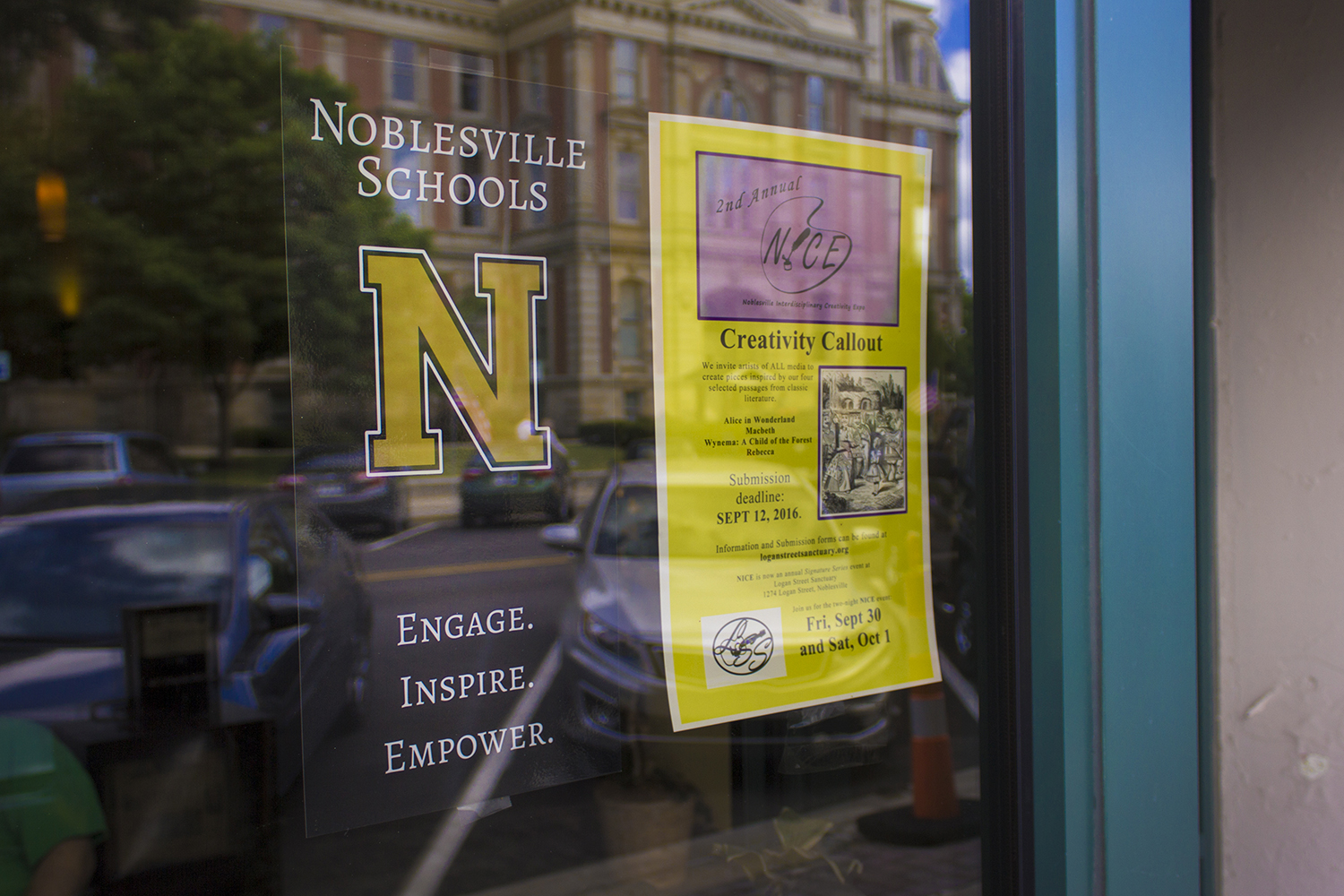
A poster for Noblesville Schools hangs in a coffee shop window of Noble Coffee and Tea Company. (Peter Balonon-Rosen/Indiana Public Broadcasting)
“When school starts you’ll see Noblesville school banners hanging on those posts,” Cooke said. “And we have a coffee shop over here that has a Noblesville Schools poster in the window.”
Plus, there will be community events, fliers and social media advertising. It’s deliberate marketing to keep schools on the community’s mind.
Two hours south, that marketing gets even more direct.

A MULTIMEDIA APPROACH TO ADVERTISING

Clarksville Community Schools developed an advertising campaign with an express purpose: drive students to their district.
The southern Indiana district paid the ad agency Bandy Carroll Hellige over $160,000. Beyond ‘Mad Men’: More Public Schools Advertise To Survive | StateImpact Indiana:


Why Don't Schools Teach Children Morality and Empathy? - The Atlantic

Why Don't Schools Teach Children Morality and Empathy? - The Atlantic:

Why Don't Schools Teach Children Morality and Empathy?

A few months ago, I presented the following scenario to my junior English students: Your boyfriend or girlfriend has committed a felony, during which other people were badly harmed. Should you or should you not turn him or her into the police?
The class immediately erupted with commentary. It was obvious, they said, that loyalty was paramount—not a single student said they’d “snitch.” They were unequivocally unconcerned about who was harmed in this hypothetical scenario. This troubled me.   
This discussion was part of an introduction to an essay assignment about whether Americans should pay more for ethically produced food. We continued discussing other dilemmas, and the kids were more engaged that they’d been in weeks, grappling with big questions about values, character, and right versus wrong as I attempted to expand their thinking about who and what is affected—and why it matters—by their caloric choices.
I was satisfied that students were clearly thinking about tough issues, but unsettled by their lack of experience considering their own values. “Do you think you should discuss morality and ethics more often in school?” I asked the class. The vast majority of heads nodded in agreement. Engaging in this type of discourse, it seemed, was a mostly foreign concept for the kids.
Widespread adoption of the Common Core standards—despite resistance by some states—arguably continues the legacy of the No Child Left Behind Act. The 2002 law charged all public schools to achieve 100 percent proficiency in reading and math by 2014, meaning that all students were expected to be on grade level. This unrealistic target forced schools to track and measure the academic achievement of all students, a goal lauded by most, but one that ultimately elevated standardized testing and severely narrowed curricula. Quantifying academic gains remains at the forefront of school-improvement efforts to the detriment of other worthwhile purposes of schooling.
As my students seemed to crave more meaningful discussions and instruction relating to character, morality, and ethics, it struck me how invisible these issues have become in many schools. By omission, are U.S. schools teaching their Why Don't Schools Teach Children Morality and Empathy? - The Atlantic:


Ch*ckenshit Education | The Merrow Report

Ch*ckenshit Education | The Merrow Report:

Ch*ckenshit Education

When I was 8 years old, my morning chores including collecting the eggs of the 30-40 chickens on our farm. I’d bring them to the kitchen, wash my hands, and walk to school with my older sister.   It was a simple 4-step process: collect the eggs, deliver them to the kitchen, wash up, and head off to school.
Unfortunately, I sometimes forgot Step 3, washing my hands, meaning that I might have had some ch*ckenshit in my fingernails when I entered my 3rd grade classroom. Unfortunately for me, my 3rd grade teacher was a hygiene fanatic who required each of us line up and approach her desk, breathe into her face (had we brushed?) and show her our hands (had we washed?).  I always brushed my teeth after breakfast, so I never failed the halitosis test, but she got me on the “clean hands” exam quite a few times.
Each time the punishment was a BLACK STAR next to my name on the wall chart that was prominently displayed near the classroom door.  She started the chart on Day One, and I got quite a few of those unforgettable BLACK STARS during the year. It was humiliating, but I still made the mistake of not washing up quite a few times.  I was only 8, or we were running late, or whatever….
What brings this to mind is the practice in some benighted school systems of posting students’ scores on state exams on a so-called “data wall” in each classroom, so that every kid can see how he or she did…and how everyone else did.  That’s supposed to make kids work harder….
Teacher Launa Hall has written a thoughtful essay about this trend, which I urge you to read.  She writes that she resisted the requirement at first but eventually gave in and created her own “data wall,” a decision she regretted as soon as she saw her students looking at the scores.
“My third-graders tumbled into the classroom, and one child I’d especially been watching for Ch*ckenshit Education | The Merrow Report:


Zero tolerance laws increase suspension rates for black students, research shows

Zero tolerance laws increase suspension rates for black students, research shows:

Zero tolerance laws increase suspension rates for black students, research shows

Sad black child (Shutterstock)

The State Senate of Michigan is currently considering legislation that would scale back “zero tolerance” discipline policies in the state’s public schools.
Zero tolerance discipline laws require automatic and generally severe punishment for specified offenses that could range from possessing weapons to physical assault. They leave little leeway for consideration of the circumstances of the offense.
The bill, already approved by the State House, proposes to add provisions that would consider the contextual factors around an incident, such as the student’s disciplinary history, and would ask whether lesser forms of punishment would suffice.
In other words, suspension and expulsion would no longer be as “mandatory” and there would be a little more “tolerance” in these state discipline laws.
As a researcher of education policy and school discipline, I would highlight that these revisions, some of which have been passed in other states, represent a significant change of course for state school discipline law.
In fact, my recent work and that of others suggests that the shift away from zero tolerance approaches is for the better.

Why zero tolerance policies were introduced

Throughout the 1990s, the number of states with zero tolerance laws, those requiring suspension or expulsion for specified offenses, increased significantly.
The rapid adoption of such laws was spurred in part by the passage of the 1994 Gun-Free Schools Act, federal legislation that required states to adopt mandatory expulsion laws for possessing a firearm in school.
These safety concerns were further heightened by the shooting that took place at Columbine High School, a public high school in Littleton, Colorado.
Following Columbine, by the early 2000s, nearly every state had a zero tolerance law in place. Many of these laws expanded beyond firearms to include other weapons, physical assaults and drug offenses.

Push back against zero tolerance

Clearly, such zero tolerance laws were meant to improve the safety and order of the school environment. However, in recent years, they have been seen as being overly prescriptive and as contributing to racial disparities in school discipline.
For instance, there are cases of students being suspended for accidentally bringing apocketknife to school. In one high-profile case, a student was suspended for chewing a pastry into the shape of a gun.
Additionally, federal data show that black students are suspended at rates two to three times higher than their white peers.
As a result, in 2014, the U.S. Department of Justice and Department of Education issued a joint “Dear Colleague” letter directed to public school districts. The letter was a call for reductions in the use of suspensions and expulsions and, instead, for a focus on ensuring the fair use of school discipline for students of all backgrounds.

Here’s what new research shows

In a newly published study, I explored the implications of state zero tolerance laws – laws that require school districts to adopt zero tolerance policies.
In particular, I sought to find out if they contributed to increased use of suspensions and if they led to racial disparities. Given claims by proponents of such laws that they increase the safety and order of the school overall, I also wanted to see if these laws Zero tolerance laws increase suspension rates for black students, research shows:

A Study of Branding and Marketing in the New World of School Competition | Diane Ravitch's blog

A Study of Branding and Marketing in the New World of School Competition | Diane Ravitch's blog:

A Study of Branding and Marketing in the New World of School Competition


A few years ago, when I visited Michigan, I spoke with about 80 district superintendents. The most common complaint from them was the money they had to spend every year advertising themselves in a fierce competition with other districts. The money follows the child, so larger enrollments meant bigger budgets. Each district, they said, typically puts about $100,000 into campaign to poach students away from neighboring districts.
They thought this was a huge waste of resources, since they also had to hire people to design their marketing materials.
This study reviews the practices of branding and marketing schools in a competitive environment.
The charter chain that does it best is Success Academies, which targets its audience, sends out mailers, and blankets the neighborhood with notices to parents. Its goal is to have more applicants than places, so it can advertise that it has a long waiting list.
When Success Academy opened its first school in Harlem, it had a marketing budget of $325,000. The public school with which it competed had $500 to print flyers and brochures.A Study of Branding and Marketing in the New World of School Competition | Diane Ravitch's blog:

40 years after desegregation ruling, core problems remain

40 years after desegregation ruling, core problems remain:

40 years after desegregation ruling, core problems remain

A new student at Fourth Street School, 1542 N. 4th St., is directed to his teacher by Mary Krause, a paraprofessional aide, in 1976.
A new student at Fourth Street School, 1542 N. 4th St., is directed to his teacher by Mary Krause, a paraprofessional aide, in 1976. Credit: Journal Sentinel files

Here's a milestone I don't expect anyone will celebrate. The start of the school year, just over a month from now, will mark the 40th anniversary of the launch of court-ordered school desegregation of Milwaukee Public Schools.
It's remarkable how some of the key elements of the plans implemented beginning then remain part of the Milwaukee school landscape now. To name three:
The racial integration plan that was implemented over several years was focused largely on trying to make a group of "magnet schools" attractive enough that both white and black children would enroll. Some schools that arose in that era, such as Rufus King High School and Golda Meir School, remain comparatively diverse and among the best in Milwaukee.
Busing is No. 2. Desegregation brought a large increase in the role of busing to move children to schools outside their own neighborhoods. To this day, busing remains a central part of the school landscape, long after desegregation itself pretty much faded out.
It's the third remnant that is most dispiriting: The problems desegregation aimed to solve have not, for the most part, gone away. In some ways, they are worse.
In 1976, the MPS student body was about two-thirds white. Within five years, the white percentage was under 50%. Last fall, according to MPS, it was 13%. Where did all those kids go? The suburbs is the main answer.
As for MPS schools, for a few years, there was a big push for diverse enrollments in many schools, including use of quotas by race in some. But even mandated integration faltered soon, largely because so many whites left the system.
Today, the large majority of schools in the city, including private schools and non-MPS charter schools, predominantly have one racial or ethnic identity, black, Hispanic or white. With a short list of praiseworthy exceptions, there is little in Milwaukee that qualifies to be called integration in education.
As for integration in the suburbs, quite a few schools that are closer to the city of Milwaukee have more diverse student rosters than they had a decade ago, not to mention four decades ago. That's due to a number of changes, including the demographic makeup of those suburbs, as well as the state's open enrollment law, which allows students from one school district to enroll in another district. But open enrollment actually has increased segregation. And many schools in farther-out suburbs remain predominantly white.
The voluntary city-suburban racial integration program known as Chapter 220 is 40 years after desegregation ruling, core problems remain:

What’s Good For the Goose Is Good For the Gander: – B. Keller | DCGEducator: Doing The Right Thing

What’s Good For the Goose Is Good For the Gander: – B. Keller | DCGEducator: Doing The Right Thing:

What’s Good For the Goose Is Good For the Gander: – B. Keller

whats-good-for-the-goose-is-good-for-the-gander-quote-1
(“The needs of the many, outweigh the needs of the few” Dr. Spock)
   The loud outcry concerning the “destruction” of charter schools being caused by not permitting some of them to co-locate is both dishonest and misguided. For one thing, the schools denied co-location only exist on paper. There are no students, the school is not even open. Given this fact, the rhetoric and the impassioned speech notwithstanding, these schools cannot possibly be closed because they do not even exist!
I must tell you that as a teacher, I always required my students to present facts. I told them don’t just say, “I should have passed your class.”, show me the grades, the work, the evidence that supports your claim. You would certainly have to think and expect that people who are responsible to lead and teach young people, people who claim to have cornered the market on successful education strategies and methodologies far superior to those people and methodologies found in the “public schools”, would know this and would model that behavior and technique, but clearly those on the charter school side of the argument consider it to be all right to omit certain facts in order to make their argument appeal to the pathos of the issue and gain the sympathy of those who cannot or do not think, analyze or examine what they hear because they simply assume that if someone is saying it, it must be a fact! (See Wikipedia).
It is also to present charter schools as “THE solution” to today’s educational issues. While I have no doubt that there are charter schools somewhere that are amazing, almost magical places where education just seems to happen out of nowhere, there are non charter schools where this happens as well. It is also interesting to note that most, if not all of the people presently advocating the importance and value of charter schools NEVER attended charter schools. In fact many of them are products of some public school system, yet they are extraordinarily successful. Think about this for a minute. If charter schools are the only schools where education can take place, how was it possible for What’s Good For the Goose Is Good For the Gander: – B. Keller | DCGEducator: Doing The Right Thing:

Inequality is for Winners – EduShyster

Inequality is for Winners – EduShyster:

Inequality is for Winners


I talk to Tom Frank, author of Listen, Liberal, about the Democrats’ break up with the working class and why education can’t save us…
listen liberalEduShyster: We’re going to be hearing a lot about income inequality at the Democratic convention in Philly this week. But you insist that the Democrats not only have no intention of doing anything about inequality, they actually kind of like it.
Tom Frank: The Democratic party really doesn’t care about inequality because they’re now a party of the professional class: affluent, white-collar professionals. They themselves say this all the time; they talk about the professional class as being their constituency. But we don’t often try to put the pieces together and try to figure out, well what does it mean to be a party of the professional class vs. the working class? One thing it means is that inequality is seen as the natural order of things. In fact, professionals believe in inequality. They think of inequality as totally fair and the way things should be, and they think that because they themselves are the winners in the great inequality sweepstakes.
EduShyster: There are many great lines in Listen, Liberal, but one of my faves is that whenever the kind of liberal you’re describing stumbles upon an economic problem—say, the collapse of the middle class—s/he sees an education problem.
Frank: That’s one of the lines in the book that I’m quite proud of. The liberals I’m describing are an affluent group, by and large, who’ve done very well, and they Inequality is for Winners – EduShyster: