Latest News and Comment from Education

Friday, June 10, 2016

New Data Show Chronic Absenteeism is Widespread and Prevalent Among All Student Groups | US Dept of Ed
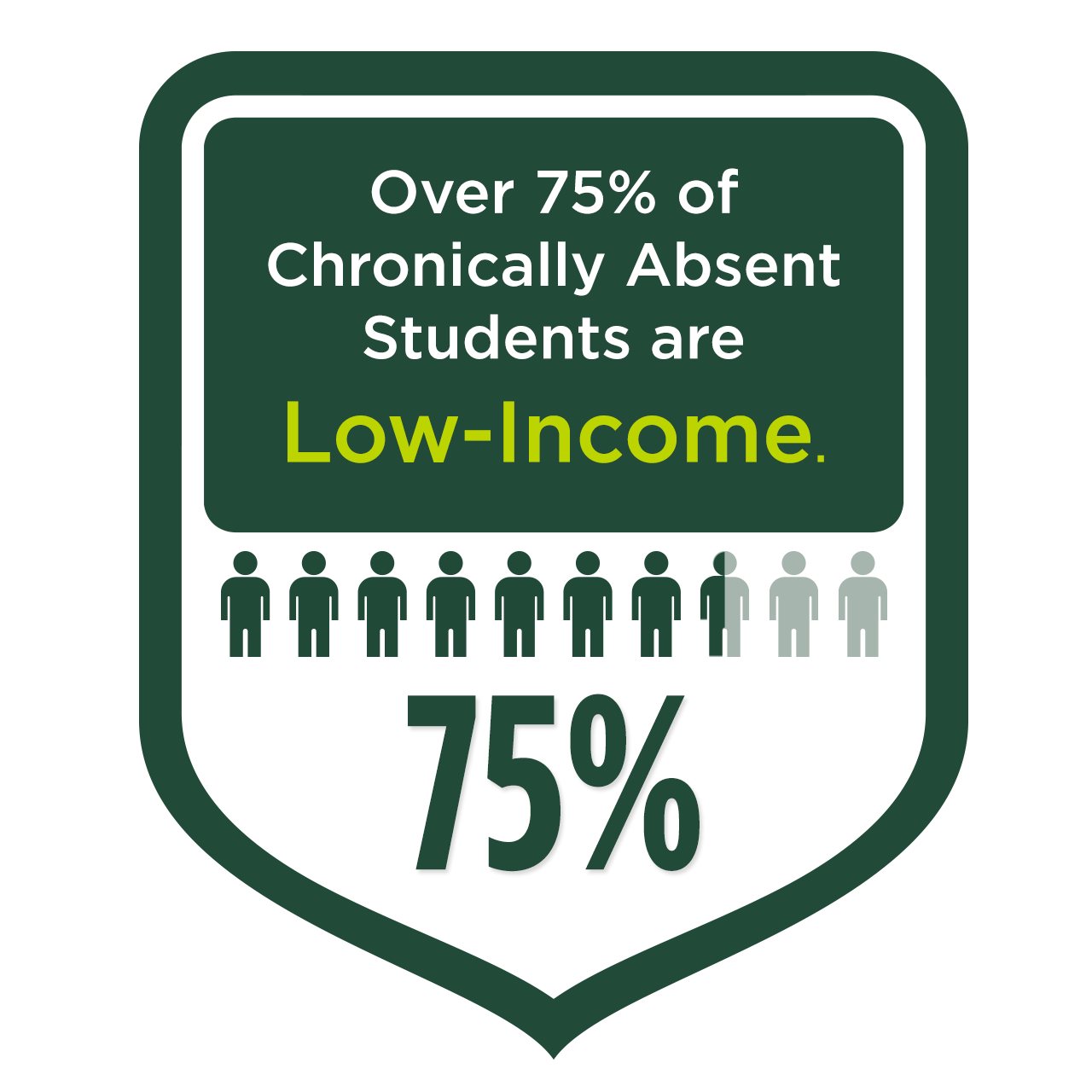
New Data Show Chronic Absenteeism is Widespread and Prevalent Among All Student Groups | U.S. Department of Education:

New Data Show Chronic Absenteeism is Widespread and Prevalent Among All Student Groups

A new analysis from the U.S. Department of Education shows that chronic absenteeism impacts students in all parts of the country and is prevalent among all races, as well as students with disabilities. The first-ever national comprehensive data collected on chronic absenteeism reveal that more than 6 million students—or 13 percent of all students—missed at least 15 days of school in the 2013-14 school year. The data paint a striking picture of how many students miss three weeks or more of school each year.
To shine a light on these widespread challenges, the Department is debuting a new interactive website showing the extent of the crisis in terms of geography, ethnicity, disability status, and school level.
"Chronic absenteeism is a national problem," said U.S. Secretary of Education John B. King Jr. "Frequent absences from school can be devastating to a child's education. Missing school leads to low academic achievement and triggers drop outs. Millions of young people are missing opportunities in postsecondary education, good careers and a chance to experience the American dream."
Many aspects of the analysis are sobering, including:
  • Geography — Chronic absenteeism is prevalent in all parts of the country. The graphs represent the areas of greatest concentration of the percentages of students missing three or more weeks of school.
  • Race & Ethnicity — More than 22 percent of American Indian students were chronically absent in 2013-14, followed by Pacific Islanders, blacks, students of two or more races, Hispanics-Latinos, whites, and Asians.
  • School Level — High school students were absent the most—almost 20 percent—followed by middle school (12 percent) and elementary school students (10 percent).
  • Disability Status — More than 17 percent of students with disabilities were chronically absent compared to 12 percent of students without disabilities.
  • Gender — Roughly 13 percent of both males and females were chronically absent.
King released the new data and website at the Every Student, Every Day National Conference, the first of its kind focusing on chronic absenteeism that aims to support states, local school districts, schools, and communities in their work to develop effective chronic absenteeism policy and practice; showcase how schools can address the root causes of the problem; and strengthen the collaborative capacity of multi-agency early warning systems to link students to necessary interventions, programs, and preventative services.
To address the concerns about the depth of the problem, the Obama Administration launched Every Student, Every Day: A National Initiative to Address and Eliminate Chronic Absenteeism last fall in response to recommendations put forth by President Obama's My Brother's Keeper Taskforce. Led by the White House and the Departments of Education, Health and Human Services, Housing and Urban Development, and Justice, the effort is aimed at combating chronic absenteeism and urging states and local communities across the country to reduce absenteeism by at least 10 percent each year. As part of this initiative, 30 communities across the country have joined the My Brother's Keeper Success Mentor initiative, an evidence-based effort which aims to reduce chronic absenteeism by connecting students who are or at risk of becoming chronically absent with trained school-linked caring adults and near-peers over the next three to five years.
The new, national chronic absenteeism data are part of the 2013-14 Civil Rights Data Collection (CRDC), a comprehensive look at conditions within over 99,500 public schools across the country, or 99.5 percent of all public schools. The CRDC included data on all students from elementary, middle, and high school, including students of color, students with disabilities. and students with limited English proficiency.
This week's CRDC release is the first in a series of data analyses from the 2013-14 CRDC that the Education Department will issue over the course of the summer and fall. To make these data more accessible and useful for parents, educators, policymakers and others, for the first time, the whole data file is available online at CRDC.ed.gov.
The federal government has collected civil rights data about schools since 1968. As with previous Civil Rights Data Collections, the purpose of the 2013-14 report is to obtain vital data related to civil rights laws requiring public schools to provide equal educational opportunity.New Data Show Chronic Absenteeism is Widespread and Prevalent Among All Student Groups | U.S. Department of Education:

Is Cleveland's unique teacher pay plan living up to promises? Not yet | cleveland.com

Is Cleveland's unique teacher pay plan living up to promises? Not yet | cleveland.com:

Is Cleveland's unique teacher pay plan living up to promises? Not yet

JACKSON_GORDON_QUOLKE.JPG
Cleveland school district CEO Eric Gordon, left, and teachers union head David Quolke, right, spent months in 2012 reaching agreement on the Cleveland Plan, an improvement plan for the district. But work since then has dragged on a teacher pay system called for in the plan, drawing sharp criticism from Quolke. (Plain Dealer file)

CLEVELAND, Ohio – Four years after the "Cleveland Plan" was supposed to bring a groundbreaking new way of paying teachers to Ohio, the Cleveland school district still hasn't moved beyond using a strict "merit pay" system that would have been a lightning rod in 2012.
As part of the plan to improve the Cleveland school district, the state legislature called for a teacher pay plan "based on performance," instead of the traditional teacher salary schedule other districts use. That made Cleveland the only district in Ohio that no longer gives raises for years of experience and degrees that teachers earn.
But Cleveland's new compensation plan is still far from being a model for teacher pay that many hoped for.
It hasn't even been fully put together yet.
Despite hours of meetings over the last four years, the district and Cleveland Teachers Union can't agree on how to define and reward "performance" and the two have been unable to build out the full plan.
The district, at least for now, is only increasing salaries when teachers earn strong ratings on their annual evaluations. Those ratings combine classroom observations by principals or other evaluators with measures designed to show how much students learned under each teacher over a school year.
More than half of teachers in the district earned increases in the first two years of the new system. But the ratings-only raises are similar to the merit pay system that 2011's Senate Bill 5 attempted to impose across Ohio.
That bill drew union backlash over merit pay and other union restrictions. Voters agreed with the unions and repealed the law later that year.
Cleveland Teachers Union President David Quolke said teachers and other unions would not have agreed to the Cleveland Plan in 2012 without assurances that other factors, not just ratings, would be part of the new compensation system.
But the union and district have not reached agreement on several other ways to Is Cleveland's unique teacher pay plan living up to promises? Not yet | cleveland.com:

Opportunity Gaps Confirmed by New Federal Data | janresseger

Opportunity Gaps Confirmed by New Federal Data | janresseger:

Opportunity Gaps Confirmed by New Federal Data

Many of us whose children attend school in a middle income or more privileged community may assume that all of the students in the nation’s 95,000 public schools have access to pretty much the same courses and school experiences as our own children do.  Hence, when less advantaged students lack the skills our children have developed in school, we imagine that those children and adolescents have failed to take advantage of what was provided.  However, new 2013-2014 data disaggregated by race and ethnicity—data released by the U.S. Department of Education on Tuesday—demonstrate just how mistaken are those assumptions. Here are just some of the opportunity gaps exposed in the new data.
First there are shocking disparities across America’s high schools in math and science courses offered: “High-rigor course access is not a reality across all of our nation’s schools: Nationwide, 48% of high schools offer calculus; 60% offer physics; 72% offer chemistry; and 78% offer Algebra II… 33% of high schools with high black and Latino student enrollment offer calculus, compared to 56% of high schools with low black and Latino student enrollment.”  And in a society with a growing percentage of English learners, the data show that English learners make up only 5% of students in high schools that offer Algebra II and 4% of students enrolled in Algebra II.”  English learners make up only 1% of students enrolled in calculus. What about high school students’ access to advanced courses?  “Black and Latino students represent 38% of students in schools that offer AP courses, but 29% of students enrolled in at least one AP course.”  English learners make up only 2% of students enrolled in at least one AP class.
The new report does not track class size, but it does document very unequal access to experienced teachers and to school counselors.  Schools with a high percentage of black and Latino students have twice as many teachers in their very first year of teaching than the schools that serve fewer black and Latino students.  “Nearly 800,000 students are enrolled in Opportunity Gaps Confirmed by New Federal Data | janresseger:


Malloy says NO oversight of his administration is allowed - Comptroller Kevin Lembo says what the ____! - Wait What?

Malloy says NO oversight of his administration is allowed - Comptroller Kevin Lembo says what the ____! - Wait What?:

Malloy says NO oversight of his administration is allowed – Comptroller Kevin Lembo says what the ____!


 Yesterday – June 9, 2016 – Governor Dannel Malloy, who once pledged to run the most transparent administration in history, vetoed an extremely important piece of legislation that would have ensured that there was proper oversight over Malloy’s outrageous corporate welfare and economic development programs.

As the CT Mirror Reported,
“State Comptroller Kevin P. Lembo called the veto “deeply troubling” and a blow against transparency. “
According to the news story;
“Malloy also wrote that transferring the analysis of tax credits from DECD to Program Review was “unnecessary and unwarranted.”
That drew a rebuke from Lembo, a fellow Democrat who testified at a public hearing in March favor of giving the job to Program Review, a bipartisan committee with a staff of non-partisan researchers and analysts.
“If objectivity really matters, we always want an independent third party to evaluate our work,” Lembo said Thursday in an emailed statement. “This is why teachers grade tests and students don’t just assign their own grades. Furthermore, this is a terrible loss of transparency where we need it most.”
Lembo said the veto, following a decision to provide $22 million in state bond funds to a rich hedge fund over his objection, is “deeply troubling.”
“The state owes it to businesses and all taxpayers to fully analyze the return 
Malloy says NO oversight of his administration is allowed - Comptroller Kevin Lembo says what the ____! - Wait What?:

CURMUDGUCATION: Chester Finn's Charter Market Worries

CURMUDGUCATION: Chester Finn's Charter Market Worries:

Chester Finn's Charter Market Worries


Chester Finn, honcho emeritus of the right-tilted Fordham Institute, was back on the Fordham blog this week to continue his charter school series with a look at what he thinks are three "market malfunctions in the charter sector." Man, I just love the word "sector"- it sounds so clean and neat, not like marketplace or business. Honey, I'm going to get a tub of popcorn in the snack sector. Last night I was forcibly relieved of some financial instruments by an armed member of the mugging sector. Girl, do not get all up in my sector.

But I digress.

Finn was actually called out almost immediately on twitter by a fellow conservative who pointed out that Finn's "market" malfunctions are really "government regulation" malfunctions, which was doubly ironic. Ironic the first time for a conservative calling out another conservative for mistaking regulations for market forces, and then ironic again because what conservatives like to call the free market is really just a market that is government-regulated in a particular manner that some folks like to label "free market." We like to have these discussions as if the choice is between having a government with its hands on the scale and a free market where the government takes its hands off the scale. But a free market is Somalia. A free market is Neanderthals clubbing each other for a piece of rat. The government always has its hands on the scales.

But I digress.

Here are Finn's three malfunctions. Well, first, part of his wind-up to the pitch:

In general, the charter marketplace—where it’s had the freedom and capacity to grow in response to demand—has done pretty well at responding to families’ non-educational priorities, such as safety, convenience, and a welcoming atmosphere. It’s also given rise to an array of fairly diverse schools that align with the varied educational tastes of an ever more diverse society.

I'm not sure that's true. I'm not sure that's true at all, though Finn probably knows more charter 
CURMUDGUCATION: Chester Finn's Charter Market Worries:


TBFURMAN: The Governor and the Gulenists

TBFURMAN: The Governor and the Gulenists:

The Governor and the Gulenists

Big Education Ape: KILLING ED: 120 American Charter Schools and One Secretive Turkish Cleric -http://bigeducationape.blogspot.com/2016/01/killing-ed-120-american-charter-schools.html


This is just weird. It needs a journalist to unpack it.

The intrepid Cassie Creswell was doing a little research today, when she realized that Bruce Rauner's foundation had given some money ($10K) to this thing called The Atlantic Institute, down in Florida.  It's on the Rauner Foundation's 2013 990.


That happens to be the Orlando node of the Gulen Movement; it's the south Florida version of the Niagara Foundation. Across the nation, the Gulen model is basically identical. They give random awards to influential people and work them with flattery so that their charter school business has lots of friends. It's a basic principal taught by Fethullah Gulen himself. Here are a bunch of Floridians getting their random awards. These people have no idea what's going on but they look happy.

Ok, so that's weird. The governor of Illinois, whose family foundation gives a lot of money to charter school and reform groups, is sending $10k down to Orlando to the Gulen Movement. Not to the Florida Gulen-linked charter schools, but to the Movement directly.

So, we were trying to figure that one out. And honestly, I'm stumped. It raises a lot of questions.

Now, this Florida Gulen node is also known by another name, the Nile Foundation. Remember, these groups change their names all the time; it's part of the strategic ambiguity that they embrace to avoid detection. Here's the little notice about the name change, courtesy of Sharon Higgins.


It's all one thing, with constantly changing, hard-to-track names. And it's part of the same cult-network operating in Illinois as the Niagara Foundation and the Turkish American Society.

Now,  strangely, it so happens that Governor Plutocrat also happens to have at least one, possibly two, ranches in Montana, and he gives a ton of money to Montana-related things. And,
TBFURMAN: The Governor and the Gulenists:

 June 19, 2016

Big Education Ape: Update: Gulen Harmony charter school network accused of bias and self-dealing Dallas Morning News - http://go.shr.lc/1qV85Hm
Big Education Ape: Turkey Links Texas Charter Schools to Dissident - WSJ - http://go.shr.lc/1OW1ZfV

Big Education Ape: Magnolia Science Academy - A Gulen Charter School: Gulen Magnolia Science Academy links discussed at LAUSD board meeting -http://bigeducationape.blogspot.com/2016/06/magnolia-science-academy-gulen-charter.html

Shaming third-graders: How school reform fails students - NonDoc

Shaming third-graders: How school reform fails students - NonDoc:

Shaming third-graders: How school reform fails students

School reform

Virginia third-grade teacher Launa Hall exposed a shocking example of how corporate school reform has lost its soul, and a surprising innovation known as “data walls” has produced the latest scandal. She reminds us how “bubble-in” accountability started the nation’s schools down an abusive road when she writes in the Washington Post:
Our ostensible goal in third grade was similar to what you’d hear in elementary schools everywhere: to educate the whole child, introduce them to a love of learning … But the hidden agenda was always prepping kids for the state’s tests.
Hall reluctantly complied with the seemingly illegal mandate prompted by the bubble-in mania. She even went so far as to create a data wall that put each student’s status regarding testable state standards on display for other students to see.
Hall’s mistake focused on the shaming of kids. Her article paints a picture of the pains inflicted on her student, Janie, when she walked into class and saw her name on the chart, followed by “lots of red dots” — warnings that she wasn’t meeting official state standards. Of course, Hall “tried to mitigate the shame she felt.” The teacher’s efforts to reconnect with the student may have helped a little, but Janie “still had all those red dots for everyone to see.”
Hall tells us “exactly who is being shamed by data walls.” Janie is:
… part of an ethnic minority group. She received free breakfast and lunch 
Shaming third-graders: How school reform fails students - NonDoc:


How Charter School Powerbrokers Plan to Crater Public Education as We Know It | Alternet

How Charter School Powerbrokers Plan to Crater Public Education as We Know It | Alternet:

How Charter School Powerbrokers Plan to Crater Public Education as We Know It

Why do so many charter advocates embrace privatization? They don’t trust democracy

The Billion Dollar Investment
Charter proponents, most notably the Walton Family Foundation, contribute large amounts of money to expand charter schools in select cities around the nation. The foundation says it has invested more than $385 million in new charter schools over the past two decades and, earlier this year, announced that it plans to give $1 billion over five years to support charters and school-choice initiatives.
In announcing its $1 billion strategic plan to support new and existing charter schools, the foundation has said the money would go to four initiatives – investing in cities, supporting the school-choice movement, innovation and research. It identified 13 cities nationwide where it said it can have the biggest impact, including Los Angeles and Oakland. Los Angeles already has more charter schools than any other school district in the United States and Oakland has the highest percentage of charters for any district in California.
“If funders like Eli Broad or the Walton Family Foundation were truly committed to education equality,” says John Rogers, an education professor at the University of California, Los Angeles, “they could have taken steps to simply support reducing class size or after-school [activities] or summer programs that would provide more educational opportunity, rather than try to invest in strategies to undermine the capacities of a school district. The primary aim is to dismantle the school district as a whole and replace it with a new way of doing public education.”
Gary Miron, a professor of education at Western Michigan University, agrees. “They believe in privatization,” he says. Miron co-authored a critical study, sponsored last year by the National Education Policy Center, that focused on the charter industry’s funding policies.
But why do so many charter advocates embrace privatization?
“I don’t think it’s about the money,” says Kevin Welner, director of the National Education Policy Center at the University of Colorado at Boulder. “They like charters in part because they decrease the publicness of public schools. They want a system much more based on market forces because they don’t trust democracy.”
Netflix founder and prominent charter advocate Reed Hastings seemed to confirm this view when, during a 2014 convention of the California Charter Schools Association, he decried publicly elected school boards for their alleged lack of stability in governance. He then praised the closed-governance charter model of private boards whose “board members pick new board members.”How Charter School Powerbrokers Plan to Crater Public Education as We Know It | Alternet:


Interview: Michelle Rhee - Harvard Political Review

Interview: Michelle Rhee - Harvard Political Review:

Interview: Michelle Rhee


An educator and advocate for education reform, Michelle Rhee served as Public Schools Chancellor in Washington D.C. from 2007 to 2010. Following this period, she founded a non-profit organization called StudentsFirst that works for education reform. In addition to her involvement in the sphere of public policy, Rhee has been very visible with her advocacy work in the national media, having appeared on various television programs, radio shows, and documentary films.
Harvard Political Review: As Chancellor of the Washington, D.C. public school system, you drew a lot of attention by firing hundreds of teachers who were deemed ineffective. Why fire these teachers instead of working with them to improve their teaching?
Michelle Rhee: It wasn’t just punitive measures that we put in place in D.C. We also recognized and rewarded teachers who were outstanding. One of the things that you’ll hear from highly effective teachers is that nobody’s really paying attention to them, nobody’s saying, “Wow, we want you to stay. What you’re doing matters.” While part of what we did was to ensure that ineffective teachers could not stay in the classroom, we also created an environment where highly effective teachers wanted to stay longer… I think it’s easy from a systemic perspective to say, “We should spend a lot of time investing in ineffective teachers and making them better.” From a systemic perspective, that’s fine. But when you’re thinking about things from the perspective of kids and families, it’s harder. It’s hard for me to say, “You know what, Ms. Smith? We know that your child has an ineffective teacher, but we’re going to spend a few years trying to see if we can them better. Meanwhile, your kid might not learn how to read, but this is the better thing for the adult.” That is a hard proposition when your responsibility is first and foremost to the kids.
HPR: Recently, we’ve seen examples of an overemphasis on standardized testing leading to negative outcomes like cheating and pushing low-performing students out of schools. Do you still think standardized tests are a valid evaluative tool?
MR: First of all, I think it’s important to note that nothing forces people to make the wrong decisions and cheat. That’s like saying if you live in poverty, you’re forced to break the law and rob a bank. There are certain morals that you have to uphold when you’re a professional. That said, is there oftentimes a dysfunctional environment where people feel like test scores are the end-all be-all, the only thing that matters? Yeah. And I don’t think that’s good for the culture, and I don’t think it’s good for the profession. So, what I think you need is a balance where people understand that we are going to measure student achievement levels, and those matter a lot, but they matter a lot because what we care about is the fact that kids are learning what they’re supposed to be learning. The test scores and standardized tests are a means to an end, they are not an end.
HPR: Can you talk about why you see the movement to opt out of standardized tests as problematic?
MR: Because I think the focus is on the wrong thing. The focus is that, “The tests are bad, and so let’s opt out of the tests.” And I think that what the tests do is give parents and schools an indication of how the students are performing, and that’s important to know. I think what parents and other community members should be focused on instead, and what’s negative, is not necessarily the tests, but the culture around how people are perceiving the tests and what their role is in the educational process. They are a tool through which we can understand where kids are and what their needs are.
HPR: As Chancellor of D.C.’s public schools, you also decided to close many schools, predominantly in black and low-income neighborhoods. Do you see the disproportionate effect of these school closures on black and low-income students as problematic?
MR: We had a situation in DC, and I think most districts that are closing schools have the same situation, where you are paying to heat, air condition, and staff buildings that are half full. So, Interview: Michelle Rhee - Harvard Political Review

Former Education Secretary Arne Duncan Joins Board Of Pluralsight (Highest Bidder)

Former Education Secretary Arne Duncan Joins Board Of Pluralsight | Fast Company | Business + Innovation:
Former Education Secretary Arne Duncan Joins Board Of Pluralsight
The former education secretary's new role is emblematic of the migration from Obama's White House to Silicon Valley.


Since leaving his post as U.S. education secretary, Arne Duncan has spent most of his time in his hometown of Chicago. There, as managing partner of the philanthropic organization started by Steve Jobs's widow, Laurene Powell Jobs, Duncan is developing programs designed to help high school dropouts and former convicts find jobs.
Now he has added another role to his plate, signing on to become a member of the board at Pluralsight, a Utah-based education technology startup worth more than $1 billion. The appointment represents his first board seat since leaving Washington.
"The pace at which people need to acquire new knowledge is only going to grow," Duncan says. Pluralsight, which develops online courses for technology professionals, is well positioned to take advantage of that new reality. For Duncan, it's a natural fit. "I’ve talked all the time about cradle to career, this idea of folks being life-long learners," he says. "The idea that learning stops at [age] 22, that’s a death sentence today."
Other Obama administration officials have also been decamping for the greener grass of startup country. Jim Shelton, a former Duncan deputy at the Department of Education, announced last month that he would be leading education projects for Mark Zuckerberg and Priscilla Chan via the billionaire couple's philanthropic organization. (Shelton previously directed education investments at the Gates Foundation.) Former White House press secretary Jay Carney works for Amazon, and former campaign manager David Plouffe has become an Uber flak.
Duncan joins the Pluralsight board alongside Adobe marketing executive Brad Rencher, finance insider Gary Crittenden, and e-commerce expert Tim Maudlin. Pluralsight cofounder and CEO Aaron Skonnard says the appointments are designed to support the company's next phase of growth.
"We started as a B2C company," Skonnard says. "Now we’re a full-fledged enterprise Saas company, and we’ve been looking to bring in a much deeper level of experience to our top-level leadership and board."
In recent years, enterprise customers have embraced Pluralsight, which has excelled at recruiting instructors who balance authority with authenticity and cover topics that are top of mind for technologists at large companies, from data warehousing to security. The result is a business model that has been profitable since its founding in 2004. (Instructors have also done well: Software developer John Sonmez, for example, has made more than $1.1 million in royalties.)
"We’re speaking to one of the biggest needs these enterprise companies have directly," Skonnard says. "They have a skills gap, and they have to figure out how to move their workforce forward at the same pace that the technology is Former Education Secretary Arne Duncan Joins Board Of Pluralsight | Fast Company | Business + Innovation:

Thursday, June 9, 2016

Bernie Sanders Has Rung the Bell, and it Cannot be Un-Rung - Living in Dialogue

Bernie Sanders Has Rung the Bell, and it Cannot be Un-Rung - Living in Dialogue:

Bernie Sanders Has Rung the Bell, and it Cannot be Un-Rung

By Anthony Cody.
Many of us are in a state of deep frustration over the strong possibility that Bernie Sanders will not be the Democratic Party’s nominee in the presidential race this fall. Circumstances may yet occur to upset the presumptions that are now being made, so I think it is legitimate to wait until the convention in Philadelphia to see who the actual nominee will be. But the feelings of frustration have some important roots, and should not be discarded lightly, because they point the way forward.
As Chris Hedges has suggested, we are living in a shadow sort of pseudo-democracy, where our political choices are constrained by what we are told is possible, and what is impossible. Hope is discouraged. Participation is futile.
In spite of the fact that the US has the wealthiest, most productive economy in the world, we have been told that there is not enough money to pay for:
  • Health care for all
  • Higher education for all
  • Adequate funding for public schools
We are told that public schools are so broken that further investment in them is unwarranted, and money should be funneled into a parallel system of supposedly innovative, largely non-union charter schools, which intensify patterns of segregation and inequity.
We are told fracking can be made safe for the environment, even as we see groundwater polluted coast to coast.
We have been told that businesses cannot afford to pay workers a living wage, even as they swim in profits.
We have been told that public sector jobs are somehow inherently wasteful, while corporations like Walmart Bernie Sanders Has Rung the Bell, and it Cannot be Un-Rung - Living in Dialogue:


TBFURMAN: Amsterdam Sounds The Alarm On Gulen

TBFURMAN: Amsterdam Sounds The Alarm On Gulen:

Amsterdam Sounds The Alarm On Gulen

Big Education Ape: KILLING ED: 120 American Charter Schools and One Secretive Turkish Cleric -http://bigeducationape.blogspot.com/2016/01/killing-ed-120-american-charter-schools.html


Turkey's Canadian lawyer, Robert Amsterdam, issued a very public statement to Jeh Johnson, Secretary of Homeland Security, about the Gulen Movement activity in the United States.

There are people who point out that the Turkish president is an autocrat, a theocrat, and a generally unpleasant person, and all of these observations are correct. And many of those people are reluctant to acknowledge the truth behind Mr. Amsterdam's statements because he represents just such an autocrat in this case.

As for me, I've been studying this issue now for a number of years, and I can only tell you that it's all true--- the statements Amsterdam makes in the video below are true. And the phenomenon is much bigger and more deeply established than what I've written about on these pages. And I'm to the left of Bernie Sanders on virtually everything.

At this point I think we would all be very lucky here if all we had was a secretive criminal organization entrenched in our public education system. When you look at these two men--- Erdogan and Gulen--- and you consider the mutual enemies they have--- I think what we have here is a blinking red-light emergency-in-the-making.

Here's Amsterdam.


The only thing I'd take issue with is the assertion that the charter school industry is rallying to their defense. From where I sit, it looks to me like the industry is basically neutral TBFURMAN: Amsterdam Sounds The Alarm On Gulen:


 June 19, 2016


Big Education Ape: Update: Gulen Harmony charter school network accused of bias and self-dealing Dallas Morning News - http://go.shr.lc/1qV85Hm
Big Education Ape: Turkey Links Texas Charter Schools to Dissident - WSJ - http://go.shr.lc/1OW1ZfV


Big Education Ape: Magnolia Science Academy - A Gulen Charter School: Gulen Magnolia Science Academy links discussed at LAUSD board meeting -http://bigeducationape.blogspot.com/2016/06/magnolia-science-academy-gulen-charter.html

CURMUDGUCATION: Back to the Children's Table

CURMUDGUCATION: Back to the Children's Table:
Back to the Children's Table


Do you remember?

It was going to be our year. Education-- the issue, the American institution, the highly contested battleground of policy, politics, and pedagogy-- was going to be on the front burner. Presidential politics would be the Big Event, and education was going to be seated at the Big Table.

Lots of folks thought so. Jeb! Bush had spent ages first fine-tuning his education organization as a Florida-based group, and then scaled it up so that he would have a national profile built around his aggressive and forward-thinking reform of public education. He mounted all sorts of clever PR pushes like Learn More Go Further to help push his education cred into the public eye. He even stepped down from running the Foundation for Excellence in Education, which in retrospect is kind of cute-- like a candidate for governor who resigns from his job as watchman at the junkyard because he doesn't want to look like he's getting an unethical advantage. Jeb! was ready to ride the Big Education Wave right to the White House.

Campbell Brown thought it was our year. Her website/advocacy group/hobby business The 74 Million was poised to ride the wave-- education was going to leading the parade down Pennsylvania Avenue and Brown was going to be there waiting for it, staking out the eduterritory so that she could set the proper agenda. She was going to be a king-maker; everyone who wanted to be President would have to talk about education, and everyone who wanted to talk about education would have to talk to her.

And if we're being hones, we can't fault Brown or Bush for what now looks like childlike faith. At 
CURMUDGUCATION: Back to the Children's Table:

CURMUDGUCATION: TX: Yet Another Testing Screw-up - http://go.shr.lc/1tliI8E

Mike Klonsky's SmallTalk Blog: No, Gov.Rauner. Schools are not 'crumbling prisons'. But they are in big trouble.

Mike Klonsky's SmallTalk Blog: No, Gov.Rauner. Schools are not 'crumbling prisons'. But they are in big trouble.:

No, Gov.Rauner. Schools are not 'crumbling prisons'. But they are in big trouble.

When asked by reporters to name any ‘Crumbling’ CPS schools he’s visited, he couldn't come up with one.
Gov. Rauner is delusional if he thinks equating Chicago's public schools with "crumbling prisons" is a political winner for him. He has succeeded only in uniting forces, from classroom teachers to parents, unions, Rahm/Claypool and Dem machine pols, AGAINST HIM. The same forces that a year ago were at war against each other.

#Notaprison tweets have gone viral with hundreds of snapshots and positive stories of great teaching by great teachers and wonderful learning opportunities for city kids, despite old, dirty, worn out, and toxic facilities in which teacher/learning take place. Chicago teachers are responsible for the many gains that have been reported (some exaggerated for political purposes) in measurable learning outcomes.

Most recently, for example, we learned that it's the neighborhood schools (not charters), as run-down as many of them are, that have been driving increased graduation rates.

And all these great achievements by students and educators, are now being threatened as Rauner holds school budgets hostage for the past year.

When pushed by reporters to name even one school he visited that was like a "crumbling prison", Rauner couldn't come up with one. How could he? He's more familiar with elite selective-enrollment schools like Walter Payton H.S., the school he clouted his own daughter into, with the help of Arne Duncan. Payton certainly is no crumbling prison.

As we pull together in opposition to our sociopath governor, let's not lose sight of the fact that Mike Klonsky's SmallTalk Blog: No, Gov.Rauner. Schools are not 'crumbling prisons'. But they are in big trouble.:


Mindless Underfunding Of Schools Continues, Doing Irreparable Harm To Kids

Mindless Underfunding Of Schools Continues, Doing Irreparable Harm To Kids:

Mindless Underfunding Of Schools Continues, Doing Irreparable Harm To Kids


High school graduation season is in full bloom in many communities around the nation, but in some places, parents with kids still in schools have to be worried about the conditions of their schools they’ll return to in the fall – or even if the schools will open at all.
As states wrap up their budget seasons, many lawmakers are proving they simply aren’t up to the task of adequately funding schools. State spending, which accounts for about half of most public school districts’ budgets, has been in steep decline for a number of years in most states, leaving most local taxing authorities, which provide about the other half, unable to keep up unless the populace is wealthy enough to withstand higher property taxes. (Federal spending accounts for less than 10 percent of school funding, historically.)
Many of these lawmakers say the problem with the nation’s education system is lack of accountability, but  school kids and their teachers are being hurt by government officials not being accountable to adequately and equitably fund our schools.
In Chicago, the nation’s fourth largest school system, the district’s school chief announced schools may not open in the fall due to a budget impasse in the state capital. Separate funding bills in the state House and Senate have drawn the ire of conservative Republican Governor Bruce Rauner who would prefer to inflict on schools a program of tough love that includes a $74 million cut in funding to Chicago.
It’s not like the city’s schools are living in the lap of luxury. Inadequate Mindless Underfunding Of Schools Continues, Doing Irreparable Harm To Kids:


How should online teacher programs be judged? - The Hechinger Report

How should online teacher programs be judged? - The Hechinger Report:

How should online teacher programs be judged?

A fight over accountability pits Obama administration against online teaching schools


 teachers who learn the job online perform as well as teachers trained in the same kind of brick-and-mortar classroom they’re likely to teach in? A new set of proposals to regulate online teacher preparation programs from the federal government is an effort to find out which programs are working and which aren’t, but it’s facing widespread opposition from the world of distance learning.
Late in 2014, the Department of Education revealed its plans to ramp up accountability for education schools, which have come under fire in recent years for lax admissions standards and questionable rigor. The move sparked a deluge of 4,800 mostly critical letters, calling out federal overreach into state affairs and denouncing reforms that would “extend the ‘test and punish’ accountability model into higher education.”
Now the DOE is grappling with how to apply its controversial rules to online teacher preparation programs, which have become the top providers of education degrees in the country. (A month-long public comment period closed on May 2.) The country’s 2,100 education schools offer a staggering 28,000 teacher certification and degree programs. At a fundamental level, online schools fear that having separate evaluation methods from brick-and-mortar campuses would set them apart and diminish their status.
The DOE’s proposal requires every state to issue a rating to online programs that grant 25 or more teaching certificates in that state. This means, for example, that the University of Phoenix, a for-profit institution which operates online in 42 states, would potentially receive 42 separate ratings. Beyond the bureaucratic burden, online universities argue that comparing ratings will be useless since each state can assign different weight to the four evaluation metrics, creating an “apples to oranges” How should online teacher programs be judged? - The Hechinger Report: