Latest News and Comment from Education

Tuesday, June 7, 2016

Transgender Teacher: 'Being Trans Isn't Anything to be Ashamed of'

Transgender Teacher: 'Being Trans Isn't Anything to be Ashamed of':

Transgender Teacher: ‘Being Trans Isn’t Anything to Be Ashamed of’

Dusty Rader

Last month, Connecticut teacher Dusty Rader had a “teachable moment” with his students at Avon High School in Avon, Conn. During a school-wide conversation about school climate and bullying, and talk of the recent North Carolina law that prohibits transgender people from using bathrooms that match their gender, Rader told his students that he is transgender. “I don’t think I have anything to hide from my students, and I don’t want them to think I do. My mantra is that being trans isn’t anything to be ashamed of.” Recently, Rader talked to NEA Today about his coming out, and how his fellow educators across the U.S. can support their transgender students.
So you recently made a very significant, personal announcement to your students. What prompted that discussion, and how did it go?
DR: My principal had been talking for a couple of days with the kids about bullying and school climate… I was listening to him, and thinking a lot of stuff is going on, especially in North Carolina. Also I was thinking I want to be open with the kids. I want them all to know that they can be proud of who they are. So I used his conversation about bullying to say that what’s happening in North Carolina is the work of bullies who haven’t been stopped, and that their bullying of trans people affects real people. In fact, it affects me!
For a lot of the kids, the thing in North Carolina wasn’t a tangible thing until I said something. One said he’d never thought of it as something that affected ‘real’ people until then. Of course a lot of them were like, ‘What? I never guessed!’
Tell us a little about your own experience as a student, coming out as a transgender man…
DR: I came out in November 2008, during my senior year of high school. I already presented as male, so what changed then was the language. My chosen pronouns became ‘he/him.’ For me, I had a lot of support, and I didn’t have much trouble. I was in a public school, Glastonbury (Conn.) High School, and I know there were definitely teachers there who would have stood up for me if I had problems. There were teachers who were like, ‘If that’s who you are, that’s who you are, and we’re going to support you no matter what.’
I had it really easy, but I know a lot of people who didn’t. I have a friend who dealt Transgender Teacher: 'Being Trans Isn't Anything to be Ashamed of':


Privacy advocates accuse Obama administration of failing to properly protect student data - The Washington Post

Privacy advocates accuse Obama administration of failing to properly protect student data - The Washington Post:
Privacy advocates accuse Obama administration of failing to properly protect student data


A coalition of organizations and individuals concerned about student privacy rights is accusing the Obama administration of failing to properly protect student data from unauthorized disclosure and is petitioning the Education Department to strengthen a federal law to prevent the unauthorized disclosure of kids’ personally identifiable information.
The petition, sent to U.S. Education Secretary John King, says changes made to the Family Educational Rights and Privacy Act, known as FERPA, over the past several years have allowed education agencies and organizations to share student data with third parties without permission from students or their parents. It also says that the department has failed to protect data from major breaches, which have occurred at a number of schools and colleges.
Here are some of the examples of data breaches given in the petition:
* A University of Maryland database containing 287,580 student, faculty, staff and personnel records was breached in 2014; the “breached records included name, Social Security number, date of birth, and University identification number.” The breached records included records going as far back as 1992.
* In 2015, unauthorized individuals gained access to the University of Berkeley’s Financial System and gained access to Social Security numbers and bank account information for approximately 80,000 students, vendors, staff, and current and former faculty. By some estimates, the breach impacted “approximately 50 percent of current students and 65 percent of active employees.”
* Indiana University also reported that it had stored names, addresses and Social Security numbers for “approximately 146,000 students and recent graduates” in an “insecure location” for almost a year, thus potentially exposing students to identity theft and other forms of fraud.
The petition asks that the Education Department establish new rules within FERPA for encryption, privacy-enhancing techniques and breach notification. Among the signatories are the members of the advisory board of the Electronic Privacy Information Center, a Washington, D.C.-based nonprofit public interest research group that focuses on civil liberties issues and the First Amendment, as well as groups including the American Association of School Librarians and the Consumer Federation of America.
The Education Department has come under stern criticism from Congress and its own Inspector General’s Office for its handling of student data. In a 2014 report, the department’s Inspector General’s Office said:
“While the Department made progress in strengthening its information security program, many longstanding weaknesses remain and the Department’s information systems continue to be vulnerable to serious security threats.
In November, lawmakers at a hearing held by the full House Oversight and Government Reform Committee, took Danny Harris, the chief information officer of the Education Privacy advocates accuse Obama administration of failing to properly protect student data - The Washington Post:


They stole the fricking school bus seat belt money again! - Wait What?

They stole the fricking school bus seat belt money again! - Wait What?:

They stole the fricking school bus seat belt money again!

Hidden deep inside the new state budget bill negotiated by Governor Dannel Malloy and Democratic legislative leaders, and approved last month by the Democrats in the General Assembly, was a provision that, once again, transferred the money that had been set aside to help school districts retrofit school buses with seat belts into the general fund.
As Wait, What? readers know, this is not the first time Governor Malloy and the Democrats have stolen the School Bus Seatbelt Account in order to make the state budget balance.
Since taking office, Malloy has reached into the special school seat belt fund four times, grabbing close to $10 million dollars.
Rather than use the funds for their intended use – to protect our children – Malloy and the Democrats simply grabbed the money to plug holes in the state budget.
This time, rather than adopt a fair and honest budget, the Democrats added Section 28 to Senate Bill 501 which “transferred” $2 million from the School Bus Seatbelt Account to the General Fund.  The legislature also swept $2 million from the Seat Belt fund to address a small part of the $250 million Fiscal Year 2016 budget deficit.
Previous Wait, What articles on this issue can be found via the following links:
The Train Wreck of the Democrats’ State Budget. [Or for long-time Wait, What? readers file under – Not the Fricking School Bus Seat Belts again!] (6/3/2015)
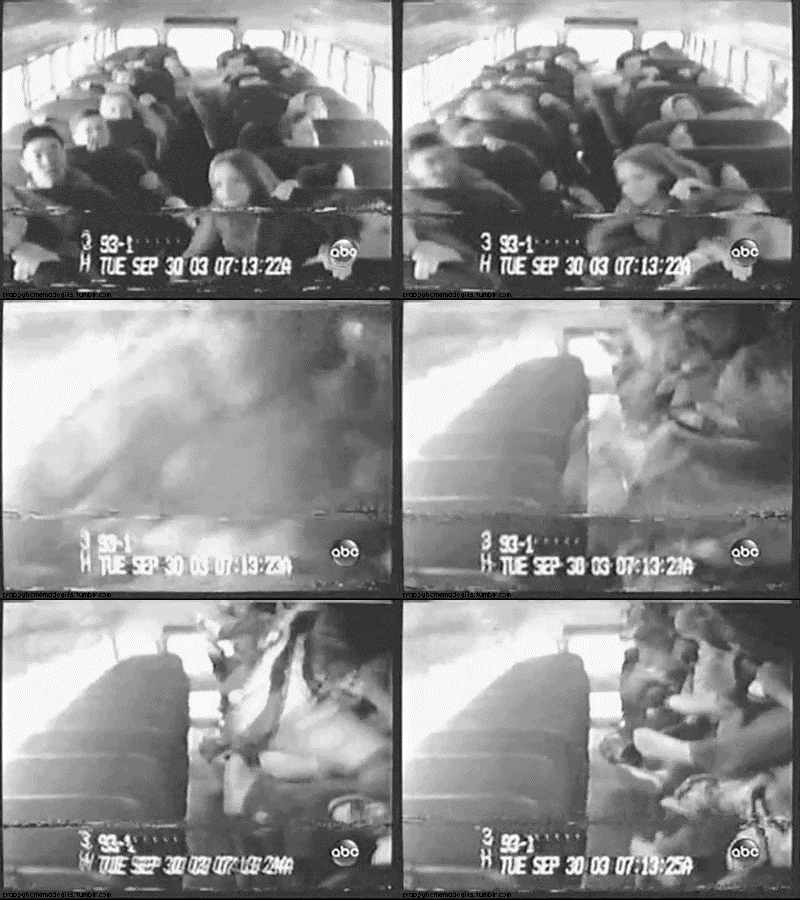
The School Bus Seat Belt Account was created following the tragic January 2010 school bus accident on Route 84 in Hartford that killed a Rocky Hill student who was attending one They stole the fricking school bus seat belt money again! - Wait What?:


Was LA Times Practicing Independent Journalism When They Ranked Teachers? - Living in Dialogue

Was LA Times Practicing Independent Journalism When They Ranked Teachers? - Living in Dialogue:

Was LA Times Practicing Independent Journalism When They Ranked Teachers? 


By Anthony Cody.
A fresh debate has emerged in the aftermath of the Los Angeles Times’ critique of the Gates Foundation’s education reform project. As I noted here, they seem to have forgotten their own role in promoting the Gates Foundation’s efforts – namely, their “Teachers investigation,” in which they hired an economist, and using several years of test score data, generated and published their very own VAM ratings for thousands of Los Angeles teachers.
Here was the debate on Twitter:
I tweeted my post:
LA Times Criticizes Gates & Deasy, Forgets OWN rolehttp://www.livingindialogue.com/la-times-criticizes-gates-deasy-forgets-role/ 
Alexander Russo retweeted this, adding: The publication of teachers’ scores is one of the most questionable pieces of edjournalism of the last decade. (and he has posted a followup here.)
I replied: thank you. These ‘journalists’ won 2nd place award fr. EWA for this hatchet job on teachers
Greg Toppo, who covers education for USA Today, and is Vice President of the Education Writers Association, replied:
“Say what you will about the stories. They are not journalists in quotes.”
To which I replied:
“If you define journos so as to exclude bloggers due to the latter’s advocacy, that applies to LAT also.”
Greg Toppo then replied:
“No. Journos, LAT included, go where evidence sends them, sometimes badly but always independently.”
So let’s dig in a bit here, because obviously Twitter is not the place to reach any real clarity.
A bit of context underscores why it is useful to delve into the ethics of this work. I have been engaged in a bit of a debate with the leaders of the Education Writers Association for the past couple of years, since they Was LA Times Practicing Independent Journalism When They Ranked Teachers? - Living in Dialogue:


CURMUDGUCATION: Maybe Old Teachers Don't Suck

CURMUDGUCATION: Maybe Old Teachers Don't Suck:

Maybe Old Teachers Don't Suck

A repeated refrain among some reformsters is that we need to get rid of tenure, job protections, and seniority rules for teachers because the system is clogged with washed-up uncaring has-beens and when budgets are slashed and staffing is cut, it's the hot young rock stars of education that are thrown out on the street (oddly enough, their concern over this issue never translates into calls to knock it off with the budget slashing, but that's another conversation).

But what if older teachers didn't suck?

This month the Learning Policy Institute released a new research brief, Does Teaching Experience Increase Teacher Effectiveness? The report is a meta-analysis, a study of studies that looks at thirty studies over the last thirty years. And it turns out that maybe older teachers don't suck.


I'm going to start with my usual caveat-- many of these studies use student scores on the Big Standardized Test as a proxy for student achievement or teacher effectiveness or general swellness of the school, and it needs to be said that this is crap. The BS Tests are not a measure of student achievement; they are a measure of student ability to take BS Tests. We'll be able to accomplish a lot more in the world of teacher training, development, and effectiveness when we start talking about the real marks of excellent teaching instead of this standardized test baloney. But test scores are the measure reformsters have chosen, and I'm provisionally willing to use reformster tools to disprove reformster policy ideas, because if they can't win on their own court with their own ball and their own rules, that's just further proof that they should get out of the game.

That said, here are what study authors Tara Kini and Anne Podolsky found.

1) Teacher experience raises student "achievement" throughout the teacher's career. The gains are 
CURMUDGUCATION: Maybe Old Teachers Don't Suck:


Schools Matter: Gulenist Caprice Young lies in a Magnolia Science Academy Press Release

Schools Matter: Gulenist Caprice Young lies in a Magnolia Science Academy Press Release:

Gulenist Caprice Young lies in a Magnolia Science Academy Press Release


“Magnolia should be ashamed of this reprehensible behavior; attempting to use innocent students and parents as human shields to hide their criminal activity” — Robert Amsterdam, Esq.
This video segment is significant in that Gülenist Caprice Young claimed in her most recent "press release" and "protest" smear of those investigating her corporate charter cult that LAUSD had found no connection between Magnolia Science Academy (MSA) and the Gülen charter network. The video puts to lie Young's assertion. Clearly there was an intentional misrepresentation in Magnolia's press release.
The same MSA press release stated that LAUSD has never found any irregularities with Magnolia's finances. This assertion, repeated by Young on numerous occasions, is an intentional misrepresentation on both her and the corporate charter chain's part.
Magnolia, its parent Pacifica Institute, and their cult leader Fethullah Gülen are all high profile Armenian Genocide deniers. To make matters worse, their entire public relations campaign is paid for with money that is supposed to be used in classrooms. 


Big Education Ape: KILLING ED: 120 American Charter Schools and One Secretive Turkish Cleric - http://bigeducationape.blogspot.com/2016/01/killing-ed-120-american-charter-schools.html

Big Education Ape: Update: Gulen Harmony charter school network accused of bias and self-dealing Dallas Morning News - http://go.shr.lc/1qV85Hm
Big Education Ape: Turkey Links Texas Charter Schools to Dissident - WSJ - http://go.shr.lc/1OW1ZfV

Big Education Ape: Magnolia Science Academy - A Gulen Charter School: Gulen Magnolia Science Academy links discussed at LAUSD board meeting - http://bigeducationape.blogspot.com/2016/06/magnolia-science-academy-gulen-charter.html

LA Returns Schools to Local New Orleans Board; But Schools Remain Charters, Still Unequal | janresseger

LA Returns Schools to Local New Orleans Board; But Schools Remain Charters, Still Unequal | janresseger:

LA Returns Schools to Local New Orleans Board; But Schools Remain Charters, Still Unequal


You may have read that Louisiana Governor John Bel Edwards signed a law in mid-May to shut down the Louisiana Recovery School District and return schools to the locally elected school board. Like me, you may also have wondered what this will mean in a district where all the schools are now charter schools. Will the charter schools once again become traditional public schools? Not a chance. What has happened is that an extra layer of state intrusion into the affairs of the school district has been eliminated. The rest is not yet clear.
Here is how some people have tried to explain the transition, beginning with Emma Brown in the Washington Post: “Many charter school advocates describe it as an inevitable next step in the city’s bold education experiment, and one that could serve as a road map for other cities grappling with how to manage and coordinate a large number of charter schools… But some critics say it is a whitewash, written to appear as if local control over public education will be restored when the bill really leaves most of the power in the hands of the unelected boards of directors who run each of the city’s charter schools…  (T)he parish school board—which already runs a half-dozen schools and oversees more than a dozen charter schools—would be prohibited from interfering with school-level decisions about a litany of issues, including instruction, schedules, staffing, contracting and collective bargaining.  Instead, the district superintendent and board members would be responsible for reviewing schools’ performance and deciding whether they have met their targets and should be allowed to continue operating.”
Mercedes Schneider, a New Orleans teacher and blogger describes the transition a little more technically, but it still isn’t clear how it all will work: “The charters to be returned can petition the local school board and state board for permission to act as their own independent school board (‘local education agency,’ or LEA). If approved, then the charter acting as its LEA will be overseen directly by the state. The state board is to establish administrative procedures so that the state superintendent has the authority to revoke a charter’s LEA authority and return it to the local school board. The state board is to determine financial and other conditions that the LEA charters must meet in order to continue to receive public money. Any charters (whether choosing to act as their own LEAs or not) will continue to have control over issues such as LA Returns Schools to Local New Orleans Board; But Schools Remain Charters, Still Unequal | janresseger:

Feature: Remember when teacher evaluations were the subject of controversy in LA Unified? Not anymore | 89.3 KPCC

Feature: Remember when teacher evaluations were the subject of controversy in LA Unified? Not anymore | 89.3 KPCC:

Remember when teacher evaluations were the subject of controversy in LA Unified? Not anymore


Only a few years ago, the Los Angeles Unified School District's system for evaluating teachers' job performance was the subject of legal disputesfull-blown lawsuits and bitter fractious debate between district leaders and the teachers union.
Not anymore. Last weekend, the rank-and-file of United Teachers Los Angelesoverwhelmingly approved new contract terms for a teacher evaluation system — and unlike in the past, both sides agreed the talks had gone smoothly.
"One of the things [the union's] chief negotiator said was that the entire process was one that had been very collaborative in nature," said Gifty Beets, co-director of labor relations for L.A. Unified.
"It was a collaborative effort on both ends," said UTLA vice president Cecily Myaert-Cruz, who was on the bargaining team for the union.
The amity didn't come about by accident. As a prelude to this last spring's contract negotiations, representatives for UTLA, the district, and the principals' union all met over six months in 2015 to discuss how to handle evaluations.
The new contract language contains few blockbuster changes to the evaluation system itself. Still, the tone of the debate over the system's future has shifted dramatically, according to Ama Nyamekye, executive director of the teacher advocacy group Educators For Excellence-Los Angeles.
"We went from an age where teachers weren’t getting teachers getting feedback on their practice to a national spotlight on the teacher evaluation effort," said Nyamekye, whose organization tends to provide a counterweight to teachers unions in policy debates.
"Suddenly," she continued, "everyone wants to come into your classroom and give you feedback. And there are a lot of warring perspectives on how to evaluate teachers, from academia, from districts, from unions, from reformers."
Now? "It feels less politicized," said Nyamekye.
But did the harmonious talks between union officials and district leaders produce a better teacher evaluation system? For Bootsie Battle-Holt, a math teacher at Marina Del Rey Middle School, the agreement is a mixed bag. On one hand, she feels the changes make for a process that's less about a "gotcha evaluation" and more about professional growth.
But "the evaluation process right now," Battle-Holt added, "is still the dog and pony show [based on] the one lesson [principals observe] … It needs to be a big, Feature: Remember when teacher evaluations were the subject of controversy in LA Unified? Not anymore | 89.3 KPCC:

La. BESE President James Garvey Active in the Purchase of 2010 Jeff Parish School Board Race | deutsch29

La. BESE President James Garvey Active in the Purchase of 2010 Jeff Parish School Board Race | deutsch29:

La. BESE President James Garvey Active in the Purchase of 2010 Jeff Parish School Board Race


On June 04, 2016, I wrote a post about an email that Louisiana Board of Elementary and Secondary Education (BESE) president James Garvey sent to the rest of the BESE board especially regarding one of Louisiana state superintendent John White’s lawsuits to block public record requests.
At the end of the post, I noted that the real issue is that the public does not trust White because White is “a greasy, fast-tracked ‘superintendent’ who has an established reputation for narrative mud.
Even as I was writing those words, I was thinking that Garvey is also greasy.
And wouldn’t you know, an anonymous commenter noticed that Garvey responded using his personal email and asked me if I were aware of this January 2016nola.com article regarding a public records request connected to Garvey.
I was not. It is quite a story, and at the end of the article, reporter Danielle Dreilinger attached the actual emails cited in her article.
The article concerns the 2010 Jefferson Parish school board election. It is entitled, “See How Jefferson Business Activists Plotted School Board Takeover.”
Here are some excerpts:
Newly released emails that passed through the government account of Lucien Gunter, former executive director of the Jefferson Economic Development Commission, shed new light on the extent to which Gunter and other business activists engaged in extensive campaigning and fundraising for candidates in the pivotal 2010 Jefferson Parish School Board races. …
The names of most of Gunter’s email correspondents have been redacted. But it is clear that he worked hand-in-glove with Metairie lawyer Jim Garvey, who is an elected member of the Louisiana Board of Elementary and 
La. BESE President James Garvey Active in the Purchase of 2010 Jeff Parish School Board Race | deutsch29:

White Students Get Experienced Teachers, While Black Students Get Police In School

White Students Get Experienced Teachers, While Black Students Get Police In School:

White Students Get Experienced Teachers, While Black Students Get Police In School

“I don’t think there’s any way you could look at this data and not come away with a tremendous sense of urgency.”

In America, the most rigorous classes, experienced teachers and moderate discipline practices tend to be reserved for white students, according to new survey results from the U.S. Department of Education. 
The Department of Education’s Civil Rights Data Collection surveys 99 percent of the nation’s public schools on issues related to the level of opportunity provided to their students. The survey, which is conducted every other school year, collects data about students’ access to classes, teachers and school discipline trends. The latest survey, which has data from the 2013-2014 school year, also collected data on issues like student absenteeism and the quality of education provided in juvenile justice facilities. 
The Department of Education provided reporters with top-level national indicators and will release full data that informed its conclusions later in the week. 
The survey results paint a picture of vast educational inequalities based on students’ skin color and disability status, with only a few bright spots. Specifically, while student suspension rates appear to have dropped 20 percent since the last time data was collected in 2011-2012, stark racial inequities persist in terms of which students receive this punishment. 
“In general, the data shows students of color, students whose first language is not English, and students with disabilities are, according to a number of indicators, not getting the same the opportunities to learn as their classmates who are white, first language is English or who do not have disabilities,” U.S. Secretary of Education John King Jr. said on a call with reporters Monday.
King is hopeful that the nation’s new federal education law, The Every Student Succeeds Act, will serve to rectify some of these inequities
“These statistics are not just numbers. They represent the educational experiences of real students, whose lives are affected in profound ways by what goes on in their schools,” said King.

Even In Preschool, Black Students Are Punished More Harshly Than White Students

As early as preschool, students of color are subjected to harsher punishments than their white peers. The 2011-2012 Civil Rights Data Collection first reported this imbalance — finding that even though black children accounted for only 18 percent of preschool students, they represented 48 percent of children receiving one or more out-of-school suspensions. Several years later, little has changed. In 2013-2014, black children accounted for 19 percent of preschool students, but 47 percent of students receiving one or more suspensions — making them 3.6 times more likely to receive a suspension than their white peers. 
For K-12 students, this trend continues. Even though the 2.8 million K-12 students who received one or more out-of-school suspensions in 2013-2014 represents a 20 percent decrease from 2011-2013  — a decline the Education Department is highlighting — the racial gaps in who gets suspended persist. Black students are 3.8 times more likely to face suspension than white students. Also more likely to receive a suspension are Latino, American Indian and Alaskan Native, Native Hawaiian and Pacific Islander students; mixed-race males; and students with disabilities.
As far as female students go, though, only black girls are being disproportionately 
 White Students Get Experienced Teachers, While Black Students Get Police In School:

School suspensions are declining, but racial disparities in discipline persist

School suspensions are declining, but racial disparities in discipline persist:

School suspensions are declining, but racial disparities in discipline persist

Public schools across the country suspended nearly 20 percent fewer students in 2014 than they did in 2012, according to new federal data released Tuesday, a positive sign amid a mixed picture on how the nation’s school serve students of color.
Some 2.8 million students were suspended from public schools nationwide during the 2013-14 school year, a sign that efforts by the Obama administration to curb the use of suspensions, which activists say are linked to higher dropout rates and a greater likelihood of entering the criminal justice system, are working.
But there are also significant racial disparities, both in the use of discipline and in students’ access to experienced teachers and advanced math and science classes, according to the Civil Rights Data Collection, released every two years by the US Education Department.
Black students were nearly four times as likely to be suspended as white students, and twice as likely to be expelled. The same pattern was apparent in preschools, where black children represent 19 percent of all preschoolers, but 47 percent of pre-schoolers receiving an out of school suspension.
“Fewer suspensions is an important sign of progress,” Education Secretary John King Jr.told The Washington Post. “But I don’t think there’s any way you can look at this data and not come away with a tremendous sense of urgency about continuing to close our equity gaps”
Students with disabilities are twice as likely to be suspended in K-12 schools, though they are not more likely to be suspended in preschool, the survey found. They are also more likely to be physically restrained or secluded than other students.
Catherine Lhamon, the assistant secretary for civil rights called the 20 percent reduction in suspensions across the country “breathtaking.”
But “these disparities beg for more districts to follow the lead of places like Baltimore and Chicago, which are dramatically limiting the use of suspensions in early grades,” she told the Associated Press.
Students’ access to advanced classes in math and science is also limited across the country. Only 48 percent of the nation’s high schools offer courses in calculus. At schools that serve predominately black and Latino students, that number drops to 33 percent.
King said the recently passed federal Every Students Succeeds Act could help spur further changes. In addition to test scores, the law also allows states to hold schools accountable for measures such as student absences and how schools discipline students, The Washington Post reports.
"A systemic failure to educate some groups of children as well as others tears at the moral fabric of the nation," he said in a phone call with reporters. "What sets the U.S. apart from any other country is the idea that opportunity is universal. These data show that we still fall far short of that ideal."
This report contains material from the Associated Press.School suspensions are declining, but racial disparities in discipline persist:

Why Doesn't Society Care About the Education of Incarcerated Youth - The Atlantic

Why Doesn't Society Care About the Education of Incarcerated Youth - The Atlantic:

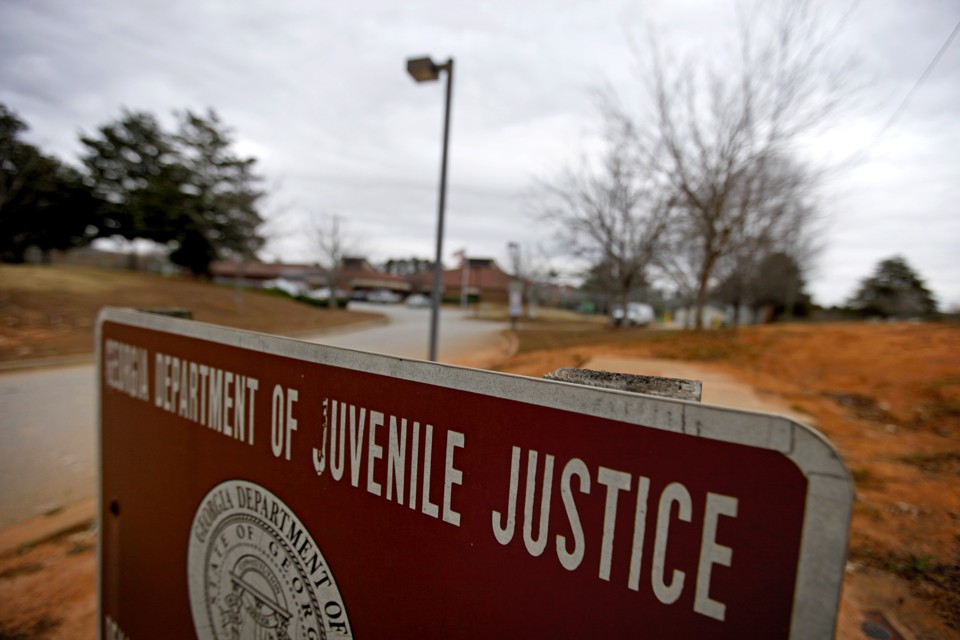
Learning Behind Bars

Why doesn’t education in juvenile detention facilities get any attention or support?


In spite of some signs of improvement, fundamental disparities persist in youth incarceration. The number of youngsters in U.S. correctional facilities has been cut in half—a dramatic drop of 53 percent from 2001 to 2013—according to a Pew analysis of federal data. Still, the Annie E. Casey Foundation, a child-advocacy group, found “in every year for which data are available, the overwhelming majority of confined youth are held for nonviolent offenses.” And children of color bear the brunt of juvenile-justice policies: Black children are nearly five times as likely, and Latino and Native American youngsters are two to three times as likely, to be incarcerated as are their white peers.

Similar inequities carry over to the learning that happens behind bars. Though confined young people are entitled to an education by law, the quality of the education they receive can vary greatly. The U.S. Departments of Education and Justice issued guidance to states in December 2014 to improve school programs in youth detention. But overall, the education of incarcerated youth is mostly ignored and poorly understood.
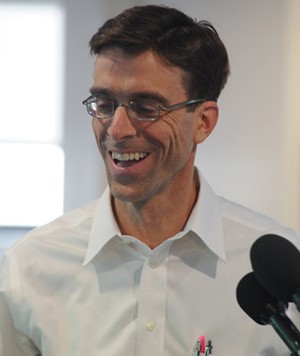
Among those working to bring greater visibility to the issue of schooling in juvenile-detention facilities is David Domenici, the director of the Center for Educational Excellence in Alternative Settings (CEEAS), a nonprofit devoted to improving teaching and learning at juvenile-justice schools. In 2013 CEEAS developed “Words Unlocked,” a nationwide poetry contest to amplify the voices and creative talents of incarcerated youngsters. After speaking recently at an education summit hosted by The Atlantic, Domenici offered additional thoughts on why educating students in juvenile facilities deserves more attention and support. The interview that follows has been edited for length and clarity.


Melinda D. Anderson: “Education is the civil-rights issue of our time” is a recurring catchphrase in education policy, until the topic turns to the civil rights of incarcerated youth. The notion that youth in juvenile detention are “bad kids” who deserve their fate—and thus that educating them is immaterial—is a philosophical hurdle that activists and others engaged in this work must constantly strive to overcome. How do we begin to combat the belief that these children are expendable?

David Domenici (CEEAS)
David Domenici: These are not bad kids—they are poor, they have failed at and been failed by our school systems, they are disproportionately kids of color, many are victims of violence and abuse, and they mostly live in under-resourced neighborhoods, wracked by violence and high unemployment. And yes, many are hard to work with, and some have done some bad stuff. [Yet] I was the principal at what’s now known as New Beginnings Youth Development Center (D.C.’s secure facility for adjudicated youth formerly known as Oak Hill Detention Center) for four years. Hundreds of kids passed through Oak Hill during my time there. Not one was white.

I don’t want white kids locked up either—but we have to be honest about this. About 98 percent were black, the rest Hispanic. Almost all of the kids came from a handful of poor, segregated neighborhoods. None attended the city’s magnet schools, or the one integrated, high-performing high school. How is this not a Why Doesn't Society Care About the Education of Incarcerated Youth - The Atlantic:

The 7 steps to making a standardized test - The Boston Globe

The 7 steps to making a standardized test - The Boston Globe:

The 7 steps to making a standardized test

Inside the New Hampshire not-for-profit where assessments like the MCAS are born.

Who designs the standardized tests that spread a blanket of silence and stress across schools in Massachusetts and other states each spring?
A) A phalanx of drill sergeants who would ban recess if they could
B) A coven of witches who feed on the sweat and tears of small children
C) Dozens of PhDs and former teachers who spend their days in cubicles in Dover, New Hampshire.
The answer is C. The Massachusetts tests for grades 3 through 8 — used to rate schools, partially evaluate teachers, and help decide if students move to the next grade — are created by the employees of the not-for-profit Measured Progress, an enthusiastic bunch who care deeply about improving education through testing. Measured Progress has worked with the Massachusetts Department of Elementary and Secondary Education to make and score the MCAS for all but four of the 19 times it has been given. The company also works on large-scale assessments for 16 other states and is one of two companies in the running to design the MCAS 2.0.
Here’s how they do their work:
1. The state decides what the test should look like
The list of standards — the skills and knowledge states decide their students should have at each grade level — is the test maker’s bible. Examples from the Massachusetts standards, which incorporate the Common Core, include: “Determine a theme of a story, drama, or poem from details in the text; summarize the text” or “Use the four operations with whole numbers to solve problems.” The state and Measured Progress agree on how many questions to devote to each standard and the ratio of multiple-choice questions to open-ended ones.
2. Measured Progress begins writing questions
 Next, it’s time to start writing “items,” as they’re called in the industry. Each year, MCAS tests included some recycled items, but a large number will have been field-tested in previous years and used for scoring for the first time. A good item is clear and concise and will address the standard it’s supposed to be assessing. Multiple-choice questions can have only one right answer. Reading passages need to be drawn from actual fiction or nonfiction. In math, word problems need to be realistic. “You can’t have someone going on a hike where he’s hiking 20 miles per hour,” says Raymond Reese, a math content development specialist.
3. Educators weigh in
After an internal review, the state assembles six to 12 educators from across Massachusetts for each grade (and sometimes subject area) that’s being tested to go through items with them, one by one. If teachers don’t like an item, they can either suggest revisions or vote to reject it (fewer than 10 percent are discarded at this stage). Meanwhile, separate committees of state educators vet the items for bias. “They’re really looking for things that might affect performance on items other than the student’s ability,” says Stuart Kahl, Measured Progress’s founding principal. A writing prompt to The 7 steps to making a standardized test - The Boston Globe: