Latest News and Comment from Education

Friday, June 3, 2016

After 25 Years, a Course Correction on Charter Schools?

After 25 Years, a Course Correction on Charter Schools?:

After 25 Years, a Course Correction on Charter Schools?

Charter Schools - Dividing Communities since 1991

On June 4, 1991, Minnesota passed the nation’s first charter school law, leading to the opening of City Academy in St. Paul one year later. Within a decade, more than 40 states would have their own laws authorizing charters to set up shop in school districts. And now, 25 years later, 7 percent of all U.S. students – almost 3 million total – are now attending charter schools.
Often considered the crown jewel of the education reform movement, charters have faced heightened scrutiny in recent years, and it’s fair to say that the brand has taken a bit of a beating. Whether it’s extreme financial mismanagement, punitive and unfair disciplinary policiesquestionable enrollment practices, or exaggerated reports of academic success, the charter sector’s record is (finally) on display.
But will new calls for greater accountability steer us away from the unfettered expansion of the last 25 years, or will charter schools continue to grab larger chunks of market share in school districts across the country?  That was one of the questions adressed at a recent panel discussion held at the Center for American Progress (CAP)to mark the 25th anniversary of Minnesota’s landmark charter school law.
Moderated by Catherine Brown, CAP vice president of education policy, the panel featured Leo Casey, executive director of the Albert Shanker Institute, Shantelle Wright, founder and CEO of Achievement Prep, a charter school in Washington D.C., Richard Kahlenberg, senior fellow of the Century Foundation, and David Osborne, director of the Reinventing America’s Schools Project at the Progressive Policy Institute.
Casey began by reminding the audience that the original vision for charter schools – first articulated by Albert Shanker in the late 1980s –  is now more or less non-existent in the sector today. The two pillars of that vision were, one, charters should be a place for innovation that could be shared with traditional public schools, and, secondly, teachers, parents and community members would be empowered to try out new ideas and actually play an active role in school decisionmaking.
“But 25 years later, the reality is that this has happened in only a minority of charter schools,” Casey said. “Most use a very traditional curriculum, a very traditional pedagogy, rely upon stringent discipline policies. And most charters don’t have avenues for parent voice. Being a “consumer” is not real voice. And there are no avenues for teacher voice either.”
The successful charter schools that are innovative and do empower educators and parents “represent the exception, not the rule,” he added.

Misinterpreting Results

David Osborne, a longtime charter school advocate, disagreed with Casey’s assessment and held up KIPP schools – the leader of the “No Excuses” movement – as models of innovation. As an example, Osbourne pointed to the practice of After 25 Years, a Course Correction on Charter Schools?:


A backlash against L.A. schools as high-security fortresses - CSMonitor.com

A backlash against L.A. schools as high-security fortresses - CSMonitor.com:

A backlash against L.A. schools as high-security fortresses

SEARCH FOR SOLUTIONS An L.A. school policy of mandatory bag checks and random metal detector scans fits a nationwide trend of schools beefing up security. But a coalition of educators says that the trend has gone too far.


Students (from l.) Zahnki Woods, Jimmy Escobar, Carlos Fructuoso, Gissell Gomez, and Jesse Vargas stand with their teacher, Vitaly (2nd r.), outside their classroom at Central High School, a Los Angeles Unified School District continuation school in Culver City, Calif., on Thursday.
Vitaly refuses to use a metal detector on his students.
The educator runs the Culver City site for Central High School, a Los Angeles Unified School District continuation school for students at risk of dropping out. To engage his class of ninth- through 12th-graders – all of whom identify as people of color and working class or low-income – Vitaly says he has to earn their trust.
Complying with the district policy to conduct random searches with a metal detector wand, he says, would do just the opposite.
“On my campus, there has never been a violent incident,” says Vitaly, who goes by one name. “Here they are, supposedly high school dropouts, and they’re learning, bettering themselves. They’re doing what the system hasn’t been able to make them do in traditional schools. They relax and let their guard down.”
“And I’m supposed to search them with metal detectors?” he asks. “That’s the most counterintuitive, counterproductive thing I could dream up. I would be like all the other adults in their lives that have traumatized them.”
Vitaly is one educator in a coalition of teacher’s unions, charter schools, civil rights groups, and educational organizations across Los Angeles that is urging the district to revise its school security policy, which calls for daily, random metal detector and locker searches at all L.A. Unified secondary and co-located charter schools.
The request, school safety analysts say, is part of an ongoing debate over how to protect students in an era of violence without turning campuses into fortresses. The question is central to a broader nationwide struggle to reconcile zero-tolerance policies in the juvenile and criminal justice systems with those that focus on community engagement and relationship-building, they say.
“There’s an inherent tension between beefed-up security on one end of the rope and maintaining a welcoming, supportive school climate on the other,” says Kenneth Trump, a school security consultant who runs National School Safety and Security Services, a private consulting firm based in Cleveland.
In the wake of high-profile mass shootings like the 2012 tragedy at Sandy A backlash against L.A. schools as high-security fortresses - CSMonitor.com:

With A Brooklyn Accent: Why Jim Horn's New Book Should Be Required Reading in Every School District in the Nation

With A Brooklyn Accent: Why Jim Horn's New Book Should Be Required Reading in Every School District in the Nation:

Why Jim Horn's New Book Should Be Required Reading in Every School District in the Nation


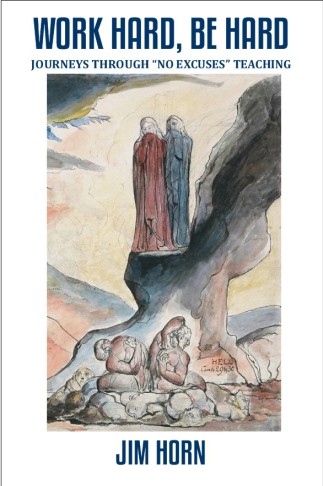
Jim Horn's new book "Work Hard,Be Hard: Journeys Through 'No Excuses' Teaching" should be required reading in every school district in the nation. Horn provides a devastating portrait of how what is essentially a Sweatshop model of schooling for children of color attracted huge support from philanthropists-many of whose own companies profited from Sweatshop labor- along with elected officials in both parties. That a model that depends so heavily on intimidation and behavior modification, for teachers as well as students, has become a model, not only for charter schools, but public schools, reflects a society where the prerogatives of great wealth have overpowered humanity, common sense and our best understanding of child development. 


Those who romanticize this "results driven" model need to come to grips not only with Horn's portrait of what it means to teach and learn in such a school, but his analysis of the antecedents of this model in post civil war industrial education. That we as a society have invested so heavily in institutionalized educational abuse for the children of the poor is damning enough; that we now want to spread it to all public school children suggest what a grim future is in store for most of our population if current economic trends continue! 


Every school board, superintendent, and principal who extoll the "No Excuses" model or promotes a pedagogy that sees test results as the sole criteria of achievement and learning a should be required to read this book. We are heading down a path that is crushing joy and creativity among more and more of our young people, and driving the best teachers out of the profession With A Brooklyn Accent: Why Jim Horn's New Book Should Be Required Reading in Every School District in the Nation:


CURMUDGUCATION: Moskowitz Schadenfreude

CURMUDGUCATION: Moskowitz Schadenfreude:
Moskowitz Schadenfreude


Eva Moskowitz, the super-well-paid queen (almost a cool half million) of Success Academy, finally had more than just a lousy day. She flat out lost one. I know it's not nice, but let's share a little schadenfreude over the defeat of a woman whose defiant hubris has been a bamboo shoot under the fingernails of educators all across Ne York.

The plan has been to expand the SA empire by adding Pre-K. But in an unexpected twist, the city of New York, rather than simply handing Moskowitz a pile of money and saying "Have a nice day," actually insisted that she sign a contract and agree to use the money in particular ways. 


You might think that this does not sound terribly unreasonable, that virtually all vendors who want a chunk of public money have to enter some sort of contract in which they agree to do certain things in certain ways according to certain rules. Even the long-existent military-industrial complex does not work by having contractors say, "We'd like a million dollars to just do some stuff. Heck, plenty of charter advocates propose a system in which charters contract to hit certain marks and have their success or failure measured accordingly. 

But we're talking Eva Moskowitrz here. Moskowitz who successfully told the state of New York that they had no right to audit her. Moskowitz who simply went over the head of the mayor of New York City and had the legislature overrule him so that she could have more schools. 

Not only did Moskowitz want her pile of Pre-K money without conditions, but she offered the argument that it was illegal to require anything contractually of her when the money was handed over. The contract may have been okay for every other provider of Pre-K services in the city, but Moskowitz answers to no one. Check out her op-ed here, where among other things, she says that 
CURMUDGUCATION: Moskowitz Schadenfreude:


Election Year Politics - Congressional delegation to cut ribbon for Vo-Tech schools that Malloy/Wyman are destroying - Wait What?

Election Year Politics - Congressional delegation to cut ribbon for Vo-Tech schools that Malloy/Wyman are destroying - Wait What?:

Election Year Politics – Congressional delegation to cut ribbon for Vo-Tech schools that Malloy/Wyman are destroying


 Welcome to the sad state of Connecticut politics in 2016.

The headline in of the press release screams out;
COURTNEY, BLUMENTHAL, MURPHY TO HIGHLIGHT ‘MANUFACTURING PIPELINE’ DURING ROUNDTABLE DISCUSSION AND JOIN RIBBON CUTTING FOR GRASSO TECH WELDING SHOP
The news advisory goes on explain that “Welcoming remarks” will be provided by Lieutenant Governor Nancy Wyman.
The event, which is taking place this morning at the Grasso Vo-Tech High School, will include a roundtable discussion, followed by a celebratory “ribbon cutting” for the Connecticut Vocational Technical High School’s expanded manufacturing program that seeks to, “train or retrain employees for high-tech manufacturing careers.”
Discussing the importance of job retraining in the 21st Century economy, Congressman Courtney, along with Senators Blumenthal and Murphy, will be basking in the glory of having helped the Connecticut Vo-Tech High School’s Workforce Training Program get a $6 million federal grant last year.
But of course, the problem – which is nicely overlooked in the media announcement- is that Governor Dannel Malloy and his policy partner, Lt. Governor Nancy Wyman, were successful in their effort to persuade the Democratic-controlled State Senate and State House of Representatives to adopt Malloy’s strategy of instituting the deepest cuts to Connecticut’s Vo-Tech high schools in state history .
The state budget was finally passed and signed into law by Governor Malloy who slashed another $7.8 million from Connecticut’s Vocational-Technical High School system.  In Election Year Politics - Congressional delegation to cut ribbon for Vo-Tech schools that Malloy/Wyman are destroying - Wait What?:

Third Way or the Highway – EduShyster

Third Way or the Highway – EduShyster:

Third Way or the Highway

Third-Way-Logo


The future of education reform in Massachusetts requires mis-remembering its past…
Since 1635, Massachusetts has been known for its district public schools—the *first way.* Since 1993, Massachusetts’ charter schools have led the nation in pioneering a *second way.* It is time to recognize a Third Way – an emerging set of strategies that combine school-level autonomies and energetic innovation with a commitment to universal service and local voice…
Quick: what’s absent from this rather, um, selective account of the past 381 years of Bay State history? If you answered *that bit about 1993 seems to be a bit fact challenged,* you would be correct. As providence would have it, I happened to be acquainting myself with the history of Massachusetts’ bold experiment with school reform, circa 1993, at the very moment that the Third Way, brought to you by these guys, blazed into the Hub to blaze an optimistic path ahead in K-12 education. Which is how I happen to be in possession of such facts as that charter schools were a virtual after thought in Massachusetts’ actual second way success story. And that the Third Way, which is already well underway, appears to veer off markedly from the course set by its bold predecessor all those 23 years ago. Strap yourself in, reader: it’s time machine time.
postcardOut with the old
The year was 1993, reader, and my adopted home state found itself with a sticky wicket on its collective hands. How to ensure that the Commonwealth provided all of its children with an adequate education, not just those who lived in leafy suburbs with horses? The resulting process was messy. It was deliberative. It was astonishingly democratic, not to mention weirdly thrilling to read about. (Shout out to my friend, journalist 
Third Way or the Highway – EduShyster:


Mike Klonsky...: My webinar with Jonathan Kozol

Mike Klonsky...: My webinar with Jonathan Kozol:

Mike Klonsky...: My webinar with Jonathan Kozol


Mr. Kozol has not lost his passion for progressive education in America, On our June 1st  SOS Webinar, Mr. Kozol will discuss topics he has devoted his life to, including the damage done to children by testing mania, the damage done to teachers by a regiment of punitive accountability built on test scores, and the shameful inequality between rich schools and poor, the latter resulting in the near total segregation within our schools. For Black and Hispanic children, separate and unequal education is an everyday phenomenon.
A portion of the virtual fundraiser tied to Mr. Kozol's SOS Webinar will go to scholarships for the students he's been working for all his life: those in need, and those who want to be part of the solution....to change an education system that fosters segregation and inequality while actively ignoring if not crushing creativity, curiosity and originality, as critical capacities of children.
Please click here to make a generous  donation to the   SOS Convention fund. 
We suggest a $25 contribution, but any and all amounts will be gratefully appreciated! 
Save Our Schools Coalition Webinar and Fundraiser 
Moderated by Mike Klonsky 
Wednesday, June 1st, 8 PM [EDT] 
https://attendee.gotowebinar.com/register/7245044229553562114 
 Mike Klonsky...: My webinar with Jonathan Kozol:

Failing the Test: A New Series Examines Charter Schools- CAPITAL & MAIN

Education Archives - CAPITAL & MAIN:


CAPITAL & MAIN


 Yolanda Rios (Photo by Pandora Young)

(Photo by Pandora Young)

Failing the Test: Nine Solution Takeaways

Despite the trendy popularity of charter schools in some circles, their wholesale replacement of traditional public schools is unnecessary. Not only do decades of data and research show this, but ...
READ MORE
Photo by Pandora Young

Failing the Test: Charter School Powerbrokers

The Billion Dollar Investment Charter proponents, most notably the Walton Family Foundation, contribute large amounts of money to expand charter schools in select cities around the nation. The foundation says ...
READ MORE
Failing the Test

Failing the Test: UCLA’s John Rogers on Charter Schools and Exclusion of Special Needs Students

...
READ MORE

Education Archives - CAPITAL & MAIN:

Title I funding often still doesn’t make it to our poorest schools, half a century later.

Title I funding often still doesn’t make it to our poorest schools, half a century later.:

Title I Is Supposed to Fund Our Poorest Schools

Somehow $2.6 billion of it still ends up in the hands of wealthier-than-average districts.


n Wednesday, U.S. News & World Report released a comprehensiveanalysis showing that Title I, the federal program created as part of civil rights–era legislation to meet the needs of low-income students, is still flawed. A significant portion of the $14.5 billion spent via Title I each year is funneled to students in wealthier districts: Nearly 20 percent, or $2.6 billion, goes to wealthier-than-average districts, while many districts with high concentrations of poverty are shortchanged.
The mission of Title I, created in 1965 as part of President Lyndon B. Johnson’s “war on poverty,” was to provide federal funding to help meet the educational needs of low-income students. It’s been reauthorized regularly since then, and it’s a key part of the most recent federal education law, the Every Student Succeeds Act, signed into law in December by President Barack Obama to replace 2001’s No Child Left Behind Act. The funding is meant to provide supplemental resources for low-income, struggling students, such as instructional coaches, reading and math intervention programs, professional development, and additional guidance counselors. But it is notoriously difficult to correctly allocate these funds—how do you know how to fairly disperse money so it benefits just the poor students in more than 13,000 school districts?
Over the years, Title I has been modified in attempts to address misuse. One of the most significant amendments, passed in 1970, requires districts to use Title I funds to supplement, not supplant, state and local funding. In other words, it prohibits local districts from intentionally underfunding schools serving poor students because they assume they can backfill the shortfall using federal money. A more recent modification helped curb blatant misuses of funds, such as using it to build twoOlympic-sized swimming pools in Claiborne Parish, Louisiana, which at the time had a child poverty rate of 36 percent.
Despite the overall intent that Title I funding help poor students, it doesn’t always work out that way in practice. That’s because of the inherent difficulty in pinpointing exactly which schools should get funding and how much. If a school in a wealthy district enrolls students who live below the poverty line, should it still get a piece of the cake, and if so, how much? Is it the number of poor students that matters or the percentage of students who are poor? (The current formulas take both into account, although more weight is given to the number of poor students.) Title I also incentivizes states to provide higher levels of financial support by offering additional funds when they do.
There are other considerations, too; for example, there’s the fact that states with small populations, which are presumed to be rural, receive additional funding. While this makes sense for a state such as New Mexico, it also means that states such as Delaware, whose small population is due to its small size, not its ruralness, also receive this Title I bump—in fact, they end up receiving more Title I funds per student than other states with higher rates of child poverty.
Another quirk of the law: In schools where at least 40 percent of students come from low-income families, Title I funds can be used on schoolwide programs that benefit all of the students.
The net result is that the distribution of funds is uneven and often counterintuitive. SoTitle I funding often still doesn’t make it to our poorest schools, half a century later.:

Charter schools and allies pour it on in California legislative races | The Sacramento Bee

Charter schools and allies pour it on in California legislative races | The Sacramento Bee:

Charter schools and allies pour it on in California legislative races


Charter school advocates and their allies, largely bankrolled by a handful of wealthy donors, are dominating the state’s political landscape this primary season, pouring nearly $9 million into legislative races around the state.
Saying they are tired of current conditions in California schools, they are spending in 12 different districts, seeking to elect lawmakers they believe will be more sympathetic to their cause on such issues as teacher performance, tenure and the way schools are governed.
The California California Charter Schools Association, EdVoice and the charter-school funded Parent Teacher Alliance are spending significantly more than those groups committed during the last three legislative primary seasons, through Wednesday spending a third of all outside money seeking to influence legislative elections.
EdVoice, which has spent nearly $5 million in six districts since April 1, is supporting candidates it believes will be receptive to changing the education system, either through charter schools or changes in public schools, said Bill Lucia, the organization’s president and CEO.
12Number of legislative districts where charter schools or EdVoice have spent money.
“It’s about eliminating inequities and providing opportunities to all kids. The Legislature has an important role in that,” Lucia said. “But there are too many who are perfectly fine being defenders of the status quo.”
As they grow in popularity, charter schools have cut into public school enrollment and funding, particularly in larger urban districts like Los Angeles. Their advocates regularly clash with teachers unions in the California Legislature, the state education board and courtrooms.
But any semblance of a campaign fight with teachers unions in legislative races on next Tuesday’s ballot is decidedly lopsided.
Until last week, the 330,000-member California Teachers Association was all but a non-player in primary races around the state, two years after putting more than $5 million outside spending efforts leading up to the June 2014 primary. The group could be saving its money: a top goal for the teachers union this year is to help pass a proposed November measure to extend higher income taxes for the wealthy to support schools and other programs, a campaign that would cost millions.
This spring’s spending disparity increases the likelihood that the November ballot will include multiple candidates, all Democrats in safely Democratic districts, who advance to the fall runoff with the strong backing of self-described education reform groups. Results in the fall election could give the interests a significantly stronger voice in the union-friendly Legislature.
“Right now, we’re involved in just a handful of races in the primary,” said Becky Zoglman, a spokeswoman for the teachers union. “We’ll reassess for the November election,” she said. So far, the union has contributed almost $4 million to efforts to extend a version of the temporary income tax increases in Proposition 30 of 2012.
“It’s definitely a top priority for CTA this cycle,” Zoglman said.
Outside spending by Ed Voice and charter schools
DistrictCommitteeAmountSupportOppose
AD43Parent Teacher Alliance$1,261,785Laura FriedmanArdy Kassakhian
1 of 1
The charter schools association is the sole source of money for the Parent-Teacher Alliance, which has spent $3.5 million in four Assembly districts. The charter schools association itself is spending another $264,000 in two Assembly districts.
More than 80 percent of the association’s donations since last July have come from five people: GAP co-founder Doris Fisher, Netflix CEO Reed Hastings, developer Eli Broad, Texas billionaire and former hedge fund manager John D. Arnold and Carrie Walton Penner, the granddaughter of Wal-Mart founder Sam Walton. The association’s own committee hasCharter schools and allies pour it on in California legislative races | The Sacramento Bee:


Read more here: http://www.sacbee.com/news/politics-government/capitol-alert/article81488362.html#storylink=cpy
 

Big Education Ape: Analysis: EdVoice with an IE for Dodd; Educational Reform Group Has Ties to Vergara Suit and Wa... http://bit.ly/1SJq26U

Big Education Ape: News Analysis: Education fight ‘over shades of Democrat’ | CALmatters http://bit.ly/25csc6L

Big Education Ape: Local legislative races become battleground in statewide fight over educationhttp://bit.ly/1WMlJKA

Big Education Ape: Edvoice pumps cash into Assembly campaign | News | Palo Alto Online | http://bit.ly/1s8OhSi

Big Education Ape: Charter school groups spending big in California legislative races | 89.3 KPCChttp://bit.ly/1TYIvJj