Latest News and Comment from Education

Sunday, May 15, 2016

NYC Public School Parents: Read the blog post that PARCC doesn't want you to see -- and then share it on your blogs!

NYC Public School Parents: Read the blog post that PARCC doesn't want you to see -- and then share it on your blogs!:

Read the blog post that PARCC doesn't want you to see -- and then share it on your blogs!

Here is the critique of the 4th grade PARCC exam  by an anonymous teacher, as it originally appeared on Celia Oyler's blog before she was threatened by PARCC and deleted key sections.  See also my post about my tweet that was deleted  after PARCC absurdly complained to Twitter that it infringed on their copyright!

As an act of collective disobedience to the reigning testocracy, I urge all other fellow bloggers to paste the below critique and copy it into their blogs as well.

As the teacher points out below, "we can use these three PARCC prompts to glimpse how the high stakes accountability system has deformed teaching and warped learning in many public schools across the United States. "

No high-stakes test that is used to judge students, teachers and schools should be allowed to be kept secret to escape accountability for the test-makers -- especially ones as flawed as these!  

If you do repost this, please let me know by emailing me at leoniehaimson@gmail.com thanks!
The PARCC Test: Exposed

The author of this blog posting is a public school teacher who will remain anonymous.

I will not reveal my district or my role due to the intense legal ramifications for exercising my Constitutional First Amendment rights in a public forum. I was compelled to sign a security form that stated I would not be “Revealing or discussing passages or test items with anyone, including students and school staff, through verbal exchange, email, social media, or any other form of communication” as this would be considered a “Security Breach.” In response to this demand, I can only ask—whom are we protecting?

There are layers of not-so-subtle issues that need to be aired as a result of national and state testing policies that are dominating children’s lives in America. As any well prepared educator knows, curriculum planning and teaching requires knowing how you will assess your students and planning backwards from that knowledge. If teachers are unable to examine and discuss the summative assessment for their students, how can they plan their instruction? Yet, that very question assumes that this test is something worth planning for. The fact is that schools that try to plan their curriculum exclusively to prepare students for this test are ignoring the body of educational research that tells us how children learn, and how to create developmentally appropriate activities to engage students in the act of learning. This article will attempt to provide evidence for these claims as a snapshot of what is happening as a result of current policies.

The PARCC test is developmentally inappropriate

In order to discuss the claim that the PARCC test is “developmentally inappropriate,” examine three of the most recent PARCC 4th grade items.

A book leveling system, designed by Fountas and Pinnell, was made “more rigorous” in order to match the Common Core State Standards. These newly updated benchmarks state that 4th Graders should be reading at a Level S by the end of the year in order to be considered reading “on grade level.” [Celia’s note: I do not endorse leveling books or readers, nor do I think it appropriate that all 9 year olds should be reading a Level S book to be thought of as making good progress.]

The PARCC, which is supposedly a test of the Common Core State Standards, appears to have taken liberties with regard to grade level texts. For example, on the Spring 2016 PARCC for 4th Graders, students were expected to read an excerpt from Shark Life: True Stories about Sharks and the Sea by Peter Benchley and Karen Wojtyla. According to Scholastic, this text is at an interest level for Grades 9-12, and at a 7th Grade reading level. The Lexile measure is 1020L, which is most often found in texts that are written for middle school, and according to Scholastic’s own conversion chartwould be equivalent to a 6th grade benchmark around W, X, or Y (using the same Fountas and Pinnell scale).
Even by the reform movement’s own standards, according to MetaMetrics’ reference material on Text Complexity Grade Bands and Lexile Bands, the newly CCSS aligned “Stretch” lexile level of 1020 falls in the 6-8 grade range. This begs the question, what is the purpose of standardizing text complexity bands if testing companies do not have to adhere to them? Also, what is the purpose of a standardized test that surpasses agreed-upon lexile levels?

So, right out of the gate, 4th graders are being asked to read and respond to texts that are two grade levels above the recommended benchmark. After they struggle through difficult texts with advanced vocabulary and nuanced sentence structures, they then have to answer multiple choice questions that are, by design, intended to distract students with answers that appear to be correct except for some technicality.

Finally, students must synthesize two or three of these advanced texts and compose an original essay. The ELA portion of the PARCC takes three days, and each day includes a new essay prompt based on multiple texts. These are the prompts from the 2016 Spring PARCC exam for 4th Graders along with my analysis of why these prompts do not reflect the true intention of the Common Core State Standards.

ELA 4th Grade Prompt #1

Refer to the passage from “Emergency on the Mountain” and the poem “Mountains.” Then answer question 7.
  1. Think about how the structural elements in the passage from “Emergency on the Mountain” differ from the structural elements in the poem “Mountains.”
Write an essay that explains the differences in the structural elements between the passage and the poem. Be sure to include specific examples from both texts to support your response.
The above prompt probably attempts to assess the Common Core standard RL.4.5: “Explain major differences between poems, drama, and prose, and refer to the structural elements of poems (e.g., verse, rhythm, meter) and drama (e.g., casts of characters, settings, descriptions, dialogue, stage directions) when writing or speaking about a text.”

However, the Common Core State Standards for writing do not require students to write essays comparing the text structures of different genres. The Grade 4 CCSS for writing about reading demand that students write about characters, settings, and events in literature, or that they write about how authors support their points in informational texts. Nowhere in the standards are students asked to write comparative essays on the structures of writing. The reading standards ask students to “explain” structural elements, but not in writing. There is a huge developmental leap between explaining something and writing an analytical essay about it. [Celia’s note: The entire enterprise of analyzing text structures in elementary school – a 1940’s and 50’s college English approach called “New Criticism” — is ridiculous for 9 year olds anyway.]

The PARCC does not assess what it attempts to assess

ELA 4th Grade Prompt #2
Refer to the passages from “Great White Shark” and Face the Sharks. Then answer question 20.
 Using details and images in the passages from “Great White Sharks” and Face to Face with Sharks, write an essay that describes the characteristics of white sharks.

It would be a stretch to say that this question assesses CCSS W.4.9.B: “Explain how an author uses reasons and evidence to support particular points in a text.”

In fact, this prompt assesses a student’s ability to research a topic across sources and write a research-based essay that synthesizes facts from both articles. Even CCSS W.4.7, “Conduct research projects that build knowledge through investigation of different aspects of a topic,” does not demand that students compile information from different sources to create an essay. The closest the standards come to demanding this sort of work is in the reading standards; CCSS RI.4.9 says: “Integrate information from two texts on the same topic in order to write or speak about the subject knowledgeably.” Fine. One could argue that this PARCC prompt assesses CCSS RI.4.9.
However, the fact that the texts presented for students to “use” for the essay are at a middle school reading level automatically disqualifies this essay prompt from being able to assess what it attempts to assess. (It is like trying to assess children’s math computational skills by embedding them in a word problem with words that the child cannot read.)

ELA 4th Grade Prompt #3
  1. In “Sadako’s Secret,” the narrator reveals Sadako’s thoughts and feelings while telling the story. The narrator also includes dialogue and actions between Sadako and her family. Using these details, write a story about what happens next year when Sadako tries out for the junior high track team. Include not only Sadako’s actions and feelings but also her family’s reaction and feelings in your story.
Nowhere, and I mean nowhere in the Common Core State Standards is there a demand for students to read a narrative and then use the details from that text to write a new story based on a prompt. That is a new pseudo-genre called “Prose Constructed Response” by the PARCC creators, and it is 100% not aligned to the CCSS. Not to mention, why are 4th Graders being asked to write about trying out for the junior high track team? This demand defies their experiences and asks them to imagine a scenario that is well beyond their scope.

Clearly, these questions are poorly designed assessments of 4th graders CCSS learning. (We are setting aside the disagreements we have with those standards in the first place, and simply assessing the PARCC on its utility for measuring what it was intended to measure.)

Rather than debate the CCSS we instead want to expose the tragic reality of the countless public schools organizing their entire instruction around trying to raise students’ PARCC scores.

Without naming any names, I can tell you that schools are disregarding research-proven methods of literacy learning. The “wisdom” coming “down the pipeline” is that children need to be exposed to more complex texts because that is what PARCC demands of them. So children are being denied independent and guided reading time with texts of high interest and potential access and instead are handed texts that are much too hard (frustration level) all year long without ever being given the chance to grow as readers in their Zone of Proximal Development (pardon my reference to those pesky educational researchers like Vygotsky.)

So not only are students who are reading “on grade level” going to be frustrated by these so-called “complex texts,” but newcomers to the U.S. and English Language Learners and any student reading below the proficiency line will never learn the foundational skills they need, will never know the enjoyment of reading and writing from intrinsic motivation, and will, sadly, be denied the opportunity to become a critical reader and writer of media. Critical literacies are foundational for active participation in a democracy.

We can look carefully at one sample to examine the health of the entire system– such as testing a drop of water to assess the ocean. So too, we can use these three PARCC prompts to glimpse how the high stakes accountability system has deformed teaching and warped learning in many public schools across the United States.

In this sample, the system is pathetically failing a generation of children who deserve better, and when they are adults, they may not have the skills needed to engage as citizens and problem-solvers. So it is up to us, those of us who remember a better way and can imagine a way out, to make the case for stopping standardized tests like PARCC from corrupting the educational opportunities of so many of our children.NYC Public School Parents: Read the blog post that PARCC doesn't want you to see -- and then share it on your blogs!:

Detroit schools' decline and teacher sickout reflect bad economy and demographic shifts - LA Times

Detroit schools' decline and teacher sickout reflect bad economy and demographic shifts - LA Times:

Detroit schools' decline and teacher sickout reflect bad economy and demographic shifts

Detroit teachers stage sickout
For two days this month, most Detroit schools were closed as teachers staged a sickout after learning the district was so low on funds it might not pay them.
 (Bill Pugliano / Getty Images)
e mostly poor and black students enrolled in Detroit Public Schools have been exposed to lead, have endured crumbling classrooms, and have some of the lowest literacy rates in the country. They've also seen one neighborhood school after another shut down.
Then this month they had to endure something else. For two days, most of them had no school to go to.
On May 2 and 3 — the start of Teacher Appreciation Week — scores of teachers called in sick, shutting down 97% of schools. The action came about after the teachers union said it learned that the district was running out of money, and that teachers' paychecks might not be guaranteed past June 30.
Most teachers went back to school after the union secured a promise that they would be paid through the end of June.
The walkout was yet another troubling episode for a long-beleaguered school district that is hundreds of millions of dollars in debt and behind on payments to its retirement system. It was also another reminder of how the destiny of schools is guided by shifting demographics, the growing charter-school sector and poor economics, though Detroit is an extreme example.
How did things get so bad?
The distrust and financial insecurity that exploded this month followed years of buildup — a mounting deficit, dramatically declining enrollment and management by one state-appointed official after another. The problems paralleled Detroit's overall downturn as it lost population and jobs as industry declined.
"The district is starved for cash," said Mike Addonizio, an education professor at Wayne State University. "That brought them to where they are today."
A major driver of that loss in revenue has been the loss of students. In 2002-2003, Detroit Public Schools counted 164,496 students in its ranks — by this year, that number was down to 47,000. And with each student that leaves, so do several thousand dollars. The Detroit schools' decline and teacher sickout reflect bad economy and demographic shifts - LA Times:


Editorial: Charter schools the problem, not other programs - LimaOhio.com - limaohio.com

Editorial: Charter schools the problem, not other programs - LimaOhio.com - limaohio.com:

Charter schools the problem, not other programs


Ohio’s problem with holding public charter schools accountable was well documented last week during a program at Elida High School that featured the executive director of the Ohio Coalition for Equity and Adequacy of School funding.
Charter schools have been a disaster.
Students who attend the state’s charter schools learn 36 days less math and 14 days less reading than traditional public school students, according to research done by the Hoover Institute at Stanford University. It crunched data obtained from student standardized test scores and ranked Ohio’s charter school performance 49th in the nation, with only Nevada being a worse gamble. That’s incomprehensible, considering that in 2013-14 when the study was done, charter schools accounted for more than 120,000 students, or 7 percent of the total public school enrollment in Ohio.
It doesn’t end there.
No sector in Ohio — not local governments, school districts, court systems, public universities or hospitals — misspends tax dollars like charter schools, according to research done a year ago by the Akron Beacon Journal. It reviewed 4,263 state audits and found charter schools misspent public money “nearly four times more often than any other type of taxpayer-funded agency.”
Clearly, the licensing of charter schools needs a major fix, to the point of closing down underperforming schools that falsely sell themselves as a good alternative to public education.
However, Ohioans should be careful not to confuse the failed charter school program with the state’s successful open enrollment and Educational Choice Scholarship Program (otherwise known as vouchers).
Thanks to these two programs, a ZIP code will not determine where parents send their child to school and what type of education he or she will receive. Parents are provided an option of where to send their children.
Yes, every time a student leaves their “ZIP code school,” that school loses its state funding for said student. That can be $4,650 each year for a student in kindergarten through eighth grade and $6,000 each year for a high school student.
That kind of money can add up quickly, and we won’t argue it can put a financial strain on a district.
However, there’s a reason the voucher program as well as open enrollment have seen significant growth the last 10 years. To put it frankly, they work.
Children who live in a ZIP code where a public school is underperforming have the opportunity to receive a better education through both programs. Time and time again we have seen how Ohio’s EdChoice program or its open enrollment program provide students with the tools they need to succeed.
Both programs can help break the cycle of poverty that plague a community by offering students the opportunity to get a high-quality education in a school that best fits their needs.


Saturday, May 14, 2016

Complete US DOE FOIA Showing Delaware DOE & US DOE Emails – Exceptional Delaware

Complete US DOE FOIA Showing Delaware DOE & US DOE Emails – Exceptional Delaware:

Complete US DOE FOIA Showing Delaware DOE & US DOE Emails 

On December 23rd, 2015, I found letters sent from the United States Department of Education sent to all the state DOEs about potential opt out penalties for the 2015-2016 year if schools went below the 95% participation rate.  In response, I sent a very detailed Freedom of Information Act request to the US DOE.  For the first time, you can view the entire response in its entirety.  I wrote an article based on some key parts of the US DOE FOIA response last month.
Julie Glasier is the main contact person for Delaware at the US DOE.  Many of these emails are in response to the Delaware School Success Framework which was met with stiff resistance last fall because of the opt out penalties against schools.  Keep in mind that the US DOE Complete US DOE FOIA Showing Delaware DOE & US DOE Emails – Exceptional Delaware:


No Man’s Land | The Patiently Impatient Teacher

No Man’s Land | The Patiently Impatient Teacher:

No Man’s Land

no-mans-land-and-restricted-area-of-the-un-buffer-zone-in-the-green-line-dividing-cyprus-famagusta-joe-fox1

As I have mentioned in a previous post, I work at a magnet school. In anti-school privatization circles I have been surprised to see some criticism of magnet schools. It confused me that some would lump charter and magnet schools together. After attending the Magnet Schools of America annual conference and witnessing some of the magnet policies being practiced in other states and districts, I get it now. In some places magnets have started to resemble charter schools in all the worst ways.
Steven Singer had a recent blog post in which he described the co-opting of legitimate educational reform by those who wish to privatize and profit from public schools. His analogy is that of the cuckoo bird that sneaks its egg into another bird’s nest. I think another apt analogy is that of convergent evolution. Convergent evolution is when unrelated organisms following different evolutionary paths develop adaptations that have similarities. One example is the similar wing structures of bats, birds, and insects. While these structures appear similar, they have very different origins and possibly very different futures as well.
While charter schools, magnet schools, and the school privatization movement may appear similar to the casual observer, they have very different origins and futures. Despite the rosy picture painted by charter school advocates  both charter schools and school privatization have deep roots in the White response to school desegregation efforts (see here and here. Today’s charter schools have strayed very far form any utopian vision of charter schools as places for teacher freedom and innovation. Charters have mostly been co-opted by the forces of school privatization with openly for-profit schools, privately managed schools, and schools that are ostensibly non-profit but with huge salaries for questionably large numbers of “directors.”
In many places including my state, charter schools are still serving as way for White families to avoid more diverse school environment. This report shows that one-fifth of all charter schools in NC are 90% or more White. It concerns me greatly that liberal education reformers seem to be unconcerned that there is so much similarity between their reform agenda the privatization agenda on the right. Look, if an education reform policy has any similarity to what the GOP is doing in NC, then it is past time to reconsider exactly how social justice is being addressed and how those policy actions are actually impacting students of color and disadvantaged students.
Magnets, however, have almost the opposite origin (see here and here). They were designed to encourage voluntary desegregation by offering unique and specialized programs at school that would not otherwise house a diverse student population. Magnets are governed by the local school district are often developed based on community input and frequently highlight the resources unique to the area.
However, some districts seem to have taken the approach of “if you can’t beat them, join them” and have evolved magnet systems that resemble charter schools in the most No Man’s Land | The Patiently Impatient Teacher:

CURMUDGUCATION: FL: Teacher Purge (or, Why Schools Needs Tenure, Pt. 23,617)

CURMUDGUCATION: FL: Teacher Purge (or, Why Schools Needs Tenure, Pt. 23,617):

FL: Teacher Purge (or, Why Schools Needs Tenure, Pt. 23,617)


Here's a story of how not to solve problems at a troubled school, and why tenure is a good idea. 

The first thing you have to remember is that in 2011, the Florida legislature and Governor Rick Scott killed teacher tenure. In Florida, a teacher is now hired a year at a time. Nobody is ever actually fired-- they're just not asked back for next year. This is a particularly clever end run around any sort of employment protections, because it means no teacher is actually fired, and therefor no district ever has to give a justifiable reason for firing any teacher.

Now let's travel to Palm Beach Lakes High School to see just how bad an idea that law is, and remind ourselves why due process protections of teachers are not just a scheme to fatten union bank accounts.

Palm Beach Lakes High School is poor and low-achieving. They were once pretty huge, but FL went through a school-minimizing phase; current enrollment 9-12 is listed around 2K (in a district of 183K total students). They have a reported 80% poverty rate, and a 68% graduation rate.

They also have trouble hiring. The school kicked off the year with trouble hiring an Honors Algebra teacher. They finally filled the position in November, but that teacher bailed shortly thereafter, citing "behavioral concerns." Two other candidates each subbed for a day and said "No, thanks."

By March, the situation had only deterioriated, with a series of substitutes in the class. Parents made phone calls and were put off. But PBL is a law magnet, intended as a training ground for future lawyers, and some students in a law class discussion of contracts and negligence had a lightbulb moment about the district's failure to provide an actual teacher for the class. And five of the students decided to take their concern to the school board. The students were freshmen and 
CURMUDGUCATION: FL: Teacher Purge (or, Why Schools Needs Tenure, Pt. 23,617):


Unwilling to Help Schools, PA Legislature Attacks Teachers | gadflyonthewallblog

Unwilling to Help Schools, PA Legislature Attacks Teachers | gadflyonthewallblog:

Unwilling to Help Schools, PA Legislature Attacks Teachers

Screen shot 2016-05-13 at 10.48.35 PM
If you live in Pennsylvania, as I do, you must be shaking your head at the shenanigans of our state legislature.
Faced with a school funding crisis of their own making, lawmakers voted this week to make it easier to fire school teachers.
Monday the state Senate passed their version of an anti-seniority bill that was given the thumbs up by the House last summer.
As usual, lawmakers (or more accurately their surrogates at the American Legislative Exchange Council (ALEC) who actually wrote the bill) spent more time on branding the legislation than appealing to logic, sense or reason. The bill called HB 805 was given the euphemistic title “The Protecting Excellent Teachers Act.”
Yes, this is exactly how you protect excellent teachers – by making it easier to fire them.
Currently, if teachers are furloughed, those with least seniority go first. Under this new law, teachers would be let go based on their academic rating. Teachers can have one of four ratings: Distinguished, Proficient, Needs Improvement and Failing. Under the new legislation, teachers rated Failing would be furloughed first, followed by those under Needs Improvement, etc. Within those categories decisions would be made based on seniority.
It sounds great – if you know absolutely nothing about Pennsylvania public schools.
First off, in 2015 our rating system found 98.2% of state teachers to be in the highesttwo rating categories. So at best this bill is next to meaningless.
Second, like virtually all value added rating systems across the country, our rating Unwilling to Help Schools, PA Legislature Attacks Teachers | gadflyonthewallblog:


Schools Matter: Duckworth Panned, Grit Roasted, KIPP Cooked

Schools Matter: Duckworth Panned, Grit Roasted, KIPP Cooked:

Duckworth Panned, Grit Roasted, KIPP Cooked


New York Times reviewer, Judith Shulevitz, concludes a negative review of Angela Duckworth's new book with this:
You can’t blame Duckworth for how people apply her ideas, but she’s not shy about reducing them to nostrums that may trickle down in problematic ways. On the one hand, some of the “no excuses” charter schools that her research helped to shape have raised math and literacy scores among minority and poor students. On the other hand, a growing number of scholars as well as former teachers at those schools report that some of the schools, at least, feel more like prisons than houses of learning. Schools that prize self-­regulation over self-expression may lift a number of children out of poverty, but may also train them to act constrained and overly deferential — “worker-learners,” as the ethnographer Joanne W. Golann calls them. Meanwhile, schools for more affluent children encourage intellectual curiosity, independent reasoning and creativity. Ask yourself which institutions are more likely to turn out leaders. Perhaps an approach to character training that’s less hard-edge — dare I say, less John Wayne-ish? — and more willing to cast a critical eye on the peculiarly American cult of individual ascendancy could instill grit while challenging social inequality, rather than inadvertently reproducing it.
Actually, you can blame Duckworth for how people apply her ideas, since the humiliation that we see at KIPP and other other KIPP Model schools is directly linked to her and David Levin's design for teaching grit, which is based on the "learned helplessness" and "resilience" research of psychologist and CIA consultant, Dr. Martin Seligman.  

Below are a few excerpts from my book that provide more context for Duckworth's role in creating the ethnic character cleansing used by the KIPP Model schools.   

Work Hard, Be Hard: Journeys through "No Excuses" Teaching may be purchased with a 20 percent discount from Rowman & Littlefield Publishers.  Use code: RLEGEN16 when ordering.

-->

Performance Character


Seligman’s influence and that of his protégé, Angela Duckworth, continue to be central in controlling the “non-cognitive” behaviors and attitudes that are central to completing the KIPP Model mission. As “KIPP teachers believe their job is to teach 49 percent academics and 51 percent character” (Morris, 2011), “grit” and “self-control” are the two most important character traits that KIPP develops in their students. The other components of character are zest, optimism, gratitude, social intelligence, and curiosity,although the KIPP model is principally concerned with developing grit, or relentless determination to achieve and to maintain self-control


KIPP further divides self-control into two categories, each having four components:Schools Matter: Duckworth Panned, Grit Roasted, KIPP Cooked:

Raising the Common Core Bar Until Nobody Can Get Over - Teacher in a Strange Land - Education Week Teacher

Raising the Common Core Bar Until Nobody Can Get Over - Teacher in a Strange Land - Education Week Teacher:

Raising the Common Core Bar Until Nobody Can Get Over


 The legislature in my home state is currently on a roll. They're planning to systematically destroy the largest public school system in Michigan, once a landmark district, drain it of resources, and make it super-easy for predatory, for-profit charters to move in. Plus other ultra-important stuff likepreventing municipalities from banning plastic shopping bags, and keeping open-carry laws as open as possible.

I'm no advocate for the Common Core (although the thought of abandoning all the CCSS alignment work and pricey professional training teachers have been dragged through makes me shake my head). But here's the funny thing: the Michigan House wants to adopt the old Massachusetts State Standards--the ones MA abandoned when they adopted...the Common Core.
I know. Confusing to the general public (and more than a few educators). Didn't we already adopt the CCSS to raise standards? Aren't teachers complaining about how unrealistic the standards and tests are--even harmfully inappropriate for our youngest learners? What do the old Massachusetts standards have that made them more--what, successful?--than the Common Core?
Good question. Quick answer: they were being utilized in Massachusetts. Fully 55% of adults in Massachusetts have at least an Associates' degree, compared to 39% in Michigan. Poverty rates?MA is in the top ten, nationally--and Michigan's in the bottom third.
Massachusetts had a reputation for having excellent state-built education standards, but they (like many other states) dropped all their in-house work and jumped on the Common Core bandwagon, probably in hopes of tapping into the federal grant machine.  And here's the real irony: MA standards are very similar to the Common Core--especially the math standards.
The legislation was introduced by Sen. Patrick Colbeck, a longtime critic of Common Core who argues the change is needed because the standards haven't delivered on their promise of increased student achievement.
"The goals that it has set out to achieve, which are improved student performance or academic achievement, it's not achieving," said Colbeck, R-Canton.
Colbeck and his media cheerleaders are making a classic mistake, here (albeit one that many citizens make): Believing that raising standards will raise achievement. Problems with low-achieving students? Don't look for causes! Don't bother trying solutions! Just raise the standards!
Besides, I'd be willing to bet that none of the senators co-sponsoring this bill have actually read the standards--either set. This is a political ploy--a jab at the folks who adopted the CCSS in the first place (the State Board), and a chance to poke some more at public schools, who have been diligently (and often reluctantly) rolling out the Common Core to meet the latest tests--whatever the legislature decided was the test du jour.
By shifting to the Massachusetts standards, the lawmakers think they can claim they raised the bar. So high that an increasing number of students can't get over them. "Proving" that public schools are failing, and need to be replaced by for-profit charters.  
Colbeck says the state shouldn't bet on standards that aren't proven.
"Beyond that, I think it's important from a government control perspective ... I'm actually very concerned about making sure that we have Michigan control of our education system."
Maybe adopting the unproven Common Core standards wasn't such a great idea. But blaming them for not raising test scores is idiotic--and expecting another set of standards to do the job is worse.
Nobody seems to understand that the Common Core was the essential building block in crafting a set of national tests that would generate a comparative-data gold mine for would-be "reformers" and a boondoggle for publishers and professional training.  There was a lot of happy talk about building your own curricula and using rich content to develop critical reading skills, but in the end, the Common Core was mostly about what Arne Duncan called "the same goalposts."
Some people think the Common Core is what has ruined the teaching of English or forever screwed up arithmetic. We can argue about instructional, curricular and assessment issues--it's my professional wheelhouse--but the Common Core is not what has broken public education. It's the accountability movement and austerity funding. And maybe, in some states, a craven disregard for the children of the poor.
The Common Core is just another set of standards. We can raise and lower, tweak and replace standards until the cows come home, but until other things are in place (clean, safe classrooms, say--or books, supplies and experienced teachers), it's an exercise in blah-blah over reality.
Most important: if we're going to dump everything we've been working on, let's put the rebuilding back in the hands of educators, not politicians. Raising the Common Core Bar Until Nobody Can Get Over - Teacher in a Strange Land - Education Week Teacher:

Schools offer lessons on accommodating transgender students - Yahoo Finance

Schools offer lessons on accommodating transgender students - Yahoo Finance:

Schools offer lessons on accommodating transgender students


SAN FRANCISCO (AP) — From locker rooms and sex education classes to dress codes and overnight field trips, many U.S. public schools already are balancing the civil rights of transgender students with any concerns that classmates, parents and community members might have.
The U.S. Department of Education is drawing on those practices to guide other schools as they work to comply with the Obama administration's directive that transitioning children be treated consistent with their gender identity.
That has been the policy since 2013 of the Arcadia Unified School District in Southern California. As part of a settlement with the federal departments of Justice and Education that became the foundation for the national mandate issued Friday, students may use the bathroom, locker room or wilderness cabin that corresponds with their recognized gender outside school, Superintendent David Vannasdall said.
"This is absolutely not about a student on a day-to-day basis saying, 'Today I'm a boy, tomorrow I'm a girl.' That has never happened," Vannasdall said. "By the time these students are at a point where they are asking for our help, they are presenting in all areas of their life as that gender."
The administration had warned schools before Friday that denying transgender students access to the correct facilities and activities was illegal under its interpretation of federal sex discrimination laws. But the new guidance, for the first time, offers advice for accommodating the privacy needs of nontransgender youngsters.
Citing guidelines adopted by Washington, New York, the District of Columbia and Atherton High School in Louisville, Kentucky, President Barack Obama's Education Department said schools could erect privacy curtains in changing areas, permit all students to make use of single-stall restrooms or work out other case-by-case arrangements as long as the burden doesn't rest exclusively on transgender students.
"The concerns for right to privacy and safety of children applies to every single child, including the transgender child," said Atherton's principal, Thomas Aberli, who faced community opposition when he first allowed a transgender freshman to use the girls' restrooms two years ago. Since that first student, about a half-dozen more have come out as transgender, Aberli said.
Asaf Orr, a lawyer who directs the Transgender Youth Project Staff at the National Center for Lesbian Rights, said the guidance could help temper the transgender rights backlash that the restroom issue has engendered in states such as North Carolina by showing that minority rights and privacy rights can co-exist if schools respect all students' need to be comfortable.
At least 13 states and the District of Columbia prohibit discrimination on the basis of gender identity in schools. Hundreds of school districts, from Anchorage, Alaska, and Tucson, Arizona, to Fairfax County, Virginia and Chicago, have adopted similar protections.
Nearly two dozen state high school sports federations have adopted rules governing the participation of transgender athletes on competitive teams, including the ones in South Dakota, Maryland and Nevada.
In Portland, Oregon, Lincoln High Principal Peyton Chapman recalls the "challenging times" about seven years when a transgender student who identified as female transferred there after being bullied at her previous school. The student made the cheerleading squad and "bathroom and locker Schools offer lessons on accommodating transgender students - Yahoo Finance:

Want to fix schools? Start with equal funding.

Want to fix schools? Start with equal funding.:

Want to fix schools? Start with equal funding.


As a teacher and administrator who has spent more than 13 years serving children in Detroit, I wholeheartedly understand the frustrations of students, parents and educators in the city today. It is a travesty that more than 50 years after the Supreme Court ruling on Brown v. Board of Education we continue to accept segregated schools. Although schools can no longer base enrollment on race or ethnicity, we now have schools that are highly segregated by social class and socioeconomic status. According to the Michigan Department of Education finance records for the 2015-2016 school year, Detroit receives $7,434 in state funding per pupil, while school districts in more affluent communities often receive significantly more. For example, Grosse Pointe receives $9,864, Birmingham receives $11,924, and Bloomfield Hills receives $12,004 in state funding for each student.

Teachers in urban communities are working under increased levels of accountability at the local, state and federal levels, yet they are not provided with the appropriate tools, such as adequate instructional materials or technology for all students. Not to mention the unsafe conditions for both students and staff. How are students supposed to learn and be prepared to compete academically with boarded-up windows and mold infestations in their schools?

While some would argue that schools in communities with high poverty rates often receive additional federal funding, I counter that those funds, while helpful, typically come with stringent guidelines and penalties for not following those guidelines. This leaves districts with high percentages of students eligible for free and reduced lunch at a disadvantage in ensuring that all students have adequate staffing and supplies such as books, technology and lab equipment. Just two years ago, I taught at a high school with a significant level of low-income students where we did not have enough history books for one class, let alone one for every student.

While nearly all teachers are overworked and underpaid, teachers in communities like Detroit are often working even harder for less compensation and fewer benefits, in their effort to ensure students are prepared to compete academically with students from more affluent schools. These circumstances often lead to teachers having higher health insurance premiums. In my previous district, instead of bringing home a paycheck, some employees would owe the district $11 per pay period just to cover the cost of health care premium co-pays.

Challenging conditions make it more difficult for districts to attract and retain top educators.

Detroit Public Schools has 180 teacher vacancies. I am sure that other districts are facing similar shortages and staffing turnover because of similar working conditions. Schools with higher turnover often have lower academic achievement rates and students from schools serving a high concentration of students eligible for free and reduced lunch often enter post-secondary opportunities significantly less prepared than students from suburban communities with larger budgets and per-pupil funding allowances. We must ensure that students with the most needs have the teachers with the capacity to support their learning.

As the state Legislature works to develop a plan to “fix” Detroit’s Public Schools, I agree that many school districts, not just Detroit, should right-size their infrastructure because of declining enrollment. However, neither legislative plan, in the House or the Senate, address the inequity in per-pupil funding for schools in Detroit. The Senate plan, which includes the Detroit Education Commission, has drawn opponents from the charter sector. But public school advocates also should be concerned about an appointed authority with no real accountability to parents and community members. Instead, we should look to create equity and access for all students, not a Want to fix schools? Start with equal funding.:

Governor’s latest early education budget proposal disappoints advocates, providers | EdSource

Governor’s latest early education budget proposal disappoints advocates, providers | EdSource:

Governor's latest early education budget proposal disappoints advocates, providers

Gov. Jerry Brown’s budget proposal for early education, released Friday as part of the May revision of the 2016-17 state budget, is virtually unchanged from his initial proposal in January, offering no new spending and envisioning the creation of a $1.6 billion block grant that would combine funding for the state’s preschool, transitional kindergarten and quality rating and improvement programs.
Early education advocates and providers expressed swift disappointment. For months they had urged greater spending and asked that the block grant – which would give local school districts more flexibility to spend early education funds and be a major change in how the state allocates those funds – be removed from the budget process for further review.
“The governor is proposing a substantial policy change to the early childhood system without any new funding for children,” said Debra Kong, president of the advocacy organization Early Edge. “And the few weeks left in the budget process is not enough time for the field, families, and policymakers to consider the ramifications.”
At the Bay Area Council, a business advocacy group that last week took 60 members to Sacramento to lobby Brown administration officials on early education spending and reform, Senior Vice President of Public Policy Matt Regan said: “There’s certainly not the additional investment we’d hoped to see. I know the revenue numbers are a little short of what we’d hoped for, but at the end of the day we’re still under-resourcing early education programs and we’re still in deficit for where we were before the recession, and that needs to be made up.”
“The governor’s correct, we do need reforms,” Regan added. “Unfortunately, it’s being done through the budget process. It needs to be done through a more thoughtful process … through the legislative process.”
In announcing his revised budget at a morning press conference, Brown did not directly reference early education. But he made clear, as he has before, that his hand is being guided by the inevitable prospect of the next economic downturn.
“Things don’t last forever and the surging tide of revenue is beginning to turn, as it always does,” Brown said.
The budget proposal reflected none of the recent sentiment articulated in the state Legislature, where lawmakers in the Assembly subcommittee on education voted in April to reject the block grant plan. Legislators in both the Assembly and state Senate had also given generally friendly receptions to Governor’s latest early education budget proposal disappoints advocates, providers | EdSource:


Friday, May 13, 2016

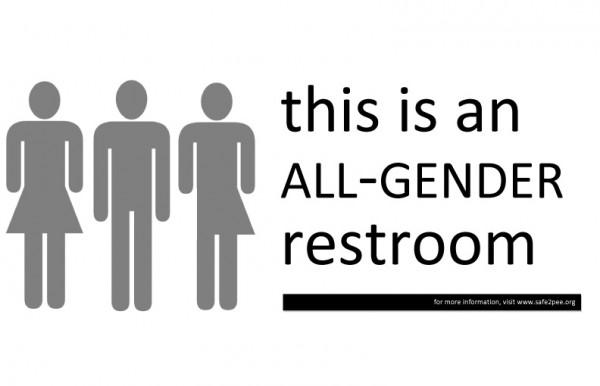
To Pee or Not To Pee: Where is the Question


To Pee or Not To Pee: Where is the Question 


U.S. Depts of Ed and Justice Release Joint Guidance to Help Schools Ensure the Civil Rights of Transgender Students http://bit.ly/1Tbff5C


To Our Transgender Students: We See You, We Stand With You! - Lily's Blackboard http://bit.ly/1TCsto8
13TRANSGENDER-master768


Big Education Ape: US gives directive to schools on transgender bathroom access http://bit.ly/1TCsw3g


SEAT OF UNREST: Inside transgender students' war over school bathrooms -- NY Daily News Daily Dig http://bit.ly/1TCsqbT
westandwithher


How Schools Around The Country Are Treating Transgender Student Rights : NPR Ed : NPR http://n.pr/1TCsubF


Here's Exactly What The Administration Is Saying About Transgender Students : The Two-Way : NPR http://n.pr/1X7i5tN

Transgender High School Student Responds To White House Guidelines : NPR http://n.pr/1TCsA36

N.C. Governor Calls Obama Transgender Guidelines A 'Massive Overreach' : NPR http://n.pr/1TCsFni


Jose Lara, dean of Santee High School in Los Angeles, talks about the transgender issue beside the school's gender-neutral restrooms. Schools have new governmental guidance on the issue provided by the Justice and Education departments.


Seattle Schools Community Forum: New Gender Neutral Bathroom to Open in SPS High School http://bit.ly/1TCsB7e

States Dig in Against Directive on Transgender Bathroom Use - ABC News http://abcn.ws/1TCsKHG

Texas will forgo federal funds over LGBT policy, official says | NOLA.com http://bit.ly/1TCsCrQ

Asa Hutchinson Tells Schools to Disregard LGBT Directive | Arkansas Business News | ArkansasBusiness.com http://bit.ly/1TCsMiM


LGBT fight is everyone's fight (Opinion) - CNN.com http://cnn.it/1siZNef