Latest News and Comment from Education

Friday, February 19, 2016

FACT SHEET: The White House Launches New National Effort to Eliminate Chronic Absenteeism

FACT SHEET: The White House Launches New National Effort and Ad Council Campaign to Eliminate Chronic Absenteeism and Drive Student Success | U.S. Department of Education:

FACT SHEET: The White House Launches New National Effort and Ad Council Campaign to Eliminate Chronic Absenteeism and Drive Student Success

Today, the White House and the U.S. Department of Education announce two groundbreaking campaigns to address and eliminate chronic student absenteeism in this country:  the My Brother’s Keeper (MBK) Success Mentors Initiative -- with 10 initial participating cities -- and a multi-million dollar Ad Council campaign to engage parents on this critical issue. Chronic absenteeism is a nationwide challenge with devastating consequences for more than five to seven million students, and in low-income communities, the impact is even more prevalent. These efforts are part of the national Every Student, Every Day Campaign, and is in response to the MBK Task Force’s recommendation that federal agencies launch a cross-sector national absenteeism initiative to improve the outcomes for young people, including those in underserved communities.

Groundbreaking Mentorship Initiative:

The MBK Success Mentors Initiative aims to reduce chronic absenteeism by connecting over one million students with caring mentors. It is the nation’s first-ever effort to scale an evidence-based, data-driven mentor model to reach and support the highest risk students – using existing resources already linked to schools, and the metric of chronic absenteeism to drive school and life success.  The Initiative is a partnership between the Department of Education and Johns Hopkins University.
The Initiative will launch with participation from school districts in 10 communities – Austin, Boston, Columbus, Denver, Miami-Dade, New York City, Philadelphia, Providence, San Antonio and Seattle – that accepted the MBK community challenge. Additional communities are expected to join this effort by the spring.  Over the coming months, MBK Success Mentors will work with students in the 6th and 9th grades across their communities’ high needs school districts, with the goal of reaching over 250,000 students over the next two years  and eliminating chronic absenteeism in these grades. At full scale when operating in grades K-12 across districts, the model aims to reach over 1 million students within the next 3-5 years. In the next phase, the initiative will be bolstered by college students from nearby colleges who will serve as MBK College Success Mentors, leveraging federal work-study allocations.  Miami-Dade College will be the first MBK community to launch this college-linked model as part of this effort.
The MBK Success Mentors Initiative model connects students to caring adults who are trained school-linked personnel. These mentors will receive additional resources and tools to help them mentor students with greater impact. Mentors will include coaches, administrative staff, teachers, security guards, educators, AmeriCorps members, tutors, after-school providers and others. They will serve as trained and supported motivators, problem solvers, connectors, and advocates to form supportive relationships, identify and celebrate student’s strengths, promote their attendance every day, and connect them with the necessary supports to keep them on track and thriving.  Each mentor is assigned 3-5 students as mentees. Mentors are also “connectors,” helping flag challenges causing absenteeism and connecting mentees to appropriate school personnel or resources through this system that would otherwise remain untapped. Mentors meet with students 3 times per week in school all year and are trained to find a mentee’s positive strengthens, celebrate them, and call home as a parent engagement tool.
Key Department of Education collaborators in this work include Dr. Robert Balfanz of Johns Hopkins University’s Everyone Graduates Center, MENTOR, Attendance Works, United Way, Corporation for National and Community Service, the Ad Council, Mott Foundation and the Arnold Foundation, which will provide critical assistance in identifying mentors, as well as strategic advice, training, and philanthropic support.

The Ad Council’s Parent Engagement Campaign — Absences Add Up:

The Ad Council, in partnership with the Department of Education and the Mott Foundation, will simultaneously launch a multi-million dollar parent engagement campaign to elevate the conversation about the devastating impact of chronic absenteeism, specifically targeting parents of K-8th grade students.
The Ad Council has helped to address some of the country’s most challenging public health and safety concerns, and through this campaign with MBK, will help to ensure that students across the country have the opportunity to succeed.  The effort will include billboards and bus shelter outdoor Public Service Announcements (PSAs) and community posters for barbershops, doctor’s offices and schools. A key component of the effort will include a new campaign website offering resources for parents in the key areas that contribute to student absences, including an online tool kit offering downloadable resources such as customizable posters, blog posts, infographics and absence trackers. The website will also include resources for educators, community leaders and afterschool providers.
Through this awareness campaign, the Ad Council and its partners will help raise awareness about how chronic absenteeism affects children in the short-and long-term, and share tips and resources for parents to help address chronic absenteeism.

Why This Matters:

Chronic absenteeism, or missing at least ten percent of school days in the school year, or a month or more of school, excused or unexcused, is a leading cause of low achievement and a powerful predictor of which students will eventually drop out of school. Five to seven and a half million children miss a month or more of school each year, putting them at significant risk of falling behind and not graduating from high school. Half the high-need students who fall off-track to high school graduation do so in just 65 school districts. Chronic absenteeism is often the first flag.
A recent report by America’s Promise Alliance shows that students in our highest need communities typically experience “relationship poverty,” which greatly increases the odds that they will dropout. The research showed that having a caring adult in their lives was a major counter force to dropping out.  Having a caring adult in school had the largest impact of all – reducing the likelihood of leaving school by 25%.
Every Student, Every Day Campaign is focused on the estimated 5 to 7.5 million students who are chronically absent each year. Defined as missing at least 10 percent (approximately 18 days) of school days in a school year, chronic absenteeism puts students at heightened risk of falling behind and dropping out of school. Together, communities can address and eliminate chronic absenteeism, and ultimately boost student success and strengthen our nation's workforce and our future prosperity. As part of this initiative, the Administration is collaborating with states, local communities, and nonprofit, faith, and philanthropic organizations to support local, cross-sector efforts.

Evaluating and Planning

To build the most impactful intervention possible, a multi-year evaluation and learning agenda will be incorporated into the MBK Success Mentor Initiative, including a series of randomized variations of the model, and cutting edge components including district-based mentor and mentee text messaging, and socio-emotional skills training. Private support for this evaluation and learning agenda is being provided by the Arnold Foundation. Based on the evaluation, the Department of Education will develop guidance and tool kits for school districts to  implement this model.FACT SHEET: The White House Launches New National Effort and Ad Council Campaign to Eliminate Chronic Absenteeism and Drive Student Success | U.S. Department of Education:

California court to rule on suit to scrap K-12 funding system | 89.3 KPCC

California court to rule on suit to scrap K-12 funding system | 89.3 KPCC:

California court to rule on suit to scrap K-12 funding system


 A California appeals court is expected to rule soon in a case that claims that the state's system of funding public schools in unconstitutional.

If the plaintiffs in the case prevail, observers say, it could prompt a groundbreaking move towards focusing on providing schools the amount that it would take to prepare students for college and beyond. 
The case is a consolidation of two 2010 cases -- Campaign for Quality Education vs. California and Robles-Wang vs. California. Both suits were dismissed in Alameda County Court in 2011, and the state appeals court combined the suits into one when they appealed.  
The California constitution guarantees the right to a free publicly funded education, but it's less clear whether the constitution requires the state to hold its public schools to a certain level of quality. 
Right now, California's funding system is complex, but it essentially “delivers a minimum amount of funding, essentially based on what we did last year, with some adjustments,” said John Affeldt, a lawyer with Public Advocates, one of several groups that filed the lawsuits. (The suits' plaintiffs include one of the state's teachers unions, associations representing the state's school boards and administrators, the state Parent-Teacher Association, a group of non-profits representing low-income, minority families, and more than 60 individuals.)
Creating a funding system around what it costs to prepare each student for college or a career would ensure “every student can succeed in the work force and succeed as an engaged citizen in our democracy,” Affeldt said.
But the county court dismissed that claim, saying that the state legislature can fund schools how it chooses and the constitution does not demand that schools meet any bar for excellence.
And beyond the constitutional issues, the case also raises questions about what it means for schools to prepare students for college and to participate fully in civic life, and how much that costs.

NEW FUNDS, BUT STILL STRESSED

At Whittier High School, the increased focus on graduation is apparent in the classroom. One a recent afternoon, six school administrators walked into an eleventh-grade history class to have a serious talk with the students. The school's juniors are earning many more Ds and Fs than students in other grades, the administrators told the students. 
"We’re not freaking out but we do have a concern," said assistant principal Tim California court to rule on suit to scrap K-12 funding system | 89.3 KPCC:

Shanker Blog: Student Attrition And "Backfilling" at Success Academy Charter Schools:

Shanker Blog: Student Attrition And "Backfilling" at Success Academy Charter Schools: What Student Enrollment Patterns Tell Us | National Education Policy Center:

Shanker Blog: Student Attrition And "Backfilling" at Success Academy Charter Schools: What Student Enrollment Patterns Tell Us


This is the second of two posts on Success Academy Charter Schools. The first post was entitled “Student Discipline, Race and Eva Moskowitz’s Success Academy Charter Schools.”
Last fall, at a press conference called to respond to a New York Times exposé of efforts to “push out” targeted students from New York City’s Success Academy Charter Schools, Eva Moskowitz , the charter chain’s founder and CEO, described those practices as “an anomaly.”
“Our goal in suspending children or issuing any consequences,” Moskowitz told reporters, “is not to get rid of children or to have them leave our school. It is to have them have high standards of conduct.”
Last week, at a press conference called to respond to the New York Times publication of a video of a Success Academy model teacher berating a child for making a mistake in arithmetic, Moskowitz reiterated her claim that such practices were “anomalies.”
The notion that students were being “pushed out” in order to boost Success Academy scores on standardized exams was “just crazy talk,” Moskowitz told journalist John Merrow in a PBS interview.
Does the available evidence support Moskowitz’s claims? In search of an answer, I examined the student enrollment patterns at Success Academy Charter Schools, using the data currently available in the New York State Education Department’s school report cards.
The following charts capture those data. The first chart pools the student enrollment numbers across all Success Academy Charter Schools; the subsequent charts (below) are for the individual Success Academy Charter Schools that have four years or more of data.1 I have color coded the charts to make it easier for readers to follow the student cohorts as they pass through different grades.
The general pattern is unmistakable.  In the early grades, student enrollment in Success Academy Charter Schools increases: Whatever losses the schools may suffer through student attrition are more than compensated for by the enrollment of new students. After Grade 2, however, the enrollment numbers begin to decline and do so continuously through the later grades. There are only small variations in this essential pattern among the different Success Academy Charter Schools.
In New York State, high stakes standardized exams begin at the end of Grade 3.
Success Academy Charter Schools has made a conscious decision to not fill seats opened up by student attrition in the upper grades of its schools. And this is a deliberate, network-wide practice, as evidenced by Success Academy’s own website. When Shanker Blog: Student Attrition And "Backfilling" at Success Academy Charter Schools: What Student Enrollment Patterns Tell Us | National Education Policy Center:

Public vs Private and Charter Schools: The Biggest Issue Might Be the Brand

Public vs Private and Charter Schools: The Biggest Issue Might Be the Brand:

The Biggest Public School Problem Might Be the Brand
Surprisingly, public schools outperform private and charter schools—but no one knows it.


 Most people believe that charter and private schools are preferable alternatives to traditional public schools. This is evident in the palpable anxiety at school open houses, in overheard conversations at coffee shops, and humorless posts on parent blogs. And it comes across quite clearly in survey data. According to a recent Gallup poll, 78 percent of Americans believe that private schools provide a good or excellent education. Charter schools aren’t far behind, clocking in at 60 percent. And traditional public schools (where the vast majority of K-12 students are educated)? They come in dead last, with only 37 percent of respondents expressing confidence in their merits.

This wouldn’t be much of a story if the data on school performance supported these assumptions. Yet private schools are often outperformed by their public counterparts. Sure, private schools often have higher raw test scores. But they also tend to serve more privileged populations. So, when factors like income, race, and parental education are taken into account, private schools don’t appear to add as much value as one might assume they do.
Charter school performance also fails to match public perceptions. As researchindicates, charter school quality varies dramatically, from state to state, and from school to school. And on the whole, charter performance is comparable to that of traditional public schools.
So what accounts for the split between popular perception and actual results?
One factor worth considering is marketing. Gauging school quality from the outside isnotoriously difficult, and it can often take parents years to determine the value of the education their children are receiving. Desperate as they are for information, parents tend to fall back on general brand attributes—turning to crude indicators of quality like the condition of the school’s physical plant or its general reputation, which may have nothing to do with actual effectiveness. Private and charter schools, always vying for clients, are well aware of this. And not surprisingly, they work to shore up their brands by investing in computer labs, creating impressive faculty bio pages, posting cheery banners, and even launching advertising campaigns.  For their part, traditional public schools tend not to engage in such practices. After all, they have plenty of clients, and brand status is only loosely tied to actual performance.Public vs Private and Charter Schools: The Biggest Issue Might Be the Brand:

PTA adopts position against state laws - President Obama adopts position against his own education policies - What is LAUSD to do? — PS connect

PTA adopts position against state laws - President Obama adopts position against his own education policies - What is LAUSD to do? — PS connect:

PTA adopts position against state laws - President Obama adopts position against his own education policies - What is LAUSD to do?

Now that winter has all but passed without the torrential rains we expected, Angelenos are wondering what all the fuss was about El Niño. 

The same might be said as the national standardized testing opt out movement finally reaches California. What started out in New York as a hurricane seems to have been downgraded to a chance of sprinkles here in sunny California.

But with the SBAC tests still two months away, the conversation is getting lively in school council meetings, on blogs and among policymakers.

Probably fearful of a spread of the New York movement in which over 200,000 students opted out across that state last year, the National PTA is trying to muscle parents out of exercising their legal right to opt children out of standardized tests. In January, the PTA adopted a position against state laws that give parents the right to opt out of state testing. Former US Deputy Secretary of Education Diane Ravitch says that might have something to do with the PTA receiving $1 million last October to promote Common Core assessments. This will be news to some of the less edu-policy obsessed.

Even President Obama admitted that his education policies have rained on a lot of parades, saying recently that he hears from parents who worry about "too much testing, and from teachers who feel so much pressure to teach to a test that it takes the joy out of teaching and learning. I want to fix that," he said.

The PTA says, “We highly value family engagement in education and respect the rights of parents to make decisions on behalf of their PTA adopts position against state laws - President Obama adopts position against his own education policies - What is LAUSD to do? — PS connect:

'School choice' is an idea whose time has passed - NonDoc

'School choice' is an idea whose time has passed - NonDoc:

‘School choice’ is an idea whose time has passed

For more than 25 years, I have cautiously supported school choice — at least in terms of homegrown charter schools offering alternatives to local families.
Oklahoma City has been fortunate. We have excellent private schools and charters serving lower-poverty and alternative-school populations, and we even have a few outstanding higher-poverty charters serving as many at-risk students as they can handle. But, the first generation of competition-driven school improvements went hand-in-hand with the outmoded 1990s gentrification and the urban revitalization that sought to lure sports teams and convention centers from one city to another.
Urban charters, like other schools embracing win-lose policies, helped some children gain access to a better education while leaving others behind in even worse conditions. Thus, choice helped create schools with more brutal concentrations of kids who have endured extreme trauma from generational poverty. And, we must not forget, many charters and private schools have failed in their own right — imposing education malpractice, increasing segregation and opening the doors to corruption.
Perhaps the worst thing about today’s school choice is that it has created a climate 'School choice' is an idea whose time has passed - NonDoc:

Democratic Party calls for firing over altered ISTEP report

Democratic Party calls for firing over altered ISTEP report:

Democratic Party calls for firing over altered ISTEP report

The chairman of Indiana’s Democratic Party called Thursday for the firing of a State Board of Educationofficial who altered a report that detailed a so-called independent investigation into the troubled and unpopular standardized ISTEP standardized exam.
Chairman John Zody said that actions taken by State Board of Education Executive Director John Snethen “manipulated” the report which officials had billed as an “independent” review of the validity of the test, which was plagued by problems after it was revamped in 2015 and hastily rolled-out.
Zody cited a story by The Associated Press based on documents provided through a public records request that show Snethen made edits and requested changes to the report. Some passages Snethen altered or asked to change were critical of a decision by Republican Gov. Mike Pence and his GOP allies to adopt last year’s exam after dropping national Common Core math and English standards in favor of Indiana-specific ones that were included in the 2015 test.
“Any way you look at it, Mr. Snethen manipulated what was supposed to be an independent report to strike out information damaging to his boss, Governor Pence. This clearly crosses a line. It violates the public trust, it’s unethical, and it’s grounds for termination,” Zody said in a statement. “Mike Pence needs to do the right thing here - terminate this individual and explain to the public how this happened.”
Pence spokeswoman Kara Brooks dismissed Zody’s comments in a two sentence statement: “Hoosiers are tired of political antics. This doesn’t merit a response.”
The Republican governor previously said he has not seen changes made to the document and expressed “confidence in the integrity” of state education board, as well as its staff.
Republican Senate leader David Long said Thursday that the ISTEP has become a major problem and needs to be scrapped in favor of a different test.
“The test is damaged goods in my eye and a lot of other peoples’ eyes and we need to move on,” Long said.Democratic Party calls for firing over altered ISTEP report:

Why Science Teachers Are Struggling With Climate Change : NPR Ed : NPR

Why Science Teachers Are Struggling With Climate Change : NPR Ed : NPR:

Why Science Teachers Are Struggling With Climate Change

Hands point to climate change.


 Many middle and high school science teachers are getting climate change wrong.

That's according to the results of a new, national teacher survey backed by theNational Center for Science Education and published in the journal Science.
Before we get to those results, a quick, climate science refresher is in order.
NPR science correspondent Christopher Joyce says the world's major scientific organizations are now clear on global warming:
"They've all said: It's happening, and it's being caused by human activity. Add to that the fact that most of the published literature that you see in the big journals, likeScience and Nature and Geophysical Research Letters, is all showing a consensus. It's overwhelming."
How overwhelming? According to this and this, roughly 95 percent of climate scientists believe global warming is happening and that humans are to blame.
Which is why this new survey of some 1500 middle and high school science teachers, representing all 50 states, is surprising. Roughly 3 in 4 say they talk about global warming in class, though typically only for an hour or two. But the study's lead author, Eric Plutzer of Penn State, says barely a majority are getting the science right.
"A little more than half are sending clear messages that human consumption of fossil fuels is the major cause of recent warming," Plutzer says.
What are the rest saying?
Well, roughly 30 percent tell students that humans are only partly to blame for climate change, along with natural causes. The problem with that, Plutzer says, is that it sends mixed messages, suggesting that the causes of climate change are still up for debate — when there is no debate among the vast majority of climate scientists. As for the rest...
"About one in 10 [teachers] seem to be denying a human role altogether" while the remaining 5 percent don't talk about causes at all.
Why the disconnect between science teachers and climate science?
"Very few of our teachers had formal training while in college," Plutzer says, "and so the burden of learning the science falls to them."
Robert Clifton is in his third year teaching science at Rose Park Magnet Math & Science Middle School in Nashville. In college, he majored in biology but says he didn't get much climate science.
"I took an ecology class, but that was the extent of it," Clifton says. "As far as teaching it to the students, no, not a lot of it."
Molly Sloss is in her second year of Teach for America, teaching eighth grade science Why Science Teachers Are Struggling With Climate Change : NPR Ed : NPR:

Cartoons on Parenting | Larry Cuban on School Reform and Classroom Practice

Cartoons on Parenting | Larry Cuban on School Reform and Classroom Practice:

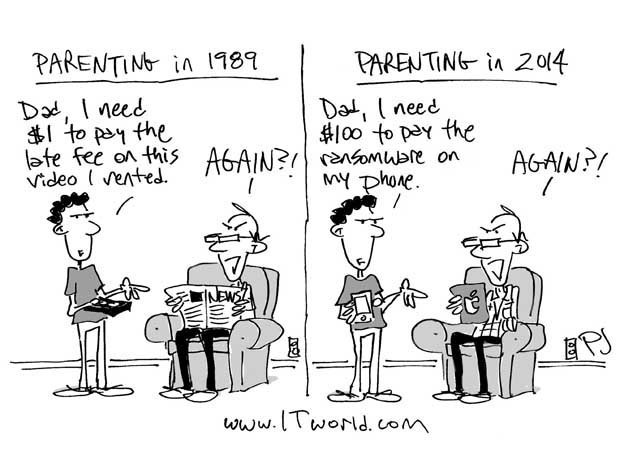
Cartoons on Parenting

Some cartoons about parenting that I found amusing. Enjoy.
'Did Dr. Spock ever write anything about how to handle PARENTS?'

If I learn how to write Roman Numerals, will that help me write computer code?

slide_20140529_parenting_ransomware-620x465-100503042-gallery.idge

mpt245dy
perfect_parenting_1065715

Color-Parent-skills-WEB
Print


Sacramento City teachers urge board to provide competitive salaries | The Sacramento Bee

Sacramento City teachers urge board to provide competitive salaries | The Sacramento Bee:

Sacramento City teachers urge board to provide competitive salaries


If the Sacramento City Unified School District expects to recruit and maintain top teachers, it has to offer salaries and benefits that are competitive with those in other districts, teachers told board members.
Teachers turned out in force for Thursday night’s district board meeting. With the board room filled to capacity, the overflow crowd watched proceedings on a television in an adjoining cafe area at the district’s Serna Center.
The Sacramento City Teachers Association is asking for a 5 percent retroactive pay raise for the current school year. The pay increase was triggered by an increase in state funding that enables the district to provide higher salaries to teachers. The district has offered a 2.5 percent raise.
Teachers speaking during the public comment portion of the the meeting Thursday told board members they must do better if they expect to keep current teachers and attract new ones. Nikki Milevski, SCTA president, said 53 percent of district teachers responding to a recent survey said they were considering taking a job in another district.
Other speakers cited the number of teachers in the district nearing retirement and argued that the Sacramento district would have trouble competing for new hires with districts like San Juan and Elk Grove, which offer higher salaries.
Board President Christina Pritchett told the audience that the board has to look at all the demands on its budget. The last thing its wants to do is spend beyond its means and have to lay off employees, she said. She stressed that in considering raises, the district must also make sure it can fulfill its current commitment to lifetime benefits for employees.
There is disagreement over whether increasing pay means the district should reduce the teachers’ health and welfare benefits, which are the most generous in the Sacramento region.
Priya Jaggi, a first-year teacher at The Met Sacramento High School, said she was offered jobs in Folsom and Woodland, at a higher salary. Although she chose the Sacramento District, Jaggi said she has to be able to be able pay off student debt and meet routine expenses such a car insurance.
“I’m not here to ask you to pay me what I’m worth, because you can’t,” Erin Duarte, a sixth-grade teacher at Pony Express Elementary School told the board.
But Duarte asked board members to talk with her about the challenges teachers face before they make a decision. She concluded her comments by handing trustees cards with her phone number and email address.

What high court just did to the way Phila. schools are run

What high court just did to the way Phila. schools are run:

What high court just did to the way Phila. schools are run


 Teacher reassignments. Caps on charters. School closings.

All those weighty matters could be up in the air in Philadelphia schools, after this week's Pennsylvania Supreme Court decision that stripped the School Reform Commission of extraordinary powers it had believed it had - and had used - under state law.
Lawyers and close watchers of the School District were still combing through the 18-page decision Wednesday, determining exactly what it means for the school system.
But the scope of the ruling was clear. The SRC on Wednesday called it a "sobering moment."
"Clearly, it's going to require a total reenvisioning of the way in which the SRC is going to manage costs and resources," said Donna Cooper, executive director of Public Citizens for Children and Youth. "Their quiver has been depleted a bit."
Financially, the decision could be devastating, because of the possibility for rampant, unplanned charter-school growth, already a sensitive issue in a district whose leaders were uncertain, even before the ruling, that they would have enough cash to get through the school year.
Jerry Jordan, president of the Philadelphia Federation of Teachers, called the ruling a "double-edged sword." While he was pleased that some of the district's special powers were dulled, he worried "that the district won't be able to control its own budget, its own destiny."
In a 4-2 vote handed down Tuesday, the court declared unconstitutional a provision in state law that permitted the SRC to cancel sections of the Pennsylvania school code. The commission relied heavily on this special power in the last several years to close schools, bypass seniority in teacher assignments, and limit charter school growth.


School officials huddled Wednesday to puzzle over what the ruling will mean, and in a statement, the SRC said that it had acted in good faith "to take actions consistent with our duty to secure financial stability for the School District and provide high-quality educational opportunities for all students."
One SRC member, Bill Green, said after the ruling that he saw little choice but to follow the order, potentially undoing actions taken under the provision of the law.
Teacher assignments could also be affected significantly. The SRC used the law to bypass seniority after it began rehiring thousands of staffers it had laid off in 2013. It has continued to circumvent seniority since.
Green had said he feared the district might be forced to reassign teachers now, more than halfway through the school year. Jordan dismissed that possibility.
"Absolutely not," he said. "How could you take a teacher away from a student midyear?" Jordan suggested that changes would affect assignments next year.
Cooper said restoration of seniority would further destabilize the school system.
"For people who think they might run the risk of being shifted to another school, that might cause them to look elsewhere," she said. "There's a lot of rolling impact to this."
The impact on school closures is also unclear. The SRC suspended part of the code to amend the timeline required by law to shut dozens of schools in the last several years. Closures are unlikely to be reversed, but steps might have to be taken to remedy the now-improper proceedings.
Perhaps the biggest question is what impact the ruling could have on charter school
Read more at http://www.philly.com/philly/education/20160218_What_the_courts_just_did_to_the_way_Philly_schools_are_run.html#PfuSze0sbXrWQX3w.99

CURMUDGUCATION: WI: Trying To Hide Charter Truth

CURMUDGUCATION: WI: Trying To Hide Charter Truth:

WI: Trying To Hide Charter Truth

One of the great lies of the charter-choice movement is that you can run multiple school districts for the price of one.

A school district of, say, 2,000 students can lose 75 students and with them about $750,000 dollars of revenue, and somehow that district of 1,925 students can operate for three quarter of a million dollars less. And how does the district deal with that loss of revenue? By closing a building-- because the more school buildings you operate, the more it costs.

The other common response of a school district to the loss of revenue to charters is to raise local taxes. If charters want to look at where some of their bad press is coming from, they might consider school boards like mine that regularly explain to the public, "Your local elementary is closing and your taxes are going up because we have to give money to the cyber charters."

We can run examples a dozen different ways. What is cheaper in the aggregate-- to house your ten person family in one house, or to house each family member is a separate building? Is it cheaper and more efficient to educate 2,000 students in one district with one set of administrators and special areas teachers, or in five school districts with five sets of administrators and special area teachers?

The inefficient, multiple provider model of charter schools creates greater expense, and the difference can only be made up one of two ways-- either taxpayers must fork over more money for education, or schools must cut services. If you are going to add charter-choice schools to a system, 
CURMUDGUCATION: WI: Trying To Hide Charter Truth:


Why Common Core math is not as easy as riding a bike – Missouri Education Watchdog

Why Common Core math is not as easy as riding a bike – Missouri Education Watchdog:

Why Common Core math is not as easy as riding a bike


 It is quite possible that if the CCSSI had only focused on reading and writing first, the public might not have noticed or cared much about the standards. The lack of good grammatical skills might easily be blamed on modern social media’s casual acceptance of poor grammar or space limitations rather than the fact that it was no longer specifically taught. When an adult used a common quote from classic literature that sailed over a child’s head, it might have been written off by thinking they are reading new classics instead of realizing they were spending way more time reading instructional text. It takes a while for people to realize how much their cultural identity is developed through shared experience and shared reading. But unfortunately for the developers of CCSS, they also introduced new math standards that were very instructional in nature which changed the way teachers taught math in the very early grades. Here they ran up against the phenomenon of neuroplasticity and garnered the attention and ire of adults.

There is a great video that provides a very clear demonstration of this idea of neuroplasticity. It gives a real world demonstration of how it works that should resonate with parents looking at Common Core math.
A quick synopsis is this: When we learn to ride a bike we take on a novel experience and begin to build neural pathways that help us remember how to do the task the next time. The more we practice the activity, the stronger those pathways become. When we try to do the same task using a different technique, our brain is strongly drawn to using those established pathways even though we can clearly see that the old Why Common Core math is not as easy as riding a bike – Missouri Education Watchdog:

School Funding, Residual Budgeting, and Kansas | janresseger

School Funding, Residual Budgeting, and Kansas | janresseger:

School Funding, Residual Budgeting, and Kansas


 If you live in Ohio, and if you were paying attention during the 1990s, the decade of decisions and appeals of the DeRolph school funding case, you understand the concept of residual budgeting.  School funding in Ohio, the plaintiff’s attorneys explained again and again, is a mere budgetary residual. The legislators calculate the pot of tax money available this year; then they look at what they spent on education last year; then they divide available revenue  up across all the functions of government including education—usually making sure they don’t spend too much less on education than last year unless there is a budgetary emergency.  Any year’s state budget allocation doesn’t necessarily reflect what services are really needed, nor does it demonstrate an investigation of what different programs cost. In fact, because last year’s funding is usually the baseline, and because last year’s funding was likely way too low, the school funding formula is likely over time to become way out of kilter relative to the rising cost of services.  Although legislators may allocate something extra to support school districts serving a lot of children in poverty, nobody ever really measures what it would take to make our poorest rural and urban schools operate as schools do in wealthy communities.

At the federal level, the most visible case of residual budgeting is for the Individuals with Disabilities Education Act.  When Congress passed the IDEA in 1975, Congress said the federal government would pay 40 percent of the costs, but in 2014, Congress paid for only 16 percent. Local school districts are simply expected to pick up the expenses of what is known to be a huge unfunded mandate.  Similarly, Title I was created in 1965 as the centerpiece of the Elementary and Secondary Education Act to assist schools serving a large number or high concentration of children in poverty, but Title I has never been funded at a level to support the education of all the children who qualify. Neither has it sufficiently compensated for school funding inequity across the states.
In the 1990s, the problem of residual budgeting at the federal level was compounded by outcomes-based demands for accountability.  David Cohen and Susan Moffitt, in their bookThe Ordeal of Equality, describe how the 1994 and 2001 reauthorizations of the Elementary and Secondary Education Act failed.  These two reauthorizations incorporated an outcomes-based strategy, “profoundly at odds with the unequal conditions of education in the United School Funding, Residual Budgeting, and Kansas | janresseger:

Charter Schools: Problems and Solutions

Charter Schools: Problems and Solutions:

Charter Schools: Problems and Solutions


As a State Rep, I get a ton of emails about supporting and opposing raising the cap on charter schools in Massachusetts. One side contends that there should be more choice in public schools and the other side contends that charter schools take money away from traditional public schools. Both sides are correct. But there are more issues to consider than these two concerns.

Funding
The first issue is one of funding. Charter schools take money away from traditional public schools. If I may simplify it, the average cost per pupil is shifted from the public school district to the charter school to pay for the education of that individual student, and this doesn't even consider transportation. However, this is problematic. The average cost of a student is different from a traditional public school and a charter school, and then it is further complicated when we consider that the fixed costs and the marginal costs of the student that create the average costs are different between charter schools and traditional public school. The issue is still further complicated when a student leaves a charter school; after a certain period of time the money would not follow the student back to the traditional public school. If the money would just follow a student on a prorated basis throughout the academic year, there is still the issue of the difference in fixed, marginal and average costs between the traditional public school and the charter school.
The way to fix the issue is for the legislature to create a second funding stream in the budget for charter schools so that money is not taken out of traditional public schools. This issue is in need of a Legislative branch fix.
Performance
Another issue is one of performance. Charter schools often contend that their students perform better on standardized tests than traditional public schools. This may or may not be true. First, I have serious problems with standardized tests because the scores reflect many non-academic influences. Second, charter schools often compare their scores to other traditional public schools, but they shouldn't. A charter school is a self-selected group of students who have parents who want their children to do well so much so that they took the time to enroll them in another school. This is a cohort or self-selection bias. Comparing charter students to a group of people who are made up of people who wanted to get into a charter school mixed with people who didn't is inappropriate. It compares apples to oranges.
The way to correctly measure the performance of a charter school is to compare a group of students in the charter school to a specific group of students in a traditional public school. We can do this using the lottery process. Charter schools often have more applications than they have seats. As such, a lottery is (supposed) to randomly select students. This random selection creates a group of two sets of students with no consistent difference between the two groups except that one Charter Schools: Problems and Solutions:

Thursday, February 18, 2016

Ability to opt out uncertain in lawsuit requiring student data release | EdSource

Ability to opt out uncertain in lawsuit requiring student data release | EdSource:

Ability to opt out uncertain in lawsuit requiring student data release

judge’s order requiring the California Department of Education to release personal data for 10 million students as a result of a lawsuit over special education rights does not state whether parent objections will automatically trigger the removal of their children’s records from disclosure.
Many parents throughout the state want to opt their children out of the data release, which includes records dating back to 2008. Information to be released could include Social Security numbers, addresses, demographics, behavior and discipline information, special education records, and mental health or medical details.
Although Judge Kimberly Mueller is accepting letters or objection forms from parents, or former students who are 18 or over, through April 1, her order does not indicate whether she will block the release of data based on them. However, it does clearly state that failure to submit an objection “will be deemed a waiver of your right to object to the disclosure of your or your child’s protected personal information and records.”
“The way we’re interpreting it is: ‘Get your paperwork in now and the court is going to decide whether that is an opt-out or not,” said Robert Oakes, spokesman for the California Department of Education. “So, we strongly encourage everyone to get their paperwork in because the judge will make that determination.”
The order came as a result of a 2011 lawsuit by the Morgan Hill Concerned Parents Association against the California Department of Education alleging that the state is failing to ensure that students are getting the special education services they are legally entitled to receive. The California Department of Education denies the allegations.
The lawsuit was joined in 2012 by the California Concerned Parents Association, which includes parents from 75 percent of the districts in the state, said Christine English, vice president of the group.
“We’re doing a statistical analysis of information that is reported to the California Department of Education,” she said. “We’re not getting any information from local school districts, nor do we want it.”
The state is encouraging districts to inform parents of the lawsuit and to post the objection form on their websites. The state PTA is also alerting its members to the judge’s order, which it characterizes as “an overexposure of children’s information.”
Sherry Skelly Griffith, executive director of the state PTA, said she believes there must be another way to determine whether the needs of students are being Ability to opt out uncertain in lawsuit requiring student data release | EdSource: