Latest News and Comment from Education

Thursday, January 7, 2016

Torlakson Appoints Division Directors - Year 2016 (CA Dept of Education)

Torlakson Appoints Division Directors - Year 2016 (CA Dept of Education):

State Schools Chief Torlakson Appoints Division Directors to Help Districts Implement New Academic Standards and New Funding System


SACRAMENTO—State Superintendent of Public Instruction Tom Torlakson today named Brent Malicote Director of the California Department of Education's (CDE) new Standards Support Office and Jeff Breshears as Director of the Local Agency Systems Support Office.
Both appointments are key CDE leadership positions and reflect the department's increasing emphasis on supporting local districts and schools, Torlakson said.
The Standards Support Office will provide increased access to the tools and resources necessary to implement the new, more rigorous California learning standards, which cover English-Language Arts, Math, Science, and English Language Development.
Malicote is a high-energy leader with extensive field experience in teaching and administration in California's Central Valley. He most recently served as Principal of Pinewood Elementary School, which CDE honored as a California Distinguished School in 2014. He was named El Dorado County's Elementary Principal of the Year for 2015.
"We are fortunate that a proven school leader of Brent's caliber has joined the department," Torlakson said. "His success leading school teams with high-quality implementation of Common Core Standards will be a great addition to CDE and the students and families we serve."
The Local Agency Systems Support Office (LASSO) helps school districts achieve state and local goals in the Local Control Funding Formula (LCFF), which gives districts more resources and more flexibility in spending and requires them to work with their communities to create education plans.
Breshears brings 10 years of CDE experience supporting programs that serve high-need students. He supported critical phases of Local Control Funding Formula implementation, including extensive work with County Offices of Education to support design and implementation of Local Control Accountability Planning (LCAP).
Breshears has extensive teaching and administrative experience in California public schools, including innovative work with students with exceptional needs in middle schools and high schools in Solano County.
"Jeff's work with the initial stages of California's innovative Local Control Funding Formula implementation will provide the department with high-quality leadership needed to create and guide the next phase of this important program," Torlakson said. "He currently leads the department's LCAP Support Team, a new initiative designed to support local school districts as they design and implement effective plans for their schools and communities."
For additional information on the Local Agency Systems Support Office, visit the Local Agency Systems Support Office Web page.
# # # #
Tom Torlakson — State Superintendent of Public Instruction
Communications Division, Room 5206, 916-319-0818, Fax 916-319-0100
Last Reviewed: Thursday, January 7, 2016


State Board of Education approves charter school policy change :: WRAL.com

State Board of Education approves charter school policy change :: WRAL.com:

State Board of Education approves charter school policy change


 — The State Board of Education voted unanimously Thursday to give newer charter schools more chances to remain open if they are struggling to meet performance standards.


Under the old policy, the state board could revoke the charter of any school that, for two of three consecutive years, failed to meet or exceed expected growth on state tests and had a proficiency rate below 60 percent.


The new policy allows charter schools in the first five years of operation to be labeled "inadequately performing" instead of facing closure. They will be required to develop a strategic plan to meet goals for student performance. If they fail to make improvement within two years, the charter will revoked.


For charter schools that have been open more than five years and meet the definition of “inadequately performing,” the school board will revoke their charter.


The state board on Thursday also declined to vote on the annual charter schools report, which is due to the legislature on Jan. 15. They will delay the vote until next month, at the request of Lt. Gov. Dan Forest, who called the report "negative" and asked for more time to review it.
Read more at http://www.wral.com/state-board-of-education-approves-charter-school-policy-change/15217900/#uZgQSZPprYxBzRAk.99

Editorial: Taxpayers assume risk, little gain for charter schools | Tampa Bay Times

Editorial: Taxpayers assume risk, little gain for charter schools | Tampa Bay Times:

Taxpayers assume risk, little gain for charter schools


 Florida has invested heavily in privately run charter schools for years, and the payoff for taxpayers has been uneven at best. While some successful charter schools fill particular needs in local communities, too many have failed and research shows they have not outperformed traditional public schools in the state. Taxpayers also have lost millions in construction costs and other capital investments when charter schools have closed, and state lawmakers should revisit the oversight and funding for these schools.

The state has lost as much as $70 million in money for construction, rent and other costs when charter schools have closed over the last 15 years, a recent Associated Press analysis found. In Broward County, 19 now-closed charter schools received $16.5 million. In Hillsborough County, 17 now-closed charter schools received more than $5.4 million. In Pasco County, three now-closed charter schools received more than $900,000, and in Pinellas County three received almost $550,000. In Miami-Dade County, the Liberty City Charter that Jeb Bush helped establish before he ran for governor in 1998 received more than $1 million in capital money from the state before it closed with financial problems. Why should taxpayers be shouldering such financial risk and eating these losses for privately run schools?
It would be one thing if traditional public schools were flush with cash with no need for new construction or maintenance. In fact, the state's 67 school districts received no new construction money for three years before finally dividing a modest $50 million last year (a handful of rural counties got another $59.7 million). Those facilities are used by more than 2.7 million students, yet far fewer charter schools that served about 230,000 students split $75 million. This year traditional schools and charter schools each received $50 million, and Gov. Rick Scott recommends public schools and charter schools each get $75 million for construction and maintenance for 2016-17. But a 50-50 split of the money is hardly fair. Pinellas County schools alone have more than $400 million in construction and capital needs over the next five years, yet the district has received just $8.1 million in construction and maintenance money from the state over the last five years.
Charter schools, which are publicly funded but privately operated, overall have received more than $760 million from taxpayers for capital costs since 2000, the AP reported. In 2012 and 2013, they got virtually all of the state money for construction and maintenance. Charter school advocates argue that the money is critical to their success, and they point out they do not have the authority to levy local property taxes to pay for those capital costs like school districts can for traditional public schools. But charters are not always small operations. They are often managed by large, for-profit companies such as Charter Schools USA, which won approval from the Hillsborough School Board this fall to run four new schools with up to 4,650 students. Passing through tax dollars for per student funding, paying public money for construction and maintenance, and allowing for less regulation for charter schools where private management companies make a profit at little risk is a pretty sweet deal.
Florida taxpayers will never get back the $70 million lost on construction costs for failed charter schools. At the very least, the state should require that the school building or other capital assets be handed to taxpayers when that happens so at least some of the public's investment can be recovered.
Editorial: Taxpayers assume risk, little gain for charter schools 12/24/15 [Last modified: Thursday, December 24, 2015 11:55am]  Editorial: Taxpayers assume risk, little gain for charter schools | Tampa Bay Times:

Deep Pockets, Corporate Reform, and Teacher Education | VAMboozled!

Deep Pockets, Corporate Reform, and Teacher Education | VAMboozled!:
Deep Pockets, Corporate Reform, and Teacher Education


A colleague whom I have never formally met, but with whom I’ve had some interesting email exchanges with over the past few months — James D. Kirylo, Professor of Teaching and Learning in Louisiana — recently sent me an email I read, and appreciated; hence, I asked him to turn it into a blog post. He responded with a guest post he has titled “Deep Pockets, Corporate Reform, and Teacher Education,” pasted below. Do give this a read, and a social media share, as this one is deserving of some legs.
Here is what he wrote:
Money is power. Money is influence. Money shapes direction. Notwithstanding the influential nature of it in the electoral process, one only needs to see how bags of dough from the mega-rich-one-percenters—largely led by Bill Gates—have bought their way in their attempt to corporatize K-12 education (see, for example, here).  
This corporatization works to defund public education, grossly blames teachers for all that ails society, is obsessed with testing, and aims to privatize.  And next on the corporatized docket: teacher education programs.
In a recent piece by Valerie Strauss, “Gates Foundation Puts Millions of Dollars into New Education Focus: Teacher Preparation,” she sketches how Gates is awarding $35 million to a three-year project called Teacher Preparation Transformation Centers funneled through five different projects, one of which is the Texas Tech based University-School Partnerships for the Renewal of Educator Preparation (U.S. Prep) National Center.
A framework that will guide this “renewal” of educator preparation comes from the National Institute for Excellence in Teaching (NIET), along with the peddling of their programs, The Deep Pockets, Corporate Reform, and Teacher Education | VAMboozled!:


American Rage: The Esquire/NBC News Survey

American Rage: The Esquire/NBC News Survey:

American Rage: The Esquire/NBC News Survey

WE THE PEOPLE ARE PISSED. THE BODY POLITIC IS BURNING UP. AND THE ANGER THAT COURSES THROUGH OUR HEADLINES AND NEWS FEEDS—ABOUT INJUSTICE AND INEQUALITY, ABOUT MARGINALIZATION AND DISENFRANCHISEMENT, ABOUT WHAT THEY ARE DOING TO US—SHOWS NO SIGN OF ABATING. ESQUIRE TEAMED UP WITH NBC NEWS TO SURVEY 3,000 AMERICANS ABOUT WHO'S ANGRIEST, WHAT'S MAKING THEM ANGRY, AND WHO'S TO BLAME.
LET'S BEGIN WITH THE BIG REVEALS: Half of all Americans are angrier today than they were a year ago. White Americans are the angriest of all. And black Americans are more optimistic about the future of the country and the existence of the American dream. There are depths and dimensions, dark corners and subtle contours to our national mood, and setting aside the issue of who actually has a right to be angry and about what—these pages are neutral territory; everyone is allowed their beef—we found three main factors shaping American rage:
EXPECTATIONS: Are you disappointed? Do you feel stifled and shortchanged and sold a bill of goods? Then you're probably pretty angry. Consider the white men and women in our survey: From their views on the state of the American dream (dead) and America's role in the world (not what it used to be) to how their life is working out for them (not quite what they'd had in mind), a plurality of whites tends to view life through a veil of disappointment. When we cross-tabulate these feelings with reports of daily anger (which are higher among whites than nonwhites), we see the anger of perceived disenfranchisement—a sense that the majority has become a persecuted minority, the bitterness of a promise that didn't pan out—rather than actual hardship. (If anger were tied to hardship, we'd expect to see nonwhite Americans—who report having a harder time making ends meet than whites, per question three—reporting higher levels of anger. This is not the case.)
Indeed, despite having what many would consider a more legitimate case for feeling angry, black Americans are generally less angry than whites. Though they take great issue with the way they are treated by both society in general and the police in particular, blacks are also more likely than whites to believe that the American dream is still alive; that America is still the most powerful country in the world; that race relations have improved over the past eight years; and, most important in the context of expectations, that their financial situation is better than they thought it would be when they were younger. Their optimism in the face of adversity suggests that hope, whatever its other virtues, remains a potent antidote to anger.
EMPATHY: When we take a close look at our respondents by gender, women report a greater rise in anger than men over the past year. (See question two.) One possible explanation: Although they share many of the same frustrations with respect to dashed expectations, they are more likely than men to be angry about the treatment of others. (See question 14.) That perception of unfairness has a way of rubbing people the wrong way.
EXPERIENCE: Seventy percent of blacks express anger about the way they are treated by society. Forty-eight percent of women are angry about the way they are treated. Even 21 percent of white men say they are angry at how they are treated in this country. People get angry when they don't like how they and theirs are treated. People, we suppose, are funny like that.
A NOTE ABOUT TERMINOLOGY: Anger—the intensity and frequency with which it is felt—can be a challenge to measure, but for these purposes we kept it simple: We measured and compared anger primarily according to the frequency with which respondents report hearing or reading something that makes them angry. Those who report feeling angry a few times a day are considered angrier than those who report feeling angry once a day, who are angrier than those who get angry once a week, and so forth. To the lucky souls who say they rarely hear or read something that makes them angry, namaste: We'd love to know your secret.American Rage: The Esquire/NBC News Survey:

Let’s Make Community Schools the Schools Our Children Deserve – PCAPS Releases Plan | WeArePCAPS

Let’s Make Community Schools the Schools Our Children Deserve – PCAPS Releases Plan | WeArePCAPS:

Let’s Make Community Schools the Schools Our Children Deserve – PCAPS Releases Plan

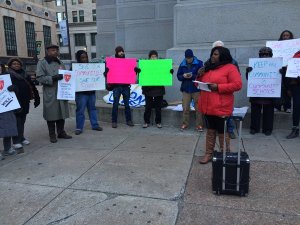
CYEO4N1WEAQ7QB5


Spring Garden parent Sheila Armstrong speaking at City Hall press conference
Today, the Philadelphia Coalition Advocating for Public Schools announced theircomprehensive Community Schools platform, developed by over the last year by  a group of public school parents, educators, service providers, university partners and community organizations working with or in public schools. This platform outlines clear, concrete next steps that will ensure real Community Schools are built across the City, providing transformational education and resources to our neediest neighborhoods.
“We reached out during the last election cycle to candidates, calling for them to embrace a Community Schools initiative. We are here today to share the fruit of that work,” said Ron Whitehorne, retired teacher and PCAPS coordinator. “First, we applaud Mayor Kenney and Council President Clarke for their commitment to a community schools initiative. We hope to work with them as well as the School District to fashion a community schools plan.”
As an initial step, the group called for the City to establish a funded planning process led by a city-wide task force that includes parents, students, teachers and other school staff, community organization leaders, and city agency leaders. The group asserted that the task force should be charged with developing Philadelphia’s inclusive and effective plan for community schools, including fleshing out the ongoing governance structure, long-term funding, program components, school selection criteria, performance metrics, and processes and templates for partnership contracts.
The PCAPS plan also calls for embracing a vision of community schools that goes beyond a lowest common denominator.  “What has been emphasized to date is the development of partnerships housed in the school that provide support and services to students and families,” stated Ron Whitehorne. “That is critical, but we believe other things are essential as well, including a democratic culture and structure that draws on the energy and special knowledge of all elements of the school community… students, parents, teachers and neighborhood leaders.”
A series of speakers talked about why they saw community schools as a critical need.  Sheila Armstrong, a parent leader from Spring Garden elementary and co-chair of the POWER Education Committee, talked bout the gains a community schools approach has brought at the school.  “The leaders at Spring Garden School determined that one way we can see our students succeed is to find community resources to help our families with their issues that were not school related,” she explained, “The benefits we saw in the past three years were a reduction in missed days from school due to illness or medical appointments, Let’s Make Community Schools the Schools Our Children Deserve – PCAPS Releases Plan | WeArePCAPS:
 

1/7/2016 – Five Education Stories To Keep Your Eye On In 2016

1/7/2016 – Five Education Stories To Keep Your Eye On In 2016:

Five Education Stories To Keep Your Eye On In 2016

Education Opportunity Network -
THIS WEEK: Students Are Over-Stressed … Millions Go To Failed Charter Schools … Instead Of Suspensions … Who Profits From College Debt … Why Standardized Tests Suck

TOP STORY

Five Education Stories To Keep Your Eye On In 2016

By Jeff Bryant

“Here are five stories to look for … Vulnerable governors … Charter schools … The Test Rebellion … Friedrichs … Chicago.”
Read more …

NEWS AND VIEWS

Is The Drive For Success Making Our Children Sick?

The New York Times

“Expectations surrounding education have spun out of control … Even those not bound for college are ground down by the constant measurement in schools under pressure to push through mountains of rote, impersonal material as early as preschool … This drive for success is eroding children’s health and undermining their potential. Modern education is actually making them sick … A growing body of medical evidence suggests that long-term childhood stress is linked not only with a higher risk of adult depression and anxiety, but with poor physical health outcomes, as well … Working together, parents, educators and students can make small but important changes.”
Read more …

Florida Gave About $70 Million To Charter Schools That Later Closed; State Recouped Little

Miami Herald

“Charter schools, which are public schools run by private groups, have received more than $760 million from [Florida] taxpayers since 2000 … Yet charter schools in 30 districts have wound up closing after receiving as much as $70 million combined in such funding … Taxpayers usually can’t recover the capital money invested in those schools because most of it has been spent on rent or leasing costs. The Department of Education reported it has taken back just $133,000 in the last three years from schools that closed.”
Read more …

What Happens When Instead Of Suspensions, Kids Talk Out Their Mistakes?

The Hechinger Report

“There is now strong research that shows pulling students out of class as punishment can hurt their long-term academic prospects. What’s more, data show that punishments are often unequal. Nationally, more black students are suspended than white students … Alternative programs like restorative justice are gaining popularity in public schools from Maine to Oregon. Early adopters of the practice report dramatic declines in school discipline problems, as well as improved climates on campuses and even gains in student achievement … In addition … there is now federal pressure for districts to rethink their practices: Schools may face sanctions if discipline policies are found to unfairly target minority students. That is a significant milestone.”
Read more …

Who’s Profiting From $1.2 Trillion Of Federal Student Loans?

Bloomberg Business

“Congress created the loan program 50 years ago with the goal of encouraging students to attend college. Today, the Education Department is one of the largest financial institutions in the country. If it were a bank, it would rank fifth in the U.S. in assets … Companies that have benefited from the loan program range from debt servicer Affiliated Computer Services … to Education Management, which operates for-profit colleges … FMS Investment … was paid $227 million by the Education Department from October 2011 through September of this year… Florida Coastal is part of the InfiLaw System … A principal investor in InfiLaw is Sterling Partners, a private-equity firm that also owns a stake in Laureate Education Inc., which is planning an initial public offering next year … FMS’s parent, Ceannate, is one of about two dozen collection firms paid a total of $963 million in the fiscal year that ended in September… That’s down from a record $1.1 billion the previous year.”
Read more …

Straight Talk About Standardized Tests

The Progressive

Pennsylvania classroom teacher Peter Greene writes, “It may seem odd or even hypocritical for teachers to complain about standardized tests … These tests are scored by seasonal, minimum wage workers in temporary test-scoring sweatshops. The emphasis is on speed … The line drawn between success and failure … is drawn only after the tests have been scored … So students will not be able to find out what they need to do until after they have taken a test … This after-the-fact level setting also means that the line can be drawn differently every year … All of this means that even if they were great tests (that’s another conversation), they would not give parents or policymakers a picture of how a school is doing.”
Read more …
1/7/2016 – Five Education Stories To Keep Your Eye On In 2016:

A CEO’s Point of View: Children as Products for Corporate Consumers | janresseger

A CEO’s Point of View: Children as Products for Corporate Consumers | janresseger:

A CEO’s Point of View: Children as Products for Corporate Consumers


Business Gets Schooled, a long piece in the January 1, 2016, issue of Fortune, perches the reader as a fly on the wall of the corporate board room during a conversation among CEOs about public education.  This blog has argued that while public schools are the quintessential institution of the 99 Percent, education policy is being made by the One Percent.  Business Gets Schooled explains how that works.
The reporter, Peter Elkind—whose point of view dovetails nicely with the thinking of the business executives he is profiling—describes the involvement of Bill Gates, Exxon Mobil’s Rex Tillerson, and IBM’s Lou Gerstner, without even wondering what these people know that qualifies them for imposing the Common Core standards on the schools. One wonders if the corporate giants who hatched the standards ever leave their offices to spend time with their own children or grandchildren. As profiled in this piece, they do not acknowledge the existence of a credentialed education profession or of a vast body of academic literature on child and adolescent psychology or learning styles or the role of family economics in educational success. Neither does Elkind seem to know about any of this.
Exxon Mobil’s Tillerson stands out. For him schools are a kind of machine:  “I’m not sure public schools understand that we’re their customer—that we, the business community, are your customer… What they don’t understand is they are producing a product at the end of that high school graduation… Now is that product in a form that we, the customer, can use it?  Or is it defective, and we’re not interested? (American schools) have got to step up the performance level—or they’re basically turning out defective products that A CEO’s Point of View: Children as Products for Corporate Consumers | janresseger:

#TomPorton, Hero Teacher, retires | JD2718

#TomPorton, Hero Teacher, retires | JD2718:

#TomPorton, Hero Teacher, retires

I’ll save the comments for later. These are Tom Porton’s words. Please read. – Jonathan
To all my friends and supporters:… It is with mixed emotions that I announce that I will be retiring from the New York City Department of Education on February 1, 2016.
Looking back on 47 years in education (46 in the James Monroe building), I see a mosaic of thousands of faces…students, parents, colleagues. I have so many great memories of those years, from the excitement of the classroom, to the applause for shows I directed, to the impact of my many school and community projects. My heart is filled with so many great relationships that came from those years…so many of which I maintain even to the present day.
It is because of the joy I feel when I think of my teaching career that I have such mixed emotions about retiring. And yet, as this new year began and I took inventory of my daily routine, I realized there was a need to make a change in my professional life.
First and foremost, I do not feel that I have the same impact on young people that I have had in the past. The reason I continued teaching at Monroe for so many years was the fact that I really thought I was making a difference in the lives of my students, not only in the classroom, but especially through my work in school and community activities. It was that energy and excitement of creating and working with motivated, committed young people that kept me young and vital.
However, beginning this school year, my opportunities for continuing that impact have been lessened to the point where each day has become a struggle. For over 35 years, I began each day with my Leadership class, where I was able to create a core of 40-50 students who would facilitate a wide variety of school and community events in the Monroe Campus. Now, with that class programmed away by the current administration, making those events continue becomes harder and harder. I realized this during the past several months where I struggled to continue such projects as the Blood Drive, the Thanksgiving Community Dinner, the World AIDS Day commemoration, and the Holiday Caroling Celebration. #TomPorton, Hero Teacher, retires | JD2718:

Louisiana Educator: Bassett Examines Progress Point Influence on School Performance Scores

Louisiana Educator: Bassett Examines Progress Point Influence on School Performance Scores:

Bassett Examines Progress Point Influence on School Performance Scores

Why question School Performance Scores?


 The School and District Performance Scores, along with their associated letter grades, were released without fanfare just as schools dismissed for the Christmas holiday. Potentially controversial news is often held until a holiday.


Despite the letter grades being curved to maintain a constant grade distribution, well over one third of schools and almost one-fourth of districts moved up or down a letter grade.

I would like to explain to your readers how the LDOE designed this churn into the accountability system. The promulgated rules for Progress Points magnify small changes in performance into large point jumps. A computer model that produces highly erratic year-to-year outcomes determines the winners and losers of a Hunger-Games style competition for the Progress Points.

This churn-by-design perpetuates an unjustified sense of crisis about school performance. When your local school drops a letter grade, you are concerned. The churn means that, if not this year, sometime within the next few years you will almost certainly experience the concern. This turmoil provides a ready environment into which LDOE can plant its next untested reform. Progress Points fertilize the turmoil.

After careful study, my opinion is that they are complete natural fertilizer.

Herb Bassett

Progress Points introduce unnecessary volatility to school performance measures 

The 2015 School and District Performance Scores were released later than usual this year, just before the Christmas holiday. An important feature in those scores in the John White era is Progress Points which were first known as Bonus Points when introduced in 2013. Progress Points are proving to be a major source of year-to-year volatility in the performance scores.

In theory, Progress Points identify and reward schools and districts that excel at the job of improving the performance of struggling students.  In reality, they fail at that task and randomly fluctuate the letter grades assigned to schools and districts, causing turmoil and giving a false impression that we have found ways to break the relationship between scores and poverty.

The LDOE curved the School Letter Grades this year to hold the Louisiana Educator: Bassett Examines Progress Point Influence on School Performance Scores:

Wendy Lecker explains - Again - Why the Malloy-Wyman teacher evaluation system is a terrible farce - Wait What?

Wendy Lecker explains - Again - Why the Malloy-Wyman teacher evaluation system is a terrible farce - Wait What?:

Wendy Lecker explains – Again – Why the Malloy-Wyman teacher evaluation system is a terrible farce


In her commentary piece last week, public education advocate Wendy Lecker returned to the issue of Governor Dannel Malloy and Lt. Governor Nancy Wyman’s unfair, inappropriate and fundamentally flawed teacher evaluation system.   Her article, entitled Teacher evaluation system needs overhaul, first appeared in the Stamford Advocate.
While Wendy Lecker has pounded away about the problems associated with Connecticut’s teacher evaluation system for four years, the good news is that it seems that some of the power-elite are finally listening.
Having helped craft and usher in the absurd and destructive teacher evaluation system, the Connecticut Education Association (CEA) will be holding a press conference later today, January 7, 2016, in which they will apparently stand up for Connecticut educators and take a strong stand against Malloy and Wyman’s anti-teacher and anti-public school, teacher evaluation program.
The problem with the existing teacher evaluation system could not be any clearer.  As Wendy Lecker explains – Teacher evaluation system needs overhaul;
With the passage of the new federal law replacing the No Child Left Behind Law (NCLB), Connecticut now has a unique opportunity to rethink its flawed teacher evaluation system.
In response first to the federal Race to the Top grant and then the NCLB waiver mandates, Connecticut developed a teacher and principal evaluation system calling for student standardized test scores to be a part of a teacher and principal’s effectiveness rating.
Under the federal law replacing NCLB, the Every Student Succeeds Act (“ESSA”), the federal government no longer requires states to link student standardized test scores to teacher evaluations.
Connecticut’s Performance Evaluation Advisory Council (“PEAC”), the body 
Wendy Lecker explains - Again - Why the Malloy-Wyman teacher evaluation system is a terrible farce - Wait What?:

All I Really Need to Know I (Should Have) Learned in Kindergarten | EduShyster

All I Really Need to Know I (Should Have) Learned in Kindergarten | EduShyster:

All I Really Need to Know I (Should Have) Learned in Kindergarten

backpack-school

Are no excuses charter schools setting kids up to struggle later by pushing academic skills too hard, too soon? 
By Emily Kaplan
backpack-schoolThe very youngest children at the charter school at which I taught all start their nine-hour school day in the same way: by reciting the school “creed.”
“I AM A…SCHOLAR,” the two hundred children chant. The principal weaves among the tables, making sure that the children “track” her by turning their heads in accordance with her movement. One child lets out a giggle. He is immediately sent to the Silent Area.
I HAVE THE POWER TO DETERMINE WHO I AM, WHO I WILL BECOME, AND WHAT I DO IN LIFE. They point their thumbs to their chests, extend their arms, and stack their fists in unison. I WILL STAY FOCUSED ON ACHIEVING EXCELLENCE. 
I notice that one of my second-grade students is wearing one neon green sock, in stark defiance of the dress code. I am contractually obligated to order him to take it off or to send him to the dean. I smile and look away.
I WILL MAKE SMART CHOICES BECAUSE I CARE ABOUT MYSELF, MY TEAMMATES, AND MY COMMUNITY. 
I turn my attention to the table of kindergartners next to me. They’re my favorite to watch, these tiny children who haven’t yet learned to be predictable.
Most mouth the words obediently: TODAY IS A STEP ON MY PATH TOWARD SUCCESS! On cue, their little fists shoot into the air.
The principal smiles and returns to the front of the cafeteria. Ignoring the group of All I Really Need to Know I (Should Have) Learned in Kindergarten | EduShyster:


Quality Counts - Education Week

Quality Counts - Education Week:

QUALITY COUNTS

Quality Counts is Education Week's annual report on state-level efforts to improve public education. Published in January.

Quality Counts 2016: Called to Account

Quality Counts 2016: Called to AccountThis 20th edition of Quality Counts takes a deep look at a welter of issues surrounding educational accountability and how the changes being ushered in by what's widely seen as a scaling back of the federal government's policy footprint are putting newfound autonomy and opportunities for innovation in the hands of states and school districts. This year's Quality Counts also includes summative grades for the nation, each of the 50 states, and the District of Columbia on key education indicators.

Web-only and multimedia content includes:


Prior Years

2015: Preparing to Launch