Latest News and Comment from Education

Saturday, May 2, 2015

Yong Zhao’s NPE Speech, Transcribed– Part I | deutsch29
Yong Zhao’s NPE Speech, Transcribed– Part I | deutsch29:

Yong Zhao’s NPE Speech, Transcribed– Part I


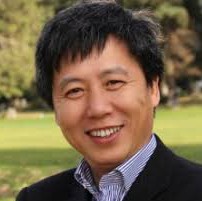
yong zhao


 On Saturday, April 25, 2015, University of Oregon education professor Yong Zhao gave a keynote address at the second annual conference of the Network for Public Education (NPE). Zhao’s entire 55-minute speech can be found here.

It is a fantastic speech– truthful, yet also incredibly funny, and encouraging.
I was so impressed with Zhao’s words that I decided to transcribe his entire keynote. I believe his sppech is valuable enough to be preserved as a text. I also realize that many may not be able to srt aside 55 minutes to watch a video might be more inclined to read his words in more manageable installments.
I will post the speech in a series of five parts, each approximately 11 minutes long and consisting of under 2,000 words. In my last post, I will include a link to Zhao’s transcribed keynote in its entirety.
And now, for Part I:
Good afternoon. It’s great… you know, these kinds of gatherings, most of us, you did this in China, in Asian countries, would end up in jail. [Audience laughter.] Seriously, seriously. We are deliberately challenging the government. This is very serious, so, guys, better watch out with the airport tomorrow, you better consider. But, as I was telling Diane, I came to this country, this is the hope of this country: the individuals who think they can do something about something they don’t like, their government. We need a lot more of this; it’s happening [but] not happening fast enough.
I was very surprised over the last many years. As an immigrant I had to do this myself. I thought you guys were taking care of this country for me[laughter] [so] I had to do it myself. I’ve gotta do something.
[Points to projector screen] This is, uh, you can download. Those are the slides I use. This website, if you feel like to Tweet or follow me on Twitter, that’s fine. I don’t really tweet anything controversial, nothing [laughter] but just follow me anyway. It’s good, it’s always good to have. And, if you are on something, you can email me.
This gathering this morning, I was hearing some of the comments about what we do, what kind of discourse we should have. But before that, I want [to] tell you that I have a personal problem with No Child Left Behind. I still think George Bush owes me money. [laughter] It’s a real story. It’s real. I have two children, and this is my daughter (shows slide of a girl blocking photo with her hand; no face visible) [laughter] And right now, she’s applying for college now. I have another child now who lives in Chicago. My son, he just, uh, this morning I heard someone, undergraduate from the University of Chicago. My son just graduated from Chicago, from University of Chicago and now is working in Chicago.
The story, I said Bush owed me money, is this: My son had been [in] public school in Michigan for a long time and was perfectly happy, and one morning, about eighth or ninth grade, I forgot, says, we went to the quintessential American restaurant, Cracker Barrel, [laughter] [to] have a great American breakfast, and we were talking about education, and he said, “Dad, I really know how to get the best scores.” Anyone from Michigan here? MEAP. We used to have the MEAP test. So, saying that, “O man, I know how to get [a] perfect score on the MEAP.” I said, “How do you do that?” He said, “Well, you just write one statement and the three supporting statements.” I said, “Man, they’re ruining your education.” I said, “We’ve got [to] get out of here.”[laughter] That is why, so I had to send him, honestly, to a private school[3:00] and that’s really why Bush owes me three years of tuition. [laughter]That’s how I [got] started with this whole thing.
And then, you know, right now in the US, what are we trying to do in education reform? The most popular phrase today in the US is called “readiness.”[laughter] Right? Readiness, readiness everything. Ready for college, ready for career, ready for kindergarten, I mean, really, every “ready” for something else, just not life. [laughter] Ready to die. It’s like a “ready” for death, you know. We have all these standards, there’s “readiness.” So, it’s been ready, a lot of us, so, what is the purpose of education? I think that’s what we want to talk about. What is the purpose of, is the purpose of education to always be ready for something you will never be? So, now, you know, everybody likes the Common Core. I’ve been going around debating with people. They love the Common Core [for] all kinds of reasons: Because it gets you ready for life and a career, college, right? So, I have a son who was ready for college. He went to college; he got into Chicago and was very good, competitive. But he was so ready that he got in, but he was not ready enough that he didn’t get any money. I had to pay for everything. [laughter] That’s, that’s another thing about life, life is really funny. As a professor, sure you know in education, we are, this is the worst part of living in America, when you are in the middle, right? We make enough money not to qualify for any assistance, right? And, but we don’t make enough not to care about the money. So, we, he graduated two years ago, and, by the way, in the middle, he was going to become, you know, like any Chinese kid would try to be, you know. You want to study economics. [laughter] So, that’s, uh, the kind of predetermined pathway for China so you can be ready for a banking job. [5:00] And so you can be ready to make some money.
I didn’t object to that. It’s fine. Go for it. But then he went to Chicago. He’s somewhere nearby. I hope he’s not here, but I will share his story, anyway.[laughter]  He said after two years, he said, “Dad, I’m not going to study economics anymore.” I said, “Why?” He said, “Well, there are too many darn Chinese there, and, uh…” [laughter] “and, uh, they all are better at, you know, than me in math.” I said, “Okay, fine. Okay.” And, I said, “What are you gonna do?” He said, “I’m going to start something else.” I said, “What are you going to study?” He said, “I’m going to study, uh, uh, um, art.”
You know, that’s a very alien concept for a Chinese, but, [laughter] and so, I said, “What kind of art?” He said, “I’m going to do art history.” I said, “Why 
Yong Zhao’s NPE Speech, Transcribed– Part I | deutsch29:


Schneider is a southern Louisiana native, career teacher, trained researcher, and author of the ed reform whistle blower, A Chronicle of Echoes: Who’s Who In the Implosion of American Public Education.

She also has her second book available on pre-order, Common Core Dilemma: Who Owns Our Schools?, due for publication June 12, 2015.
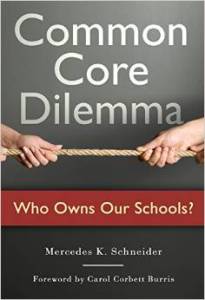
CC book cover

Activist Ignites Heated Debate Over Whether Charter Schools Can Save Baltimore - Yahoo News

Activist Ignites Heated Debate Over Whether Charter Schools Can Save Baltimore - Yahoo News:


Activist Ignites Heated Debate Over Whether Charter Schools Can Save Baltimore


 As the nation watched the unrest in Baltimore over the mysterious, police-involved death of a young black man from a poor inner-city neighborhood, education activist Jeanne Allen saw an undeniable symptom of a failing public school system in desperate need of reform. 

So she expressed that notion with a simple message on Twitter: 
"Baltimore riots and community dysfunction remind us that we must fix school and make #edreform a reality 4 all. #Charterschools save cities," tweeted Allen. 
She didn’t realize it at the time, but Allen, an outspoken advocate who is the senior fellow and president emeritus of the Center For Education Reform, had just thrown a 140-character brick through a virtual public-school window. Her message triggered the equivalent of a Twitter riot; Allen took so much heat from public-school advocates and charter-school haters—ranging from stinging insults to death threats—that she bailed out of the debate she had inadvertently started. 
“I was so dismayed and so disappointed and, frankly, sad about the level of discourse to which people will go when they disagree,” Allen said in a phone interview. “The vast majority of responses are this notion that education reform is white, rich, and antagonistic towards public education, and any of us who support it are monsters.” 
“It goes against the grain about everything we know of who is succeeding, and why.” 
The images of Baltimore's high school-age students clashing with police placed the issue of inner-city school reform on the national agenda. It spurred an intense online debate between charter school proponents and advocates for traditionally-run schools. As Baltimore burned, the debate grew more intense, and Allen found herself on the hot seat. 
Both sides believe that decades of poverty, inequality and frustration embedded in some of the city’s poorest neighborhoods fueled the riots, and that education can lift the next generation out of that cycle. But that’s the only common ground between the two. 
Republican presidential candidate Jeb Bush, Florida’s former governor and a staunch education reformer, said Wednesday that charter schools can give at-risk children a chance at a better life. Fox News commentator Charles Krauthammer declared Baltimore schools the “worst on earth” and said parents deserve alternatives. Robby Soave, an editor at Reason.com, agreed: “When families have the freedom to send their kids to better schools—and when those kids have the freedom to make mistakes without going to prison—we’ll have less rioting.”
But Perdido Street, a pro-traditional education blog, mocked Allen’s tweet, and pointed out that Bush’s record as an education reformer has a few blemishes. 
Although nearly all the pro-reform commentators insist Baltimore schools are failing, statistics from the district’s web site and the Board of Education suggest otherwise. According to the school district's website, 83 percent of pre-kindergarten students emerged ready to learn, state standardized assessment reading test scores jumped nearly 20 percent from 2004 to 2013, and math scores climbed more than 25 percent during that same time frame. 
Meanwhile, the U.S. Department of Education acknowledged Baltimore received an award as top urban school district by the Council of Urban Boards of Education. 
Despite the pushback on Twitter, Allen refuses to back down. She insists that lack of access to a quality education is the lock for underserved communities like the riot-torn ones in Baltimore—and taxpayer-funded charter schools, created with buy-in from parents and a union-free, streamlined system of accountability, are the keys. 
As an educator in Washington, D.C. in the early 1980s, Allen recalled, the city was ravaged by crime, balkanized by have- and have-not neighborhoods and “I could not go in any of the four directions without taking my life in my hands.” Since then, she says, there has been “an epic revolution” in a revitalized, more integrated Washington, driven largely by an education overhaul with school choice at its center.
“Now you have white parents fighting over charter schools,” Allen says. In the District, she adds, “almost 50 percent of students [have] some school choice,” a strategy that has had “an enormous ripple effect” and is being replicated in places like New Orleans, Indianapolis and Boston. 
Things aren’t perfect, Allen acknowledges: charter schools in Washington and Chicago have had problems, statistics show charter schools expel students at a higher rate than traditional schools, and a pending lawsuit in Delaware alleges charter schools foment racial segregation. And a joint report by two organizations that support traditional schools found waste, fraud and abuse in systems nationwide. 
Allen, however, says you’re bound to find bad apples if the barrel is big enough, and “not everyone is capable of or should be involved” in education. Those thoughts, she added, are difficult to express in the intense, compact, fast-moving space of a Twitter debate.
“It’s hard to talk about education coming out of a tweet,” she said, “but my premise is and remains that as long as schools are failing our kids and our people, it's impossible for them toActivist Ignites Heated Debate Over Whether Charter Schools Can Save Baltimore - Yahoo News:

They turned college into McDonald’s: Adjunct professors, fast-food wages and how colleges screw more than just students - Salon.com

They turned college into McDonald’s: Adjunct professors, fast-food wages and how colleges screw more than just students - Salon.com:

They turned college into McDonald’s: Adjunct professors, fast-food wages and how colleges screw more than just students

Adjunct professors are joining the fight for a living wage -- and show us all education isn't a guarantee of a job


They turned college into McDonald's: Adjunct professors, fast-food wages and how colleges screw more than just students


 The fight to raise the minimum wage to $15 has already had an enormous impact on American politics. It hasn’t been reflected in national legislation, of course. With Congress in the hands of flat-earthers, the federal minimum wage is still stuck at less than half that—$7.25, the level it reached in 2009, as a result of legislation passed in 2007.

But what first registered as a surprising anomaly—one-day strike in New York City involving just over 100 workers on Black Friday, Nov. 29, 2012—has come to serve as a focal point for articulating demands for a dignified living wage, not just for fast-food workers, but for everyone who works for a living. What began as a movement of those holding “McJobs” is now brimming over with new participants making the point that virtually all jobs nowadays are, or at least can be, McJobs—even the latest to join in with demonstrations held on April 15: adjunct college professors.
The build-up to this point has been remarkably swift, even as the rest of the political system seems paralyzed. After a brief lull to lay further groundwork, NYC fast-food workers held a second strike on April 4, 2013, the anniversary of Martin Luther King’s assassination, while supporting the Memphis Sanitation Workers’ Strike. Covering the strike for Salon, Josh Eidelson made a number of key points. First, that far from being peripheral, fast food jobs represent a de facto employment paradigm for today’s America:
Fast food is becoming an ever-larger and more representative sector of the U.S. economy. “We should think of these jobs as the norm,” said Columbia University political scientist Dorian Warren, “because even when you look at the high-skilled, high-paying jobs, they’re even adopting the low-wage model” of management. That means erratic schedules, paltry benefits, and – so far – almost no unions. “These are the quintessential example of the kinds of jobs that we have now,” said Warren, “and of the kind of job that we can expect in the future for the next few decades.”
Eidelson also discussed how the changing nature of work required changing labor strategies as well, and gave a hint of what was to come in the way of further actions:
A parallel effort is underway in Chicago, where workers are also demanding $15 an hour and unionization without intimidation, but so far haven’t gone on strike. While New York’s and Chicago’s are the only ones to go public so far, similar organizing efforts are underway elsewhere as well.
Finally, he quoted a prescient message of support from then-mayoral candidate Bill de Blasio,“Fast Food Forward is fighting for solutions for working people right here and now, and it deserves the support of all New Yorkers.”
From there, movement spread rapidly through a series of widening one-day strikes in 2013—Chicago on April 23, then St. Louis on May 8, followed swiftly by Detroit on May 10, then Milwaukee on May 15, and Seattle on May 30, culminating in a seven-city strike on July 29,  after which organizers gave Salon a heads-up on the massive expansion to come, which was quickly fulfilled by a 58-city strike on Aug. 29, and has continued spreading ever since. It’s certainly no accident that a growing list of cities have either approved or are considering local minimum wage laws at or even beyond the $15 level. The idea of what a minimum wage can and should be has been radically transformed in a remarkably short period of time.
There are, of course, counter-arguments. But in a way, that’s the point: The “Fight for 15” has set the agenda, put forth the argument for others to respond to. One such response has been to renew old attacks on the very idea of a minimum wage. The minimum wage is for losers, the argument goes. It’s intended for teenagers just getting their start in the job market, but anyone who’s been working a year or two and is still making minimum wage is only getting what they deserve.
There are plenty of counter-arguments to this line of thinking, and anyone seriously tempted by it should definitely read “No Shame in My Game: The Working Poor in the Inner City,” Harvard anthropologist Katherine Newman’s intensive study of young fast-food workers (my review here). But perhaps the simplest, most powerful counter-argument is the mere presence of a new contingent in the most recent wave of “Fight for 15” strikes—adjunct college professors. If you really think people are stuck in low-wage jobs because something is wrong with them—not the economic system—then how do you explain this latest addition to the fight for a humane living wage?
These aren’t just college-educated workers we’re talking about, they’re collegeprofessors, yet many of them live just as precariously as fast-food workers do. An online survey by House Democrats last year (more on this below) found that 55 percent of responding adjuncts had PhDs, another 7 percent were PhD candidates and 35% had masters degrees. Yet, many are on some form of public assistance—earned income tax credits, food stamps, etc. Some are even homeless. “In short,” the report stated, “adjuncts and other contingent faculty likely make up the most highly educated and experienced workers on food stamps and other public assistance in the country.”
SEIU, the same union that’s been the major backer of the fast-food strikes, has also been involved in faculty organizing as well. It has launched the Faculty Forward campaign with a three-part platform:
  • Demand $15,000 per course in total compensation;
  • Target bad actors in for-profit higher education;
  • Make quality higher education affordable and accessible for all students.
The call for $15,000 per course may seem a long way from $15/hour—and it is. But adjunct professors generally carry massive amounts of student debt, and have invested They turned college into McDonald’s: Adjunct professors, fast-food wages and how colleges screw more than just students - Salon.com:

Charter schools’ five-mile enrollment under scrutiny

Charter schools’ five-mile enrollment under scrutiny:

Charter schools’ five-mile enrollment under scrutiny


 Charter schools shouldn’t be able to give enrollment preference to students who live within five miles of their campus because doing so is leading to re-segregation, some lawmakers and advocates argue.

If a charter school has more applicants than seats, Delaware law currently allows charters to give preference to students who live within five miles of their building, as long as they include that preference in their charter.
The only charter that currently uses that preference is Newark Charter School, which has almost 2,000 students in grades K-10 and is expanding into a full K-12 school. Eastside Charter and the Delaware Met have approval to do so in their charter, but have not yet exercised it because they have not had more applicants than available seats.
Rep. John Kowalko, D-Newark, says Newark Charter’s five-mile radius preference leads to de facto segregation because it is situated in a mostly white, more affluent area of town. Demand for seats in the school is so high — its test scores among the best in the state — that it routinely has lengthy wait-lists which, Kowalko argues, makes it all but impossible for a black, low-income student from Wilmington to get in.
“Newark Charter’s a good school and it’s not going anywhere,” Kowalko said. “But we have to assure, because it is a school funded with public money, that there is equal access for every student.”
More than 65 percent of Newark Charter’s students are white, while only about 11 percent are black, according to figures from the Department of Education. Only 7.2 percent of its students are low-income, and only 5.6 percent are special education.
Contrast that with the whole state of Delaware, in which only 46 percent of students are white and 31 percent are black, or the Christina School District, in which the school is housed, which is only 31 percent white and 39 percent black.
Statewide, 35 percent of kids are low-income, five times the percentage of Newark Charter. In Christina, 41 percent of students are low-income, almost six times as many.
Kowalko has proposed House Bill 83, which would eliminate charters’ ability to give preference to nearby families. He has long criticized the five-mile radius provision, and is a frequent charter school critic.
Greg Meece, the director of Newark Charter, says he’s “confused” as to why lawmakers would want to prevent charters from having a geographical preference when traditional schools have feeder patterns that are often smaller than five miles.
“The legislature listed this preference in order to keep communities together in order to encourage parent involvement in their schools and to mirror what is done in traditional schools,” Meece said.
Meece argues it doesn’t make sense to compare Newark Charter’s student population to Christina’s because the two are completely different. Christina’s schools include many urban Wilmington students in addition to the Newark suburbs in which the charter is located.
“I think you look at the community our school was created to serve, we reflect that community very well,” Meece said.
The debate over the five-mile radius preference fits into a larger discussion of whether charters are “re-segregating” Delaware schools by screening out low-income and minority students.
In December, the Delaware branch of the American Civil Liberties Union filed a complaint with the U.S. Department of Education in which they said more than three-quarters of all charters were “racially identifiable” as either mostly white or mostly minority schools.
“My thinking is that, although I don't think the five-mile radius is the most significant problem with the charter school law that is causing resegregation, I still think this is a good idea,” said Kathleen MacRae, executive director of the ACLU Delaware.
MacRae said other enrollment preferences, like admissions tests or GPA requirements, are also causing re-segregation and won’t be changed by Kowalko’s bill.
Contact Matthew Albright at malbright@delawareonline.com, 324-2428 or on Twitter @TNJ_malbright.Charter schools’ five-mile enrollment under scrutiny:

Vouchers on the Move: Return to School Segregation?

Vouchers on the Move: Return to School Segregation?:

Vouchers on the Move: Return to School Segregation?


 Twenty-five years ago, Wisconsin Governor Tommy Thompson signed the nation's first school voucher bill into law. Pitched as social mobility tickets for minority students, Wisconsin vouchers allow children to attend private, and sometimes religious, schools on the taxpayers' dime.

But as shown by the murky history of the voucher movement, and by the way voucher programs have developed in Wisconsin and other states, racial equity had nothing to do with it. It was a scheme cooked up out of an ideological disdain for public schools and teachers' unions, and first used to actually preserve school segregation in the South.
Today, voucher bills are on the move in multiple states and on Capitol Hill. GOP presidential hopefuls, who want to boost their free market bona fides for a 2016 run, have been outbidding themselves in touting vouchers as educational panaceas that will not only help minority children close education gaps, but cut corporate and property taxes in the process.
A Nationwide Voucher Program?
On April 15, Rand Paul (R-KY) introduced an amendment to an omnibus education bill that would have spelled the end to federal education aid as we know it.
Under the amendment to the Senate bill, which is a revamp of the No Child Left Behind Act, federal Title I dollars, intended to support public schools with a high proportion of low-income students, would instead follow individual students even if they choose to attend private schools.
This would have paved the way for a multi-billion-dollar nationwide voucher system, siphoning money from public school districts to private and possibly religious schools that—unlike their public counterpart—have no obligation to serve minority, at-risk or special-needs students. These schools are also free to ditch the science curriculum in favor of climate-denial and creationism.
A few months earlier, Congressman Luke Messer (R-IN) bused a bunch of kids to the Capitol to celebrate "National School Choice Week." Among the speakers were Sen.Ted Cruz (R-TX) and House Speaker John Boehner (R-OH). Their enthusiasm, however, was somewhat dampened by the kids who—for all Messer's emceeing—seemed ill at ease with being displayed as placard-wearing pawns in a political game.
Precisely what kind of school choice Messer had in mind became clear when he introduced a voucher amendment to the House version of the bill. Both Messer and Paul chose to withdraw their respective amendments, but introducing them in the first place is a way of flexing their muscles. Vouchers are gaining traction and Messer, who chairs the Congressional School Choice Caucus, has vowed not to rest until "every kid in America has that kind of opportunity."
GOP Presidential Hopefuls Hail Vouchers as Miracle Cures
Rand Paul's and Luke Messer's attempts to direct federal taxpayer money to private schools comes in the wake of a massive push for school vouchers. In 2013, SenatorMarco Rubio (R-FL) introduced an "Educational Opportunities Act" which would have created a voucher-like system allowing children from low- or middle-income families to attend private schools funded through tax-deductible corporate and private donations. The businesses get the write-off and taxpayers lose out on public revenue.
New Jersey Governor Chris Christie has implemented a slew of school “reforms,” including an expansion of the state’s charter school program and a new law making it easier to fire tenured teachers. But he now has his eyes set on vouchers, or what he calls “opportunity scholarships,” as well.
Others have upped the ante. Louisiana’s Republican Governor Bobby Jindal created the largest voucher program in the nation in 2012 with the hope of enrolling 380,000 K-12 students in private and religious schools. It was later struck down as unconstitutional by the state supreme court. “[S]tate funds … cannot be diverted to nonpublic schools … according to the clear, specific and unambiguous language of the constitution,” the court wrote in its ruling. The North Carolina and Alabamavoucher programs were ruled unconstitutional on similar grounds by courts last year.
Not one to be outdone by his fellow presidential contenders, Republican Governor Scott Walker of Wisconsin recently announced he would lift the 1,000-student cap on the statewide voucher system. And even though the Wisconsin Constitution has a similar “public purpose doctrine,” which does not allow taxpayer money to fund a “private purpose,” the original Milwaukee voucher program has already survived multiple court challenges. Chances are that Walker (if given the go-ahead by the GOP-controlled legislature) will prevail in creating the largest voucher program in the nation.
A Trojan Horse in Wisconsin and Elsewhere
As ground zero for school vouchers, and the first state to enroll religious schools in the program, Wisconsin is worthy of closer scrutiny. Walker’s sweeping expansion was unveiled in his 2015 budget address. Denounced by both local and national media as “a serious threat to local education” (The Post Crescent) and part of “a clumsy attack on education” (The New York Times) the proposal was "applauded" by the American Federation for Children, the lobby powerhouse linked to the billionaire DeVos family and their ideological crusade to destroy the public education system as we know it. In 2011, AFC greased the skids for Walker with a $1.1 million issue-ad buy while he faced recall for having all but destroyed collective bargaining rights for teachers and public sector employees.
“Every child,” Walker said in his address, “deserves to succeed.” It’s an empty sound bite, but it’s also a surprisingly revealing one. Wisconsin school vouchers were never meant for everyone; this was part of their appeal. When introduced in Milwaukee in 1990, they were pitched as social mobility tickets, and they were restricted to students from families earning less than 175 percent of the federal poverty level.
The program was championed by some prominent African-American community leaders and lawmakers, such as Dr. Howard Fuller and Annette “Polly” Williams, a Democrat from Milwaukee who went on to travel the country rallying support for “school choice.”
But what happened once the system was in place soon drew the ire of its early supporters. Under Walker, the income requirement for Milwaukee was upped to 300 percent of the poverty level. A married couple with two children can currently earn $78,637—far more than the median U.S. family income of $52,250—and still send them off to private schools at the public's expense. Polly Williams put it bluntly in a2013 interview with the Milwaukee Journal Sentinel: "They have hijacked the program."
In fact, what happened in Milwaukee is far from unique. Other states have introduced vouchers as "civil rights" measures only to expand the programs to higher-income white families. The voucher-like corporate tax credit program in Georgia was originally billed as a way of helping African-American and Latino families, but most scholarships have been awarded “white students from upper income families,” the Southern Education Foundation wrote in a scathing report.
In 2013, Governor Mike Pence of Indiana raised the income requirements of the voucher program in the Hoosier State, and last year, Florida's Republican governor Rick Scott lifted the income bar for the state voucher program, allowing a family of four making up to $62,010 a year to participate—$20,000 higher than the previous limit.
While the statewide voucher program in Wisconsin is so far limited to students from families making less that 175 percent of the federal poverty level, just like the Milwaukee program in its infancy, school advocates are worried that we will once again see a gradual "easing" of the requirements.
Subsidizing Segregation?
What emerges is a pattern of limited voucher programs signed into law under the promise of helping minority children, but later expanded to subsidize more affluent white families. What are the consequences?
As universal voucher programs are still some way off, there is no empirical data. But a 2006 study published by the University of Connecticut takes a novel approach in answering the question. By analyzing voter patterns when vouchers were on the ballot in California, the authors conclude that “among white households with children, support for voucher increases with the proportion of minority students in the local public schools. This is not true of non-white households."
In other words, as more middle class families are free to enroll their kids, self-segregation with white children drawing taxpayer money to attend racially homogenous private schools could take off. The possibility deeply concerns education experts.
“The question is: are we comfortable using our tax dollars to subsidize those choices?" Julie Mead, professor of Educational Leadership and Policy Analysis at UW-Madison, told CMD.
The Racial History of School Vouchers
The history of the voucher movement is seldom told, least of all by its advocates. But it is a history well worth telling, and it might give some idea of where we are headed.
Concern for minorities was never part of the original design. It was a libertarian scheme cooked up out of an ideological hostility toward the idea of public schools. And more tellingly, vouchers were first used to flout desegregation laws.
Early supporters would time and again find themselves faced with a dilemma: should they support public desegregated schools or private ones—including those discriminating on the basis of race? As it turned out, ideology trumped any concern for the children.
Until the mid-1980s, the school voucher movement remained a fringe movement of hardline libertarians and New Right ideologues—including the American Legislative Exchange Council (ALEC)—as well as religious school leaders. It also had some disturbing bedfellows thrown in for good measure, such as white supremacists keen on using vouchers to foster “white flight.”
In fact, school vouchers first emerged as a policy prescription in the mid-1950s, just as the U.S. Supreme Court was ordering school desegregation in the Brown v. Board of Education series of decisions. While University of Chicago economist Milton Friedman, who first floated the idea in a 1955 essay, wanted to see public schools turned into competing corporations on the free market, vouchers were de facto used in the South as a way to preserve segregation.
In 1959, for example, Virginia Governor Lindsay Almond introduced tax-funded tuition grants to white parents who wanted to send their children off to private schools that were not subject to the desegregation laws.
When Friedman learned of this, he found himself between the rock of public school segregation by law and the hard place of state intervention. He embraced racially segregated schools as a benefit of the free market while “So long as the schools are publicly operated, the only choice is between forced nonsegregation and forced Vouchers on the Move: Return to School Segregation?:

"Opting Out" (Cuomo's Song) sort of by Billy Joel


"Opting Out" (Cuomo's Song) sort of by Billy Joel 
(please consider sharing)


With deep apologies to Billy Joel (although knowing his stances on education, I have a feeling he'd give me his blessing for this...)

New booklets celebrate May, Labor History Month

Labor's Edge Blog : New booklets celebrate May, Labor History Month:

New booklets celebrate May, Labor History Month


May is Labor History Month.  Signed into law as AB 2269 (Swanson) in 2012 by Governor Brown, its purpose is to encourage schools “to commemorate this month with appropriate educational exercises that make pupils aware of the role the labor movement has played in shaping California and the United States.”
What role?  Most of the middle class arrived in that economic neighborhood when working people got together, formed unions, and wrested a fair share of what they produced from their employers.  In other words, it was by acting like a working class that most of our families became middle class during the last century.
One example is the New Deal, created by a president conscious of the enormous upsurge in unionization and worker activism in the 1930s, consisting of laws such as the National Labor Relations Act, Social Security Act, Unemployment Insurance Act, and Fair Labor Standards Act.  While most people think of these as Roosevelt’s legacy, he didn’t do this alone.  It took a massive surge of unionization, with workers engaged in strikes, demonstrations, factory seizures, and political action, pushing up from below, before those in power heard their message and created the New Deal.
So you might think these historic advances receive the attention they deserve in history books and social studies classes in our schools.  But of course they don’t.  The title of a 2010 study by scholars working with the Albert Shanker Institute, “American Labor in U.S. History Textbooks:  How Labor’s story is distorted in high school history textbooks,” describes part of the problem.  The other part is simply exclusion of unions from the story of American society, in the corporate controlled textbook publishing industry and mass commercial media alike.   
With union density sinking below 7 per cent in the private sector, it shouldn’t be too far a stretch to see the erosion of actual union achievements as related to their erasure from the history books and public conversation.  Economic inequality is growing:  the highest share of national income since 1928—23%— is in the hands of the richest 1%, at the expense of the rest of us. The Koch brothers, the Waltons, Eli Broad, and their ilk, pick up what amounts (for them) to their pocket change, fallen between the cushions of their couches, and buy elections and politicians across the country to do their bidding.  They also spend big bucks to provide curricula with their libertarian, anti-union point of view to schools.  These politicians are bent on destroying unions and privatizing every corner of the public sector.
All the more important to remember and celebrate the historic victories of the labor movement whatever ways we can. The California Labor Federation and California Federation of Teachers were co-sponsors of AB 2269, and are working with friends in the legislature and the labor movement to disseminate information and instructional materials, and carry out the spirit of the law.
For a generation of young workers facing employment in big box stores, fast food restaurants, and temp agencies, outside the protections of unions, these lessons are essential if they are to know their rights and know that it’s possible to defend the historic gains of working people.  Imagine the difference in outcome of struggles in states like Wisconsin and Michigan over worker rights if young people had had a solid education about the importance of unions in school before growing up and becoming workers and voters.  Labor History Month offers an opportunity to give all students something precious:  knowledge of where their rights came from, and how to preserve and extend them today. Labor's Edge Blog : New booklets celebrate May, Labor History Month:

Friday, May 1, 2015

#ThankATeacher | WagTheDog

#ThankATeacher | WagTheDog:

#ThankATeacher


matt
“…I had incredible teachers. And as I look at my life today, the things I value most about myself — my imagination, my love of acting, my passion for writing, my love of learning, my curiosity — all of these things came from the way that I was parented and taught.
And none of these qualities that I’ve just mentioned — none of these qualities that I prize so deeply, that have brought me so much joy, that have made me so successful  professionally — none of these qualities that make me who I am … can be tested.
I said before that I had incredible teachers. And that’s true. But it’s more than that. My teachers were EMPOWERED to teach me. Their time was not taken up with a bunch of silly test prep — a bunch of drill and kill nonsense that any serious person knows doesn’t promote real learning. No, my teachers were free to approach me and every other kid in that classroom like an individual puzzle. They took so much care in figuring out who we were and how to best make the lessons resonate with each of us. They were empowered to unlock our potential. In other words, they were allowed to be teachers.
Now don’t get me wrong. I did have a brush with standardized tests at one point. I remember because my mom went to the principal’s office and said, ‘My kid ain’t taking that.’ Actually, I have it in quotes cause she said, ‘It’s stupid, it won’t tell you anything and it will just make him nervous.’ Yes, it was the late 70’s…I guess we could get away with it back then.
Well, I shudder to think that these tests are being used today to control where funding goes.
I don’t know where I would be today if my teachers’ job security was based on how I performed on some standardized test. If their very survival as teachers was based not on whether I actually fell in love with the process of learning but rather if I could fill in the right bubble on a test. If they had to spend most of their time desperately drilling us and less time encouraging creativity and original ideas; less time knowing who we were, seeing our strengths and helping us realize our talents.
I honestly don’t know where I would be today if that was the type of education I had. I sure as hell wouldn’t be here. I do know that.
This has been a horrible decade for teachers. I can’t imagine how demoralized you guys must feel. But I came here today to deliver an important message to you: As I get older, I appreciate more and more the teachers that I had growing up. And I’m not alone. There are millions of people just like me.
So, the next time you’re feeling down, or exhausted, or unappreciated, or at the end of your rope; the next time you turn on the TV and see yourself being called #ThankATeacher | WagTheDog:
10330272_763263193705512_8667411638269069194_n