Latest News and Comment from Education

Thursday, January 15, 2015

State Schools Chief Tom Torlakson Reports Significant Drops in Suspensions and Expulsions for Second Year in a Row

Suspension and Expulsion Rates for '13-14 - Year 2015 (CA Dept of Education):


State Schools Chief Tom Torlakson Reports Significant Drops in Suspensions and Expulsions for Second Year in a Row


SACRAMENTO—State Superintendent of Public Instruction Tom Torlakson today announced a dramatic 20 percent drop in the number of students expelled in 2013-14 and a 15.2 decline in the number of students suspended. This marks the second year in a row of declines in both areas.
The new figures come at a time when the California Department of Education (CDE) is working with districts around the state to implement innovative programs that reduce suspensions and expulsions, including some known as "restorative justice."
"These numbers show that the work of the department, districts, teachers, parents, and students around the state is paying off by keeping more students in school and learning," said Torlakson. "You can have the best facilities, the best teachers, and the best curriculum in the world, but none of that matters if students are not in school. That's why we have put so much effort into increasing school attendance and reducing expulsions and suspensions and will continue to do so."
Statewide, 49,987 fewer students were suspended in 2013-14 compared to the year before, down 15.2 percent. The suspension rate is 4.4 percent, down 0.7 of a percentage point from the year before. Similarly, 1,655 fewer students were expelled in 2013-14 compared to the year before, down 20 percent. The expulsion rate remains at 0.1 percent because the overall numbers are relatively small (Table 1).     
To reduce the number of expulsions and suspensions, the CDE has taken several steps, including hosting a forum and workshops, and posting Behavioral Intervention Strategies and Supports. In addition, the CDE has worked with several education groups to develop restorative justice programs that promote respect, taking responsibility, and strengthening relationships.
Before such programs were implemented, the greatest percentage of students suspended or expelled was for "willful defiance." For the second year in a row, the highest percentage declines came under this category. Last year, there were 261 fewer expulsions for defiance-related offenses, down 47.7 percent from the year before. There were another 76,296 fewer suspensions for defiance-related offenses, down 28.9 percent from the year before (Table 1).
Willful defiance became identified with the problem of high rates of expulsions and suspensions after the CDE reported a high number of minority students were suspended for this cause. Those figures helped spur the passage of Assembly Bill 420, supported by the CDE and sponsored by former Assembly member Roger Dickinson. The bill, signed into law last year, limits suspensions and expulsions for disruptive behavior in certain grades.
Suspensions for more serious federal offenses were down by thousands among every student subgroup. However, a disparity remains among African-American students' rates of suspension, which were relatively unchanged from the year before. African-American students are 6.2 percent of total enrollment, but make up 16.4 percent of students suspended, up 0.2 of a percentage point from the year before. White students are 25 percent of total enrollment, but make up 20.6 percent of students suspended, down 0.3 of a percentage point from the year before. Hispanic students are 53.3 percent of total enrollment, but make up 54.7 percent of suspensions, up 0.1 of a percentage point from the year before (Tables 2, 3).
This is the second year of declines. Between 2011-12 and 2012-13, the number of expulsions dropped 13.5 percent, while the number of suspensions decreased 10.2 percent (Table 4).
Data collected through the California Longitudinal Pupil Achievement Data System (CALPADS) enabled the CDE to report detailed data for the third year in a row. Prior to the collection of these data in CALPADS, they were collected differently as aggregate counts, so the 2013-14 data may only be compared to the two prior years and cannot be compared accurately to prior years' suspension and expulsion data. The data presented here were for "unduplicated" counts of students suspended or expelled. This means although a student may have been suspended or expelled more than once, each student was only counted once.
The suspension and expulsion data are available on the CDE's DataQuest.  Downloadable data files are available at the CDE'sExpulsion and Suspension Data Web page. Truancy data are collected through the California Basic Educational Data System Online Reporting Application and are still being tabulated.
# # # #
Attachments
Table 1: 2013-14 Suspension and Expulsion Statewide Summary
Type
2012-13
2013-14
Difference
% Difference
Students Suspended
329,370
279,383
-49,987
-15.2%
Students Expelled
8,266
6,611
-1,655
-20.0%
Defiance Expulsions
547
286
-261
-47.7%
Defiance Suspensions
264,234
187,938
-76,296
-28.9%
Table 2: Statewide Suspension Counts by Ethnicity
Race/Ethnicity
2012-13
2013-14
Difference
% Change
Hispanic or Latino of Any Race
179,983
152,726
-27,257
-15.1%
American Indian or Alaska Native, Not Hispanic
4,089
3,427
-662
-16.2%
Asian, Not Hispanic
8,056
6,644
-1,412
-17.5%
Pacific Islander, Not Hispanic
2,236
1,764
-472
-21.1%
Filipino, Not Hispanic
3,286
2,685
-601
-18.3%
African American, Not Hispanic
53,211
45,710
-7,501
-14.1%
White, Not Hispanic
68,956
57,507
-11,449
-16.6%
Two or More Races, Not Hispanic
7,680
7,347
-333
-4.3%
None Reported
1,873
1,573
-300
-16.0%
Total
329,370
279,383
-49,987
-15.2%
Table 3: Percent of Statewide Suspensions and Enrollment by Ethnicity
Race/Ethnicity
2012-13
2013-14
Percentage
Change
Percent Enrollment
Hispanic or Latino of Any Race
54.6%
54.7%
+0.1%
53.3%
American Indian or Alaska Native, Not Hispanic
1.2%
1.2%
0.0%
0.6%
Asian, Not Hispanic
2.4%
2.4%
0.0%
8.7%
Pacific Islander, Not Hispanic
0.7%
0.6%
-0.1%
0.5%
Filipino, Not Hispanic
1.0%
1.0%
0.0%
2.4%
African American, Not Hispanic
16.2%
16.4%
+0.2%
6.2%
White, Not Hispanic
20.9%
20.6%
-0.3%
25.0%
Two or More Races, Not Hispanic
2.3%
2.6%
+0.3%
2.7%
None Reported
0.6%
0.6%
0.0%
0.6%
Total
100.0%
100.0%
0.0%
100.0%
Table 4: Percentage Change of Statewide Suspensions and Enrollment from 2011-12 to 2012-13 and 2012-13 to 2013-14
Type
2011-12
2012-13
% Change '11-12 to '12-13
2013-14
% Change '12-13 to '13-14
Suspensions
366,629
329,370
-10.2%
279,383
-15.2%
Expulsions
9,553
8,266
-13.5%
6,611
-20.0%
# # # #
Tom Torlakson — State Superintendent of Public Instruction
Communications Division, Room 5206, 916-319-0818, Fax 916-319-0100

No Name-Calling Week 2015 + National School Climate Survey

GLSEN | Gay, Lesbian & Straight Education Network:


Thousands of Educators and Students Work to End Name-Calling and Bullying by Participating in GLSEN’s No Name-Calling Week 2015


Educators and students to “Celebrate Kindness” January 19-23

NEW YORK (Jan. 15, 2015) – As part of its ongoing mission to create safe and affirming schools for all students, GLSEN will once again celebrate No Name-Calling WeekJanuary 19-23 with educators and students across the country – and more than 60 partner organizations – by providing tools and inspiration to launch on-going dialogues about ways to eliminate bullying in their communities.

Inspired by The Misfits, a young adult novel about four friends who run for student government on a “no name-calling” platform to counteract the constant teasing in their school,GLSEN’s No Name-Calling Week is an annual week of educational and creative activities aimed at ending name-calling and bullying at all levels of K-12 education.

According to the 2013 edition of GLSEN’s National School Climate Survey, 65 percent of lesbian, gay, bisexual and transgender (LGBT) students report regularly hearing homophobic remarks from other students and more than half heard negative remarks about sexual orientation and gender expression from school staff.
“All too often we hear about the negative consequences of name-calling and bullying in our schools,” said Dr. Eliza Byard, GLSEN’s executive director. “The lessons and activities educators, students and our chapters organize and participate in during No Name-Calling Week can start the crucial, ongoing process of creating safe and affirming school environments for all students.”

Since the initial No Name-Calling Week, created with Simon and Schuster Children’s Publishing in 2004, 13,000 educators have signed on to incorporate the theme of “Celebrate Kindness” into their teaching. GLSEN provides planning guides, lesson plans and ideas for activities to those who register. Participants also receive free streaming ofGroundSpark’s Respect for All Project films.

As part of No Name-Calling Week, GLSEN also organizes a Creative Expression Exhibit where individuals, schools, and groups can share their efforts and inspire others through poems, stories, essays, drawings, collages, sculptures, songs, videos and more.

About GLSEN
GLSEN is the leading national education organization focused on ensuring safe and affirming schools for all students. Established in 1990, GLSEN envisions a world in which every child learns to respect and accept all people, regardless of sexual orientation or gender identity/expression. GLSEN seeks to develop school climates where difference is valued for the positive contribution it makes to creating a more vibrant and diverse community. For information on GLSEN's research, educational resources, public policy advocacy, student organizing programs and educator training initiatives, visit www.glsen.org.

American Labor Movement at a Crossroads | Remarks by AFT President Randi Weingarten

American Labor Movement at a Crossroads | American Federation of Teachers:


American Labor Movement at a Crossroads

Remarks by AFT President Randi Weingarten
The American Labor Movement at a Crossroads: New Thinking, New Organizing, New Strategies
Washington, DC
January 15, 2015

(As prepared for delivery.)

INTRODUCTION

Our history in the United States of fighting back against inequality, of fighting for justice and opportunity and access is rich: the New Deal; the Great Society; equal rights for women; civil rights; LGBT rights. All won with the critical support of the American labor movement.
But today, our movement is at a crossroads: Globalization. Technological changes. Diminished union density. A view that we are an “antiquated brand.” And aggressive, well-funded legislative and judicial challenges by anti-union forces to break our infrastructure: Right-to-work. Paycheck deception. Harris v. QuinnFriedrichs v. California Teachers Association.
I don’t need to tell this room the many challenges our movement faces.
At the same time, workers need a voice now more than ever before: Decades of wage stagnation. Rising economic inequality. A shrinking middle class. Devastating student debt. Dwindling retirement security. Jobs that are constantly shifting. The first generation that’s doing worse than their parents. Working families that are feeling squeezed. One of every two students in public education is poor. And they need a voice. They need us.
So, the question becomes: How can we renew the American labor movement so we can face these challenges, be the voice working people want and the robust engine our economy needs? Are we flexible enough, forward-thinking enough, to meet the demands of a 21st-century economy? Can our infrastructure adapt to meet the needs of new generations?
And make no mistake, this is on us. It’s our responsibility. Sure, we’ve faced assaults from the Wal-Marts and the Koch brothers, the Scott Walkers and the Sam Alitos, the hedge-funders.
They all understand the potential power of American labor, which is why they do what they do. But we can’t simply focus on what they have done. We must focus on what we should do. We can’t lose sight of the power of a movement of labor, of the solidarity of working people.
We’ve retooled before. Forgive me for a moment, but I’m a history teacher. Look at the 1920s, when the ranks of the American labor movement were decimated. Unbridled corporate power was skyrocketing. And totalitarian states that destroyed independent labor movements had developed abroad, with echoes here in the United States. But rather than accepting its fate, the American labor movement developed a vision and a strategy for its renewal that would lead, in two short decades, to its height.
When confronted with a new era of American capitalism dominated by mass industries like auto and steel, American unions developed a model of industrial unionism that revived and reinvigorated the labor movement and made it into a force for decades of social, economic and political reforms.
And today, as we face a new global economy, one centered much less on industry and much more on knowledge, we must again develop a new model of unionism for the 21st century. We are in the technology era, moving at the speed of light. We can no longer operate as if we’re in a factory. The knowledge era has arrived.
As circumstances change, our nation changes, the world changes. We too must change.

OUR VALUES

Now, I’m sure a few of you are thinking, “But if we abandon industrial unionism, we are waving the white flag.” Let me be clear: We will never wave the white flag, because we will never surrender our values. At the same time, we can’t conflate industrial unionism with the labor movement itself. Our strategy and tactics are different from our values.
We believe that the labor movement should provide collective voice to working people, the means to organize.
We believe that to provide collective voice, the labor movement should foster solidarity and democracy in its ranks, promoting member activism. We believe that the labor movement should organize for economic justice, political power and dignity for all working people. We believe that the labor movement should organize for social justice, seeking dignity for all rather than prosperity for a few.
And when you believe in economic and educational justice and opportunity in democracy, in voting rights and social justice, that leads you not simply to the fight, but to the work to ensure that all communities have access to high-quality public services.
These enduring values have guided our efforts within the American Federation of Teachers to develop a new paradigm of unionism. Today, I would like to highlight four areas of our work as a union that we have rethought in significant ways:
  • our engagement with community;
  • our focus on the quality of the public services our members provide;
  • our “‘internal” organizing and member mobilization; and
  • our “external” organizing of the unorganized.

COMMUNITY ENGAGEMENT

As a nation, our pendulum has constantly swung from individualism to collectivism and back again.
Over the past decades, the idea of collective voice and action has been undermined in the name of innovation, disruption and globalization. And that’s led to more working families feeling squeezed—even after they’ve worked hard, even after they’ve played by the rules. Today, I think it’s fair to say that the pendulum is beginning to swing back toward the notion that it does take a village, toward collectivism. We saw this in the Wisconsin Statehouse, with Occupy, with the movement after Ferguson, with the incredible show of solidarity we saw this weekend in France.
These are streaks of activism, moments of engagement. They are not movements.
The impulse for unity—for peace, for democracy, for liberty, for the ladder of economic and educational opportunity—is there. It’s not just what we’ve seen this week in Paris or during the Arab Spring. You see it on Twitter every nanosecond. People want to come together. Our challenge is to work together to build new movements, build a new vision for collective action.
Community must become the new “density” of American unionism. We can no longer focus—as industrial unionism did—exclusively on the workplace or rely on our own density to set market standards, raise wages or improve working conditions.
Today, public education has the greatest union density of any major sector of the American economy, but a singular focus on the four walls of the schoolhouse no longer works for our K-12 members. We need a new approach, one that builds power through partnership with community.
The national AFT and increasing numbers of our locals are building organic relationships with community. These relationships aren’t transactional. It’s a real two-way street. And we’re working to rethink how we engage community in everything we do.
Here are some examples:
  • Later today, Mary Cathryn Ricker, the AFT’s executive vice president, will describe how her local in St. Paul, Minn., made the community into active participants in the negotiations for its collective bargaining agreement.
  • The success of the 2012 strike of the Chicago Teachers Union resulted, in large measure, from the strength of its community engagement.
  • Nationally, the AFT has joined with community and education organizations in the formation of the Alliance to Reclaim Our Schools, which takes on a broad array of issues, from curriculum and high-stakes testing to social services and school discipline.
  • In the wake of the killings of Trayvon Martin, Michael Brown, Eric Garner and Tamir Rice, for example, the AFT and its locals have intensified our focus on issues of racial justice and ensuring the judicial system is just for all.
  • When scores of young women began coming forward to share how their colleges failed to deal with accusations of rampant sexual assault, our union helped to change policies on campus, including my sharing my own story of sexual assault nearly 30 years ago.

A QUALITY AGENDA

The AFT is a public sector union with members in education, healthcare and local government. From austerity to privatization, we find ourselves on the frontlines of these battles daily. Ensuring the quality of the services we provide is key to fending off these attacks.
Quality can no longer be the province of management, as it was within the framework of industrial unionism. Then, unions negotiated wages, working conditions and due process. But the employer alone decided how to organize and deliver goods and services, and with that prerogative, limited the voices and ideas of those closest to the work.
Today, we’re focused on securing the voice of our members in the important decisions of their workplaces, be it a school or a hospital, a daycare center, a government office or a university.
For example, in New York City, the United Federation of Teachers has negotiated PROSE schools, in which school staffs can adopt educational innovations that waive Department of Education and contractual regulations with a supermajority vote of 65 percent. Real teacher voice in their school’s educational direction is a far richer, more robust expression of fundamental union values than any system of industrial-style regulation.
This is what I call solution-driven unionism. Actually, this is what California’s ABC Unified School District—where labor-management collaboration is a reality—called solution-driven unionism.
Solution-driven unionism is rooted in solving problems, not winning arguments. It’s about building the power we need to negotiate as real partners. It takes power to stand up for our values and to find common ground. It takes power to fight back and to fight forward. It’s a “both/and.” That’s how you move forward.
So, even as we’re under attack, as budgets are cut or services are privatized, we are focused on advancing a proactive, high-quality education agenda that will help all students succeed.
We can reclaim the promise of public education if we invest in strong neighborhood public schools that are safe, collaborative and welcoming environments for students, for parents, for educators and for the broader community. Schools where teachers and school staff are well-prepared, well-supported, have manageable class sizes and time to collaborate. Schools with rigorous standards aligned to an engaging curriculum that focuses on teaching and learning, not on testing, and that includes art and music and civics and the sciences—where all kids’ instructional needs are met. Schools with multiple pathways to graduation. Schools with evaluation systems that are not about sorting and firing but are about teaching and learning. And schools with wraparound services to address our children’s social, emotional and health needs.

MEMBER MOBILIZATION

A union is its members and is at its strongest when its members are active and engaged. When our adversaries are trying to divide members from their union, an active membership provides a needed counterweight.
For example, in Michigan, in the face of the new right-to-work law and concerted anti-union campaigns to encourage “free-riding,” the AFT successfully signed up 92 percent of the workers in our collective bargaining units.
But to fully engage our members, we can’t just be service providers, a model that defined industrial unionism. The relationship between a union and its members can’t be transactional or contractual. It should be transformational, a real movement.
We must adopt an organizing model that focuses on activating and empowering members through collective action. And this model can go beyond workplace campaigns and job actions. It’s far harder to marginalize the pre-K teacher on the frontlines, talking about why she needs paid sick leave, or the ER nurse explaining why she needs the best training to provide the best services. And the empowerment that comes along with engagement is catalytic.
Member activism and mobilization is particularly important with the millennial generation. On the whole, millennials are more politically progressive and open to collective action, more insistent that their voice be included in important workplace decisions. Vast income inequality and crippling college debt are their norm, and they want to change it. Even though we can be the change agent, as adjuncts and graduate students on campuses are seeing more and more, millennials need to be actively won over by the labor movement.
To do this, we must engage them in ways that reflect their preferred modes of communication—in small, informal gatherings and, digitally, through social media.
Social media has extraordinary organizing potential, and the labor movement needs to adopt it in our work. Some of you know that I am not just an evangelist for social media and organizing among millennials. While I still believe real, not virtual, contact is best, I do my best to walk that social-media walk, spending an inordinate amount of time, everyone in my life reminds me, communicating with AFT members on Twitter and Facebook. But I think it is important for membership activism and mobilization in the AFT that our national union president be accessible to her rank-and-file members, and my presence in social media helps make that possible.

ORGANIZE THE UNORGANIZED

Every worker deserves a voice. And so, new organizing becomes essential not only for those currently in unions, but also for the welfare of all working people.
At the AFT, new organizing has allowed us to grow our membership during a time when teacher unions and public sector unions have been under serious attack. Later today, the AFT’s chief of staff, Jessica Smith, will discuss that organizing work in some detail.
But let me give a few spoilers—sorry Jessica. It involves a mix of traditional and nontraditional organizing and organizational forms:
  • full union membership, and associate union membership;
  • classic workplace organizing, and organizing of a bargaining unit cast across thousands of home daycare sites;
  • traditional single-employer collective bargaining, and multiemployer collective bargaining;
  • organizing projects that are organized around a single employer, and organizing projects that, in a throwback to the earliest days of teacher unions, include all of the adjuncts in metropolitan Philadelphia in a single organization; and
  • in our charter school work, organizing some of the most bitterly anti-union employers in the nation.
We need to be innovative in our organizing. That is what a lot of this conference is about. Traditional workplace organizing along the lines of an industrial union is not the best fit for the current landscape of American work and the American worker. While we have had some success using different approaches in different contexts, we are still in the early stages of this experimental work, and are just now beginning to draw lessons from it.
So many of the speakers today are doing this work, confronting these new realities so we can help workers and their families fulfill the same goals and aspirations we had when we joined the American labor movement.

CONCLUSION

The renewal of the American labor movement is no small undertaking. We cannot be glib about the challenges before us, or claim quick, easy victories that fool ourselves and others that transformation is not needed. We must figure out how old and new power can come together.
We know from our history, we know from the power we see every day in working people coming together and speaking out, that renewal can take place. We know that the enduring values of the American labor movement provide a strong foundation for a renewed American unionism that will give collective voice to working people in a 21st-century global knowledge economy. We know that the building blocks of a renewed American unionism are to be found within the American labor movement—in the new thinking, the new organizing and the new strategies that have developed within our ranks. We know that the critical process of drawing upon this new thinking, this new organizing and these new strategies to build a renewed unionism has just begun, and that is why we are gathered here today.
Today, I challenge you to share and learn as much as you can, to be skeptical, to think outside the box, to think big. It will take all of us to chart a new course forward. Thank you. 
- See more at: http://www.aft.org/american-labor-movement-crossroads#sthash.NgoFa1i1.dpuf

Wisconsin Legislators talk too much. | BustED Pencils

Wisconsin Legislators talk too much. | BustED Pencils:


Wisconsin Legislators talk too much.

Share
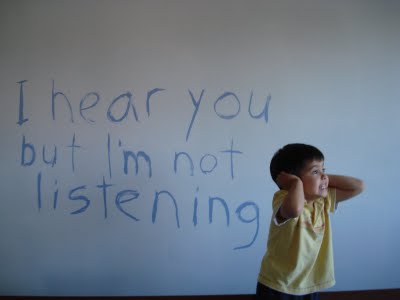
Im_not_listening
Today was the “public” hearing on Wisconsin republicans’ school accountability bill.  I wish somebody would have told me that by “public” they meant that the “public” gets to watch legislators talk to each other and that at some point during the day any zombie left in the room would get a chance to say something.
Like most of the “public” that showed up, I was there early and was supposedly registered to speak at 10:30 am.  However, after 2 and 1/2 hours of listening to a hearing where the “public” was supposed to get a voice, it was obvious that anybody that had any responsibility outside of sitting in a room listening to legislators talk at each other, that “public” comment would occur when the real important people were done.
I sat for as long as I could but my professional responsibilities required that I leave the “public” hearing before the “public”—me and all the others—got a chance to speak.
I complained on my way out the door and was informed by a shadowy figure some guy that this was obviously my first “public” hearing.  “Real people don’t really get a chance to speak at public hearings.”  Obviously that wasn’t literally true but unless you had nothing to do—other than sit for hours and lose feelings in your lower extremities—you were not going to be heard.
I have a suggestion for the legislature.  When you call a public hearing please be specific about when the public will actually get a chance to speak.  Most of us are accountable to our careers and families.
Phew! That feels better.  Now I can get the point of this post.
Here’s what I was prepared to say at 10:30 am.
Thank you for this opportunity.  My name is Tim Slekar and I am here with a large group of educators.  Between us we have over 200 years of experience as educators.  But more importantly, we have all actually taught children in public schools.
All of us examined this bill and found nothing educationally beneficial for the children of Wisconsin.  Therefore we can only come to to 2 conclusions.  1) You (the authors and sponsors of this bill) just didn’t know enough about education.  Or, 2) You knew exactly what you were doing.
Sadly—based on the evidence available—we can only conclude that the authors and sponsors of this bill new exactly what they were doing and had no intention to improve 
Wisconsin Legislators talk too much. | BustED Pencils:

Plutocratic philanthropy shaped education — People Power

People Power — Plutocratic philanthropy shaped education:


Plutocratic philanthropy shaped education


“In our dreams, people yield themselves with perfect docility to our molding hands. The present education conventions of intellectual and character education fade from their minds and unhampered by tradition we work our own good will upon a grateful and responsive folk. We shall not try to make these people or any of their children into men of learning or philosophers, or men of science. We have not to raise up from them authors, educators, poets or men of letters, great artists, painters, musicians, nor lawyers, doctors, statesmen, politicians, creatures of whom we have ample supply. The task is simple. We will organize children and teach them in a perfect way the things their fathers and mothers are doing in an imperfect way.”

~ First mission statement of the J.D. Rockefeller-endowed General Education Board in 1906
In 1905 J.D. Rockefeller kick-started the creation of the General Education Board (GEB). Rockefeller alone, with 1905 dollars, initially gifted $1 million dollars, then increased it to $10 million in 1907, later a further sum of $32 million and through subsequent decades granted some $7.5 billion. With significant money buys significant influence and loyalty.

In 1913, the Sixty-Second Congress created a commission to investigate the role of these newly created NGO foundations. The commission after a year of testimony concluded:

“The domination of men in whose hands the final control of a large part of American industry rests is not limited to their employees, but is being rapidly extended to control the education and social services of the nation. The giant foundation exercises enormous power through direct use of its funds, free of any statutory entanglements so they can be directed precisely to the levers of a situation; this power, however, is substantially increased by building collateral alliances which insulate it from criticism and scrutiny.”
image
“We view with alarm the activity of the Carnegie and Rockefeller Foundations—agencies not in any way responsible to the people—in their efforts to control the policies of our State educational institutions, to fashion after their conception and to standardize our courses of study, and to surround the institutions with conditions which menace true academic freedom and defeat the primary purpose of democracy as heretofore preserved inviolate in our common schools, normal schools, and universities.”  National Education Association meeting, 1913]http://www.wakingtimes.com/2014/01/28/untold-history-modern-u-s-education-founding-fathers/

"We want one class of persons to have a liberal education, and we want another class of persons, a very much larger class, of necessity, in every society, to forgo the privileges of a liberal education and fit themselves to perform specific difficult manual tasks.
—Woodrow Wilson, then president of Princeton University.

Rockefeller plaque

In 1962, the center management placed a plaque at the plaza with a list of principles in whichJohn D. Rockefeller, Jr. believed, and first expressed in 1941. It reads:[29]
I believe in the supreme worth of the individual and in his right to life, liberty, and the pursuit of happiness.
I believe that every right implies a responsibility; every opportunity, an obligation; every possession, a duty.
I believe that the law was made for man and not man for the law; that government is the servant of the people and not their master.
I believe in the Dignity of labor, whether with head or hand; that the world owes no man a living but that it owes every man an opportunity to make a living.
I believe that thrift is essential to well ordered living and that economy is a prime requisite of a sound financial structure, whether in government, business or personal affairs.
I believe that truth and justice are fundamental to an enduring social order.
I believe in the sacredness of a promise, that a man’s word should be as good as his People Power — Plutocratic philanthropy shaped education:

Wednesday, January 14, 2015

NSBA Statement on ESEA Reauthorization | National School Boards Association

NSBA Statement on ESEA Reauthorization | National School Boards Association:


Home


Statement of the National School Boards Association
Alexandria, Va., (Jan. 14, 2015) - As Sen. Lamar Alexander (R-TN), Chairman of the Senate Health, Education, Labor and Pensions Committee, Sen. Patty Murray (D-WA), and other lawmakers discuss their priorities for reauthorizing the Elementary and Secondary Education Act (ESEA) , the National School Boards Association announces its top priorities to advance student achievement and ensure all students have equitable access to a high quality education. Also in a speech on Monday (Jan. 12), U.S. Secretary of Education Arne Duncan outlined Administration priorities for reauthorizing No Child Left Behind (NCLB), the latest iteration of ESEA.
"We all agree, the current version of ESEA must be revamped, taking care not to repeat the inadequacies of the existing law," said Thomas J. Gentzel, Executive Director, National School Boards Association. "A modern ESEA must ensure that local school boards in local communities across the nation gain the flexibility essential to deliver a high-quality public education. NSBA calls for flexibility and strong local governance, among other priorities aimed at supporting student outcomes, to appear in any version of ESEA sent to the president for his signature."
With Alexander’s nearly 400-page draft bill, “Every Child Ready for College or Career Act of 2015,” under scrutiny, and in advance of congressional hearings next week, NSBA calls for a comprehensive, strategic reauthorization of ESEA that provides school districts with the flexibility and funding essential to support local community public schools and our nation’s public schoolchildren. 
NSBA urges Congress to pass legislation that will:
  1. Safeguard the authority and flexibility of states and local school districts, without placing undue burden on districts or adversely impacting effective local governance.
  2. Ensure the modernized version of ESEA is fully supported by federal investments in Title I, a cornerstone of ESEA intended to improve academic achievement of disadvantaged students, which has been woefully underfunded for decades.  And, also ensure Title V restores local flexibility to provide innovative programs and services and is fully supported by federal investments to advance local innovative programs effective in closing achievement gaps.
  3. Ensure ESEA going forward includes requirements for Maintenance of Effort (a provision of the current law that requires states and districts to maintain spending at a certain level in order to access federal funds) to help sustain and improve education services for millions of students.
  4. Eliminate the sanctions of NCLB that impose unintended consequences on schools that are trying to improve and advance reform.
  5. Protect the federal investments in public education and ensure public dollars are not redirected to private schools that are not fully accountable to the same laws and civil rights that govern public schools.
NSBA leaders are available for comment or interview:
Thomas J. Gentzel, Executive Director, National Schools Boards Association
Michael C. Zola, Associate Executive Director, Federal Advocacy & Public Policy, National School Boards Association
Interviews may be arranged through Linda Embrey, lembrey@nsba.org(link sends e-mail), or 703-838-6737
Communications Office, National School Boards Association
# # #
The National School Boards Association (NSBA) is the leading advocate for public education and supports equity and excellence in public education through school board leadership. NSBA represents state school boards associations and their more than 90,000 local school board members throughout the U.S.
- See more at: http://www.nsba.org/newsroom/press-releases/nsba-statement-esea-reauthorization#sthash.vFmkychF.dpuf

Sincerely, A Teacher By: NY BAT Eric Olson Badass Teachers Association

Badass Teachers Association:


Sincerely, A Teacher
By:  NY BAT Eric Olson

Hello, Everyone,
I'm writing this email to inform and update folks about what is happening to public education in New York State and across the country as a whole. Let there be no mistake about it, there are a few very wealthy people who are trying to destroy public education for their own gain and teachers must educate and inform themselves, stay on top of what is happening, and begin to act before it is too late.
The attack on public education has been going on now for over a decade (some would say it goes back to the 1983 "A Nation at Risk" Report), gained steam with the 2009 Race to the Top initiative, and has now gone to an entirely new level in the past few weeks.
Since the New Year alone, Andrew Cuomo has threatened teacher pensions (he tweeted, "Albany has been too concerned with protecting the pension rights of teachers and not enough with the future of students"). He has attacked teacher tenure by stating, “I understand the union’s issue; they don’t want anyone fired, but we have teachers that have been found guilty of sexually abusing students who we can’t get out of the classroom. We have a process where literally it takes years and years to get a bad teacher out of the classroom.“ Obviously, this is a lie - there are no convicted sex offenders teaching in classrooms. He has initiated a new call to change the new APPR system that we have all worked so hard to put in place and carry out. Many believe his comment about pensions is an empty threat - who knows with this guy - but the APPR threats are very real, I'm sorry to say.
Cuomo believes the current APPR system is too lenient. He points to the low percentage of teachers that received an ineffective rating last year. He sees a problem with the fact that most teachers are effective or highly effective while just over 30% of New York's students are not meeting the new Common Core Standards as measured by 3-8 tests in ELA and Math tests. He doesn't mention, of course, that the cut scores are actually set AFTER the tests have been scored and calculated. In other words, the state decides, after the fact, what percentage of students will be deemed as performing at grade level making these tests and their results invalid. He also doesn't mention that testing, in general, is a poor measure of a teacher's effectiveness.
More alarming is what Regent Chancellor Merryl Tisch is proposing in response to a letter sent by Jim Malatras, Cuomo's state director of operations, that expressed Cuomo's disappointment with the APPR system. Tisch's response suggested that, instead of the current 20/20/60 breakdown, the state tests should count for 40% of the evaluation, thus eliminating the local 20%. Even worse, she is proposing that if a teacher is rated ineffective in the 40% test score component, the 60% based on observations and "other measures" doesn't matter. The 40% state test score trumps all and the Badass Teachers Association:

Should elementary schools have recess? Some Florida parents fight for break - Parents - TODAY.com

Should elementary schools have recess? Some Florida parents fight for break - Parents - TODAY.com:


Should elementary schools have recess? Some Florida parents fight for break

Some Florida parents are fighting for their child’s right to recess.
Twenty-three elementary schools in Orange County, Florida, have been cutting back on recess, and even canceling it altogether to maximize class time. In a recent Orange County School Board meeting, parents asked that recess time be enforced in all local schools for all students.


Visit NBCNews.com for breaking news, world news, and news about the economy


Angela Browning, a parent in the area, told TODAY that schools are fluctuating between holding zero to 30 minutes of recess per day.
“Five-year-olds not getting recess is nothing short of abuse,” said Browning, who added that her twins, who are in the second grade, have ADHD and benefit from taking a break to use up some of their energy. "We will not accept a 'recess for some, but not all' approach."

Should elementary schools have recess?

17978 votes
"They have become machines that produce data as opposed to children,'' Amy Narvaez, a mother of two, told Kerry Sanders on TODAY Wednesday. 
At the center of the issue in Florida are Common Core exams, mandatory standardized tests in math, language arts and literacy, where the students' performance often dictates teachers' pay and sometimes their jobs. Many teachers are using that extra 20 minutes that would have been spent on the playground at recess in order to teach the test. 
"Because so much of the money is tied to the schools' scores and their grades, everybody's pressured,'' Diana Moore, president of the Orange Count Classroom Teachers Association, told TODAY. 
"We will come to a place in Florida and probably nationally where we have to admit that we really don't have enough minutes in the day to get everything done that we'd like to see accomplished for our children,'' Orange County Public Schools Superintendent Barbara Jenkins told TODAY. 
The decision of whether recess takes place, and for how long, has thus far been up to each school’s principal.
“Florida law requires that districts provide 900 instructional hours during the school year,” Florida’s Department of Education press secretary Cheryl Etters said in a statement. “Whether recess is part of the school day is a decision made by the school board.”
Eliminating recess also can take away an opportunity for children to learn social skills, according to many experts. 
"At the end of the day, who cares if you have straight A's and you get a scholarship to Harvard if you're socially inept?" Heather Mellet, a mother of two children in the district, told TODAY. 
NBC's Krista Brunson, Amy Eley and Scott Stump contributed to this report.Should elementary schools have recess? Some Florida parents fight for break - Parents - TODAY.com: