Thursday, March 14, 2019

Trump’s Proposed 2020 Budget Favors the Rich, Increases Inequality, and Shorts Public Education | janresseger

Trump’s Proposed 2020 Budget Favors the Rich, Increases Inequality, and Shorts Public Education | janresseger

Trump’s Proposed 2020 Budget Favors the Rich, Increases Inequality, and Shorts Public Education


Nobody paid much attention to President Trump’s 2020 federal budget proposal for education when it was released on Monday. The 2020, K-12 education budget is similar to what Trump and Education Secretary Betsy DeVos proposed last year and also the year before.  In both of those years, a Republican-led House and Republican-led Senate increased allocations for core public school programs instead of cutting them, and Congress entirely rejected DeVos’s proposals for vouchers. This year, Democrats, who do not share the President’s priorities, dominate the House of Representatives, while key senators in both parties remain committed to maintaining what is already meager public school funding.
Summarizing proposed budget allocations for K-12 public education, Education Week‘s Andrew Ujifusa reports: “Title I funding for disadvantaged students, the single-largest federal funding program for public schools, remains flat at $15.9 billion in Trump’s budget pitch. Special education grants to states would also be level-funded at $13.2 billion. Also flat-funded are the English Language Acquisition formula grants at $737.4 million… (T)he office for civil rights would get $125 million, the same as current funding.” Head Start, which is part of the Health and Human Services budget, would also be funded at the 2019 level.
Several important programs are eliminated in the President’s 2020 budget proposal: Title II for teacher staff development, Title IV for students’ academic support and enrichment, and the 21st Century Community Learning Centers after-school program.  DeVos proposed last year that these same programs be eliminated, but Congress preserved the funding.
The proposed education budget would increase the federal Charter Schools Program to $500 million—up by $60 million from last year.  The proposed budget would double funding for the CONTINUE READING: Trump’s Proposed 2020 Budget Favors the Rich, Increases Inequality, and Shorts Public Education | janresseger
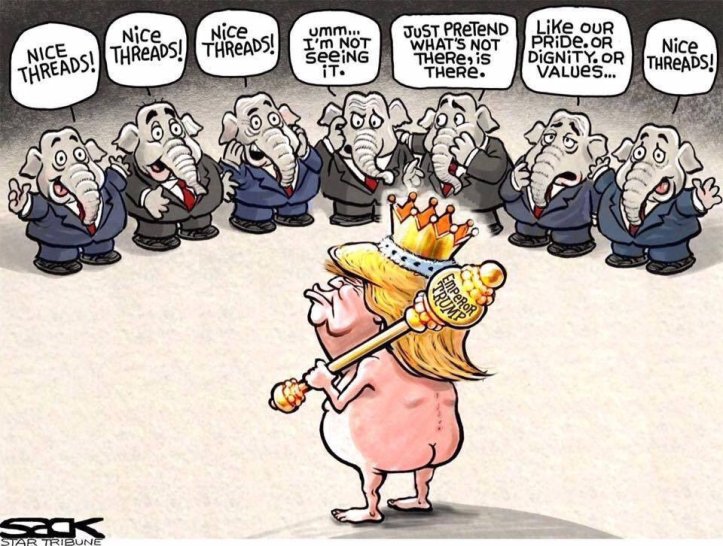
Image result for Trump’s Proposed 2020 Budget Favors the Rich

CURMUDGUCATION: Maybe We Should Talk About College Readiness Again

CURMUDGUCATION: Maybe We Should Talk About College Readiness Again

Maybe We Should Talk About College Readiness Again


College and career ready. College and career ready. College and career ready.

How long have we been reading and listening to that magical phrase, quietly at first and now omnipresent as the euphemism of choice for people who no longer dare say "Common Core."

It is a hollow phrase, completely empty of meaning. It never, ever, comes with a list, description, or quantification of what "college ready" actually looks like. No mystery there-- we don't know.


But then, few education policy mavens have ever tried to figure out, really, what college ready means,. and mostly they weren't even tryin. Instead, the phrase has been employed to give weight to the Big Standardized Test. "Students didn't score as well on the BS Test as we wanted them to," is not terribly compelling-- but run around hollering, "OMGZ! 63% of our students are not ready for college!!" and you can draw a crowd and get some money moving around in support of whatever test-driven idea you're selling this week.

But "scored higher than the cut score on the PARCC" is not the same as "college ready." How could any single measure tell us that? What single measure would tell us that one student is ready to attend as pre-law at Yale and another student is ready to attend Julliard to study music and another student is ready to attend East South Dakota Community College to get a history teaching certificate and another student is working on her welding certifications. What one instrument could possibly measure the readiness of students for an infinite variety of Next Steps?

But reformsters keep telling us that test scores measure college readiness, even as we all know that CONTINUE READING: 
CURMUDGUCATION: Maybe We Should Talk About College Readiness Again


Opposing Mediocre Minds: Einstein on Education | Live Long and Prosper

Opposing Mediocre Minds: Einstein on Education | Live Long and Prosper

Opposing Mediocre Minds: Einstein on Education

Image result for Einstein PI

Today, March 14 is Pi day (3.14) and the birthday (#140) of Albert Einstein.
Albert Einstein is remembered as the physicist who developed the theories of special, and general relativity.
the laws of physics are the same for all non-accelerating observers, and that the speed of light in a vacuum was independent of the motion of all observers…
…that massive objects cause a distortion in space-time, which is felt as gravity.
He came to the U.S. in the early thirties and, with the rise of the Nazi party in Germany and the accompanying anti-semitism, he decided to stay (after short stays in both Belgium and England). He was already internationally known, having won the Nobel Prize for physics in 1921 for his discovery of the law of photoelectric effect.
Princeton offered him a job and he became a U.S. citizen in 1940 (while also retaining his Swiss citizenship).
MORE THAN PHYSICS
Einstein was more than a world famous scientist. He was also someone who examined philosophy, religion, and politics and much of his writing has applications for students and teachers.
The quotes below (from Wikiquote) reflect the universality of Einstein’s thought and apply to education and learning.
THE SUPPORT FOR SCIENCE AND KNOWLEDGE
It is ironic that the first quote I’ve listed here is one on the value of science institutions to nations. This week I read that our current administration has requested deep cuts in science funding.
The administration is asking for…
  • a 13% cut for the National Institute of Health.
  • an 8% cut for NASA
  • a 12% cut to the National Science Foundation
  • 17% less for the Office of Science in the Department of Energy
  • A cut of 1/3 for the EPA overall and cuts of 40% for science and technical programs and 66% for air and energy research (climate change)
It would be nice if someone would stop the war against knowledge.
Science is international but its success is based on institutions, which are CONTINUE READING: 
Opposing Mediocre Minds: Einstein on Education | Live Long and Prosper

Charter Profiteer in Arizona Plans to Open Charter Chain in North Carolina | Diane Ravitch's blog

Charter Profiteer in Arizona Plans to Open Charter Chain in North Carolina | Diane Ravitch's blog

Charter Profiteer in Arizona Plans to Open Charter Chain in North Carolina

Last year, the Arizona Republic wrote an expose of the millions made by Glenn Way, founder of a charter chain in Arizona, primarily by real estate deals and construction of the schools by “related” companies. He previously ran charters in Utah.
Now Way plans to launch a charter chain in North Carolina, which welcomes for-profit charters.
Way’s chain in Arizona has a red-white-and-blue patriotic theme.
A charter school operator who made millions of dollars building, selling and leasing properties to the schools he runs moved a step closer Monday toward setting up shop in North Carolina.
The N.C. Charter Schools Advisory Board voted Monday to recommend giving a full interview to Wake Preparatory Academy, a proposed K-12 charter school that wants to open in 2020 in northern Wake County. Wake Prep would be managed by a company whose owner also owns the company that would build and lease back the facility to the charter school.
Wake Prep is proposing to contract with Arizona-based Charter One to manage the school. Charter One manages American Leadership Academy, a network of Arizona charter schools. Former Utah state legislator Glenn Way founded ALA and owns Charter One and Schoolhouse Development.
The Arizona Republic reported last year how Way had made as much as $37 million by setting up no-bid deals in which he built school campuses and then sold the properties at a profit to the ALA charter schools. The newspaper’s five-part investigation into charter schools earned it the prestigious George Polk Award for Education Reporting.
Under Wake Prep’s proposed agreement, the school CONTINUE READING: Charter Profiteer in Arizona Plans to Open Charter Chain in North Carolina | Diane Ravitch's blog


Choosing Democracy: SCUSD Budget Fiasco- #Unite4SACKids #WeAreSCTA #WeAreCTA #strikeready #REDFORED #SCTA #CTA

Choosing Democracy: SCUSD Budget Fiasco- 2

SCUSD Budget Fiasco- 2


10 Facts About the Budget Fiasco at Sac City


At its most basic, the Sacramento City Unified District has a budget crisis because Superintendent Jorge Aguilar and the School Board are not honoring commitments to students, educators and even the Sacramento County Office of Education.
Rather than re-balance the budget to put students first, Mr. Aguilar and the Board have continued to prioritize spending on administrators, including $6 million in vacation payouts to top administrators.
To understand the 10 facts about the Sac City Budget Fiasco,  click here to Read More

Big Education Ape: UPDATE: Community leaders come together to launch 'Save Sac Schools' from state takeover | abc10com #Unite4SACKids #WeAreSCTA #WeAreCTA #strikeready #REDFORED #SCTA #CTA - https://bigeducationape.blogspot.com/2019/03/community-leaders-come-together-to.html


Big Education Ape: Choosing Democracy: SCUSD Plans for Teacher Lay Offs #Unite4SACKids #WeAreSCTA #WeAreCTA #strikeready #REDFORED #SCTA #CTA - https://bigeducationape.blogspot.com/2019/03/choosing-democracy-scusd-plans-for.html


Big Education Ape: ATTENTION SACRAMENTO CITY UNIFIED SCHOOL DISTRICT: CHICKENS COMING HOME TO ROOST #Unite4SACKids #WeAreSCTA #WeAreCTA #strikeready #REDFORED #SCTA #CTA - https://bigeducationape.blogspot.com/2019/03/attention-sacramento-city-unified.html


Choosing Democracy: SCUSD Budget Fiasco- 2

Wednesday, March 13, 2019

What Linda Darling-Hammond's Appointment Means for Education

What Linda Darling-Hammond's Appointment Means for Education

What Linda Darling-Hammond's Appointment Means for Education
Democrats once fought to keep her from becoming Obama's education secretary. Now she's set to lead California's State Board of Education, where she could influence the national party's education stances


When Barack Obama was first assembling his White House Cabinet in late 2008, one of his top candidates for education secretary was Linda Darling-Hammond, the Stanford University professor leading his education transition team. Her selection would have been a rebuke to the leading school reformers of the time -- charter school supporters who fought the teachers unions to advance policies like merit pay based on students' test scores.
Darling-Hammond opposed merit pay, had a union-friendly focus on education funding, and was seen by charter school advocates as a threat to their movement. The pro-charter political action committee Democrats for Education Reform (DFER) worked to prevent Obama from picking her, deploying what The Nation described as “a highly coordinated media campaign.”
In the end, the president-elect chose DFER’s preferred candidate -- Arne Duncan, the leader of Chicago's public school system. But a decade later, the Democratic Party is increasingly turning against DFER-style reforms like charter schools and merit pay, and Darling-Hammond is getting another opportunity to directly shape education policy -- in the nation’s most populous state.


California Gov. Gavin Newsom, a Democrat, nominated Darling-Hammond last month to lead the State Board of Education. Education experts say her tenure will be closely scrutinized in policy circles and could end up influencing school systems across the country.
Her fellow board members are expected to vote her in as president this week. The state Senate will then have a year to confirm her appointment, which so far hasn’t produced any organized opposition.
“She's an ingenious choice by Gov. Newsom, largely because Professor Darling-Hammond has strong ties with the labor and the social justice communities,” says Bruce Fuller, an education professor at the University of California, Berkeley. “This contrasts the Obama era, and even [former Gov.] Jerry Brown's reign, when one wing of Democrats was pitted against the other. Professor Darling-Hammond has the robust capacity to unite educators and activists intent on building equitable schools.”
Fuller says Newsom’s selection suggests he’s “not warming to charter schools,” which are publicly funded but privately run, unless they have the same regulations as traditional public schools. Indeed, he is already fast-tracking legislation that would require charter schools to follow the same transparency guidelines as public schools. Like much of the the Democratic Party, Newsom's education approach has shifted to become less favorable toward charters, which he supported when he was mayor of San Francisco.
Charters are intended to be innovative and free from bureaucratic red tape, but they divert taxpayer dollars from traditional schools, and many fail to outperform them.
Charter school opponents have mixed feelings about Darling-Hammond’s appointment.
“Until recently, I felt sure that Linda understood the damage charters and privatization do to public schools,” says Diane Ravitch, a prominent education CONTINUE READING: What Linda Darling-Hammond's Appointment Means for Education


The diversity gap for public school teachers is actually growing across generations

The diversity gap for public school teachers is actually growing across generations

The diversity gap for public school teachers is actually growing across generations


Editor's Note: 
This post is part of "Teacher diversity in America," a series from the Brown Center on Education Policy that examines minority underrepresentation among public educators in the U.S.
The public teacher workforce has been slowly growing more racially diverse over the last three decades. A notable study from Richard Ingersoll and Lisa Merrill finds the number of teachers of color more than doubled between 1987 and 2012, resulting in the share of nonwhite teachers in America’s public schools expanding from 12 to 17 percent over that same period. More current survey results from 2016 show the share of nonwhite teachers has jumped even higher, nearing 20 percent.
These rather encouraging trend lines may lead observers to conclude that public schools are successfully attracting an increasingly larger share of people of color into the teaching profession—whatever we’re doing, we’re moving in the right direction. And though this conclusion seems reasonable, it runs counter to what the underlying data tells us about racial underrepresentation among the teacher workforce.
In this installment of our ongoing teacher diversity series, we examine the racial diversity of the teacher workforce looking across different generations of teachers. For readers following this series, our analysis here is part of our contribution to the forthcoming Handbook of Research on Teachers of Color, edited by Conra Gist and Travis Bristol (expected publication: Spring 2020)—a volume that should also be of interest.
In this piece, we analyze national survey data spanning 25 years and arrive at a counterintuitive finding: The public teaching profession is growing disproportionately white over time. In other words, we see very worrying trends about racial diversity that have been decades in the making. If states and districts are taking teacher diversity seriously, the following analysis should be a wakeup call that much more needs to be done to promote more racial diversity in schools.

WORRYING SIGNS FORMING

Though the general teacher diversity trend has been steadily moving upwards for decades, two recent studies offer a different interpretation on the same trends, casting doubt on whether the teacher workforce will become sufficiently diverse.
First, a study we published with co-authors Hannah Putman and Kate Walsh in 2016 estimated the racial/ethnic breakdown of both the teacher CONTINUE READING: The diversity gap for public school teachers is actually growing across generations

A hidden scandal: America's school students exposed to water tainted by toxic lead | Environment | The Guardian

A hidden scandal: America's school students exposed to water tainted by toxic lead | Environment | The Guardian
A hidden scandal
America's school students exposed to water tainted by toxic lead
Elevated levels of lead have been found in schools across the US, alarming experts who say it is particularly harmful to children


When Shakima Thomas came home one day last October, she found a piece of paper wedged in her door telling her the water in her home could be contaminated with lead.

Thomas, a social worker in Newark, New Jersey, knew what it meant – that the tap water she and her four-year-old son Bryce had been drinking could have profound effects on their health.
“My kid loves water – he loves it – so it was difficult telling him not to drink the water,” Thomas said. “He’s four years old and doesn’t understand.”
A century-long war to remove lead from Americans’ daily lives has been successful on some fronts, but a lack of regulation, political will and funding has meant the contamination of drinking water remains a public health crisis.
There “is no known level of lead exposure that is considered safe”, the World Health Organization has warned. The heavy metal, used widely in the past manufacture of water pipes, can cause serious health problems in adults including high blood pressure and kidney damage as it accumulates in the body at high levels of exposure.
But children are particularly vulnerable to its toxic effects, which can affect the development of the brain and nervous system. Even low levels can impair a child’s IQ, academic achievement and ability to pay attention. US studies have shown lead-exposed children are more likely to be aggressive, leading to bullying, truancy and even jail.
“Unfortunately, it’s a problem that was swept under the rug for many years, even though many experts were well aware there was excess of lead in their tap water,” said Erik Olson, a senior director of advocacy at the Natural Resources Defense Council, about lead in schools in particular.
“Lead is a neurotoxin, it drops IQ scores, it’s linked to aberrant behavior and violence,” said Howard Kessler, a retired doctor based in Tallahassee, Florida, who is part of Physicians for Social Responsibility.
“The concern is that while we are not taking much action, children are being CONTINUE READING: A hidden scandal: America's school students exposed to water tainted by toxic lead | Environment | The Guardian

Operation Varsity Blues: One Corrupt Tree in the Forest of White Wealth Privilege | radical eyes for equity

Operation Varsity Blues: One Corrupt Tree in the Forest of White Wealth Privilege | radical eyes for equity

Operation Varsity Blues: One Corrupt Tree in the Forest of White Wealth Privilege


It’s called the American Dream because you have to be asleep to believe it.
Andrew Lelling, the US attorney for Massachusetts, made a nearly laughable opening claim in his press conference about a college admissions scandal named “Operation Varsity Blues”:
“This case is about the widening corruption of elite college admissions through the steady application of wealth combined with fraud,” Lelling said. “There can be no separate college admission system for the wealthy, and I’ll add that there will not be a separate criminal justice system either.”
He added, “For every student admitted through fraud, an honest, genuinely talented student was rejected.”
Nearly laughable, in part, because this grandstanding of justice wants to proceed from the position that discovering the wealthy gaming a system they already control is somehow shocking (it isn’t), and nearly laughable as well because Lelling offered as context and with a straight face the following:
We’re not talking about donating a building so that a school’s more likely to take your son or daughter.
We’re talking about deception and fraud – fake test scores, fake athletic credentials, fake photographs, bribed college officials.
The layers of bullshit in what is being called a “massive admissions scandal” are nearly as complicated as the story itself, an intricate web of complicit parents, college and athletics officials, SAT/ACT shenanigans, and CONTINUE READING: Operation Varsity Blues: One Corrupt Tree in the Forest of White Wealth Privilege | radical eyes for equity

CURMUDGUCATION: OH: Beating Back School Takeovers

CURMUDGUCATION: OH: Beating Back School Takeovers

OH: Beating Back School Takeovers


If there is any benefit at all to the complete hash of the takeover of Lorain  City Schools, it's that it has brought renewed attention to Ohio's terrible takeover law and renewed energy to attempts to bust that law.

There are actually two proposals floating around currently, both bipartisan. State Reps. Kent Smith, D-Euclid, and Steve Hambley, R-Brunswick, announced House Bill 127 this week. The bill calls for a moratorium on all school takeovers. The bill would not roll back the three takeovers already under way (Youngstown, Lorain, and East Cleveland). Hambly told the Chonicle:

At this point, untangling that knot’s a little bit more complicated, but I think the one thing I can say about our proposal is it doesn’t create any more victims.

Hambly says at this point the bill has disrupted not just schools, but the entire city, providing "three case studies on how not to help a community."

Meanwhile, Rep. Joe Miller, D-Amherst, and Rep. Don Jones, R-Freeport,  say they will be proposing a bill that will dissolve the Academic Distress Commissions that run the takeovers. Once again, the Chronicle is all over this story.

“We realize that when you move decision-making farther and farther away from students, the more likely you’re not going to be able to meet their needs,” Miller said Friday in a phone CONTINUE READING: 
CURMUDGUCATION: OH: Beating Back School Takeovers


5 Key Trends in the Teacher Workforce - NEA Today

5 Key Trends in the Teacher Workforce - NEA Today

5 Key Trends in the Teacher Workforce


Thanks largely to a nationwide campaign by educators, the country is finally talking about how we can recruit, support and retain teachers. This is an important discussion, says Richard Ingersoll,  professor of education and sociology at the University of Pennsylvania, because “the teaching force has been transformed over the last 30 years, with significant financial, structural, and educational consequences.” 
Ingersoll recently updated “Seven Trends: The Transformation of the Teaching Force,” his longitudinal study on the elementary and secondary teaching force that culls data from several comprehensive sources, including the Schools and Staffing Survey.
“Too often, researchers, school leaders, and policymakers are still operating under false assumptions about who goes into teaching and how teaching careers unfold,” Ingersoll said. “If we want to improve student performance, we must understand this new reality.”
Here are Ingersoll’s key  findings:

A Growing Profession

Since 1987, the size of the teaching force, says Ingersoll, has “ballooned.”
Student enrollment and the number of teachers peaked in the 1970s, then leveled off before climbing again in the late ’80s. The teaching force has been on the uptick ever since (except for the period following the Great Recession), even outpacing the rate of increase for students.
From 1987-88 to 2015-16, total K-12 student enrollment in the nation’s public CONTINUE READING: 5 Key Trends in the Teacher Workforce - NEA Today

Six Things More Important than that Desperate Housewife Cheating to Get Her Kid into a Prestigious College | Teacher in a strange land

Six Things More Important than that Desperate Housewife Cheating to Get Her Kid into a Prestigious College | Teacher in a strange land

Six Things More Important than that Desperate Housewife Cheating to Get Her Kid into a Prestigious College


I was mildly shocked by the network news leading off with the ‘cheating to get into college scandal’ last night. Were they just sick of starting each broadcast with the latest on Paul Manafort, Roger Stone and Tim Apple?
The story is pretty juicy, involving real-life arrests and Famous Actresses Shamed and photoshopping rich kids’ heads onto actual athletes’ bodies posed in rowing sculls—and, oh yeah, an ex-basketball coach taking in hundreds of millions to ‘help’ them cheat.
To Labaree, it’s all about credentialing. And to wealthy, influential parents, evidently, the right kind of credentialing matters more than setting a good example, or, you know, personal integrity.
In the end, I think it’s a kind of dumb and not very important story, for six reasons I’ll list in a bit.  A national episode of schadenfreude isn’t going to change people’s minds about the actual value of a college degree, unfortunately.
But first, I’d like to re-share one of the more interesting stories that got buried when it first surfaced, in the days after the 2016 election: The Story Behind Jared Kushner’s Curious Acceptance into Harvard.
ProPublica editor Daniel Golden wrote a book a decade ago about how the rich buy their CONTINUE READING: 
Six Things More Important than that Desperate Housewife Cheating to Get Her Kid into a Prestigious College | Teacher in a strange land

The Benefits of Libraries for Teachers and Students - Teacher Habits

The Benefits of Libraries for Teachers and Students - Teacher Habits

The Benefits of Libraries for Teachers and Students


For a long time, libraries have served as sanctuaries for many students and teachers. Libraries aren’t being visited as often as they once were, but educators can still benefit from utilizing libraries in their lessons. Additionally, they provide a place of solitude and refuge from the hardships associated with day-to-day school life. Within the rows of books, there are other worlds to escape to, history to be revisited, and information to gather.

Library Importance
Many consider libraries to be dead because of today’s focus on technology. This is a common misconception; in fact, many libraries are thriving across the country. As a teacher, offering the chance for your students to spend time in their local library will continue the support that is needed for libraries to keep their doors open.
Including a visit to your local library in your curriculum can benefit your students. It is there they have access to the news stories and history of their town that they cannot find in any other library. Today, many of the libraries’ newspaper collections and historical photographs are being digitized and are available on their websites. However, research being conducted on students shows that information retention for data obtained in print is greater than digital media.
By enabling your students to become library patrons, you are empowering them to utilize a space that can act as more than just a place to study. In addition to access to information, libraries offer many benefits as an institution:
  • They serve as a community hub and meeting place.
  • They can offer a place for oral histories and storytelling.
  • Libraries create ties and partnerships between community members and organizations.

  • The Internet’s Role in Change
Many people aren’t going to the library anymore because they can find answers to questions online so easily. The danger of the age of the internet, however, is the lack of credible sources. This has created a need for instilling critical analysis skills to enable our students to CONTINUE READING: The Benefits of Libraries for Teachers and Students - Teacher Habits

Louisiana Bamboozles! – Educate Louisiana

Louisiana Bamboozles! – Educate Louisiana
Louisiana Bamboozles!


Raise your hand if you’ve ever checked your weight against one of those charts that tells you how much you should weigh based on your height. You know. The ones with unrealistic goals that you immediately dismiss because of their ridiculousness. Well, I have. I can tell you that in all my 35 adult years, even at my thinnest and best condition, I have never been less than 40 pounds overweight according to the scale.
Now, imagine if we started measuring the height/weight of our children in kindergarten with the goal of them exiting high school within the recommended range. We all know there will be some kids that do it with zero effort. Others will achieve the goal with moderate to heavy dieting. And still, others will never make it. Let’s take it a little farther. The federal government provides minimum guidelines for determining reliable diets to follow, and the State’s job is to select a diet and develop a plan to monitor the progress toward meeting the goal. Would you be mad if, in choosing how to achieve these goals that a large percentage of children won’t meet, the State requires the use of a diet that doesn’t meet the minimum guidelines, and a one-time/one-use scale produced by a particular manufacturer? Of course, you would, and every state legislator would be asking questions and changing laws to correct the problem.
Whether you know it, or not, this is exactly what is happening in education, in Louisiana. When Congress passed the Every Student Succeeds Act (ESSA), there was a fundamental shift in requirements for interventions. Under No Child Left Behind (NCLB), states were required to use “research-based” interventions when implementing plans to improve failing schools. Under ESSA, the requirement is “evidence-based.” What is the difference? Research-based interventions are designed around CONTINUE READING: Louisiana Bamboozles! – Educate Louisiana