Wednesday, August 17, 2016

Milwaukee’s War on Black People | Educate All Students: Larry Miller's Blog

Milwaukee’s War on Black People | Educate All Students: Larry Miller's Blog:
Milwaukee’s War on Black People


Sarah Lazare
August 15, 2016
Alternet
Protesters taking to the streets today say that police violence against black residents of Milwaukee remains systemic. “You see anger, just the anger and the frustration of a community that has suffered atrocities and oppression on behalf of what they deem to be the police oppressive system, that has never seemingly been held accountable for taking the life, like the young man said, of their loved ones,” Muhibb Dyer, a community activist said.

Maria Hamilton, mother of Dontre Hamilton, leads the march Mondayalong Water St. during a Coalition for Justice rally at Red Arrow Park in downtown Milwaukee, Calvin Mattheis,
Donald Trump supporter and Milwaukee Sheriff David Clarke has built a national profile by openly declaring war on the Black Lives Matter movement, from the floor of the Republican National Convention to the pages of national media outlets, once even proclaiming on social media that racial justice protesters will “join forces” with ISIS.
Now that some Milwaukee residents have staged days of open rebellion against police violence following the cop killing of 23-year-old Sylville K. Smith, Clarke is ratcheting up his rhetoric. During apress conference on Sunday, he employed dog-whistle racist language, stating that “the urban pathologies have to be addressed to shrink the growth of an underclass.” Clarke went on to argue that, from Baltimore to Ferguson to Milwaukee, there is a “war on police,” and vowed to escalate his crackdown on demonstrators. Meanwhile, Gov. Scott Walker on Sunday declared a state of emergency and activated the national guard against protesters.
But in a city that has been called the most segregated urban area in America, angry demonstrators are telling a different story, of a state-sanctioned war against poor black residents. This perspective was described by Sedan Smith, who identified himself to local outlet CBS 58 as the brother of Sylville Smith.
“It’s the police. This is the madness that they spark up. This is what they encourage. This is what they provoke. This is what you get. You take a loved one from something, this is what you get,” Smith declared on Saturday, standing in view of an auto parts store engulfed in flames. “I don’t know when it’s going to end. But it’s for y’all to start. We’re not the ones that’s killing us. Y’all killing us. We can’t make a change if you all don’t change.”
Before Sylville Smith was killed, Milwaukee was already reeling from former Milwaukee police officer Chistopher Manney’s killing of Dontre Hamilton, a mentally ill black man, with 14 gunshots in 2014. While Manney was fired from his position, he did not face any charges for the murder, and Milwaukee residents staged Black Lives Matter demonstrations to protest his impunity.
Protesters taking to the streets today say that police violence against black residents of Milwaukee remains systemic. “You see anger, just the anger and the frustration of a community that has suffered atrocities and oppression on behalf of what they deem to be the police oppressive system, that has never seemingly been held accountable for taking the life, like the young man said, of their loved ones,” Muhibb Dyer, a community activist and co-founder of the organization Flood the Hood with Dreams, told Democracy Now.
But in Milwaukee, injustices against black people extend far beyond policing. A 2013 study from the University of Wisconsin at Milwaukee found the state has the highest incarceration rate for black men in the country at 13 percent. Report authors John Pawasarat and Lois M. Quinn note:
The prison population in Wisconsin has more than tripled since 1990, fueled by increased government funding for drug enforcement (rather than treatment) and prison construction, three-strike rules, mandatory minimum sentence laws, truth-in-sentencing replacing judicial discretion in setting punishments, concentrated policing in minority communities, and state incarceration for minor probation and supervision violations. Particularly impacted were African American males, with the 2010 U.S. Census showing Wisconsin having the highest black male incarceration rate in the nation. In Milwaukee County over half of African American men in their 30s have served time in state prison.”
Not surpringly, Wisconsin’s budget allots more for incarceration than for schooling. Four out of every five African-American children in Milwaukee live in poverty.
A report released last year by the University of California at Los Angeles found that schools in Milwaukee suspend black students at nearly two times the national average. Meanwhile, Wisconsin has theworst achievement gap between white and black students in the United States, thanks largely to the Milwaukee public school system, which has been systematically defunded and privatized for more than two decades.
Racial disparities extend to home lending. A study released in July by the National Community Reinvestment Coalition found, “In the Milwaukee Metropolitan Statistical Area, whites represent 70 percent of the population, yet received 81 percent of the loans. African Americans are 16 percent of the population yet only received four percent of the loans.”
NPR’s Kenya Downs wrote an article last year raising the question, “Why is Milwaukee so bad for black people?” Downs wrote: “Milwaukee is a vibrant city known for its breweries and ethnic festivals and can be a great place to live — unless you’re black. Statistically, it is one of the worst places in the country for African-Americans to reside.”
When Baltimore erupted in uprisings last year following the violent death of Freddie Gray in police custody, angry protesters, most of them black youth, were widely demonized. Yet a recently released Department of Justice investigation into that city’s police department vindicates protesters’ outrage, exposing law enforcement’s atrocities against poor black communities, including systematic harassment, violence and degradation.
Now, like their counterparts in Baltimore, the black youth of Milwaukee are being demonized as thugs and criminals by the police department entrusted to protect and serve them. Bolstered by a hate-fueled presidential campaign, Sheriff Clarke is escalating his demagogic incitement against the very people he and his city have failed.
Sarah Lazare is a staff writer for AlterNet. A former staff writer for Common Dreams, she coedited the book About Face: Military Resisters Turn Against War.
This article was made possible by the readers and supporters ofAlterNet.Milwaukee’s War on Black People | Educate All Students: Larry Miller's Blog:


Mike Klonsky's SmallTalk Blog: Claypool not worried about a strike. It's all good.

Mike Klonsky's SmallTalk Blog: Claypool not worried about a strike. It's all good.:

Claypool not worried about a strike. It's all good.

Claypool with top lawyer Mormer, the man from Jenner & Block
Given that Chicago schools CEO Forrest Claypool is under investigation once again, this time for funneling CPS contracts a connected law firm, you would think he would tone down his arrogance a notch or that the mayor would put someone else in front of the media for a while.

Claypool suddenly exudes a false sense of optimism after forecasting a deficit hovering near $1 billion less than a year ago. This even while Gov. Rauner, in a political death spiral himself, is still holding the state's school budget hostage.

After a year of CPS teachers working without of contract, Claypool still had the audacity to assure everyone that contract negotiations with the CTU were going swell with no need to worry about a teachers strike.

"We are at the negotiating table. I don't see any reason why we should not be able to come to an agreement. Teachers do important work. We want to give them as generous a contract as we can possibly provide given the dollars that are available."
Well here's one reason for no agreement. Claypool continues to push for an end to the 7% pension pick up which was negotiated in lieu of a pay increase. With no corresponding pay Mike Klonsky's SmallTalk Blog: Claypool not worried about a strike. It's all good.:


Civil Rights organizations vs. Wealthy: Are charter schools better? – Cloaking Inequity

Civil Rights organizations vs. Wealthy: Are charter schools better? – Cloaking Inequity:

Civil Rights organizations vs. Wealthy: Are charter schools better?


Corporate reformers supported by the deep pockets of the wealthy and their foundations (Broad, Gates, Walton etc.) are spending millions on propaganda— research, websites and books extolling the virtues anti-democratic, private control of resources for public schools. Meanwhile, Civil Rights organization such as the Black Lives Matter movement (here) the Journey for Justice Alliance (here) and the NAACP (here and here) have criticized the private control and privatization of our public schools via charters. The ACLU also weighed in here. Mother Jones has covered these recent developments and reported,
A few weeks ago, the Movement for Black Lives, the network that also includes Black Lives Matter organizers, released its first-ever policy agenda. Among the organization’s six demands and dozens of policy recommendations was a bold education-related stance: a moratorium on both charter schools and public school closures. Charters, the agenda argues, represent a shift of public funds and control over to private entities. Along with “an end to the privatization of education,” the Movement for Black Lives organizers are demanding increased investments in traditional community schools and the health and social services they provide.
The statement came several weeks after another civil rights titan, the NAACP, also passed a resolution, calling for a freeze on the growth of charter schools. The NAACP had equated charters with privatization in previous resolutions, but this year’s statement—which will not become policy until the National Board meeting in the fall—represents the strongest anti-charter language to date…
There is much much more in the Mother Jones article… Please check out and share as it’s an excellent read.
Screen Shot 2016-08-17 at 8.38.48 AM
This week I also had the opportunity to have a conversation with the The Real News Network about the rapidly changing climate for charters. I have pasted the entire 8-minute RNN segment below which includes their introduction to the developing debate surrounding charter schools. Below the full clip, I have pasted easily shareable abbreviated YouTube clips.


Hawaii Charter School Commission Is Under The Microscope - Civil Beat News

Hawaii Charter School Commission Is Under The Microscope - Civil Beat News:

Hawaii Charter School Commission Is Under The Microscope
School leaders’ complaints have the Board of Education considering a special performance review of the state’s charter school authorizer.


 Members of a Hawaii Board of Education committee tasked with investigating the State Public Charter School Commission are recommending a more formal review of the agency’s performance after finding a “pattern of well-founded complaints” from charter school leaders.

The committee is “primarily concerned with why there are consistently similar complaints from a large number of charter school leaders and why there is a seeming disconnect between the perceptions of these leaders and those of the Commission,” it stated in a report.
The recommendation comes more than seven months after the BOE formed an investigative committee to decide if a review of the Commission was warranted. The full board is expected to vote on the committee’s recommendation at a meeting in September.
Lawmakers created the Charter School Commission in 2012 as part of a broad overhaul of regulations aimed at strengthening academic and financial oversight of the schools. The BOE oversees the commission, but has not previously undertaken a formal evaluation.
BOE members conducted three listening tour events with charter schools in November and December.
Charter school leaders said then that the commission had been overburdening schools with reporting requirements, not doing enough to support the schools and failing to clearly communicate. Many expressed frustration with the new school contracts, which they felt were too uniform when they should be negotiated more individually with schools.
Charter School Commission members were not asked to attend the listening tour and did not get a chance to respond to complaints before the BOE published a report on the tour.
The BOE committee has since met with members of the Charter School Commission and its staff, but has not altered its position on the complaints of school leaders.
Despite months of discussions, the committee said that it “cannot report with confidence that the Commission will adequately and fully address the concerns, whether real or perceived, of charter school leaders.”
A BOE review of the commission would take four months, according to a special review Hawaii Charter School Commission Is Under The Microscope - Civil Beat News:

Clock ticking on failing schools; lawmaker calls plan 'irresponsible'

Clock ticking on failing schools; lawmaker calls plan 'irresponsible':

Clock ticking on failing schools; lawmaker calls plan 'irresponsible'


A Democratic lawmaker today called for more transparency on aggressive plans by the State School Reform Office to close chronically failing schools in Michigan.
"The decision to close an unknown number of schools, based on data from two entirely different tests without any clear, consistent and transparent processes to help schools improve, is completely irresponsible," said Rep. Adam Zemke, D-Ann Arbor.
"This will leave Michigan families in flux, wondering what their options will be for their children's education going forward," Zemke said.
He called the decision-making process "mysterious" and said "we don't even know how these extreme decisions about our children's futures are being made."
Natasha Baker, the head of the school reform office, said Monday that a decision will be made by the end of 2016 on which schools would close. Those at risk, she said, have been poor-performing for years and should close so the students in the schools have better opportunities.
The decision is taking heat from educators who had been assured by the Michigan Department of Education that the scores on the state's new exam — the Michigan Student Test of Educational Progress — wouldn't be used for accountability purposes until 2017. But the school reform office operates separately from the education department, and says it will use results from that new exam, in addition to results from the now-retired MEAP exam.
MDE officials declined to comment for a story Monday. But Martin Ackley, spokesman for the MDE, said in a statement today that the department is "keeping to that commitment," to not use the assessment data to rank schools now.
"The State Reform Office, outside of the Michigan Department of Education, is choosing to use its own authority outlined in state law, to identify a new bottom 5 percent of schools," Ackley said.
The number of schools that would close is unknown. The reform office is starting with a list of 128 schools that performed in the bottom 5% academically in 2014 — based on MEAP scores. But the office will also look at 2015 and 2016 rankings. Baker said the final number will be far less than the number identified in 2014 and include those schools that consistently were the worst-performing in all three years.
Contact Lori Higgins: 313-222-6651, lhiggins@freepress.com or @LoriAHigginsClock ticking on failing schools; lawmaker calls plan 'irresponsible':
 

Bill Phillis: If the U.S. Extradites Fethullah Gulen, What Happens to His Charter Chain? | Diane Ravitch's blog

Bill Phillis: If the U.S. Extradites Fethullah Gulen, What Happens to His Charter Chain? | Diane Ravitch's blog:

Bill Phillis: If the U.S. Extradites Fethullah Gulen, What Happens to His Charter Chain?


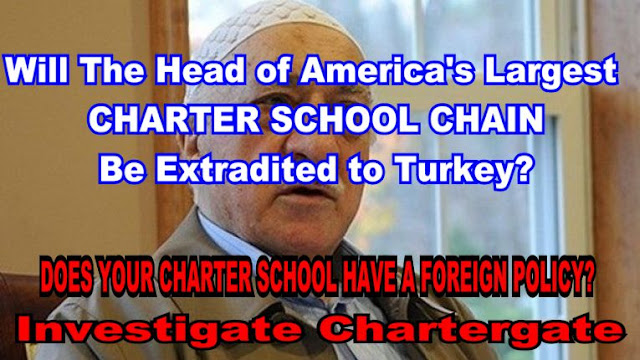
Bill Phillis, onetime state deputy superintendent of instruction in Ohio, now director of the Ohio Coalition for Equity and Adequacy, raises an important question: What becomes of the Gulen charter chain of about 150 charters if the U.S. State Department decides to extradite Imam Fethullah Gulen? The Turkish government blames Gulen’s followers for the coup that sought to overturn the government. The Turkish government now blames the U.S. for sheltering Gulen. Turkey has resumed an alliance with Russia because of our refusal to turn Gulen over.
The decision the White House makes on the request of the Turkish government to extradite Turkish Islamic cleric Fethullah Gulen (the U.S. charter school magnate) will likely affect the future of the 150 Gulen, tax-funded charter schools, 19 of which are in Ohio
The August 3 New York Times article-Turks can agree on one thing: U. S. was behind failed coup- indicates that pressure is mounting for the U.S. to send Gulen home to Turkey. Since the U.S. government has denied the extradition request multiple times, the Turks opine that the U.S. is supporting the coup attempt by the Gulenists in Turkey.
Disentanglement of the international politics associated with the recent coup attempt is beyond the scope of this post. But it is appropriate to ask a fundamental question to state officials and the sponsors of Gulen charters: Should a chain of charters, spawned and operated by members of the Gulen movement, continue to be supported by tax funds?
In dealing with this sensitive issue, the White House could send a clear message to Turkey by forbidding public funding of Gulen charters. Inasmuch as it has been substantiated that some of the funds paid to Gulen charters gravitates to the Gulen movement, state and federal officials should arrange for a complete investigation of the connection between the Gulen movement and the Gulen charters.


The question remains: Why are taxpayers allowing foreign nationals to take control of their neighborhood public schools?Bill Phillis: If the U.S. Extradites Fethullah Gulen, What Happens to His Charter Chain? | Diane Ravitch's blog:

Big Education Ape: Fethullah Gรผlen: public intellectual or just another charter school crook? - http://bigeducationape.blogspot.com/2016/08/fethullah-gulen-public-intellectual-or.html

Big Education Ape: Fethullah Gulen’s Race to the Top Is Over | Foreign Policy - http://bigeducationape.blogspot.com/2016/08/fethullah-gulens-race-to-top-is-over.html
 

On the Miracle called Finland’s public schools - Wait What?

On the Miracle called Finland’s public schools - Wait What?:

On the Miracle called Finland’s public schools


Education reformers like to point to Finland as the prime example of how public education should work.  The primary problem with their argument is that Finland’s public education system is exactly the opposite of what the charter school industry and their corporate education reform allies are proposing.
In Finland, there is no privatization of public education.
In Finland, teachers are respected and honored and are given the responsibility for developing programs that provide every student an opportunity to succeed.  Administrators are hired to support their teachers, not limit their ability to teach.
In Finland, there is no massive standardized testing scheme
In Finland, students are provided a comprehensive education, not one restricted to the Common Core and its limited focus on just math and language arts.
In Finland, children are allowed to be children.
To better understand why Finland has the best public education system, one must understand how Finland aggressively reduces the level of child poverty, how it funds and supports its public schools, and how it recognizes the importance of childhood.
The following blog posts from Diane Ravitch provide some of that vital background;
 On the Miracle called Finland’s public schools - Wait What?:

Uganda Will Close For-Profit Schools Pushed by Gates, Zuckerberg, US, UK, and World Bank | janresseger

Uganda Will Close For-Profit Schools Pushed by Gates, Zuckerberg, US, UK, and World Bank | janresseger:

Uganda Will Close For-Profit Schools Pushed by Gates, Zuckerberg, US, UK, and World Bank


In a statement to the Ugandan parliament last week, Hon. Janet Museveni, Ugandan Minister for Education and Sports, explained that the ministry will close 63 private primary and nursery schools at the end of the term due to problems with licensing, safety and sanitation.  The schools are operated by one of the world’s largest private, for-profit education companies.
As this blog reported in April, Bridge International Academies is funded by the World Bank; American venture capitalists, New Enterprise Associates and Lean Capital; and philanthropists including the Bill Gates, Mark Zuckerberg, and Pierre Omidyar.  Bridge is associated with the publishing and testing giant, Pearson.  It has also been supported by the United Kingdom Department for International Development.  Justine Greening, a Conservative Party member of the British Parliament who headed up the Department for International Development before being appointed earlier this year as British Secretary of State for Education, has been influential in promoting Bridge Academies.
According to its website, Bridge International Academies has expanded rapidly in Africa.  It opened its first school in Nairobi, Kenya in 2010 and operated 130 schools in Kenya by 2013.  In 2014 it prepared to expand into Uganda and Nigeria—operating seven academies in Uganda by February, 2015. Bridge currently operates 63 schools in Uganda. Now it is expanding into Liberia and India.
The Global Campaign for Education and a number of international education and human rights organizations released a statement at the end of last week supporting Ms. Museveni’s decision to close all Bridge International Academies in Uganda.  Respecting Ms. Museveni’s decision to close the schools based on immediate problems with licensing and hygiene, these international advocates for public education as a human right examine much deeper problems in the schools: “Bridge International Academies is a for-profit commercial chain of low-cost private schools backed by investors such as Bill Gates, Mark Zuckerberg (Facebook) and Pierre Omidyar (eBay), as well as the World Bank, and the U.S. and British Governments. It aims at providing education to 10 million pupils by 2025 and already runs over 450 schools in Kenya, Uganda, Nigeria, and soon Liberia and India. The company has been particularly Uganda Will Close For-Profit Schools Pushed by Gates, Zuckerberg, US, UK, and World Bank | janresseger:

 Saying kids were endangered, Uganda is closing schools backed by U.S., World Bank, Bill Gates and Mark Zuckerberg - The Washington Post - https://www.washingtonpost.com/news/answer-sheet/wp/2016/08/17/saying-kids-were-endangered-uganda-is-closing-schools-backed-by-u-s-world-bank-bill-gates-and-mark-zuckerberg/

Russ on Reading: Teaching, Tragedy and Comprehension

Russ on Reading: Teaching, Tragedy and Comprehension:

Teaching, Tragedy and Comprehension


No one can teach for any length of time without being touched by tragedy. Students get terribly sick. Students experience death in their families and we ache for them as they bring the grief on their faces into the classroom. Sometimes, students die. I have experienced these tragedies many times in my teaching career. Suicides. A devastating diagnosis of cancer for a nine-year-old student. Parents who were killed in the World Trade Center on 9/11.

One particular tragedy stands out for me above all others. Van Johnson was one of my first students as a wet-behind-the-ears 8th grade social studies teacher at Bristol Junior-Senior High School. He was tall, handsome, with a winning smile and a 70s' style Afro that entered the classroom before he did. Van was bright, capable, curious, motivated, challenging and thoughful. He was always engaged in class, always had his hand up (or, truth be told, often didn't have the patience to raise his hand and just blurted stuff out) and multi-talented. In addition to being a top student, he was a pitcher on the junior high baseball team I coached and a performer in the school plays I directed. When I started a branch of the World Affairs Council at the school, Van was elected president. The future seemed very bright for young Mr. Johnson.

During his senior year at Bristol, 17-year-old Van Johnson drowned. He and some friends were celebrating their impending graduation with a late night swim at a nearby lake, when tragedy struck. For all his talents, Van was a poor swimmer. It was foolish for him to be in that lake, but he was, after all, just a kid trying to have some fun.

These memories of Van came rushing back to me as I read an article titled,Will Simone Manuel Encourage More Black Children to Swim? in today's New York Times. The article refers, of course, to the Olympic champion swimmer, Simone Manuel, an African-American who won two gold and one silver medal at the Rio Olympics. The article outlines the hope of many public health experts, swimming advocates and African-American parents, that her charisma and success will lead to more minority children learning how to swim.

Among the many gaps between white and black, majority and minority, rich and poor in this country is a swimming gap. This swimming gap kills. It is estimated that about 70% of African American adults and children cannot 
Russ on Reading: Teaching, Tragedy and Comprehension:

BACK TO SCHOOL: Enrollment up a bit as kids return to school

BACK TO SCHOOL: Enrollment up a bit as kids return to school:

BACK TO SCHOOL: Enrollment up a bit as kids return to school


WASHINGTON (AP) — No more staying up late during the week. Farewell to sleeping in. And hello, homework!
The lazy days of summer are ending for millions of children as they grab their backpacks, pencils and notebooks and return to the classroom for a new school year.
Some facts and figures to know as the new school year begins:
___
ENROLLMENT AND COSTS
About 50 million students are expected to attend public elementary and secondary schools this fall. That's up just slightly from the 2015-16 school year, according to the Education Department. They'll be taught by some 3.1 million school teachers from pre-kindergarten through high school, with an average student-to-teacher ratio of about 16 students to each teacher. Around 249,000 teachers are new hires this school year.
The growth of charter schools is continuing, with enrollment increasing from 800,000 in 2003 to 2.5 million in 2013, according to government figures. Some 40 states and the District of Columbia reported having about 6,400 charter schools.
The U.S. spends about $11,670 per pupil, on average, on public school education.
About 4.8 million students are expected to attend private school this fall, down slightly from the previous school year.
The National Center for Education Statistics estimates that 3.5 million students, both public and private, will graduate from high school at the end of the school year.
___
LONGER SCHOOL YEAR
Some schools are adding to the traditional 180-day year. In Washington, D.C., for example, 10 public schools are moving to extended-year schedules.
Students in those schools will have 20 more days per year than peers at other schools. They'll have shorter breaks over the school year, which will run 200 days through all 12 months. The idea is less time away from school in the summer will help boost learning and achievement.
___
HIGHER ED
The cost of college continues to rise.
Undergraduate tuition, fees, room, and board were estimated at $15,640 at public institutions, $40,614 at private nonprofit institutions, and $23,135 at private for-profit institutions for the 2013-14 school year.
In the last 10 years, prices increased 34 percent at public institutions and 25 percent for private nonprofits.
In all, 40 percent of 18- to 24-year-olds were enrolled in college or graduate school in 2014, according to Census Bureau numbers.
___
HOW U.S. STUDENTS STACK UP
The latest results from national math and reading tests show slipping or stagnant scores.
Math scores were down for fourth and eighth graders over the last two years. It was the first decline since 1990.
Reading grades were flat for fourth graders and lower for eighth graders, according to results from the National Assessment of Educational Progress.
Globally, American students trail their counterparts in Japan, Korea, Canada, Germany, France and more.
In reading, the U.S. ranks No. 16 in a global test given to 15-year-olds. Scores were worse for math, with the U.S. ranked 30th against students from other countries taking the Program for International Student Assessment, or PISA tests.
___
NEW LAW OF THE LAND
The nation's schools districts are working with states and the federal government as they implement a new education law passed last December that returns to the states significant control over education policy. But the Education Department still plays an oversight role for the nation's 100,000 or so public schools.
States and schools are busy developing new accountability systems — a key component of the Every Student Succeeds Act. The law allows states and districts to design their own measures of achievement and progress, and decide independently how to turn around struggling schools.
And while students still have to take federally mandated reading and math tests, the law encourages states to cap the amount of time students spend on standardized testing each school year. The Obama administration has recommended that districts cap the percentage of classroom time students spend taking required statewide standardized tests at no more than 2 percent. The Council of the Great City Schools says testing amounts to about 2.3 percent of classroom time for the average eighth-grader in public school.
___
BACK-TO-SCHOOL SUPPLIES
Back-to-school supply costs are expected to decrease this year, but they'll be offset by higher fees for after-school activities such as sports, according to the latest Backpack Index by Huntington Bank. The index measures the cost of supplies and extracurricular activities.
For the 2016-17 school year, parents should expect to pay:
—$659 for an elementary school child, a 1.5 percent increase compared to last year.
—$957 for a middle school student, a 1.6 percent increase.
—$1.498 for a high school student, a 6.8 percent increase.
The report says higher fees for sports participation, especially in high school, are responsible for much of the increase.BACK TO SCHOOL: Enrollment up a bit as kids return to school:


A parent’s guide to K-12 school success