Latest News and Comment from Education

Friday, June 24, 2016

Dear schools: Here's how not to body shame girls next year

Dear schools: Here's how not to body shame girls next year:

Hey schools: Stop body shaming girls

Https%3a%2f%2fblueprint-api-production.s3.amazonaws.com%2fuploads%2fcard%2fimage%2f125881%2fschooldressshame_thumb
Hey, school administrators and teachers, we have to talk about something.
You uphold antiquated, strident, unbalanced and frankly sexist standards when it comes to female students and how they dress at school. That's a problem.
It's time to stop body shaming your female students (and hey, even some of your male students) over their fashion choices.
Don't get us wrong, there are certain things that may be too risqué for the classroom. Students have to also choose to be respectful and professional around peers and colleagues while expressing their individual style. And that's okay.
But what we're talking about here is when a female student wears perfectly normal outfits to school and is told to cover up or go home. It affects their own academic standing as well as makes them feel personally embarrassed or attacked.
We're talking about Aniya Wolf's dapper prom suit.
We're talking about Kaitlyn Juvik, the braless warrior
We're talking about Amy Steverson's lacy, yet respectable, prom gown.
None of these girls were wearing their shorts too short, their shirts too cropped or walking around topless. Instead they were shamed for not conforming to gender norms, dressing comfortably and not having stick-thin bodies. The same is likely true for other girls whose stories didn't go viral.
If you're still confused as to why these young women should not have been body shamed, here are some helpful tips on making your female students feel safe and comfortable in your school.


1. Accept that these students have bodies — large, small, pear-shaped, hour glass, etc. And they can't change that.
Embrace the body positivity movement, starting with not making comments about a student who is overweight. You do not know how much they exercise, how much they eat, or how high their blood pressure, blood sugar or any other health marker is. Look beyond their weight and remember that overweight people can be healthy.
On the flip side, if a student noticeably loses weight or maintains a low weight — it's not your business to comment on it as a school administrator unless you truly feel the student is causing harm to themself. Calling attention to weight loss, even if it's to say they look great, can put anDear schools: Here's how not to body shame girls next year:

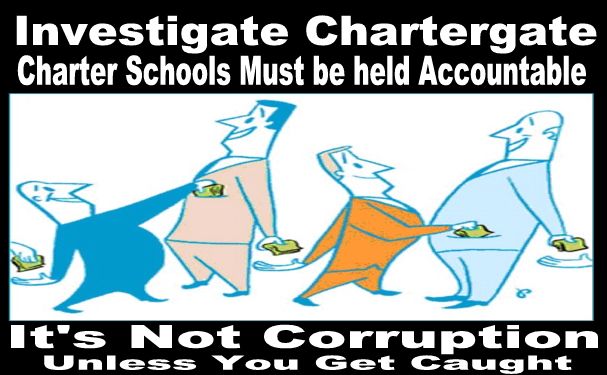
Charter schools must take out loan to sever ties with Newpoint Education Partners

Charter schools must take out loan to sever ties with...:

Charter schools must take out loan to sever ties with management company

San Jose charter schools to end contract with Newpoint Education Partners


JACKSONVILLE, Fla. - The board of two local charter schools decided Thursday night it would take out a loan with their management company, Newpoint Education Partners, to cover a portion of the money the company said the schools owe.
The loan would allow San Jose Academy and San Jose Preparatory High School to officially end their contract with Newpoint, which was indicted last month on charges of grand theft, money laundering and aggravated white-collar crime.
Newpoint initially came up with the option, loaning the schools $100,000 and having them pay a 6 percent interest rate for the next three years, and in exchange, the management contract would be terminated. But the schools would also have to announce the agreement publicly per Newpoint's specific language. 
It's money that's highly contested, yet board members said they aren't looking to fight.
"Why does the board want to enter into a $100,000 loan with a company that's accused of stealing money in another county? I would say, as you heard Gary say, not agree to do that. And then spend the next six months, two years in litigation over trying to end the arraignment and not have that. And in the end, the schools aren't going to make it through that," said Bonnie Arnold, board chair of San Jose Charter Schools. 
According to WFLA-TV, two schools formally managed by Newpoint near St. Petersburg have struggled financially to keep their doors open after the company left them in such financial chaos that they could not keep a balanced budget. Thursday, they had to end their fight to keep the schools and will most likely close, WFLA-TV reported.
In Jacksonville, Newpoint claims San Jose owes about $500,000 in payroll, management and other fees. That's why the board said it has decided to take the loan.
"You know, in many issues around the state, there were expenses accruing and fees on that that had not come before boards to be approved. So those were forgiven in that document. And we agreed to $100,000 that will be paid over a 36-month or 3-year period at 6 percent," Arnold said.
As part of the agreement from June 30, the board will have to publicly address the termination per a certain script Newpoint has written up, which includes saying, "Newpoint provided our schools with financial support, including advancing cash to cover payroll when needed and deferring their management fees, all to ensure the school would survive and then thrive as we have done."
Arnold said she doesn't disagree with that statement. 
"They really did a lot for us when we first opened. They were here a lot, and I didn't realize all that goes on behind opening up, doing an application, finding a facility, arraigning for all the renovation that goes Charter schools must take out loan to sever ties with...:


BS BS BS POSER STORY:School vouchers work, why aren't more available? | TheHill

School vouchers work, why aren't more available? | TheHill:

School vouchers work, why aren't more available?


new analysis of 19 research studies examining 11 school choice programs across the globe shows there are “statistically significant achievement effects” related to “using school vouchers.” The meta-analysis was published in May by a group of researchers at the University of Arkansas’ School Choice Demonstration Project.
Although school voucher programs vary significantly, they typically give parents the ability to receive a voucher (sometimes referred to as a “scholarship”) that can be used to pay for a variety of approved education-related expenses. Voucher amounts are almost always much lower than what it costs for a student to attend a traditional public school, and many voucher programs allow parents to use the funds to pay for tuition, transportation expenses, books, and other costs.
According to a press release announcing the findings, “The results of the meta-analysis indicate that voucher programs appear to work well globally, perhaps particularly in countries with more of a private-public gap in school quality,” although the researchers acknowledge additional randomized controlled trials are still needed.

Findings are new, but they’re not surprising
Although this study, according to the authors and the study’s press release, is “the first time a meta-analysis of international randomized controlled trials evaluating the achievement effects of vouchers has been conducted,” many studies have already been conducted showing the success of school voucher programs.
For instance, in 2011, The Wall Street Journal reported Patrick Wolf of the University of Arkansas — who is also a part of the research team conducting the new study — found the Washington, D.C. Opportunity Scholarship Program produced tremendous results for those D.C. children who were able to take advantage of the program. According to Wolf’s research, those who received vouchers had graduation rates of 91%, compared to only 56% for those students who had applied for the voucher program but wasn’t accepted.
According to A Win-Win Solution: The Empirical Evidence on School Choice,authored by Greg Forster and published in May by the Friedman Foundation for Educational Choice, of the 18 studies examining achievement of school choice participants studied by the author, 14 found school choice programs have a positive impact. Of the 33 empirical studies on school choice programs’ effect on public school students’ academic outcomes, 31 found choice actually improves public schools.
If choice works, why aren’t there more choice programs?
Only 13 states and Washington, D.C. have state-funded school choice voucher programs, and in virtually all of those states, only certain students — usually impoverished students or those with some sort of a learning disability — are able to apply for a choice program. Policy advocates, however, have been pushing for school choice programs for decades, so why hasn’t more progress on this front been made?
Misinformation, a lack of journalistic integrity and media bias, and politics all play a significant role, but at the end of the day, it all comes down to one thing: money.
In a time when the power of public and private labor unions is at 100-year low, teachers unions remain the last truly influential labor group. Unlike in other industries, where jobs and markets transform over time, the structure of public education has remained relatively the same over the past century, and there never stops being consumers (students and parents). There are over 49.5 million public school students in the United States today, and there are over 3 million teachers — many of whom earn salaries significantly higher than the average college graduate, even in failing school districts.
For instance, the average teacher in Providence, Rhode Island’s public schoolsearns more than $63,000 per year, and teachers in Newark, New Jersey earn $68,000. It’s not uncommon for School vouchers work, why aren't more available? | TheHill:

Big Education Ape: Is Funding Transparency Enough to Prevent Billionaire Influence in Education Journalism? - Living in Dialogue - http://bigeducationape.blogspot.com/2016/06/is-funding-transparency-enough-to.html

Big Education Ape: More Questions for The Post and Courier: “Necessary Data” or Press-Release Journalism? – the becoming radical - http://bigeducationape.blogspot.com/2016/06/more-questions-for-post-and-courier.html


Students opting out of state standardized test doubles in Springfield, Bethel districts | Local | Eugene, Oregon

Students opting out of state standardized test doubles in Springfield, Bethel districts | Local | Eugene, Oregon:

Students opting out of state standardized test doubles in Springfield, Bethel districts

Eugene district also sees bump in numbers


The number of students who chose to “opt out” of the state’s standardized Smarter Balanced tests in the Bethel and Springfield school districts more than doubled between the 2015-16 school year and the previous year, district officials say.
The number of students who opted out in the Eugene School District also increased, although not as dramatically.
In the Bethel district in west Eugene, 123 students were excused from the test after their parents signed an official, state-issued opt-out form. In the Springfield district, 225 students chose not to complete the tests and in the Eugene district 927 students opted out.
The numbers reported by each district do not include students in district-sponsored charter schools, nor the number of students who chose not to take the test but failed to turn in the paperwork informing the district of that decision.
State-mandated testing has been a controversial topic in the Eugene-­Springfield area, and other parts of the state, for several years. Earlier this month, the Springfield School Board may have been the first in the state to actively encourage parents to opt their children out of taking the tests.
The total number of students who did not participate in the Springfield, Eugene and Bethel districts, and across the state, won’t be known until late July after final tallies are counted, Oregon Department of Education officials said this week.
The increases are probably due in part to the fact that this school year was the first in which students could be dismissed from the test, with a parent’s permission, without providing a specific reason.
The Oregon Legislature last June passed House Bill 2655, which gives parents the right to opt their child out of the state tests for at least the next six years. It also requires schools to notify parents and students of that right via a state-issued opt-out form, at least 30 days prior to administering the tests.
Prior to this school year, parents had to check a box indicating that their child either had a disability or a religious belief that would prohibit them from taking such tests.
The standardized assessments are designed to evaluate students’ knowledge of the Common Core standards, a set of learning goals for each grade level that most states, including Oregon, have adopted. The tests are required for all students in grades three through eight, and 11th grade. The 2015-16 school year was the second year students in Oregon completed the Smarter Balanced tests.
In November, the state education department issued the opt-out form and described how the tests provide the state with student data. A short paragraph at the end of the form, located just above where parents were directed to sign, cautioned them of potential negative consequences associated with approving the opt-out, stating that parents could lose “valuable information” about their child’s academic progress.
The paragraph also warns parents that having their child opt out of the state tests could affect their school’s and district’s Students opting out of state standardized test doubles in Springfield, Bethel districts | Local | Eugene, Oregon:
 

Thursday, June 23, 2016

Audit of California Virtual Academies - Year 2016 (CA Dept of Education)

Audit of California Virtual Academies - Year 2016 (CA Dept of Education):

State Schools Superintendent Tom Torlakson Announces Audit of California Virtual Academies 


SACRAMENTO—State Superintendent of Public Instruction Tom Torlakson announced today that the California Department of Education has contracted with the State Controller's Office to conduct an audit of California Virtual Academies (CAVA) and related charter schools because of serious questions raised about a number of their practices.
"The goal of the audit is to make sure these schools are spending public education funds properly and serving their students well," said Torlakson.
Torlakson said that under the terms of the audit, the State Controller's office will conduct a review of CAVA and related charter schools to verify whether these non-profit schools:
  • Are organizationally separate from K-12, Inc. a for-profit company that these non-profit charter schools contract with.
  • Accurately reported attendance, enrollment, and dropout graduation rates to the California Department of Education.
  • Appropriately allocated and reported shared expenses.
  • Appropriately identified, accounted for, and disclosed related-party relationships.
The audit is expected to be completed by March 2017.

# # # #
Tom Torlakson — State Superintendent of Public Instruction
Communications Division, Room 5206, 916-319-0818, Fax 916-319-0100
Audit of California Virtual Academies - Year 2016 (CA Dept of Education):


Big Education Ape: A new political strategy: throw online charters overboard to save the rest of the school privatization industry.| Alternet -http://bigeducationape.blogspot.com/2016/02/a-new-political-strategy-throw-online.html
Big Education Ape: CURMUDGUCATION: Pearson's Cyber-Kindergarten Sales Pitch - http://bigeducationape.blogspot.com/2016/06/curmudgucation-pearsons-cyber.html

CURMUDGUCATION: Charter vs. Charter Fight Heats Up - http://curmudgucation.blogspot.com/2016/06/charter-vs-charter-fight-heats-up.html

Big Education Ape: CURMUDGUCATION: Can Cyber Schools Be Saved? - http://bigeducationape.blogspot.com/2016/06/curmudgucation-can-cyber-schools-be.html

Big Education Ape: CURMUDGUCATION: PA: New Face for Old Pearson Scam - http://bigeducationape.blogspot.com/2016/06/curmudgucation-pa-new-face-for-old.html


New After School Program Award - Year 2016 (CA Dept of Education) - http://www.cde.ca.gov/nr/ne/yr16/yr16rel43.asp

What It Takes to Get *Very High Test Scores* | deutsch29

What It Takes to Get *Very High Test Scores* | deutsch29:

What It Takes to Get *Very High Test Scores*


I belong to the job review site, Glassdoor. On occasion, the site sends emails about possible information of interest based on my previous page views. On Jun 21, 2016, I received an email about recent salaries and other info on New-York-based Success Academies (SA).
I write often about SA, in part because SA does get very high test scores–extraordinary test scores, in fact— and high test scores are the single most important measure of success in corporate education reform. To the corporate reform mind, little else matters.
But what about the cost for SA’s very high test scores? For there is indeed a cost, and such cost is well represented in SA employee reviews on Glassdoor.
In adhering to Glassdoor’s terms of use, I will not directly post employee review information. However, what I will do is paraphrase and leave it up to interested readers to sign up for Glassdoor and read the SA reviews for themselves.
Regarding the cost of Moskowitz’s very high SA test scores: I first notice that her teachers and other employees are not paid much when one considers the cost of living in New York. Based on input from 41 SA “lead teachers,” the average salary is $63,000. This salary might initially sound good to someone in my circumstance (a teacher from Louisiana); I have 21 full time years in and hold a Ph.D., and my annual salary is $59,000 (the state stopped my annual step raises in 2012 when I was at 15 full time years, but I have received a little more money since then). However, when one converts that SA $63,000 to its LA cost-of-living equivalent, $63,000 per year to live in Manhattan, NY, is the same as making approximately $29,000 and living in St. What It Takes to Get *Very High Test Scores* | deutsch29:

Mexican Teachers and US Solidarity – Education Town Hall Forum

Mexican Teachers and US Solidarity – Education Town Hall Forum:

Mexican Teachers and US Solidarity

CNTE

For years, many Mexican teachers have been protesting against privatizing and union-busting education reforms. One protest this past Sunday, June 19, in the Oaxacan town of Nochixtlan ended in gun fire leaving at least 9 teachers and their supporters dead and more than 100 wounded. Reports disagree on the origin of the violence. Federal Police chief Enrique Galindo said masked individuals unaffiliated with the union were behind much of the violence, lobbing Molotov cocktails and shooting at police and civilians. Local witnesses say federal and state police are responsible for the killings.
The protests are organized by CNTE – Coordinadora Nacional de Trabajadores de la Educación or National Coordinator of Education Workers – an offshoot of the older national union, Sindicato Nacional de Trabajadores de la Educación (SNTE). Most see SNTE as closely allied with the ruling party, PRI, and it has been charged with corruption.
CNTE
Oaxaca graffiti: Twitter image
CNTE was formed in the southern, high poverty, part of Mexico. Many teachers are products of normal schools and teacher-training programs under attack in current reforms. And so, apparently, are members of the general populace and the police force, as graffiti can be seen in Oaxaca saying: “Police, remember who taught you to read.”
Sundays protests were prompted by the arrest of union leaders, Francisco Manuel Villalobos Ricardez and Ruben Nuñez, as well as the firing of thousands of teachers involved in an earlier work action. Following the shootings, Mexican President Nieto said he was ordering an end to the conflict. Even after this, however, officials arrested yet another union leader. Eugenio Rodriguez Cornejo was detained on suspicion of “aggravated assault and unlawful deprivation of liberty” relating to an Mexican Teachers and US Solidarity – Education Town Hall Forum:


Schools Matter: Competency-Based, Proficiency-Based, Personalized Bullshit

Schools Matter: Competency-Based, Proficiency-Based, Personalized Bullshit:

Competency-Based, Proficiency-Based, Personalized Bullshit


Neil Postman delivered an address at the 1969 NCTE Conference entitled "Bullshit and the Art of Crap-Detection." He advocated for an education that prepared citizens with keen "crap-detectors," or the ability to discern the bogus from the legitimate, the inane from the meaningful, the delusional from the real.

Heidi Sampson is one of those individuals who obviously was educated by parents and teachers who believed as Postman believed; she has a keen crap-detector, and she is using it for good purposes.  Here's an excerpt from a 2015 letter on her experiences detecting some awful crap being sold as education solutions--I hope you will read the entire letter:


Maine’s Education and Cultural Affair Committee commissioned a 2 year study to be conducted on this issue.  David Silvernail and the USM Center for Education Policy, Applied Research, and Evaluation posted their work April 30, 2014 titled Implementation of a Proficiency-Based Diploma System: Early Experiences in Maine. Although this work was funded by the Nellie Mae Schools Matter: Competency-Based, Proficiency-Based, Personalized Bullshit:


Getting The ‘Customer Model’ Out Of Education

6/23/2016 – Getting The ‘Customer Model’ Out Of Education:

Getting The ‘Customer Model’ Out Of Education


THIS WEEK: Schools Aren’t Failures … Ed-Tech Not A Solution … Low Teacher Pay … Chicago School Collapse … America’s School Funding Crisis

TOP STORY

Getting The ‘Customer Model’ Out Of Education

By Jeff Bryant

“We’re constantly told schools need to be in step with the needs of businesses, and that education is ‘an investment’ that gets a ‘return.’ The language of education policy is saturated in business values of efficiency, standardization, and productivity. But the truth is most businesses fail.”
Read more …

NEWS AND VIEWS

America’s Not-So-Broken Education System

The Atlantic

“The public-education system is undeniably flawed. Yet many of the deepest flaws have been deliberately cultivated. Funding inequity and racial segregation, for instance, aren’t byproducts of a system that broke. They are direct consequences of an intentional concentration of privilege … It is important not to confuse inequity with ineptitude. History may reveal broken promises around racial and economic justice. But it does not support the story of a broken education system.”
Read more …

State-Of-The-Art Education Software Often Doesn’t Help Students Learn More, Study Finds

The Hechinger Report

“Students didn’t get higher grades from using adaptive-learning software, nor were they more likely to pass a course than in a traditional face-to-face class. In some courses the researchers found that students were learning more from adaptive-learning software, but even in those cases, the positive impact tended to be ‘modest.’”
Read more …

Teacher Pay Around The World

Brookings

“American teachers are underpaid when compared to teachers in the nations we compete with … In most industrialized countries relative teacher pay is higher than in the United States … The gaps are even larger for upper secondary than for lower secondary … Making teaching a financially more attractive career isn’t the only thing that matters for who teaches. It does matter though, and probably it matters a lot.”
Read more …

Is The Nation’s Third-Largest School District In Danger Of Collapse?

The Washington Post

“Money mismanagement, inadequate funding and failed education policy are combining with a host of other factors to raise the issue of whether the nation’s third-largest school district is in existential danger … The union rejected an independent fact-finders recommendation that it accept a four-year contract offered by the city, and its president, Karen Lewis, said that the district’s financial problems could not solely be laid at the feet of the Republican governor, but also at the mayor’s and district leadership’s.”
Read more …

America Faces A School Funding Crisis

Newsday

Jeff Bryan writes, “In many communities around the country, families with children in schools are increasingly concerned about the conditions of the schools their kids will return to in the fall. Even worse, some are worrying whether the schools will open at all … National per-pupil spending on primary and secondary public schools has dropped for three straight years … In the meantime, student enrollment in public schools continues to grow … A recent review of the research on the effects of school funding on school outcomes … found that spending more money on education tends to benefit students.”
Read more …


CURMUDGUCATION: Attacking the Public in Public Education

CURMUDGUCATION: Attacking the Public in Public Education:

Attacking the Public in Public Education


Many parts of the attack on US public education have not been subtle or hard to detect. The refrain "our schools are failing" has been so steadily repeated for the past few decades that it is now accepted uncritically, independent of any evidence other than "Hey, I keep hearing people say it, so I guess it must be true." Now we hear it just tossed off as an aside, an assumption-- well, of course, public schools aren't any good.

In addition to attacking the reputation and quality of public schools, we've also heard an unending explicit and implicit attacks on the reputation of our nation's teachers. They're dummies with low SAT scores. They have the worst preparation of any college students. We'd be better off giving an ivy league grad five weeks of training and plunking them in a classroom.


All of these are an attack on the "education" part of "public education," a steady drip, drip, drip that tells us that the system that is supposed to educate is not doing a very good job of educating.

But there has been another steady attack, more subtle but increasingly successful, on the "public" part pf "public education."

The reformster refrain that the money should follow the student is one such attack-- it cuts the public out of the system, removing the voice of any taxpayer who doesn't have a child in school. The whole argument that choice-voucher systems should put all decision-making in the hands of parents makes a foundational assumption that education is not a public good, maintained by the public in the public space in order to deliver benefits to the public. Instead, it re-imagines education as a consumer good, created by a vendor and then handed off to the student while money changes hands. Where education might once have been viewed like air or water or other shared public resources, we're now encouraged to see it like a pizza or a toaster.

We can now start to see some of the side-effects of this view. When a public school is closed these days, it's not necessarily seen as a blow to the community, like the loss of a park or the pollution of 
CURMUDGUCATION: Attacking the Public in Public Education:


As the School Spins – EduShyster

As the School Spins – EduShyster:

As the School Spins 

Today’s topic: what happens when state officials hand a school whose students are among the highest needs in Boston to a team of outside turner-arounders who have never before run a school? The answer, as this week’sBoston Globe report indicated, is nothing good. But might there be more, by which I mean less, to this story than meets the eye? Grab your handrails, reader, and steer clear of the fairground corn dogs. Things are about to get awfully spinny around here.
Tis a truth universally acknowledged
Tis a truth universally acknowledged, reader, that high needs students fare best when their school is delivered into the hands of a private operator. Such is the opening line of a tale that dates back to 2014 when the state threw up its hands and bequeathed Boston’s Dever Elementary School to a well-Blueprint 1heeled (not to mention politically connected) suitor: Blueprint Schools. Lest one think that this arranged marriage was rash, well it wasn’t. You see, various attempts had already been made to turn around the troubled school, including a good old-fashioned browbeating of its teachers by none other than his nibs himself: the state’s Commission of Career and College Readiness, Mitchell D. Chester.  It was time to let someone else have a try…
The Dever’s new partner immediately *made waves,* as Globe writer James Vaznis reports, by asking the teachers and staff at the school to re-apply for their jobs. Or make that re-re-apply. Teachers at the Dever had been handpicked under the previous turnaround effort which gave the autonomous school leader the flexibilityto weed out teachers he didn’t like or who disagreed with the turnaround strategy. But that was the past, and unlike the previous turnaround attempt, Blueprint meant As the School Spins – EduShyster:


In Southern schools, segregation and inequality aren’t just history -- they’re reality | PBS NewsHour

In Southern schools, segregation and inequality aren’t just history -- they’re reality | PBS NewsHour:

In Southern schools, segregation and inequality aren’t just history — they’re reality


GWEN IFILL: The Justice Department recently hailed a federal court ruling affirming plans to desegregate schools in Cleveland, Mississippi. Desegregation, the court ruled, allows students to learn, play and thrive together.
As part of her year-long look at solutions to racism, special correspondent Charlayne Hunter-Gault talks with a teacher on how to successfully teach in integrated settings.
CHARLAYNE HUNTER-GAULT: The percentage of black and Latino students in what’s being called apartheid schools is on the increase, and yet most schools seem ill-prepared to help those students be the best they can be, while reducing prejudice and teaching them to learn to live with each other.
But Maureen Costello of the Southern Poverty Law Center says there are ways to achieve all three.
Maureen Costello, thank you for joining us.
MAUREEN COSTELLO, Southern Poverty Law Center: Thank you.
CHARLAYNE HUNTER-GAULT: The Southern Poverty Law Center has a curriculum that looks at teaching tolerance in schools. What caused that to happen?
MAUREEN COSTELLO: Well, before we started this program, we were fighting hate crimes, basically.
Morris Dees, our founder, was bringing civil suits against groups like the Klan, and often the young men who had committed some terrible acts against others were motivated by terrible, terrible hatred and just complete misunderstanding of what other people were like.
CHARLAYNE HUNTER-GAULT: It was mostly race at that point.
MAUREEN COSTELLO: It was usually race, although, sometimes, it was also ethnicity.
But he was seeing 19- and 20-year-old perpetrators who were going to spend the rest of their lives in prison. And he said, you know, we have to do something to stop this before it starts. And he said, we need a school program.
And that really was the beginning of teaching tolerance. Let’s find the best research we can find about how we can reduce prejudice starting at early ages, and let’s get it out there to teachers.
One of the issues in American education is that 80 percent of our teachers are white women.
CHARLAYNE HUNTER-GAULT: In the whole country?
MAUREEN COSTELLO: Yes. And I’m not saying white women can’t teach, because I am a white woman, and I did teach for a very, very long time.
But they bring in all of their own expectations and beliefs into class. And teachers have to kind of constantly examine those and say, wait a minute, am I making some judgments here that I shouldn’t be making?
CHARLAYNE HUNTER-GAULT: How do you then deal with such an equation?
MAUREEN COSTELLO: American classrooms are diverse as a whole, but, in fact, when you get down to individual classrooms and individual schools, we see a lot of the diversity fade away.
So, we have schools today that are more segregated than they have been in the last 25 years were.
CHARLAYNE HUNTER-GAULT: This is even in public schools?
MAUREEN COSTELLO: Absolutely, absolutely. There’s real disparities.
CHARLAYNE HUNTER-GAULT: So how do you get a handle on that?
MAUREEN COSTELLO: Every teacher’s job and the job of school is to help students develop the skills that they need to thrive in a diverse society.
Lots of people think it’s a natural thing. We’re all born open-minded, and then we learn to become bigots. And the fact is, that’s not necessarily true. You have to actually develop skills to cross boundaries. And we look at it three ways. We say, OK, first of all, we want to reduce prejudice, which means dismantle stereotypes as much as possible.
CHARLAYNE HUNTER-GAULT: How do you do that?
MAUREEN COSTELLO: You challenge them. You get kids to explore stereotypes about their own group. And once they recognize that the stereotypes of their group are not really real, you ask them to look at other stereotypes in other groups.
A stereotype is simply a box. It’s a very convenient one. It helps us In Southern schools, segregation and inequality aren’t just history -- they’re reality | PBS NewsHour: