Latest News and Comment from Education

Tuesday, February 16, 2016

Tell them no. Comments to USDoE close February 18. – Missouri Education Watchdog

Tell them no. Comments to USDoE close February 18. – Missouri Education Watchdog:

Tell them no. Comments to USDoE close February 18.

make a difference
Every state group opposing Common Core or ESSA, anyone opposing Fed-Led, every parent concerned about data mining their child, every teacher, should simply write in and at least say NO.   Our silence infers compliance.
The Federal Government has a proposal to collect sensitive personal information of teachers and children, including personally identifiable student discipline records and IEP records.  The proposal is open for public review and comment until FEB. 18th.
You can see the U.S. Department of Education data collection proposal here. Very few have commented. One group representing online learning, iNACOL, left comments in favor of the data collection, here.  iNACOL encourages USDOE to sample schools that use personalized learning and competency-based approaches because “Technology-based models can allow for rapid capture of student performance data.” (If  iNACOL sounds familiar, this is the organization representing online schools whose CEO said, “Online learning is a trojan horse for education reform.”)
The Electronic Privacy Information Center (EPIC), also commented and said no.  EPIC issued this warning complaint to USDoE.  Valerie Strauss of the Washington Post wrote about the complaint field by EPIC and alerted Americans to the Federal data grabbing proposal. See an excerpt from the WaPo article here:
“The U.S. Education Department’s new planned system of records that will collect detailed data on thousands of students — and transfer Tell them no. Comments to USDoE close February 18. – Missouri Education Watchdog:

Ohio Again Hides Rotten Record of Huge On-Line Charter School from Federal Regulators | janresseger

Ohio Again Hides Rotten Record of Huge On-Line Charter School from Federal Regulators | janresseger:

Ohio Again Hides Rotten Record of Huge On-Line Charter School from Federal Regulators

Over the weekend, Ohio’s Plunderbund blog demanded an explanation from the Ohio Department of Education about the continued exclusion of on-line charter schools from Ohio’s reporting to the U.S. Department of Education.
Ohio had been asked by the federal government to further justify its qualifications for a $71 million federal grant to expand charter schools and to pay for the state takeover of the Youngstown Schools. The federal government had been shamed into demanding additional evidence that Ohio is capable of overseeing charter schools after David Hansen, the author of the original grant proposal, was forced to resign last summer when it was made known that he had developed a charter school accountability system that neglected to consider the performance of Ohio’s notorious on-line charters.  Then last week, the press exposed thatHansen’s federal grant application had further misrepresented the performance of Ohio charter schools.  While the state had identified six low performing charter schools in its application last summer, a letter sent on January 29, 2016 by Ohio’s Interim Superintendent of Public Instruction, Lonny Rivera, identifies 57 charter schools in trouble. And while last summer the state had claimed 93 charter schools as “high-performing,” the new letter puts only 59 of the state’s charter schools in that top category.
Plunderbund now points out that the Ohio Department of Education, in its recent letter of explanation to the federal government, also included this footnote: “Note: Only general and special education site-based community schools were included in the original and updated analyses of high quality/high performing and poor performing schools.”
Plunderbund wonders why the notorious Electronic Classroom of Tomorrow (ECOT) was again Ohio Again Hides Rotten Record of Huge On-Line Charter School from Federal Regulators | janresseger:

The Future of School Integration - The Atlantic

The Future of School Integration - The Atlantic:

The Promise of Integrated Schools

New research shows more districts opting for diverse schools, as others face resistance.

Kristina Carr and Hanna Benn deliver flowers to their teachers Air Base Elementary School, one of the first in Miami-Dade County to integrate black students 50 years ago. Wilfredo Lee / AP

Charlotte, North Carolina, became a national model for school desegregation in the 1970s, busing students to balance the racial composition of its schools. Decades later, Charlotte is a city where no racial or ethnic group constitutes a majority of residents—whites (45 percent), blacks (35 percent), and Latinos (13 percent) top the city’s multicultural mix. And within this diverse and fast-growing urban metropolis, the city’s students are once again segregated by race and class, with levels reminiscent of the pre-1970s era.

It’s not uncommon to find public schools across the country with students isolated by race and income. As headlines chronicle the problem, the debate continues—from the court of public opinion to state courts—over how to integrate schools. Two recent reports offer the latest research to point to hopeful trends as more school districts pursue integration—with promising benefits shown for students of color and their white peers in racially diverse classrooms. Yet the research does not reveal how to bridge the gap between belief and action. Policymakers and parents who both support integration, and are universally willing to expend political and social capital to bring about racially and socioeconomically diverse schools. Instead, efforts to make that a reality have ultimately lagged.
The first of two companion reports issued by The Century Foundation, a progressive policy and research think tank, tracks the growth of socioeconomic integration in education over the last 20 years. In 1996, the group identified just two school districts nationwide that used socioeconomic status as a factor in student assignment policies. By 2007, the number of districts with socioeconomic-integration polices had increased twentyfold, with roughly 40 using this strategy. Today, 91 school jurisdictions deliberately blend affluent and less-advantaged children, totaling over 4 million students, about 8 percent of K-12 public-school enrollment. For contrast, there are more than 15,000 school districts in the U.S., some 50 million students in K-12 schools, and 92 percent of students remain in racially and socioeconomically homogenous schools. Still, researchers say the raw numbers—comprising traditional public schools and charter schools—indicate a dramatic shift.
“The real story here is about the momentum,” said Kimberly Quick, the co-author of the school integration study and a policy associate at the foundation. “The districts and charter networks identified intentionally, and in most cases voluntarily, chose to integrate their schools during an era in which integration was under-discussed and under-supported.” Noting that both Acting Secretary of Education John King and the White House have recently made school integration The Future of School Integration - The Atlantic:

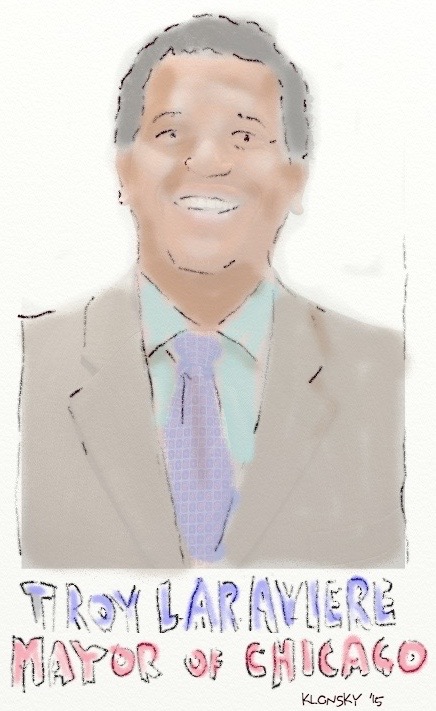
WGN: Principal Troy LaRaviere on teacher pensions. | Fred Klonsky

WGN: Principal Troy LaRaviere on teacher pensions. | Fred Klonsky:

WGN: Principal Troy LaRaviere on teacher pensions.

Troy for Mayor


 CHICAGO – The teachers’ pension crisis clouds every aspect of the Chicago Public Schools.

The district is running enormous deficits and demanding that teachers pay more.

But teachers say they didn’t cause the problem and it’s unfair to put the burden of on them.

Tonight, one Chicago principal is speaking out on what he says is the real problem with the pension crisis.

Troy Laraviere will challenge your pre-conceived notions just as quickly as he’ll challenge powerful interests, as he showed when he burst on the scene.

He is both an administrator and an agitator, so much so he was slapped with a warning by the Board of Education.

But Laraviere doesn’t seem worried about losing his job to speak his mind.

“I worry far more about the ability of the young people coming to CPS about the knowledge and skill set that they need to get any job than I worry about me keeping one job,” he said.

His road to this job really starts with his mother — a white woman who had a baby with and a black man, in the days when that was taboo.

“She was told that, by her mother that she couldn’t bring that child into her home. So she left. She was told to give it up for adoption or leave, so she left,” he recalled.

The family bounced between Bronzeville and Back of the Yards, thinking he would never amount to much anyway, he went straight from high school to the U.S. Navy at the age of 17.

“What is it about how I grew up, what is it about my life’s experiences that led me to having such a low assessment of myself?” he asks.

He enrolled at the University of Illinois without much of a plan. But once he saw his first report card – straight A’s – he had a revelation.

“I wanted to become a teacher, so that no kid like me would come through my classroom, and not have a sense of what his or her potential,” he said.

He became the principal at Blaine Elementary, and under his leadership the WGN: Principal Troy LaRaviere on teacher pensions. | Fred Klonsky:

RANDOM
Random Thoughts. SCOTUS appointment puts Kirk and NEA/IEA on the hot seat. | Fred Klonsky http://bit.ly/1omJVFn

Standards, Grades And Tests Are Wildly Outdated, Argues 'End Of Average' : NPR Ed : NPR

Standards, Grades And Tests Are Wildly Outdated, Argues 'End Of Average' : NPR Ed : NPR:

Standards, Grades And Tests Are Wildly Outdated, Argues 'End Of Average'

Giant finger pushing test-takers into bubbles


 Todd Rose dropped out of high school with D- grades. At 21, he was trying to support a wife and two sons on welfare and minimum wage jobs.

Today he teaches educational neuroscience at the Harvard Graduate School of Education. He's also the co-founder of Project Variability, a new organization devoted to "the science of the individual and its implications for education, the workforce, and society."
The End of Average
The End of Average
How We Succeed in a World That Values Sameness
Hardcover, 246 pages
purchase
In other words, Todd Rose is not your average guy. But neither are you.
In fact, he argues, absolutely no one is precisely average. And that's a big problem, he tells NPR Ed: "We've come to embrace a way of thinking about ourselves as people that was intentionally designed to ignore all individuality and force everything in reference to an average person."
Admissions offices, HR departments, banks and doctors make life-changing decisions based on averages. But Rose says that "works really well to understand the system or the group. But it fails miserably when you need to understand the individual, which is what we need to do."
Rose talked with us about his new book: The End Of Average: How We Succeed in a World That Values Sameness.
The opening example you use in the book is that in the 1940s, when the Air Force designed cockpits based on the average measurements of the pilots, there was an unacceptable number of crashes. But when they went back and measured thousands of pilots, across 10 body dimensions, they found that zero of them even came close to the "average" on all 10. So they concluded that they had to redesign the seats and so forth to be adjustable to each person.
Body size is a very concrete example of what I call jaggedness. There is no average pilot. No medium-sized people. When you think of someone's size you think of large, medium, small. Our mass-produced approach to clothing reinforces that. But if that were true you wouldn't need dressing rooms.
So dimensions like height and weight and arm length and waist circumference ...
Yes, they're not nearly as correlated as you would think. Height is one-dimensional, Standards, Grades And Tests Are Wildly Outdated, Argues 'End Of Average' : NPR Ed : NPR:

Why veteran teachers aren't surprised young people are shunning the profession - LA Times

Why veteran teachers aren't surprised young people are shunning the profession - LA Times:

Why veteran teachers aren't surprised young people are shunning the profession

Teachers
L.A. teachers rally in Grand Park in February 2015. In the last decade, there has been a 70% drop in people preparing to be California teachers.
 (Luis Sinco / Los Angeles Times)
dging from my email, a lot of California public school teachers are demoralized and questioning their career choices.
They're not at all surprised that fewer and fewer college students are going into teaching.
My column last week about a growing teacher shortage triggered a barrage of responses. Most of it came from current or retired teachers.
The volume and intensity matched what would be expected from a column about such contentious topics as guns, abortion or taxes.
"I am a retired teacher who years ago encouraged my children to go into teaching," one woman wrote. "Sadly, we are now strongly recommending that it is the last profession that my college-aged grandchildren consider."
The former Los Angeles Unified teacher asked for anonymity because "I still have exhausted, discouraged but dedicated family members teaching."
The retiree, now a classroom volunteer, wrote about one 8-year-old who is "confused, bored and frequently unaware of the need to use the bathroom," yet is not in special education. That's probably because there's a particular shortage of special ed teachers.
A 7-year-old, she continued, is the daughter of a woman "in and out of rehab [who] has taught her child that she should never obey the rules. So the student refuses to work, lies on the floor and screams, bullies classmates and uses profanity that would make a truck driver blush."
The retiree cited "teacher bashing, general disrespect for the profession … out of touch politicians and parents who either neglect their children or who set an example of disrespect and entitlement."
She concluded: "Young people are well advised to look elsewhere until society takes a good, hard and honest look at what they have done to the profession."
Scores of emails echoed her sentiments. Only a handful hailed the profession.
"Teaching is a hidden gem of a career that only needs a slight nudge to get young people into," wrote Bob, a retired high school teacher from the San Fernando Valley. He recommended "a modest advertising program and not so many hoops to get a teaching credential."
As for being burdened with nighttime paper grading, he said, "I did it for years until I noticed that most teachers were car key teachers. That's the only thing being carried to the parking lot."

How Many Education Secretaries Have Been K-12 Classroom Teachers? - Politics K-12 - Education Week

How Many Education Secretaries Have Been K-12 Classroom Teachers? - Politics K-12 - Education Week:

How Many Education Secretaries Have Been K-12 Classroom Teachers?

John-King-Jr-blog.jpg


Newly minted acting U.S. Secretary of Education John B. King, Jr. , who has been officially nominated to head up the Education Department, loves to weave his background as a social studies teacher into his speeches (especially when he's talking about how government works.) And a couple times lately, he's even played the former principal card (including when getting the attention of a room full of edu-advocates eager to hear about the presidents's budget proposal).
It turns out King is the very first former principal to serve as education secretary (or acting secretary). That got us wondering—how many other former classroom teachers have been at the helm of the department? How many had other sorts of teaching backgrounds?
And it seems that just four out of the eleven, or less than half of, the officials who have lead the department as secretary or acting secretary since its inception in 1980 were full-time K-12 classroom teachers at one point in their careers, according to our research team. Others though had done work in K-12 schools (like serving a big city superintendent) or taught at the university level. 
Want specifics? Here you go, in chronological order:
Shirley Hufstedler (served under President Jimmy Carter, a Democrat) 
K-12 classroom teacher? Nope, but she was a visiting professor at a few universities, including the University of California-Irvine, after her tenure. More here
Terrel H. Bell (served under President Ronald Reagan, a Republican)
K-12 classroom teacher? Yup. He taught high school chemistry, physics, and athletics in Eden, Idaho. Plus, he served as the superintendent of a bunch of school districts in the western U.S., including Salt Lake City. And he was the Utah state chief. More here
William J. Bennett (served under Reagan)
K-12 classroom teacher? Nope, but he had some college teaching experience, in philosophy and religion at the University of Southern Mississippi, plus some teaching posts at Boston University. More here
Lauro F. Cavazos (served under President George H.W. Bush, a Republican)
K-12 classroom teacher? No, he was more of a higher education guy. He taught at the Medical College of Virginia and at Tufts University School of Medicine in Boston (where he was also dean). And he was the president of Texas Tech University. More here
Ted Sanders (served as acting secretary under Bush)
K-12 classsroom teacher: Yes. He taught in Mountain Home, Idaho and for the Bureau of Indiana Affairs. Plus he was the state chief in Nevada and Illinois (also Ohio, but that was after his stint in the cabinet). More here
Lamar Alexander (served under Bush)
K-12 classroom teacher? Nope. He had more of a political background. But as governor of Tennessee, he was chairman of the Southern Regional Education Board, and was one of the most active governors on K-12 policy in the country. More here
Richard Riley (served under President Bill Clinton, a Democrat)
K-12 classroom teacher? Nope. But, like Alexander, he was very active early on in the standards movement, when he served as governor of South Carolina. More here
Roderick Paige (served under President George W. Bush, a Republican)
K-12 classroom teacher? Yes. He taught health and physical education, plus was a coach. Later, he became the superintendent of public schools in Houston (where he won superintendent of the year.) More here
Margaret Spellings (served under Bush)
K-12 classroom teacher? No, she had more of a political and higher education background, serving as the associate executive director for the Texas Association of School Boards, and as a top domestic policy in the White House before taking the helm at the department.
She took some flak at a hearing once from Rep. Mike Honda, D-Calif., himself a former teacher, who seized on the requirement in the No Child Left Behind Act that all teachers be highly qualified—and asked Spellings what qualified her to be secretary of education, given that she had never been a classroom teacher. Spellings said she had substitute taught—and that she was qualified given her work in the policy arena. More here
Arne Duncan (served under President Barack Obama, a Democrat)
K-12 classroom teacher? No, although he did other direct work with kids, including tutoring and mentoring, and held some high-level central office positions. He worked in a tutoring program started by his mother, and later ran the nonprofit Ariel Education Initiative. He also ran Chicago's magnet school program, served as deputy chief of staff, and later, superintendent of the Chicago public school district. More here
John B. King Jr. (serving as acting secretary under Obama)
K-12 teacher? Yes. He taught high school social studies in Boston and Puerto Rico, and co-founded a charter school in Roxbury, Mass. He was also a managing director with the nonprofit Uncommon Schools. And he later served as state chief in New York. More here
Library interns Rachel Edelstein and Connor Smith contributed research to this story.

Standardized test scores decline with each passing hour of school

Standardized test scores decline with each passing hour of school:

Standardized test scores decline with each passing hour of school

Standardized test scores decline with each passing hour of school
(HealthDay)—While the debate over the value of standardized testing continues, new research suggests that educators should also consider the timing of these tests.
The study found that students aged 15 and under suffered from  as the school day progressed, and that their  dipped later in the day. The effect appeared to be the greatest on those who scored the poorest—a hint that tests later in the day might hurt struggling students the most.
But there's , too: Students seemed to get a brain boost when they took tests after a brief break.
The researchers said their findings support the idea of giving kids some time off during the school day.
"If policymakers want to have longer days, then they should consider having more frequent breaks," said study co-author Francesca Gino, a professor of business administration at Harvard Business School in Boston.
The researchers also recommend that standardized tests be held at the same time of day, to avoid throwing off the results by making some kids take them when their brains are taxed.
The new study is unusual because it's so large and because it explores the role played by breaks during the day, Gino said.
However, the study was only designed to find an association between the time a test is taken and performance; it did not prove a cause-and-effect relationship.
The study appears in the Feb. 15 issue of the Proceedings of the National Academy of Sciences.
The researchers reviewed results from about 2 million national standardized tests taken by kids aged 8 to 15. The children attended public schools in Denmark from 2009-2010 and 2012-2013.
The findings revealed that test performance decreased as the day progressed. As each hour went by, scores
Read more at: http://phys.org/news/2016-02-standardized-scores-decline-hour-school.html#jCp


Monday, February 15, 2016

Dispute With New York City Threatens Success Academy’s Pre-K - The New York Times

Dispute With New York City Threatens Success Academy’s Pre-K - The New York Times:

Dispute With New York City Threatens Success Academy’s Pre-K


A critical deadline passed on Monday in a dispute between Success Academy charter schools and the de Blasio administration over the charter school network’s prekindergarten program, leaving its fate in doubt.
The disagreement arose last year after Success Academy refused to signNew York City’s contract for prekindergarten providers. As a result, the city has not paid Success for its prekindergarten program, which currently enrolls 72 children at three of the network’s schools.
In October, Success and a group of parents appealed to the New York State Education Department, accusing the city of violating state law by denying the network funds for its program. Last month, Success’s founder, Eva S. Moskowitz, wrote to the state education commissioner, MaryEllen Elia, saying that if the department did not make a decision “by February 15, 2016, we will have no choice but to cancel our pre-K classes for next year.”
On Monday, a spokesman for the Education Department said that it had not yet made a ruling.
“We’re moving as quickly as we can,” the spokesman, Dennis Tompkins, said. “It’s a complicated issue, and we want to get it right.”
A spokesman for Success Academy did not respond on Monday to an inquiry about whether the network would indeed cancel its prekindergarten program for next year.
The argument is another turn in a continuing battle between Ms. Moskowitz and Mayor Bill de Blasio, who served on the City Council together a decade ago. Mr. de Blasio is critical of charter schools, saying that they do not serve enough of the most difficult students and that they increase the burden on regular public schools. In his first year in office, he sought to block three Success Academy schools from getting space in public school buildings, only to reverse himself after Ms. Moskowitz’s supporters unleashed millions of dollars’ worth of television advertisements against him. Ms. Moskowitz repeatedly suggested that she might run against Mr. de Blasio when he sought re-election in 2017. In October she said that she had decided against it.
On the prekindergarten issue, Success argues that the city’s demand that it sign the contract violates state law, which it says gives a charter school’s authorizer, not the city, oversight of its prekindergarten programs. Success Academy’s schools are authorized by the State University of New York. The 

Fordham Institute Favors PARCC, Neglects Item Readability | deutsch29

Fordham Institute Favors PARCC, Neglects Item Readability | deutsch29:

Fordham Institute Favors PARCC, Neglects Item Readability


It seems that the Fordham Institute views itself as the grader of the corporate reform initiatives that it is paid to support. In July 2010, it graded the Common Core State Standards (CCSS) and state standards– and found in favor of CCSS in this highly questionable, slanted report.
In February 2016, Fordham Institute released another report, this time on supposedly grading CCSS assessments based on CCSSO (Council of Chief State School Officers) criteria. Why the CCSSO criteria matters is anybody’s guess. Still, Fordham Institute has time and money to publish whatever ti will, and what Fordham Institute, uh. “found,” was that the two federally-funded, consortium-developed CCSS assessments are tops:
As our benchmark, we used the Council of Chief State School Officers’Criteria for Procuring and Evaluating High-Quality Assessments. We evaluated the summative (end-of-year) assessments in the capstone grades for elementary and middle school (grades 5 and 8). (The Human Resources Research Organization evaluated high-school assessments.)
Here’s just a sampling of what we found:

Solutions to and Analysis of Louisiana’s Budget Crisis – Crazy Crawfish

Solutions to and Analysis of Louisiana’s Budget Crisis – Crazy Crawfish:

Solutions to and Analysis of Louisiana’s Budget Crisis

I’ve been seeing numerous vitriolic statements from various folks recently assigning blame to each other over Louisiana’s budget crisis.  For those of you who don’t know, Louisiana is short approximately one billion dollars of general funding revenue. We have to make that deficit up over the next 4 months or we will start defaulting on our financial obligations.  Next fiscal year, starting July 1st, we are looking at a 2 billion dollar deficit.
Our entire general fund is roughly 9 billion dollars.  One outspoken critic, who has little room to talk, is our State Treasurer, John Kennedy.  Kennedy should have been warning us before things got as bad as they are.  Kennedy has been issuing numerous proposals to fix the current crisis, however many of the proposals from our Treasurer are based on misappropriating federal funds – like those allocated to welfare and food stamp recipients by the federal government, or involve inconsequential amounts that will take years of investigations to realize.
clip_image001
The idea that “we should take care of our children before we take care of able bodied, childless adults” is a great philosophy and hard to argue with from an Solutions to and Analysis of Louisiana’s Budget Crisis – Crazy Crawfish:

A Retired Massachusetts Principal on her Teachers’ “Value-Added” | VAMboozled!

A Retired Massachusetts Principal on her Teachers’ “Value-Added” | VAMboozled!:

A Retired Massachusetts Principal on her Teachers’ “Value-Added”

A retired Massachusetts principal, named Linda Murdock, posted a post on her blog titled “Murdock’s EduCorner” about her experiences, as a principal, with “value-added,” or more specifically in her state the use of Student Growth Percentile (SGP) scores to estimate said “value-added.” It’s certainly worth reading as one thing I continue to find is that which we continue to find in the research on value-added models (VAMs) is also being realized by practitioners in the schools being required to use value-added output such as these. In this case, for example, while Murdock does not discuss the technical terms we use in the research (e.g., reliability, validity, and bias), she discusses these in pragmatic, real terms (e.g., year-to-year fluctuations, lack of relationship of SGP scores and other indicators of teacher effectiveness, and the extent to which certain sets of students can hinder teachers’ demonstrated growth or value-added, respectively). Hence, do give her post a read here, and also pasted in full below. Do also pay special attention to the bulleted sections in which she discusses these and other issues on a case-by-case basis.
Murdock writes:
At the end of the last school year, I was chatting with two excellent teachers, and our conversation turned to the new state-mandated teacher evaluation system and its use of student “growth scores” (“Student Growth Percentiles” or “SGPs” in Massachusetts) to measure a teacher’s “impact on student learning.”
“Guess we didn’t have much of an impact this year,” said one teacher.
The other teacher added, “It makes you feel about this high,” showing a tiny space between her thumb and forefinger.
Throughout the school, comments were similar — indicating that a major “impact” of the A Retired Massachusetts Principal on her Teachers’ “Value-Added” | VAMboozled!:

Equity, Race, Revolution & Reform in US Education: What has (not) changed? an anniversary program | Education Town Hall Forum

Equity, Race, Revolution & Reform in US Education: What has (not) changed? an anniversary program | Education Town Hall Forum:

Equity, Race, Revolution & Reform in US Education: What has (not) changed? an anniversary program

COMING THIS WEEK on the Education Town Hall —
To honor Black History Month and the Education Town Hall’s anniversary, join us on February 18, as host Thomas Byrd leads a conversation on where we are in U.S. education, in terms of equity, race, revolution & reform:  What has, and has not, changed since the mid-20th Century in U.S. education? Which, if any, school reform furthered racial equityWhat revolutions in education — in the classroom, through homeschooling, or otherwise — have succeeded, however locally or shot-term? Do mid-20th Century observations on education — from James Baldwin, Shirley Chisholm, Martin Luther King, Jr., and Black Panthers — still apply after 50 years or more?
Kymone_RonKymone Freeman, activist and homeschooling dad, will join feature reporter Virginia Spatz and engineer Ron Pinchback for this special anniversary discussion.
See below for some mid-20th Century statements on education: from James Baldwin, Shirley Chisholm, Martin Luther King, Jr., and Black Panthers. What, if anything, has changed?
Join the conversation Thursday, February 18, at 11 a.m. Eastern.
Listen via TuneIn or check back for recording.

The Education Town Hall broadcasts from Historic Anacostia
in Washington, DC, Thursdays at 11:00 a.m. Eastern
on We Act Radio.
Listen live via TuneIn.
Shows are archived for convenient listening shortly after broadcast.

Ed Notes Online: Rebecca Friedrichs in Mourning

Ed Notes Online: Rebecca Friedrichs in Mourning:

Rebecca Friedrichs in Mourning

The anti-union case being heard today by the Supreme Court: A backgrounder
Friedrichs: Please, pay me less.

Untold story: How Scalia's death blew up an anti-union group's grand legal strategy

http://www.latimes.com/business/hiltzik/la-fi-mh-scalia-s-death-anti-union-group-legal-strategy-20160214-column.html

The anti-union lawsuit known as Friedrichs vs. California Teachers Assn. is widely viewed as one of the leading casualties of Supreme Court Justice Antonin Scalia's death.

What's less well-known is how the anti-union plaintiffs connived to fast-track the case through the federal judiciary in order to get it before the court while it still harbored a conservative majority. Their method was to encourage the lower courts to rule against them, so they could file a quick appeal. But Scalia's passing is likely to leave a 4-4 deadlock over the case, so the last ruling, in which the U.S. 9th Circuit Court of Appeals ruled for the teachers union, remains in force.
This wasn't how the anti-union group behind the lawsuit, the Center for Individual Rights, expected things to work out. As we write, the group's website still features a photograph of nominal plaintiff Rebecca Friedrichs and the center's lawyers standing in front of the Supreme Court on Jan. 10, looking plenty chuffed about that morning's oral arguments, which plainly went their way. The poet Robert Burns had a line for the subsequent developments: "The best-laid schemes o' mice an' men gang aft agley."*  
 
Here's the background, drawn in part from our previous coverage here and here.
The target of the Friedrichs lawsuit, and several others just like it, is the "agency" or "fair share" fee. Under the law and Ed Notes Online: Rebecca Friedrichs in Mourning:


Seattle Schools Community Forum: Protecting Your Student's Data (and Your Privacy)

Seattle Schools Community Forum: Protecting Your Student's Data (and Your Privacy):

Protecting Your Student's Data (and Your Privacy)

The Department of Education is seeking comment on a new student database.  From Student Privacy Matters:

The U.S. Department of Education intends to create a new student database to house the personally identifiable information of 12,000 students, 500 teachers and 104 principals from 104 unidentified schools in 12 school districts across the country.

The information collected on students will include vast amounts of sensitive data including, but not limited to, standardized test scores, race/ethnicity, individual education plan status, and discipline records in order to facilitate “a rigorous study of the effectiveness of providing data-driven instruction professional development to teachers and principals.” The Department of Education is accepting public comments about its data-collection plans untilFebruary 18, 2016.  There was an article about this plan in the Washington Post last month, before the comment period was extended.

Please send in your comments and join the Parent Coalition for Student Privacy in telling the Department of Education that the federal government should 
Seattle Schools Community Forum: Protecting Your Student's Data (and Your Privacy):

Understanding How Our Brains Learn | Creative by Nature

Understanding How Our Brains Learn | Creative by Nature:

Understanding How Our Brains Learn

Image
Over the last 30 years or so, researchers in cognitive science, education and developmental psychology have discovered some amazing things about how the human brain works, how our minds are naturally configured to develop skills, think creatively and continuously learn.
You’ve probably heard that we each use only about 10% of our brains. That’s not quite accurate. Actually, while we probably use less than 40% of the brain at any given moment, the patterns and regions of activation shift continuously throughout the day.
These PET scans (above) can help to make this discovery easier to understand. For every kind of structured activity you engage in there is a corresponding “skill” pattern of brain activity in your head- coordinated with specific sensory input, thoughts, emotions and movements of the body.
Constructing complex knowledge representations and skill patterns is what the brain does best, its designed for continuous growth and learns from direct observation, practice and experience. Since early childhood, our brains have constructed hundreds of unique skill patterns, what the developmental psychologist Donald Ford calls “behavior episode Understanding How Our Brains Learn | Creative by Nature: