Latest News and Comment from Education

Saturday, February 13, 2016

Keeping retirement weird. I could have been a contender. | Fred Klonsky

Keeping retirement weird. I could have been a contender. | Fred Klonsky:

Keeping retirement weird. I could have been a contender.

somebody


 Retirement has meant me working out on a regular basis with my trainer Mike at the gym. Not as regular as my trainer Mike would like.

But, you know.

Regular.

The results of the past three years seem remarkable to me. I am down 20 to 30 pounds, depending on the month and the level of my dining self-discipline. And I feel better. I hurt less. I can bend over to pick up Ulysses’ dog poop without uttering a strange noise. I have biceps that nearly fill the sleeves of my smaller t-shirts. I can’t say that I love workouts. But I am happy with the results.

Last week I put on the boxing gloves for the first time and started hitting the boxing pads Mike holds up.

I beat up a punching bag.

I love this exercise.

It’s hard work. I sweat.

I visualize people who have pissed me off in public life and in my personal Keeping retirement weird. I could have been a contender. | Fred Klonsky


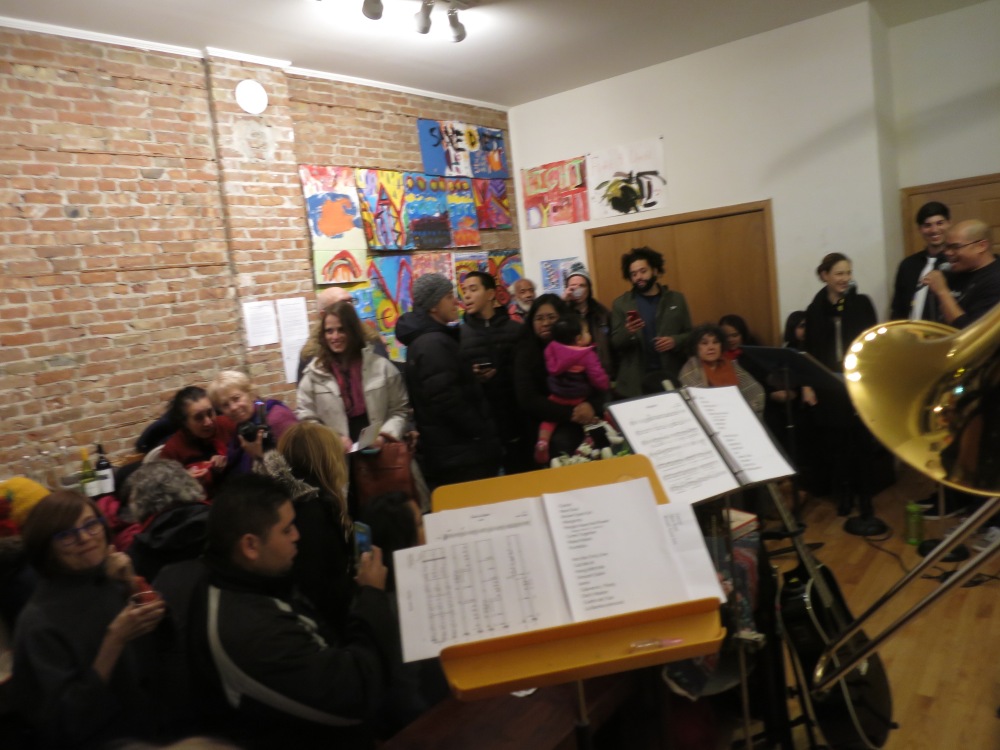
Art + Activism. Our exhibit opened last night.


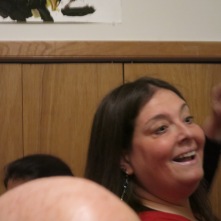
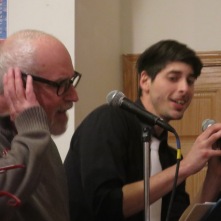
A constant flow of friends and Chicago’s activists kept the Uri-Eichen Gallery packed to the gills most of the night for the opening of an exhibit of work by my friend Ellen Gradman and me.
Spoken word artist Jalen – he enters Whitney Young High School in the fall Art + Activism. Our exhibit opened last night.

Till:Rice

Russ on Reading: Want Great Literacy Instruction? Trust the Teacher

Russ on Reading: Want Great Literacy Instruction? Trust the Teacher:

Want Great Literacy Instruction? Trust the Teacher


 In the final chapter of the book, Research-Based Practices for Teaching Common Core Literacy, James V. Hoffman and P. David Pearson take an historical perspective on where trust is placed in the teaching of reading. Summing up more than three-hundred years of literacy education history, the authors conclude that education policy has consistently put its trust in programs rather than in teachers. Hoffman and Pearson believe this has been a mistake of historic proportions. I agree.


Teachers have rarely been given the respect they deserve as the knowledgeable professionals they are; as the persons in the best possible position to make the instructional decisions on the fly that will assist the developing reader to become a literate individual. Throughout education history all sorts of programs have been touted as "teacher proof" systems sure to bring students to literacy if compliant teachers just implement them with fidelity. And so we have seen one program after another: the alphabet-spelling method, the "look-say" method, the Dick and Jane basal readers, phonics driven Direct Instruction (DISTAR), etc., etc., etc. Interestingly, no independent research has ever found one reading program to be superior to another. All have strengths and weaknesses and all 
Russ on Reading: Want Great Literacy Instruction? Trust the Teacher:

With A Brooklyn Accent: Privatizing What Should Be Public; The True Face of Inequality in Parks and Schools in NYC

With A Brooklyn Accent: Privatizing What Should Be Public; The True Face of Inequality in Parks and Schools in NYC:

Privatizing What Should Be Public; The True Face of Inequality in Parks and Schools in NYC


 During the late 1970's, under pressure from a banker led Emergency Financial Control Board, two important public agencies- the Department of Parks and the Department ( then the Board) of Education made draconian budget cuts that would dramatically change the face of New York City for the next 40 years.

The Parks Department, forced to slash its budget in half, dramatically pared down its staff for maintaining trees, meadows and ball fields and eliminated the position of recreation supervisor ( "parkie) from the thousands of vest pocket parks around the city
The Department of Education eliminated its great after school programs and night centers and shut down the music programs in its middle schools and high schools which served hundreds of thousands of youngsters a year, produced thousands of professional musicians and were the pride of city schools.
These cutbacks had immediate and tragic consequences. Parks and ball fields around the city began to deteriorate, with weeds growing on diamonds and grass rarely cut. And young people were suddenly and shockingly derived of the mentoring and arts and sports instruction they once received in parks and schools. The city became a meaner place, with young people all over set adrift and lacking opportunities they once had.
But not in all neighborhoods. In the city's wealthier communities, especially those adjoining Central Park, private funding stepped into the breach, replacing the services that were cut in parks through the creation of private maintenance organizations, and swelling the coffers of PTA's in schools in wealthy neighborhoods with the funds to support first rate arts and music programs.

School Choice Fails to Make a Difference - Bloomberg View

School Choice Fails to Make a Difference - Bloomberg View:

School Choice Fails to Make a Difference

This is the kind of news that school-choice advocates and skeptics alike need to pay attention to: The Economist magazine reports that a team of academic economists found that students who won a lottery in Louisiana to receive vouchers to go to the public or private school of their choice did worse than students who didn't win the lottery.
This outcome flies in the face of the predictions of many economists, who often tout school choice as a way to improve the U.S. educational system while also increasing equality of opportunity. Economists typically assume that people are rational and well-informed, and will make decisions that benefit them. If giving students and their parents more school choice hurts the students academically, then something is seriously wrong with the theory.
The Louisiana finding is just a more extreme version of a fairly typical finding. School-voucher programs rarely actually hurt students, but most produce little if any positive effect. A recent survey paper by economists Dennis Epple, Richard Romano and Miguel Urquiola, covering many randomized studies similar to the Louisiana study, found that the typical voucher program does nothing for test scores. The researchers report:
The evidence does not suggest that awarding students a voucher is a systematically reliable way to improve their educational outcomes. A…large proportion of the best-identified studies suggest that winning a voucher has an effect on achievement that is statistically indistinguishable from zero.
An example of the programs covered in the Epple et al. survey is Washington’s Opportunity Scholarship Program, which began in 2003. This program awarded vouchers to thousands of low-income children in the metropolitan area. Epple et al. report on a 2010 studyfinding that the program had no detectable impact on test scores in either the short term or the long term. Studies of other programs tell School Choice Fails to Make a Difference - Bloomberg View:


Success Academy undercover video shows no-excuses discipline at its ugliest.

Success Academy undercover video shows no-excuses discipline at its ugliest.:

That Brutal Charter School Video Shows That Rich People Love No-Excuses Discipline ... for Other People’s Kids


 oday, the New York Times published undercover video taken at a Success Academy elementary school in Brooklyn that’s part of the controversial charter network known for “no excuses” discipline. It shows a first grade teacher berating and humiliating a girl who stumbles when solving a math problem. The teacher, Charlotte Dial, rips up the student’s paper and barks, “Go to the calm-down chair and sit!,” though by all indications, the girl was already sitting calmly. “You’re confusing everybody,” the teacher says, her voice seething. “I’m very upset and very disappointed.” I found the video shocking and disturbing; other parents I know said they couldn’t bear to watch the whole thing.

According to reporter Kate Taylor, an assistant teacher who was concerned by Dial’s “daily harsh treatment of the children” filmed the scene surreptitiously. Success Academy’s founder, Eva Moskowitz, as well as some of the parents whose children attend the school insisted that Dial’s behavior was anomalous. “But interviews with 20 current and former Success teachers suggest that while Ms. Dial’s behavior might be extreme, much of it is not uncommon within the network,” Taylor writes. She quotes a former Success Academy assistant principal: “It’s this culture of, ‘If you’ve made them cry, you’ve succeeded in getting your point across.’”

As it happens, the Success Academy where the video was filmed is a few blocks from my apartment in the hyper-gentrifying neighborhood of Cobble Hill, Brooklyn. Cobble Hill has been affluent for a while, but in recent years, there’s been an influx of the really rich; early this year, a nearby townhouse sold for $15.5 million. Last year, a friend whose son started kindergarten at our local public elementary school, P.S. 29, was shocked when she realized his class was entirely white. By contrast, if you watch the Success Academy video, you’ll notice that the students, whose faces are blurredSuccess Academy undercover video shows no-excuses discipline at its ugliest.:

Marie Corfield: The Day NJ Parents Occupied the State DOE

Marie Corfield: The Day NJ Parents Occupied the State DOE:

The Day NJ Parents Occupied the State DOE

The February 10th NJ State Board of Education meeting was a watershed moment in the NJ Opt-Out movement. Here's my report from the field.


 Newton's third law says that for every action, there is an equal and opposite reaction. 


So, when Commissioner Hespe, sitting smugly on his throne at the February 10th State Board of Ed meeting and borrowing a page from Arne Duncan’s book of anti-middle class rhetoric, proclaimed the NJ Opt Out movement last year was nothing more than a bunch of high school students* not wanting to take the test...

As Bari Ehrlichson gushed over the wonderfulness and fabulousness of the CCSS and PARCC, and practically compared Language Arts writing prompts currently used by elementary school teachers to coloring books...

As Hespe proclaimed, “This is what educators want! This is the promise and we’re delivering!”...

As board member Dorothy Strickland, stricken with a severe case of the vapors over the CCSS and PARCC, proclaimed, “I’m so thrilled!... Delighted!”...

... a storm was brewing. 

Parents were traveling from all over the state to Trenton for the afternoon session of testimony. 

I've attended and testified at many State Board of Ed meetings, but this one was Marie Corfield: The Day NJ Parents Occupied the State DOE:

Romano: The topsy-turvy tale of charter schools and whom they really serve

| Tampa Bay Times

Romano: The topsy-turvy tale of charter schools and whom they really serve<p></p> | Tampa Bay Times:
Romano: The topsy-turvy tale of charter schools and whom they really serve


 Here is a hand basket.

And here is your state Legislature continually packing Florida up like so many groceries ready for final delivery.
Granted, today's outrage is more sneaky than blatant. It's more sleazy than audacious. Still, it gets high marks for being both shameless and, in the long-term, dangerous.
The subject itself — money for school construction — sounds like a bit of a snooze. But the devil, and his Tallahassee minions, are in the details.
Let's begin with the guy driving this mess.
Rep. Erik Fresen, a font of smiling insincerity, wants the state to turn most of its school construction and renovation funds over to companies that run charter schools.
Never mind that traditional schools outnumber charters about 6-to-1. Never mind that from 2009-14, charters got $312 million in capital funds and traditional schools got a pat on the head. Never mind that practically 1 out of every 4 charters eventually closes and that taxpayer money is forever lost.
Nope, let's forget all of that for a minute, and focus on Fresen, a Republican from Miami.
The guy the Miami Herald reports earns $150,000 a year consulting for an architecture firm that specializes in — I can't make this up — building charter schools. The guy whose sister and brother-in-law are executives with one of the state's largest charter operators.
Now who thinks that might be a conflict of interest for a politician in charge of divvying up construction funds between charters and traditional schools?
But perhaps I'm being unfair.
After all, the original mission of charter schools in Florida was certainly admirable. Charters were considered cutting edge education in the 1990s, and they were supposed to pick up the slack in areas where public schools were failing.
It was even spelled out in Florida's original charter school statute:
The schools were to have "special emphasis on expanded learning experiences for students who are identified as academically low achieving.''
That sounds like at-risk kids. Poor kids. Minority kids.
And yet all these years later, that's not what's happened.
For instance, based on the data included in the Florida Department of Education's school grades released Romano: The topsy-turvy tale of charter schools and whom they really serve<p></p> | Tampa Bay Times:

School policies have gotten smarter in the decade after ‘No Child Left Behind’ - The Washington Post

School policies have gotten smarter in the decade after ‘No Child Left Behind’ - The Washington Post:
School policies have gotten smarter in the decade after ‘No Child Left Behind’


Michael J. Petrilli is president of the Thomas B. Fordham Institute. Chester E. Finn Jr. is a distinguished senior fellow and president emeritus of the institute. Both hold fellowships at Stanford University’s Hoover Institution.
A decade ago, U.S. education policies were a mess. It was the classic problem of good intentions gone awry.
At the core of the good idea was the common-sense insight that if we want better and more equitable results from our education system, we should set clear expectations for student learning, measure whether our kids are meeting them and hold schools accountable for their outcomes, mainly gauged in terms of academic achievement.
And sure enough, under the No Child Left Behind law, every state in the land mustered academic standards in (at least) reading and math, annual tests in grades three through eight and some sort of accountability system for their public schools.
Unfortunately, those standards were mostly vague, shoddy or misguided; the tests were simplistic and their “proficiency” bar set too low; and the accountability systems encouraged all manner of dubious practices, such as focusing teacher effort on a small subset of students at risk of failing the exams rather than advancing every child’s learning.
What a difference a decade makes. To be sure, some rooms in the education policy edifice remain a mess. But thanks to the hard work and political courage of the states, finally abetted by some unquenchable leaders in Washington, the core elements of standards-based reform have seen a reasonably thorough cleansing and dramatic upgrade.
Take the academic standards themselves. We and our colleagues at the Thomas B. Fordham Institute have been fans of the Common Core standards. By our lights, they’re dramatically clearer and stronger than most of the state standards they replaced (and on par with the rest). They do a good job of School policies have gotten smarter in the decade after ‘No Child Left Behind’ - The Washington Post:

Sacramento’s next mayor has a full plate | The Sacramento Bee

Sacramento’s next mayor has a full plate | The Sacramento Bee:
Sacramento’s next mayor has a full plate


After eight years of Kevin Johnson, Sacramento’s next mayor will be a very different politician and personality. Which is fine because what the city requires right now is less celebrity and drama. It needs a steady, intelligent leader to build on Johnson’s accomplishments – and take on new challenges.
So far, the campaign between the two main contenders – City Councilwoman Angelique Ashby and former state Senate leader Darrell Steinberg – has been mostly about raising money and collecting endorsements.
In the three months before mail balloting starts for the June 7 primary, Ashby and Steinberg owe it to voters to be crystal clear on where they want to take the city and how they’d get there. To start with, neither of their campaign websites have a section on where they stand on the issues, which is surprising and disappointing. They should fix that, pronto.
There’s no shortage of subjects on which voters need to know their positions. The next mayor will have a full plate – issues that will carry over from the Johnson era, but also new ones. Just to name a few:
▪ Downtown: The new arena is jump-starting downtown redevelopment, but other major public projects are on the horizon. It appears likely that the next mayor and City Council will make the final decisions on whether to renovate the Community Center Theater, expand the Sacramento Convention Center or even build a brand new performing arts center – and where to get the money.
▪ Crime: Violent crime is on the rise after years of decline. While anti-gang and other efforts must be beefed up in the hardest-hit neighborhoods, the city needs to follow through on its long-term strategies of adding patrol officers, partnering with community leaders and diversifying the police force. The next mayor should listen closely to any recommendations from the new Community Police Commission.
▪ Jobs: In his final State of the City speech, Mayor Johnson focused on growing the city’s innovation economy. There are some promising prospects, but it’s essential that the city do what it can to attract middle-class jobs beyond construction and government.
▪ Infrastructure: The city is headed toward raising water and sewer rates again to finish installing water meters and repair pipes and facilities. An increase in storm drainage rates could be coming in 2017. The next mayor must help make sure that the work is done efficiently and without too much disruption, and that those least able to pay get more help.
▪ Regional cooperation: Too often, Sacramento’s leaders don’t work closely with their peers in surrounding cities. Collaborating with West Sacramento on developing the riverfront and on building a streetcar line could usher in a welcome new era.
▪ Homeless: Frequent protests are a vivid reminder that homelessness hasn’t been resolved. City and county leaders must still come up with a smart, long-term strategy and stick with it. The next mayor should be an active participant in that conversation.
▪ Pensions: The city has made some progress, but must continue trying to trim retirementSacramento’s next mayor has a full plate | The Sacramento Bee:


Read more here: http://www.sacbee.com/opinion/editorials/article60109566.html#storylink=cpy

Rick Snyder's Gag Order Fails to Block Teachers - HeraldCourier.com: News

Information freeze thaws after injunction on election law - HeraldCourier.com: News:

Information freeze thaws after injunction on election law


 LANSING, Mich. (AP) — An information freeze on local and school officials is thawing after a federal judge put a preliminary injunction on a new Michigan election law that critics called a "gag order."

The injunction was a relief to many local and school officials fearful of legal repercussions for distributing information about upcoming ballot proposals. Gov. Rick Snyder had signed the legislation into law early this year.
Some local officials say they're once again holding public meetings, talking to media and distributing information about some of more than 100 upcoming money-related local ballot proposals up for vote. Others said the law only stopped them from using taxpayer money for mass mailing, robo calls and TV or radio advertising campaigns.
The law confused many. Now that the injunction is in place, some local officials are rushing to spread the word about their city, county, or township proposals.
Dickinson County Clerk Dolly Cook said she's scrambling to inform voters about 12 proposals. That includes a 911 dispatch millage renewal, a service that can't function without tax money.
"We do need to get (information) out, like I'm on the radio once a month," Cook said. "And man, I'll tell you what, when they put that out I didn't say a word because you're looking at a $20,000 fine. I'm glad the injunction is there."
Benton Harbor Area Schools has a $6.062 million millage renewal request on the ballot. Chief Financial Officer Scott Johnson for the Berrien Regional Education Service Agency said the agency is "seriously considering" sending information about the proposal with the injunction in place.
Superintendents from Pontiac School District and Pittsford Area Schools also say they're happy about the injunction. The Pontiac School District has a $27.6 million millage renewal proposal over the next 20 years. Pittsford has several bonding proposals that would help fix a leaky roof in a 1939 section of the school, repair old bathrooms and add electrical outlets to classrooms.
The new law stopped them and other local governments from distributing information about upcoming ballot proposals 60 days before an election through mass mailing campaigns, robo calls and television or radio ads. The law was meant to curb the use of taxpayer money to spread biased interpretations of proposals, a practice that supporters of the change called "electioneering."
U.S. District Judge John Corbett O'Meara issued the injunction about a week ago citing vague and confusing language after 18 plaintiffs — mostly school and local officials — filed a lawsuit against the state and secretary of state over the law.
One plaintiff, Dowagiac Mayor Donald Lyons, said he was concerned about language he thought prohibited the use of city resources for informing voters about proposals.
"What defines a city resource? Am I, as a mayor, a city resource? They're spending money, and I'm a resource, so does that mean that I can't speak on this issue?" Lyons asked. "The whole thing was very confusing, and I felt Information freeze thaws after injunction on election law - HeraldCourier.com: News:

Friday, February 12, 2016

Guest columnist: Privatizing our schools

Guest columnist: Privatizing our schools:

Privatizing our schools


Just Like Michelle Rhee's Students first only BETTER


Astroturf lobbying refers to political organizations or campaigns that appear to be made up of grassroots activists but are actually organized and run by corporate interests seeking to further their own agendas. Such groups are often typified by innocent-sounding names that have been chosen specifically to disguise the group's true backers

Several NC news outlets recently ran a guest editorial from Darrell Allison, president of Parents for Education Freedom in North Carolina, indicating that there is a grass roots parent revolution demanding vouchers and charter schools as “schooling-choice options,” particularly for low-income families.
Factual examination reveals no parent revolution that ordinary families are leading. Three organizations, Parents for Education Freedom in North Carolina (PEFNC), Partners for Educational Freedom in North Carolina, and North Carolina Citizens for Freedom in Education Independent Expenditure PAC, lead the school privatization movement in NC. They share the same Raleigh address and have overlapping staff.
PEFNC is a nonprofit established in 2005 to advocate for public school privatization and charter school expansion, funding derived from the Walton Family Foundation, according to tax documents. Tax records show Allison received $107,889 for his work running the non-profit in 2010, $156,582 in 2012, and $167,085 in 2013. The NC Governor’s salary is $142,265 and State Superintendent of Public Instruction earns $125,676. In 2015, HB 535 proposed allocating $1 million a year to PEFNC to distribute taxpayer dollars to new charter schools in our state. Giving an independent nonprofit the discretion of allocating tax dollars without public oversight did not make the final budget but is expected to rise again.
Partners for Education Freedom in NC (PEFNC2) is a “social welfare” nonprofit. Allison is also president of PEFNC2. 2013 revenue was $500,000, all of it from American Federation for Children, a Washington, D.C. nonprofit that advocates for school privatization. PEFNC2 manages a political action committee that makes contributions to NC candidates for state office. All four members of PEFNC2 serve on the board of PEFNC. PEFNC2 pays for lobbyists, political contributions, TV and radio ads, and outreach to promote vouchers and charter schools.
North Carolina Citizens for Freedom in Education Independent Expenditure PAC (PAC) was formed in 2010. Information about this PAC is limited. What is known? The president of PEFNC serves as its custodian of books and PAC contributes to lawmakers who support vouchers and charter schools.
The work of these well-funded entities, supported by some lawmakers and Gov. McCrory, resulted in a budgeted voucher expansion, funneling more than $40 million in taxpayer funds into unaccountable private schools that may discriminate in their admissions policies. Charter schools receive over $366 million in taxpayer dollars. Charter schools are growing in number but are less accessible to children in poverty and children with special needs. Charter schools do not have to offer transportation or lunch to students. Duke University professors in a 2015 study reported a troubling trend of resegregation in charter schools.
Two online charter schools operate in our state, NC Connections Academy (owned by the British multinational corporation Pearson PLC) and Virtual BAcademy (part of Virginia-based K-12, Inc.) Both have lost 19-20 percent of total enrollment. Virtual schools were allocated $14.3 million in public funding. Their funding is based on a one-day count of student membership. Student withdrawals do not affect funding to Guest columnist: Privatizing our schools:


Report offers strategies to create successful community schools | EdSource

Report offers strategies to create successful community schools | EdSource:

Report offers strategies to create successful community schools

California’s new school finance system and the state’s rules regarding Medi-Cal are making it easier for low-performing schools to transform themselves, according to a recent report.

Some of those schools are becoming community schools, which emphasize student and community engagement and work with outside partners to provide health, social and other services to students and their families. Across the country, about 5,000 community schools serve about 5 million students, according to the report, “Transforming Struggling Schools into Thriving Schools,” released this month by The Center for Popular Democracy, theCoalition for Community Schools and the Southern Education Foundation.
The report — which highlights Social Justice Humanitas Academy, a high school in the San Fernando Valley, as a model community school — recommends six strategies that schools can employ to transform themselves. One of the strategies is providing on-campus resources for students, such as health and dental care and mental health counselors.
California supports that strategy in two ways. The state allows on-campus health clinics to accept Medi-Cal payments for health services for low-income students. Medi-Cal is the state’s version of the federal health care program, Medicaid. And the Local Control Funding Formula — which provides extra funding for low-income students, English learners, and foster and homeless students — allows districts and schools to funnel some of those funds into mental and physical health services.
At the Social Justice Humanitas Academy, a mobile health van comes once a week offering health, dental and eye care. Students with significant mental health problems such as depression have access to mental health counselors on campus. A student women’s caucus and a student men’s group meet each Report offers strategies to create successful community schools | EdSource:


United Opt Out National Fifth Annual Event in Philadelphia, Feb. 26th - 28th

PRESS RELEASE from United Opt Out National for Immediate Release: February 12, 2016: Fifth Annual Event in Philadelphia, Feb. 26th - 28th - UNITED OPT OUT: The Movement to End Corporate Education Reform:

United Opt Out National Fifth Annual Event in Philadelphia, Feb. 26th - 28th

UNITED OPT OUT: The Movement to End Corporate Education Reform
United Opt Out National is hosting their fifth annual event.  This year’s sold- out conference, “Transcending Resistance, Igniting Revolution,” takes place in Philadelphia from February 26th to 28th. Keynote speakers include  Antonia Darder, Chris Hedges, Bill Ayers, Stephen Krashen, and Jill Stein. In an effort to include the greater Philadelphia community, a pre-conference United Opt Out Town Hall will take place on Thursday, February 25th. Place and time will be posted on the website.
United Opt Out, vehemently opposed to the components of the Every Student Succeeds Act ( ESSA) that are tantamount to a Black Friday sale of public education,  will take this opportunity to voice concerns and refine plans to push back against the privatization efforts this bill attempts to secure.  Unfortunately, it continues the failure to secure an equitable learning environment for all children as it continues the damaging ranking, sorting, and maligning of children.  During this conference, attendees will dig into each component of the bill, clarify its purpose for the public, and brainstorm demands and direct actions to advocate the changes needed to end the continued punitive and exploitive aspects of the federal law. Additionally, the conference will organize a diverse body of educators, support staff, students, parents, and citizen volunteers into working groups to devise solutions that promote healthy curricular innovations, that promote the attraction and nurturing of qualified and career focused people into the education field,  that promote the implementation of appropriate and safe technology infusion, that promote wrap around support services, abundant materials support, and symbiotic public/private partnerships absent of one-sided exploitation.  Philadelphia, one of the hotbeds of the privatization effort, is the perfect locale to critique current legislation and brainstorm for direct actions that coordinate with the following organizational goals adopted by United Opt Out administrators:
1.  Push legislators to embrace “the original intent of ESEA, which was to facilitate equitable, thriving, and successful public education for all schools via distribution of funding free of strings attached other than need and a comprehensive and viable game plan for success.
2.  Push for the collection of data that reveals how well resourced and integrated individual schools, districts, and states are, in an effort to appropriate state and federal funding that negates the harmful effects of racism and poverty.
3.  Push for protections for the teaching profession and public school funding that ESSA policy attempts to tear down via the implementation of faulty alternative teacher certification programs and the unregulated charter industry.
4.  Continue to develop and engage in opt out campaigns with a special focus on engaging non-whites, students with disabilities, second language, and impoverished communities and assist parents and students in the resistance to Competency Based Education (CBE) that involves too much unsafe student engagement in screen time, too much opportunity for data collection and privacy violation, and too much sub-par pedagogy.
5.  Educate established civil rights groups as to the underlying harm in supporting policy created by those who serve a corporate agenda that ultimately harms students and their educators and encourage them to join the resistance that fights for creative, non-status-quo inventiveness coming from those most impacted: teachers, non-Whites, women, and special needs, second language, and impoverished students.
6.  Join the campaign to end Citizens United, the unrestrained corporate spending used to tear down democratic thought, action and any semblance of a country which believes in the common good; facilitate election campaigns for school boards, federal and state legislative bodies, PTA /PTSA, union leadership, and local community leadership; and join with other like-minded organizations to alert local, state, and national groups to vote in leaders who support public education and demand that ESSA be returned to its original intent.
Over the last four years United Opt Out has been successful in making Opt Out mainstream. It has not done it alone.  It is only through collective effort and unyielding resistance to the corporate take-over of public education that an equitably funded, democratically based, anti-racist, desegregated public school system for all Americans that prepares students to exercise compassionate and critical decision making with civic virtue can be realized.
 PRESS RELEASE from United Opt Out National for Immediate Release: February 12, 2016: Fifth Annual Event in Philadelphia, Feb. 26th - 28th - UNITED OPT OUT: The Movement to End Corporate Education Reform:


Posted on February 12, 2016
Contact: United Opt Out National
FOR IMMEDIATE RELEASE

Jersey Jazzman: "Success"

Jersey Jazzman: "Success":

"Success"


Looks like Eva Moskowitz has yet another p.r. disaster to contend with, courtesy of the New York Times: a one-minute video of a Success Academy teacher ripping into her first grade student because... well, honestly, I can't tell. Clearly, the girl in the video gets something wrong on her math problem -- but it's also clear this burst of anger from the teacher was a long time coming.

Of course, what Charlotte Dial does in this video is really horrible teaching; even she admits that. If Success Academy knew that she had behaved this way even once, they should have intervened and let her know in no uncertain terms how unacceptable what she did was. And if she did it again, she should have been removed from the classroom.

The fact that Dial is white and the student is black makes this especially troubling. I'm all for teachers being authoritative, but too many students of color are living a school experience where they are dehumanized by teachers of a different race. To be clear: I don't think this is confined just to "no excuses" charter schools; we've seen far too many examples of bad behavior against students of color in public district schools to pretend that it's only the charters that are guilty of perpetuating a hidden curriculum.

That said, I'm not about to say, on the basis of a one-minute video, that Dial should be fired immediately. If any teacher tells you that they've never said anything to a student that they later regretted, they're either lying, deluded, or a living saint.

Teaching is hard, frustrating work -- especially if you actually give a damn about your - See more at: http://jerseyjazzman.blogspot.com/2016/02/success.html#sthash.TtRgWt2j.dpuf