Latest News and Comment from Education

Monday, June 15, 2015

4LAKids - TORLAKSON GREEN-LIGHTS TEACHER PAY RAISES IF THEY FURTHER LCFF GOALS

4LAKids - some of the news that doesn't fit: TORLAKSON GREEN-LIGHTS TEACHER PAY RAISES IF THEY FURTHER LCFF GOALS:

TORLAKSON GREEN-LIGHTS TEACHER PAY RAISES IF THEY FURTHER LCFF GOALS


Torlakson green-lights teacher pay raises for union allies -- 6.15.2015  ::  Last week, state schools Superintendent Tom Torlakson sent a letter to superintendents that skinned back on Breshears’ relatively strict interpretation of the LCFF rules, saying it “supersedes that letter.” The money could be used for general salary increases, Torlakson declared, if they furthered LCFF goals.

...a district must demonstrate in its LCAP how this use of the grant funds will increase or improve services for unduplicated pupils as compared to services provided all pupils. This should be in proportion to the increase in supplemental and concentration funds apportioned on the basis of the number and concentration of unduplicated pupils."

Walters column in Sacramento Bee


4LAKids - some of the news that doesn't fit: TORLAKSON GREEN-LIGHTS TEACHER PAY RAISES IF THEY FURTHER LCFF GOALS:


Turkish religious movement influence alleged at Ohio school - Yahoo Finance

Turkish religious movement influence alleged at Ohio school - Yahoo Finance:

Turkish religious movement influence alleged at Ohio school

Filing alleges Turkish religious movement at work inside Ohio charter school; operator says no


COLUMBUS, Ohio (AP) -- A recent court filing raises anew allegations a Turkish religious movement is wielding influence inside a chain of Ohio charter schools targeted in federal raids last year, claims the schools' operator maintains are false.
An ex-employee of Horizon Science Academy Denison Middle School made the allegations in a May affidavit filed in Cuyahoga County Common Pleas Court in an ongoing discrimination lawsuit brought by his wife, a fired teacher.
Mustafa Emanet, who worked at the school from August 2006 to May 2009, says followers of the moderate Islamic cleric Fethullah Gulen brought him to the U.S. from Turkey without a job interview, demanded cash kickbacks to the Gulen movement from his pay and pension and repeatedly deceived the U.S. government.
Emanet, of Elyria, says the school's Turkish teachers and administrators were called to exclusive staff meetings, attended religious retreats and made regular visits to the Poconos compound where Gulen lives in exile. Emanet says he saw a man who was with him on a 2007 trip to the compound deny any connection to Gulen in a 2012 television interview.
The Chicago-based Concept Schools, which operates the Horizon and Noble academies in Ohio, continues to deny formal ties to the Gulen movement. Officials there have said many of them admire the teachings of Gulen, a promoter of universal education, but he doesn't run their schools or benefit from the public money they collect.
Spokesman Mark Weaver said claims in the affidavit have been previously raised and disproved. He said Emanet and his wife, Mary Addi, have a longstanding vendetta against the school because of her firing and because it's non-union and are spreading falsehoods. He produced a letter in which Concept's attorney says Addi was terminated for reasons including "breach of contract, fraud, dishonesty, (and) insubordination."
"The school fired this disgruntled former employee because she was caught lying and caught working another job when she had promised taxpayers she would work full time," he said. "Later, she destroyed numerous public records to cover her tracks."
According to the affidavit, Murat Sagnak, then-director of the Horizon Academy, instructed Emanet to tell officials at the U.S. Embassy in Istanbul if they asked "that he (Sagnak) had conducted several phone interviews with me, which never actually happened."
Emanet says employees also were told to hand over the usernames and passwords to their State Teachers Retirement System accounts with the expectation they would "give the Gulen Movement our STRS retirement funds if we left the school." Further, he alleges Concept raised his pay from $28,000 to $42,000 and he "was instructed to give the money back in cash to the Gulen Movement every pay period." Federal labor officials settled an earlier claim between Emanet and Concept on Turkish religious movement influence alleged at Ohio school - Yahoo Finance:

Divided, Conquered: “Everybody blogs. Nobody reads.” | the becoming radical

Divided, Conquered: “Everybody blogs. Nobody reads.” | the becoming radical:

Divided, Conquered: “Everybody blogs. Nobody reads.” 


In her 14 June 2015 email update about her blog, Susan Ohanian offered an opening statement:
When I started this website of resistance 13 years ago, I posted a lot of outrage, outrage I tried to buttress with research. Of late, I’ve cut way back because I feel there’s far too much jabber filling the air–too much rage and not enough explanation. Everybody blogs. Nobody reads. I figure whatever I might say just gets lost in the cacophony so I’ve turned my efforts elsewhere. Right now I’m working on a big project that I hope will startle you with originality. At the very least, it won’t be part of the chorus.  
I’m not abandoning the site–just cutting back on its size.
Well before the education reform debate blossomed on social media, Ohanian was dissecting and challenging the most recent cycle of high-stakes accountability—from the perspective of a classroom teacher.
I very much feel compassion for Ohanian’s concerns, having begun writing against accountability and specifically high-stakes testing in the 1990s, also as a classroom teacher. Once I moved to higher education in 2002, my access to public work was significantly expanded so my public commentaries reach back about as long as Ohanian’s (although my move to blogging is about half that span).
The powerful refrain—”Everybody blogs. Nobody reads”—resonates, I think, because it touches on how social media has in many ways had the opposite effect than its great promise: Instead of building solidarity, blogging, Facebook, Twitter, and all the rest have allowed factions to develop and has reduced much of the vibrant and important discourse to be subsumed by the great failure of social media—the cult of personality.
The online world of public debate about education and education reform has included the ugliest part of social media—anonymous vitriol—but it has also, for me, created a much more troubling dynamic. On more than one occasion, I have been refuted and attacked (based on false assumptions) by those with whom I share solidarity.
It is all too easy, then, for those of us who share the same mission to turn on each other while those who are running the education reform machine sit by mostly untouched.
In fact, that is what the minority in power thrive on—divide and conquer.
Part of my advocacy includes making a case for the importance of workers so I often ask people to consider if all service workers in the U.S. (mostly poorly paid and many part-time without benefits including the horribly under-paid wait staff) simply did not work tomorrow, how would that compare in impact to if all the CEOs did not go to work tomorrow?
And how does that impact expose real value to society versus how we compensate work in the U.S.?
One wait staff compared to one billionaire is a tale of supreme inequity.
Without solidarity, without a moral grounding among those who still may disagree, each of us is ripe for the sort of resignation that happens in isolation and powerlessness.
Each time I post on Common Core and the views increase and then I post on race and the views drop, I contemplate simply walking away from trying to make a difference.
The reason I have shifted from traditional scholarship and toward public work stems from the echo chamber that is scholarship where, to paraphrase Ohanian, everybody publishes, but nobody reads.
Social justice and educational equity are, simply put, the defining goals of a free people, and it Divided, Conquered: “Everybody blogs. Nobody reads.” | the becoming radical:

Ohio Charter School Operators Choose Financial Success Over Ethics

Ohio Charter School Operators Choose Financial Success Over Ethics:

Ohio Charter School Operators Choose Financial Success Over Ethics


Columbus Dispatch readers were shocked, shocked to learn last week that members of Imagine Columbus Primary School’s charter board, protesting that they had no say in negotiating the terms of an operational contract, resigned “en masse” over a lease imposed by the management company that had the school paying $58,000 per month in rent for space to house 150 students, as well as other issues related to the viability of the school.
The board’s action, which did get some attention from the usually somnolent “Ohio’s Greatest Home Newspaper,” was so dramatic that the Casablanca Prefect of Police might have exclaimed it was time to “round up the usual suspects.”
But Captain Renault and the rest of us don’t have to look too far. In this case, the usual suspect is Imagine Schools, a national for-profit charter school chain founded by Dennis Bakke, a well-known Christian evangelical, and his wife, Eileen.
The Bakkes have found great success with Imagine and its subsidiary, SchoolHouse Finance. But as is the case with many charter school enterprises, success is one thing, and ethics is quite another.
When Ohio politicians find out more about this mass board exodus in the course of their debate on the need for systemic charter school reform, the issue with Imagine that pols and the public must confront is whether this charter school denizen is merely a for-profit national educational enterprise or a national real estate enterprise. Or both.
Or most frightening of all, maybe Imagine is just one of many usual suspects in the netherworld called charterdom or charterworld.
Modeling its predictable behavior when the subject is charter schools, theDispatch couched the issue in careful language: “The lease is with SchoolHouse Finance, a subsidiary of Imagine Schools Inc., raising questions about a possible conflict of interest.”
Conflict of interest? When the friend of a governor is appointed to a commission to study the feasibility of charter schools and, using his insider knowledge, forms a charter school management company to coincide with the enactment of the legislation, when one of the sponsors of the original charter school legislation works to have it designed so that a political friend and a family member profit from its enactment, and when a private foundation affiliated with a school management company offers free international travel to members of the legislature as a vehicle for influencing favorable charter school legislation, could these be examples of possible conflicts of interest?
Are we shocked, shocked at these examples? Or when the subject is charterworld, can we channel Donald Rumsfeld and say “There are known knowns. These are things we know that we know. There are known unknowns. That is to say, there are things that we know we don’t know. But there are also Ohio Charter School Operators Choose Financial Success Over Ethics:

Oregon opt-out bill draws Education Dept. threats

This week in the war on workers: Oregon opt-out bill draws Education Dept. threats:

This week in the war on workers: Oregon opt-out bill draws Education Dept. threats


Parents are allowed to opt their kids out of standardized tests, and doing so has become an important part of the movement against over-testing. But the U.S. Department of Education is threatening education funding for Oregon over a bill that makes opting out easier. The bill, passed this week by the state Senate and headed to the governor's desk, requires that schools notify parents about their opt-out rights; parents be informed about how much class time will be spent on tests, when tests will be administered, and when results will be available; and parents be informed about how test data will be used and by whom. It also sets up a process for amending school ratings if opt-outs affect test results.

The Obama administration is issuing stern warnings:
But Gov. Kate Brown got a call from Education Secretary Arne Duncan recently—and an official letter from Assistant Secretary of Education Deborah Delisle warned federal funds could be in jeopardy.
“The text of the Oregon bill currently under consideration, proactively encouraging parents to opt students out of assessments and failing to hold districts and schools accountable if they fall below 95% participation, increases the likelihood that Oregon will not meet its obligations under the law and incur enforcement action,” Delisle said in an email in late May.
What they're worried about is that parents will have information about how much school time is taken up by testing and how the testing is used, will know that they have the right to opt their kids out of those tests, and will do so. Just so we're clear about what's going on here. FairTest has an information sheet on opting out, in case your schools aren't offering that information.

Massachusetts legislators are similarly considering a bill that would place a moratorium on the use of high-stakes testing.
Continue reading below the fold for more of the week's education and labor news.This week in the war on workers: Oregon opt-out bill draws Education Dept. threats:

CURMUDGUCATION: Magical Magical Standardized Tests

CURMUDGUCATION: Magical Magical Standardized Tests:

Magical Magical Standardized Tests


We have become accustomed to teacher essay about magical Common Core Standards. "I used to stumble about my classroom drooling and pummeling my students with rote reading rocks until I discovered Common Core, and now I use reading and writing and thinking in the classroom which is awesome because no teacher ever thought of that before ever."

Well, now we're getting Magic of Standardized Tests Essay. Huffington Post has an essay from Teach Plus KIPPster Chris Hoffman about how deeply invaluable standardized tests are to his classroom practice, because with ESEA being discussed we need to remember how important Big Standardized Tests are for every student, every year in order for corporate profiteers to keep pulling in that sweet sweet tax money students to learn. (It should be noted that this was back in March, but somehow I missed it. It still cries for response.)

Hoffman's piece is short on words but long on baloney.

He begins with the story of Alex, a student that Hoffman saved by the power of testing. Alex was actually pumped full of two years worth of learning in just one year, and that reminds us once again that you can't actually measure learning in years, but okay. How did testing help Hoffman perform this feat?

Well, before Alex even entered the classroom, Hoffman checked out his standardized test results. This means one of a couple of things:

1) Hoffman is playing fast and loose with the term "standardized test," because no BS Test that I low of gets results back to teachers before the next school year starts. So Hoffman is talking about some in-house standardized test, which is not at all what ESEA reauthorizers are talking about.

2) California, where Hoffman works, has a speedier turnaround on BS Tests than anyone else I've heard about which, hey, would not be the first time I didn't know something.

3) KIPP schools start in November.

Now, Hoffman acknowledges some limitations:

While these tests never paint a complete picture, they give me a great start. I am able to identify 
CURMUDGUCATION: Magical Magical Standardized Tests:

Teachers for Teachers | The Philadelphia Citizen

Teachers for Teachers | The Philadelphia Citizen:

Teachers for Teachers 

As school days offer less time for prep and collaboration, teachers find what they need elsewhere—in networks all over the city
by Roxanne Patel Shepelavy
Like so many new teachers, Lisa Hantman entered the classroom ambitious and enthusiastic, with grand plans for how she would engage her young students at the very beginning of their school careers. What she lacked was the experience to bring all those ideas into the classroom. Hantman tried to turn to her colleagues for help—but found their teaching styles and philosophy so different from hers that they could barely communicate. “I’m an innovative teacher, and they were more traditional,” she recalls.
So Hantman sought out like-minded teachers from throughout the city through thePhiladelphia Teachers Learning Cooperative (PTLC), a network of educators that meets every six weeks in a member’s home to hash out real solutions to problems they face in the classroom. “It offered me a formalized conversation about how to become a better teacher,” Hantman recalls.
That was 37 years ago. Hantman, who now teaches third grade at George C. McCall School, is still a member of PTLC—as well as six other teacher networks around town. It’s all part of what she considers a vital piece of educating children in the city: Educating herself. “They help me hone in and perfect my skills with students,” she says. “From hearing other teachers’ stories, whether new or experienced, I learn to be a better teacher, and a better person.”
What Hartman and her colleagues recognized decades ago is truer than ever in Philadelphia: Teachers in this town need each other. Budget cuts over the last few years have left teachers with less time for classroom prep, collaboration with colleagues and in-school professional development—while more is expected of them and their students than ever before. Yet, professional development is consistently at the top of the list when education experts talk about how to improve learning for students. One study, in 2007, found that with 49 hours of “substantial” professional development, teachers can raise their student’s achievement scores by 21 percent. In Singapore, one of the top-ranked education systems in the world, teachers are guaranteed 100 hours of consistent, well-planned teacher training outside of school. They also interact with students no more than 18 of their 42 hours at work, giving them 24 hours for grading, developing teaching plans and honing their own skills, either on their own or with colleagues.
More and more, teachers are forming—or joining—citywide networks, coming together regularly to trade ideas. Estimates are that several hundred teachers in Philadelphia belong to at least 25 different teacher networks.
“Common planning time and collaboration is really important,” says Ami Patel Hopkins, Vice President of Teaching, Learning and Innovation at the Philadelphia Education Fund. “Here, teachers can’t do that as much during the school day. Even if it’s scheduled into their day, they’re often pulled to cover other classes, or to serve as nurses. We don’t have that culture with many of the schools.”
So what’s a Philly teacher to do? More and more, they are forming—or joining—citywide networks of teachers, from different types of schools, who come together regularly to trade ideas about an academic subject (Philadelphia Area Math Teachers Circle); or a political objective (Caucus of Working Educators); or mentorship (Teachers Lead Philly); or networking (PhilaSoup). Hopkins estimates several hundred teachers in Philadelphia belong Teachers for Teachers | The Philadelphia Citizen:

With A Brooklyn Accent: The Coming Education Bloodbath in New York State

With A Brooklyn Accent: The Coming Education Bloodbath in New York State:

The Coming Education Bloodbath in New York State


School districts in New York State are extraordinarily diverse in terms of the resources they have available, as well as in the racial and economic background of their students. Some districts have schools which have an incredible array of arts programs, excellent libraries, and a full complement of intramural and interscholastic sports programs; other districts get by with the basics with sports, the arts, physical education and even honors classes, seen as luxuries. If the most resourced school districts had the neediest students, these disparities might not be so troubling; but as fate would have it, the highest concentration of students growing up in poverty and English language learners often attend schools with the fewest resources.
So what does the New York State government, spearheaded by Andrew Cuomo, decide to do? Does it try to make sure every child in the state has access to the same resources?
NO! It makes sure that every child in the state is held to the same standards and punishes teachers, principals and entire districts if they don't meet them!!!
This approach, is quite simply insane. It presumes you can cajole, threaten and punish your way to equality of outcomes when you do nothing to assure equality of conditions.
We are about to see an educational bloodbath in New York State as these policies are implemented, with teachers, students and families, especially in the poorest school districts, being put With A Brooklyn Accent: The Coming Education Bloodbath in New York State:

The school that puts kids in charge of their own education | Deseret News National

The school that puts kids in charge of their own education | Deseret News National:

The school that puts kids in charge of their own education


On a recent Friday afternoon in a sleepy suburb just west of Chicago, 5-year-old Zeke Banks faces several teenagers seated at a table.
Attentive but unperturbed, with big eyes and curly blonde hair, he peers up at them, answering questions about how and why his older brother, Ollie, 7, had knocked him off a ball he was sitting on several days ago.
The older students form the school’s Judicial Committee, or the “JC” as they call it here at the Tallgrass Sudbury School in Riverside, Illinois. There is one adult in the room, but she doesn’t speak at all. The JC’s job is to enforce the school rules and to keep peace in the community.
The ball incident had left Zeke sobbing, feeling small and violated, but he perked right up when someone reminded him he could “call Ollie up” before the JC later that week.
After listening to both sides, the committee issues a simple warning to Ollie. If it becomes a pattern, the committee will take a harder look. Zeke is satisfied. The JC committee has done its job.
Welcome to Tallgrass Sudbury, part of a radical experiment in American education unlike just about any other. Here, kids of all ages don’t just enforce the rules. They also make them. They vote on budgets and hire and fire staff. Each child and each of the two full-time and three part-time staff members gets one vote — regardless of age.
The 20 students here have a startling degree of autonomy. They choose what they do all day, including what and even if they study. The school doesn’t have teachers: it has “staff members” tasked with helping children develop their own interests, but not to pressure them.
Sudbury schools have been quietly doing their thing since 1968, but now they suddenly find themselves part of a broad push-back against what proponents see as one-size-fits-all factory education.
With the advent of Common Core and the ratcheting up of standardized exams aligned to it, American students are facing increased pressure to get into good colleges, which will hopefully lead to stable careers. But reaction has set in, and 2015 may go down as the year of testing backlash.
Anti-testing “opt out” movements are making headlines in Colorado, Florida and New York. Over 100,000 kids reportedly opted out of tests in New York this year. Meanwhile, homeschooling continues to grow. The U.S. Department of Education estimates that by 2013 1.8 million students were homeschooled, up from 850,000 in 1999.
In the midst of the furor for tighter standards, schools like Sudbury are part of the "democratic" or "free schools" movement. Along with their "unschooled" cousins, estimated at about 10 percent of homeschoolers, these alternative approaches to education are responding not with less testing or structure, but with none.
They propose that kids learn best when left to pursue their own interests, surrounded by stimulating peers of all ages and supportive adults. Sudbury is not a retreat to a quieter past: it’s a plunge into an improbable parallel universe.
They are few, but they are not alone. The Alternative Education Resource Organization lists 102 democratic schools in the United States. And at least two prominent psychologists, based at Boston College and New York University, are optimistic about the results. Could this extreme “opt out” option offer insights on how to cultivate, rather than manufacture, emerging adults?
A low hum
At Tallgrass, there is a pleasant, low hum through much of the day as kids wander around, mingling in groups, talking, playing computer games, or reading. A staff member plays tic tac toe with a younger student.
In the Sudbury model, staff members have valuable talents to share if kids want to avail themselves, but the staff demand nothing of them. No one is forced to do math or read, and many don’t read until they are eight years old or later.
The school occupies several rooms on the upper story of a graceful Methodist church built of grey stone. It’s situated five blocks from the picturesque Des Plaines River, across the bridge from acres of fields and forests surrounding the renowned Brookfield Zoo.
It's a cloudy, cold day and a 16-year-old girl wears bedroom slippers and carries a comforter around with her. At 11 a.m., she chairs the school meeting, where students discuss updating the cleaning assignments, whether to promote the school in a social media contest, and whether to invite a volunteer adult to come work at the school.
After lunch, a mixed-age group gets ready to go play at the park down the street while a

Read more at http://national.deseretnews.com/article/4827/The-school-that-puts-kids-in-charge-of-their-own-education.html#sMLIr7qyG1zQ7Ykk.99

What if all teachers were scholars? SmartBlogs

What if all teachers were scholars? SmartBlogs:

What if all teachers were scholars?

textbooks


SmartBlog on Education will highlight summer learning and enrichment for educators during June. In this blog post, English teacher Mike Saenz explores the concept of “teachers as scholars.”
As an English teacher, I often find it interesting to pick apart the way we use language. For instance, when asking someone what his or her job is, we usually don’t say: “What is your job?” Instead we say: “What do you do?” In reply, we say something like: “I am a teacher.” I think these phrases are telling. They both imply that a job is not just a thing you do to earn money, but rather your job is what you do, period. (I teach.) The title of your job isn’t just the title of your job, it is who you are. (I am a teacher.)
Because I am a teacher, because teaching is what I do, I should always be looking for ways to upgrade myself and my product. There are techniques I use in my class that need to be improved, lessons that need to be rewritten or customized and processes that I ask my students to work through that often need to be revisited by a teacher. In the summer, I won’t be actively teaching students, but I’ll still be a teacher. It is after all, what I am. So what does being a teacher consist of over the summer?
At my school, we utilize a flexible online curriculum that allows us to customize our courses and create lessons to best meet the needs of our students. So each summer I take a step back and think about what needs to be changed in the courses for the upcoming year. I read through some novels, dramas, short stories and essays that could be interesting to incorporate into lessons. This is fun for me, and certainly improves the classes I teach, but this isn’t enough. After all, since I have the entire summer, each year I should try to tackle at least one ambitious project.
This summer’s project is to address some issues with student writings. Many of my students don’t know how to develop strong points in their compositions. The first places I’m looking for answers to my problem are Aristotle’s “Topics,” and Cicero’s “Treatise on Rhetorical Invention.” Why Aristotle and Cicero? In part because I’m familiar with these authors and find them interesting, and in their works they touch on the students’ problem I’m trying to solve: How do you find the right questions to ask that will prompt a student to expand ideas around a particular subject or stance?
These sources will give me the leads needed to effectively address the above challenge, as well as lead me to other sources or perhaps discover that a lead is a dead end. Whatever the outcome, my experience has been that long-term study (especially of great thinkers) with an eye toward advice for teaching always has good results, even if the results are not the answers to the particular problems you start with. This study is an integral part of what it means to bea teacher. Being a teacher means being a scholar.
Of course, other teachers might naturally study other things according to their interests and needs to solve their respective issues that lead to equally valid results. I’m the only teacher on my campus that studies philosophy and rhetoric on the side, but I’m not the only teacher that comes to the classroom with new and interesting ideas. Other teachers study what they think is most interesting, what will help them develop best, and what will help their classroom and our campus most. This diversity in teachers’ contexts of knowledge is a great advantage on our campus. We bounce ideas off of each other throughout the year, ideas usually coming from radically different places, and it is all of this interesting scholarship that flavors our campus’ intellectual climate.
According to the historian Arthur Bestor, “Liberal education is essentially the communication of intellectual power. That it cannot be communicated by someone who does not possess it — by a teacher who is not also a scholar — is self-evident.” We are teachers. As teachers, we deal with knowledge and thinking. We teach students how to research. We teach how to think critically and how to think creatively. Who then is more responsible than the individual What if all teachers were scholars? SmartBlogs:

What Kind of Workplace Would I Like to Teach in? - Rick Hess Straight Up - Education Week

What Kind of Workplace Would I Like to Teach in? - Rick Hess Straight Up - Education Week:

What Kind of Workplace Would I Like to Teach in? 


 I spent last week at a pretty nifty gathering hosted by the Spencer Foundation. The second of their "disciplined dialogues," the exercise brought about two dozen practitioners, academics, and others together to discuss what it would mean to create a "better teacher workplace." This is a question that has long been seminal for me—back to when I left teaching to enter grad school.

What kind of school and school system would I like to teach in?
Would-be reformers (of all stripes) should ask themselves this question regularly, yet I rarely hear it asked. Now, there are two provisos when raising this question: 1] we're going to disagree about the answer and 2] just because something makes for a better workplace doesn't mean it's a good idea. "Better" workplace conditions often entail costs, and those may not be good bets. (After all, a 25-hour work week might make for a swell workplace, but crimp performance. Big expense accounts and free top-shelf coffee may boost morale, but can soak up a lot of funds without improving results.)
Anyway, I left with four takeaways. 
One, participants were generally disinclined to focus on the workplace question. There was a tendency to leap straight to asking how we "fix schools," with the presumption that doing so will yield a good workplace. That's not an unreasonable focus; after all, schools are there to educate kids. But in most professional environments I've encountered, there's an understanding that good workplaces help attract talented people, make them want to stay, nurture morale and commitment, and help them grow. Whether or not these things boost short-term outcomes, there's a presumption that this stuff is good. Now, it's not like every organization does this well or takes it seriously—lots of law firms, universities, medical practices, accounting firms, and such do a mediocre-to-awful job at all this. But there is an understanding that professionals are real people and not just levers to be pulled. It seems to me that this insight has gotten trampled in much of the school improvement discussion—even (or especially) among those who focus mechanistically on "human capital."
Two, I think all of us seeking to improve or reform schools always do well to ask ourselves, "Are my ideas creating the kind of workplace in which I'd like to work?" If you think you're a reasonably bright and competent person, and you wouldn't want to teach in the schools you're creating, you've got to wonder who will. This mindset can provide a useful filter for thinking about various proposed policies, proposals, and programs. Seems to me that efforts like Public Impact's "Opportunity Culture," Joel Rose's "New Classrooms," or New York City's "The Equity Project" charter schoolare all examples of reforms that consciously work to create a more dynamic, professional, and rewarding workplace. There are other initiatives and policies that don't do this.
Three, discussing the kind of place in which we'd like to work can put some of our more abstract What Kind of Workplace Would I Like to Teach in? - Rick Hess Straight Up - Education Week:

State lacks info on 1,700 Ohio charter-school students | The Columbus Dispatch

State lacks info on 1,700 Ohio charter-school students | The Columbus Dispatch:

State lacks info on 1,700 Ohio charter-school students


As the Ohio Department of Education attempts to close the financial books on last school year, one thing is certain: Making sure charter schools get the right amount of money is no easy task.
The state is continuing to withhold or reduce payments to schools that educate about 1,700 charter-school students because they have been “flagged.” That means the state got conflicting claims about where the students lived or what schools they attended.
Although the number is down from about 5,000 flagged students this spring — mainly because a state computer system that charters and districts use to resolve enrollment disputes went down for maintenance — the 1,700 flags are still more than triple the number the state ended with last school year.
Out of 385 charters, 240 have been paid for students even though it is uncertain whether the students were enrolled at those schools. Other charters might have been shortchanged and are owed money by the state. To lessen the financial blow, the Ohio Department of Education has said it won’t reduce a charter’s payments by more than 5 percent in a month.
But other errors have cut funding by more than 5 percent for some charters: Four charters lost all of their monthly state payments in June, after the state questioned how they were calculating attendance or providing transportation or because of other problems.
One of them — London Academy, sponsored by London City Schools west of Columbus — agreed to assume that every one of its students attended only half a school day after it determined it couldn’t adequately track the number of hours students had worked from home over the Internet, said London district Treasurer Kristine Blind. London Academy received $117,500 in January, but because of the discrepancies, received no state money in May or June.
The schools with the largest number of flagged students are four of the state’s large Internet charter schools, which together have more than 300 students flagged, worth an annual total of about $1.8 million in state education aid. TRECA Digital Academy had the most flags — 117 students, worth about $680,000 in state aid.
“We haven’t been able to reconcile our budget from January on,” said Tim Hilborn, chief instructional officer of META Solutions, TRECA’s parent.
A charter school in Cleveland had the highest rate of flags — more than 19 percent of its 190 students. The New Day Academy Boarding & Day School’s state payments dropped
85 percent between January and June, down about $91,000 a month. The problem: Many students have more than one state identification number, or they have moved among multiple school districts and it’s State lacks info on 1,700 Ohio charter-school students | The Columbus Dispatch:

Pension investment fees: Very little transparency and it’s our money. | Fred Klonsky

Pension investment fees: Very little transparency and it’s our money. | Fred Klonsky:

Pension investment fees: Very little transparency and it’s our money.


MI-AZ450_CALPOL_DV_20091022174417
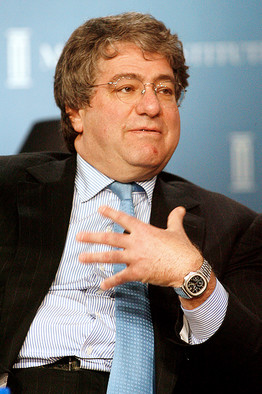
Leon Black, head of Apollo Global Management, receives discounts paid for by public pension funds

On Sunday The New York Times business writer Gretchen Morgenson discusses pension theft. This time not by politicians, but by Wall Street private equity firms.
Some might say that is a distinction without a difference.
Who comes first, the investors or the person who manages their money?
That question is crucial for any investor. But it poses a special challenge for retired firefighters, police officers, teachers and other employees who may not know that their retirement money is being held in private equity funds.
These are opaque and costly investment vehicles that borrow money to buy companies and sell them, ideally, for a profit. The secrecy under which this $3.5 trillion industry operates has essentially required millions of people whose pensions are invested in these funds to simply trust that they are being treated fairly.
The pension theft addressed by Morgenson has three components.
Fees to wealthy private equity firms (like Bruce Rauner’s GTCR) are discounted, while public pension funds are charged higher fees. This means our pension funds are essentially underwriting private equity profits in addition to returns on investments. Call it skimming.
The implications of such arrangements seem troubling: Wealthy private equity funds receive discounts on legal, accounting and other outside work while pension fund investors, like retired bus drivers, librarians and teachers, pay full freight or, in some cases, a premium.
A second component of the theft is the charging of fees for work not done.
Regulators have identified certain fees as problematic. One example is the so-called monitoring fee, which investors pay to private equity firms, ostensiblyfor overseeing portfolio companies in the funds.
Often, though, the firms charged investors for the monitoring of companies no longer in fund portfolios. After the S.E.C. highlighted this practice last year, some firms, like Blackstone, stopped doing it.
A third issue is the lack of transparency.
“It puts the lie to the fact that we are partners with the private equity firms,” Mr. Jelincic said. “We are simply a source of income to the general partners; we are not partners.”
Private equity investors have not typically been informed of the vendor Pension investment fees: Very little transparency and it’s our money. | Fred Klonsky: