Latest News and Comment from Education

Showing posts with label LABELING AND TRACKING STUDENTS. Show all posts

Friday, December 18, 2020

The Crime of Branding Students As Criminals - Philly's 7th Ward

The Crime of Branding Students As Criminals - Philly's 7th Ward
THE CRIME OF BRANDING STUDENTS AS CRIMINALS


Throughout my time as an educator, I’ve been pulled into my share of “special taskforces” meant to address “at-risk” students – namely Black students. I have no doubt that such groups can be found in schools across America; primarily (I believe) because districts accept “helping” Black children on the backend with interventions that feign problem solving, rather than working on the frontend on behalf of Black children.

Districts that work on the frontend are districts that hire more Black teachers, make curricula culturally relevant and teaching culturally responsive – with rigor – districtwide, and ensure that teaching resources and assignments are both culturally and community affirming. They do not assume that pre-service training is good enough to serve Black students and spend time in deep and meaningful in-service, coaching, and mentoring. But I digress.

“At-risk” students are generally identified by teachers and administrators to identify which students have an increased risk for dropping out of school, usually because of failing grades and an unsightly discipline record. It always starts with an email attached with a list of names; educators love making lists. I’ve received these lists and I always notice the overabundance of Black children on them – lists of children of color that are often rife with racial biases and negative mindsets about Black and Brown communities .

Never did I consider that my colleagues would ever refer these lists to local CONTINUE READING: The Crime of Branding Students As Criminals - Philly's 7th Ward

Sunday, November 29, 2020

Reclaiming the Field | The Merrow Report

Reclaiming the Field | The Merrow Report
Reclaiming the Field


I know that I interviewed hundreds of future Trump supporters during my 41 years of reporting on public education for PBS and NPR. I’m also pretty sure that I taught some of them in high school 55 years ago.  Joey L. is a case in point.  Joey was a junior back in 1966 when he was in my English class, so he would be about 70 years old today.  Back then most public schools (including his, Paul D. Schreiber High School in Port Washington, NY) tracked students into groups.  Joey had been placed in the third level in its 1-5 system of tracking, and Level 3 was certainly not a winner’s track.

I was a rookie teacher, assigned to teach only 3’s and 4’s, and Joey was in my class. I knew nothing about tracking–and therefore nothing about how the Administration viewed my students. I didn’t see them as ‘losers’ or even as ‘others.’ They were my students, and I wanted and expected them to work hard, think, and write and rewrite.

“MacBeth” was part of the curriculum, and because I suspected that Shakespeare might be tough sledding, I got the Caedmon recording of the tragedy and played it in class. My students (including Joey) understood it and began arguing in class about MacBeth’s and Lady MacBeth’s guilt. Out of that came the notion of putting the two of them on trial for first degree murder.

Which we did.

Some students were lawyers, others were the defendants or witnesses for the defense and prosecution. In order to testify, they had to know the play backwards CONTINUE READING: Reclaiming the Field | The Merrow Report


Sunday, November 8, 2020

Labeling Students Then and Now (Part 2) | Larry Cuban on School Reform and Classroom Practice

Labeling Students Then and Now (Part 2) | Larry Cuban on School Reform and Classroom Practice
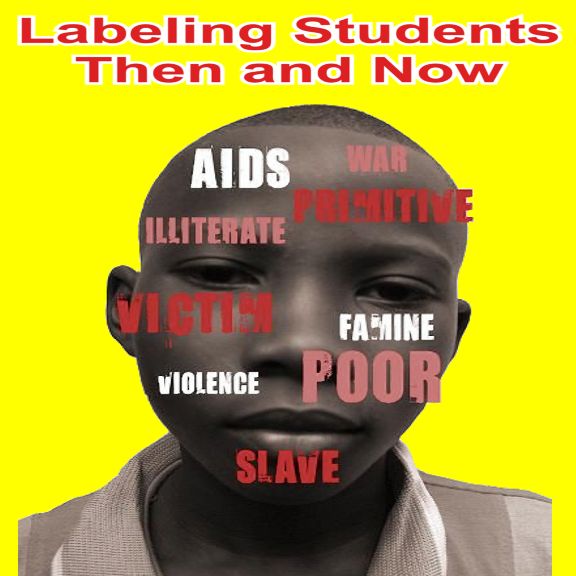
Labeling Students Then and Now


Two decades ago, Sarah Deschenes, David Tyack and I wrote an article published in the Teachers College Record called: “Mismatch: Historical Perspectives on Schools and Students Who Don’t Fit Them.”

Part 1 described the labels educators used in the 19th and 20th century for children who didn’t keep pace with the majority of other students in the age-graded school. This post includes the arguments we used to explain why these labels were used then and, perhaps, even now.

We first look at four ways educators and reformers have assigned blame for failure. We then propose a different historical explanation that locates this problem in a mismatch between students and the structure of schools and in schools’ resistance to adapting to the changing needs of their student populations. We also consider how the current standards movement might reinforce existing age-graded institutional structures.

A. Students who do poorly in school have character defects or are responsible for their own performance. [L]ocating responsibility in the individual—a response with deep roots in American ways of thinking—has been the dominant way of framing the problem. In the educational system of the nineteenth and early twentieth centuries, this manifested itself in a focus first on character deficiencies, which reformers believed children could overcome, and later on students’ low IQs, which students were thought to have no control over. Labels like ne’er-do-well, sleepy-minded, and limited exemplify this way of thinking about students….

In the twentieth century, when the “science” of education informed professional decision making, educators leaned heavily on psychological interpretations for CONTINUE READING: Labeling Students Then and Now (Part 2) | Larry Cuban on School Reform and Classroom Practice

Friday, November 6, 2020

Labeling Students Then and Now (Part 1) | Larry Cuban on School Reform and Classroom Practice

Labeling Students Then and Now (Part 1) | Larry Cuban on School Reform and Classroom Practice
Labeling Students Then and Now (Part 1)


Twenty years ago, Sarah Deschenes, David Tyack and I wrote an article published in the Teachers College Record called: “Mismatch: Historical Perspectives on Schools and Students Who Don’t Fit Them.” 

Because of the pervasiveness of the age-graded school since the middle of the 19th century, “normal” students were those who satisfactorily acquired the slice of curriculum 1st, 5th, or 8th grade teachers distributed through lessons in their self-contained classrooms Those students who met their teachers expectations for grade-level academic achievement, behavior during lessons, and the school’s requirements for attendance and performance were “normal.” And “normal” students were the majority.

But a sizable fraction of students, for many reasons deviated from the “normal.” They didn’t fit. Since the mid-19th century until the present, these students have been given labels. They were (and are) “educational misfits.”

Examining the changes in the language of labels attached to students who strayed from the definition of “normal” required in age-graded schools offers reformers pause in considering the power of these labels over time. Especially now as the U.S. schools enter the fourth decade of the standards, testing, and accountability reform movement, surely an added template for judging “normal” performance.

Between the “normality” structured within the age-graded school and the state and federally driven standards movement since the mid- CONTINUE READING: Labeling Students Then and Now (Part 1) | Larry Cuban on School Reform and Classroom Practice