Latest News and Comment from Education

Thursday, March 20, 2025

THE GREAT EDUCATION HEIST: TRUMP, MUSK AND THE DOGE BOYS ARE PLAYING MONOPOLY WITH OUR SCHOOLS


THE GREAT EDUCATION HEIST

TRUMP, MUSK AND THE DOGE BOYS ARE PLAYING MONOPOLY WITH OUR SCHOOLS

In a move that feels like it was brainstormed during a poker game at Mar-a-Lago, Donald Trump has reportedly signed an executive order to dismantle the Department of Education. Yes, you read that right. The federal agency responsible for ensuring every child has access to quality education is now on the chopping block. The Department of Education, which oversees everything from student loans to special education programs, is apparently too much of a burden for the "small government, big yachts" crowd. 

And who’s cheering this on? A cast of characters that sounds like the lineup for a dystopian reality show—Trump, Elon Musk, and the so-called "Doge Boys." Together, they seem to be on a mission to turn public services into private profit machines faster than you can say, “voucher program.”

A Return to the Wild West of Education?

Let’s break this down. The Department of Education isn’t just some bureaucratic paper-pushing machine. It’s the lifeline for millions of students across the country. Through programs like Title I, it provides funding to schools in low-income areas, attempting to level the playing field in a nation where educational opportunities are often dictated by your ZIP code. Without it, rich districts will thrive on their property tax-funded schools while poorer areas are left with crumbling buildings and outdated textbooks. It's basically "The Hunger Games," but with algebra.

And let’s not forget IDEA (Individuals with Disabilities Education Act), which ensures that students with disabilities receive a free and appropriate public education. Scrapping the Department of Education is like taking the accessibility ramp off a school building and replacing it with a sign that says, “Good luck.” 

Oh, and then there’s the Office for Civil Rights (OCR), which enforces laws against discrimination in schools. Without it, who’s going to ensure that schools don’t suddenly decide to bring back segregation-era policies under the guise of “local control”? This isn’t just about education—it’s about civil rights, equity, and the kind of society we want to live in.

Mindless Cuts or Master Plan?

The justification for this move? Efficiency, of course! It’s the same argument used every time someone wants to gut a public service—cut costs, streamline operations, and let the states handle it. But let’s be real: this isn’t about efficiency. It’s about ideology. It’s about privatization. It’s about handing over public education to private companies who see students not as learners but as dollar signs.

Imagine a world where your child’s education is determined by how much profit their school can generate. Where vouchers redirect public funds to private schools that aren’t held to the same standards as public ones. Where corporations swoop in to offer “solutions” that conveniently come with hefty price tags. It’s like turning your local school into a franchise of McEducation—“Would you like fries with your standardized test?”

The "Doge Boys" and Their Privatization Dream

And then there’s Elon Musk, who seems to be moonlighting as an education policy advisor between launching rockets and tweeting memes. Musk has long been a critic of traditional education systems, favoring tech-driven alternatives like his experimental Ad Astra school. But while innovation is great, dismantling an entire federal department isn’t exactly the same as upgrading your Tesla software.

The Doge Boys—an unofficial nickname for a group of wealthy libertarian tech enthusiasts—are also reportedly in favor of this move. Their vision for America seems to involve dismantling every public institution and replacing it with blockchain-powered alternatives. Because nothing says “quality education” like paying your tuition in cryptocurrency.

The Fallout: Who Loses?

If this plan goes through (and that’s a big “if,” given that Congress would need to approve it), the consequences will be catastrophic. Vulnerable populations—low-income students, students with disabilities, and students from marginalized communities—will bear the brunt of these changes. These are kids who are already fighting an uphill battle in a system stacked against them. Taking away federal oversight and funding is like pulling the rug out from under them while they’re still trying to find their footing.

And let’s not forget the economic impact. The Department of Education manages over $1.6 trillion in federal student loans. Without it, who’s going to oversee this massive financial system? Are we just going to hand it over to Wall Street and hope for the best? Because that worked out so well in 2008.

Resistance Is Not Futile

The good news is that this plan isn’t going unchallenged. Education unions, advocacy groups, and Democratic state attorneys general are gearing up for a fight. They’ve already pointed out that dismantling the Department of Education would require Congressional approval—a tall order in a divided government.

Critics argue that this move is part of a broader agenda outlined in far-right plans like Project 2025, which prioritize privatization and tax cuts for the wealthy over public welfare. It’s not just about education; it’s about reshaping America into a country where public services are replaced by profit-driven enterprises.

A Call to Action

So what can we do? For starters, we can stop treating education like it’s a line item on a budget spreadsheet and start treating it like the fundamental human right it is. We can hold our elected officials accountable and demand that they prioritize students over shareholders. And we can remind ourselves—and each other—that America is at its best when it lifts up its most vulnerable, not when it leaves them behind.

Because at the end of the day, this isn’t just about schools or budgets or executive orders. It’s about what kind of country we want to be. Do we want to be a nation that invests in its future or one that auctions it off to the highest bidder? Do we want to be a society that values equity and opportunity or one that doubles down on inequality?

The choice is ours. Let’s make it wisely. And maybe leave the Doge Boys out of it this time.


In Response to Reported Executive Order, School Defenders Vow Uprising as Trump Targets Public Education | Common Dreams https://www.commondreams.org/news/trump-executive-orders-department-of-education 

Trump administration live updates: President to order dismantling of Education Department at White House event https://www.nbcnews.com/politics/trump-administration/live-blog/trump-administration-education-department-immigration-live-updates-rcna196782 

Donald Trump to sign executive order aiming to shut down Department of Education – US politics live https://www.theguardian.com/us-news/live/2025/mar/20/donald-trump-executive-order-department-of-education-us-politics-latest-updates-news 

Trump to sign order calling for shutdown of Education Department – NBC Los Angeles https://www.nbclosangeles.com/news/national-international/trump-executive-order-education-department-shutdown/3658832/ 

What does the Department of Education do? | USAFacts https://usafacts.org/explainers/what-does-the-us-government-do/agency/us-department-of-education/ 


Wednesday, March 19, 2025

TOO LITTLE, TO LATE: CHIEF JUSTICE JOHN ROBERTS AND THE CHAOS OF THE UNITARY EXECUTIVE THEORY


TOO LITTLE, TO LATE

CHIEF JUSTICE JOHN ROBERTS AND THE CHAOS OF THE UNITARY EXECUTIVE THEORY

In a world where the Constitution is supposed to reign supreme, we somehow find ourselves in a reality show where the judiciary, the executive, and the legislative branches are contestants vying for power. And let’s be honest: lately, it feels like the Supreme Court has been handing out golden tickets to contestants who think they’re auditioning for "America’s Next Top Monarch."  

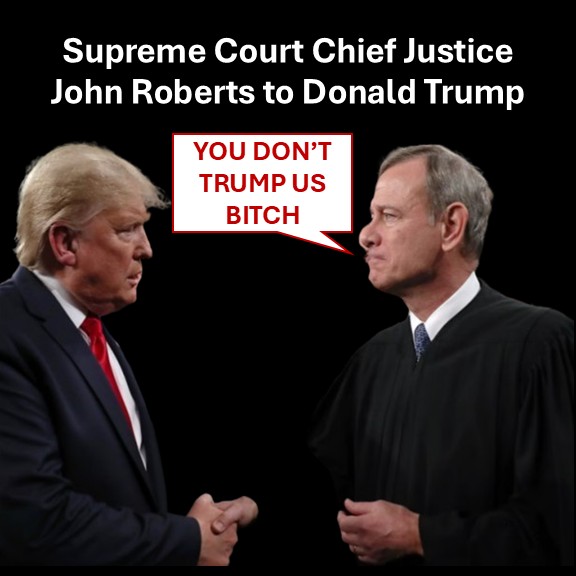
Chief Justice John Roberts recently decided to chime in, offering a polite wrist-slap to Donald Trump’s ongoing disregard for judicial rulings. But let’s call it what it is: too little, too late. If Roberts were a firefighter, he’d be showing up to a house that’s already burned to the ground, holding a garden hose and asking, “Did someone call for help?”  

The real culprit here is the so-called Unitary Executive Theory—a fancy term for “the president can do whatever they want because reasons.” This theory has been lurking in the shadows of legal academia for decades, but it found its loudest cheerleader in Trump, who treated it less like a theory and more like a personalized cheat code for democracy. Spoiler alert: it’s not in the Constitution.  

Let’s get one thing straight: the Constitution is not a buffet where you pick and choose what suits your appetite. It explicitly outlines three equal branches of government—equal being the operative word here. The president isn’t a king. The Supreme Court isn’t an oracle. Congress isn’t an overpaid debate club. Each branch has its role, and none is supposed to overshadow the others. Yet here we are, with a Supreme Court that has, at times, enabled executive overreach like an overly indulgent parent handing car keys to a reckless teenager.  

And don’t get me started on Trump’s approach to court rulings. Ignoring them? Flouting them? Treating them like suggestions instead of mandates? That’s not how a president behaves; that’s how a wannabe dictator operates. Imagine if every citizen treated laws the way Trump treats court decisions. Chaos would reign! People would run red lights, skip taxes, and bring emotional support peacocks on airplanes—oh wait, some of that already happens.  

This isn’t about political parties or ideological leanings. This isn’t about red states or blue states or even purple prose. It’s about America—the United States of America—a nation built on the idea that no one is above the law. Not Trump, not Musk, not Bezos, not anyone who thinks their billions or their title grant them immunity from accountability.  

The problem is that we’ve allowed this nonsense to fester. We’ve let highfalutin legal theories like the Unitary Executive morph from obscure law school debates into real-world policies that threaten our democracy. And while it’s nice that Chief Justice Roberts has finally decided to speak up, his words feel more like a gentle nudge than the stern wake-up call we desperately need.  

Roberts’ recent comments suggest he wants to remind us that the courts are still arbiters of justice. Great! But where was this energy when the Supreme Court was busy enabling some of these very issues? It’s like building a dam after the floodwaters have already swept away the village. Thanks for trying, but maybe next time act before we need lifeboats.  

At its core, this isn’t just about Trump or Roberts or any other individual. It’s about us—the people. We’re the ones who have to demand better. We’re the ones who have to insist on respecting the Constitution and upholding the rule of law. Democracy isn’t self-cleaning; it requires maintenance, vigilance, and occasionally a good old-fashioned intervention when things go off the rails.  

We need to stop treating politics like a spectator sport and start treating it like what it is: the foundation of our shared lives as citizens of a republic. That means holding leaders accountable, rejecting authoritarian tendencies, and remembering that “nation of laws, not of men” isn’t just a catchy phrase—it’s a guiding principle.  

So yes, Chief Justice Roberts’ comments are appreciated, but they’re hardly sufficient. The time for half-measures and polite admonitions has passed. What we need now is bold action—action from the courts, from Congress, and most importantly, from us as citizens.  

Because if we don’t stand up for our democracy, who will? Certainly not those who see power as their birthright and the Constitution as an inconvenient speed bump on their road to domination. And definitely not those who think “checks and balances” is just a phrase you use when reconciling your bank account.  

It’s time to wake up, America. The Constitution isn’t going to defend itself, and democracy won’t survive on autopilot. Let’s treat this moment as a call to action—not just for Chief Justice Roberts but for all of us. And let’s remember: this isn’t about left or right; it’s about right and wrong.


What Is Unitary Executive Theory? How is Trump Using It to Push His Agenda? https://www.democracydocket.com/analysis/what-is-unitary-executive-theory-how-is-trump-using-it-to-push-his-agenda/ 

White House calls judge challenging Trump deportation order a ‘Democrat activist’ | Trump administration | The Guardian https://www.theguardian.com/us-news/2025/mar/19/trump-deportation-court-ruling 

Trump attacks on judges continue after statement from Chief Justice John Roberts https://youtu.be/Vz7nxur0Llc?si=bw7YpjLGt4d4oaJN via @YouTube 


THE BILLIONAIRE'S BALLOT: HOW MONEY BECAME THE MVP OF MODERN POLITICS

THE BILLIONAIRE'S BALLOT

HOW MONEY BECAME THE MVP OF MODERN POLITICS

In the grand theater of American democracy, where the stage is draped in red, white, and blue, and the actors deliver impassioned soliloquies about liberty and justice for all, there’s an undeniable truth lurking backstage: the candidate with the fattest wallet often gets top billing. Yes, folks, welcome to the United States of America, where elections are less about ideas and more about the almighty dollar. It’s hard to believe, but we’ve turned democracy into a retail system. And just like at the mall, the one who spends the most usually leaves with the prize.

Money Talks, and It Says "Vote for Me"

Let’s not kid ourselves. The correlation between campaign spending and winning is as predictable as a rom-com plot. Studies show that candidates who outspend their opponents win about 90% of the time in House races. In Senate contests, it’s a similar story. Why? Because money buys ads, consultants, rallies, and those awkward photo ops where candidates pretend to enjoy eating corn dogs at state fairs.

Sure, incumbents have a built-in advantage—they’ve already got the donor Rolodex and a head start on fundraising. But let’s not ignore the elephant (and donkey) in the room: big money isn’t coming from Grandma’s cookie jar. It’s coming from billionaires, corporations, and Super PACs with names like “Americans for Prosperity” (read: "Billionaires for More Billions"). Thanks to the 2010 Citizens United ruling, these entities can now funnel unlimited cash into campaigns, turning elections into financial arms races.

The Oligarchs’ Shopping Spree

So, what are these deep-pocketed donors buying? A better America? Hardly. They’re buying a government that works for them, not us. Let’s take a stroll down memory lane to see what their investments have yielded so far:

1. **Shipping Jobs Overseas**: Remember when America was the manufacturing powerhouse of the world? Neither do I. That’s because our oligarchic overlords decided they could make more money by outsourcing jobs to countries with cheaper labor. And voilà! Factories closed, towns crumbled, and billionaires added another zero to their bank accounts.

2. **Privatization Bonanza**: Public education? Privatize it. Healthcare? Privatize that too. Social Security and Medicare? They’re next on the chopping block. The mantra is simple: if it can be privatized and profited from, it will be.

3. **Union Busting**: Billionaires hate unions like cats hate water. Why? Because unions demand fair wages and benefits, which cut into profits. So, they’ve spent decades dismantling organized labor, leaving workers with fewer protections and stagnant wages.

4. **Tax Loopholes Galore**: Paying taxes is for suckers—or so say the ultra-rich. With armies of accountants and lobbyists, they’ve rigged the tax code to ensure they pay less than you do. Some even manage to pay nothing at all. Zero. Zilch. Nada. Meanwhile, you’re stuck wondering why your refund barely covers a week’s worth of groceries.

5. **Authoritarian Allies**: Let’s not forget their love affair with authoritarian regimes. After all, nothing says “freedom” like cozying up to leaders who suppress dissent and exploit their citizens for cheap labor.

Democracy on Life Support

Now, you might be wondering: where are our elected officials in all this? Aren’t they supposed to represent us? Well, technically, yes. But in practice, many of them are living in the pockets of billionaires like a well-trained hunting hound curled up in its master’s lap.

Once upon a time, politicians at least pretended to hide their allegiance to big money. But now? They flaunt it. Take the tech bros like Elon Musk and others who openly champion a privatized, profit-driven America where public services are relics of the past. They don’t even bother with subtlety anymore—it’s all yachts and Twitter tirades now.

The Most Expensive Show on Earth

Let’s talk numbers for a moment. The 2020 U.S. presidential election was the most expensive in history, with Democratic candidates alone spending a jaw-dropping $3.16 billion. That’s billion with a “B.” For context, that’s more than the GDP of some small countries. And what did all that money buy us? A divided nation still arguing over whether pineapple belongs on pizza.

And it’s not just presidential races breaking the bank. Congressional campaigns are also ballooning in cost, making it nearly impossible for candidates without billionaire backers to compete. It’s like trying to win Monopoly when someone else owns Boardwalk, Park Place, and half the railroads before you even roll the dice.

What Can We Do?

So, how do we fix this mess? Campaign finance reform would be a good start—perhaps limits on donations or public funding for elections. But good luck getting that passed when the people who would vote on it are the same ones benefiting from the current system.

Another option is to support grassroots candidates who rely on small-dollar donations rather than billionaire sugar daddies. It’s not easy—they face an uphill battle against well-funded opponents—but every movement starts somewhere.

Finally, we need to stay informed and hold our leaders accountable. Call them out when they prioritize corporate donors over constituents. Demand transparency in campaign financing. And for heaven’s sake, vote in every election—not just the big ones.

Curtain Call

In the end, American democracy is starting to feel less like a government “of the people, by the people, for the people” and more like a Broadway production bankrolled by a handful of wealthy producers. The rest of us? We’re just the audience—paying for overpriced tickets and hoping for a happy ending.

But here’s the thing about democracy: it’s not a spectator sport. If we want to reclaim it from the clutches of billionaires and Super PACs, we need to get off the sidelines and into the game. Otherwise, we’ll find ourselves living in a neo-feudal society where the rich call all the shots and the rest of us are just serfs scrolling through TikTok during our lunch breaks.

The choice is ours—wallet or ballot? Let’s make it count.

THE UNITED STATES OF OLIGARCHIA https://open.substack.com/pub/ru4people/p/the-united-states-of-oligarchia?r=kja7f&utm_campaign=post&utm_medium=web&showWelcomeOnShare=false 

Monday, March 17, 2025

WHILE DEMOCRATS SLEPT

WHILE DEMOCRATS SLEPT

 A Chamberlain-esque Stumble into the Political Abyss

History, as they say, has a way of repeating itself—though sometimes it feels less like repetition and more like a poorly written sequel. The recent vote by 10 Senate Democrats has left many scratching their heads, wondering if they accidentally stumbled into a time machine set to 1938. Yes, it appears that Senator Chuck Schumer and his merry band of sleepwalking centrists have taken a page from Neville Chamberlain's "How to Handle a Crisis: The Appeasement Edition." And no, this isn’t about annexing Sudetenland—it’s about something far more insidious: the slow erosion of democracy, one poorly thought-out vote at a time.

Let’s set the stage. While the Democratic base—led by a coalition of firebrands like Alexandria Ocasio-Cortez, Bernie Sanders, and Chris Murphy—has been busy sounding the alarm about creeping authoritarianism, a handful of Senate Democrats decided it was time to play political Jenga with the Constitution. And just like an ill-fated game night, the tower is wobbling dangerously. The issue at hand? A subtle but significant rollback of constitutional guarantees, particularly those enshrined in the First Amendment. Freedom of speech, meet freedom to be drowned out by billionaire megaphones.

Meanwhile, on the other side of the aisle, Donald Trump has been busy crafting what can only be described as a geopolitical fever dream. His "parallel goals," as he calls them, include everything from annexing Greenland (because why not?) to imposing irrational tariffs on Canada (because maple syrup is apparently a national security threat). Throw in some saber-rattling over Panama and Gaza for good measure, and you’ve got yourself a foreign policy that makes Chamberlain’s Munich Agreement look like a masterstroke of diplomacy.

But let’s not get distracted by Trump’s greatest hits; this is about the Democrats—or rather, their lack of hits. While progressives are ready to fight fascism tooth and nail, some Senate Democrats seem content to play footsie with oligarchs and right-wing billionaires. These are the same billionaires who are hell-bent on turning America into a kleptocratic playground where the ultra-rich call the shots and the rest of us are left wondering if we can afford eggs this week. Spoiler alert: we can’t.

To be fair, the Democratic Party isn’t entirely asleep at the wheel. Governors, attorneys general, and grassroots interest groups are rallying to push back against Trump’s attempts to dismantle the government through arbitrary budget cuts and fearmongering. But let’s be honest—this isn’t just about Trump. It’s about a system that has been rigged in favor of the wealthy and powerful for decades. Citizens United didn’t just open the floodgates for corporate money in politics; it turned those floodgates into Niagara Falls.

The solution? It starts with ending Citizens United and embracing a democracy where one person truly equals one vote. No more billionaires using their wallets as megaphones to drown out the voices of everyday Americans. No more pretending that corporations are people (unless they’re willing to pay taxes and serve jury duty). The preamble to the Constitution doesn’t say "We the Corporations," after all—it says "We the People." And it’s high time we started acting like it.

But this isn’t just about campaign finance reform; it’s about reimagining what kind of country we want to be. Do we want a nation that caters exclusively to rich, white elites? Or do we want a country that cares for all its people, regardless of race, income, or zip code? The answer seems obvious—unless you’re one of those 10 Senate Democrats who apparently think incrementalism is the cure for fascism. Spoiler alert: it’s not.

We need well-funded public schools that don’t rely on bake sales to buy textbooks. We need universal healthcare so no one has to choose between paying rent and filling a prescription. We need affordable housing because "living in your car" shouldn’t be an acceptable housing option in the richest nation on Earth. And yes, we need the ultra-rich to pay their fair share in taxes. Jeff Bezos doesn’t need another yacht; America needs infrastructure.

Let’s not mince words: this is a fight for the soul of our nation. We can’t afford to wait until 2028—or even 2026—to address these issues. The fight is now, and it’s going to take all of us to win it. That means progressives need to keep pushing, moderates need to wake up, and voters need to demand better from their elected officials.

Because here’s the thing: America doesn’t want a king. We don’t want an authoritarian government run by a billionaire oligarchy or a kleptocracy where corruption is just another line item in the budget. We want democracy—messy, imperfect, glorious democracy. And if we have to drag a few reluctant Senate Democrats kicking and screaming into that future, so be it.

So let’s channel our inner Churchill (or at least our inner Bernie Sanders) and fight on the beaches, in the fields, and yes, even on Twitter. Because while history may repeat itself, we still have a chance to rewrite this chapter. And if Chuck Schumer needs a wake-up call, someone please send him an alarm clock—or better yet, a history book.

Sunday, March 16, 2025

KING TRUMP TRYING TO TORCH THE FIRST AMENDMENT - EXPLORING DEMOCRACY'S FIREPROOFING

 
KING TRUMP TRYING TO TORCH THE FIRST AMENDMENT

EXPLORING DEMOCRACY'S FIREPROOFING

Ah, the First Amendment—a cornerstone of American democracy and the reason your neighbor can blast conspiracy theories about lizard people on Facebook. It’s the amendment that guarantees five essential freedoms: religion, speech, press, assembly, and petition. Without it, the U.S. would be like a karaoke night where no one’s allowed to sing—awkward, oppressive, and a lot less fun. But in recent years, some critics have accused President Donald Trump of trying to douse this beacon of liberty with a bucket of authoritarian gasoline. So, is there fire where there’s smoke, or is this just another Twitter-fueled overreaction? Let’s investigate.

 The Five Freedoms: A Crash Course

Before we dive into the drama, let’s recap what the First Amendment actually does. It’s not just a legal text; it’s basically America’s greatest hits album. Here’s the breakdown:

1. **Freedom of Religion**: You can worship whoever or whatever you want—or no one at all—without Uncle Sam poking his nose into your spiritual business.

2. **Freedom of Speech**: You’re free to speak your mind, even if your opinions are as unpopular as pineapple on pizza.

3. **Freedom of the Press**: Journalists can investigate and report without fear of government censorship. Yes, even when they’re exposing your favorite politician’s shady offshore accounts.

4. **Freedom of Assembly**: You can gather with others to protest or celebrate, as long as it’s peaceful. Sorry, no rioting allowed.

5. **Freedom of Petition**: You have the right to complain to the government and demand change—whether it’s about taxes or potholes that could swallow a small car.

Together, these freedoms form the backbone of American democracy. But are they under attack? Let’s take a closer look at the allegations against Trump.

 Freedom of Speech: The Art of the Presidential Clapback

Freedom of speech is the crown jewel of the First Amendment—it’s why you can criticize your boss on Twitter (though maybe don’t) or argue about pineapple pizza without fear of imprisonment. But Trump’s critics argue that his presidency cast a long shadow over this freedom.

Take his infamous “fake news” tirades. Trump didn’t just criticize unfavorable coverage—he declared war on it. By labeling journalists as “the enemy of the people,” he created a chilling effect that made some reporters think twice before publishing stories that might land them in a presidential tweetstorm. Sure, he didn’t outlaw free speech, but his rhetoric was like a mosquito at a picnic—annoying and hard to ignore.

Then there were his executive orders targeting social media platforms. Framed as a fight against “censorship,” these moves were criticized for pressuring private companies to host content they might otherwise ban. It’s like demanding a vegan café serve steak—you can try, but it’s not their job.

Freedom of the Press: Democracy’s Watchdog or Trump’s Punching Bag?

Ah, the press. Without it, Watergate might still be a leaky pipe, and we’d never know which celebrity adopted another teacup pig. But Trump’s relationship with the media was less “watchdog” and more “dogfight.”

During his tenure, Trump frequently sued media outlets for defamation—a legal right, sure, but one critics saw as an intimidation tactic. Imagine suing someone every time they said something mean about you online; you’d spend more time in court than at home.

Even more concerning were reports that his administration aggressively pursued journalists’ sources, prosecuting whistleblowers in ways some saw as an assault on transparency. While national security is important, critics argued that these actions blurred the line between protecting secrets and silencing dissent.

Academic Freedom: When Professors Meet Politics

If freedom of speech is democracy’s megaphone, academic freedom is its think tank—a space for scholars to explore ideas without fear of censorship. But under Trump, academia found itself in the crosshairs.

The administration’s efforts to ban diversity training and critical race theory in federal institutions sparked outrage among educators. Critics argued that these moves stifled intellectual exploration and imposed ideological constraints on schools and universities. Supporters countered that they were protecting students from “indoctrination.” Either way, it left professors clutching their syllabi like shields in a culture war.

The impact wasn’t just theoretical; it was personal. Imagine being a student limited to learning only what aligns with government-approved narratives. It’s like going to an all-you-can-eat buffet and finding out they only serve boiled broccoli—uninspiring and deeply unsatisfying.

Freedom of Assembly: Protests Under Pressure

Let’s not forget freedom of assembly—the right to gather peacefully, whether you’re marching for justice or hosting a flash mob in Times Square (please bring choreography). But during Trump’s presidency, this freedom faced its own set of challenges.

One particularly controversial moment came when federal officers used tear gas to clear peaceful protesters near Lafayette Square in Washington, D.C., during Black Lives Matter demonstrations. Critics called it a blatant violation of assembly rights; supporters argued it was necessary to maintain order. Either way, it raised serious questions about where the line between safety and suppression should be drawn.

And then there was the case of Mahmoud Khalil, a Palestinian-American activist arrested under dubious circumstances tied to his pro-Palestinian protests. Critics saw this as part of a broader pattern of using immigration laws to silence dissent—a move that smacks more of authoritarianism than democracy.

Freedom of Petition: Complaints Welcome (Sort Of)

Finally, we have freedom of petition—the right to ask your government for change without fear of retribution. It’s democracy’s suggestion box, except instead of “better coffee in the break room,” you’re asking for things like healthcare reform or police accountability.

While this freedom wasn’t directly targeted under Trump, critics argue that his administration’s broader actions—like cracking down on protests and whistleblowers—created an environment where people felt less empowered to speak out. After all, who wants to file a complaint if they think it’ll land them on a government watchlist?

The Roberts Court: Referee or Enabler?

No discussion of constitutional freedoms would be complete without mentioning the Supreme Court. Under Chief Justice John Roberts, the Court has been both a defender and a complicator of First Amendment rights.

On one hand, it issued rulings that strengthened free speech protections—like striking down laws restricting corporate political spending (*Citizens United v. FEC*). On the other hand, critics argue that some decisions prioritized executive power over individual liberties, raising concerns about checks and balances.

It’s like having a referee who calls some fouls but lets others slide—it keeps the game going but doesn’t always feel fair.

So... Is Democracy Doomed?

Not so fast! While Trump’s actions sparked heated debates about the First Amendment, democracy has proven remarkably resilient over time. Think of it as a Jenga tower—it might wobble during an earthquake (or a particularly chaotic presidency), but it rarely topples completely.

The key is vigilance. Holding leaders accountable, challenging policies that threaten liberties, and staying engaged in civic life are all essential to keeping democracy alive and well. After all, democracy isn’t just a system; it’s a team sport—and we’re all on the roster.

So here’s to freedom: messy, imperfect, but undeniably worth defending. Now go forth and exercise your rights responsibly—or at least avoid yelling “Fire!” in a theater unless you’re absolutely sure there’s one.

And remember: no matter how heated things get, the spirit of ’76 still flows through America’s veins like an extra shot of espresso in democracy’s morning latte.


DOGE, DON, ELON - MUSK RAT LOVE


DOGE, DON, ELON -  MUSK RAT LOVE


CAPTAIN AND TENNILLE'S SONG 'MUSKRAT LOVE' 

As Suggest by Tracy Leigh

"Musk Rat Love": A Parody for the Ages:

"Musk Rat Love."  

**Musk Rat, Musk Rat**  

**Twitter fight**  

**Trolling the libs**  

**At 3 a.m. every night, it’s endearing**  

**(Or maybe just weirding).**  


**Musk Rat Donnie**  

**Musk Rat Elon**  

**Launching tweets like rockets; oh, what could go wrong?**  

**They’re scheming**  

**Dogecoin is beaming.**  


**And they whirl**  

**And they twirl through the Twittersphere, tango-ing**  

**Slinging and slinging a Spacex-y jangle.**  

**“To the moon!” they both proclaim above.**  

**Looks like Musk Rat Love.**  


**Nibbling on Bitcoin,**  

**Chewing on memes.**  

**Donnie says to Elon,**  

**“Buddy, let’s dream! Let’s go viral.”**  

**Elon nods back with a smile.**  


**Now he’s tickling Elon’s fancy,**  

**Pitching IPOs.**  

**Mars to Mar-a-Lago—anything goes! They’re giggling.**  

**Don starts wiggling.**


**And they whirled,**  

**And they twirled through the blockchain, tango-ing.**  

**Slinging and jingling a meme-filled jangle.**  

**Floating like the heavens above…**  

**Looks like Musk Rat Love.**


**And they whirl**  

**And they twirl through the Twittersphere, tango-ing**  

**Slinging and slinging a Spacex-y jangle.**  

**“To the moon!” they both proclaim above.**  

**Looks like Musk Rat Love.**  


**Nibbling on Bitcoin,**  

**Chewing on memes.**  

**Donnie says to Elon,**  

**“Buddy, let’s dream! Let’s go viral.”**  

**Elon nods back with a smile.**  


**Now he’s tickling Elon’s fancy,**  

**Pitching IPOs.**  

**Mars to Mar-a-Lago—anything goes! They’re giggling.**  

**Don starts wiggling.**  


Musk Rat Love": A Parody for the Ages

In a world where love knows no bounds—be it for people, power, or even peculiar cryptocurrencies—one man stands at the crossroads of it all: Donald Trump. And who better to share the spotlight of his affection than the tech-savvy, meme-loving billionaire Elon Musk and his beloved Dogecoin? Ladies and gentlemen, we present to you a hilarious parody of Captain and Tennille's iconic song, "Muskrat Love," reimagined as "Musk Rat Love."  

**Musk Rat, Musk Rat**  

**Twitter fight**  

**Trolling the libs**  

**At 3 a.m. every night, it’s endearing**  

**(Or maybe just weirding).**  


**Musk Rat Donnie**  

**Musk Rat Elon**  

**Launching tweets like rockets; oh, what could go wrong?**  

**They’re scheming**  

**Dogecoin is beaming.**  


Picture it: Trump, lounging at Mar-a-Lago, scrolling through his phone with a Diet Coke in hand. Suddenly, a lightbulb moment! He realizes that Elon Musk—the man who shoots cars into space and wants to colonize Mars—might just be his soulmate. And what better way to bond than over their shared love for Dogecoin, the Shiba Inu-themed cryptocurrency that has captured the hearts (and wallets) of meme enthusiasts everywhere?  


**And they whirl**  

**And they twirl through the Twittersphere, tango-ing**  

**Slinging and slinging a Spacex-y jangle.**  

**“To the moon!” they both proclaim above.**  

**Looks like Musk Rat Love.**  


Trump slides into Elon’s DMs with all the subtlety of a gold-plated wrecking ball:  

“@realDonaldTrump: Elon, you’re doing tremendous things. I mean, bigly tremendous. Let’s make Dogecoin great again. Call me.”  

Elon replies with a single rocket emoji 🚀 and a GIF of a Shiba Inu wearing sunglasses. The bromance is officially on.  


**Nibbling on Bitcoin,**  

**Chewing on memes.**  

**Donnie says to Elon,**  

**“Buddy, let’s dream! Let’s go viral.”**  

**Elon nods back with a smile.**  


From there, the two embark on a whirlwind partnership that includes late-night brainstorming sessions about turning Mar-a-Lago into a launch pad for SpaceX and creating a new social media platform called “TruthX” (because why not?). They even discuss minting a new cryptocurrency called “TrumpCoin,” though Elon insists Dogecoin is already perfect.  


**Now he’s tickling Elon’s fancy,**  

**Pitching IPOs.**  

**Mars to Mar-a-Lago—anything goes! They’re giggling.**  

**Don starts wiggling.**  


To commemorate their newfound friendship, they release a joint tweet:  

“@elonmusk: Big things coming soon. Dogecoin to Mars! 🚀”  

“@realDonaldTrump: Yes, folks, BIG THINGS. Elon is fantastic—very smart, very handsome. Dogecoin is the future! MAGA 🚀🐕”  

The tweet garners millions of likes, though some are from bots (but who’s counting?). Meanwhile, Dogecoin’s value skyrockets by 420%, because of course it does.  


**And they whirled,**  

**And they twirled through the blockchain, tango-ing.**  

**Slinging and jingling a meme-filled jangle.**  

**Floating like the heavens above…**  

**Looks like Musk Rat Love.**


As their partnership grows, so does their mutual admiration society. Trump starts calling Elon “the Einstein of our time,” while Elon refers to Trump as “the meme king.” Together, they plan a Dogecoin-themed rally where attendees must pay for tickets exclusively in crypto. The event is held at Cape Canaveral and features fireworks shaped like Shiba Inus and golden rockets emblazoned with “MAGA.”  

The grand finale? A duet performance of their parody masterpiece, “Musk Rat Love,” complete with synchronized dancing and holographic Shiba Inus floating in the background.  

While some might roll their eyes at this unlikely bromance, one thing is clear: love—or at least mutual meme appreciation—can bloom in the most unexpected places. So here’s to Donald Trump, Elon Musk, and Dogecoin: may their Musk Rat Love take them all the way to Mars… or at least to the moon. 🚀🐕  

And remember, folks: in the words of Captain and Tennille (sort of), “Floating like the heavens above… looks like Musk Rat Love.”  


Saturday, March 15, 2025

THE FINAL DAYS OF DONALD TRUMP

The Final Days of Donald Trump

By 2027, Donald J. Trump—a former president, real estate mogul, and TV loudmouth turned Leavenworth inmate—had solidified his unglamorous new gig: top hoarder of prison Jell-O. Occupying Cell 45B, his twenty-two year sentence stemmed from the infamous "Blue State Clearance Crisis," where, as alleged, he’d tried to auction off liberal strongholds (my occasional NYC hangouts included) to none other than Putin—all for a lifetime supply of some bizarre golden-gloss vodka. The details only got messier—or perhaps just funnier—or even sadder over time...

Once upon a time... In the dimly lit confines of Cell 45B at Leavenworth Federal Prison, Donald J. Trump—former President, real estate mogul, reality TV star, and self-proclaimed "best dealmaker in history"—sat on a bunk that squeaked each time he shifted his considerable weight. It was 2027, two years into his sentence for what historians would later call "The Great Blue State Sell-Off." The charge? Selling all the blue states to Vladimir Putin in exchange for a lifetime supply of Trump Vodka (which no one drank) and a dacha on the Black Sea (which he never got to use).  

Trump, however, had his own version of events: "It was the greatest deal ever made. Tremendous. Everyone was saying so. I mean, who really needs California? All those liberals with their Teslas and kale smoothies. And New York? Overrated. Sad!"  

His cellmate, Carl "The Hammer" Jenkins, a burly man with tattoos of questionable spelling choices, rolled his eyes for the fifth time that morning. "Donny, you’ve been saying that for two years. Give it a rest. We’ve got bigger problems—like how to smuggle an extra Jell-O cup from the cafeteria without getting shanked."  

But Trump wasn’t listening. He was too busy dictating his memoirs to an imaginary ghostwriter. "Call it *The Art of the Steal*. No, wait—*The Art of the Comeback: Prison Edition*. Or maybe *How to Win Bigly Even When They’re Totally Unfair to You*. What do you think, Hammer?"  

"The Hammer thinks you should shut up before I use this spoon for something other than eating," Carl grumbled.  

Unfazed, Trump continued. He had a captive audience (literally), and he wasn’t about to waste it. "You know, they said I couldn’t do it. They said I couldn’t sell Oregon to Putin. But I did. And it was beautiful. The best sale in history. Better than Louisiana Purchase—way better. Jefferson? Amateur hour compared to me."  

Carl sighed deeply and turned his attention back to his crossword puzzle, which he had been working on for three days because "spelling is hard."  

Meanwhile, across the prison yard, a group of inmates were huddled around a makeshift chessboard fashioned out of cardboard and bottle caps. They called themselves "The Blue State Survivors," a coalition of former Californians, New Yorkers, and Oregonians who had been particularly peeved about the whole "selling their states to a foreign autocrat" thing.  

"Did you hear?" one of them whispered. "Trump’s planning to run for Warden in the next prison election."  

"Of course he is," another replied. "He’s already calling it 'Stop the Shank.' Claims the cafeteria meatloaf is rigged."  

Back in Cell 45B, Trump was deep into his afternoon routine: writing letters to world leaders who had long since stopped responding. "Dear Kim Jong-un," he scribbled on a piece of toilet paper (the only stationary available after the prison banned him from office supplies). "Remember when we fell in love? I could really use some help here. Maybe send Dennis Rodman with a file baked into a cake? Best regards, your favorite American."  

At 3 p.m., it was time for his daily press conference—a tradition he had started on Day One of his incarceration. Standing on an overturned mop bucket in the corner of the yard, Trump addressed an audience of three disinterested pigeons and one guy named Larry who only showed up because he thought there might be snacks.  

"Folks, let me tell you," Trump began, gesturing wildly with his hands. "This prison is a disaster. The walls? Weak. The food? Terrible! The warden? Total loser. If I were in charge, we’d have gold-plated bars and steak dinners every night. Believe me."  

Larry raised his hand. "Uh, Mr. Trump, you *are* in prison because you sold half the country to Russia."  

"Fake news!" Trump shot back. "I didn’t sell half the country—I sold *all* the blue states! And they were failing anyway. I saved America billions by getting rid of them! You should be thanking me."  

The pigeons cooed in what could only be interpreted as mild disdain. Larry wandered off in search of a vending machine that didn’t exist.  

As evening fell over Leavenworth, Trump retreated to his cell to watch reruns of *The Apprentice* on a contraband DVD player smuggled in by Carl (who had connections). "You’re fired," Trump muttered nostalgically as he watched himself dismiss another hapless contestant on screen.  

Carl shook his head and climbed onto the top bunk. "You know, Donny, for a guy who claims to be the greatest at everything, you sure ended up here like the rest of us schmucks."  

Trump smiled smugly. "That’s where you’re wrong, Hammer. I’m not like the rest of you schmucks—I’m a political prisoner! A martyr for freedom! The greatest martyr since...well, probably ever."  

Carl snorted. "Yeah, okay, Donny. Whatever helps you sleep at night."  

And as the lights dimmed in Cell 45B, Trump drifted off to sleep dreaming of gold-plated toilets, adoring crowds chanting his name, and a future where he would once again Make Prison Great Again.  

Somewhere in Moscow, Vladimir Putin sipped vodka from a crystal glass and chuckled as he gazed at a map of his newly expanded empire. "Best deal I ever made," he murmured to himself before turning back to his game of chess with Dennis Rodman.

The Final Days of Donald Trump: Hunter Biden's Account

By 2027, Donald J. Trump—a former president, real estate mogul, and TV loudmouth turned Leavenworth inmate—had solidified his unglamorous new gig: top hoarder of prison Jell-O. Occupying Cell 45B, his twenty-two year sentence stemmed from the infamous "Blue State Clearance Crisis," 

THE ACTUAL NEWS OF THE DAY

HOUSE REPUBLICANS' SPENDING PLAN OR A POWER GRAB FOR PRES. MUSK/TRUMP AND SENATE DEMS ROLLING OVER https://bigeducationape.blogspot.com/2025/03/house-republicans-spending-plan-or.html 

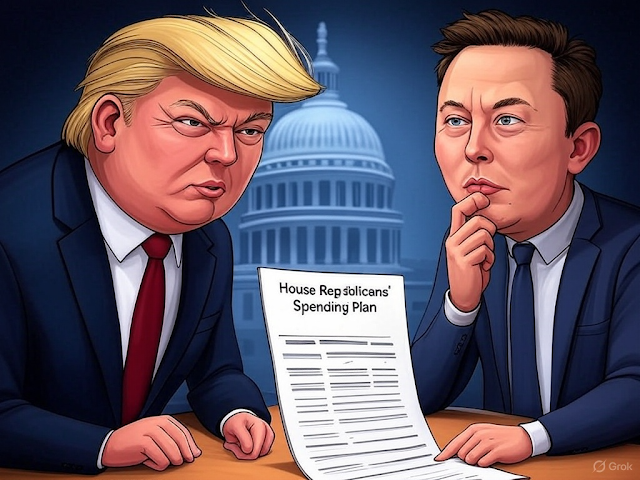
HOUSE REPUBLICANS' SPENDING PLAN OR A POWER GRAB FOR PRES. MUSK/TRUMP AND SENATE DEMS ROLLING OVER


HOUSE REPUBLICANS' SPENDING PLAN OR A POWER GRAB FOR PRES. MUSK/TRUMP AND SENATE DEMS ROLLING OVER

Ladies and gentlemen, gather 'round as we dissect the latest episode of America’s favorite political reality show, *“Who Can Outmaneuver Whom?”* In this week’s drama, House Republicans have unveiled their spending plan, a pièce de résistance of fiscal theatrics that seems custom-designed to benefit two particular billionaires: Donald Trump and Elon Musk. Oh, and spoiler alert—Senate Democrats caved faster than a sandcastle at high tide. Let’s dive in.

What’s in the Continuing Resolution (CR)?

The House Republicans’ spending plan, or as they like to call it, *“The Freedom Fiscal Fantasy Act,”* is their latest attempt to govern by ultimatum. It’s a continuing resolution (CR) that promises to keep the government running—but only if Democrats agree to some truly eye-popping cuts. Think of it as the political equivalent of saying, “We’ll fix the roof, but only if you let us burn down the kitchen first.”

So, what are these cuts? Well, brace yourselves. The CR proposes slashing funding for everything from education to healthcare to climate research. Yes, folks, the GOP is here to save America by making sure your kid’s school can’t afford textbooks, your grandma can’t afford her medication, and the planet can’t afford to keep existing. Bold strategy.

And then there’s the pièce de résistance: a provision that would gut funding for investigations into Donald Trump’s various legal escapades. Because nothing says “fiscal responsibility” quite like defunding the people trying to hold a former president accountable for, you know, *alleged crimes*. But wait, there’s more! The plan also includes tax breaks and incentives that seem tailor-made for Elon Musk’s empire of Teslas and Twitter meltdowns. Coincidence? Sure. And I’m the Queen of England.

Why Did the Senate Democrats Cave?

Now, let’s talk about the Senate Democrats, those brave warriors of progressive ideals—until someone waves a shutdown threat in their faces. Faced with the prospect of being blamed for a government shutdown (because apparently, Republicans have mastered the art of blame-shifting), Senate Democrats folded like a cheap lawn chair.

Their reasoning? Oh, it’s the classic *“We’ll fight another day”* strategy. You know, the one where they keep promising to stand up to Republican overreach but somehow always end up on the losing side. It’s almost impressive how consistently they manage to snatch defeat from the jaws of victory.

But let’s be fair. Maybe they were just tired. After all, it’s exhausting trying to govern responsibly when your colleagues across the aisle are treating Congress like a WWE wrestling ring. Or maybe they were distracted by Elon Musk’s latest X (formerly known as Twitter) rant about how billionaires are the real victims in society. Who can say?

A Power Grab Disguised as Governance

Make no mistake: this spending plan isn’t about fiscal responsibility or reducing the deficit. It’s about consolidating power and rewarding political allies. By gutting programs that help ordinary Americans while protecting Trump and Musk, House Republicans are sending a clear message: *“We’re here for the billionaires, not the plebeians.”*

And let’s not forget the timing. With Trump facing multiple indictments and Musk facing increasing scrutiny over his business practices (and his tweets), this CR feels less like a budget proposal and more like a lifeline for two men who really don’t need any more lifelines.

What Happens Next?

So where does this leave us? Well, if history is any guide, we’re heading for another round of brinkmanship, complete with dramatic speeches, late-night votes, and absolutely zero solutions for the American people. Because why fix problems when you can just blame the other party instead?

In the meantime, Trump will probably continue fundraising off his legal troubles (because nothing says “populist hero” like asking struggling Americans to fund your billionaire lifestyle), and Musk will likely keep tweeting through it all. Maybe he’ll even announce a new Tesla model that runs on taxpayer tears. The possibilities are endless.

The Bottom Line

At its core, this spending plan is less about governing and more about grandstanding. It’s a power grab disguised as fiscal policy, designed to benefit the few at the expense of the many. And while House Republicans are busy patting themselves on the back for their “bold leadership,” ordinary Americans are left wondering why their elected officials can’t seem to focus on, you know, *actually solving problems*.

As for Senate Democrats? Well, maybe next time they’ll find their spines before they cave. Or maybe not. Either way, stay tuned for the next episode of *“As Congress Turns.”* It’s sure to be as infuriating—and entertaining—as ever.


Here are the key details regarding the 2025 Continuing Resolution (CR) based on available information:

1. Nondefense Funding Reductions

  • $15 billion cut relative to fiscal year 2025 levels outlined in the Fiscal Responsibility Act. This impacts areas like education, infrastructure, and social services 2.
  • $13 billion reduction compared to the previous year’s nondefense spending 3. The discrepancy likely stems from differing baselines (FY2025 planned levels vs. prior-year actual spending).

2. Defense Spending Adjustments

  • $3 billion decrease compared to FY2025 defense funding projections in the Fiscal Responsibility Act 2.
  • $6 billion increase in defense spending relative to the previous year’s allocation 3. This suggests a net rise in defense funding year-over-year but a cut against the originally planned FY2025 budget.

3. Economic and Revenue Implications

  • The Congressional Budget Office (CBO) estimates $66 billion in reduced federal revenues over FY2025–2034 due to projected economic downturns 4. This could exacerbate fiscal pressures from the CR’s spending cuts.

4. Healthcare Policy Extensions

  • The CR avoids a government shutdown by extending funding through March 14, 2025, and preserves certain expiring healthcare policies (e.g., Medicare/Medicaid provisions) 5.

Additional Context

- The Senate passed the bill hours before the March 14 deadline to avert a partial shutdown [4].

- The CR reflects broader debates over fiscal priorities, balancing defense needs with domestic program reductions.

For further details, refer to the [House Appropriations summary] 

Committee Releases Bill to Keep Government Open, Working for the American People | House Committee on Appropriations - Republicans https://appropriations.house.gov/news/press-releases/committee-releases-bill-keep-government-open-working-american-people 

or [CRFB analysis]

What's in the House's Full-Year Continuing Resolution?-2025-03-11 https://www.crfb.org/blogs/whats-houses-full-year-continuing-resolution