Latest News and Comment from Education

Wednesday, July 29, 2020

Shanker Blog: The Pandemic and Federal Education Policy: From the Race to the Top to the Plunge to the Bottom | National Education Policy Center

Shanker Blog: The Pandemic and Federal Education Policy: From the Race to the Top to the Plunge to the Bottom | National Education Policy Center

Shanker Blog: The Pandemic and Federal Education Policy: From the Race to the Top to the Plunge to the Bottom


his post is part of our series entitled Teaching and Learning During a Pandemic, in which we invite guest authors to reflect on the challenges of the Coronavirus pandemic for teaching and learning. Our guest today is Stan Karp, a Rethinking Schools editor who also taught English and Journalism to high school students in Paterson, New Jersey for 30 years, and is currently Director of the Secondary Reform Project for New Jersey's Education Law Center. This an edited version of a piece posted by Rethinking Schools. The full version is here. Other posts in the series are compiled here.
In 2009, federal intervention during the last financial crisis gave rise to the Obama administration’s signature education initiative: the Race to the Top (RTTT). Created with $4.3 billion from the American Reinvestment and Recovery Act, RTTT weaponized its forerunner, the No Child Left Behind Act, and led to new levels of assault on unions, the teaching profession, and public schools, and to a decade of damaging privatization. 
It took years of resistance, pushback, and policy failures to turn the tide. NCLB and RTTT were ultimately unsustainable and failed to deliver on their promises. As the 2018 Red for Ed teacher strike wave and the early stages of the 2020 presidential campaign showed, resistance and activism helped shift the focus of national education politics from charters and tests to school funding and teacher salaries. Mobilized, militant teachers became the voices of communities digging out from decades of austerity, and support for public education was again on the rise.
But now the Trump pandemic and the lethal fiasco of the response by U.S. economic and political institutions have remade the education landscape again. We are back in shock doctrine, disaster capitalism territory and public schools are again in the crosshairs.
The Implications for Federal Education Policy
The emergency CARES Act was the first of several massive pieces of federal legislation rushed through Congress in response to the pandemic. While there will be additional federal action in the months ahead, including attempts to address the financial tsunami that is already engulfing school budgets, even a cursory comparison between the federal response in 2009 and the initial response to the current crisis provides some clues about the extended emergency ahead for public education. 
The CARES Act didn’t include the same kind of signature federal initiative that RTTT represented for Obama and his secretary of education, Arne Duncan, but it did give Duncan’s successor, the wildly unpopular, right-wing billionaire Betsy DeVos, extraordinary powers in a host of important policy areas.
The first — and undoubtedly most popular — use of this authority came when all 50 states CONTINUE READING: Shanker Blog: The Pandemic and Federal Education Policy: From the Race to the Top to the Plunge to the Bottom | National Education Policy Center

Teachers Union OKs Strikes If Schools Reopen Without Safety Measures In Place | 89.3 KPCC

Teachers Union OKs Strikes If Schools Reopen Without Safety Measures In Place | 89.3 KPCC

Teachers Union OKs Strikes If Schools Reopen Without Safety Measures In Place


The head of a powerful national teachers union told members Tuesday that its leadership would support "safety strikes" if health precautions are not met amid calls for schools to reopen as coronavirus cases surge.
Randi Weingarten, who leads the American Federation of Teachers, is leaving the final decision to local unions on whether to strike. The AFT — the nation's second-largest teachers union, with 1.7 million members — also unveiled several benchmarks that it said should be met before schools can fully welcome back students and staff.
"We will fight on all fronts for the safety of our students and their educators," Weingarten said in remarks delivered at the union's biennial convention, conducted online due to the pandemic.
"But if authorities don't protect the safety and health of those we represent and those we serve ... nothing is off the table," she warned. "Not advocacy or protests, negotiations, grievances or lawsuits, or, if necessary and authorized by a local union, as a last resort, safety strikes."
The Trump administration has been leading the push for schools to fully reopen in a CONTINUE READING: Teachers Union OKs Strikes If Schools Reopen Without Safety Measures In Place | 89.3 KPCC

NYCDOE – Academic Policy FAQs (but no real answers) | JD2718

NYCDOE – Academic Policy FAQs (but no real answers) | JD2718

NYCDOE – Academic Policy FAQs (but no real answers)


When the DoE puts out information, I jump on it. Teachers, principals, programmers – we don’t know what the DoE policies will be for September. We want to know their intentions. We need it for planning. Actually, many of us want the DoE to just get it over with and switch us to fully remote. We know they will eventually. But for now we want their interim answers and guidelines.
And so when I found an official NYC Department of Education “Academic Policies for Return to School 2020: Frequently Asked Questions” document in my inbox, I dropped what I was doing and began reading. Carefully. Deeply. Looking, but perplexed. Where were the answers? They asked some wrong questions. But mostly they did not give meaningful answers. Let’s look together.
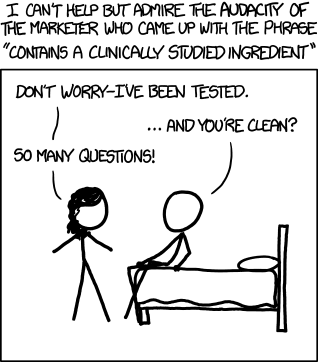
Clinically Studied Ingredient
Proudly publishing questions without answers falls in the same category . They are all equivalent to advertising that someone famous read your book, or watched your movie, without bothering to mention if they said anything about it.

New York City Department of Education – Academic Policy FAQs for Return to School 2020

First, here’s the document: academic-policy-faqs-for-return-to-school-2020
Let’s take a “deep dive” into it. Only, don’t expect to gain much knowledge.
    1. Must schools meet the unit of study requirements for 2020-21? CONTINUE READING: NYCDOE – Academic Policy FAQs (but no real answers) | JD2718

NYC Public School Parents: 108 NYC charter schools received a windfall averaging $940,000- $2.2 million each in federal PPP funds; check the list here!

NYC Public School Parents: 108 NYC charter schools received a windfall averaging $940,000- $2.2 million each in federal PPP funds; check the list here!

108 NYC charter schools received a windfall averaging $940,000- $2.2 million each in federal PPP funds; check the list here!


The Network for Public Education sifted through the companies and organizations receiving federal funds through the Paycheck Protection Program, meant to keep small businesses and non-profits afloat.  More than 1,300 charter schools and charter management companies received between $925 million and $2.25 billion from the federal government in the last few months, though public schools are not eligible to receive these grants and charter schools so far have not lost any government funding.  This doesn't count an unknown number of charter schools that may have received less than $150,000 in PPP funds, which have not been identified by the government.
What is particularly ironic is that when it suits them, charter schools call themselves public schools, but when its convenient, they admit they are private corporations and thus eligible for business loans and subsidies.
Meanwhile, in NY State there are 144 charter schools and management organizations that received PPP funding, the vast majority of which are in NYC.  Fully 108 NYC charters and charter management companies received between $102 million and $236 million in these funds, with an average of between $940,000 and $2.2 million each.   
The Charter Management Organization of New Visions and its assorted charters received between $6.7 million and $15 million dollars, despite the fact that they receive public school space free of charge and services from DOE.  In 2018, they also received a $14 million grant from the Gates Foundation to "work with" NYC public schools -- which to this day have not been identified.  Coincidentally or not,  the Gates Foundation director of K12 schools Robert Hughes came to the Gates Foundation from New Visions.
Harlem Children's Zone was awarded between $4 million and $10 million; the Hebrew Language Academies, heavily subsidized by billionaire Michael Steinhardt, between $2.8 million and  $6 million.  KIPP charter and KIPP LLC (which I guess is its Management Organization?)  is getting between $3 million and $5 million, despite also receiving $86 million from a federal charter school grant in 2019, and many millions more previously.  Uncommon Charters, which has been criticized for its abusive disciplinary practices, received between $2 million and $5 million in PPP funds. The full state and city list is below.

NYC Public School Parents: 108 NYC charter schools received a windfall averaging $940,000- $2.2 million each in federal PPP funds; check the list here!

Teacher Tom: The Invention of the Human

Teacher Tom: The Invention of the Human

The Invention of the Human


In his book Shakespeare: The Invention of the Human, literary critic Harold Bloom makes the argument that the great storyteller literally invented the modern human being. It's a grandiose claim, one that crosses the line into ridiculous, but at the same time, it's undeniable that the telling and re-telling of his stories has had an outsized influence on Western civilization. His language has become our language. It's almost impossible to speak English without relying upon metaphors, turns-of-phrase, and linguistic concepts of Shakespeare's invention. His characters like Hamlet, Falstaff, Juliet, Shylock and the Nurse have become archetypes around which we spin most of the stories we tell today. His plots are, both consciously and unconsciously, not only the soil from which contemporary plots emerge, but form a foundation for the stories of ourselves and others.

Of course, human storytelling predates Shakespeare by millennia. Indeed, Homo sapiens have been telling stories since the invention of language, and probably even before, making sense of our world, placing our experiences in context, weaving them into narratives that inform and create and explain and question. These stories invented not just Shakespeare himself, but all of us. In other words, Bloom is not wrong when he asserts that Shakespeare invented the human, he just leaves out the part about how every single one of us is a storyteller and as such we are all the inventors of "the human."

There are stories we tell and stories that tell us. And they are all part of the same story. 

We are born into the story of our mothers, our parents, our CONTINUE READING: Teacher Tom: The Invention of the Human

Where politicians get it wrong with kids going back to school : TheGrio

Where politicians get it wrong with kids going back to school : TheGrio

Where politicians get it wrong with kids going back to school
OPINION: Several conditions pre-COVID-19 that are perilous to Black kids, including lack of universal health care and racism, make schools reopening a hazard


In a recent interview with talk-radio host Marc Cox, Missouri Governor Mike Parson said, “These kids have got to get back to school. …They’re at the lowest risk possible, and if they do get COVID-19, which they will, they’re not going to the hospitals. They’re not going to have to sit in doctor’s offices. They’re going to go home and they’re going to get over it.”
Parson advocates for more social responsibility and less government intervention as the Trump administration pushes for school districts across the country to send children back to school. 
Unfortunately, not only is the COVID-19 curve going in the wrong direction for this country, the standard operations of any school suggest that having 31 people in a classroom in close quarters anywhere is a Petri dish of disaster.
The risk only gets worse when a classroom has no working windows, no ventilation, no regular sanitary supplies, and limited bathrooms.
Right now, America’s public school system serves 50.8 million students —about 90% of America’s pre-K through 12th grade children — and of those children, 52% of them identify as non-white. To this day, schools with mostly Black and brown students struggle with keeping arts and music in their schools while their independent and/or private school counterparts enjoy a plethora of academic and extracurricular CONTINUE READING: Where politicians get it wrong with kids going back to school : TheGrio

NewBlackMan (in Exile) TODAY

NewBlackMan (in Exile)


NewBlackMan (in Exile) TODAY


Lincoln Center At Home: Vanessa Williams
'Singer and actress Vanessa Williams leads Lincoln Center at Home 's tenth #MemorialForUsAll with renditions of "Colors of the Wind," "Save the Best For Last," and "Love Is" (with Darius De Haas ). Memorial For Us All is a secular community remembrance, welcoming all to celebrate the lives of those who have left us too soon during this pandemic. ' -- cunytv75
On the Clock: Kenny Leon, Tony Award-Winning Director of Stage & Screen
On this episode on On the Clock with Caroline Clark e, Tony Award-Winning director of stage and screen Kenny Leon discusses the sources of his inspiration. -- Black Enterprise
Animating While Black
'In June, a number of white actors said they would step down from voicing Black characters on popular animated shows. The producers of “The Simpsons” also announced they would no longer have white actors voice nonwhite characters. But these stories represent just one aspect of animation's complicated relationship with race. Los Angeles Times digital editor Tracy Brown discusses racism and represe
Wynton Marsalis on Arts in the After-Times
'In partnership with Gothamist and their Future NYC series, host John Schaefer consults with Wynton Marsalis as he considers arts possibilities in the after-times, touching on full participation and the ways to question institutional curation. Marsalis would like to see increased engagement with the arts - inviting folks to participate, creating the will to participate, and building community. Pr
How Can We Protect Essential Workers During the Pandemic?
'From hospitals to grocery stores, essential workers throughout the country have put their lives at risk serving the public since the pandemic began. While some employers have provided their essential workers with protective equipment like masks and hand sanitizer, as businesses around the country begin to reopen there’s one big question that looms large: who’s liable happens if someone gets sick
Candid Conversation with a Black Businessman: 7 Myths of Racial Equity
'As we are deep into this moment of civil unrest over systemic racism, Dr. Randal Pinkett , co-founder, chairman and CEO of BCT Partners, and co-author of Black Faces in White Places , offers his advice as a Black businessperson to other business people and in particular, white professionals. This is his advice to individual contributors, managers, executives and leaders on how to answer the ques
Alexandria Ocasio-Cortez Is Not Understood For Who She Really Is
'In this premiere episode of The Tight Rope , Dr. Cornel West and Professor Tricia Rose ask their esteemed guest Congresswoman Alexandria Ocasio-Cortez (AOC) the right questions for her to share powerfully about her journey, politics, and thoughts on social justice in an electoral framework, the discipline of non-attachment, and intentional vulnerability. Together they “pull the curtain” on power
'I May Destroy You' Let Michaela Coel Explore Dangerous Areas In A Safe Place
'The new HBO series I May Destroy You is a stylish, sometimes funny drama about a very serious subject: rape and sexual assault. The series centers on Arabella, a young writer who is raped after her drink is spiked at a bar. Michaela Coel , the show's creator, writer, director and star, was assaulted in a similar way when she was writing and starring in her first TV series, Chewing Gum . Coel say
Why 10 U.S. Cities Are Testing Universal Basic Income Policies
'The mayors of Los Angeles; Oakland, California; Atlanta, Georgia; Tacoma, Washington, Newark, New Jersey; Saint Paul, Minnesota; Jackson, Mississippi; Compton, California; Shreveport, Louisiana and Stockton, California, have joined Mayors For A Guaranteed Income , a coalition 
NewBlackMan (in Exile)