Latest News and Comment from Education

Saturday, June 6, 2020

Protests of the Enraged Youth - LA Progressive

Protests of the Enraged Youth - LA Progressive

Protests of the Enraged Youth


protestsLet me be blunt, I am frightened by the level of violence that protests have attained in my own city, and in cities throughout the country.
But I am also acutely aware that I have little or no influence on the people out in the streets doing the worst damage. What we have going on here looks more and more like a generational uprising as well as a protest against police violence.
It is why so many protesters are not listening to people like me who tell them that looting stores and firebombing cars undermines the moral force of their protests. Here is the argument I am hearing more and more.
“You are in no moral position to talk about looting. Your generation looted the country so much that all we have left is student debt, low paying, dangerous jobs, and a militarized police force to keep us under control in cities which have been handed over to the rich. You tossed our generation on the garbage heap and now it’s time for payback.”
If you look at the collective distribution of income wealth and opportunity in our society, can you really say this argument is wrong, especially since the Pandemic has given a fatal blow to the hopes of many already living precarious lives. There are millions of unemployed, out of school young people in this country who have nothing to lose and huge amount of anger at their position.<
No one is organizing these protests. And their very spontaneity shows how deep rooted the grievances are.
Several months ago, I feared that we could be facing food riots and rent riots on a Depression scale when the government stimulus money ran out and there were mass evictions and disruptions to the food chain.
I never thought they would come this early, or with this particular spark.
We are in deep deep trouble as a country. Years of impoverishing and marginalizing the poor, and handing our cities to the rich have brought us to this point.
mark naisonIf we view racist, militarized policing as an instrument used to enforce rising levels of inequality and gentrification in our major cities, then much of what we are seeing in these protests makes more sense.
READ MORE: Protests of the Enraged Youth - LA Progressive


PPIC: Racial disparities are wide in California

PPIC: Racial disparities are wide in California

PPIC: Racial disparities are wide in California


In response to the police killing of George Floyd and days of global protests, the Public Policy Institute of California (PPIC) released data showing the wide racial disparities within California.
The nonprofit is a nonpartisan think tank that helps guide the state on police decisions from race, water, education and voting.
The research covers the state’s criminal justice system, education, income and wealth, as well as the current COVID-19 pandemic.
“We need to think about this from a broader perspective—and that is, how can we actually reduce these inequities,” said Magnus Lofstrom with PPIC. “We see it in terms of education, we see it in terms of employment opportunities, in income, in wealth and we certainly see it in terms of our criminal justice outcomes.”
Overall, black Americans make up 6% of California’s population, but make up:
  • 16% of all arrests
  • 26% of the state’s probation population
  • 25% of the jail population
  • 29% of the prison population
Black Americans are much more likely to die from COVID-19. The death rate about twice that of whites, according to the California Department of Public Health.
“There’s strong evidence that the pandemic itself is not something that is playing out equally across our communities,” Lofstrom said.
Richard Owen is with the United Professional Educators—which represents principals and administrators in Sacramento City Unified School District. He also with the Law Enforcement Accountability Directive (L.E.A.D.).
“No, it’s not surprising because we have the highest number of the underlying conditions and we have the least access to quality healthcare,” Owen said.
The PPIC report also found black Californian families are about two times more likely to be earning at low income levels than at high income levels. But for white families in the state the opposite is true-- they are more than twice as likely to be earning at the top of the distribution.
“Wealth is where we see the biggest difference and that is more of a representation of how we have been able to accumulate our income and put it away towards savings,” Lofstrom explains.
In California, the median wealth of a white family is eight times greater than that of a black family.
“You build wealth and you pass it on to your kids,” Owen said. “But if you don’t have any wealth to pass on—then it’s everybody for themselves.”
PPIC also found the racial disparities start young with a concern that the pandemic and distance learning is further exacerbating the existing inequalities in education.
“We’re pulling a scab off of a sore here and it’s exposing all of the inequities in the system,” Owen explained. “So, if kids were not doing well prior to distance learning how do you think they are doing now?”
In fourth grade across the state PPIC found:
  • 32% of Black American children met English standards, versus 64% of white children.
  • 25% of Black American children met math standards, versus 60% of white children.
This impacts higher learning. Black Californians are 25% likely to hold a four-year degree (or higher), while white Californians are 44% likely to hold a four-year degree (or higher).
“So, when you have an educational system that’s failing them, when you have lack of economic opportunity and growth in their community—combined with this police treatment-- I mean it explains why people are so mad, so upset and so angry,” Owen said.
CONTINUE READING AND WATCH VIDEO: PPIC: Racial disparities are wide in California

Sacramento schools speak out on protests, killing of George Floyd — some posts upset students - Sacramento Bee

Sacramento schools speak out on protests, killing of George Floyd — some posts upset students 

Sacramento schools speak out on protests, killing of George Floyd
 some posts upset students


Sacramento Police Chief Daniel Hahn and Mayor Darrell Steinberg kneel with demonstrators in Oak Park on Wednesday, June 3, 2020, in a display of unity as another day of protests over the death of George Floyd are planned.
Some Sacramento-area schools are struggling to find the right way to respond to the killing of George Floyd and the nationwide protests borne from his death, and students are letting them know their statements are not enough.
Much of the criticism was aimed at the capital region’s private Catholic schools, which shared posts on social media condemning racism. The posts were quickly met with push back from students who say they’ve experienced discrimination while attending the Catholic-run schools.
A St. Francis High School Instagram post showing support for students of color garnered more than 1,000 responses, many of which were accounts of negative experiences at the East Sacramento campus.
Some of the students and alumni accused the school of deleting disparaging comments that cast the high school in a negative light. The school stated on their Instagram page that it deleted comments that identified students and teachers by name.
“Deleting the comments is like silencing them,” said Brooke Uhlenhop, 22, a St. Francis alumna. “You need to hold people accountable.”
Allesse Patterson, an 18-year-old St. Francis graduate who is black, said she felt troubled by what she described as “shallow words” from her alma mater.
“I think it’s important for them to address the issues they’ve ignored for so long,” Patterson told The Sacramento Bee.
Patterson recounted how teachers dismissed her anxiety after Stephon Clark was shot and killed by Sacramento police, and when school officials nearly withheld her diploma because she wore a kente cloth at graduation.
“Me and countless others have come to present problem after problem with racist teachers and students, microaggressions, racial insensitivity and time and time again you ignored us or pushed us aside,” she wrote. “Actions speak louder than the lousy words you copied and pasted from the Church’s website.
Bishop Jaime Soto, head of the Roman Catholic Diocese of Sacramento, said he read the comments from students, alumnae and community members, and he encouraged leaders at St. Francis to do the same.
“It is very painful to hear so many personal accounts from students of color who feel they have not been as supported, valued or protected as they should have been,” he said. “I applaud the bravery of every young woman who told her story on this forum, and who continues to live out the Christian ideal of confronting what she believes needs to be seen, heard and fixed.”
The posts sparked some activism. Two alumni, Martina Penalosa and Ana Macaspac, started a petition to demand change, including sensitivity training for teachers and promoting an environment of inclusion and diversity.
Both Jesuit High School and Christian Brothers High School also released statements that received pushback online. Christian Brothers, which made news after former principal Chris Orr stated his firing was racially motivated, released a statement on Wednesday which prompted criticism on Facebook. Orr sued Christian Brothers after he was fired.
“The world watched in horror as George Floyd’s life was brutally taken at the hands of police officers in Minneapolis, Minnesota,” the statement read in part. “Since then, we have watched our city, our country, and our world react to this tragedy with emotions ranging from prayerful sorrow to deep-seeded anger. We have seen transformative acts of love and compassion juxtaposed against horrific acts of violence. We stand with our global Lasallian Catholic community in praying for Mr. Floyd, his family, and his loved ones, as we pray for the victims of racial injustice and violence everywhere.” CONTINUE READING: Sacramento schools speak out on protests, killing of George Floyd — some posts upset students 
icle243248411.html#storylink=cpy

Upcoming Webinar: Stronger Together: A Guidebook for the Safe Reopening of California’s Public Schools - Letters (CA Dept of Education)

Release of Guidance Document and Upcoming Webinar - Letters (CA Dept of Education)

Stronger Together: A Guidebook for the Safe Reopening of California’s Public Schools


Dear Education Leaders and Stakeholders:

Release of Guidance Document and Upcoming Webinar

I am proud to announce that on Monday, June 8, the California Department of Education (CDE) will release our guidance document, “Stronger Together: A Guidebook for the Safe Reopening of California’s Public Schools.” We look forward to offering this guidance as a “how to” as you work with your local public health experts and school communities to navigate next steps and implement the recommendations we have provided.
We want to ensure you have the support you need as you review this guidance next week. You are invited to a special webinar to coincide with the release. In this webinar, CDE team members will walk through our document’s key tools and recommendations as well as answer your questions. Here is how to participate:
What: Webinar for local educational agency (LEA) leaders
When: 10 to 11 a.m., Monday, June 8
Register: This is an invitation-only webinar, and space is limited. A Zoom registration link will be provided later today.
We want to provide you with a partial view of what you can expect to find in the guidance document. The guidance will include some items we discussed at the all-LEA meeting we hosted on May 21, 2020, and that we have been discussing publicly and at stakeholder meetings over the course of the last few weeks. For example, the guidance document will include the following recommendations:
  • Face coverings: Students and staff should wear face coverings during all educational activities (at school or on a bus).
  • Physical distancing: Students and staff should engage in physical distancing (at least six feet of spacing between seats and in hallways and on buses) at all times.
  • Symptom screening: School districts should identify staff who can take temperatures for students and staff before they enter the campus.
CDE has heard from many LEAs that they may plan to provide some form of in-person instruction and distance learning. Our document will also provide in-depth considerations for designing high-quality and equitable instructional practices for all learners while arranging students and staff in the many new ways that will be needed in order to facilitate physical distancing guidelines.
We recognize that there are fiscal implications for schools to reopen safely with these physical distancing guidelines in place. LEAs will need steady revenue (for staffing and personal protective equipment)on which to rely and flexibility on instructional minutes. We are advocating for and have engaged in dialogue with the Governor’s Office, the Department of Finance, the Legislature, and educational stakeholders regarding the resources necessary to reopen safely with physical distancing measures in place.
Thank you for all you are doing to support the health, safety, and academic success of our students. I look forward to the next steps of our work together to implement this guidance safely.
Sincerely,
Tony Thurmond
State Superintendent of Public Instruction
Release of Guidance Document and Upcoming Webinar - Letters (CA Dept of Education)

When elephants fight, it is the [New Yorkers] that suffer, [amended African Proverb] | Ed In The Apple

When elephants fight, it is the [New Yorkers] that suffer, [amended African Proverb] | Ed In The Apple

When elephants fight, it is the [New Yorkers] that suffer, [amended African Proverb]


States, counties and cities are facing catastrophic budget shortfalls; unemployment rates not seen since the Great Depression and uncertainty over the re-opening of businesses and schools.  Each day as expenditures exceed revenues the deficits widen,
While the state budget was approved on April 1, under his emergency powers the governor can adjust the budget, in other words the budget is malleable; depending on revenues the budget can be adjusted after the July 1st.
A bill, the HEROES Act passed the House, it provides over $1 trillion for a wide range of supports.
Will the HEROES Act  pass the Senate? And, if so, how will the Senate change the House bill?
The current House bill would be a life-saver for New York City as well as cities across the state (See proposed $$ to each city here). Speculation is that the final bill will not come before the Senate until late June and will look considerably different than the bill that passed in the House.  The final bill has to “satisfy” Senate leader McConnell, the Republicans and the President.
In a normal year the Mayor and the City Council Speaker would be deep in discussions over the final budget. New York City, since the sweeping governance changes in the late eighties, is a “Strong Mayor,” system. The Mayor has wide discretion over the allocation of resources, the Council, aside from approving the CONTINUE READING: When elephants fight, it is the [New Yorkers] that suffer, [amended African Proverb] | Ed In The Apple

CURMUDGUCATION: Do Exit Exams Reduce Crime

CURMUDGUCATION: Do Exit Exams Reduce Crime

Do Exit Exams Reduce Crime


Of all the claims made about high school exit exams, this has to be one of the most unlikely, but here comes Matthew Larsen in the ever reformy Education Next to argue that exit exams--tests that are required to get a diploma--reduce crime.

Larsen is an assistant professor at Lafayette College in Pennsylvania. He's in the economics department, because of course he is. He set out to look at whether exit exams or increased course requirements had an effect on crime statistics. "Conventional belief holds that more and better-quality education reduces crime," he reasons. "Could exit exams improve teaching and learning in high schools such that criminal activity drops?"

The answer he came up with is that exit exams reduce the arrest rate, mostly for property crimes, but that increased course requirements do not. How did he come up with such sexy findings?

He collected FBI arrest data for 15-24 year olds from 1980 to 2010. He assumed that everyone was committing crimes in the same state in which they attended high school, and that they graduated when they were 18. There was also some estimating going on, like estimating the general age and gender distribution of the jurisdictions of the various police departments.

After that, it's pretty basic. If the state implemented exit exams in 2005, Larsen compares the arrest rates for the people who graduated before 2000 with that of the people who graduated afterwards. Larsen claims that by including cohorts in the same year (e.g. the arrest records for 2003 would include both cohorts that graduated before and after the test was implemented) he eliminates other factors, like police department staffing. Except, fo course, those overlap years CONTINUE READING: 
CURMUDGUCATION: Do Exit Exams Reduce Crime

BREAKING NEWS: New Study FINDS ONLINE CHARTERS PERFORM POORLY | Cloaking Inequity

BREAKING NEWS: New Study FINDS ONLINE CHARTERS PERFORM POORLY | Cloaking Inequity

BREAKING NEWS: NEW STUDY FINDS ONLINE CHARTERS PERFORM POORLY


The University of Kentucky College of Education has some breaking news. A new study by one of our faculty members finds that online charters perform poorly— suggesting problematic implications for critics of public education that have been calling for expansion of online charter schools in the midst of COVID19.
Here’s our press release:
Online schooling quickly became the new normal for U.S. students when school buildings shuttered to help curb the spread of COVID-19. Although the full impact this will have on student performance will not be understood for quite some time, a study published in the April issue of the journal Educational Researcher may offer a glimpse.
Dr. Joseph Waddington, an assistant professor in the University of Kentucky College of Education Department of Educational Policy Studies and Evaluation, is part of a research team that analyzes student performance in charter schools. Virtual charter schools are offered in 21 states across the U.S., including in Indiana, where the majority of Waddington’s research data is collected. 
The results of the study published in April do not bode well for virtual learning. The research team found that students who switched from traditional public schools to virtual charter schools saw test scores in mathematics and English/language arts drop substantially, and the lower scores persisted over time.
When students across the U.S. abruptly shifted to online learning, Waddington and his colleagues considered whether their performance would mirror that of students in virtual charters.  
“Researchers, policymakers, teachers, school administrators, and parents alike have all been concerned about the negative consequences for student learning resulting from the dramatic shift to online instruction during COVID-19, amongst other health, safety, and socioemotional outcomes,” Waddington said. “We knew we could not directly compare virtual charter schools and the online learning taking place during COVID-19. However, we thought it would be beneficial to provide the community with a research-informed discussion of the two online learning environments, since many individuals have been eager to catch a glimpse of the potential impacts on student achievement.”
The discussion was published by Brookings, a non-profit public policy institute based in Washington D.C. It, along with the study published in Educational Researcher, was authored by Brian R. Fitzpatrick and Mark Berends at the University of Notre Dame, Joseph J. Ferrare at the University of Washington-Bothell, and Waddington at UK.
A bill allowing charter schools in Kentucky, HB 520, was signed into law in 2017. Kentucky’s charter school legislation does not allow for virtual charter schools. 

June Newsletter: NPE Stands with Those Who Demand Racial Justice - Network For Public Education

June Newsletter: NPE Stands with Those Who Demand Racial Justice - Network For Public Education

June Newsletter: NPE Stands with Those Who Demand Racial Justice


The Network for Public Education’s Statement on the Murder of George Floyd


These are the worst of times.
Police brutality in Minneapolis murdered George Floyd  who allegedly used a fake $20 bill. Petty crimes are adjudicated in a court of law. Police do not have the authority or right to use lethal force when confronting an unarmed person. After a long string of similar incidents where black people were unjustly murdered, the killing of George Floyd ignited protests across the nation.
We stand with those who protest.  Racism is America’s deepest, most intractable sin.
Racism is thriving. It will destroy our nation until we assure equal justice to every citizen, until we guarantee that everyone has the same rights and privileges, until we provide every man, woman, and child with decent health care, housing, education, protection under the law, and a decent standard of living.
We can’t eliminate racism entirely, but we can choose leaders who fight for freedom, justice, and a decent standard of living for all people. Unless we do so, our tattered democracy will not survive. We can’t let that happen. We must be willing and able to pursue genuine change, a social democracy in which every one of us is protected equally by the law and has the right to life, liberty, and the pursuit of happiness.
Diane Ravitch
NPE, President

Conversations with Diane

If you were unable to join us this week for Diane’s incredible conversation on racial justice and equity with the National Director of Journey for Justice, Jitu Brown, you can hear it here.
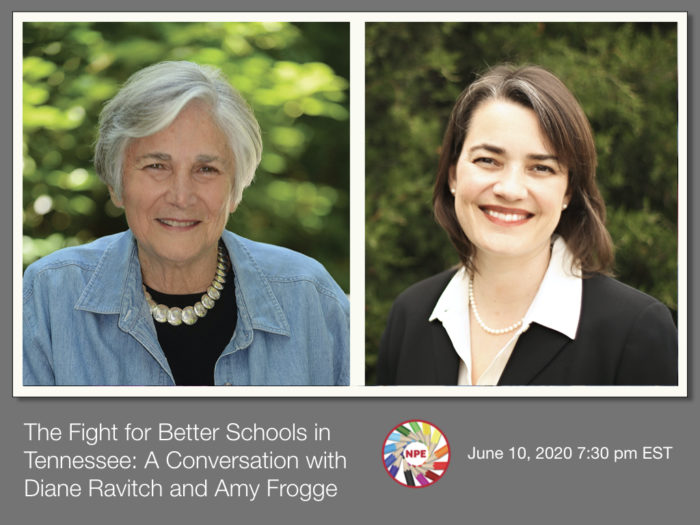
Next week, Diane’s guest will be public ed advocate and school board member, Amy Frogge. Diane and Amy will discuss the fight for better schools in Tennessee. Sign up to join us below.

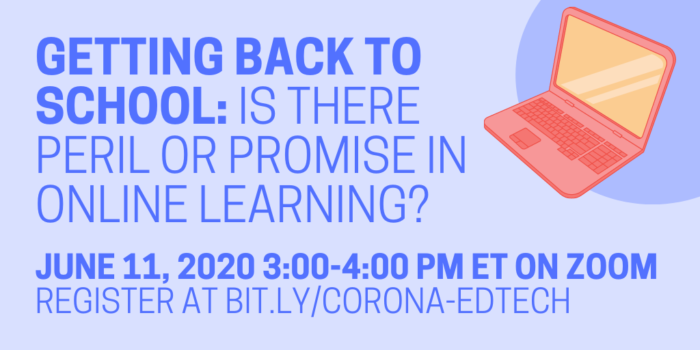
Getting Back to School

Finally, please join us for a special seminar sponsored by In the Public Interest, the Nework for Public Education and other advocacy groups about online education. See the information below and sign up here.
June Newsletter: NPE Stands with Those Who Demand Racial Justice - Network For Public Education


Teacher Tom: This is Not About Peace: This is About Power and Control

Teacher Tom: This is Not About Peace: This is About Power and Control

This is Not About Peace: This is About Power and Control


For several nights this week, Seattle has had a curfew. It started with 5 p.m., then 6 p.m., then 9 p.m. On each of those nights righteous protesters violated the curfew making the determination that, in the balance of things, Black lives matter more than some ad hoc law. They remained in the park where they had gathered, they remained in the street. By all accounts, including what I've seen with my own eyes, they have been peaceful. A few were arrested, most, however, were violently attacked with pepper spray, tear gas, explosives, and the hands and feet of police officers.

When one engages in the long tradition of civil disobedience, like staying out after curfew or inconveniencing motorists by marching in the streets, the calculation one makes is to "take the consequences." When participating in a protest, I always advise people to know in advance what the consequences of certain actions will be and to likewise know in advance what consequences one is prepared to accept. The consequence of blocking traffic, according to our laws, is a citation. The consequence of disobeying a legal order by the police, like an order to disburse, is arrest and trial. I'm not certain of the legal consequence of breaking curfew, but I am certain that it is not to be attacked with gas and explosives. I am certain that being beaten by cops is not a legal remedy. What has been happening in Seattle, across the US, and around the world is an extralegal, meaning an illegal, attack on our rights to assemble, speak, and protest, carried out by the police, and now, in the case of Washington DC, the military, and sanctioned by our elected representatives, Republicans and Democrats alike.

There are some who respond to these illegal attacks on CONTINUE READING: 
Teacher Tom: This is Not About Peace: This is About Power and Control


THIS WEEK WITH NEWBLACKMAN (IN EXILE)

NewBlackMan (in Exile)


THIS WEEK WITH NEWBLACKMAN (IN EXILE)


YESTERDAY

Racial Inequality: Black Workers Face 'Devastating Job Loss' During The Pandemic, Study Says
'Black Americans are disproportionately hard hit by the current loss of jobs. We explore why and what can be done to reverse this trend. On Point's Coronavirus Hours is joined by Valerie Wilson , director of the Economic Policy Institute ’s program on race, ethnicity and the economy; Darrick Hamilton , executive director of the Kirwan Institute for the Study of Race and Ethnicity at Ohio State Un
Helga: A Conversation with Elizabeth Alexander
'Poet and Andrew W. Mellon Foundation President, Elizabeth Alexander joins Helga to share her thoughts on what it means to live a life alongside words, how we maintain relationships with one another, and what the world looks like after loss.' -- WNYC Studios
Bassey Ikpi Didn’t Enter the World Broken
'Author Bassey Ikpi always struggled with a certain kind of heaviness and worry growing up. In 2004, she was able to put a name to those feelings when she was diagnosed with bipolar disorder. She joins Rebecca Carroll to talk about the particular stigma black women face when it comes to mental health, how TikTok is actually a form of self-care, and what she’s doing to try to stay healthy in the m
Staging Black Protest: A Play List by Lisa B. Thompson
| @DrLisaBThompson | NewBlackMan (in Exile) Black people are experiencing great turmoil. Millions have taken to the streets for a week to protest in the names of George Floyd, Breonna Taylor, Ahmaud Arbery, and countless others murdered by state sanctioned violence. As a playwright and professor who specializes in African American theatre and cultural studies, I’ve been thinking about the ways I

JUN 04

Protests, Police Brutality, And A Pandemic
'Protests have taken place throughout North Carolina, and across the country, in response to the death of George Floyd . Floyd, who was born in North Carolina, was killed by a white police officer in Minneapolis last week. In a video, Floyd can be heard saying “I can’t breathe” while the officer held his knee on Floyd’s neck for nearly nine minutes. The ongoing protests are also fueled by histori
The Law Police Used To Discriminate Against Musicians Of Color
'Jazz musicians have always faced systems of discrimination in America. One insidious example was the cabaret card, a form of identification required for any musician to work in a New York nightclub from 1940 to 1967. The New York Police Department administered these licenses and revoked them for any minor infraction. As a result, some of the biggest names in the music at the time, like Billie Ho

JUN 03

Left of Black S10:E15—Richard Brent Turner on Black New Orleans
New Orleans persists as the premiere hub of Black Creole culture in the U.S., preserving a direct connection to traditions ranging from the first & second lines in jazz funerals to the ongoing practice and performance of Black Indian tribal customs. Richard Brent Turner , the author of Jazz Religion, the Second Line, and Black New Orleans After Hurricane Katrina (Indiana University Press, 2015) a
Dr. Beverly Daniel Tatum on Talking to Kids About the National Uprising
'Dr. Beverly Daniel Tatum , the author of "Why Are All The Black Kids Sitting Together in the Cafeteria?" and Other Conversations About Race , shares ideas on how to talk to your kids about racism, discrimination, and the events that have sparked the protests across the country.' -- All Of It
Why Police Unions Have So Much Power
'There are many reasons why achieving police reform is so challenging in the United States. One reason is the role of police unions. In some cases, these unions have pushed back against reforms meant to increase transparency. In other cases, they’ve established collective bargaining agreements that make it difficult to hold officers accountable and some have increased their power by forming polit
#BackChannel: Processing Protests And Police Violence On Top Of A Pandemic
'The killing of George Floyd in Minneapolis is a flashpoint and sparked protests across the nation over the weekend. In many communities, police officers donned riot gear and used tear gas, rubber bullets and other means to subdue those demonstrating — and peaceful protests turned violent, leading to fires, broken windows and vandalism. On this edition of #BackChannel , WUNC host host Frank Stasi

JUN 02

How COVID-19 has Heightened Economic and Racial Inequality
'Sparked by the death of George Floyd , thousands of people marched in America's major cities to speak out against racism and police brutality. Racial inequality has plagued the American economy for centuries, and the coronavirus pandemic has only heightened the dangers of the existing racial wealth gap. Notably, African Americans are disproportionately dying from COVID-19. Black-owned businesses
What The George Floyd Protests Reveal About Policing In The U.S.
'Protests erupt against police brutality and use of force. In many cities, police are responding with even more force. We look at why it's happening and what it means about policing in America.' -- On Point's Coronavirus Hours Jeh Johnson , partner in the litigation department at Paul, Weiss, Rifkind, Wharton & Garrison LLP. Former secretary for the Department of Homeland Security. ( @PaulWeissLL
All The Songs We Sing: A Celebration Of North Carolina’s Black Writers
'Twenty-five years ago, renowned poet Lenard D. Moore invited a group of his peers into his basement for a session of writing critique. That monthly gathering evolved into the Carolina African American Writers’ Collective , which has supported over 60 writers across a variety of styles through their careers. The State of Things on WUNC host Anita Rao reflects on the CAAWC’s history with founder a

JUN 01

Understanding the Pain Fueling Nationwide Demonstrations
'Tens of thousands of protesters took to the streets in cities across the country, in response to the police killing of George Floyd in Minneapolis. While George Floyd’s killing is galvanizing the uprising, his death is only the latest in a series of events that make this such a painful moment for Black people in the United States. At the same time that people of color are disproportionately dyin
Who is "Karen" and Why Does She Keep Calling the Police on Black Men?
'A meme about a white woman who "wants to speak to the manager," "Karens" have been experiencing a resurgence in pandemic times : she's refusing to wear a mask. Refusing to socially distance. And, in this case, refusing to leash her dog and then calling in the power of the state on a fellow New Yorker. And "Karen" is not alone. Before her, we had BBQBecky, PermitPatty, Golfcart Gail: a slew of Wh

MAY 31

MusiQology Presents: A Spiritual Vibe, Vol. 1
"This project by Dr. Guthrie Ramsey, Jr. and MusiQology is dedicated to Rev. Dr. Leslie Callahan and Annabelle Callahan who have created a place to dream of a radical freedom that’s grounded in love at the St. Paul’s Baptist Church, Philadelphia." A Spiritual Vibe, Vol. 1 by Guthrie Ramsey
José James And Taali: Alone Together Duets
'Partners living in isolation are likely to discover a lot about each other. That’s true for José James and Taali (née Talia Billig ), vocalists and founders of Rainbow Blonde Records, who “found a love” together in this song they co-wrote.' -- Jazz Night in America
Elizabeth Alexander: Creative Process – Are You in a Period of ‘Woodshedding’?
'Creative types can feel an overwhelming sense of pressure to be prolific, especially in times like these when, in theory, free time is abundant. Creativity is a resource that takes different forms and, like other resources, it has its limits. According to Elizabeth Alexander , poet and president of the Andrew W. Mellon Foundation, it's common for artists to have gaps in the chronology of their w

MAY 30

Extra Credit with Dr. Deondra Rose: How Public Policy Has Affected Higher Education
'A high percentage of students attending college in the US today are given some form of financial aid. But this wasn’t always an option. Deondra Rose of Duke University ’s Sanford School of Public policy discusses the history of higher education policy, and how lawmakers have used programs like the National Defense Education Act of 1958, the Higher Education Act of 1965, and Title IV of the 1972
Brother Ali: Building Bridges – Muslims in America
'In March 2019, the iconic Muslim-American rapper and activist Brother Ali visited Duke University for a weeklong residency and culminating performance at Motorco Music Hall on Thursday, March 7, 2019. Brother Ali’s residency is part of a joint initiative with the Duke Islamic Studies Center and Duke Middle East Studies Center entitled 'Building Bridges: Muslims in America.' Funded in part by the
The Ethics of Now: In Defense of Terrible Television with Adriane Lentz-Smith + Mark Anthony Neal
'Duke History Professor and host of The Ethics on Now Adriane Lentz-Smith is joined by James B. Duke Distinguished Professor of African and African American Studies Mark Anthony Neal for the conversation “In Defense of 
NewBlackMan (in Exile)