Latest News and Comment from Education

Thursday, December 17, 2015

Seattle Schools Community Forum: Seattle Schools International Schools Newsletter

Seattle Schools Community Forum: Seattle Schools International Schools Newsletter:

Seattle Schools International Schools Newsletter


I didn't know this newsletter, Global Talk, existed and I am glad to provide the link.  

They provide information on travel opportunities for both students and teachers.


Here's one of their great articles.

Earn High School Credits for a Language You Already Know


Are you an 11th or 12th grade student who speaks a language other than English? Can you read and write in it too? Do you want to earn credit for it? If you answered yes to all three questions, then you are a good candidate for the World Language Credit Program. These credits can help meet high school graduation requirements for elective credits and 4-year college admissions requirements for world languages.

Seattle Public Schools is able to sponsor tests for 11th and 12th graders. Younger students (8th-10th grades) may also sign up for testing, but they'll need to pay for their own tests at this time. Over 70 students have already tested this fall with over 70% of them earning 4 credits!

Upcoming test dates and locations:
  • Wednesday, Jan 13, 2016 2:00 pm at Chief Sealth International High School(priority given to Chief Sealth students)
  • Saturday Jan 23, 2016 10:00 am - 2:00 pm at the Seattle World School
  • Saturday Feb 6, 2016 10:00 am - 2:00 pm at the Seattle World School
  • Saturday Mar 19, 2016 10:00 am - 2:00 pm at the Seattle World School
  • Saturday Apr 2, 2016 10:00 am - 2:00 pm at the Seattle World School
For more information, please see the SPS World Language Credits website and watch this short video.
 Seattle Schools Community Forum: Seattle Schools International Schools Newsletter:

Social Impact Bonds: The End of Special Education Part V

Education Lessons From A Sparkly District: The End of Special Education Part V:
The End of Special Education Part V


This is really Social Impact Bonds (SIBs), aka Pay for Success, part 2. 


It seems that NJ Senator Teresa Ruiz, Chair of the NJ Senate Education Committee, thinks that SIBs may be a way to pay for the Committee's vision of Pre-K in New Jersey. Tuesday morning I heard a clip of Senator Ruiz on WBGO's news report. My jaw dropped.


Senator Teresa Ruiz says one recommendation is establishing a five-year pilot program allowing the private sector to pay for expanding early childhood education and then receive a portion of the state savings from that investment.


“It allows for programs to really develop more quickly because the funding is there, and certainly, later on, what we can look for is we will save money because we won’t have to have early-intervention programs and classification and wrap-around services because we did the work early on.”
Just. No. 

I wrote about SIB's here, but let me recap. Goldman Sachs funded a SIBs program in Utah. They claim a 99% "success" rate. In other words, 99% of the 3- and 4-year-olds who went through their funded program did NOT require remedial help or special education classification. Goldman Sachs received $260,000 in payment for those 109 out of 110 students. And will continue to receive payment for every year those students are NOT classified for special education. 

You know there are going to be questions, really basic ones, when you see "results" like that. Presumably, Senator Ruiz heard about those results and did not look further into the inevitable questions about the validity of those claims. 

What was the starting criteria for those students? What tests did they use? Medical history? Demographics? How many students would have likely had to have special education if they didn't have the "high quality" Pre-K experience? How many would they expect to classify even with the experience? What is "high quality" Pre-K? What does "high quality" Pre-K cost? How much does Utah spend on Pre-K? What is the threshold that has to be met for Goldman Education Lessons From A Sparkly District: The End of Special Education Part V:


Expulsion and Suspension Data - Student & School Data Files (Downloadable) (CA Dept of Education)

Expulsion and Suspension Data - Student & School Data Files (Downloadable) (CA Dept of Education):

Expulsion and Suspension Data - Student & School Data Files


The file includes state, county, district, and school level data. Refer to the file structure for further details regarding the file's contents. Data are not included for districts and independently reporting charter schools (IRCs) that did not certify their CALPADS End-of-Year 3 Discipline submission.
A list of districts and IRCs by year that did not certify their CALPADS End-of-Year 3 - Discipline submission is available at CDE CALPADS Certification Status by Year/Submission Web page.
Note: An asterisk (*) appearing in a data field is used to protect student privacy where there are ten or fewer students.
Year of Discipline DataFileFile Structure
2014–15discipline15 (TXT; Posted 17-Dec-2015)File Structure: Expulsion and Suspension Data 2011–15
2013–14discipline14 (TXT; Posted 14-Jan-2015)File Structure: Expulsion and Suspension Data 2011–15
2012–13discipline13 (TXT; Posted 23-Jan-2014)File Structure: Expulsion and Suspension Data 2011–15
2011–12discipline12 (TXT; Posted 10-Sep-2013)File Structure: Expulsion and Suspension Data 2011–15
Each school in these files may have from 0 to 24 records. A separate record is created for each type of discipline data: (1) expulsion; (2) in-school suspension; and (3) out-of-school suspension. Then data is reported for up to 8 ethnic/racial subgroups.
Click on the file name you wish to download and save the file to your computer. To view the file, open the file in a database or spreadsheet program. For further instructions choose the link below or contact our office for assistance.
Questions: Data Reporting Office | dro@cde.ca.gov | 916-327-0219 
Last Reviewed: Thursday, December 17, 2015


Expulsion and Suspension Data - Student & School Data Files (Downloadable) (CA Dept of Education):

Special Issue of “Educational Researcher” (Paper #5 of 9): Teachers’ Perceptions of Observations and Student Growth | VAMboozled!

Special Issue of “Educational Researcher” (Paper #5 of 9): Teachers’ Perceptions of Observations and Student Growth | VAMboozled!:

Special Issue of “Educational Researcher” (Paper #5 of 9): Teachers’ Perceptions of Observations and Student Growth

VAMboozled!
Recall that the peer-reviewed journal Educational Researcher (ER) – recently published a “Special Issue” including nine articles examining value-added measures (VAMs). I have reviewed the next of nine articles (#5 of 9) here, titled “Teacher Perspectives on Evaluation Reform: Chicago’s REACH [Recognizing Educators Advancing Chicago Students] Students.” This one is authored by Jennie JiangSusan Sporte, and Stuart Luppescu, all of whom are associated with The University of Chicago’s Consortium on Chicago School Research, and all of whom conducted survey- and interview-based research on teachers’ perceptions of the Chicago Public Schools (CPS) teacher evaluation system, twice since it was implemented in 2012–2013. They did this across CPS’s almost 600 schools and its more than 12,000 teachers, with high-stakes being recently attached to teacher evaluations (e.g., professional development plans, remediation, tenure attainment, teacher dismissal/contract non-renewal; p. 108).
Directly related to the Review of Article #4 prior (i.e., #4 of 9 on observational systems’ potentials here), these researchers found that Chicago teachers are, in general, positive about the evaluation system, primarily given the system’s observational component (i.e., the Charlotte Danielson Framework for Teaching, used twice per year for tenured teachers and that counts for 75% of teachers’ evaluation scores), and not given the inclusion of student growth in this evaluation system (that counts for the other 25%). Although researchers also found that overall satisfaction levels with the REACH system at large is declining at a statistically significant rate over time, as teachers get to know the system, perhaps, better.
This system, like the strong majority of others across the nation, is based on only these Special Issue of “Educational Researcher” (Paper #5 of 9): Teachers’ Perceptions of Observations and Student Growth | VAMboozled!:

Seattle Schools Community Forum: Tell Your Children: Words Have Meaning

Seattle Schools Community Forum: Tell Your Children: Words Have Meaning:

Tell Your Children: Words Have Meaning

I say that here, over and over, but with two regional stories about students who are misusing words in social media, it bears saying again.

I think the issue may be that either parents or schools are not helping kids to understand that certain words are incendiary and considered hate speech.  (Maybe schools need to have assemblies with skits to explain this or perhaps Ballard's great film/video program could produce some videos.) 

Many students know about the First Amendment and may believe they can say whatever they want to whoever they want.  There are countless court cases to prove that belief to be incorrect.  One of the easiest ways to explain it this concept, even to younger students, is to talk about not being able to cry, "Fire!" in a crowded theater.  Speech that can incite is open to legal action. 

One story is the situation at Western Washington University from a couple of weeks ago that started around a discussion about whether their mascot, a Viking, is representative enough for their population.  As things do happen on social media, a lot of racially-charged statements - mostly anonymous - went out. 


There had been a claim that during this back-and-forth, the student body president, who is African-American, had called some white students "baby KKK."  That led to one student saying online at Yik Yak, "Let's lynch her."  He removed that statement very quickly but many people saw it including the student body president who was rightly frightened.  Screenshots were 
Seattle Schools Community Forum: Tell Your Children: Words Have Meaning:


On La. Governor-elect John Bel Edwards’ K12 Transition and Then Some | deutsch29

On La. Governor-elect John Bel Edwards’ K12 Transition and Then Some | deutsch29:

On La. Governor-elect John Bel Edwards’ K12 Transition and Then Some

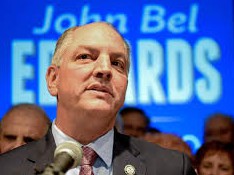
john bel edwards
On November 25, 2015, Louisiana’s Governor-elect John be Edwards launched his transition campaign, entitled, Onward Louisiana. As of December 17, 2015, Edwards has publicized seven transition committees: economic development, fiscal matters, public safety, transportation, children and family services, higher education, and K12 education.
The purpose of these committees is to assist the governor in planning a course of action to address issues related to each area.
Based on my reading of the committee membership lists, I believe that Edwards will “govern from the center,” an idea voiced by Louisiana School Boards Association (LSBA) President Scott Richard in this December 12, 2015, Advocate article.
Edwards’ committee memberships include a number of people whom I am glad to see serving. For example, the Fiscal Matters Transition Committee includes retired science teacher and education blogger Michael Deshotels, Louisiana Association of Educators (LAE) government relations specialist Shane Riddle, and Senator Edwin Murray.
In addition, and regarding the K12 Transition Committee, LSBA President Scott Richard has agreed to serve as chair. The K12 Transition Committee is the largest, with 53 members to date– and it is overwhelmingly comprised of individuals who support traditional, local-board-run public education. Yes, there are some, like corporate-reform promoter and protector and former BESE members, Leslie Jacobs, about whom I have written on numerous occasions. But I daresay hers is not the driving agenda on this transition committee.

Do Students Have to Do Common Core Now to Get into Heaven?

Do Students Have to Do Common Core Now to Get into Heaven?:

Do Students Have to Do Common Core Now to Get into Heaven?

Gate to heaven made in 3d software


It should be important to everyone, that the other day College Board president and the Common Core creator, David Coleman, met with Catholics—The Cardinal Newman Society which promotes and defends the faith—to allay their worries about Common Core.
One Newman member snapped at Coleman and said:
We don’t open Catholic schools to get kids into college. We open Catholic schools to get them into heaven.
Well, that may be true, but while Catholic parents want heaven, they might also want their students to go to Notre Dame—the next best thing to heaven in some minds.
And that’s why Catholics are stuck with Common Core like everyone else.
Common Core has been sneakily aligned to the college entrance tests, the SAT and the ACT. This means that in order for students to obtain the information necessary to pass these two tests, however crummy that information might be, they must learn Common Do Students Have to Do Common Core Now to Get into Heaven?:

Charters: Better than or just different from district schools? - CommonWealth Magazine

Charters: Better than or just different from district schools? - CommonWealth Magazine:

Charters: Better than or just different from district schools?

New data show stark differences in who enrolls -- and remains -- in charter schools


 A TRIFECTA OF initiatives focused on raising the charter school cap, including Governor Baker’s legislative proposal, a potential ballot initiative, and a class action lawsuit filed on behalf of Boston parents, has brought more heat than light to the charter school debate. The underlying argument of pro-charter school advocates can be boiled down to “charters are better than public schools while serving the same, or similar, student populations.”

In 2010, the Legislature passed An Act to Close the Achievement Gaps, which attempted to address acknowledged inequities in enrollment practices between public schools and charter schools related to under-enrollment of English language learners, low-income and special needs students. The law attempted to rectify the charter school practice of leaving empty seats unfilled in later grades by not accepting students after the initial enrollment grade.
A study released in October, “Who is Being Served by Massachusetts Commonwealth Charter Schools,”commissioned by the Massachusetts Association of School Committees, analyzed five years of Department of Elementary and Secondary Education (DESE) data since the law’s enactment and found that charter school enrollment practices do not support the pro-charter argument of “better than.” Rather, the data suggest that charter school enrollment – especially in Boston, Springfield, Worcester and Gateway Cities – is “different from” that of sending public schools.
Charter schools have chosen to be judged almost solely by their performance on MCAS and use results to support their “better than” claims. For this reason, policy makers should pay attention to the impact of enrollment practices on testing outcomes. Enrollment loss appears to be planned for and built into charter business strategy and contributes to higher test performance.
Certain student demographic characteristics are established predictors of testing outcomes. Therefore, looking at who enrolls, who stays and who leaves helps to understand charter outcomes. In general,
  • Regular education students outperform special education students.
  • English speakers outperform non-English speakers.
  • Middle- and high-income students outperform low-income students.
  • Females outperform males.
Charter schools often describe themselves as “schools of choice.”  It appears that parents, especially in urban districts, are choosing both to enroll and subsequently to remove their children from their charter schools. The data suggest that parents of 25 percent of K-4 students in urban charters take their children out of their schools before they complete the school’s program. In middle grades, the parents of 40 percent of the students in urban charter middle schools are choosing to remove their children. Parents of charter high school students are choosing to remove their sons and daughters in even higher percentages, 50 percent in Charters: Better than or just different from district schools? - CommonWealth Magazine:

John Thompson: The Beginning of the End of VAM? | Diane Ravitch's blog

John Thompson: The Beginning of the End of VAM? | Diane Ravitch's blog:

John Thompson: The Beginning of the End of VAM?


John Thompson, historian and teacher, takes a closer look at the New Mexuco court decision that imposed a preliminary injunction on the use of value-added measurement to evaluate teachers and to punish or reward them. In his judgment, VAM is on the way out.
New Mexico District Judge David K. Thomson granted a preliminary injunction preventing consequences from being attached to the state’s teacher evaluation data. As Audrey Amrein-Beardsley explains, “can proceed with ‘developing’ and ‘improving’ its teacher evaluation system, but the state is not to make any consequential decisions about New Mexico’s teachers using the data the state collects until the state (and/or others external to the state) can evidence to the court during another trial (set for now, for April) that the system is reliable, valid, fair, uniform, and the like.”
This is wonderful news. As the American Federation of Teachers observes, “Superintendents, principals, parents, students and the teachers have spoken out against a system that is so rife with errors that in some districts as many as 60 percent of evaluations were incorrect. It is telling that the judge characterizes New Mexico’s system as a ‘policy experiment’ and says that it seems to be a ‘Beta test where teachers bear the burden for its uneven and inconsistent application.’”
close reading of the ruling makes it clear that this case is an even greater victory over the misuse of test-driven accountability than even the jubilant headlines suggest. It shows that Judge Thompson made the right ruling on the key issues for the right reasons, and he seems to be predicting that other judges will be following his legal logic. Litigation over value-added teacher evaluations is being conducted in 14 states, and the legal battleground is shifting to the place where corporate reformers are weakest. No longer are teachers being forced to prove that there is no rational basis for defending the constitutionality of value-added evaluations. Now, the battleground is shifting to the actual implementation of those evaluations and how they violate state laws.
Judge Thomson concludes that the state’s evaluation systems don’t “resemble at all the theory” they were based on. He agreed with the district superintendent who compared it to the Wizard of Oz, where “the guy is behind the curtain and pulling levers and it is loud.” Some may say that the Wizard’s behavior is “understandable,” but that is not the judge’s concern. The Court must determine whether the consequences are assessed by a system that is “objective and uniform.” Clearly, it has been impossible in New Mexico and elsewhere for reformers to meet the requirements they mandated, and that is the legal terrain where VAM proponents must now fight.
The judge thus concludes, “New Mexico’s evaluation system is less like a [sound] model than a cafeteria-style evaluation system where the combination of factors, data, and elements are not easily determined and the variance from school district to school district creates conflicts with the [state] statutory mandate.”
The state of New Mexico counters by citing cases in Florida and Tennessee as precedents. But, Judge Thomson writes that those cases ruled against early challenges based on equal protection or John Thompson: The Beginning of the End of VAM? | Diane Ravitch's blog:

The Convoluted Profits of Academic Publishing - The Atlantic

Is Academia.edu Improving Access to Professors' Research—or Is It Just Profiting From It? - The Atlantic:

The Convoluted Profits of Academic Publishing

One company is changing the way research papers are being shared, but professors worry about trusting the for-profit website.

Richard Price always had an entrepreneurial bent. He started a cake business in his mum's kitchen during a summer break from his doctoral program at Oxford, eventually converting it into a sandwich-delivery service after realizing people only ate cake once a week. Then, when one of his philosophy papers took three years to get published, Price channeled his business interests into a new venture aimed at streamlining that academic process.
After finishing his DPhil (the English equivalent of a Ph.D.), Price raised venture capital in London and moved to San Francisco to start Academia.edu in 2008. On this site—which includes a social-networking function and allows users can “follow” others with similar interests—academics post drafts of papers, lecture notes, conference speeches, and published articles. With roughly 30 million registered users, 8 million uploaded papers, and 36 million unique monthly visitors, it has become the one of the most widely used websites to read academic research for free.
But lately, some have questioned whether academics should entrust their research to this for-profit website. And while there is a growing commitment to open-access research, there’s little consensus about the best way to achieve that goal. Traditionally, most of the research produced at American universities hasn’t been accessible to the general public. To read a scholarly paper on leukemia or political theory or Jane Austen, you needed a university ID card or you had to pay roughly $10 to $30, even if that paper was directly or indirectly funded with taxpayers dollars. Those paywalls essentially siloed research in the Ivory Tower.
The convoluted profit model behind academic publishing frustrates many within higher education, too. Subsidized by their universities, professors write, evaluate, and edit scholarly research—work that they largely do for free but can be essential for job security and promotions. And under that profit model, those same universities often pay publishers and database companies billions for access to the very research that their faculty produced. As I wrote in The Atlantic in 2012, this is not a rational process. While new, online journals (like the American Political Science Association’s proposed open-access publication) circumvent the traditional publishers, the most prestigious periodicals for the most part still use this model.
Paywalls and the costs of academic publishing have helped drive the open-access movement, which has gained momentum since Aaron Swartz hacked into the MIT mainframe in 2010 and downloaded 4.8 million academic articles from the JSTOR database. Now, the government requires that all research funded with National Institutes of Health grants be listed on PubMed, which is free to access, within a year of publication. The National Science Foundation is slated to have a similar requirement soon. The British government has ordered even broader mandates. Several private grantees, including the Gates Foundation, also have open-access Is Academia.edu Improving Access to Professors' Research—or Is It Just Profiting From It? - The Atlantic:

Perdido Street School: These Are Clearly Reasons Why Buffalo Schools Should Be Charterized

Perdido Street School: These Are Clearly Reasons Why Buffalo Schools Should Be Charterized:

These Are Clearly Reasons Why Buffalo Schools Should Be Charterized

From the Buffalo News:


A new survey of students in Buffalo Public Schools reinforces the extent of the problems the district is facing – not in the classroom, but in the home.

Fourteen percent of high school students who took the survey said they have been beaten or physically harmed by a parent or adult while in their house.

Sixteen percent have lived with someone diagnosed as mentally ill or suicidal.

Nearly one out of four has lived with someone who was an alcoholic, drug abuser or problem gambler.

More than a third said they have seen someone in their neighborhood shot, stabbed or beaten.

And more than 37 percent said they had a parent or adult in their home swear at or insult them.

All of these are of course the fault of their teachers, who fail them on a daily basis, and keep them from having the kind of achievement they're all capable of if only their schools and teachers didn't suck.

Wanna bet when they charterize whole swaths of Buffalo that the students who are beaten or physically harmed at home, have an alcoholic or drug addict in the home, live in neighborhoods where people are shot or stabbed or have adults in the home with mental illness or who verbally abuse them will have to strictly tow the "No Excuses!" charter line or be dumped out of the charter district and back to whatever is left of the public school district?

Which is to say, charterizing a whole swath of Buffalo won't solve this mess.

But then again, charterizing public schools isn't about solving this kind of crisis or serving students.

It's about making money for the charter entrepreneurs and their politician pals who love the yummy yummy political donations they receive from the charter sector.
Perdido Street School: These Are Clearly Reasons Why Buffalo Schools Should Be Charterized:


Schools Are Democracy Sites, Not Chain Stores - Bridging Differences - Education Week

Schools Are Democracy Sites, Not Chain Stores - Bridging Differences - Education Week:

Schools Are Democracy Sites, Not Chain Stores


Deborah Meier continues her conversation with Harry Boyte. To read their full exchange, please visit here.
Dear Harry and friends,
If democracy is in peril, another course on civics won't help. We agree. I think we also agree that they must be transformed into active democratic sites, immersed in the dilemmas of democracy. At the very least among its adults! They must become membership organizations, not chain stores built on consumer-client relationships.
But we all have precious little experience being members to build on—except the most trivial type of membership ("send us your dues"). It's not family life we're trying to recreate, but something even harder: a community of, by, and for its members, which also keeps an eye out for its impact on other communities. It doesn't happen just by wishing it were so, and it probably is always "in progress," revising itself as it goes.
There will probably always be arguments—hurrah—about the of, by, and for. Where does one draw the line? Does every family get just one vote? Do students—regardless of age—have a vote? Does the kitchen staff vote on curriculum? These will be contentious and frequently revised. No two communities may draw up the same "constitution"—although I do believe elected state and federal representatives have an obligation to set some non-negotiables. Only experience will tell us, however, whether our practices go sufficiently deep into building a culture of mutual respect that can be witnessed being practiced in all the nooks and crannies of the school.
As one starts to build such a community one assumes a very critical—if minimal—trust. (This is where choice becomes attractive.) However, as trust grows, we still have to fall back on an "as if." "As if" we assumed we are all doing our best. Sometimes it won't seem realistic. But the closer it gets to being more than an "as if"—the better democracy works. Racism and class elitism are two examples of why it often becomes a shadow of its real self.
A society like ours with vast inequalities of power has trouble even imagining what a full democracy might entail. It takes a pretty big leap of faith to imagine that our self-interests are sufficiently mutual. It also makes homogeneity—schools serving different populations of one sort or another—attractive. One can't set oneself up for perfection, but there comes a time when the gap between reality and rhetoric becomes too wide and the institution needs a "revolution." That's the way I'm increasingly feeling about American democracy. We've come a long way on paper, but the tendency to revert to deeply ingrained inequalities is immense, like gravity.
We've got to keep fighting for democratic norms in the block we live on, our workplaces, and on and on. Clearly this is not a job that can be tackled just in schooling. It presumes similar efforts in many arenas. But I believe that until we tackle schooling we will always be going against the stream. Twelve and more years of schooling designed to inculcate thoroughly undemocratic daily norms have an impact. They build habits that are hard to abandon just because one becomes 18.
I'm hoping for a conversation that might lead to greater agreement about what kind of democratic processes entitle a school to public funding. Not a list of practices, however, that must be carried out everywhere the same way. God forbid. Some may try choice, some may not. (Choice can exist along with restrictions on its use.) Ditto for how the curriculum is organized, the mixing of ages and grades, the details of due process for students, staff, and families, and on and on.
Name me a few you'd insist on, Harry (and friends). What's your short list of what shouldn't be allowed or what must be practiced in schools that rest on public resources—in the name of democracy?

Getting from ESSA to Equity

Blog | Schott Foundation for Public Education:


The latest from the Schott Foundation and our allies.

DEC16
Last week President Obama signed the Every Student Succeeds Act (ESSA) into law, replacing No Child Left Behind as the latest version of the 1965 Elementary and Secondary Education Act. With any bill of this size and scope it defies easy description, and as one would expect given the political climate in Washington, DC, ESSA is a decidedly mixed law with the potential for both positive and negative effects.
DEC01
Today is #GivingTuesday, a global day dedicated to giving back. Grassroots organizations are working hard for — and winning — serious victories for public school children in communities across the country. But they can't continue without gifts from people like you.
NOV18
On November 3, 2015, a tight race to achieve full funding of public schools across Mississippi was lost. Initiative 42, the ballot initiative for “better schools,” was a citizen-led campaign with bipartisan, grassroots support for fully funded public schools.
NOV10
The school-to-prison pipeline has drawn increased attention recently, especially after Dignity in School’s successful National Week of Action. But while stories of middle and high schoolers pushed out of school through inequitable and disproportionately applied harsh discipline policies are tragic enough, there may be something even worse: the pre-school to prison pipeline. It can be hard to imagine scenarios in which suspending or expelling a preschooler would be appropriate, but a new report from the Center for American Progress shows that even our youngest students are disciplined and pushed out at disproportionate rates.
NOV05
Mississippi's public schools have been underfunded and under-performing for years. Their students, especially in the state's poorer districts, face inequitable learning environments and lack the real opportunity to learn that could help encourage their future successes. Despite these very real problems, however, Tuesday's election failed in passing Proposition 42, a proposed constitutional amendment that would have required adequate and efficient funding of the state's public schools. Yet while the parents, students, educators, and advocates who led the campaign for the amendment are disappointed, they aren't giving up on Mississippi and the educational future of its children.
NOV04
The Foundation Budget Review Commission, a bipartisan group of legislators and educators, released their findings on the state of education funding in Massachusetts and their recommendation for an ambitious new funding plan that would allow schools to more fully support programs to increase educational equity. While the plan would cost about half a billion dollars per year, it would also be the first step in addressing the substantial opportunity gap that exists in Massachusetts.
OCT26
The Obama administration has reversed course on the high-stakes, high-frequency federal testing policies of the last decade. Following the policies of the Bush administration's No Child Left Behind, programs like Race to the Top encouraged tests that were used for crucial decisions like school funding, teacher hiring, and school takeovers. They also increased the amount of time students spend testing, reducing their instructional time and contributing to curriculum that reduced breadth and depth of learning for more test preparation. Now, while not wholly abandoning standardized testing, the administration finally responded to mounting criticism against these tests and is calling for capping the amount of time students can spend on them.
OCT12
Last week was Dignity in School’s national week of action to end school pushout. All week parents, students, educators, and activists held events across the country to engage their communities and spread information about ways we can rethink discipline in public schools. The national week of action had four major demands: to shift funding to restorative discipline practices, to use positive behavioral interventions instead of suspensions and expulsions, to fully implement restorative justice practices, and to engage parents and students about discipline policies.
OCT06
Under a beautiful October sky on the edge of the French Quarter, 700 people from around the country converged on New Orleans. Students, parents, teachers, community activists, labor organizers, policy experts, and advocates of a multitude of issues came together for a weekend of education, collaboration, and engagement. Organized by the Schott Foundation and the American Federation of Teachers, with more than a dozen co-sponsoring local and national organizations, our key theme was community and labor organizing together for racial justice.
OCT02
A new report by a trio of racial justice and LGBTQ+ organizations highlights an important but overlooked facet of the school to prison pipeline: LGBTQ+ students are also at risk from harsh disciplinary policies. The Equality Federation, the Advancement Project, and the Gay Straight Alliance Network worked together to publish their report, called Power in Partnerships: Building Connections at the Intersections to End the School-to-Prison Pipeline. The report not only emphasizes how crucial this issue is, but also serves as a valuable resource for groups looking to form partnerships to fight against all of the many ways the school to prison pipeline hurts students.


 Schott Foundation for Public Education http://bit.ly/1P9jdbm